Nomadic Origins and Regional Heritage
Afshar rugs are handwoven by the nomadic Afshar peoples of southern Iran, particularly around the city of Kerman. The Afshar tribes are within the province of Kerman, where nomadic tribes have a long history of rug weaving using strong Turkish and Kurdish weaving influences and techniques. An additional population of Afshar tribes-people is located in the Kuchan area in Razavi Khorasan Province of Iran, creating regional variations in their weaving traditions.
Distinctive Design Elements and Patterns
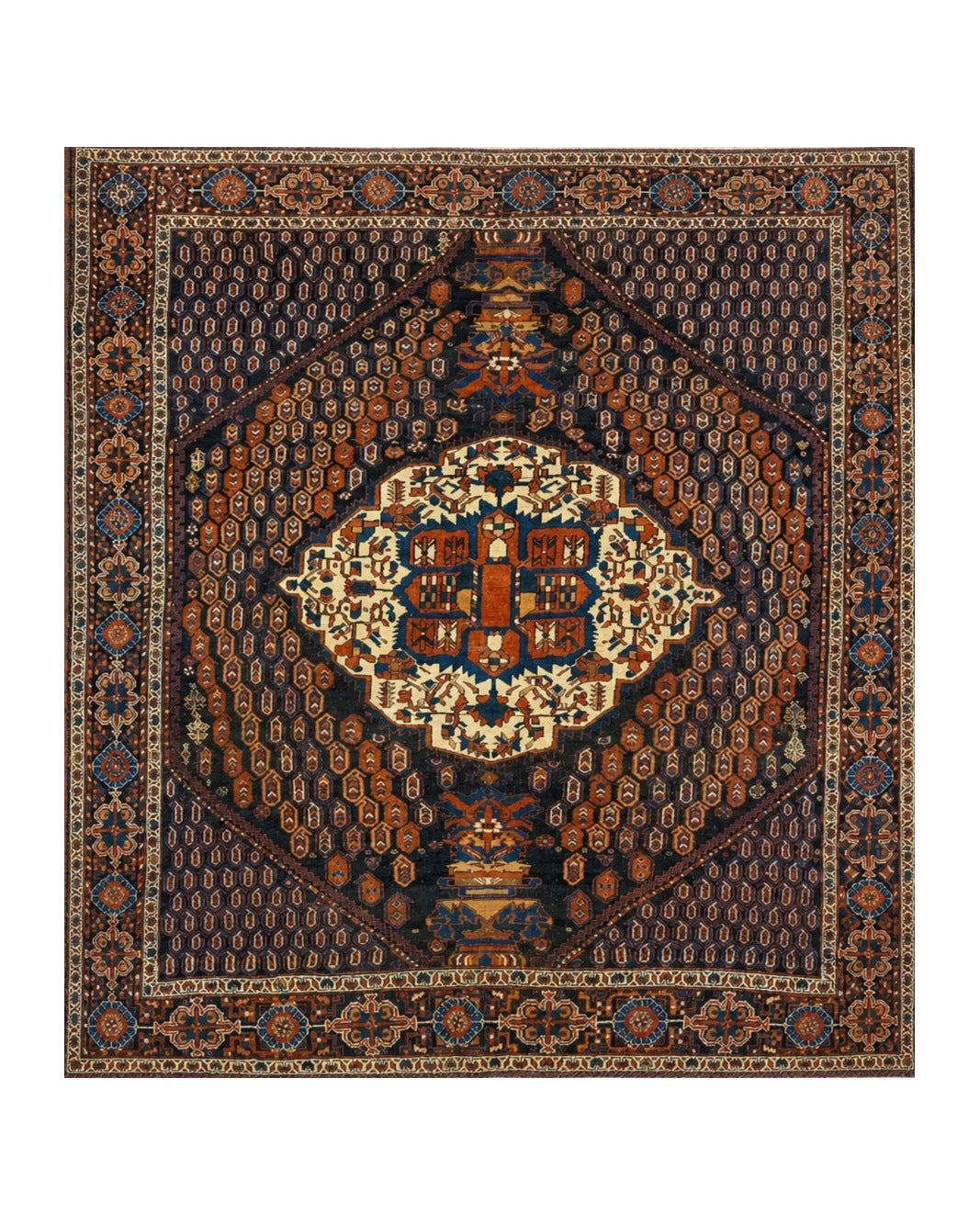
The designs of Afshar rugs are predominantly geometric, featuring one or more large diamond-shaped medallions on a field of flowers. Common design elements include the geometric pear and chickens which are widely used as border patterns, often against an ivory colored background. Classic features include three pendants at either end (mostly in Sirjan designs), multiple diamond patterns where the number of diamonds can vary within a motif, and the distinctive tribal border typical of all rugs made by this tribe.
The Boteh Legacy and Symbolic Motifs
19th-century Afshar rugs are renowned for their consistent high-quality materials and craftsmanship. Three of their most prolific designs include simple diagonal rows of "boteh," and experts believe that Afshar weavers may have been the first to use this iconic Persian motif. Their borders typically feature smaller motifs, often resembling stylized birds or other animals, with peacock motifs also found in traditional designs.
Construction and Color Characteristics
Afshar carpets are very popular because of their resistance and durability. They are typically knotted in shades of red and blue with rectilinear patterns, though the variety of designs is quite high. The most common colors include red, rust, blue, brown, and ivory, creating the characteristic palette of rust and blue color tones that distinguishes authentic Afshar work. Older Afshars are typically smaller in size while more modern examples come in larger formats.
FAQ Section
What makes Afshar rugs distinctive among Persian tribal carpets?
Afshar rugs are distinguished by their geometric diamond-shaped medallions and the characteristic use of rust and blue color tones. The designs are predominantly geometric rather than curvilinear, featuring stylized floral patterns and tribal motifs. Classic features include three pendants at either end (especially in Sirjan designs), multiple diamond patterns, and distinctive tribal borders that reflect their nomadic heritage.
What is the significance of the boteh motif in Afshar rugs?
Afshar weavers may have been the first to use the boteh motif, making them historically significant in Persian rug development. The boteh appears in simple diagonal rows across the field, and this paisley-like design became one of their most prolific patterns during the 19th century. The motif represents fertility and life, connecting these tribal carpets to broader Persian cultural symbols.
How do Sirjan Afshar rugs differ from other Afshar productions?
Nearly all Sirjan rugs have two picks of blue cotton weft between each row of pile knots and some degree of warp depression. Sirjan Afshar rugs often feature the distinctive three pendants at either end and are known for their high-quality glossy wool and fine weave. Made by Afshar nomads in the Sirjan region of Kerman Province, these pieces represent some of the finest examples of Afshar weaving.
What are the typical size characteristics of antique versus modern Afshar rugs?
Older Afshars are typically smaller in size, often in square or nearly square formats, while more modern copies come in larger sizes. Antique pieces sometimes include special small square rugs called 'masnad,' which were used for specific ceremonial purposes. The smaller traditional sizes reflect their nomadic origins where portability was essential.
How can I identify the quality and authenticity of an Afshar rug?
Look for the characteristic geometric diamond medallions, rust and blue color palette, and tribal border designs. Authentic pieces will show slight irregularities that indicate hand-knotting, natural color variations, and the distinctive stylized motifs like geometric pears and birds in the borders. High-quality examples feature lustrous wool, tight weaving, and clear definition in the geometric patterns typical of this tribal tradition.