Origins and Cultural Heritage
Kurdish rugs are handcrafted by people of Kurdish stock in Iran, eastern Anatolia, and parts of Iraq and the southernmost Caucasus. The Kurds, an Iranian tribe believed to have inhabited the Azerbaijan area since before the age of Christ, today number an estimated 10 to 13 million people. They inhabit the 140,000 square mile region of Western Iran, Eastern Turkey and Iraq known as Kurdistan, creating a rich tapestry of weaving traditions across this vast mountainous territory.
Regional Variations and Famous Centers
Kurdish rug production encompasses several distinct regional styles. The most celebrated examples come from Bijar (also spelled Bidjar), known for exceptional construction quality, and Senneh, famous for incredibly fine weaving. Many rugs from the Sauj Bulagh region are extremely early, possibly dating before 1800, and are highly prized by collectors. Each region developed its own characteristics while maintaining the core Kurdish aesthetic of bold patterns and sturdy construction.
Design Characteristics and Patterns
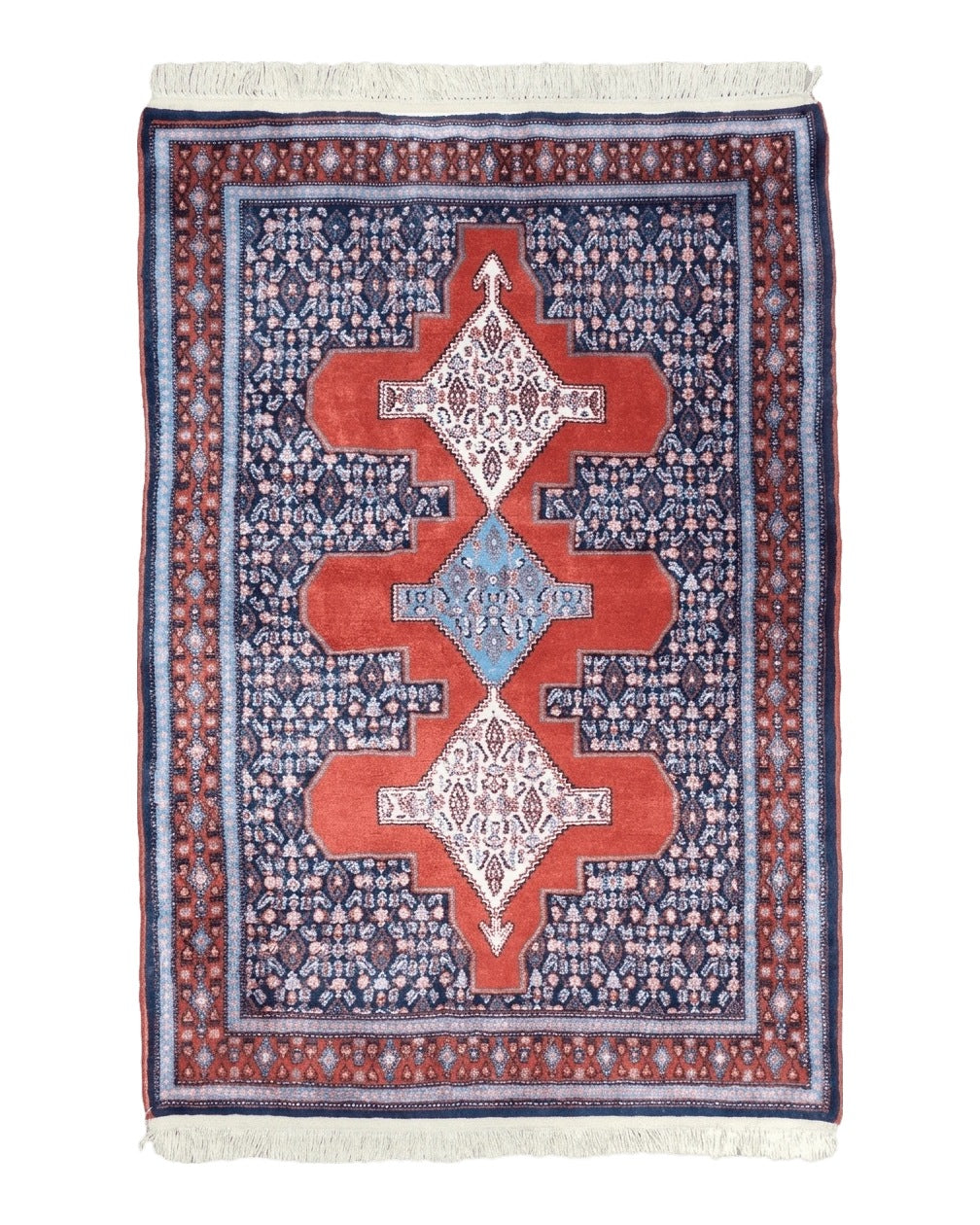
Kurdish rugs are known for their bright colors, bold geometric patterns, and the rich cultural stories woven into their designs. Kurdish rugs were produced in medallion patterns and more commonly in allover designs, either floral, Mina-Khani patterns, or geometric, like the so-called "Jaff" type. The designs often feature striking combinations of deep burgundy, indigo, ivory, and green, with colors that are deep and rich, making simple patterns stand out dramatically.
Construction and Quality
These rugs are stout and solid in structure, usually made in symmetrical knotting upon a woolen foundation. Kurdish carpet weaving is almost entirely a semi-nomadic activity, with rugs that are double wefted and all wool, giving them a fleshy and lush character. The lustrous superior grade wool and extensive, harmonious palette of naturally dyed colors exemplify traditional Kurdish weaving virtues, creating carpets that are both beautiful and built to last.
FAQ Section
What distinguishes Kurdish rugs from other Persian tribal carpets?
Kurdish rugs are distinguished by their exceptionally solid construction and bold geometric patterns that reflect the mountainous terrain of Kurdistan. Unlike other tribal rugs, Kurdish pieces are known for being "stout and solid in structure" with symmetrical knotting and all-wool construction. Their designs tend to be more geometric than curvilinear, often featuring the distinctive "Jaff" pattern type and Mina-Khani motifs that are specific to Kurdish weaving traditions.
Which Kurdish rug regions are considered the finest?
Bijar and Senneh represent the pinnacle of Kurdish rug production. Bijar carpets are famous for their exceptional durability and lustrous wool, while Senneh rugs are renowned for incredibly fine weaving with knot densities reaching 500 per square inch. Sauj Bulagh rugs are also highly collectible, with many examples dating before 1800, making them some of the earliest Kurdish pieces available to collectors.
What are the characteristic colors and patterns in Kurdish rugs?
Kurdish rugs typically feature deep, rich colors including burgundy, indigo blue, ivory, and forest green. The patterns are predominantly geometric, ranging from central medallions to allover designs like the Herati pattern, Mina-Khani motifs, and the distinctive "Jaff" geometric type. These bold patterns are enhanced by the natural dye palette, creating striking visual contrasts that make Kurdish rugs instantly recognizable.
How durable are Kurdish rugs for everyday use?
Kurdish rugs are exceptionally durable due to their solid construction and semi-nomadic origins. The double-wefted, all-wool construction with symmetrical knotting creates carpets that can withstand heavy use while maintaining their appearance. The thick, lustrous wool and tight weaving make them ideal for high-traffic areas, and their robust construction means they often improve with age and use.
What should collectors know about antique Kurdish rugs?
Antique Kurdish rugs, particularly those from Sauj Bulagh dating before 1800, are extremely rare and valuable. These early pieces feature lustrous handspun wool, natural dyes, and traditional patterns that represent centuries of weaving heritage. Collectors should look for the characteristic solid construction, geometric patterns, and rich color palette that distinguish authentic Kurdish pieces from workshop reproductions.