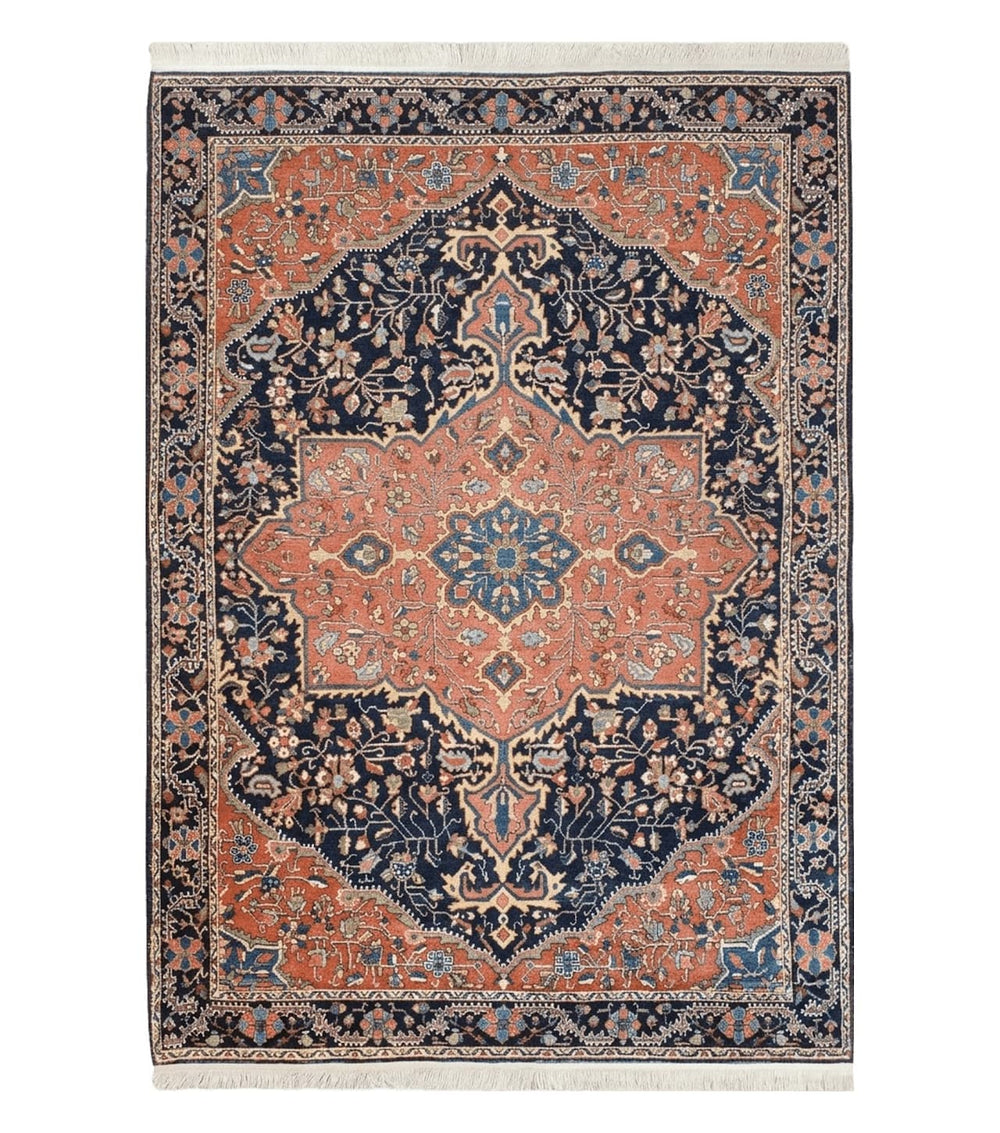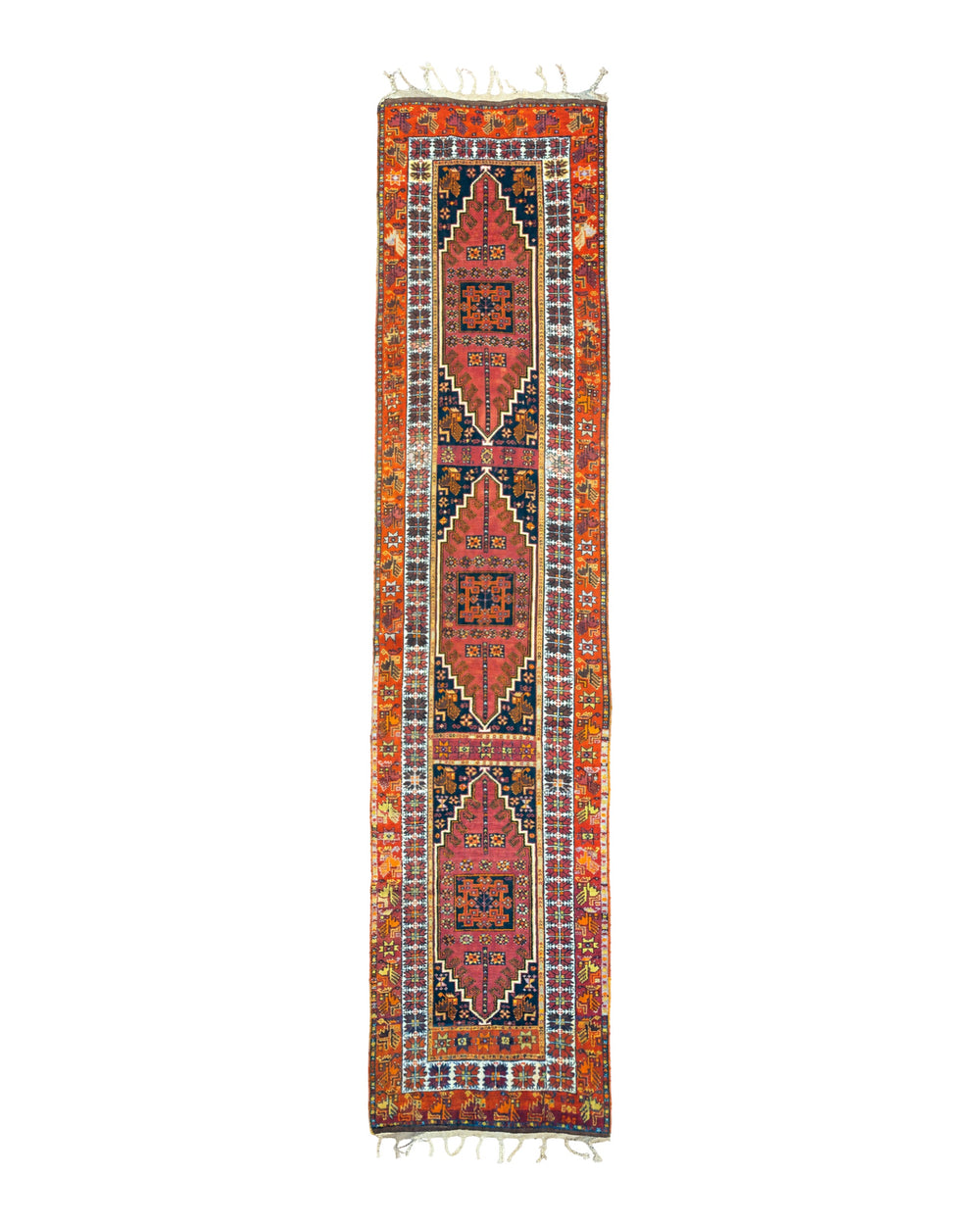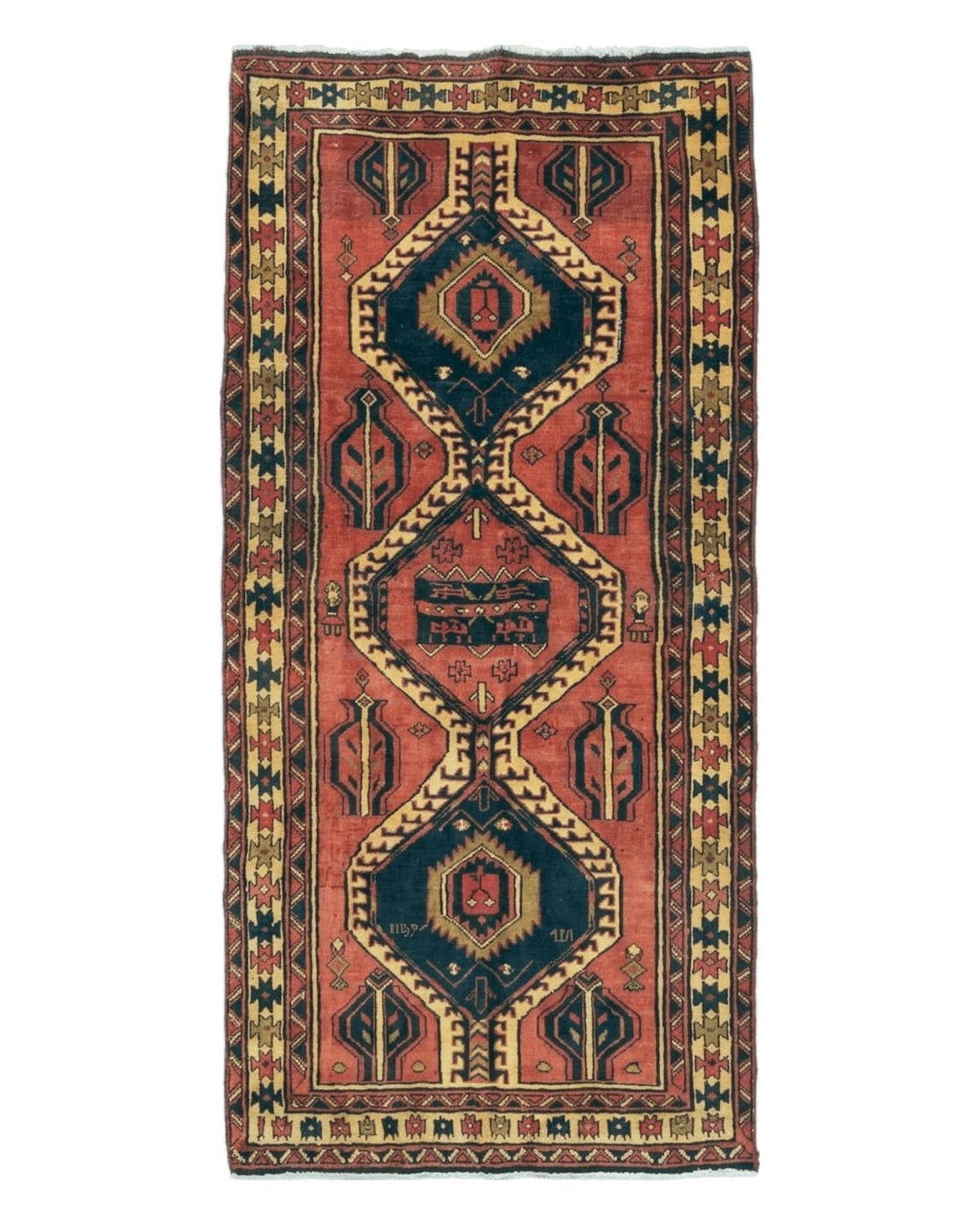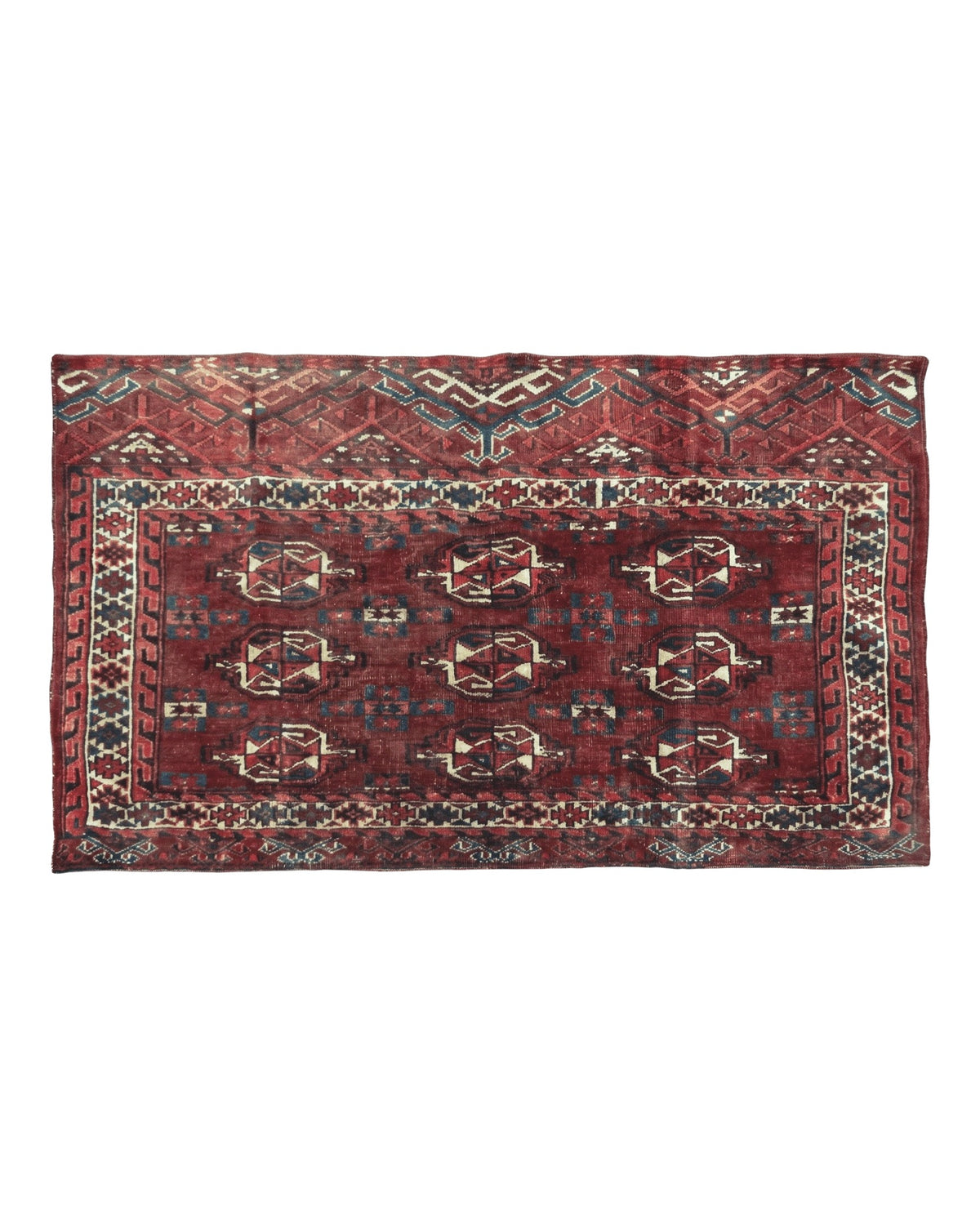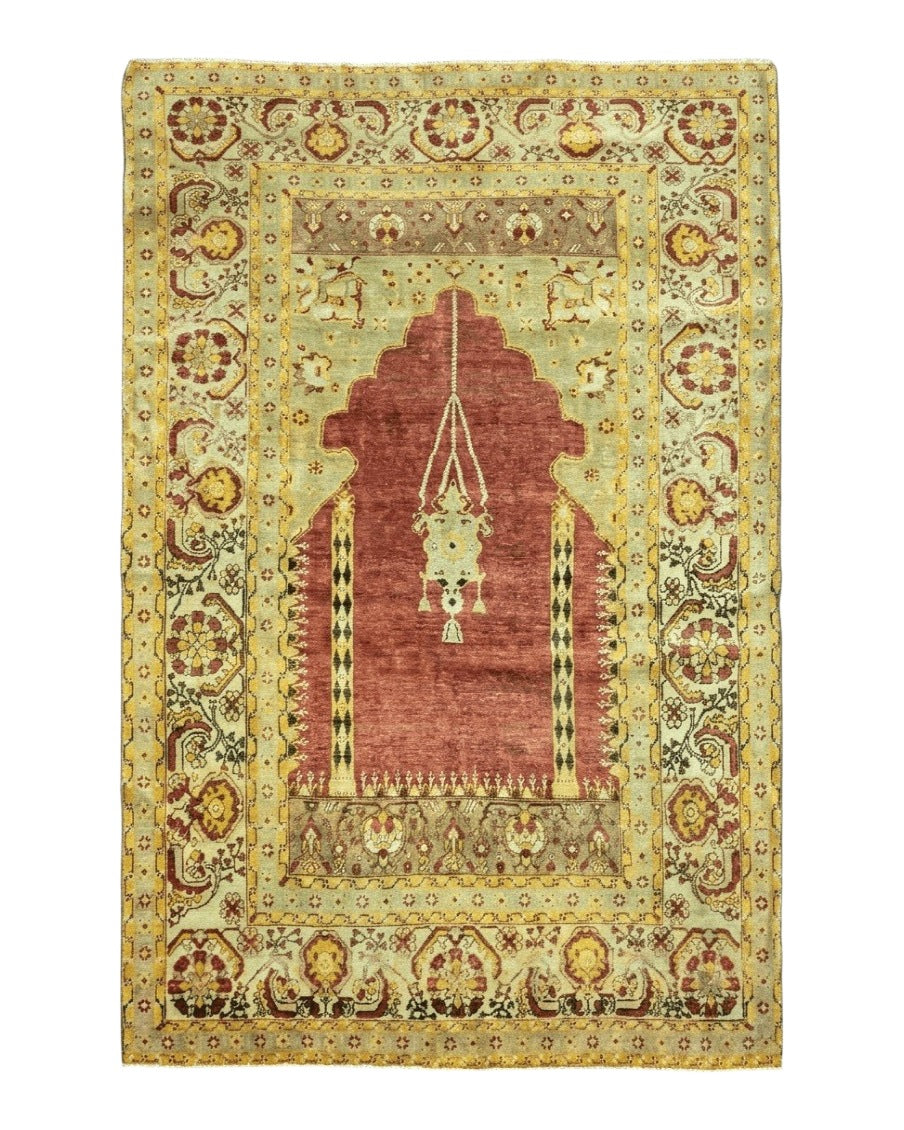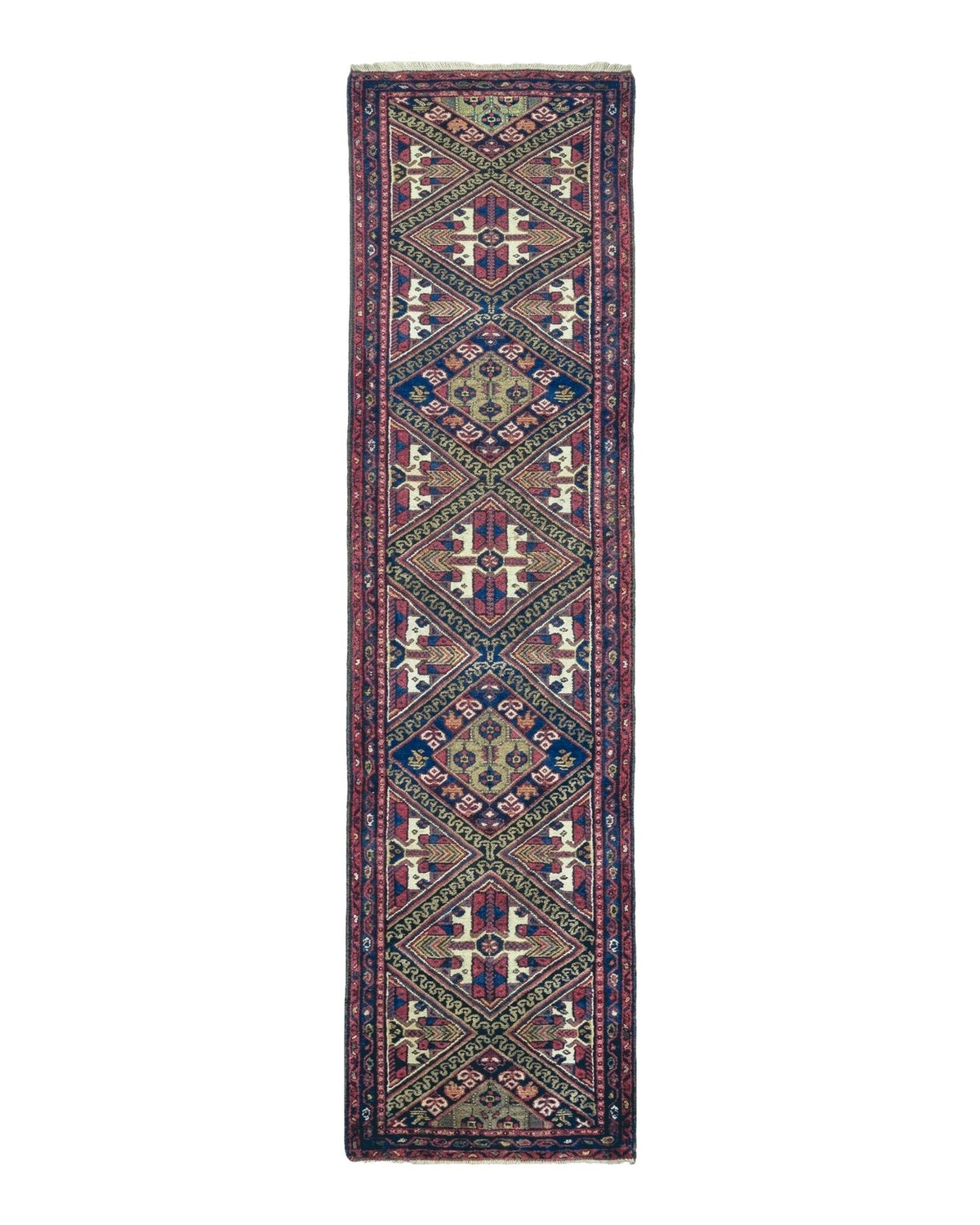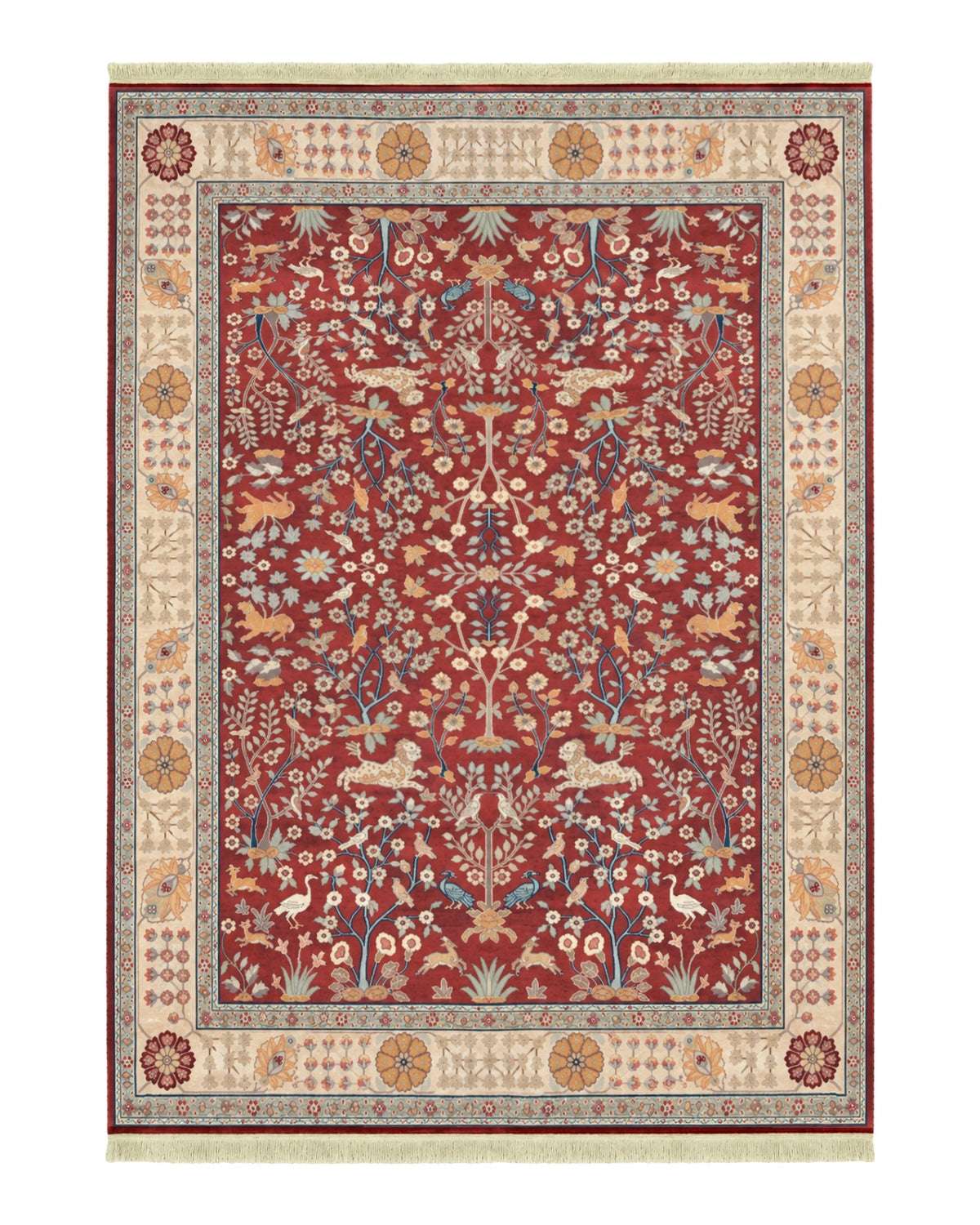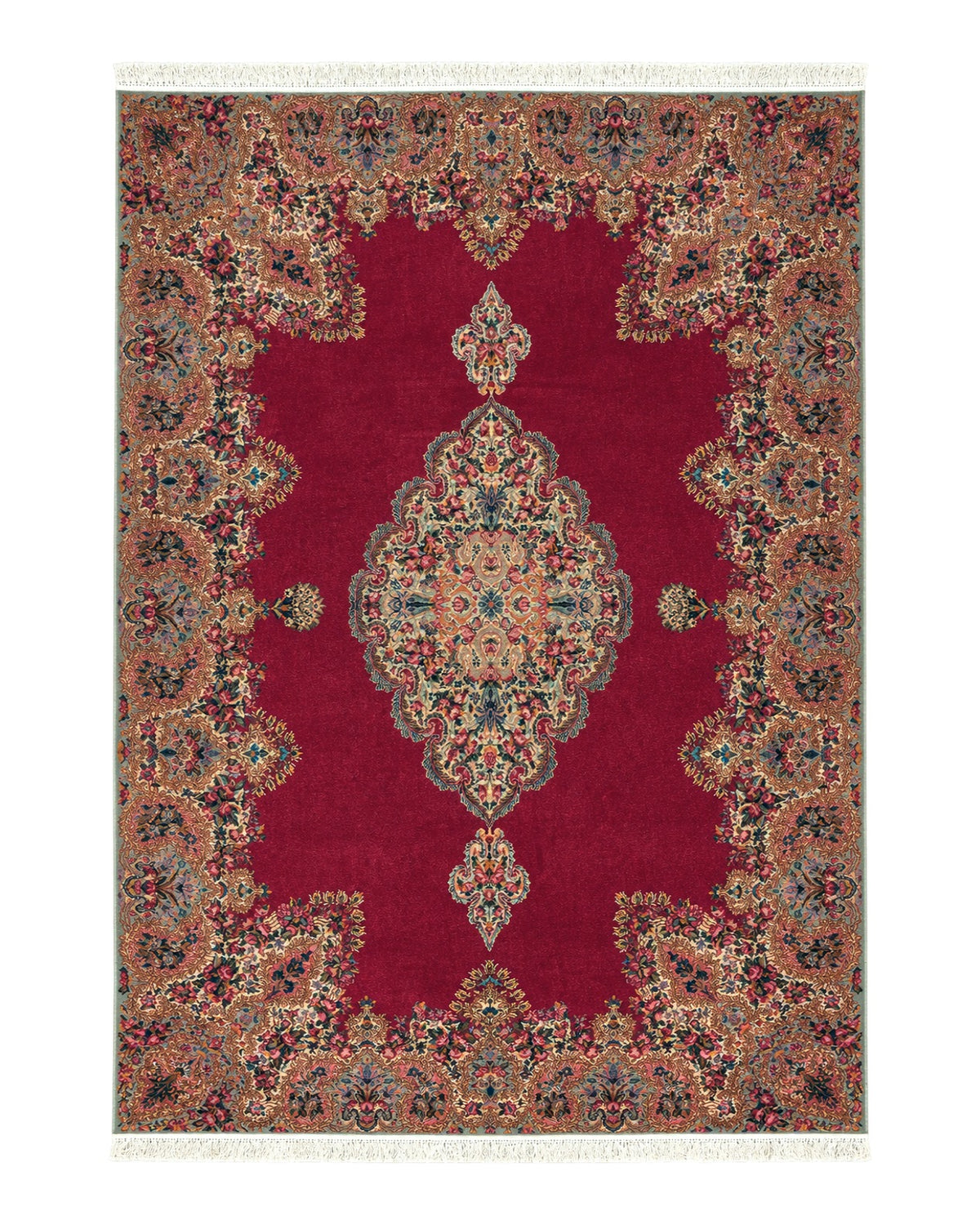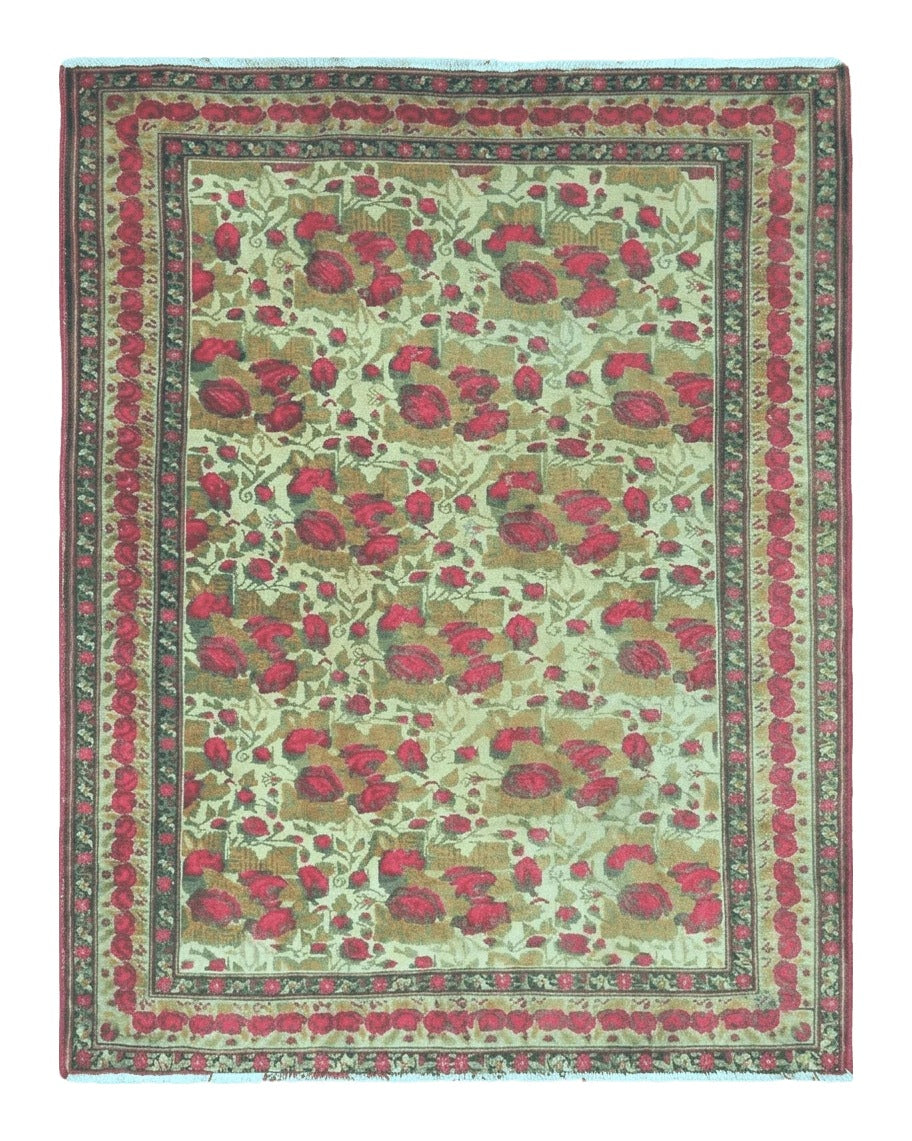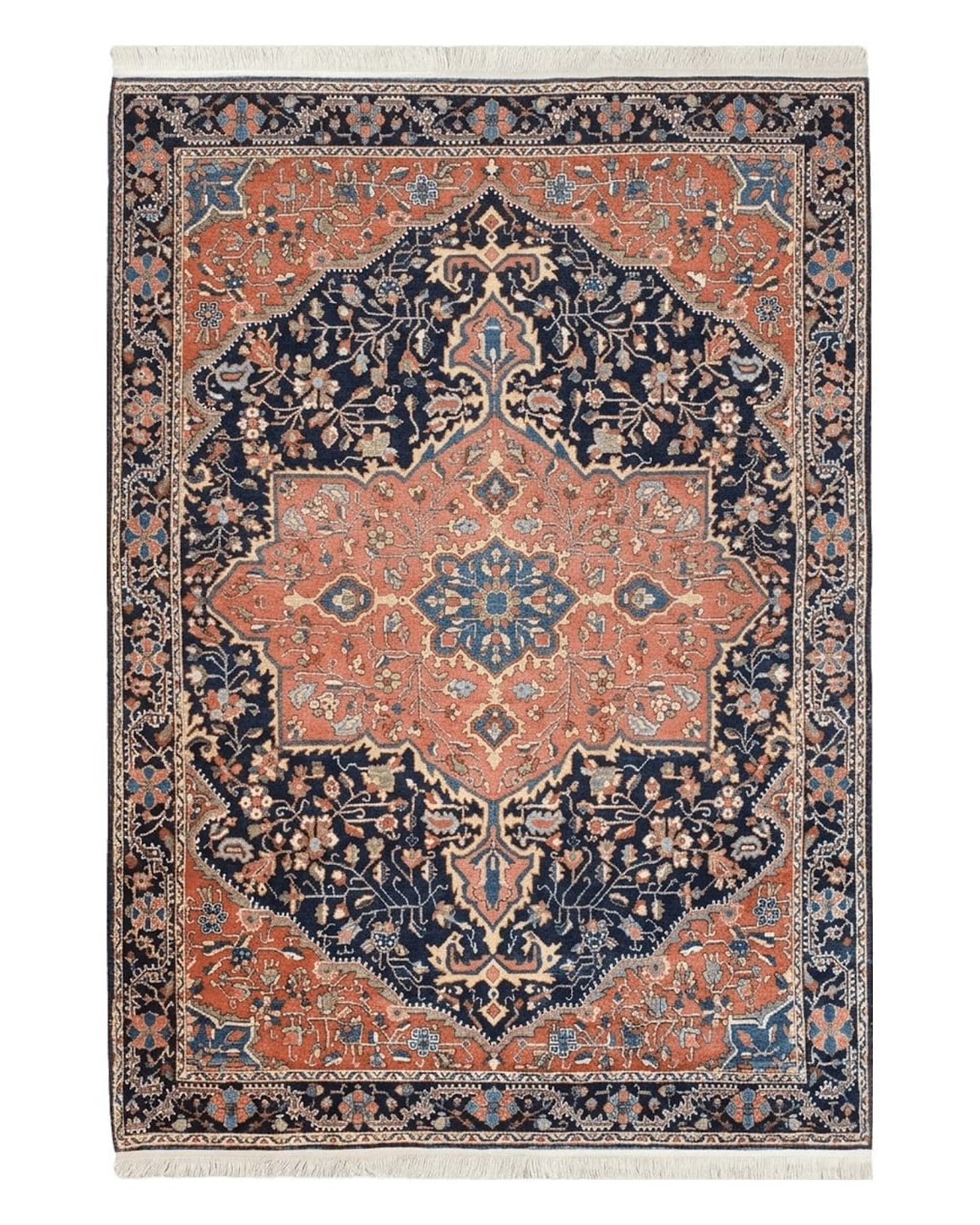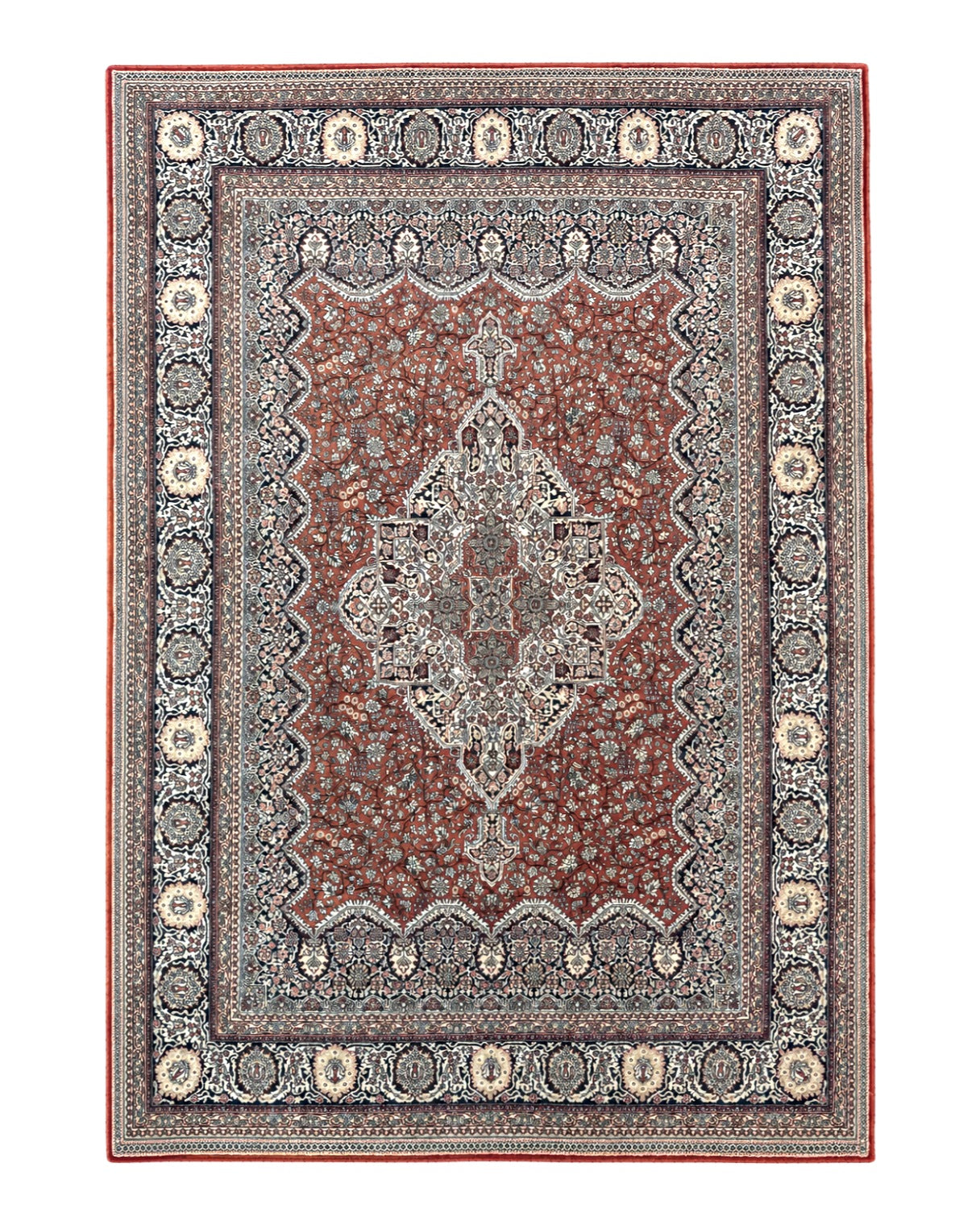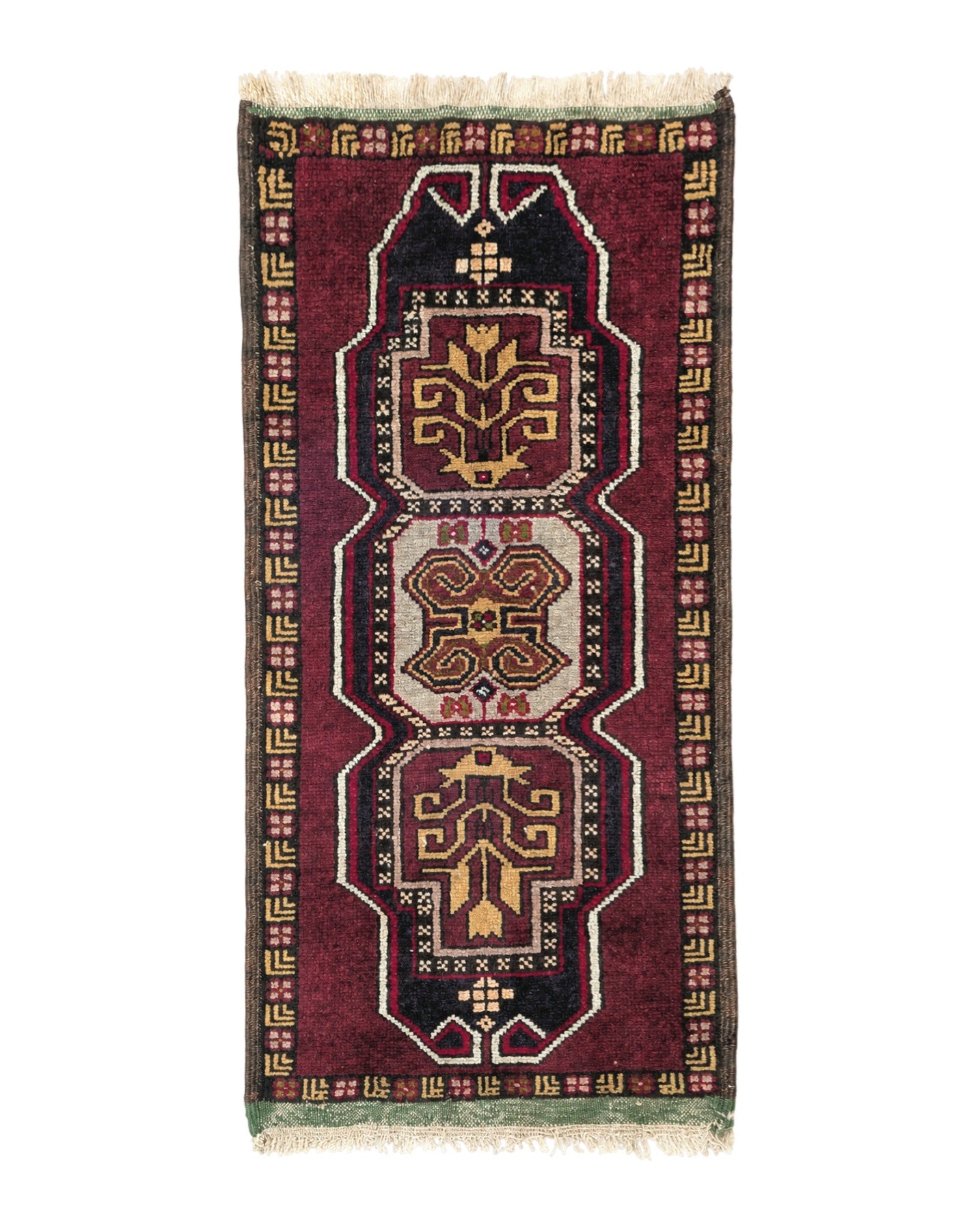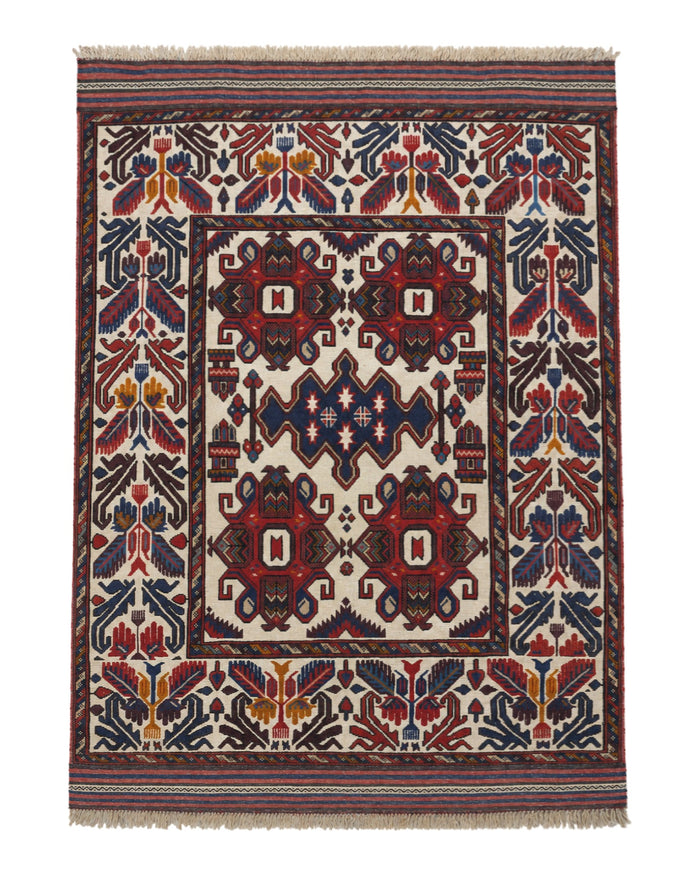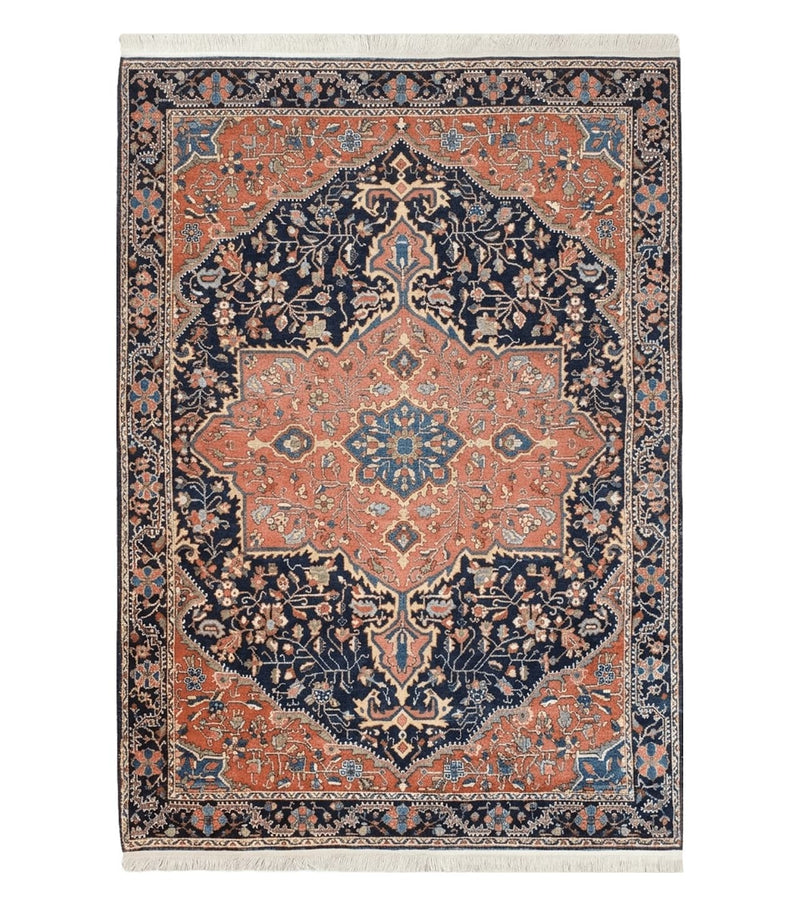


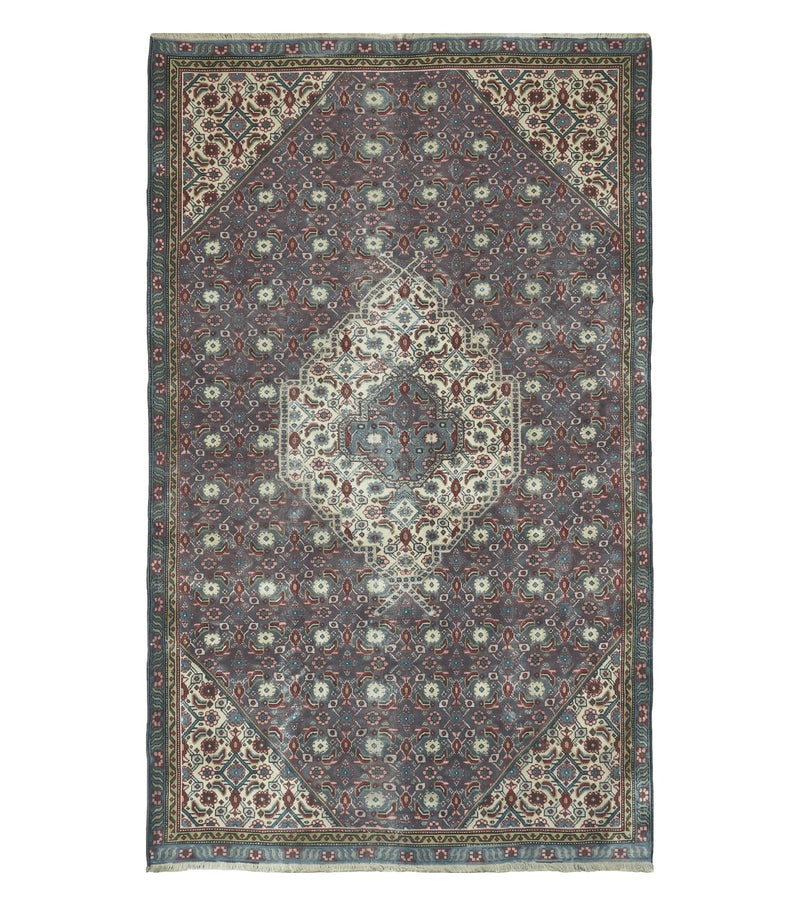


Antique, semi-antique and vintage are the words the rug trade uses to describe a rug's age. They are not legal grades with exact boundaries, and sellers use them a little differently, but the usual meanings are well established: an antique rug is about 100 years old or more, a semi-antique rug is roughly 50 to 100 years old, and a vintage rug is an older rug that is not yet semi-antique, usually from about the 1970s to the early 2000s.
| Antique | About 100 years old or more |
|---|---|
| Semi-antique | Roughly 50 to 100 years old |
| Vintage | Usually about 20 to 50 years old |
| New or contemporary | Recently woven |
| Dates are approximate | Most rugs are dated by style and construction, given as a decade or a span such as "circa 1930s" |
Antique rugs
The 100-year line comes from the definition of an antique used by U.S. Customs, and it is the most widely accepted meaning in the trade. Most antique Persian rugs on the market today were woven during the great revival of weaving for export, from about the 1880s to the 1920s. Heriz, Serapi, Sarouk, Farahan, Kashan, Bidjar and Tabriz rugs from this period are especially sought after.
Antique rugs are valued for their natural dyes, hand-spun wool, and the character of designs woven before production became standardized. They often show honest wear, which is accepted and even appreciated if the rug is sound.
Semi-antique rugs
A semi-antique rug was woven roughly between the 1920s and the 1970s. Many fine Persian city rugs, Sarouks, Kashans, Kermans and Tabrizes, date from this period, as do many of the village rugs that are now coming onto the market from older homes. Semi-antique rugs often combine good materials and traditional designs with better condition than true antiques, which makes them a popular choice for rooms that see regular use.
Vintage rugs
"Vintage" is the loosest of the three terms. It is usually applied to rugs from about the 1970s to the early 2000s, and it is also used for rugs that have been deliberately faded or "washed" to look older. A vintage rug may have plenty of life left, and many are excellent value, but the word on its own says little about quality.
How age is judged
Very few rugs carry a woven date, and woven dates are not always reliable. Most rugs are dated by experts from a combination of design, colors and dyes, materials, construction, and wear. That is why dates are usually given as a decade or a span. See How Rugs Are Dated.
Age and value
Age alone does not make a rug valuable. A well-preserved semi-antique rug in a beautiful design can be worth more than a worn antique of a common type. The factors that matter most are:
- Type and quality: the region, the fineness of the weave, and the quality of the wool and dyes.
- Design and color: how beautiful, well drawn and harmonious the rug is.
- Condition: how much pile remains, and whether there are holes, repairs, stains or color run.
- Rarity: some types and sizes are rarely found in older pieces.
See What Determines a Rug's Value.
Condition to expect
An older rug will rarely look like new, and it should not be expected to. Even pile wear, softened colors and small, well-done repairs are normal. Holes, dry rot in the foundation, moth damage and badly run colors are more serious. See Normal Wear vs. Damage.