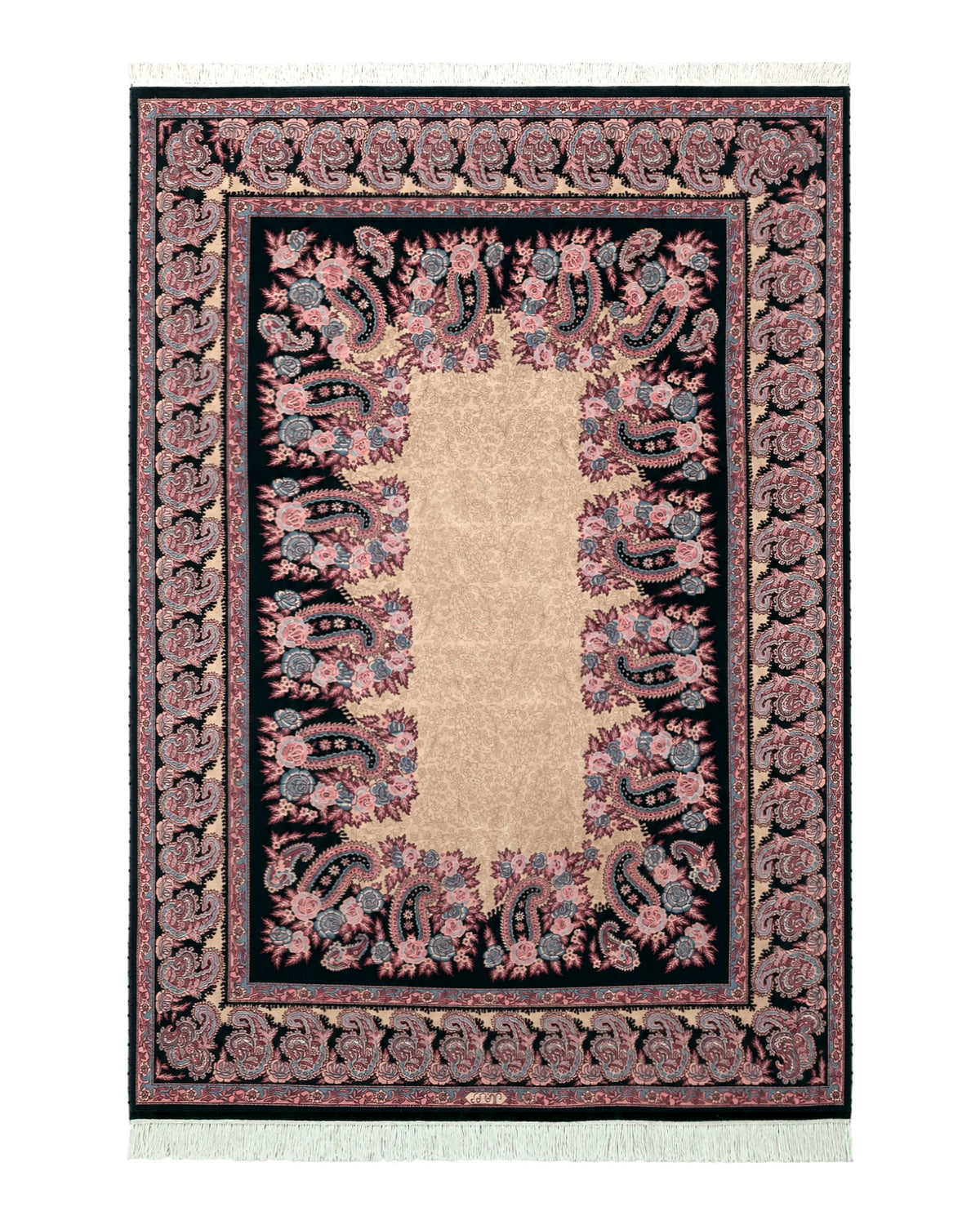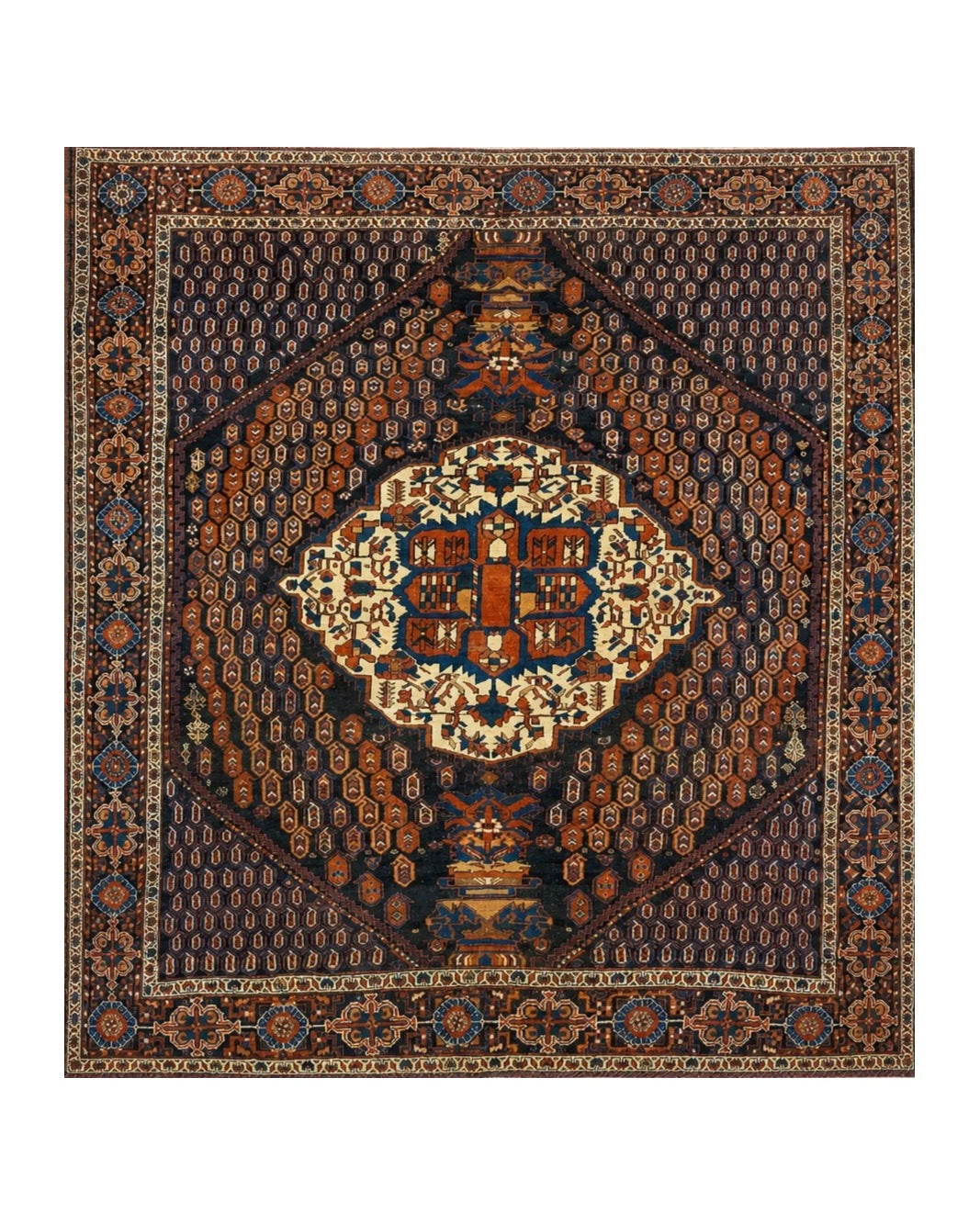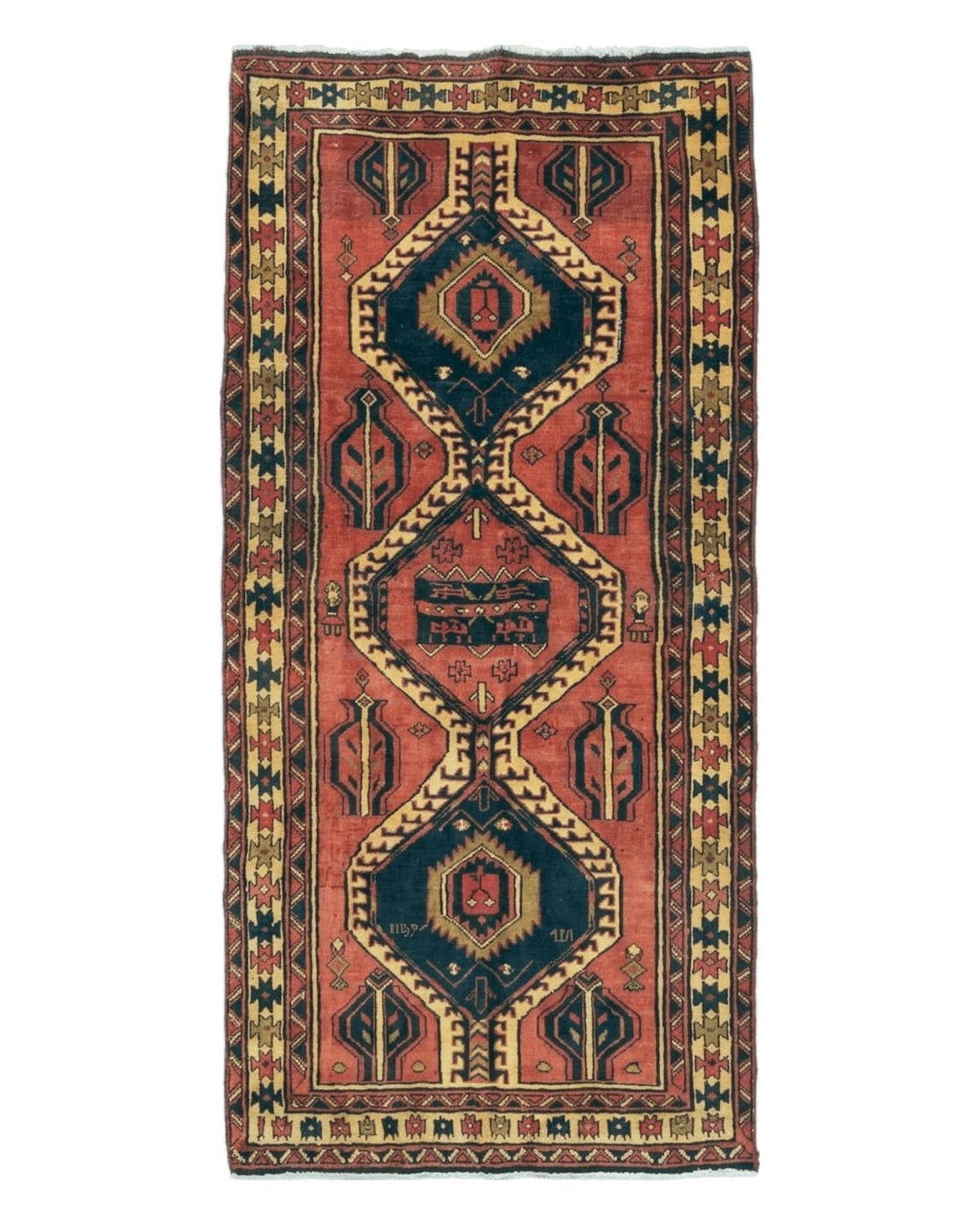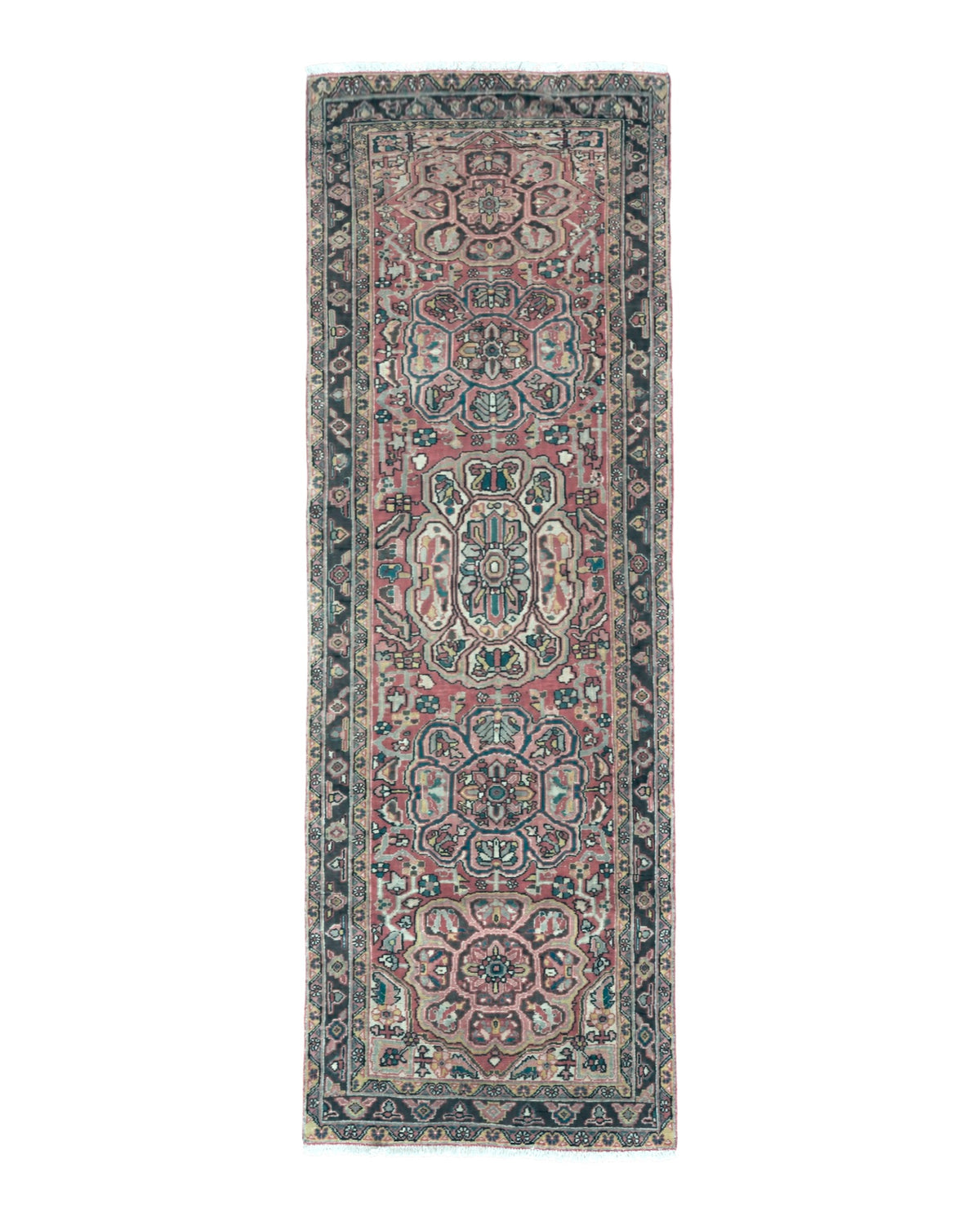




The boteh is a teardrop-shaped motif with a curled tip, one of the most familiar shapes in Persian art. In the West it is known as paisley, after the Scottish town whose mills copied it on shawls in the 19th century. In rugs it appears in rows across the field, inside medallions, and in borders, drawn finely in city rugs and boldly in village and tribal weaving.
| Shape | A teardrop or almond shape with a bent or curled tip |
|---|---|
| Name | From a Persian word often translated as "bush" or "cluster of leaves" |
| Known in the West as | Paisley |
| Often seen in | Senneh, Kerman, Afshar, Hamadan, Malayer and Qashqai rugs |
| Typical layout | Rows across the field, alternating direction or color |
What the boteh means
Nobody knows for certain where the boteh came from or what it first meant, and many explanations have been offered. It has been described as a flame, which some link to ancient Persian Zoroastrian symbolism; as a cypress tree bent by the wind; as a budding plant or a seed; as a pear or almond; and as a bush or a cluster of leaves, which is one meaning of the Persian word. Weavers themselves have often given it different names in different places. All of these meanings point to life, growth and renewal, which may explain its lasting popularity. See Rug Motifs and Their Meanings.
From Persia to Paisley
The boteh was widely used in Persian and Indian textiles, and it became famous in Europe through the fine woven shawls of Kashmir and Kerman, which were fashionable in the late 18th and 19th centuries. European mills, especially in Paisley, Scotland, began producing cheaper printed and woven copies, and the motif came to be called by the town's name. Kerman, which had its own shawl industry, has a particularly rich tradition of boteh designs in its rugs. See Kerman Rugs.
The boteh in rugs
Rug weavers use the boteh in many ways:
- All-over rows: boteh repeated in rows across the field, often alternating in direction from row to row, or in color. Typical of Senneh, Hamadan, Malayer and Afshar rugs.
- Boteh within boteh: large boteh containing smaller ones, sometimes called "mother and child," seen in Afshar and Qashqai rugs.
- Medallion fillings: small boteh filling a medallion or the field around it.
- Borders: a running border of boteh.
In city rugs the boteh is drawn with curving, flowery detail; in village and tribal rugs it becomes a bold, geometric shape with a stepped outline and a hooked tip.
Living with a boteh rug
Because the boteh is usually repeated all over the field, boteh rugs share the practical advantages of other all-over designs: they look complete from any angle and work well under furniture. Small-scale boteh rugs give a fine, textured look; large, bold boteh make a strong statement. See All-Over Designs.