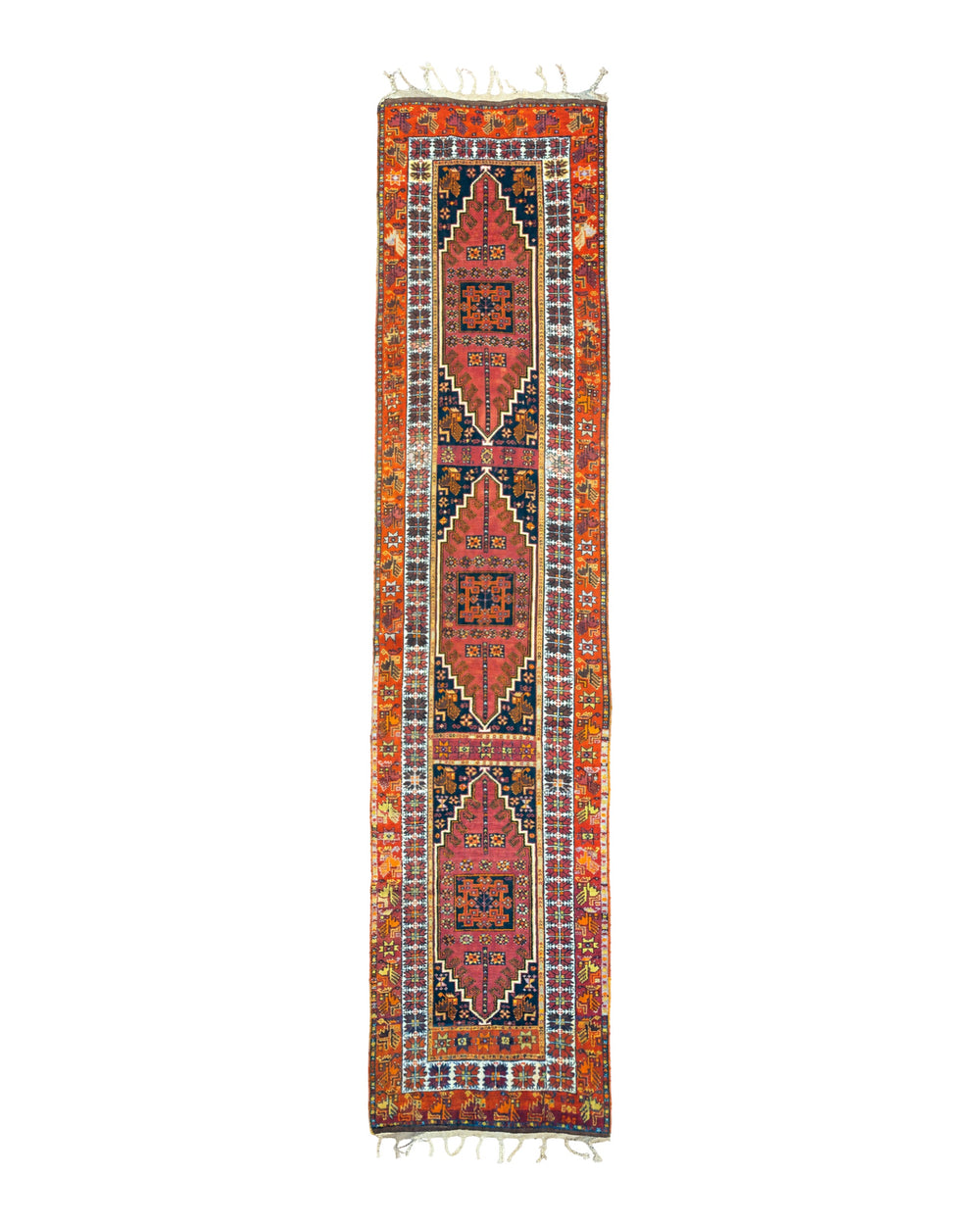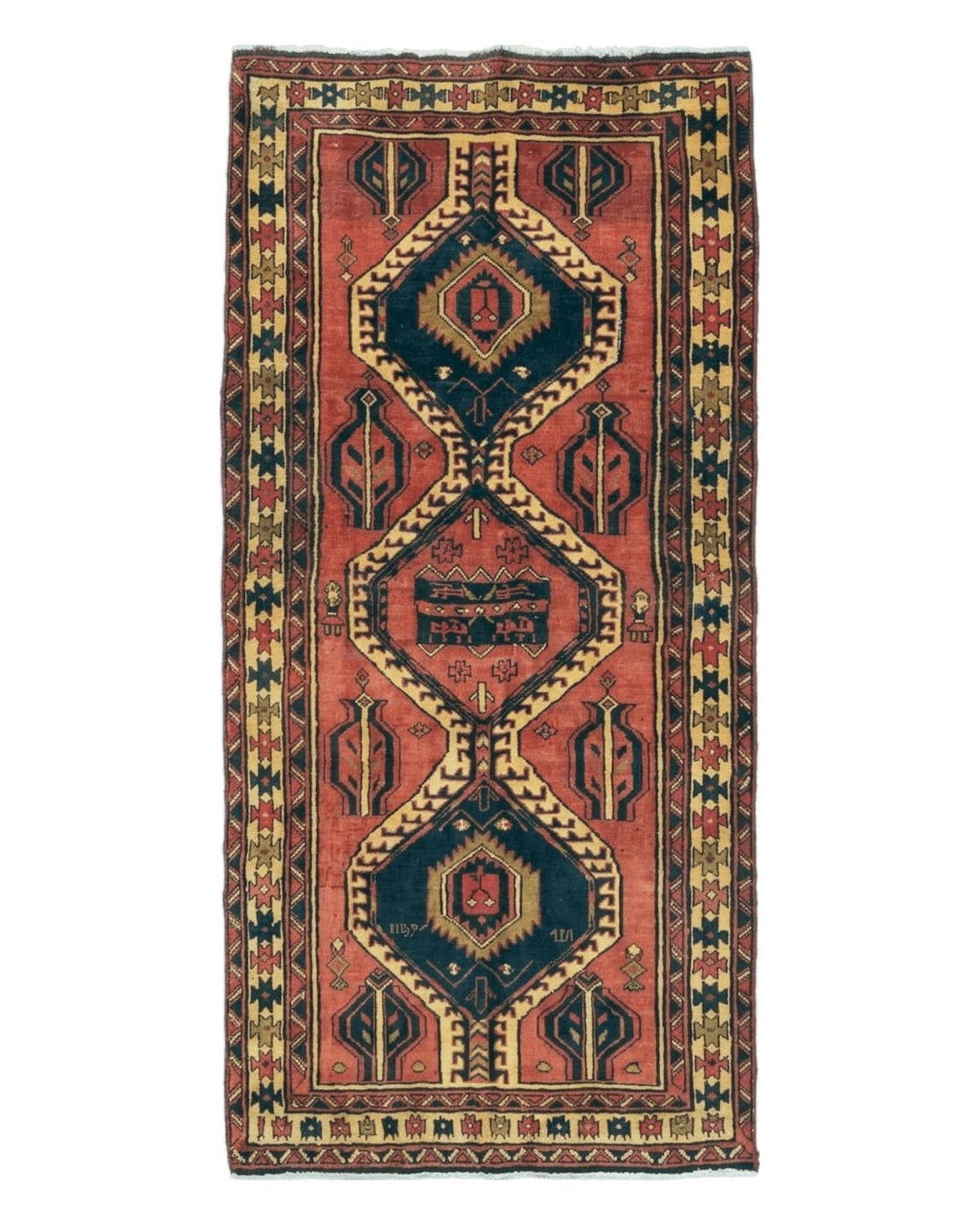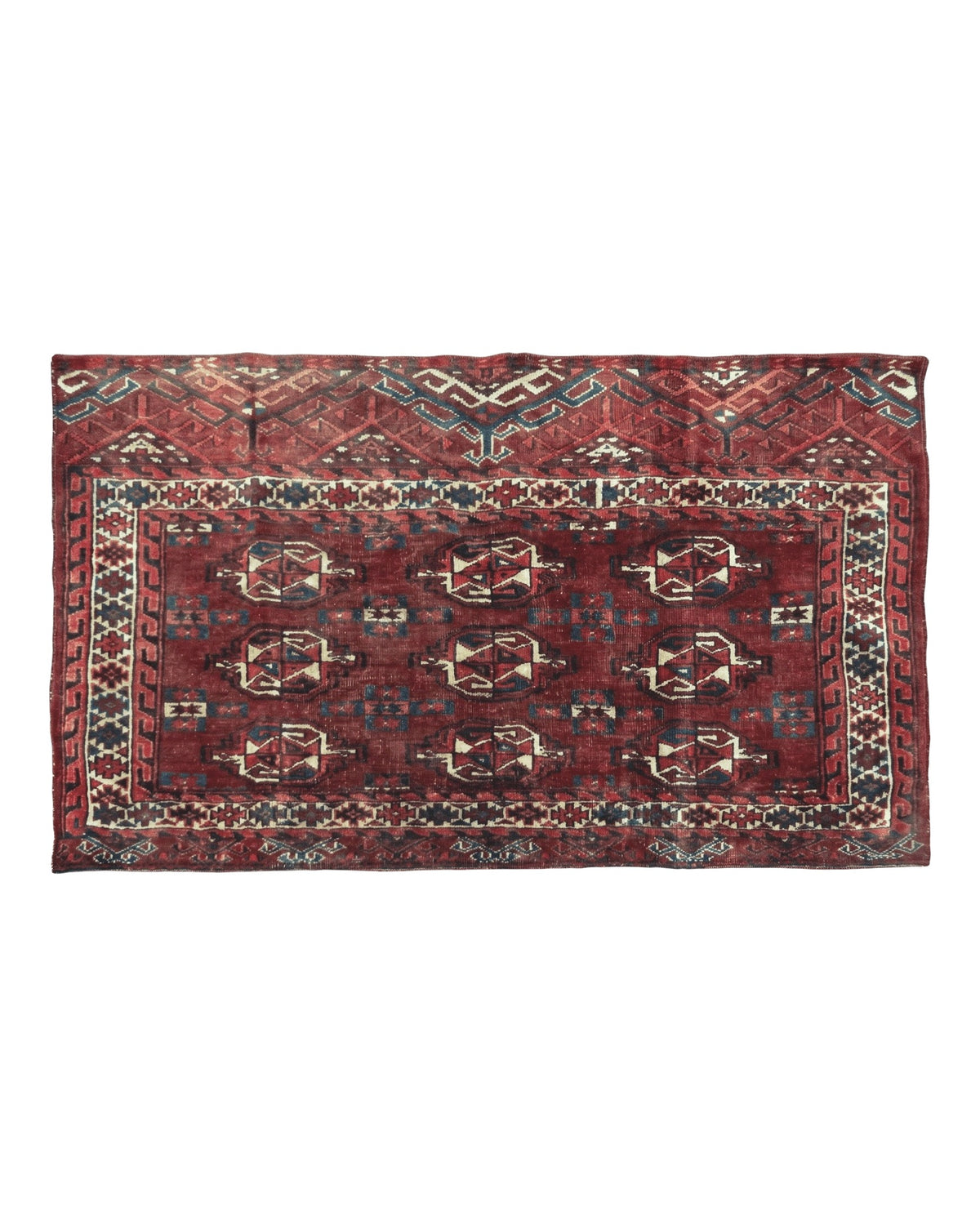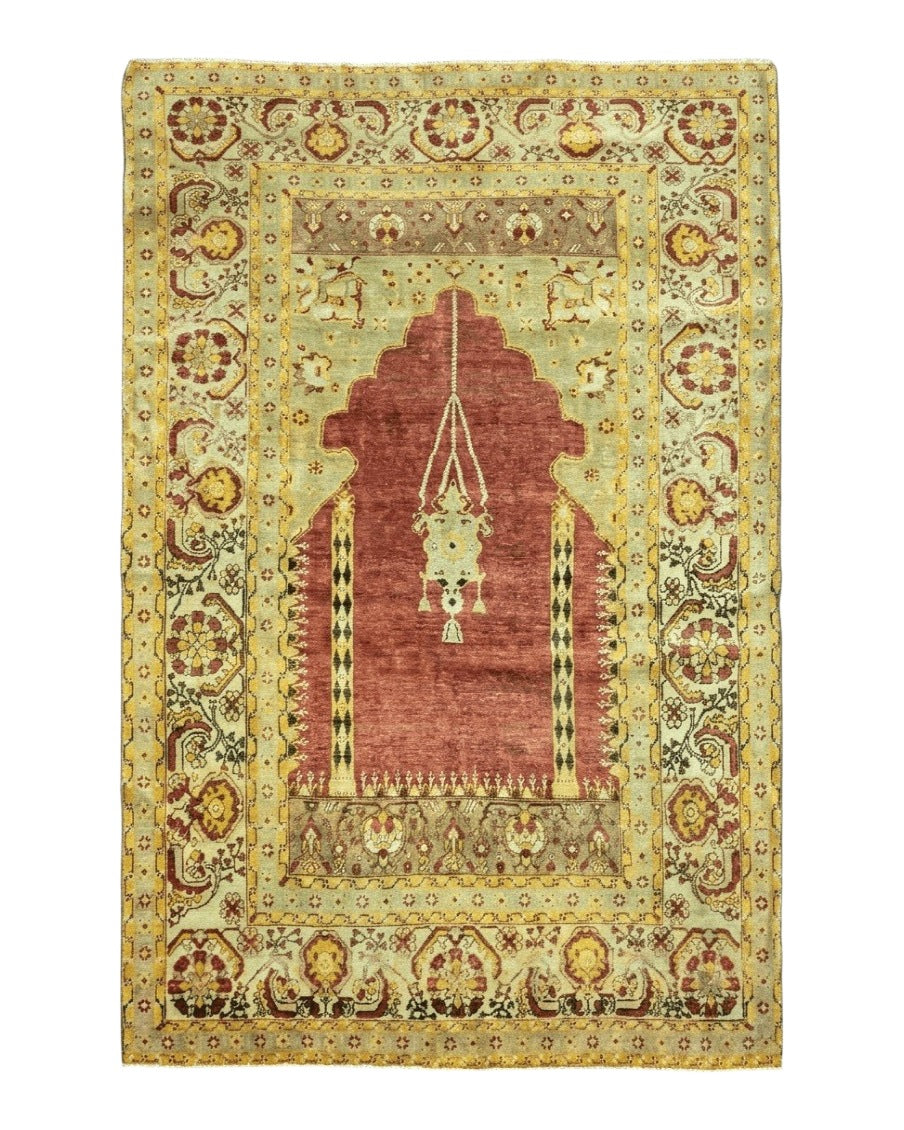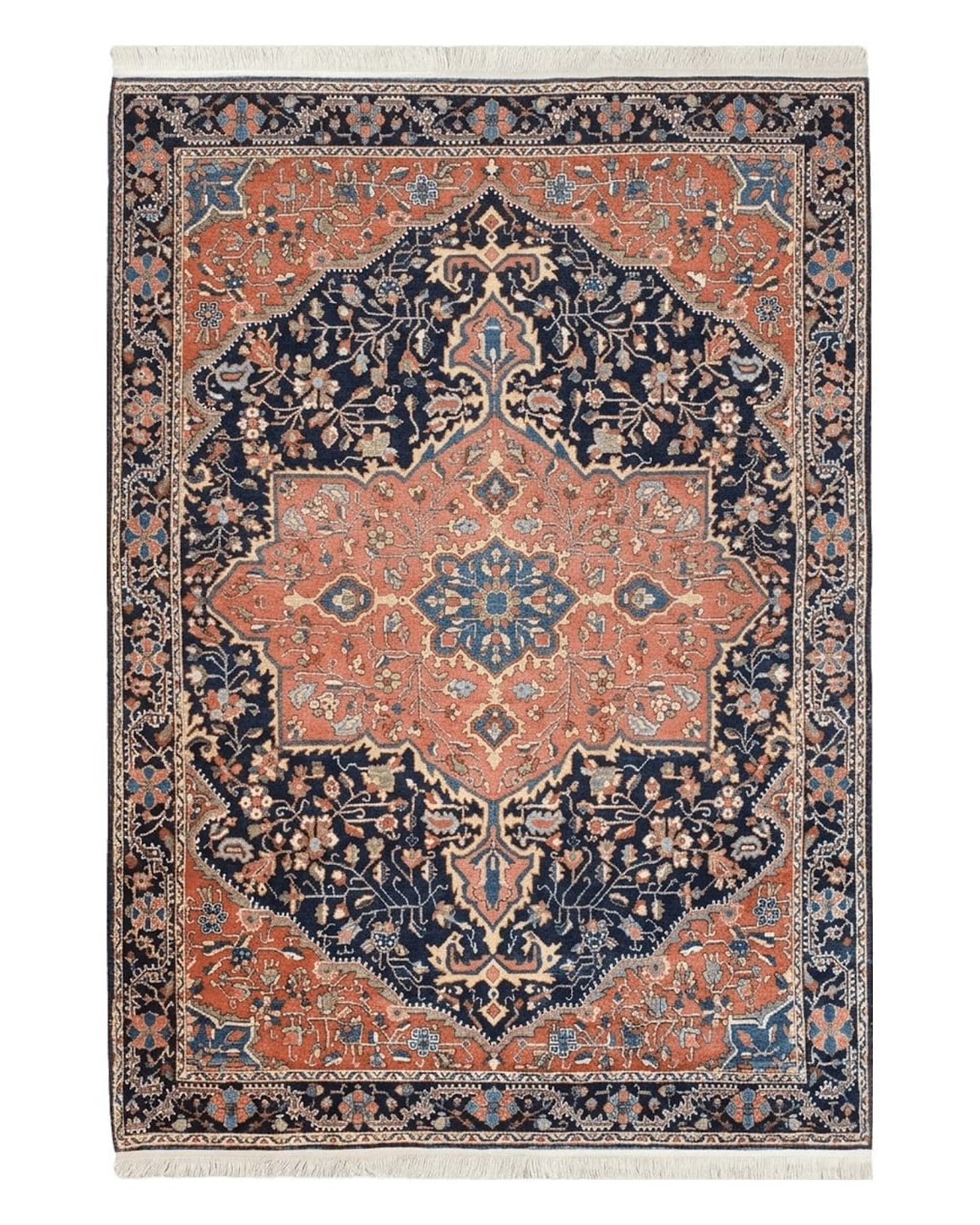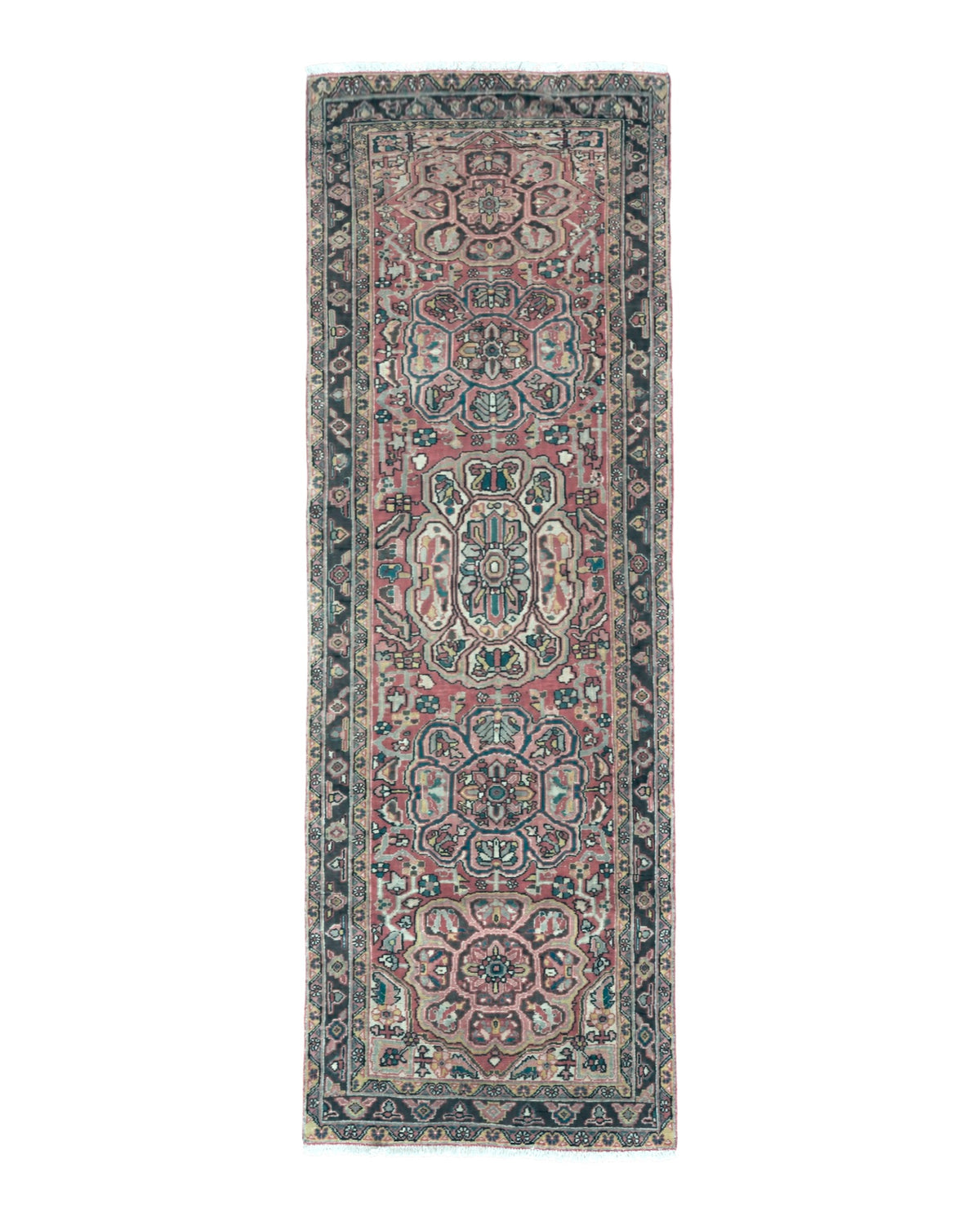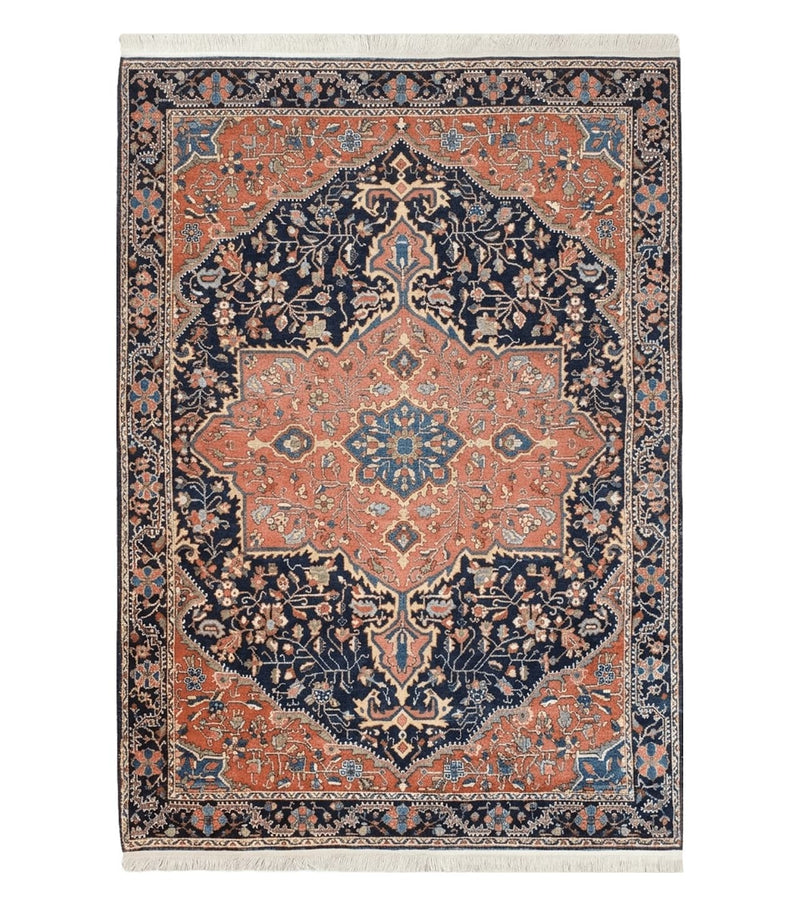


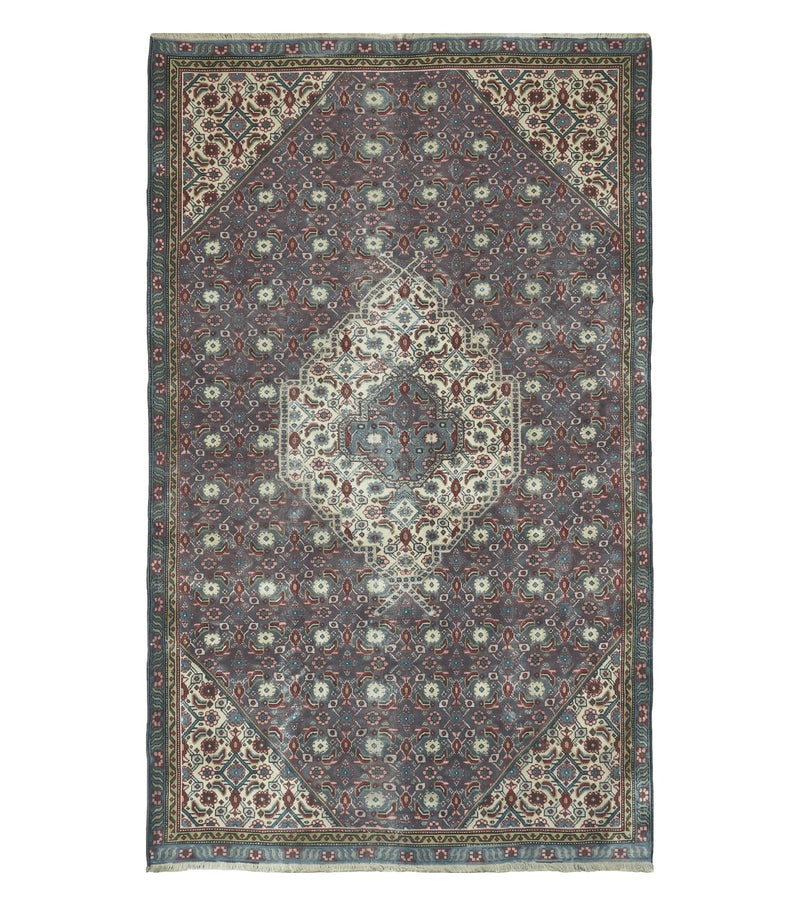


Older handmade rugs have lived full lives, and they rarely look new. Knowing the difference between the honest marks of age and real damage helps you judge a rug's condition, buy with confidence, and care for the rug you have. In general, wear that is even and stable is normal; damage that weakens the structure or spreads is a problem.
| Normal | Even, gentle pile wear; softened colors; abrash; small, good repairs |
|---|---|
| Needs attention | Worn ends and sides; low spots; small holes |
| Serious | Dry rot, active moth damage, large holes, run colors, brittle foundation |
| Check | Front and back in good light; gently flex the rug |
What is normal
- Even pile wear: an older rug's pile is often lower than when new, especially in the center. As long as the wear is fairly even and the knots are intact, this is normal and often attractive.
- Softened colors: colors mellow with age and light; even fading is part of a rug's patina.
- Abrash: bands of slightly different shade from batches of hand-dyed wool are a feature, not a fault. See Natural vs. Synthetic Dyes and Abrash.
- Corroded dark colors: in older rugs, dark brown and black wool often wears lower than other colors because of the dyes used. This is expected.
- Slight irregularities: small differences in width, gentle curves along the sides, and motifs that change are part of handwork.
- Small, well-done repairs: careful reweaving, rewrapped sides and secured ends are normal in older rugs.
What needs attention
- Worn ends and fringe: once the fringe wears away, the knots at the ends can start to unravel. Securing the ends is a simple, inexpensive repair.
- Worn sides: the wrapping on the sides wears and can be rewrapped.
- Low or bare spots: areas where the pile is gone and the foundation shows can often be rewoven.
- Small holes: best repaired early, before they grow.
Serious damage
- Dry rot: the cotton foundation decays, usually after the rug was damp for a long time. The rug feels stiff or brittle and may crack or make a crunching sound when gently folded. Dry rot is difficult and costly to repair.
- Active moth damage: bare patches, loose tufts and silky webbing, especially on the back or under furniture. See Moths, Sunlight and Storage.
- Color run: dyes that have bled into neighboring areas, often from a flood or an improper wash. Some run can be corrected by a specialist; severe run usually cannot.
- Large holes and tears, especially through the foundation.
- Heavy, poor repairs, such as patches glued or stitched on, or areas painted to hide wear.
How to check a rug
- Lay it flat in good light and look at the whole front.
- Turn it over and look at the back for repairs, moth damage and rot.
- Check the ends and sides.
- Gently fold a corner: a healthy rug flexes; a rotted one may crack.
- Smell it: a musty smell can mean dampness or mildew.
See also Antique, Semi-Antique and Vintage Rugs and What Determines a Rug's Value.