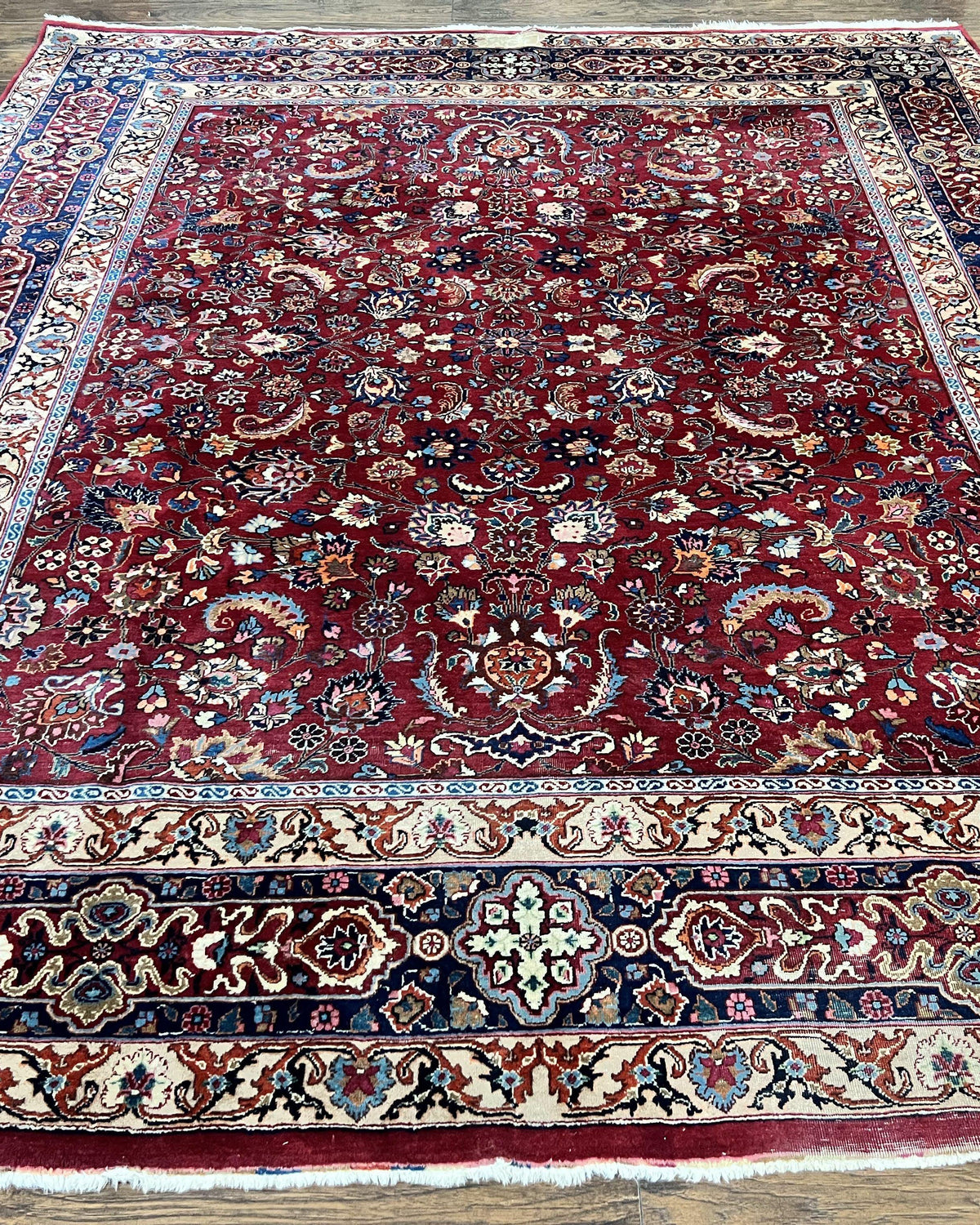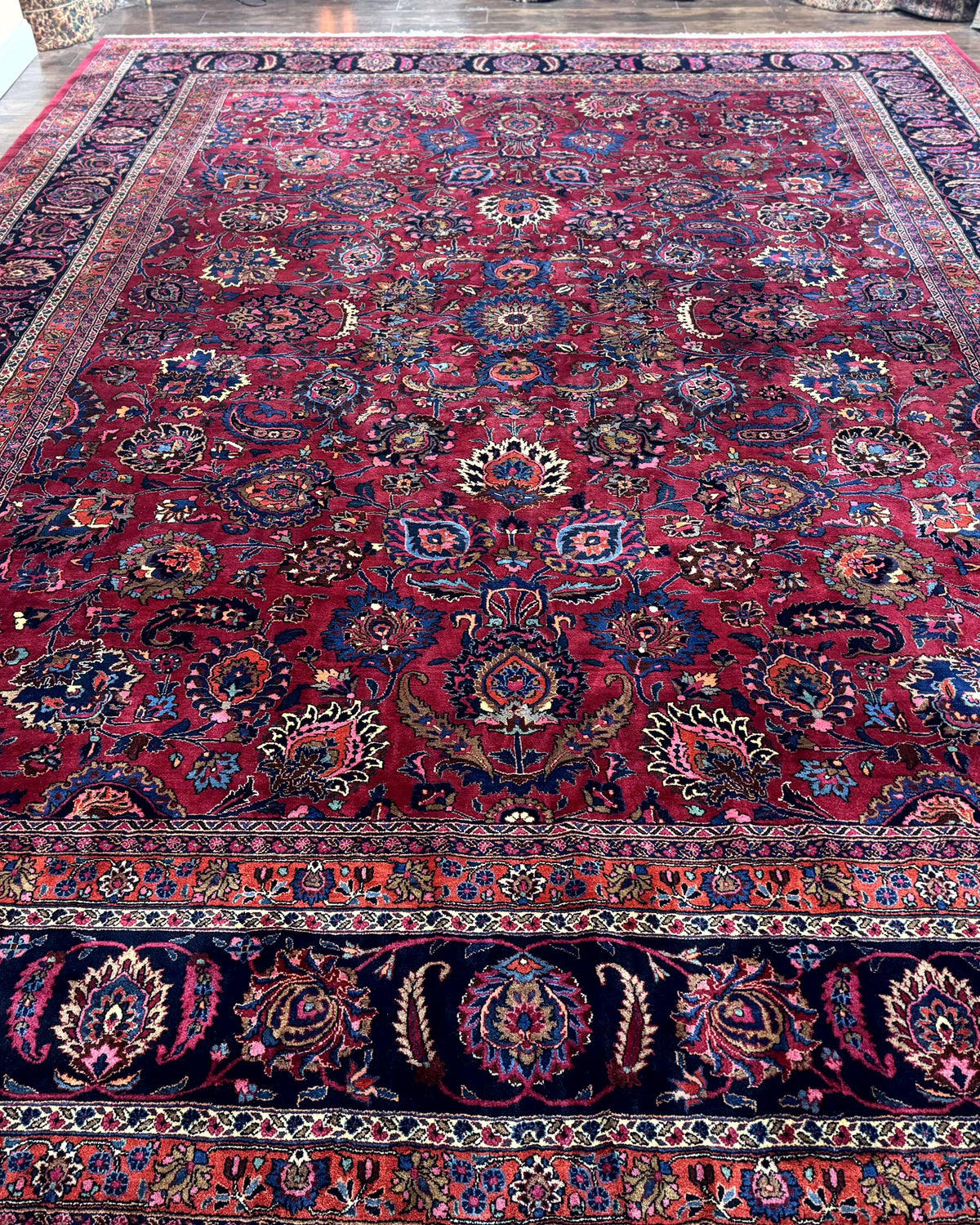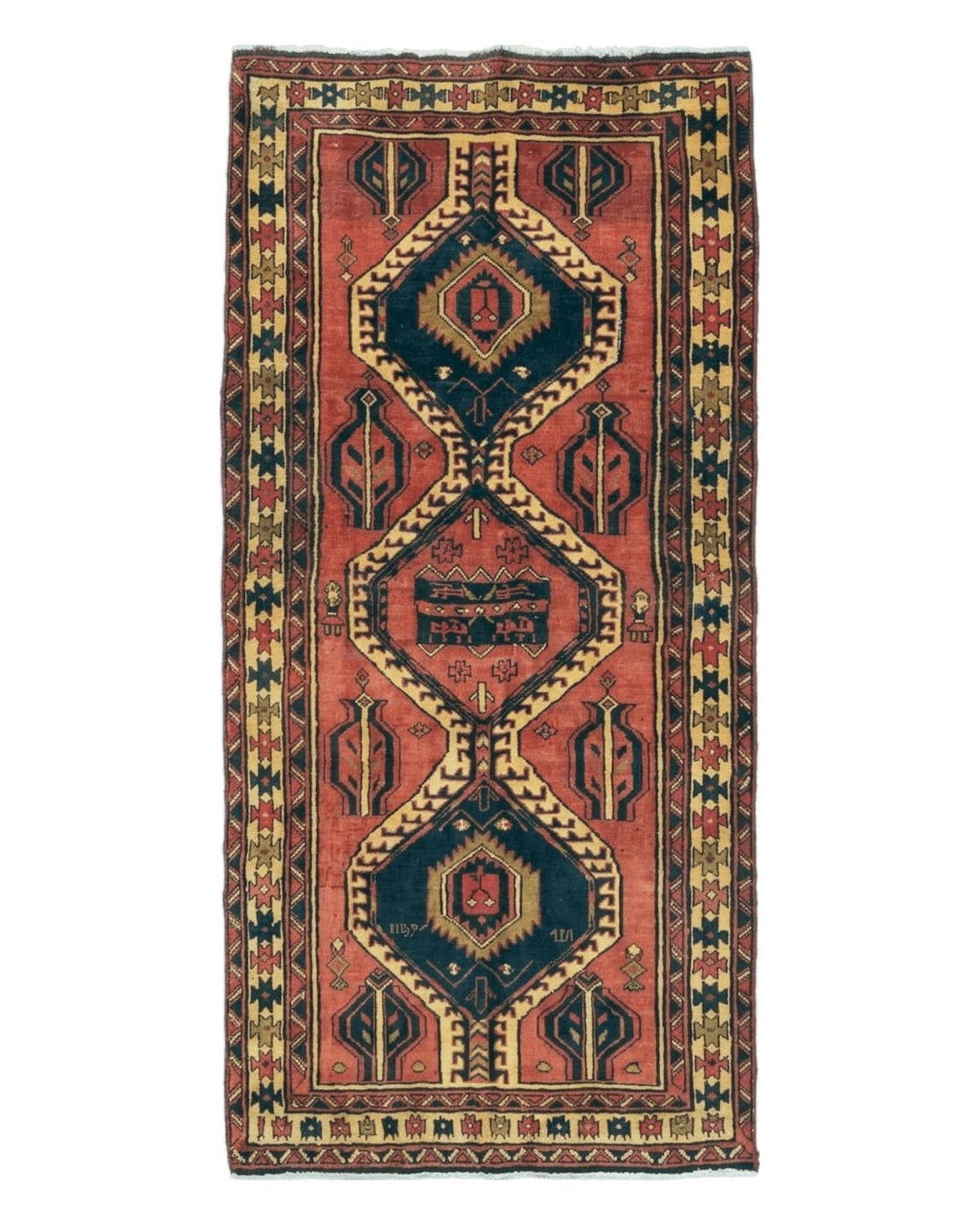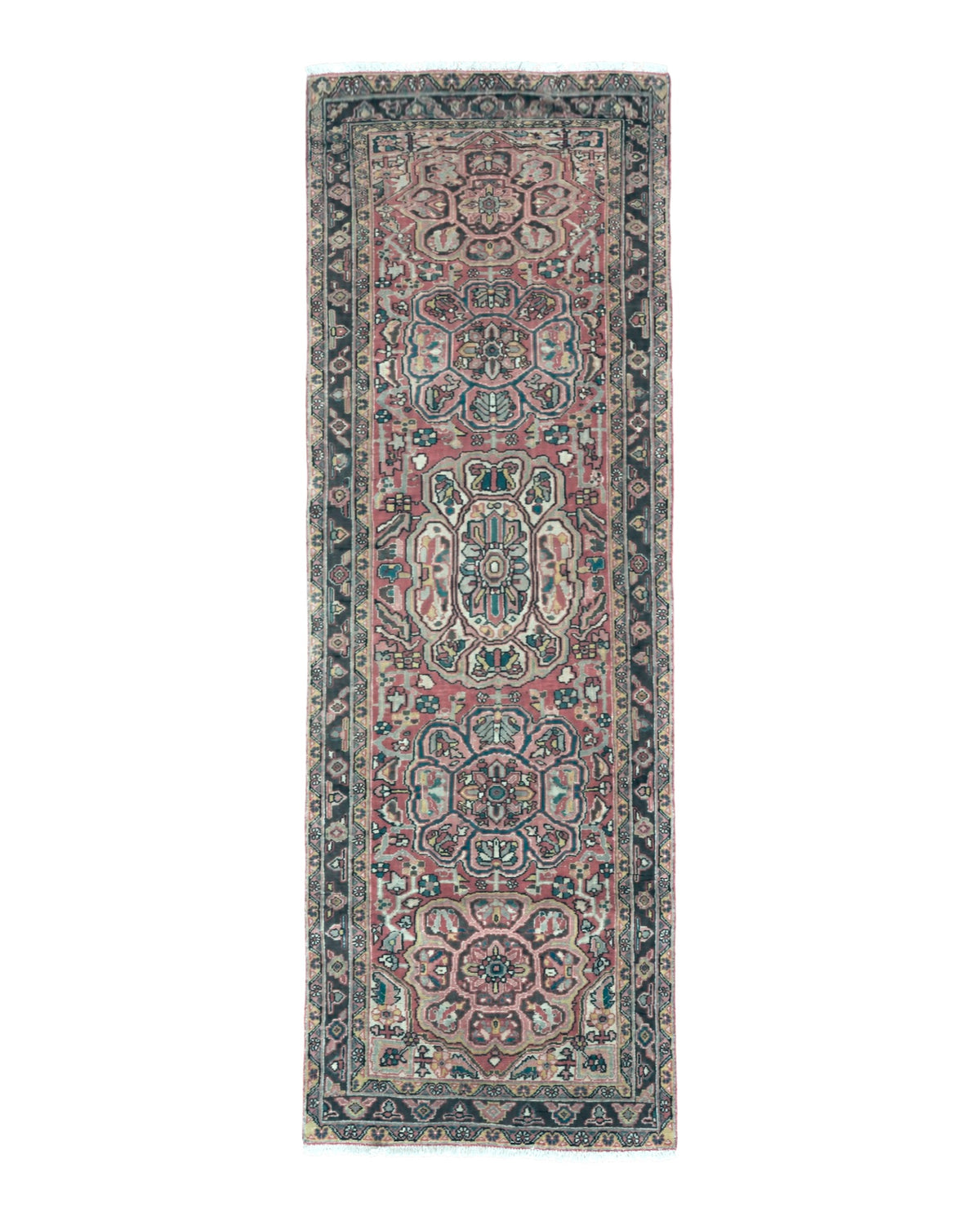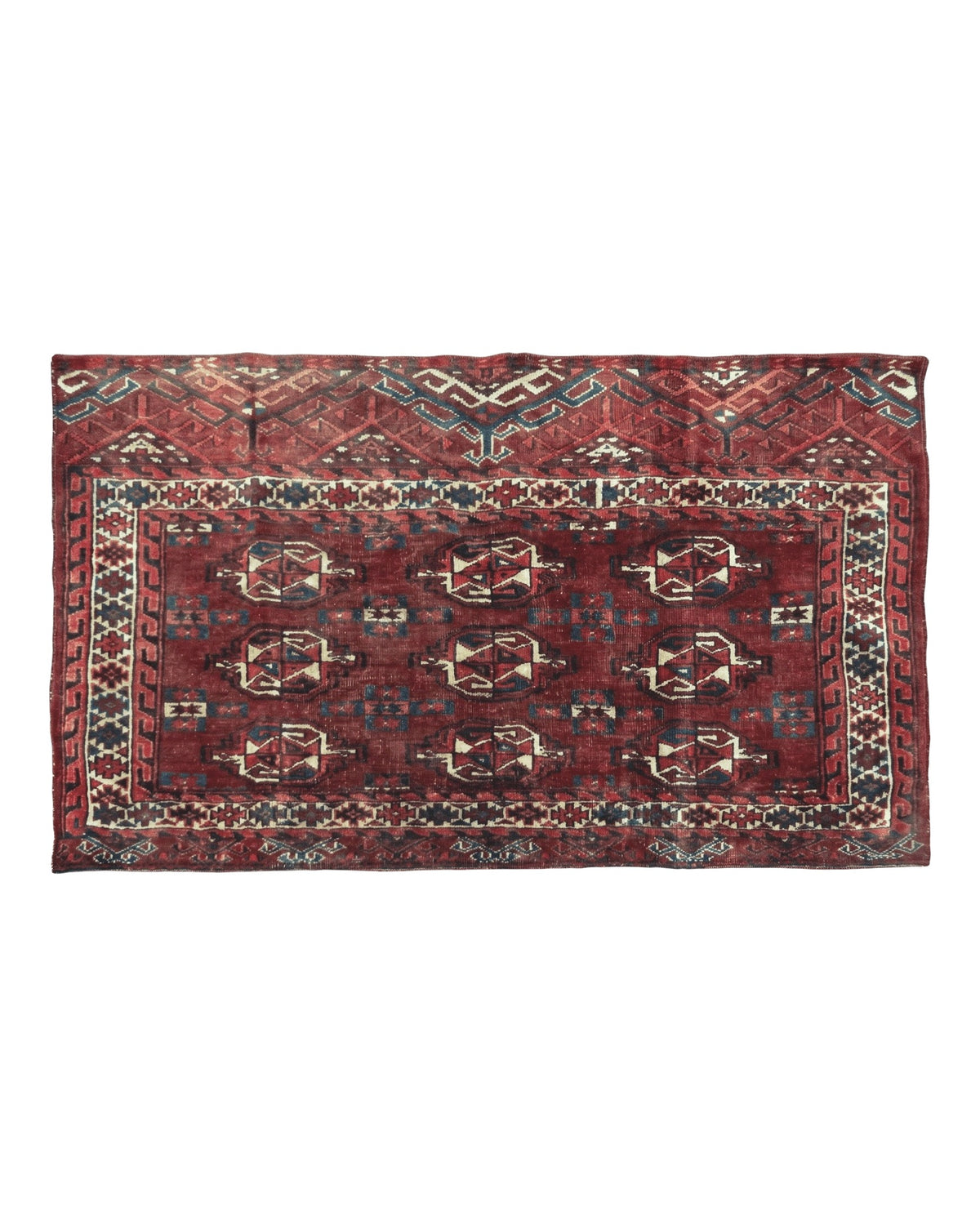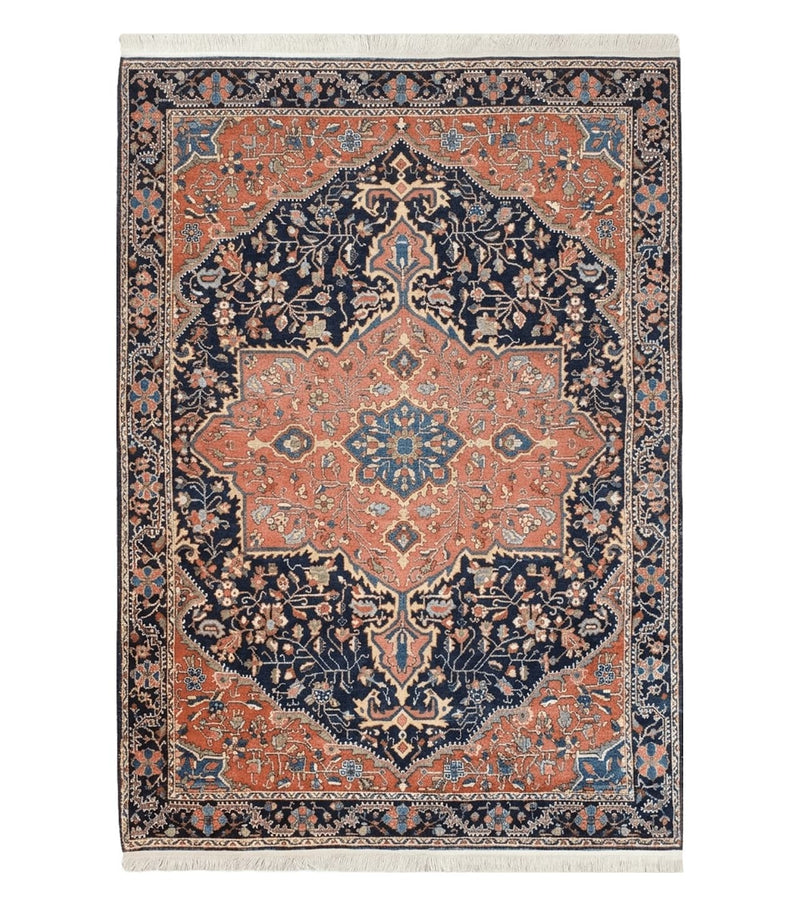


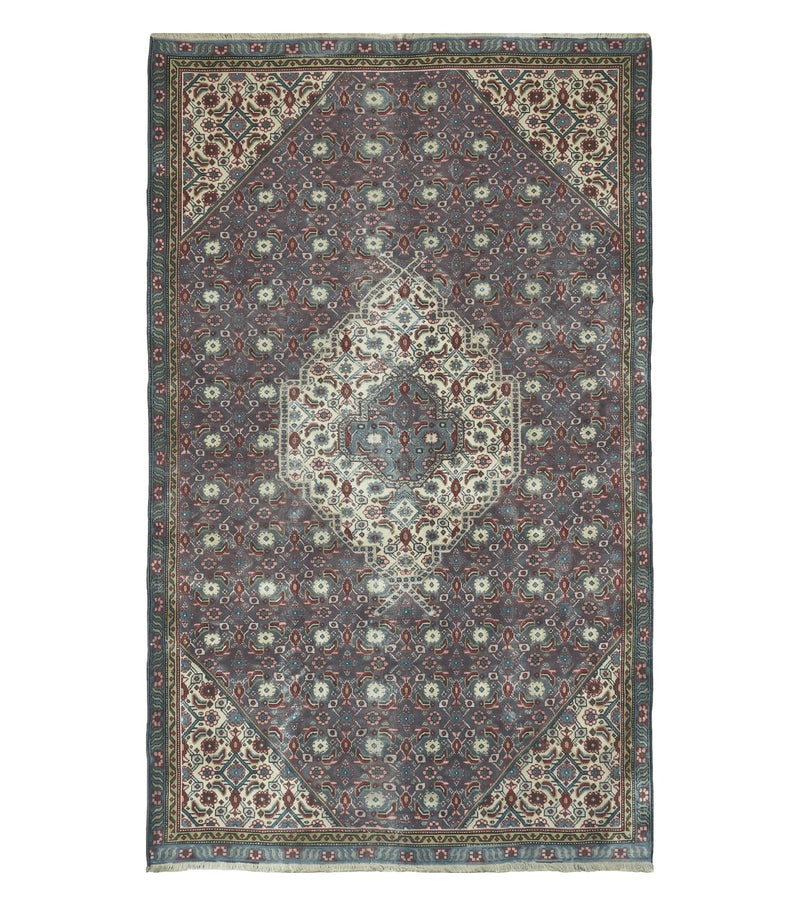


Mashad, also spelled Mashhad, is the capital of Khorasan province in north-east Iran and the country's holiest city, home to the shrine of Imam Reza. It is also a major weaving center. Mashad rugs are city rugs best known for their large, elaborate floral medallions, rich red and burgundy grounds, and soft, fairly deep pile. They are often found in generous room sizes, which makes them a favorite for large living and dining rooms.
| Origin | Mashad (Mashhad), Khorasan, north-east Iran |
|---|---|
| Tradition | City (workshop) rugs |
| Knot | Mostly asymmetric; symmetric in "Turkbaff" workshops |
| Materials | Soft Khorasan wool on a cotton foundation |
| Knotting | Medium to fine |
| Typical design | Large floral medallion with corners on a red or burgundy field |
| Sizes | Often room size and larger |
History
Khorasan has a weaving history going back many centuries, and Mashad's position on old trade routes made it a natural market for rugs. The city's modern rug industry grew from the late 19th century, and some of its workshops became famous for the quality of their rugs. Among them, the Amoghli workshop of the early 20th century produced pieces of exceptional fineness that are now highly collectible.
In the late 19th century, weavers from Tabriz in north-west Iran settled in Mashad and brought with them the symmetric (Turkish) knot. Rugs from these workshops are known as "Turkbaff", meaning "Turkish-knotted," to set them apart from the asymmetric-knotted "Farsibaff" rugs of local tradition.
The Mashad look
The classic Mashad has a large, often lobed floral medallion with pendants, set on a field of scrolling vines and flowers, with matching corners and a wide floral border. The palette is rich: deep red, burgundy and raspberry grounds with navy, ivory and gold. The designs are curvilinear and generous in scale, and the overall effect is warm and formal. All-over and vase designs are also woven.
Construction and wool
Khorasan wool is soft and lustrous, which gives Mashad rugs a pleasant, velvety pile. Many older Farsibaff Mashads have a fairly loose weave, partly because of the jufti ("double") knot often used in the region, which is tied over four warps instead of two. This speeds up weaving but halves the density, so the pile can wear faster. Turkbaff Mashads are usually more tightly woven. See Knots and Knot Density.
How to recognize a Mashad
- A large floral medallion with generous, curvilinear drawing.
- Rich red, burgundy or raspberry fields with navy borders.
- Soft, lustrous wool and a fairly deep pile.
- Large sizes, often 9 × 12 feet and up.
Nearby Khorasan towns, such as Kashmar, weave related rugs. See also Persian City Rugs and Medallion Designs.