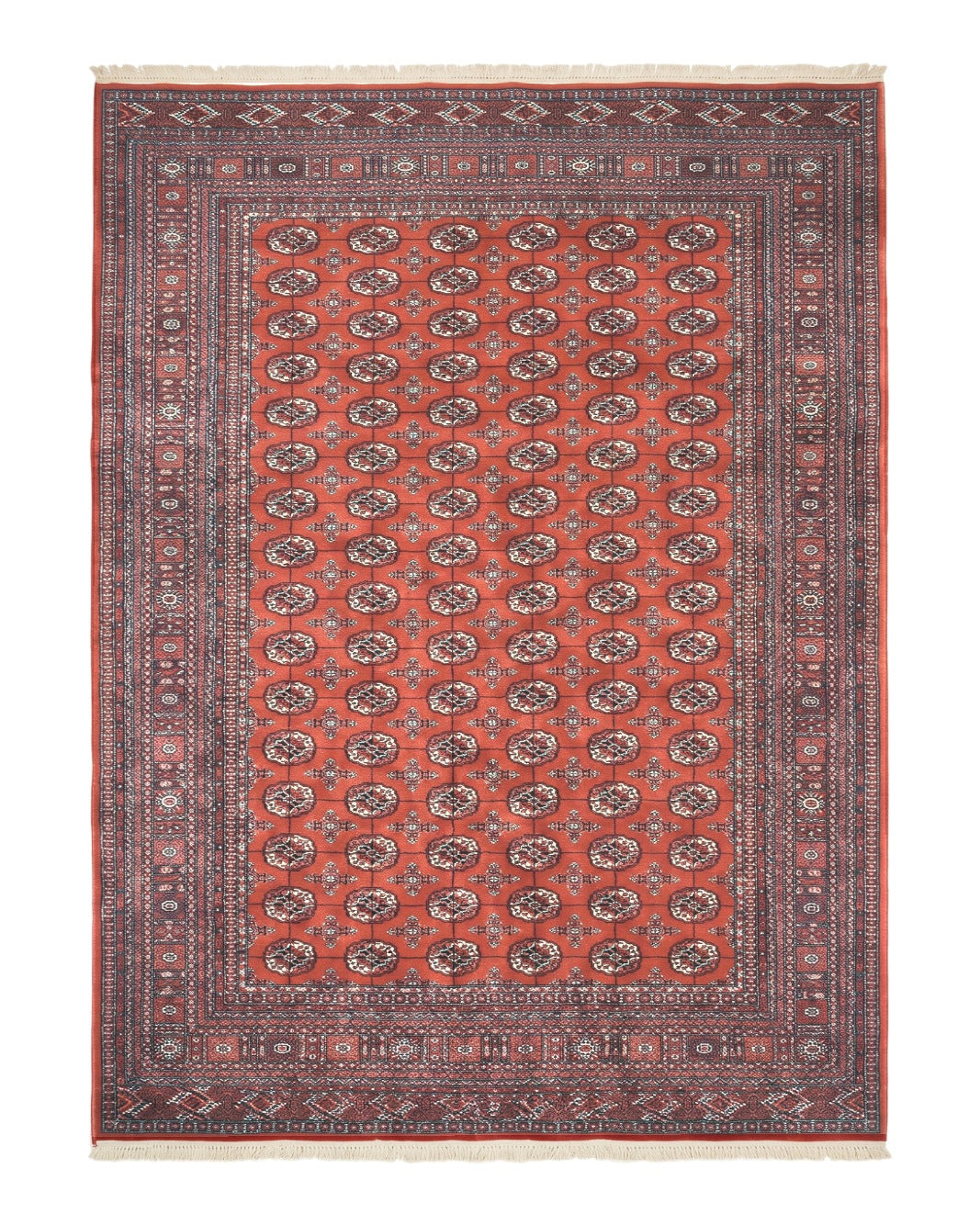
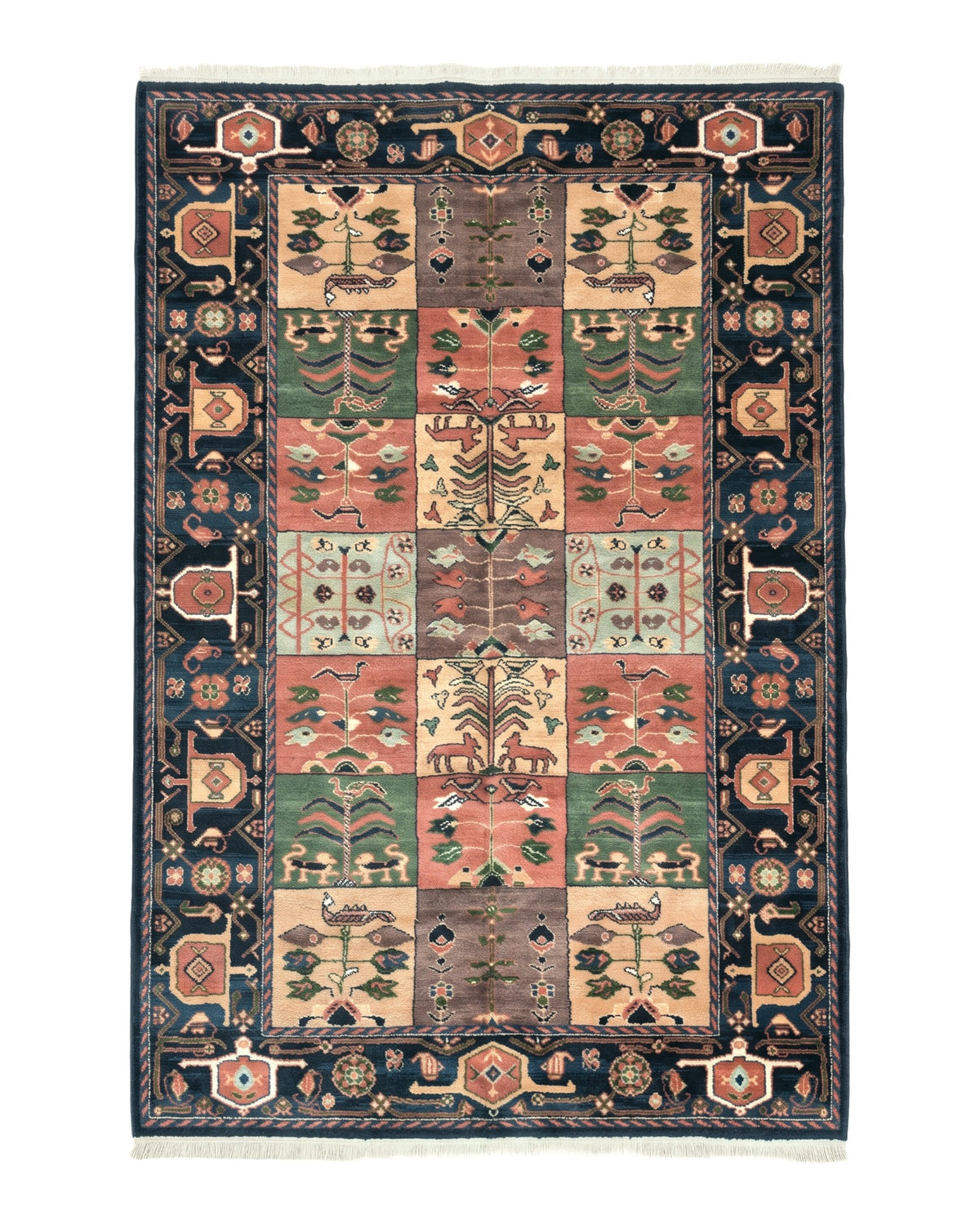
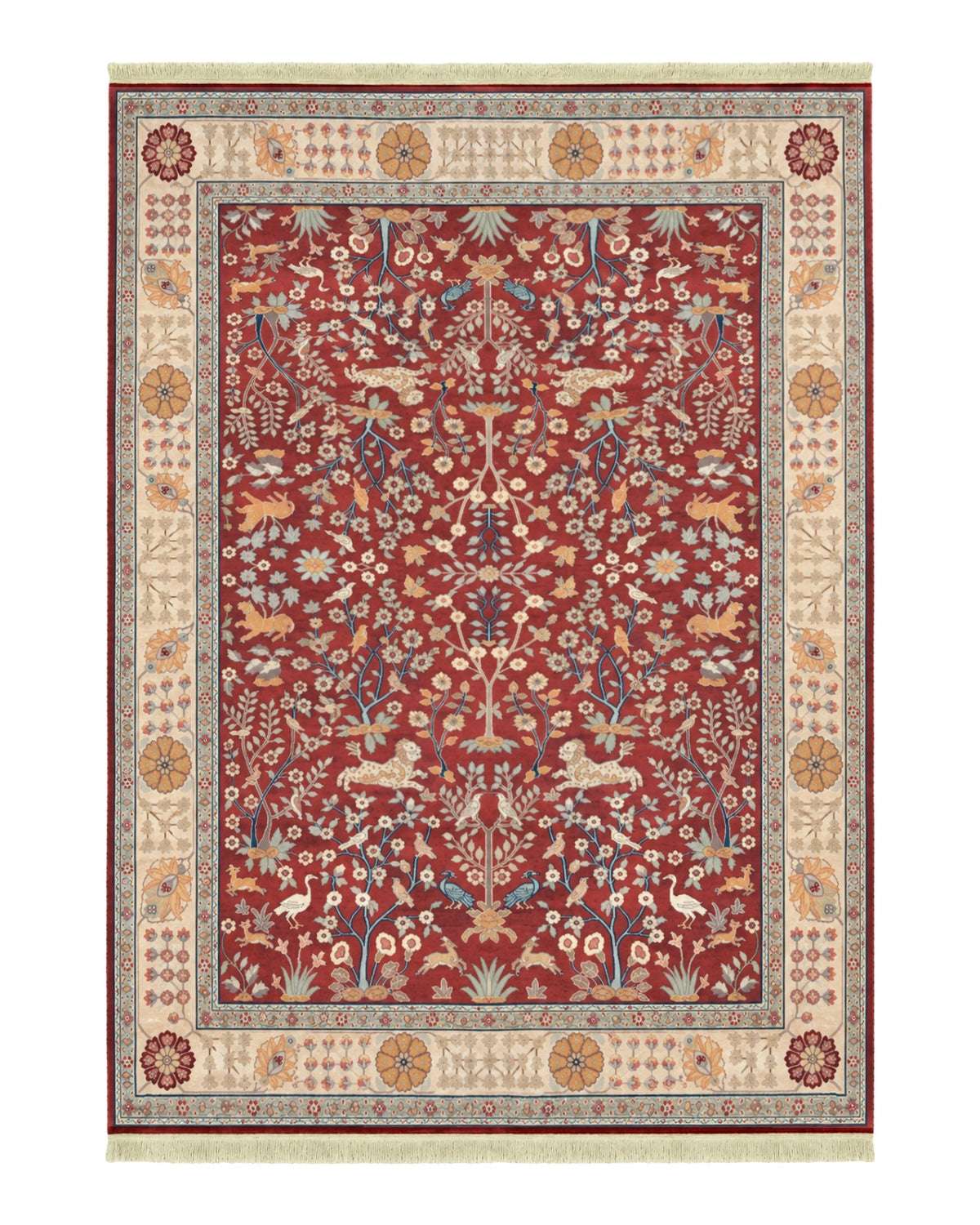
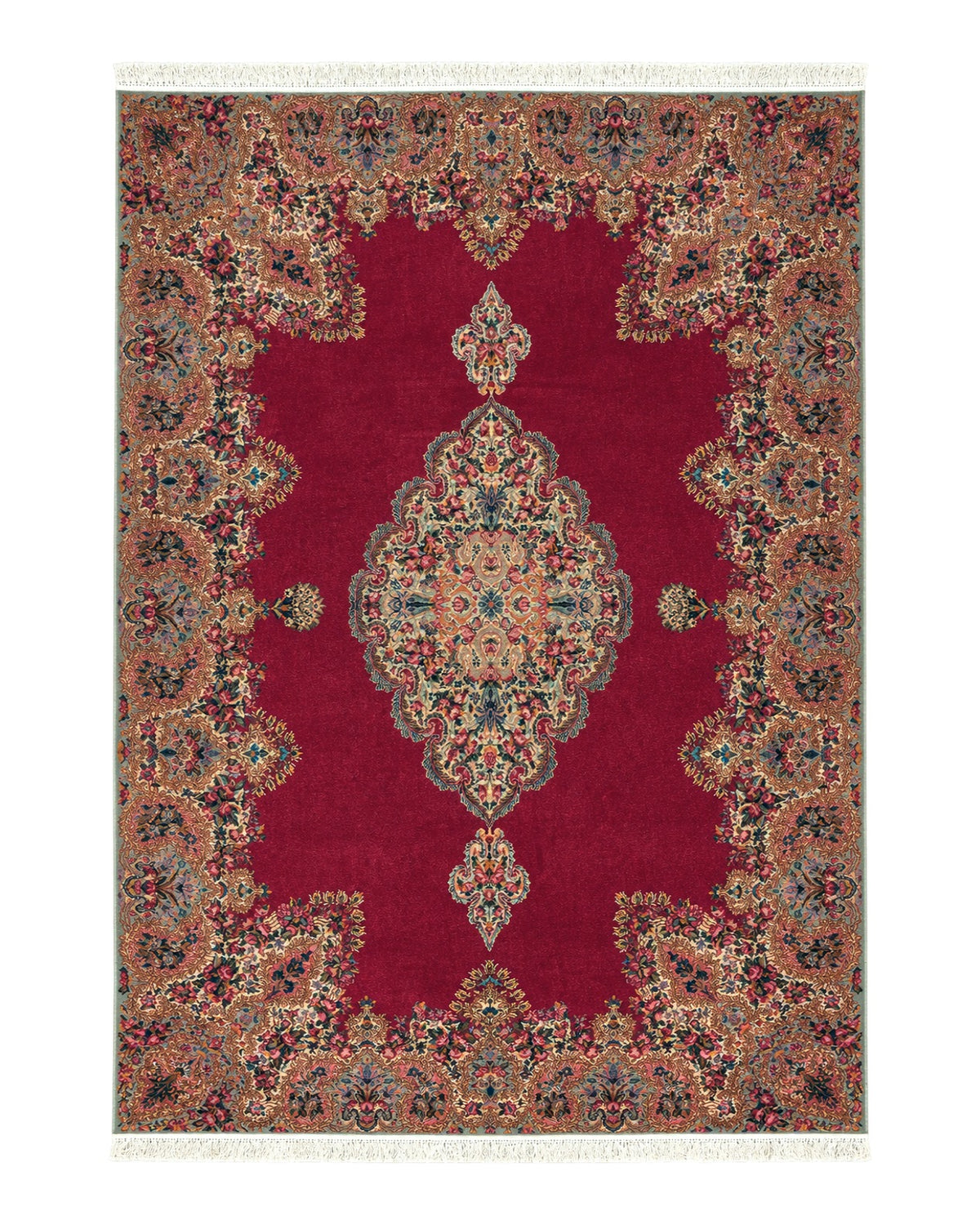
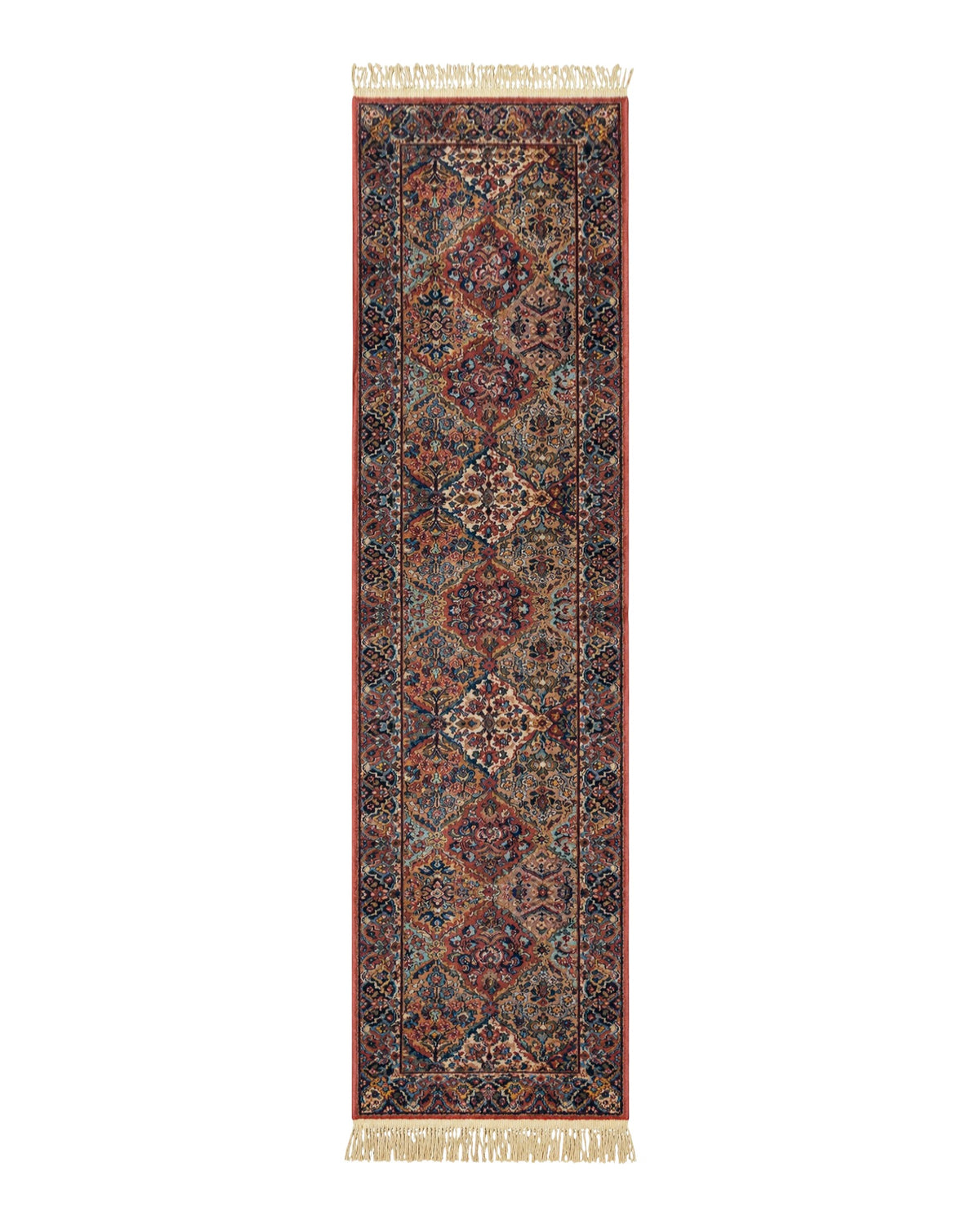
Karastans turn up in homes, estate sales and attics all over the country, often without paperwork. Fortunately they are easy to recognize once you know what to look for, and a few clues help place a rug in its era. This entry covers both: how to confirm a rug is a Karastan, and how to tell an early edition from a later one.
| Back | Design clearly visible; fine warp threads run lengthwise |
|---|---|
| Fringe | Machine-made, sewn onto the ends |
| Sides | Overcast over a strip of colored cloth |
| Label | Karastan name and pattern number, often a size |
| Trade usage | 1950s and earlier: "antique Karastan"; later: "vintage" |
Is it a Karastan?
- Turn it over. The design shows clearly on the back, almost as on a hand-knotted rug, but the back is perfectly regular, with fine warp threads running the length of the rug and a slightly ribbed texture.
- Check the fringe. Karastan fringe is made separately and sewn on; you can usually see the line of stitching where it joins the rug.
- Check the sides. They are overcast with yarn over a narrow strip of colored cloth.
- Feel the pile. It is dense, even and smooth, with the soft sheen of worsted wool.
- Find the label. Most Karastans have a cloth label on the back, usually near one end, with the Karastan name and a pattern number.
If the label is missing, the design itself is often enough: many Karastan patterns, such as the #717 Multicolor Panel Kirman, are instantly recognizable to anyone who knows them.
Reading the label
The pattern number tells you the collection and the design, for example 700/717 for the Multicolor Panel Kirman of the Original Collection. Labels may also give the size, the fiber and the company name. See Karastan Pattern Numbers Explained.
Dating a Karastan
Many Karastan designs were made for decades, so the pattern number alone does not date a rug. A #717 could have been woven in the 1940s or in the 2000s. Instead, combine several clues:
- The company name on the label. A label that names Mohawk dates from 1993 or later, when Mohawk Industries bought Karastan. Earlier labels may name Fieldcrest or the Karastan Rug Mills.
- The collection. A rug from the Original Collection may be of any age, but a rug from a later collection, such as Antique Legends or Samovar Teawash, cannot be older than that collection.
- Discontinued designs. Some 700 Series patterns were dropped long ago, so a rug in one of those designs is likely to be older.
- Patina. Early rugs usually show the gentle softening of color and luster that comes with decades of use and light.
- The fringe and finish. Original fringe, wear at the ends and the condition of the side finish all reflect a rug's age and history.
Antique and vintage Karastans
For handmade rugs, "antique" usually means 100 years or more. Karastans are judged on their own terms: in the trade, early editions woven in the 1950s or before are commonly called antique Karastans, and later rugs, such as those from the 1980s, are called vintage. The early editions are often the most sought after. See Antique, Semi-Antique and Vintage Rugs.