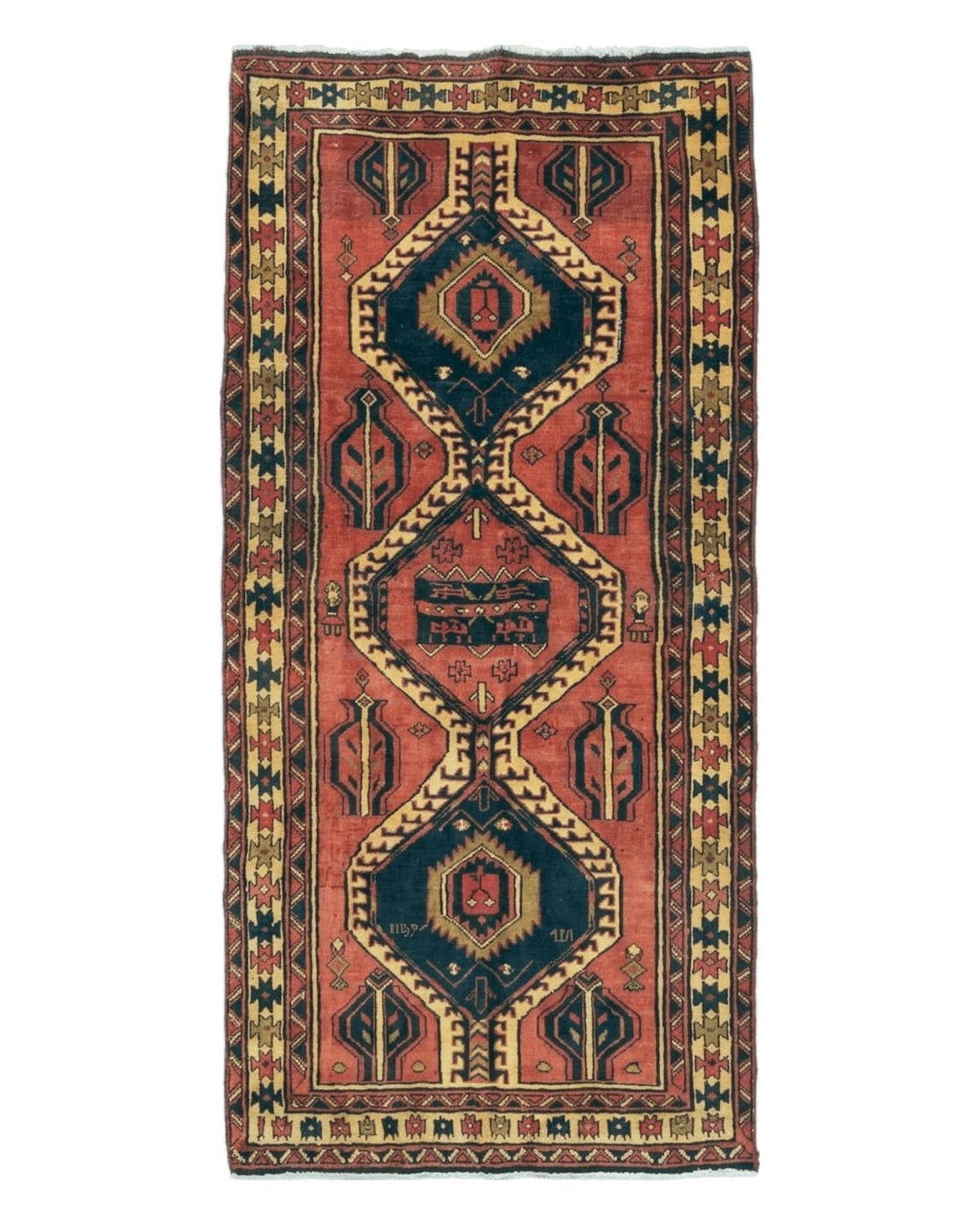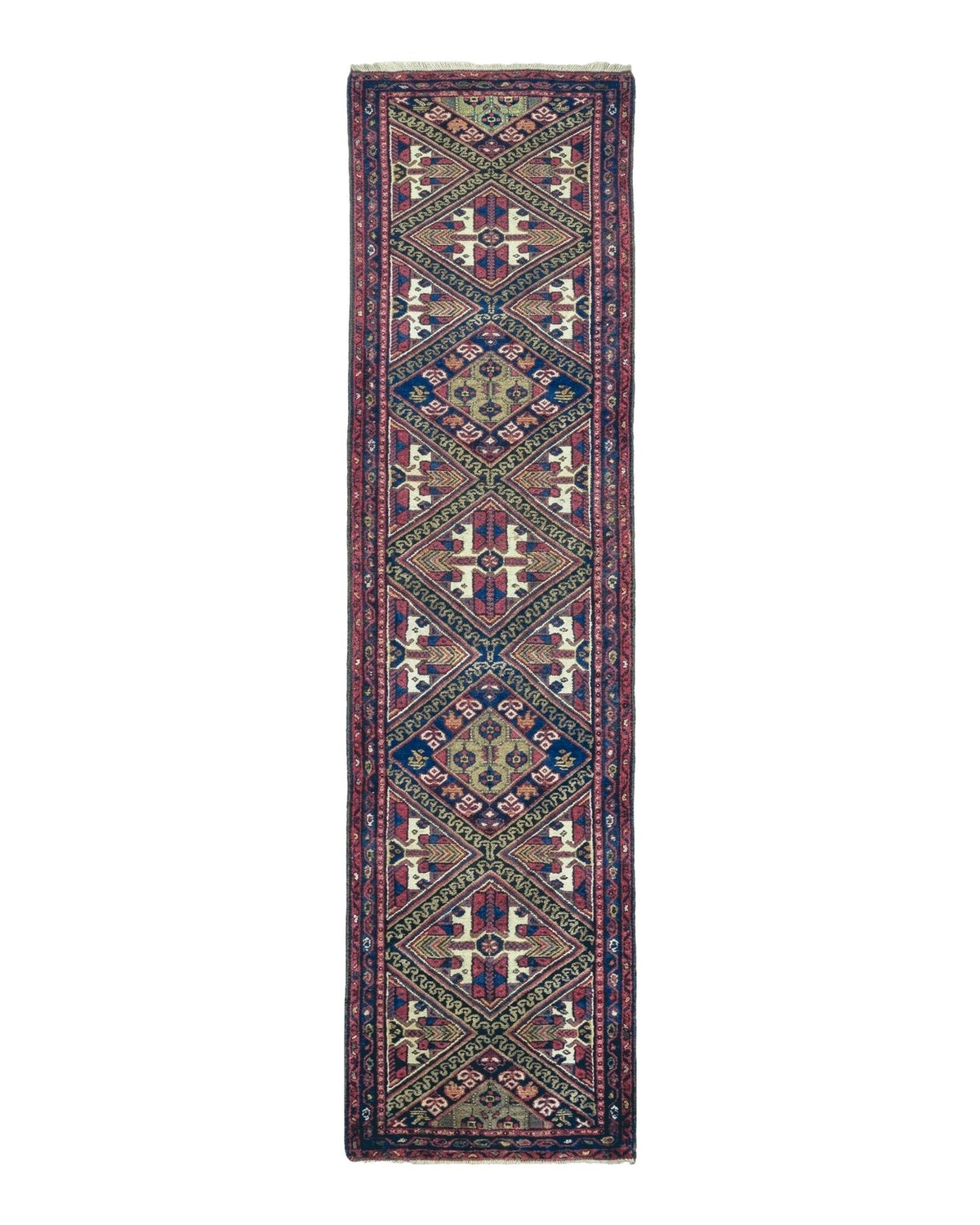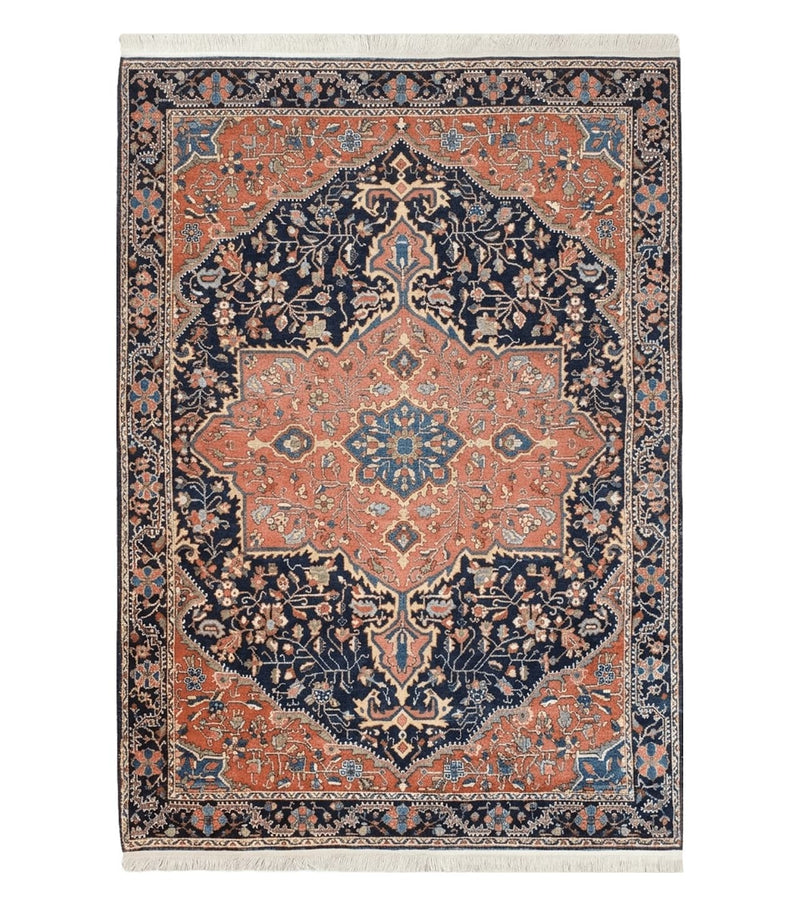


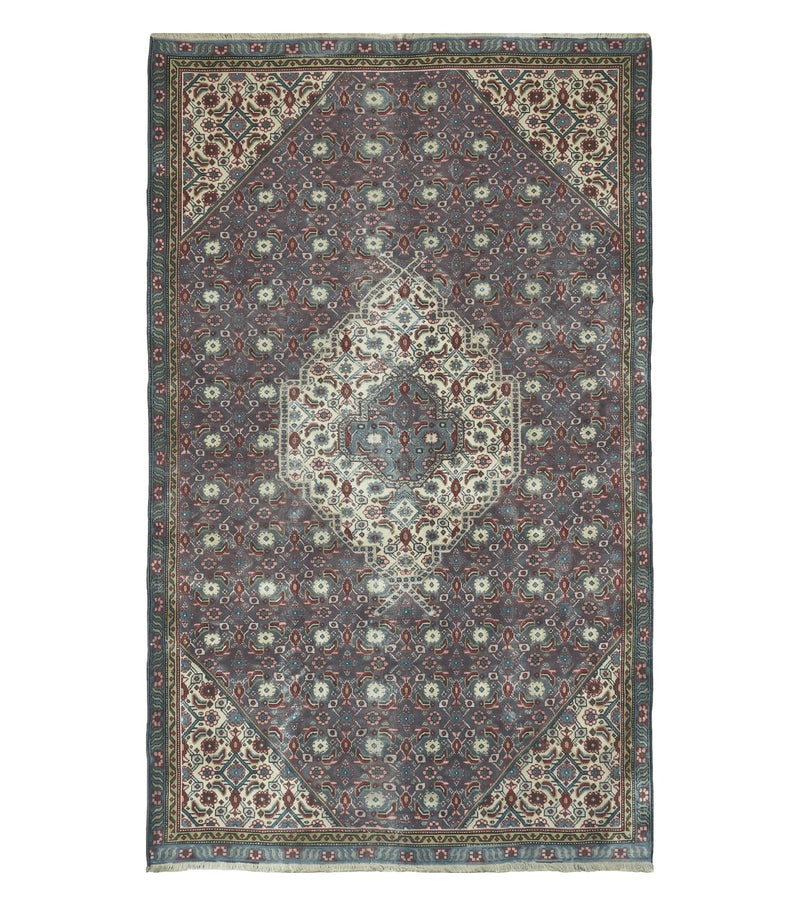


Malayer is a town in western Iran, between Hamadan and Arak, and the market for a group of weaving villages around it. Malayer rugs sit between two great traditions: they share the bold, geometric designs and village character of the Hamadan region to the north, and the finer knotting of the Arak region to the east. Antique Malayers are especially admired for their rich colors and fine weave, and many collectors consider them among the best village rugs of western Iran.
| Origin | Villages around Malayer, between Hamadan and Arak, western Iran |
|---|---|
| Tradition | Village rugs |
| Knot | Symmetric, sometimes asymmetric |
| Construction | Single or double weft, depending on the village |
| Materials | Fine wool pile on a cotton foundation |
| Typical designs | Herati, boteh, geometric medallions, all-over floral patterns |
| Best known | Antique Malayers and Mishin Malayers |
Between Hamadan and Arak
Malayer's position shows in its rugs. Some Malayer villages weave like their Hamadan neighbors, with a single weft and bold geometric designs; others weave like the Arak villages, with two wefts and more curvilinear floral work. What sets the best Malayers apart is their fine knotting and lustrous wool, which give a crisper design and a smoother surface than most Hamadan village rugs. The village of Mishin is particularly known for fine rugs, and "Mishin Malayer" is used in the trade for some of the best pieces. See Hamadan Rugs and Sarouk Rugs.
Designs and colors
- The Herati pattern, often in a bold, enlarged scale on red or navy.
- The boteh, in rows across the field. See The Boteh (Paisley) Motif.
- Geometric medallions with corners, sometimes on a camel or ivory field.
- All-over floral and lattice designs, in the manner of the Arak region.
Colors are rich and deep: madder red, navy, ivory, camel and green, often with attractive abrash in older pieces. Runners and long rugs are common, as well as room sizes.
How to recognize a Malayer
- Village designs with finer knotting than most Hamadans.
- Lustrous wool and a fairly short, even pile.
- Single or double weft, depending on the village.
- Rich red and navy with ivory, camel and green.
See also Persian Village Rugs.