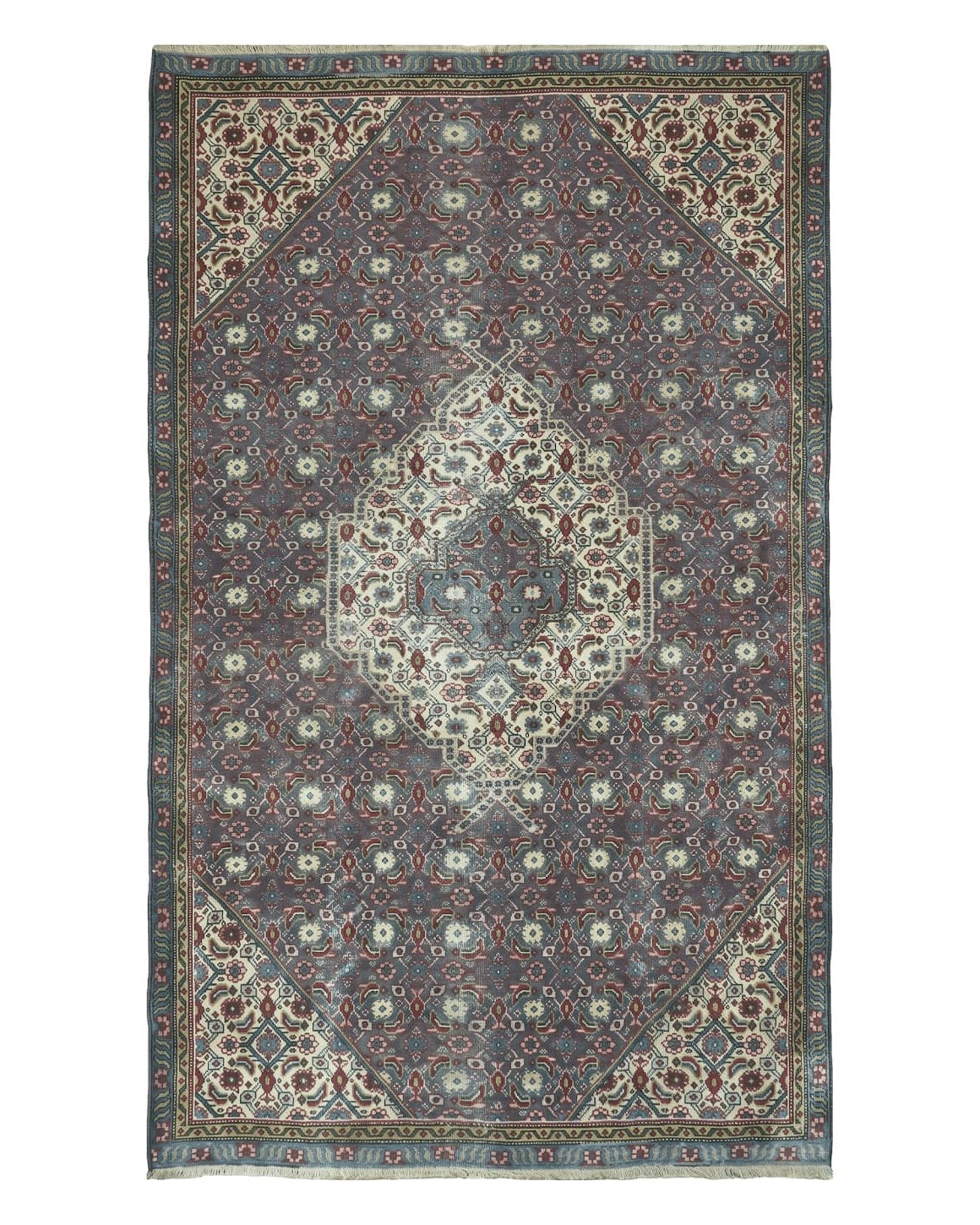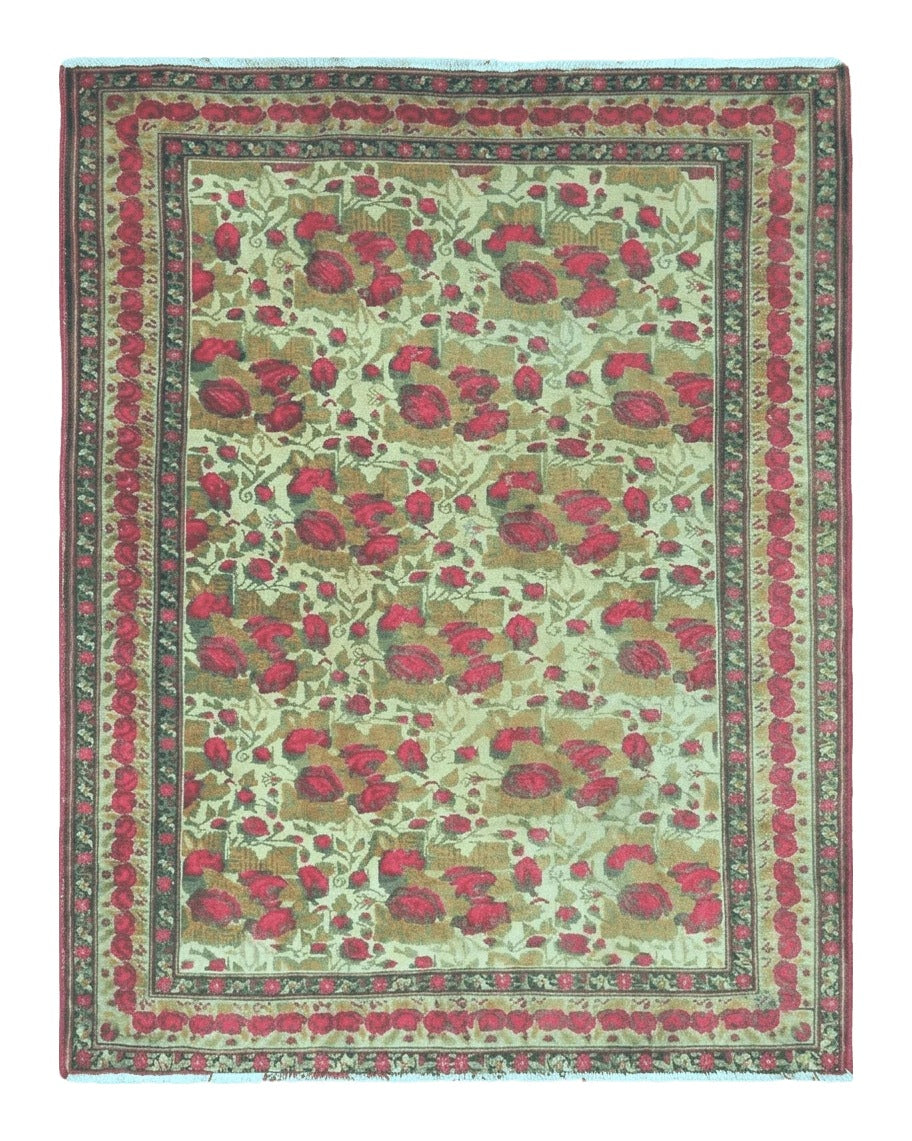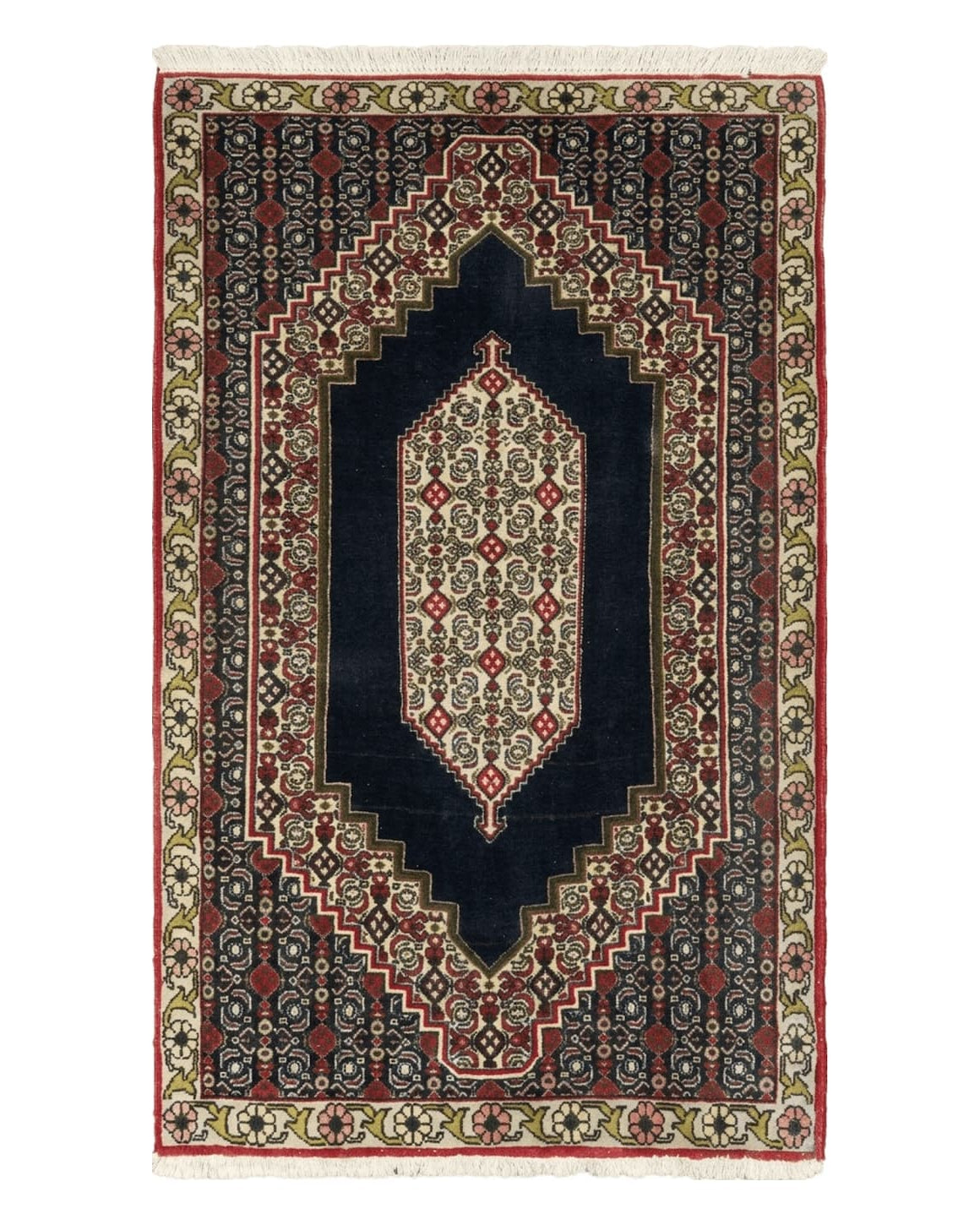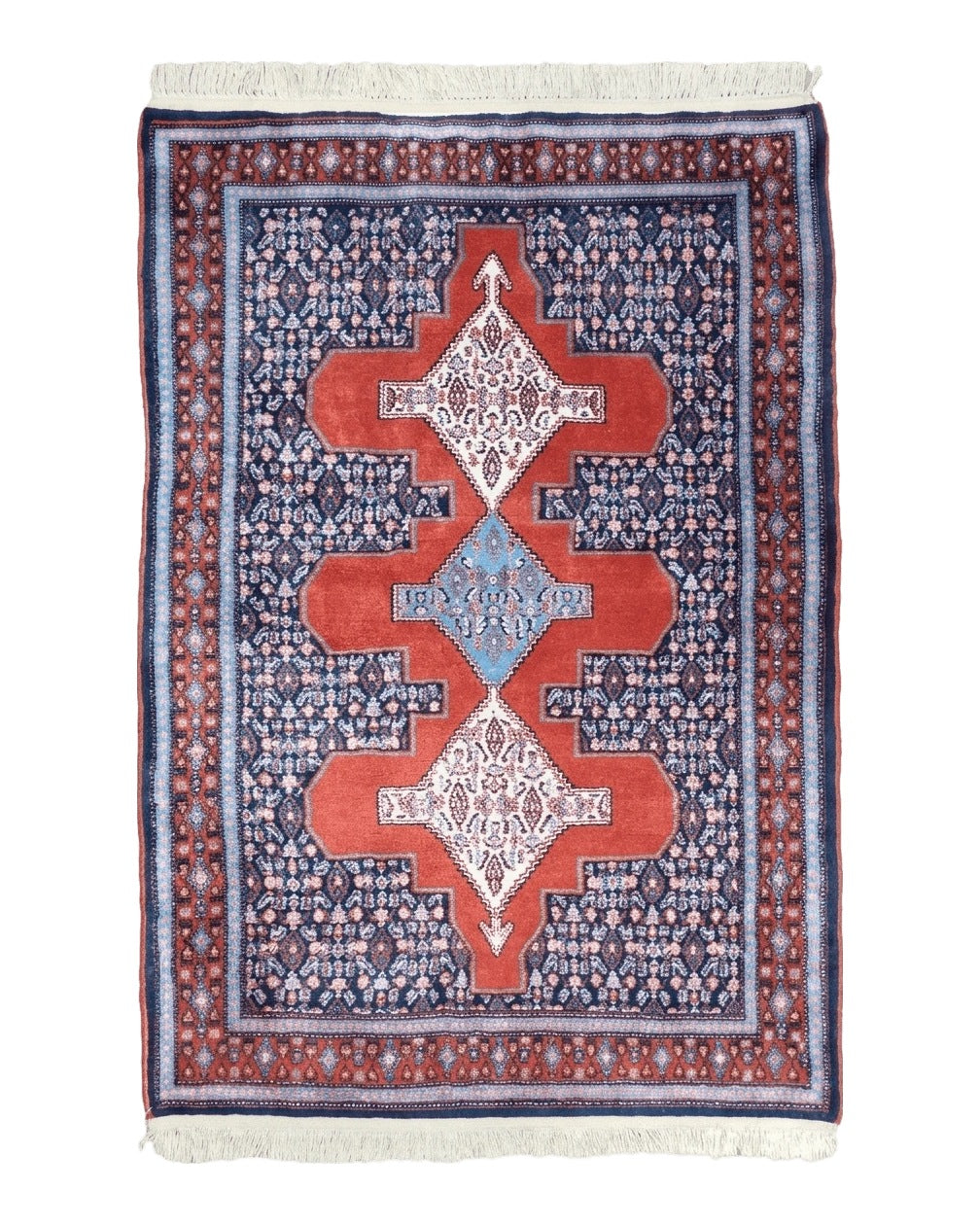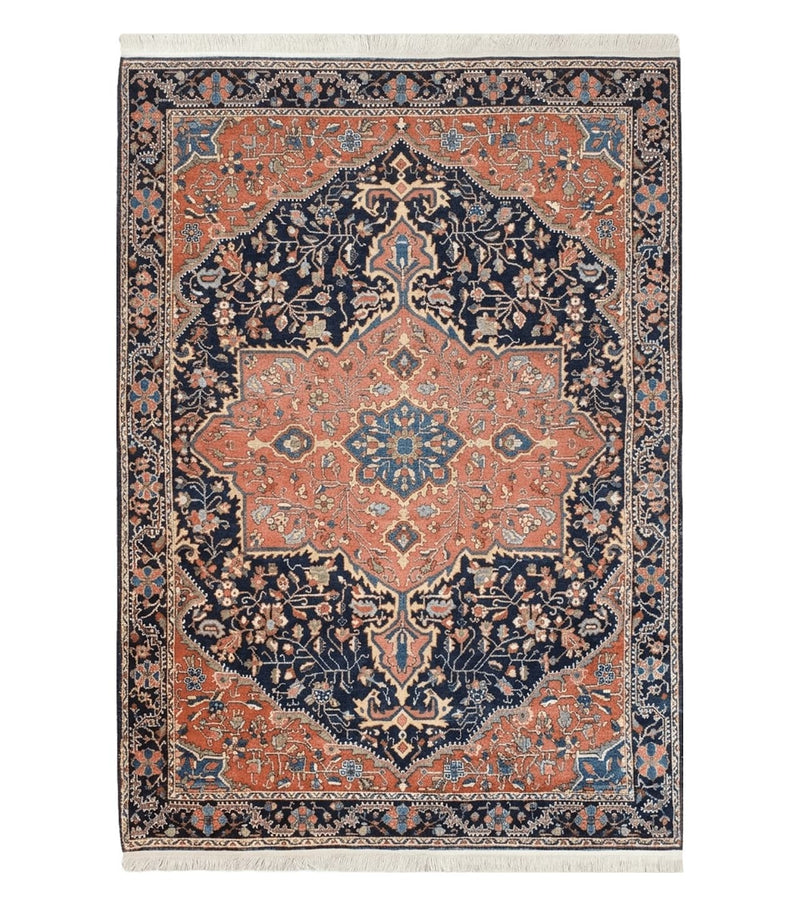


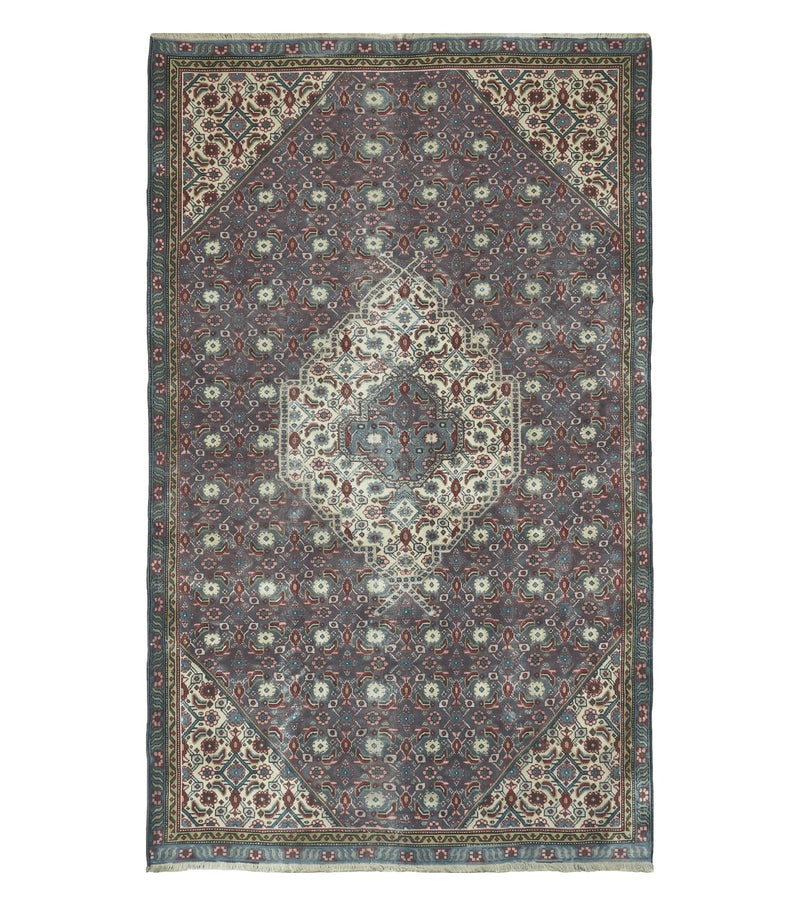


Bidjar (also Bijar) is a town in the Kurdistan province of western Iran, and its rugs have a reputation unlike any other: they are called the "iron rugs of Persia." Bidjar weavers pack their knots and wefts so tightly that the finished rug is extraordinarily dense, heavy and stiff. A good Bidjar is almost indestructible, and many antique pieces have survived a century or more of hard use with little wear.
| Origin | Bidjar and surrounding Kurdish and Afshar villages, western Iran |
|---|---|
| Tradition | Village rugs, with some workshop production |
| Knot | Symmetric (Turkish) |
| Materials | Thick wool pile on a wool or cotton foundation |
| Construction | Wet-packed, extremely dense and heavy |
| Typical designs | Medallions, Herati, Garrus, rose (Golfarang) and all-over designs |
| Known as | The "iron rugs of Persia" |
How Bidjars are made so dense
The secret is in the weaving. Bidjar weavers use a thick weft between rows of knots, and they keep the wool damp while weaving. After each row they beat the knots and wefts down hard with a heavy iron comb, often also using a pointed metal tool between the warps to pack each knot still tighter. As the wool dries, it shrinks and locks the structure solid. The result is a rug so stiff that it should never be folded, only rolled, because folding can crack the foundation.
Designs
Bidjar weavers use a wide range of designs, often drawn with more refinement than in most village rugs:
- Medallion designs, with a central medallion, often a stepped or lobed diamond, and corner pieces on an open or patterned field.
- The Herati pattern, worked in a bold, large scale. See All-Over Designs.
- The Garrus design, a bold all-over arabesque of split-palmette leaves, named after the Garrus district around Bidjar.
- Golfarang ("foreign flower") designs, with bouquets of roses influenced by European textiles.
Colors are deep and saturated: rich red, deep blue, ivory, camel and green.
Who weaves Bidjars
Bidjars are woven by Kurdish and Afshar villagers in the area around the town. Some finer rugs were made in town workshops in the late 19th and early 20th centuries; these "town Bidjars" are especially prized. See Kurdish Rugs.
How to recognize a Bidjar
- Extreme weight and stiffness: a Bidjar feels heavier than any other rug of the same size.
- A back like a board, with thick wefts and tightly packed knots.
- Symmetric knots and a firm, medium-to-high pile.
- Deep, saturated colors and bold, well-drawn designs.
Bidjar and Senneh
Bidjar and Senneh are both Kurdish weaving towns, but their rugs are opposites. Senneh rugs are thin, supple and very finely knotted; Bidjars are thick, heavy and stiff. Both are among the best rugs of western Iran.
See also Persian Village Rugs.