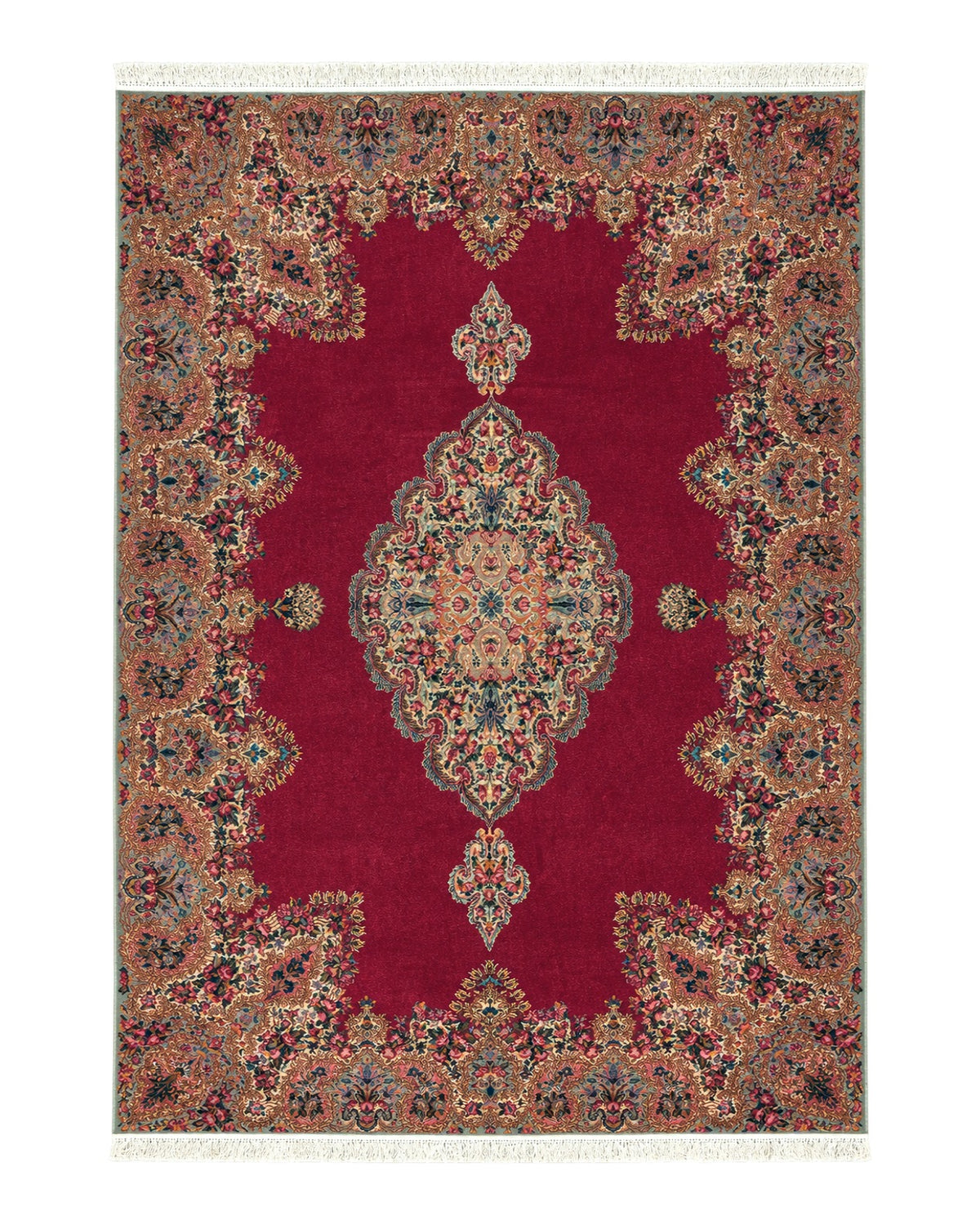
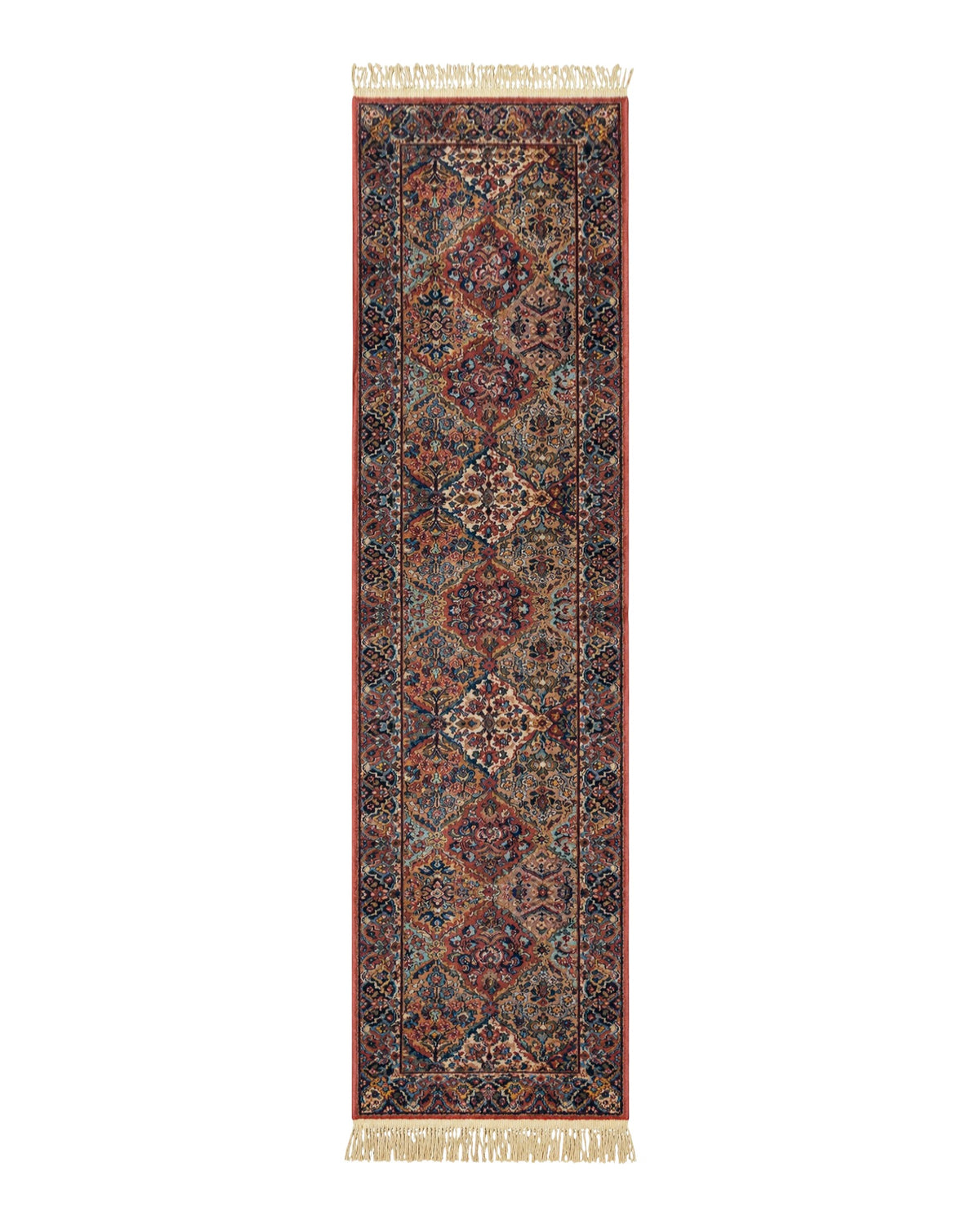
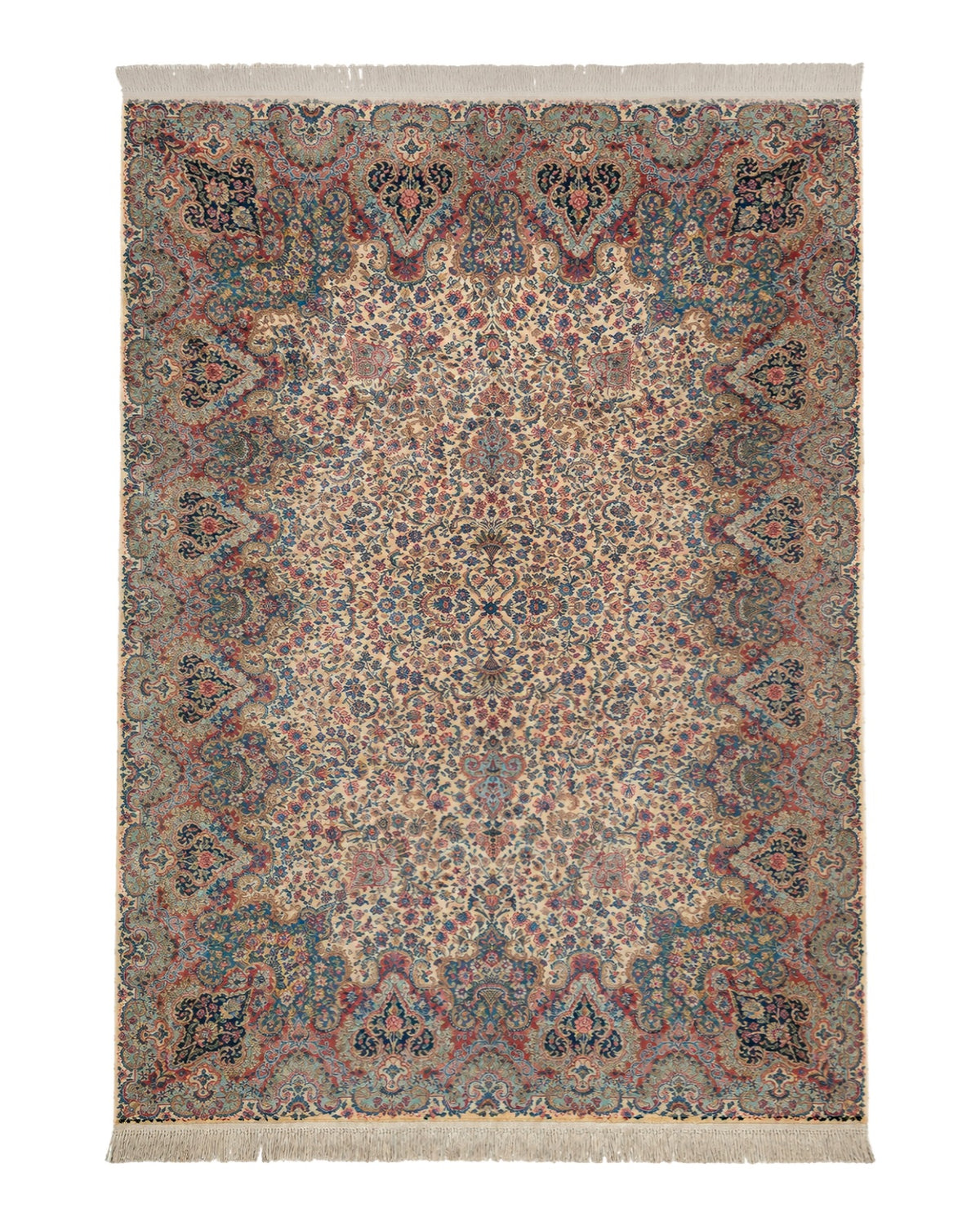
"Serapi" is a name collectors give to the finest older rugs of the Heriz region of northwest Iran: spacious geometric designs, soft colors and generous open fields. Karastan made several Serapi designs for its Original Collection, from the bold #736 Medallion Serapi to the rare #743 Ivory Serapi. Several are now discontinued and hard to find.
| Collection | Original Collection (700 Series) |
|---|---|
| Designs | #729 Serapi, #736 Medallion Serapi, #743 Ivory Serapi, #744 Antique Serapi |
| Inspired by | Antique Serapi rugs of the Heriz region |
| Style | Geometric medallion designs with open fields |
#736 Medallion Serapi
The #736 is the most often seen of the Karastan Serapis. As its name says, it is built around a central medallion, drawn in the angular style of the Heriz region, and it was made in a full range of sizes from 3' x 5' to room size.
#729 Serapi
The #729 is a separate Serapi design in the series, and examples are seldom seen today. Together with the #736, it shows how Karastan interpreted the same rug type in more than one way.
#743 Ivory Serapi and #744 Antique Serapi
The #743 Ivory Serapi sets the Serapi style on a light ground, and the #744 Antique Serapi recalls the mellow colors of an old rug. Both are rare discontinued patterns and are prized by collectors of the 700 Series.
The Persian Serapi connection
In the Heriz region, the name Serapi is usually given to older, finer rugs, many from the 19th century, with especially spacious drawing, soft natural dyes and large areas of open field. They are among the most sought-after village rugs today. Karastan's Serapi designs capture that open, geometric look. See Heriz Rugs and Medallion Designs.