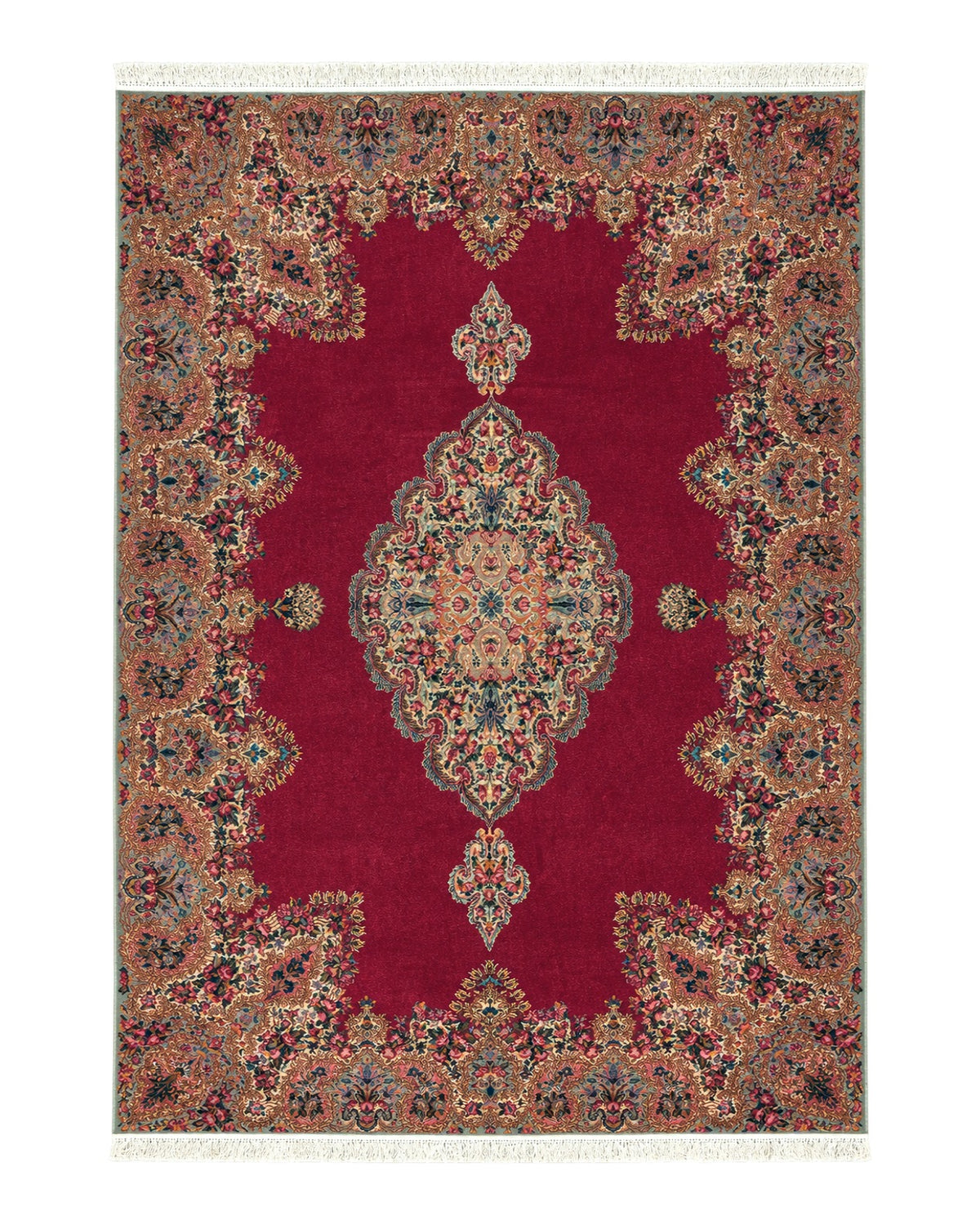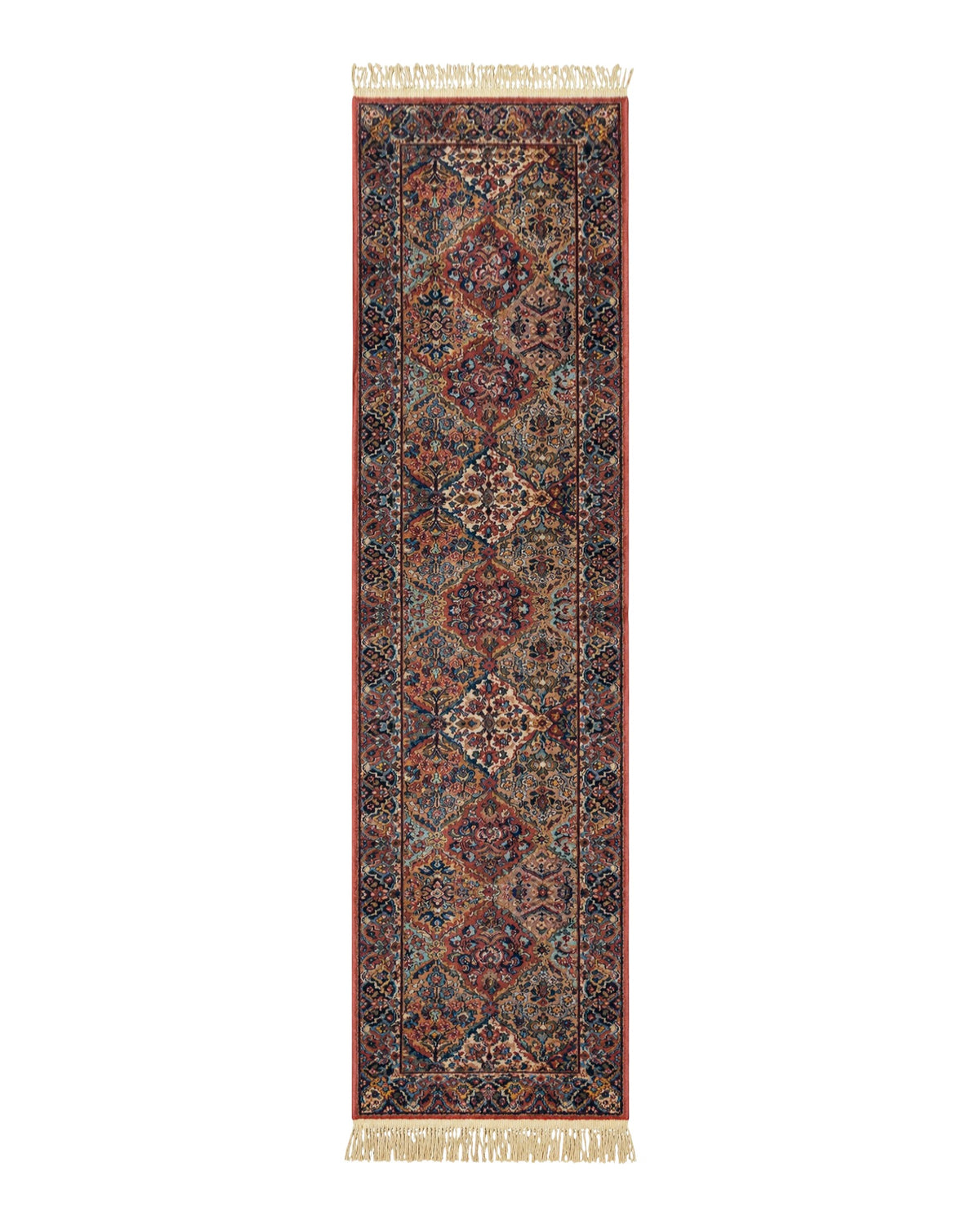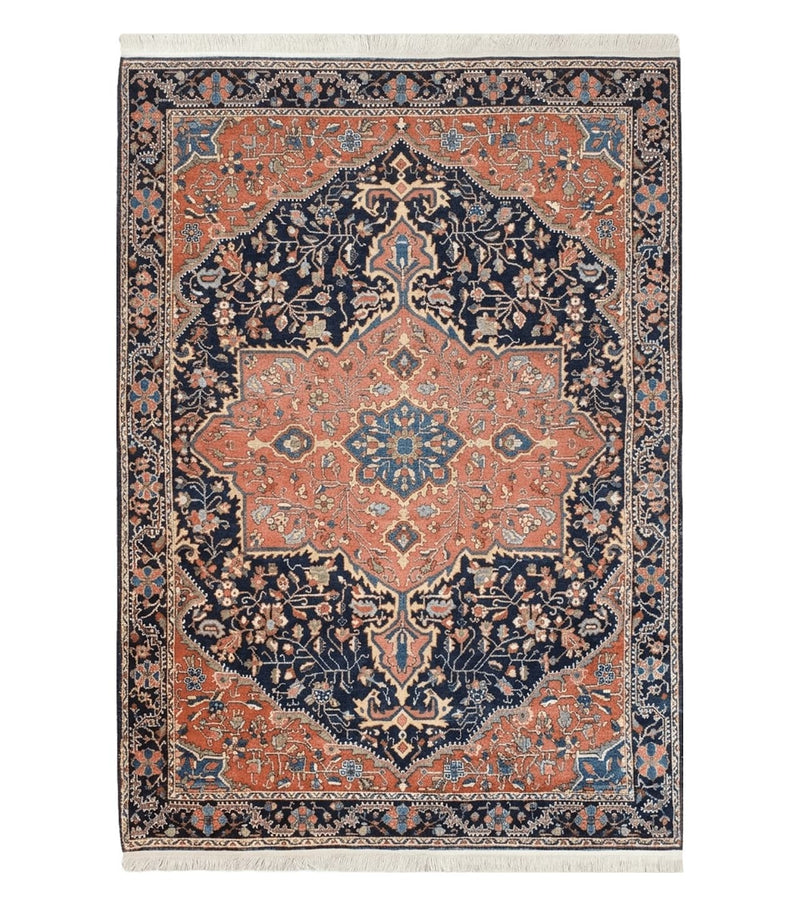


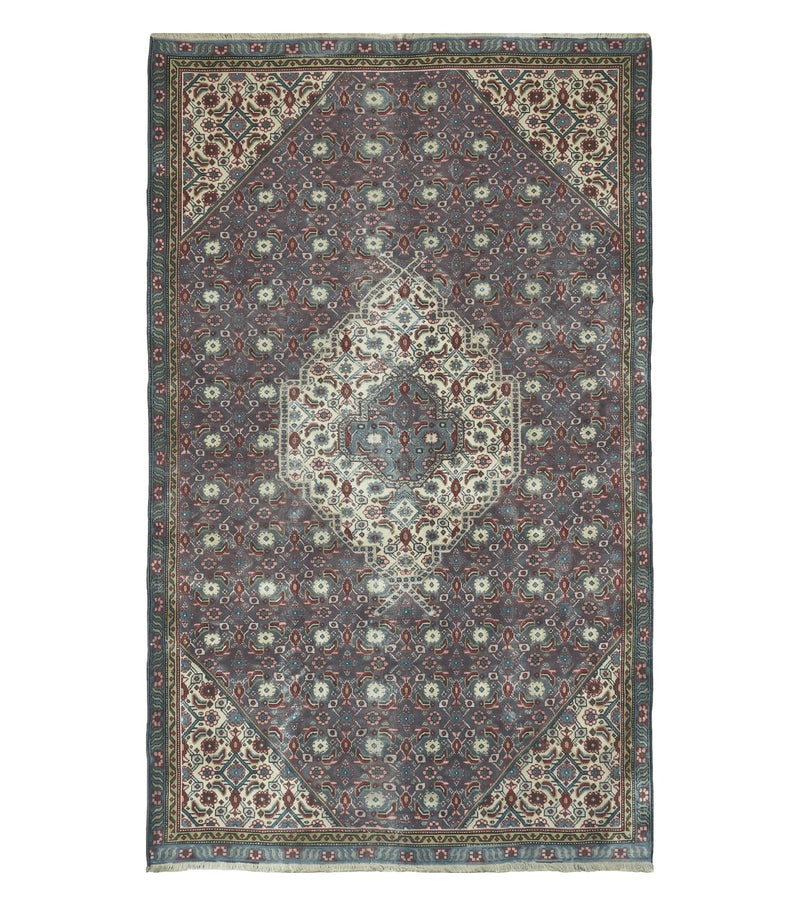


Colonial Williamsburg, the restored 18th-century capital of Virginia, holds a celebrated collection of antique furnishings, including Oriental rugs of the kind that graced the finest colonial American homes. Karastan's Williamsburg collection adapted designs from rugs in that collection, bringing an early American sense of history to its worsted-wool rugs. The designs lean toward Turkish and village rugs, with bold, simple drawing that suits traditional and colonial-style rooms.
| Numbers | The 550s |
|---|---|
| Designs | #552 Ushak, #553 Turkish Church, #558 Herati, #559 Kurdish |
| Inspired by | Antique rugs in the Colonial Williamsburg collection |
| Style | Turkish and village designs, bold and graphic |
Rugs in colonial America
Oriental rugs reached the American colonies in the 18th century, usually by way of England. Most were Turkish, and they were costly enough that some were used on tables rather than floors. The Williamsburg collection reflects that history, with Turkish village designs rather than the Persian city designs of the 700 Series.
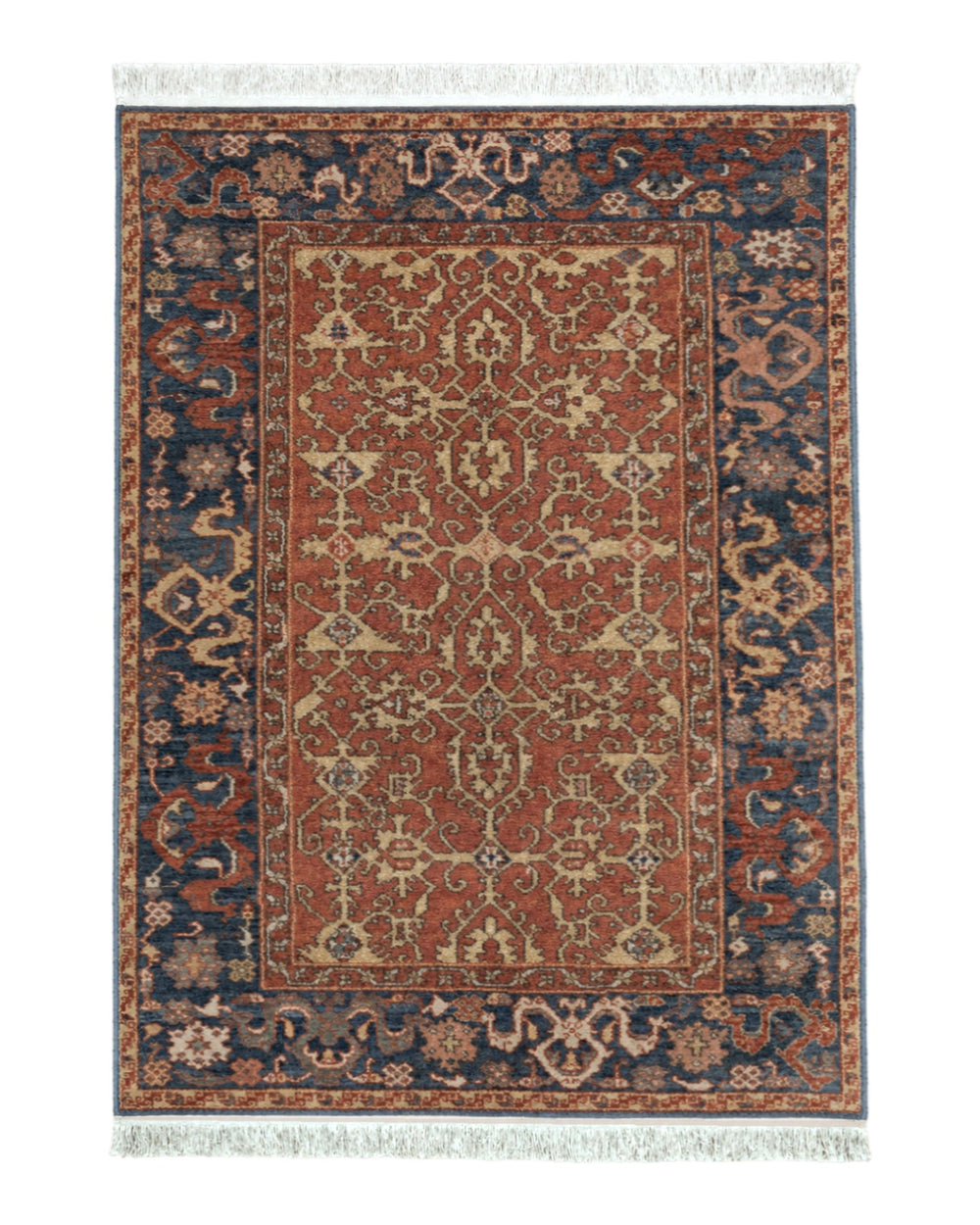
#552 Ushak
Ushak (Oushak), in western Turkey, has woven rugs for European and American buyers for centuries. The #552 follows the bold style of antique Ushak rugs and is one of the most popular Williamsburg designs. See Oushak Rugs.
#553 Turkish Church
The #553 recalls the so-called Transylvanian rugs: Turkish rugs of the 16th and 17th centuries that were given to the Lutheran churches of Transylvania and preserved there for centuries. Many are small rugs with niche designs and decorative borders, and the #553 is usually found in small sizes in keeping with them. See Prayer Rugs.
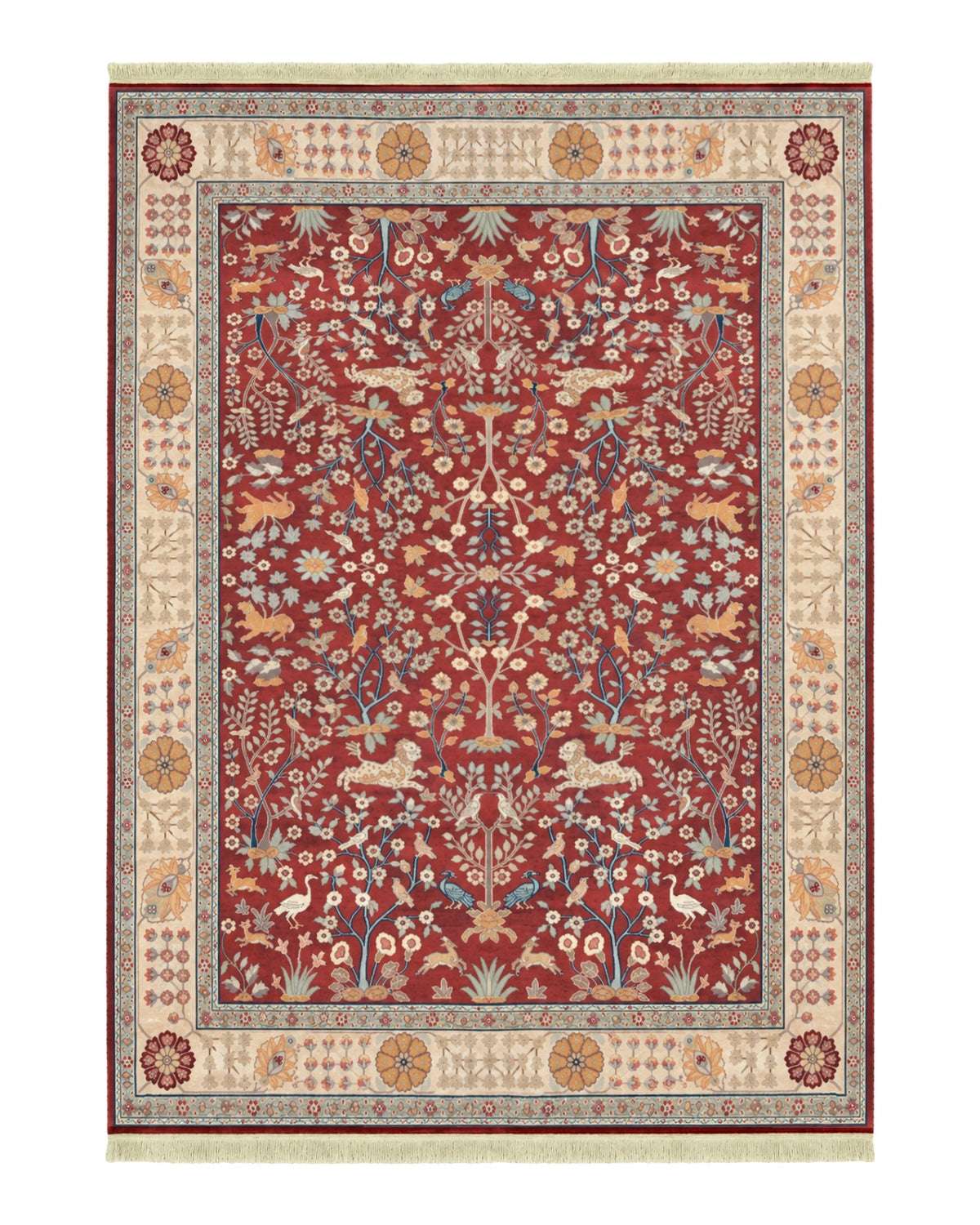
#558 Herati
The Herati is one of the most widespread patterns in Oriental rugs: a repeating motif of a flower within a diamond, surrounded by curved leaves. The #558 sets it across the whole field and suits rooms where an allover design is preferred to a medallion. See All-Over Designs.
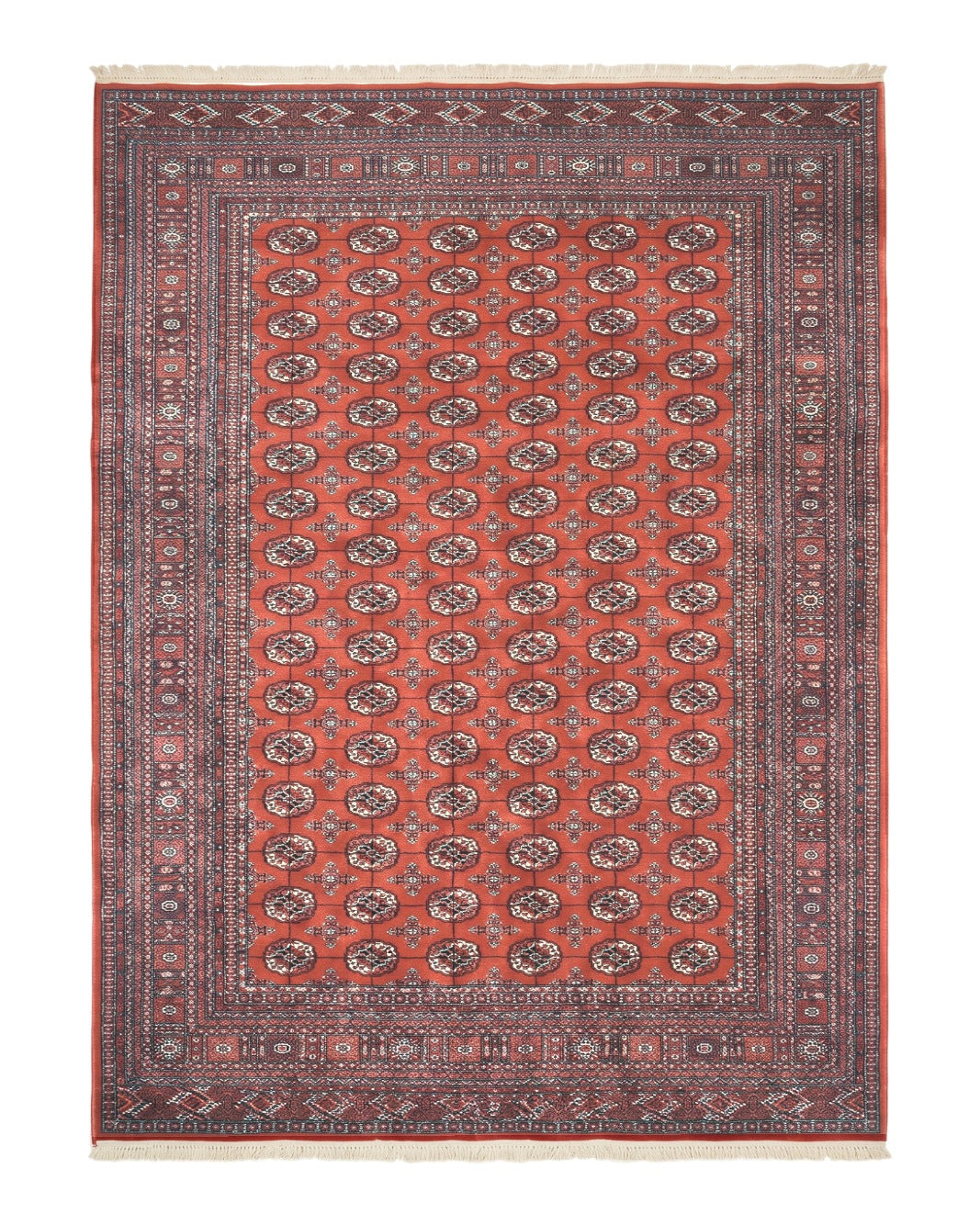
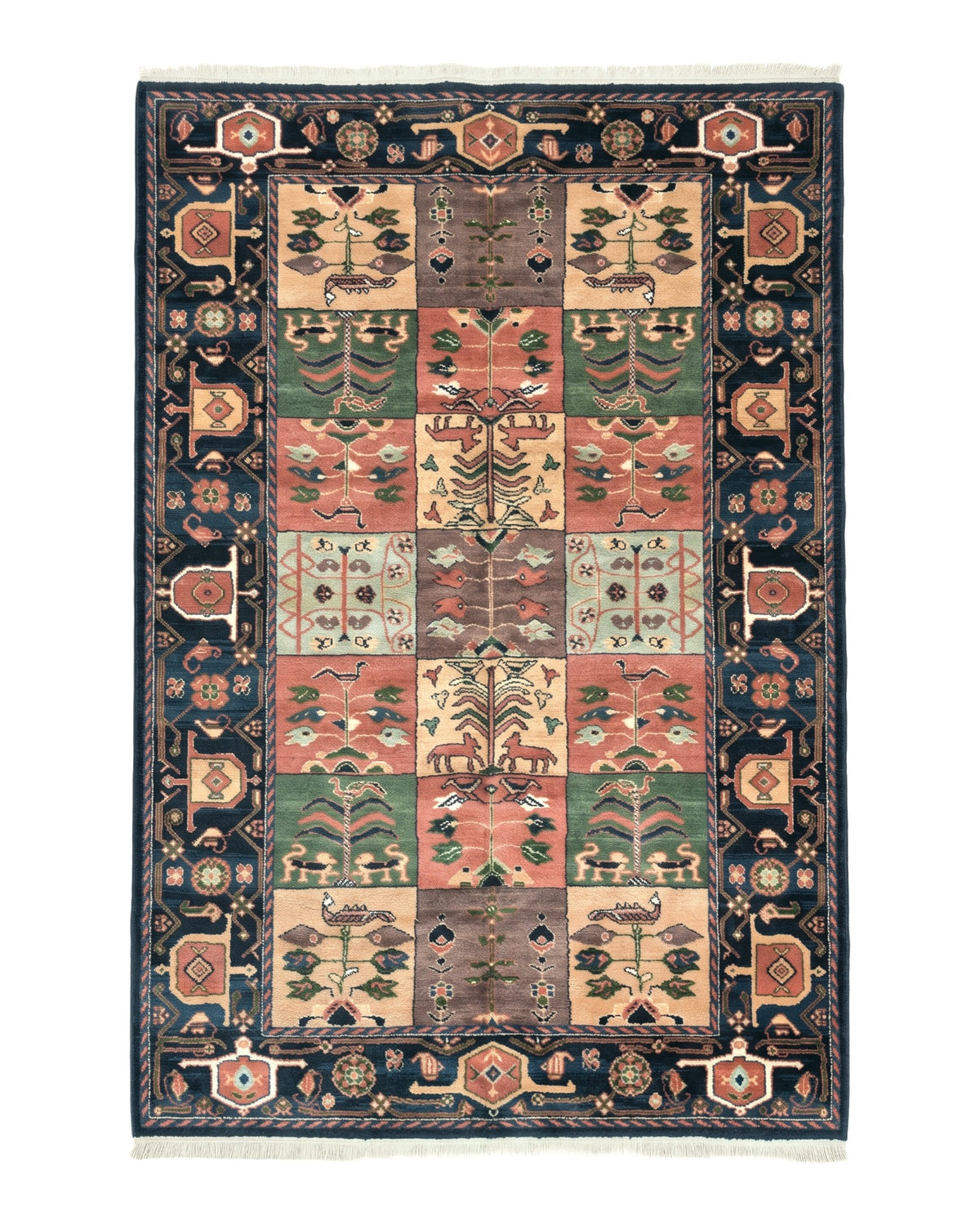
#559 Kurdish
The #559 follows the bold, geometric village rugs woven by Kurdish weavers in Iran, Turkey and the Caucasus. See Kurdish Rugs.