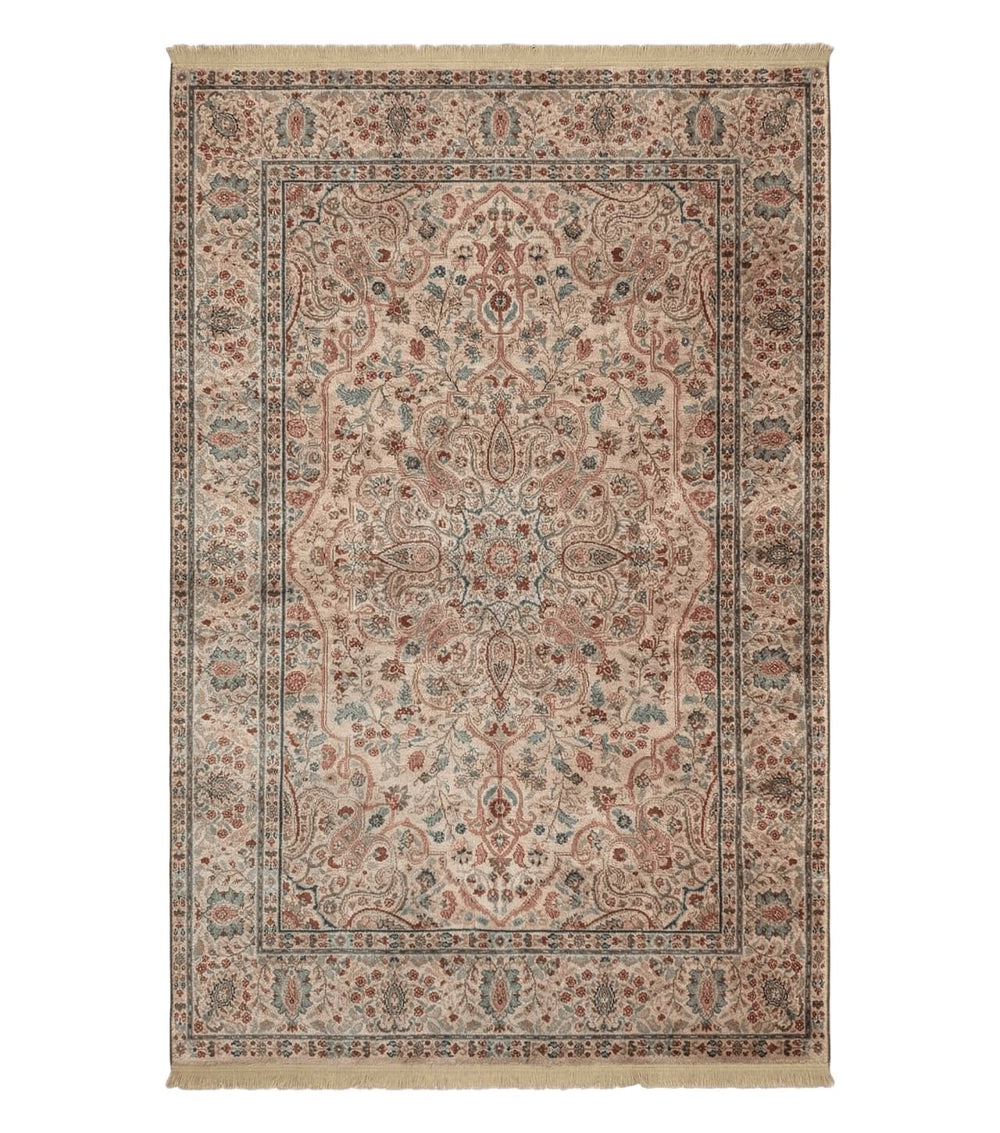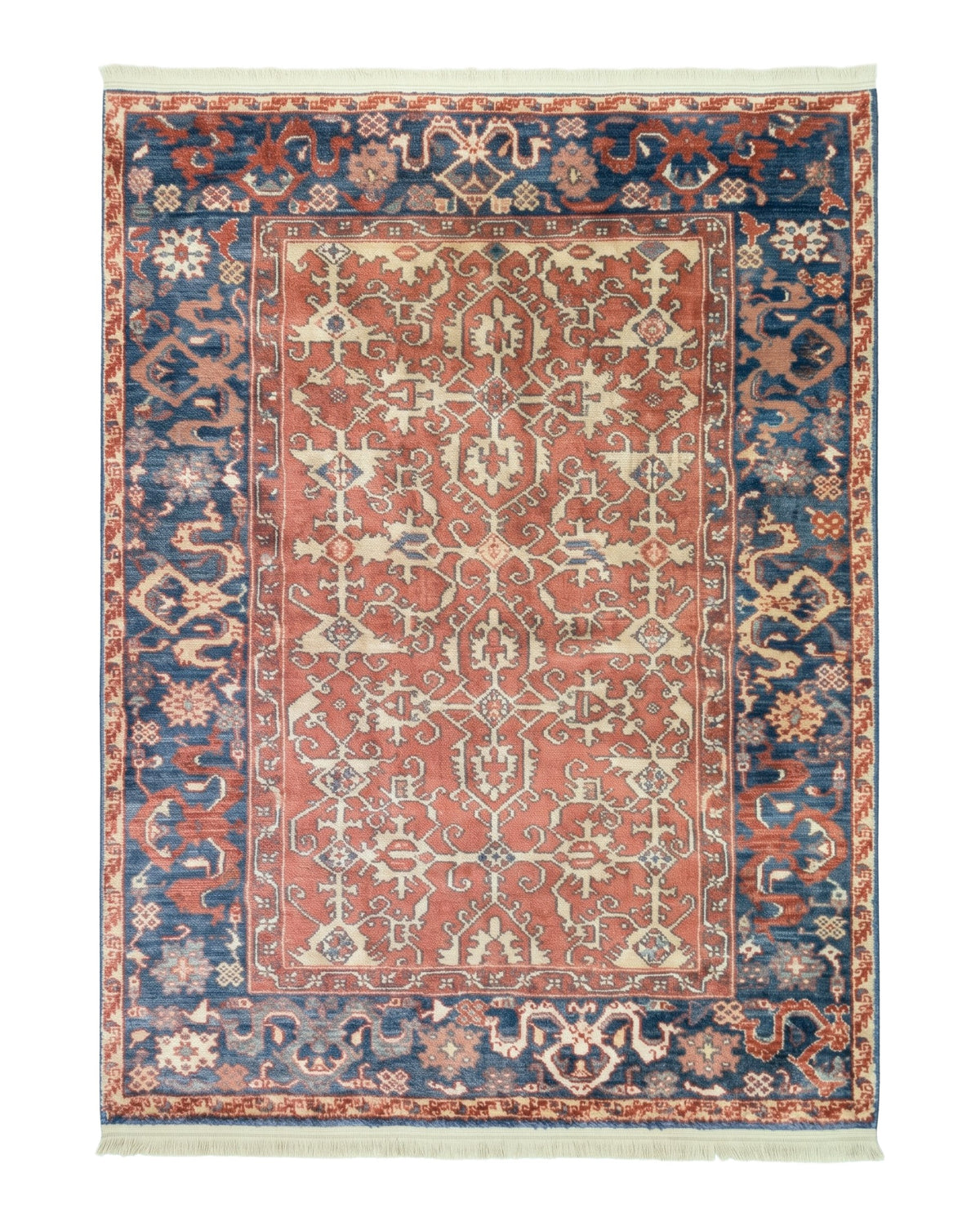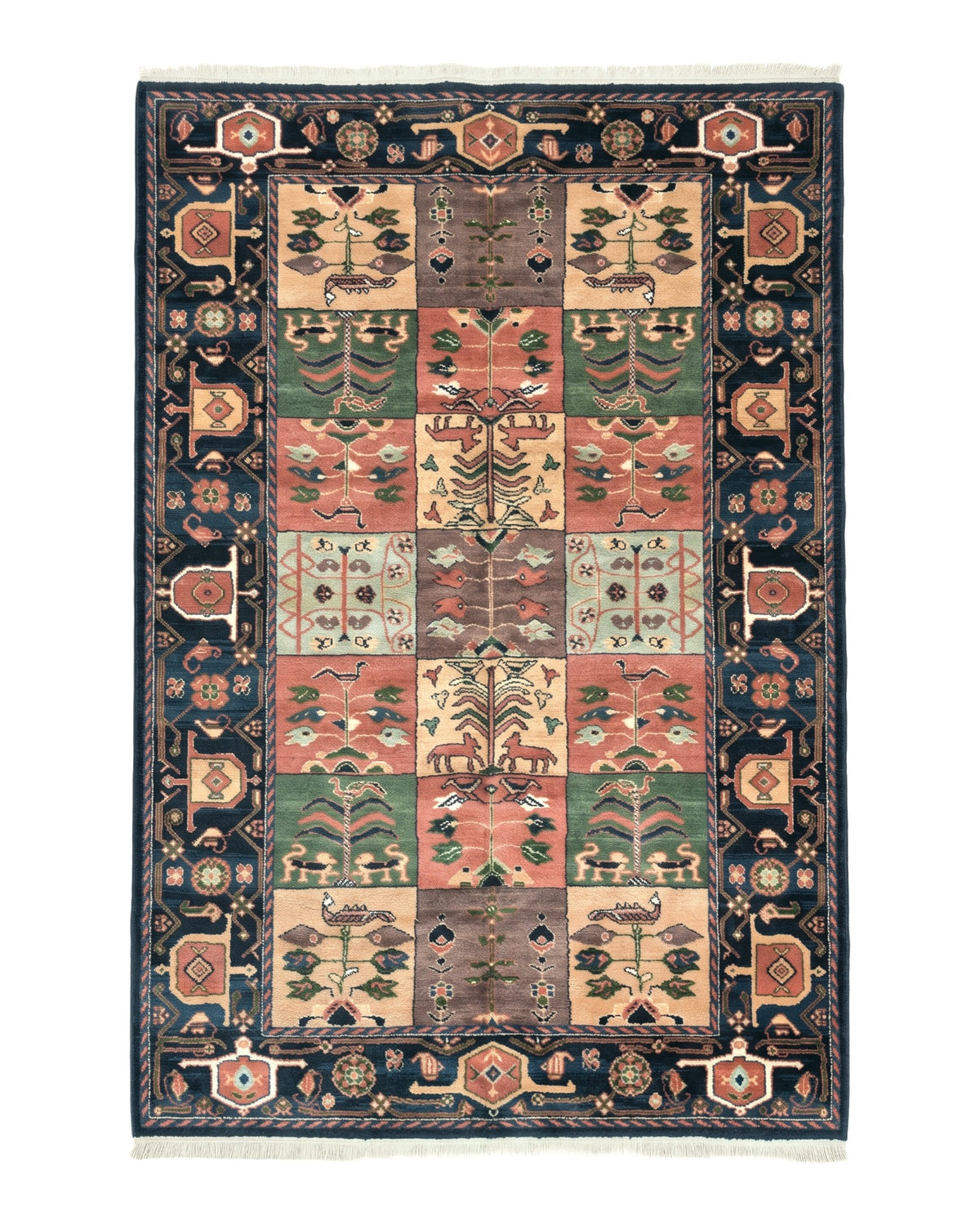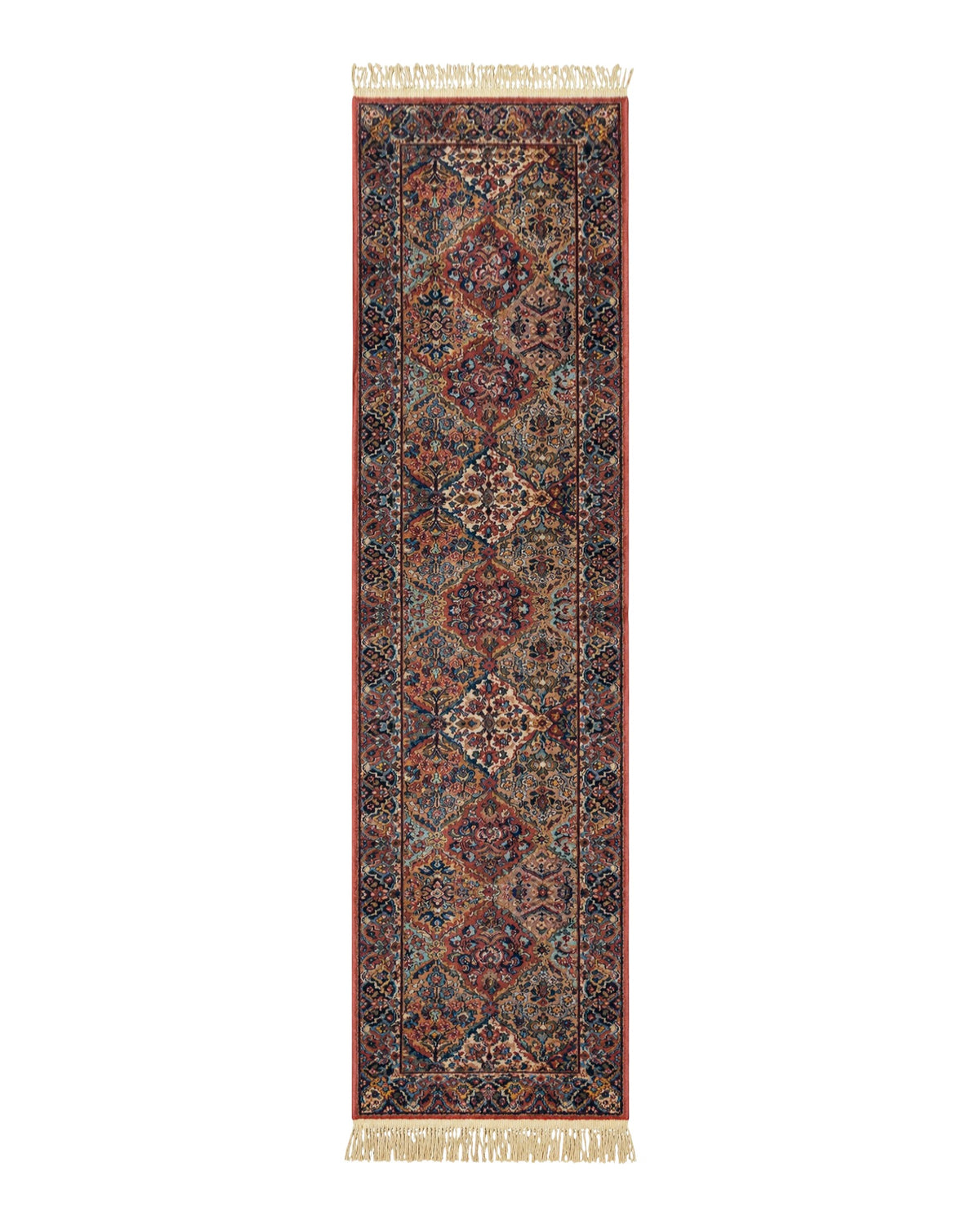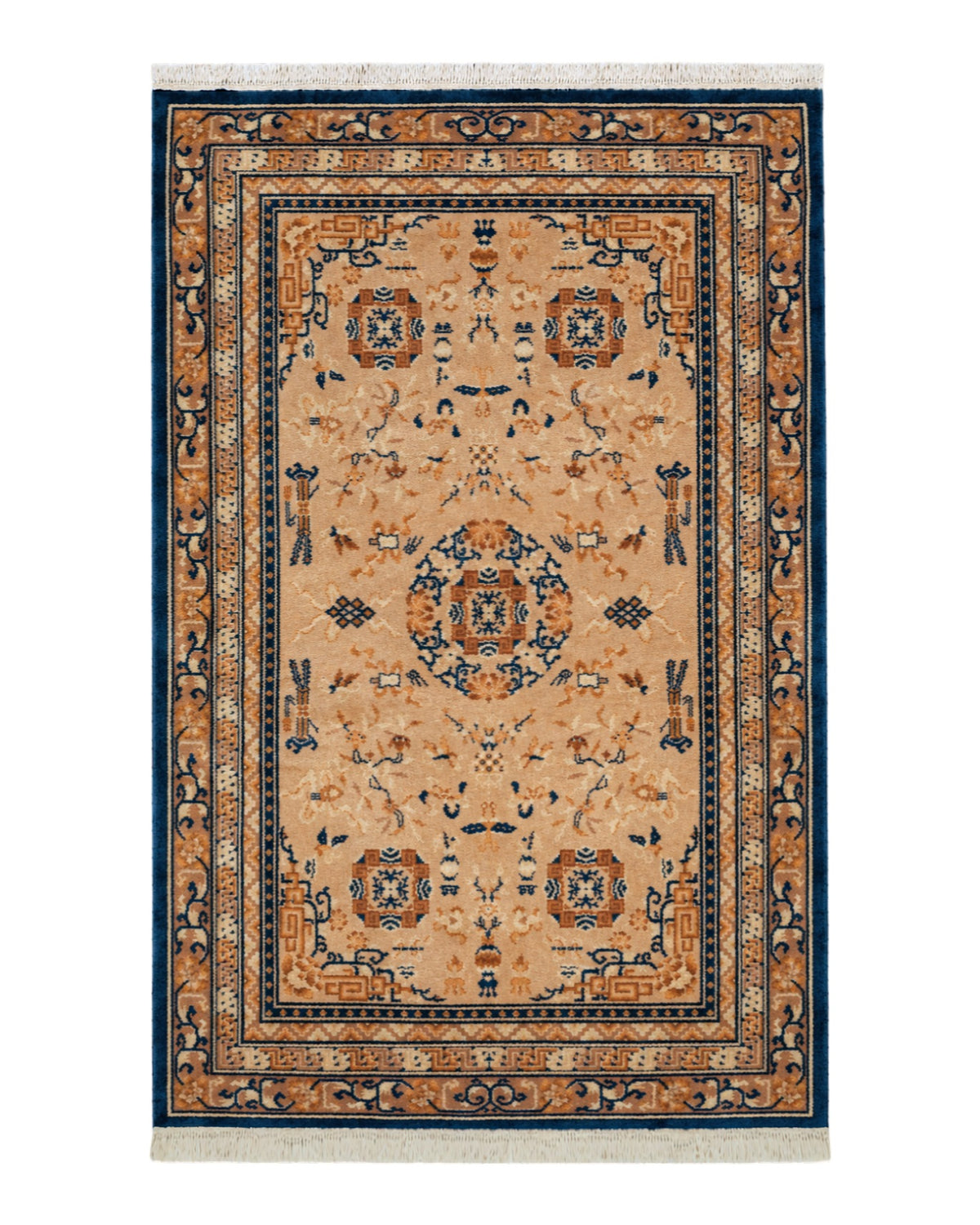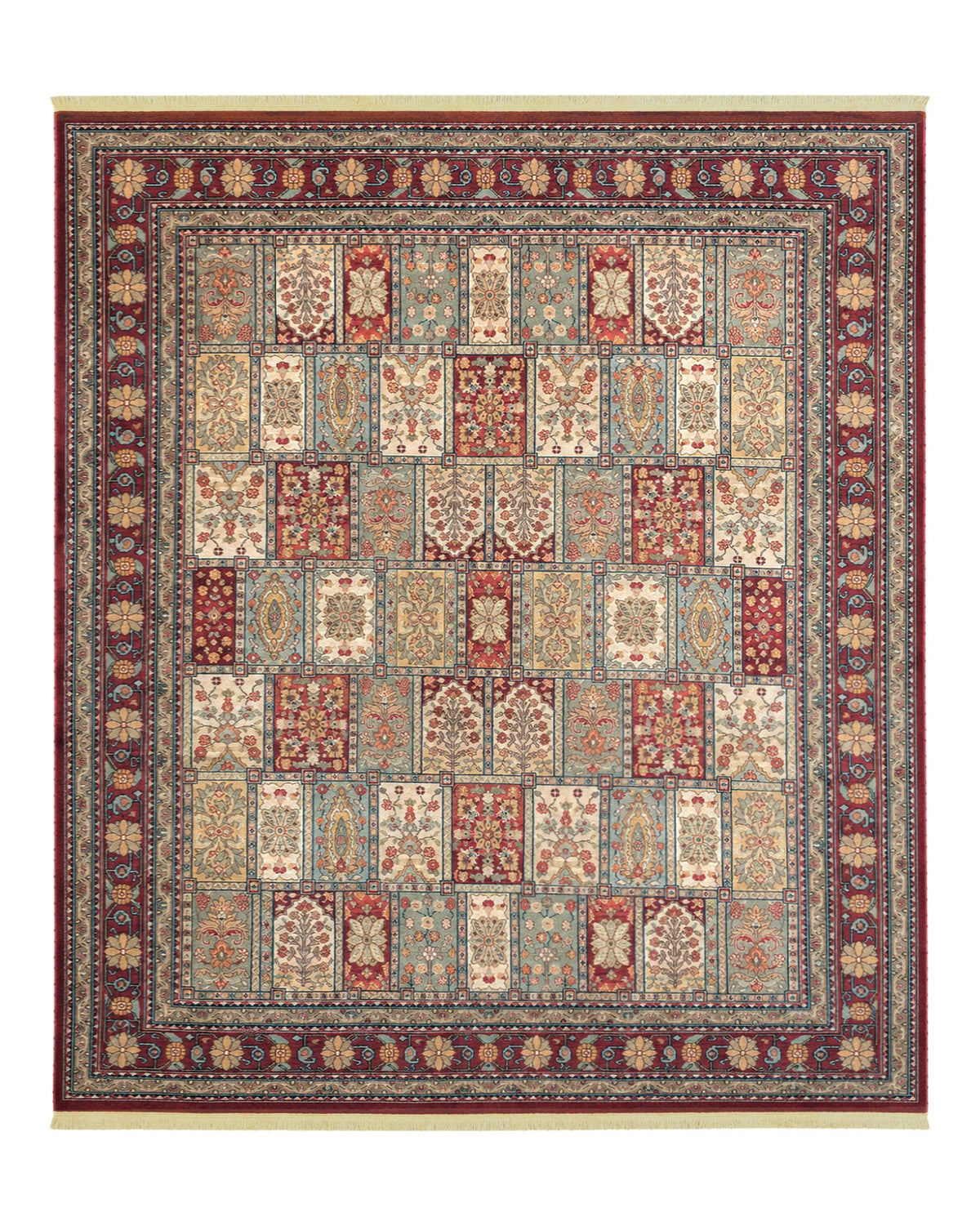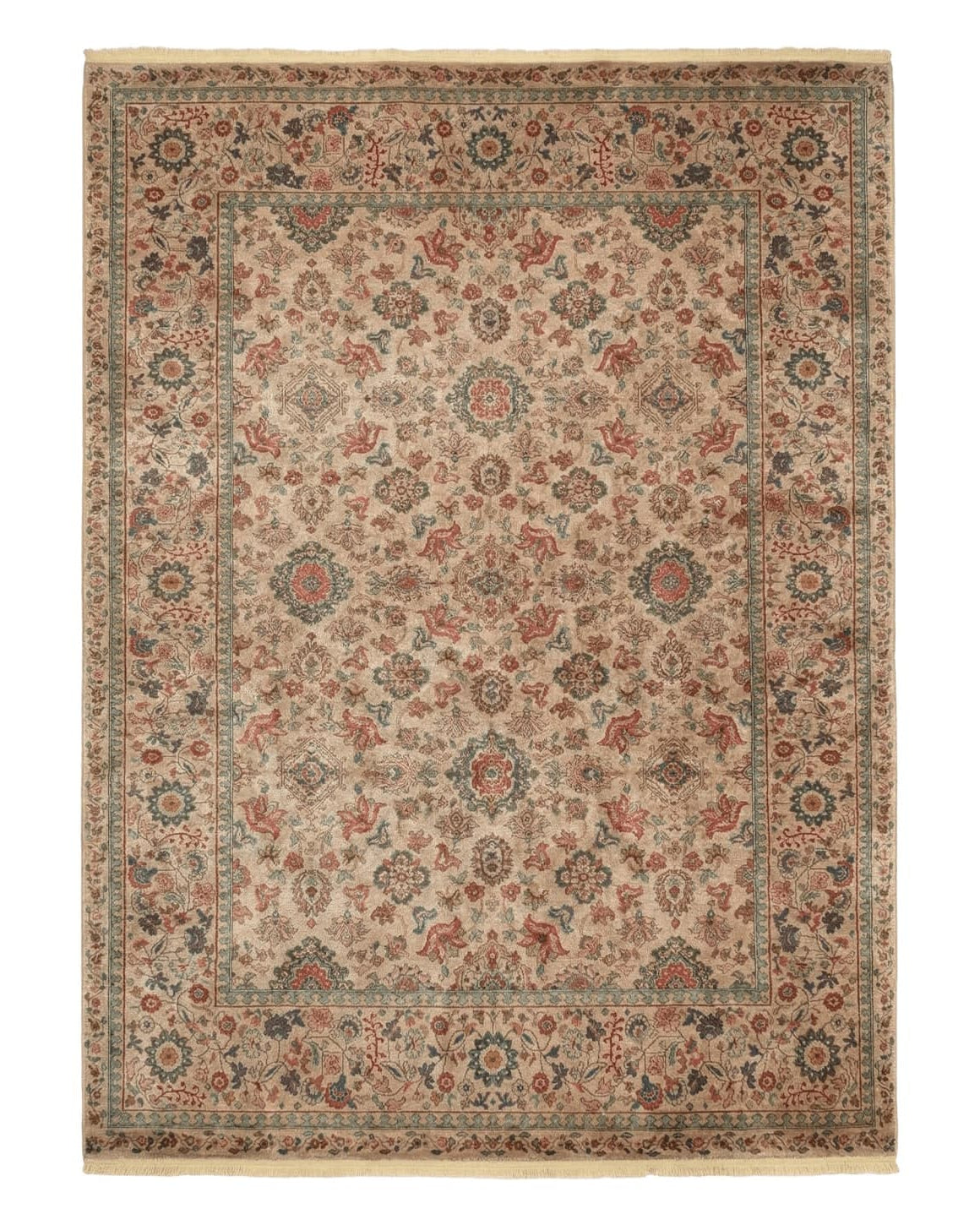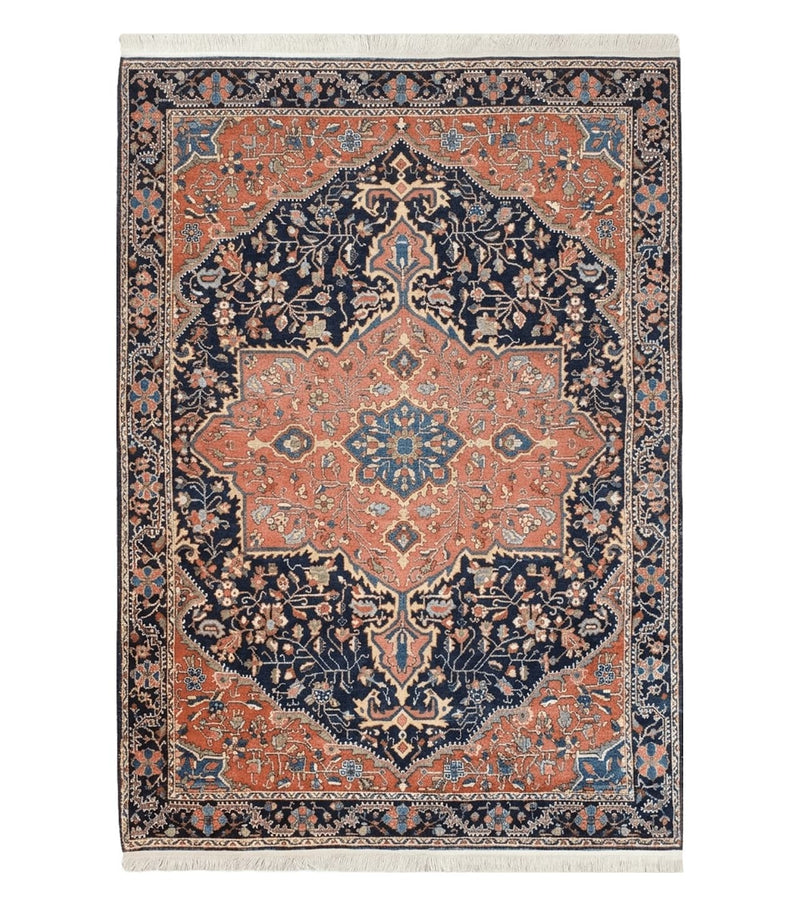


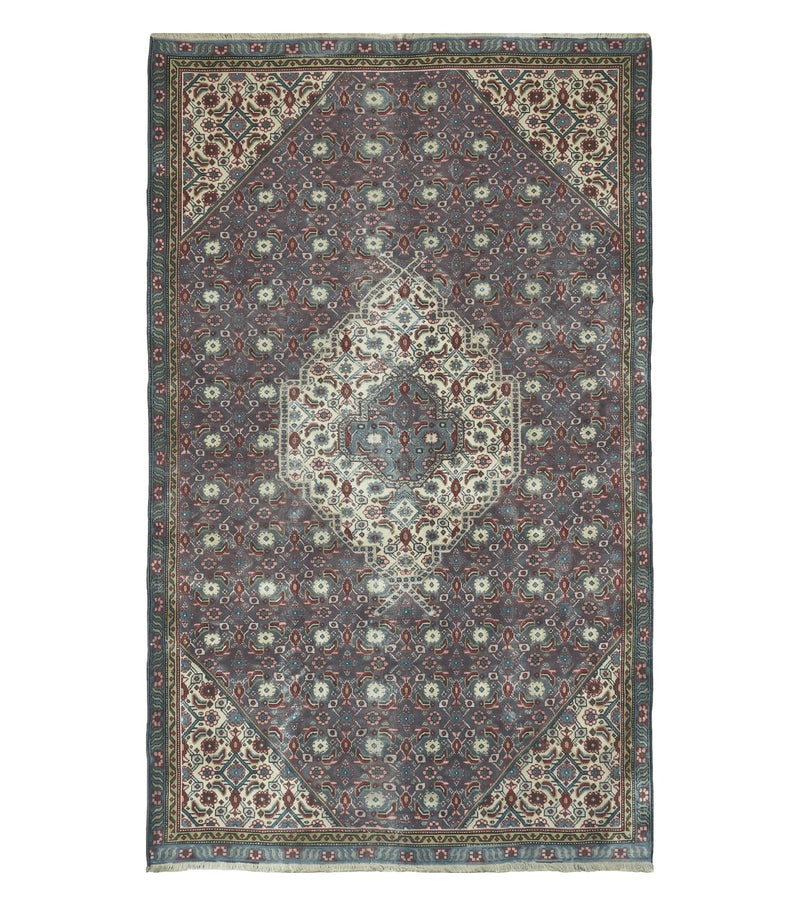


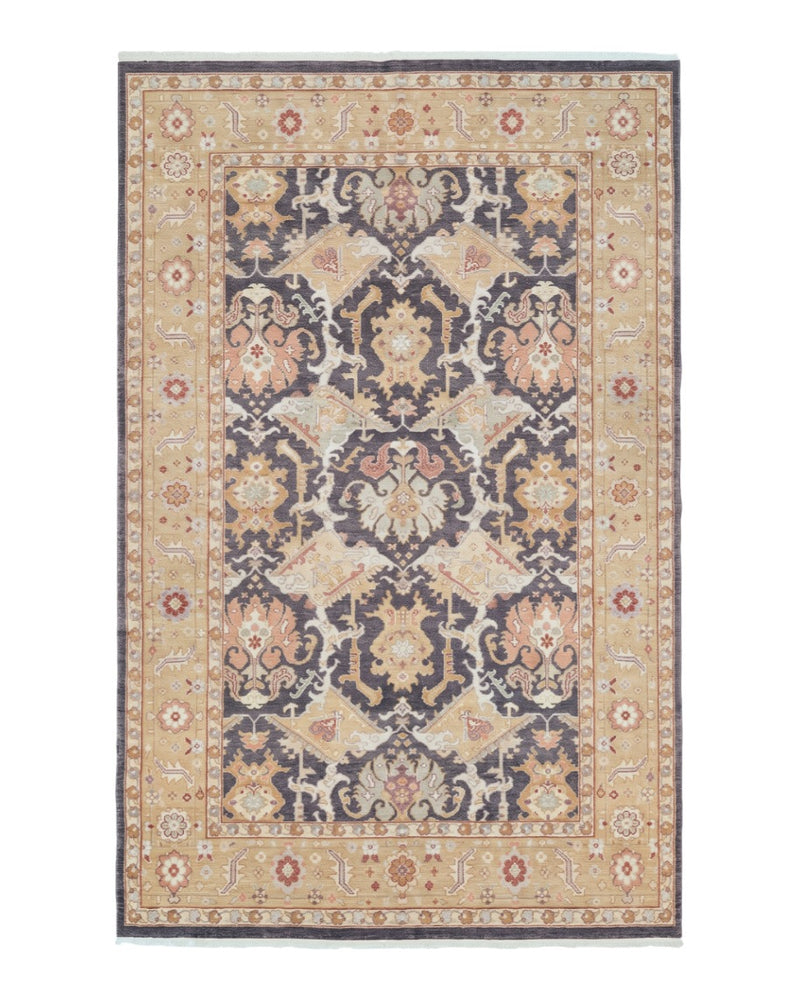


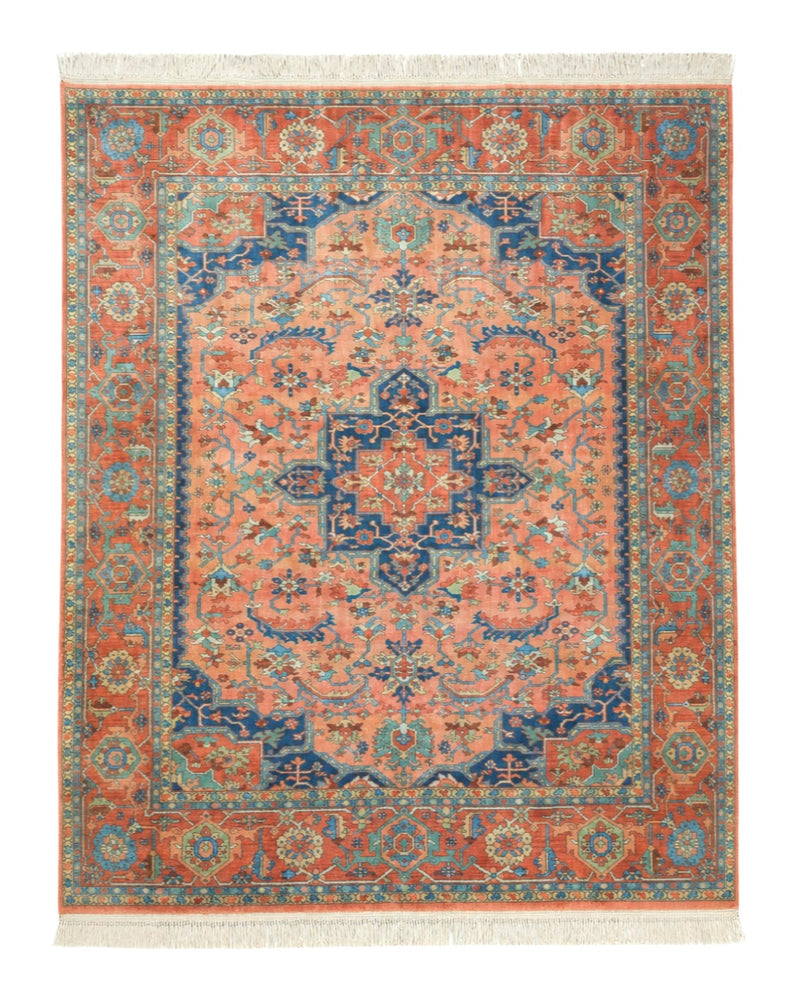


The Samovar Teawash collection takes its name from the samovar, the urn used to brew tea across Iran, Russia and Central Asia. Its rugs are finished with a "tea wash" that softens and warms the colors, giving a new rug the gentle, slightly faded look of an old one. The designs, numbered in the 900 series, are classic Persian types.
| Numbers | 900, written as 900-906 |
|---|---|
| Designs | Persian Vase (900-901), Feraghan Sarouk (900-906), Tabriz Medallion (900-909) |
| Finish | Tea-washed for softened, aged colors |
| Status | Discontinued |
What a tea wash is
For generations, dealers have softened the colors of new or bright rugs with special washes, so that they look older and blend more easily into a room. A tea-washed rug has warm, muted tones, with whites turned to soft ivory and strong colors gently subdued. Karastan already washed its rugs to soften their colors; the Samovar collection carried the idea further. See How a Karastan Is Made.
Persian Vase, 900-901
Vase designs fill the field with flowering plants growing from vases, a motif that goes back to the court carpets of Safavid Persia. The 900-901 was made in sizes up to 10' x 14'.
Feraghan Sarouk, 900-906
The Feraghan Sarouk follows the antique Sarouks of the Farahan (Feraghan) plain in west central Iran, admired for their soft colors and graceful medallions. See Farahan Sarouk Rugs.
Tabriz Medallion, 900-909
The Tabriz Medallion is a medallion design in the Tabriz tradition, made in room sizes and also in runner-like sizes such as 4' x 9'. See Karastan Tabriz Rugs.