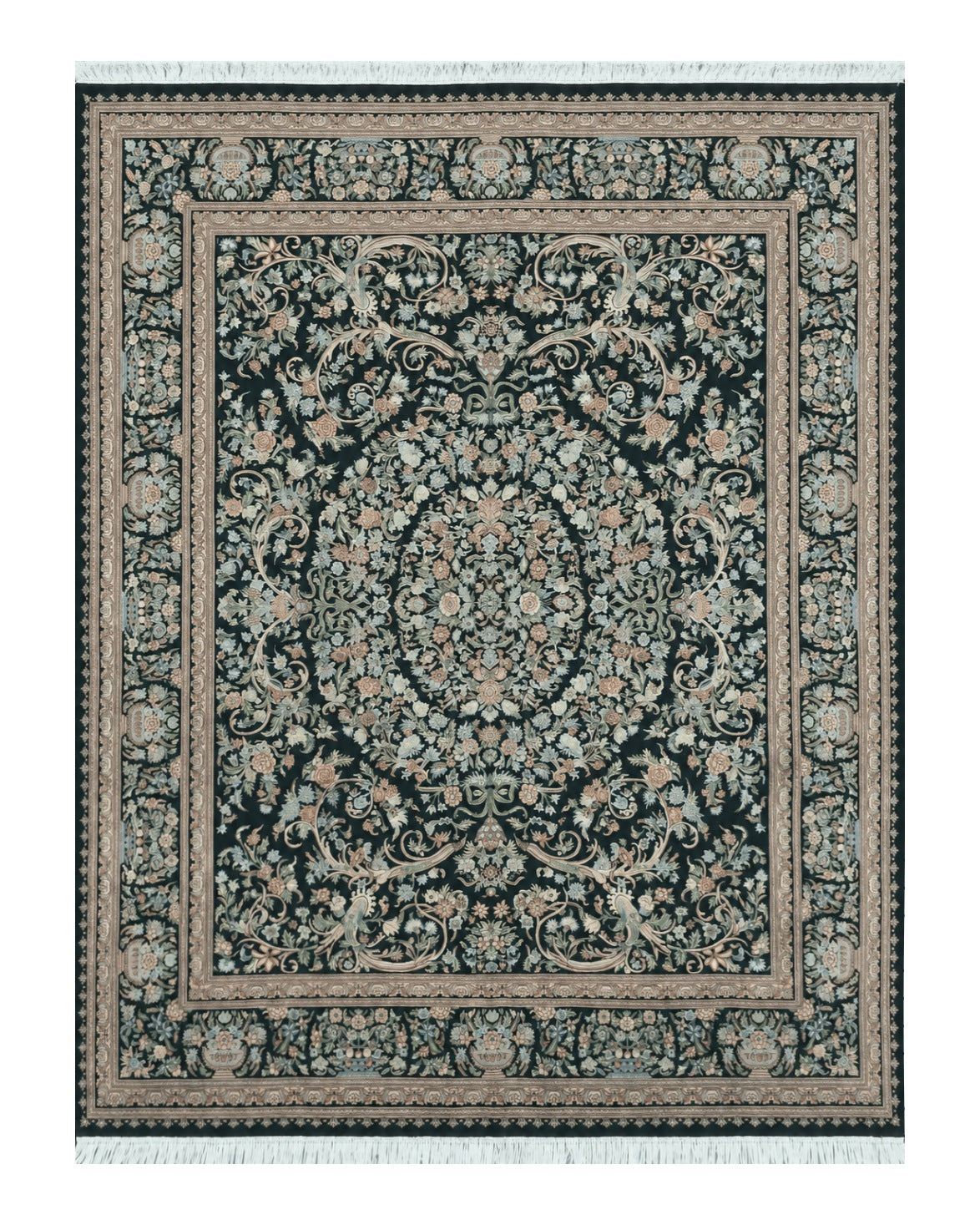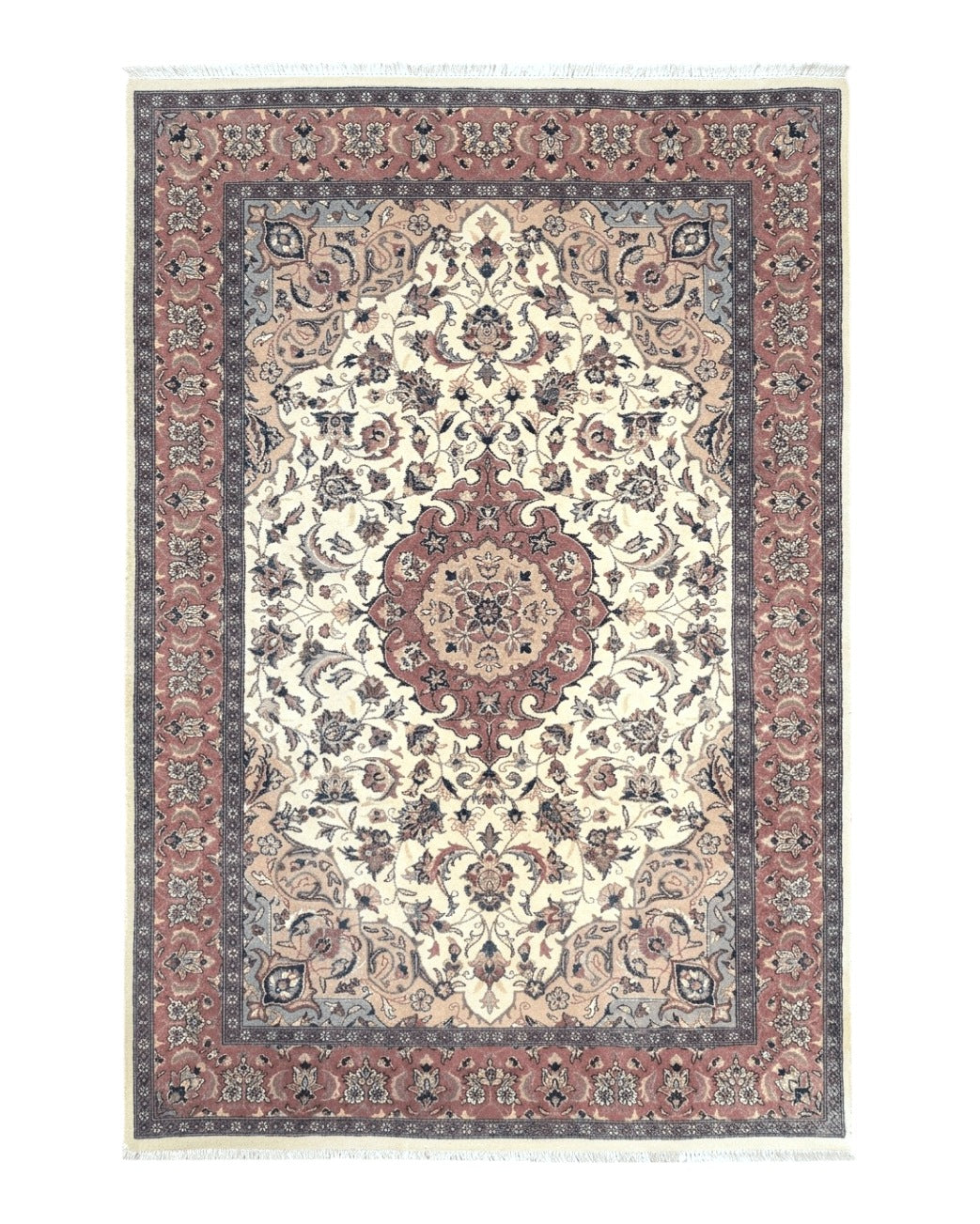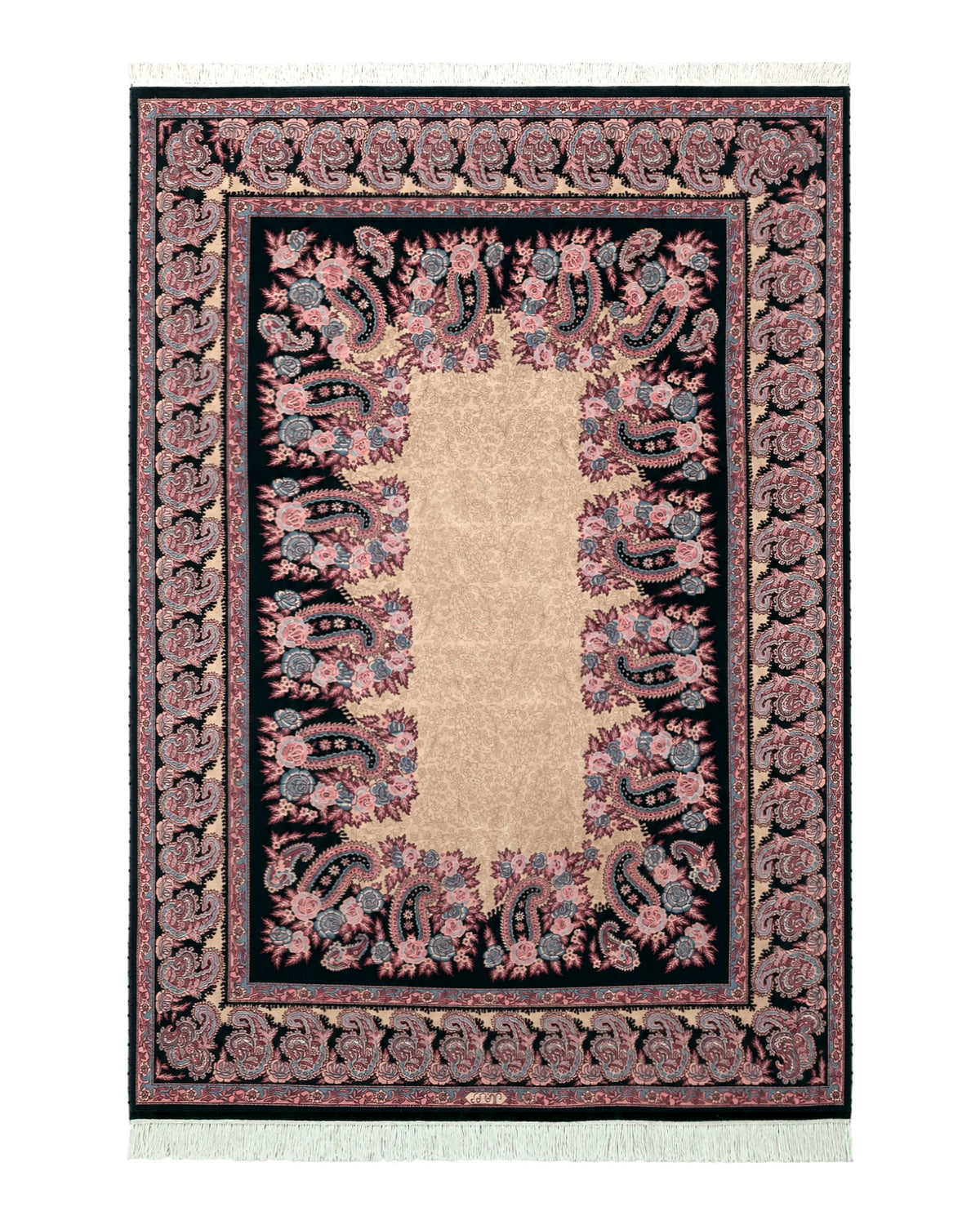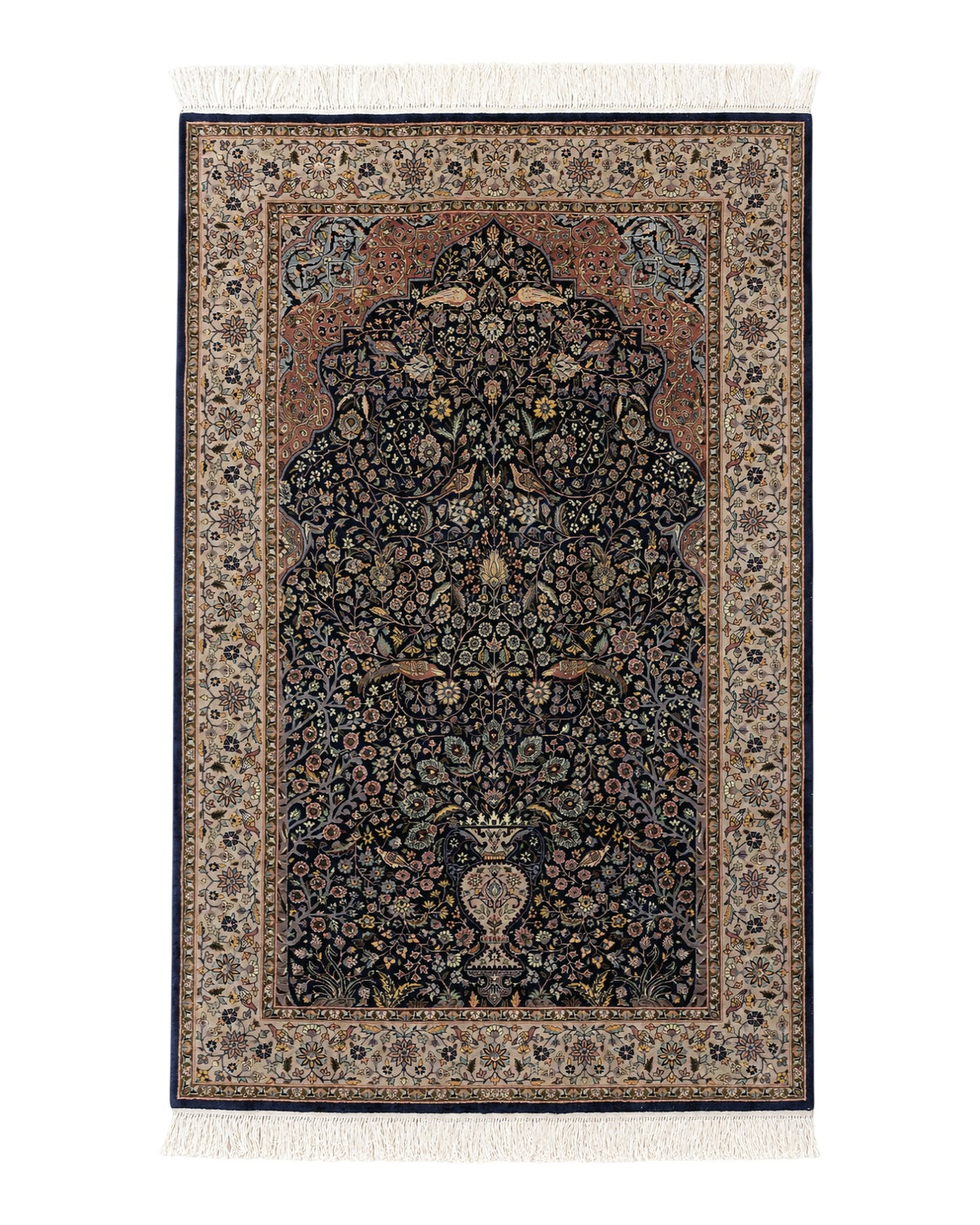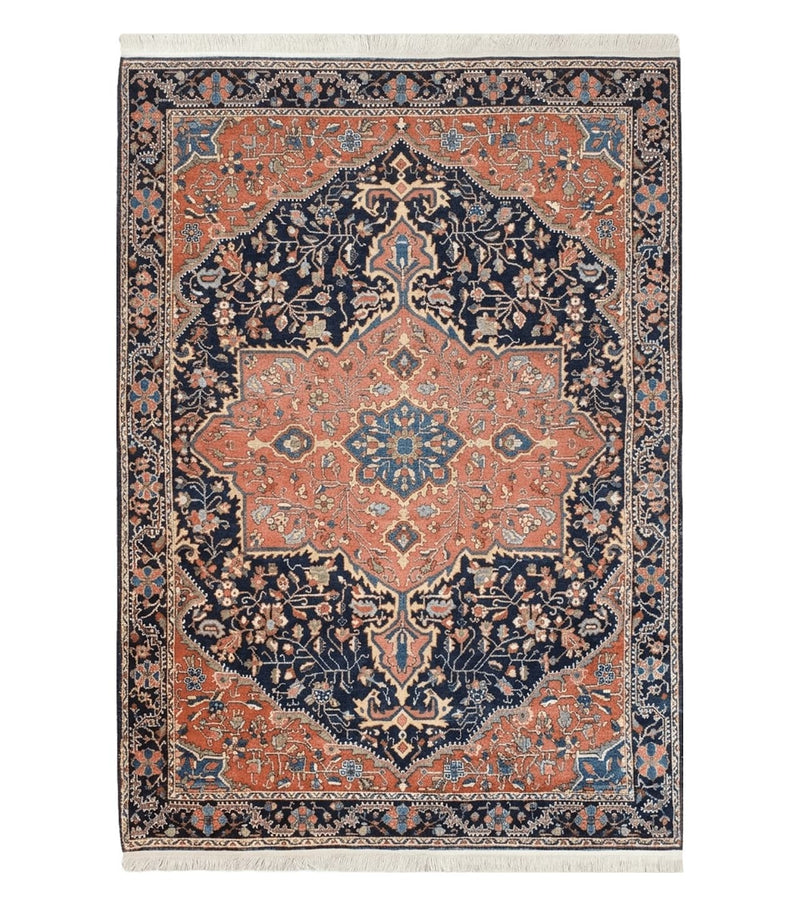


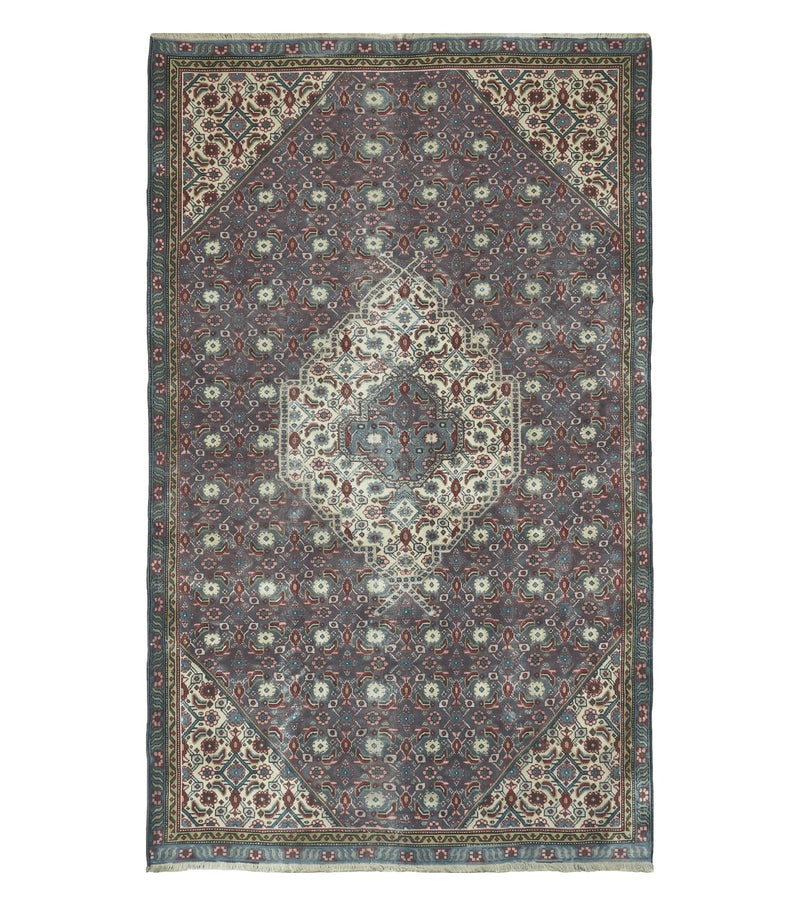


A Pak-Persian rug is a hand-knotted rug woven in Pakistan in a Persian design. "Pak" stands for Pakistan; "Persian" describes the style, not the origin. Pak-Persian rugs reproduce classic designs of cities such as Isfahan, Tabriz, Kashan and Kerman, usually in good wool, and the finest are very finely knotted. They are genuine handmade rugs, often at more approachable prices than Persian rugs of similar fineness.
| Made in | Pakistan, chiefly around Lahore |
|---|---|
| Designs | Classic Persian city designs: medallions, allover florals, garden and pictorial |
| Materials | Wool pile on a cotton foundation; silk highlights in some |
| Knot | Usually the asymmetric (Persian) knot |
| Finish | Often washed for a soft, lustrous sheen |
How Pak-Persian rugs began
Hand-knotting has a long history in the region that became Pakistan, going back to the Mughal workshops of Lahore. After the partition of India in 1947, Pakistan's rug industry grew quickly, first with Bokhara rugs in the Turkoman style, then with Persian designs. Pakistani workshops became skilled at reproducing Persian city designs with clean drawing and careful finishing. See Pakistani Rugs and Bokhara Designs.
The effect of sanctions on Iranian rugs
After the Iranian Revolution of 1979, the United States restricted imports from Iran, including Persian rugs, at various times over the following decades. With new Persian rugs hard or impossible to import, American buyers turned to other sources for Persian designs. Pakistani weavers stepped in, and Pak-Persian rugs became one of the main alternatives on the American market. This is one reason so many Pak-Persian rugs are found in American homes today. See Indo-Persian, Sino-Persian and Pak-Persian Rugs.
How they are made
Pak-Persian rugs are hand-knotted, usually with the asymmetric (Persian) knot, which suits fine curvilinear designs. The pile is wool, sometimes with silk highlights, on a cotton foundation. Quality ranges widely: everyday rugs may have around 100 to 150 knots per square inch, while fine pieces reach 300 or more. Many are given a chemical or luster wash that softens the colors and adds sheen. See Knots and Knot Density.
Designs and colors
The designs follow the great Persian city types: central medallions, allover Herati and floral designs, gardens, trees of life and hunting scenes. Colors are often a little softer and more even than in Persian rugs, with ivory, rose, gold and blue alongside the classic reds and navies, and the drawing is typically very regular.
How to tell a Pak-Persian from a Persian rug
- The design is often a faithful copy of a well-known Persian type, but drawn with great regularity.
- The sheen from washing is often stronger and more even than on a Persian rug.
- The wool tends to be soft and silky rather than firm.
- The foundation and edges are usually very neat and uniform.
- The seller should state the origin. A reputable dealer will describe a Pak-Persian as made in Pakistan.
Value
A well-made Pak-Persian rug is a durable, attractive handmade rug that can give generations of service. It is usually valued below a Persian rug of similar age and fineness, because origin matters greatly in the rug market. Fine examples hold their value well and offer an approachable way to own a hand-knotted rug in a classic Persian design. See What Determines a Rug's Value.