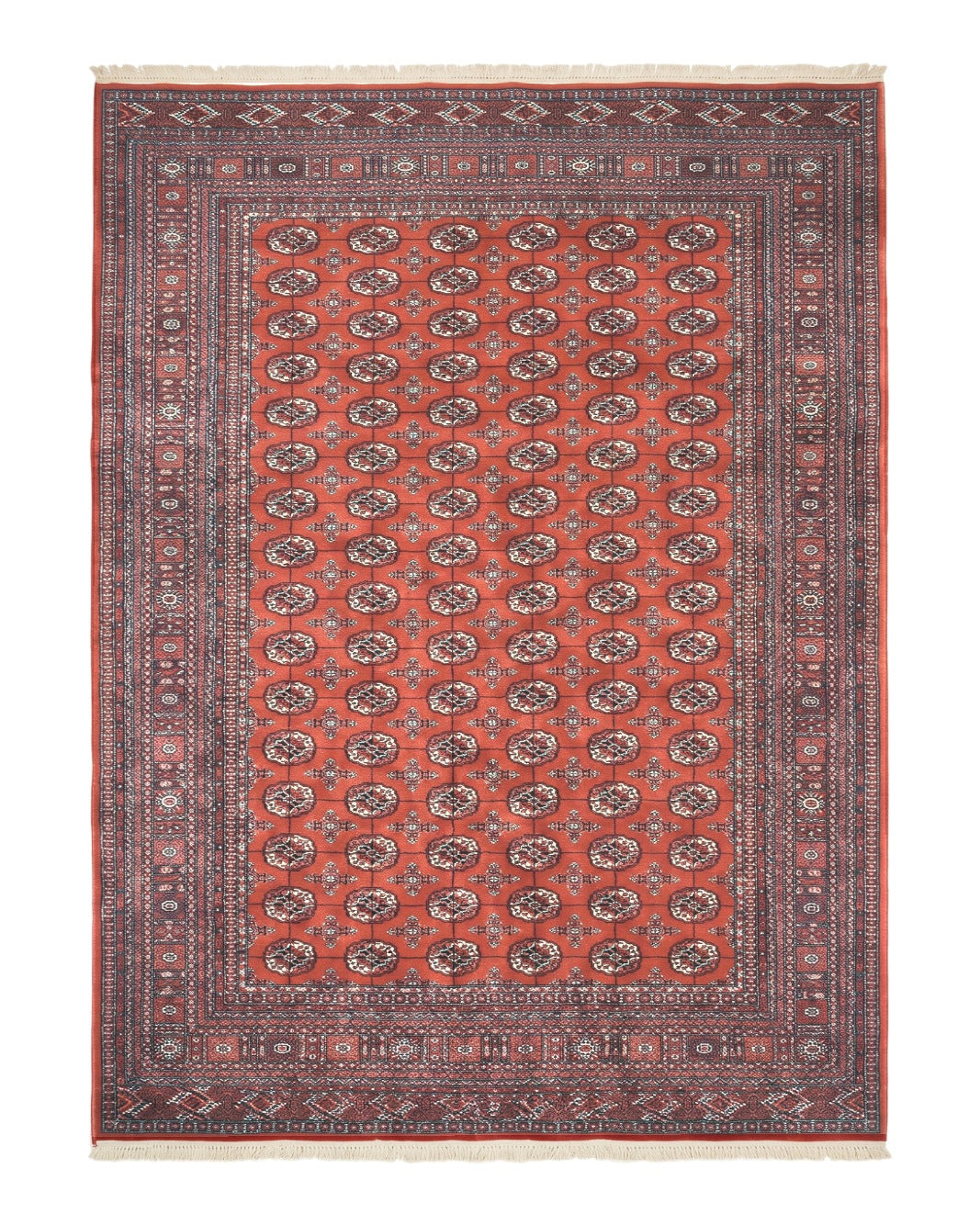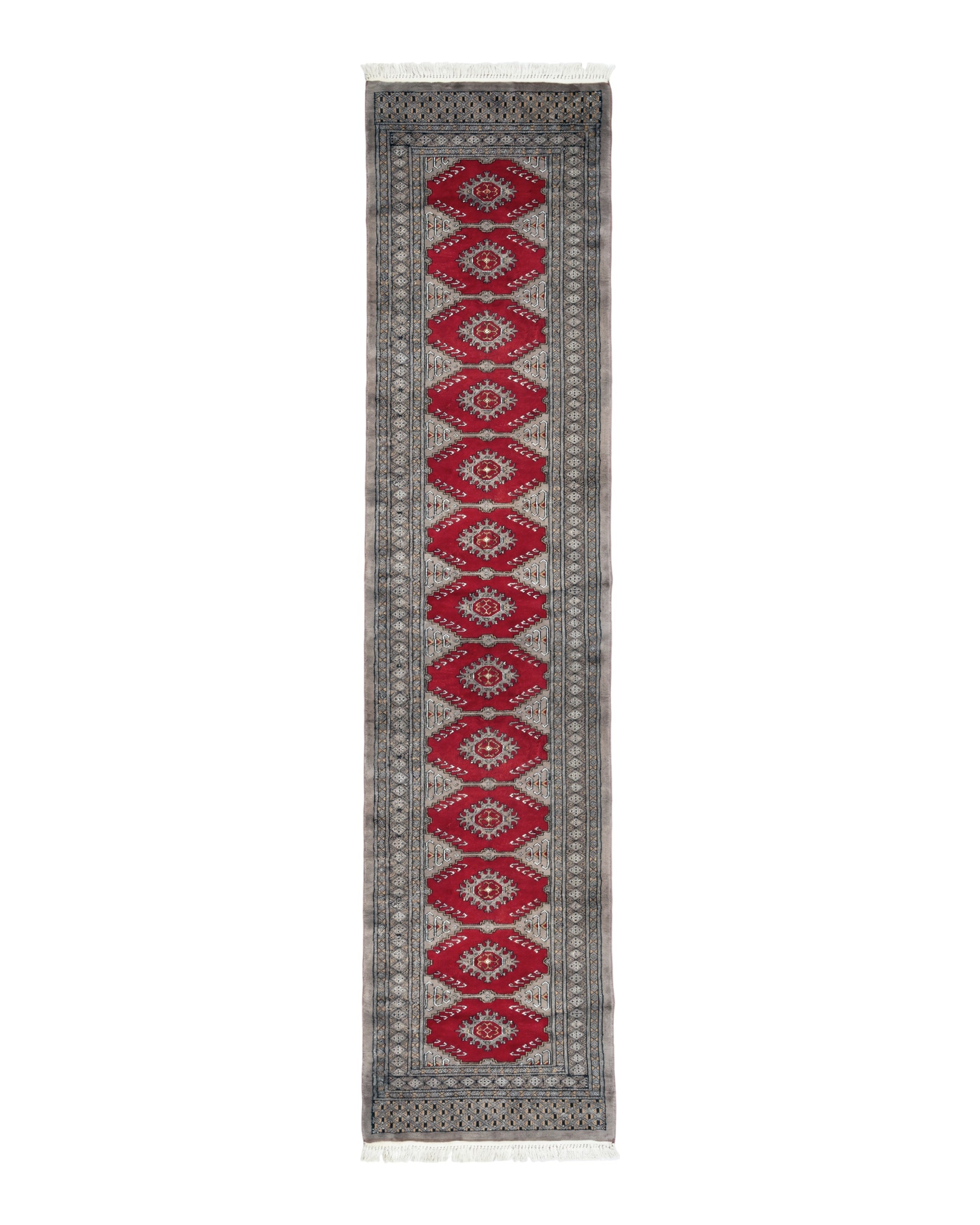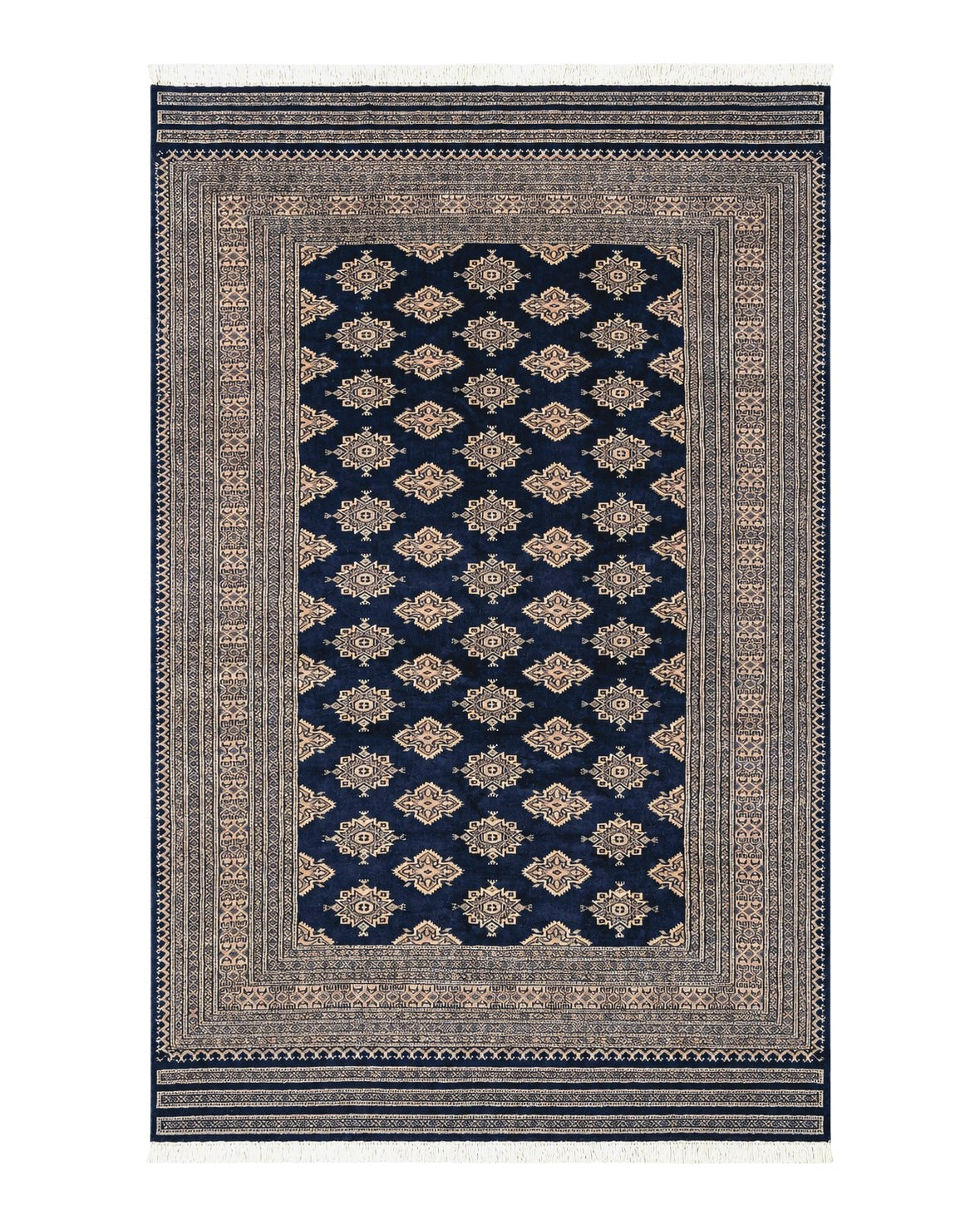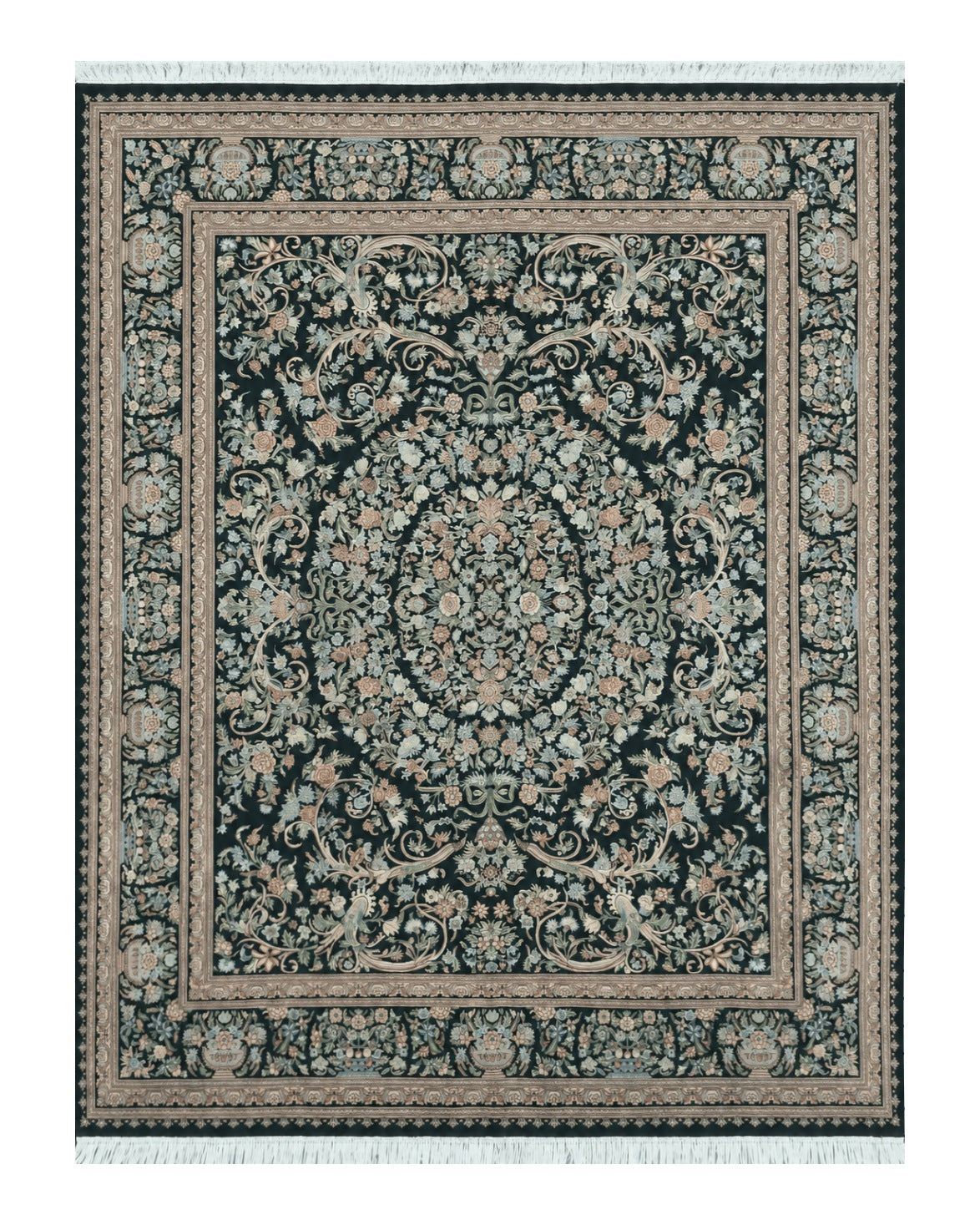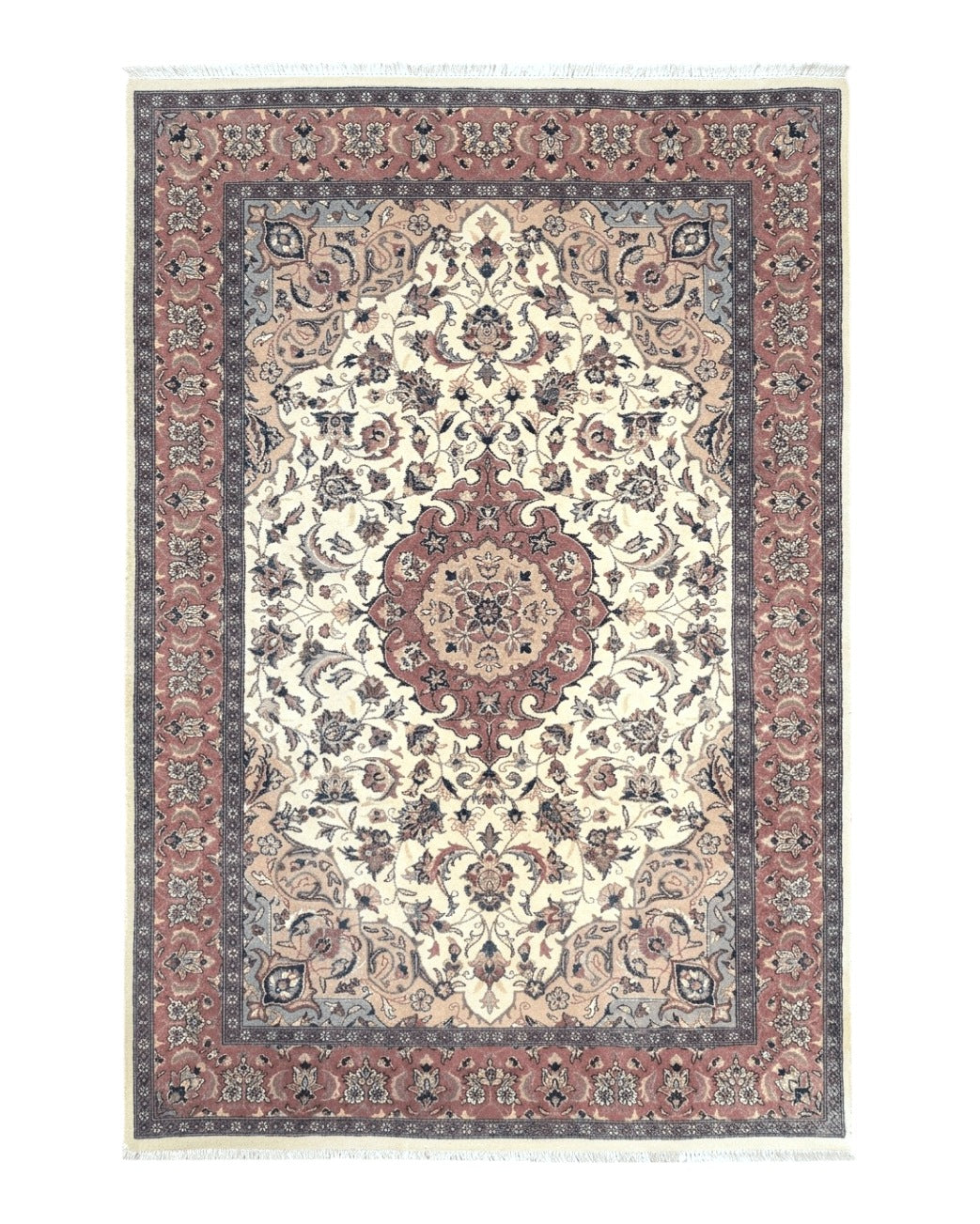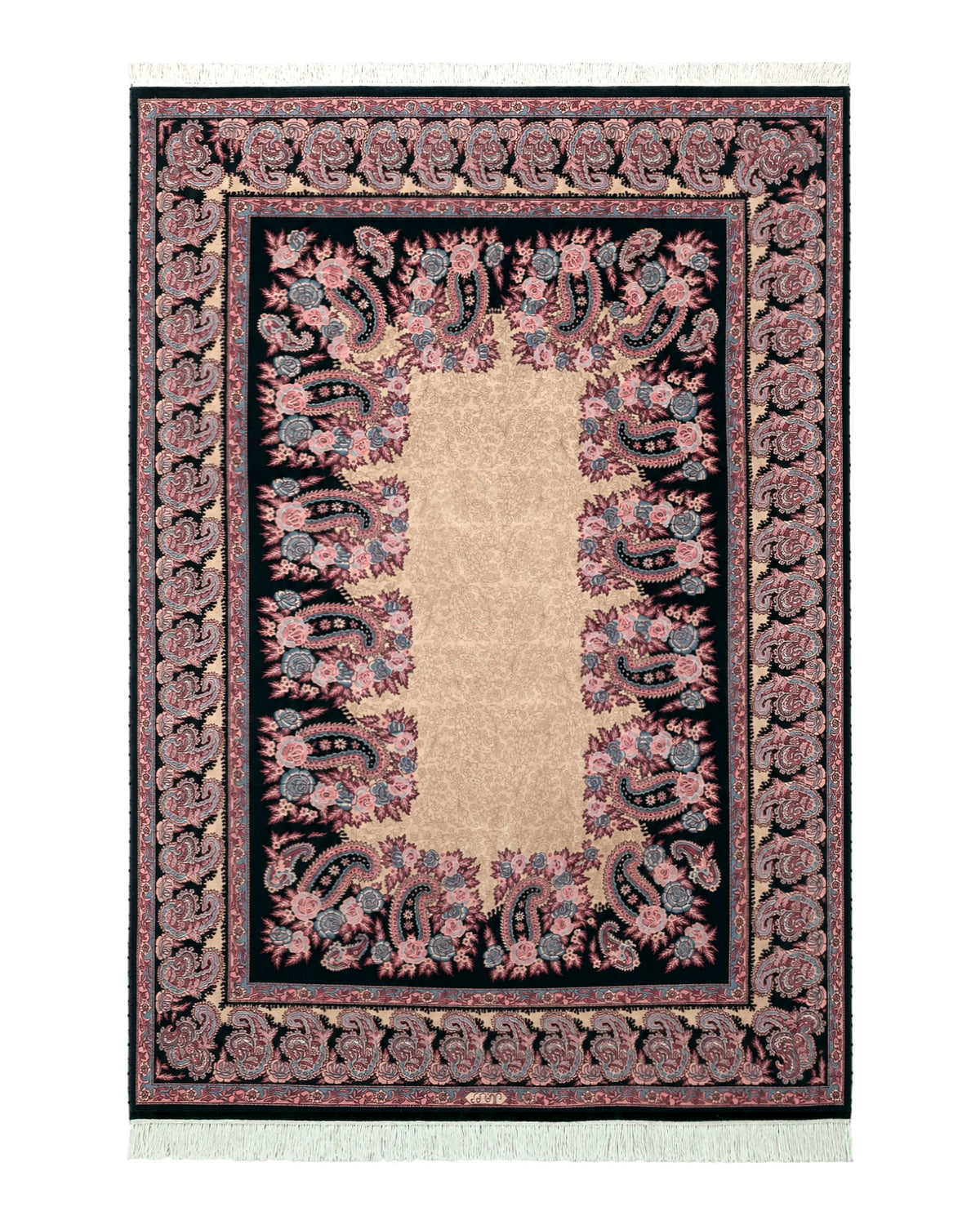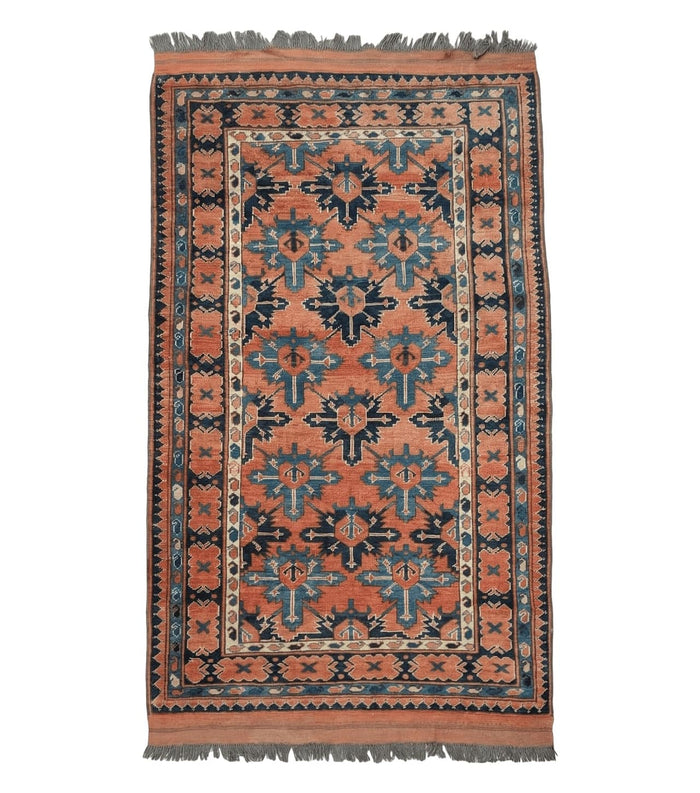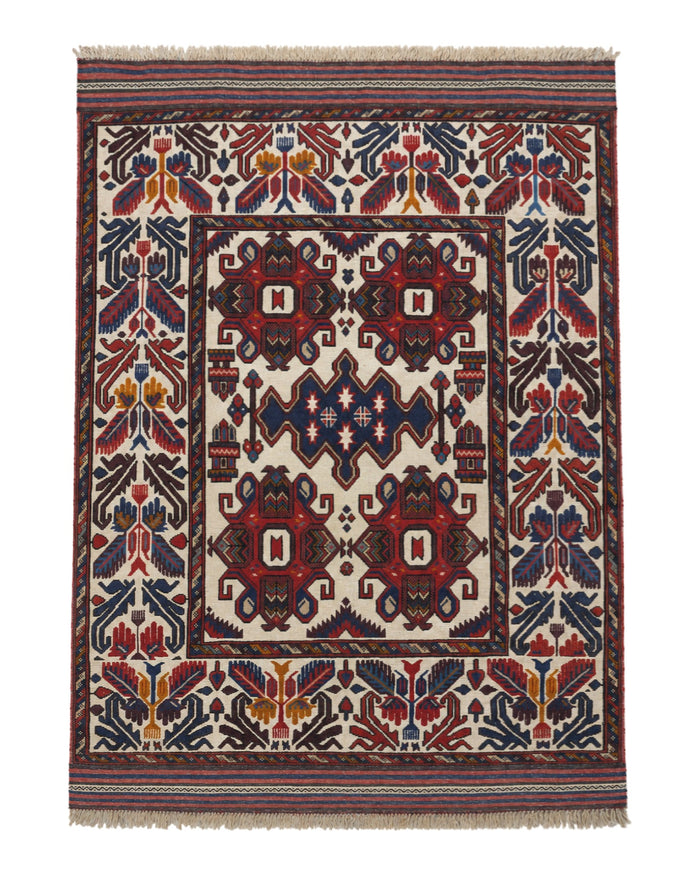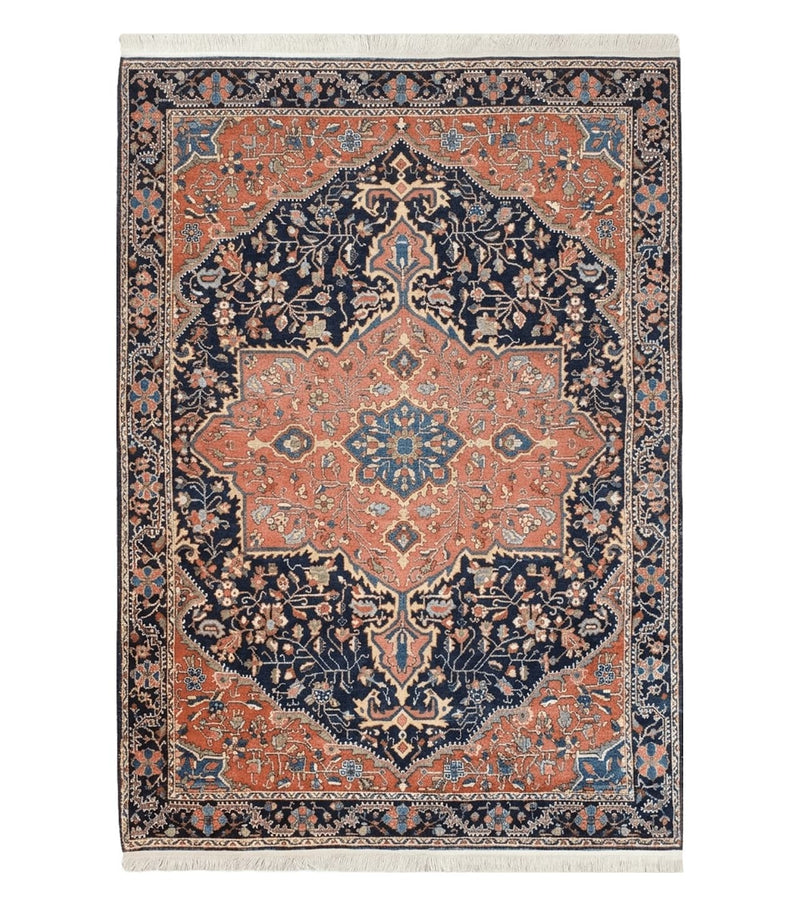


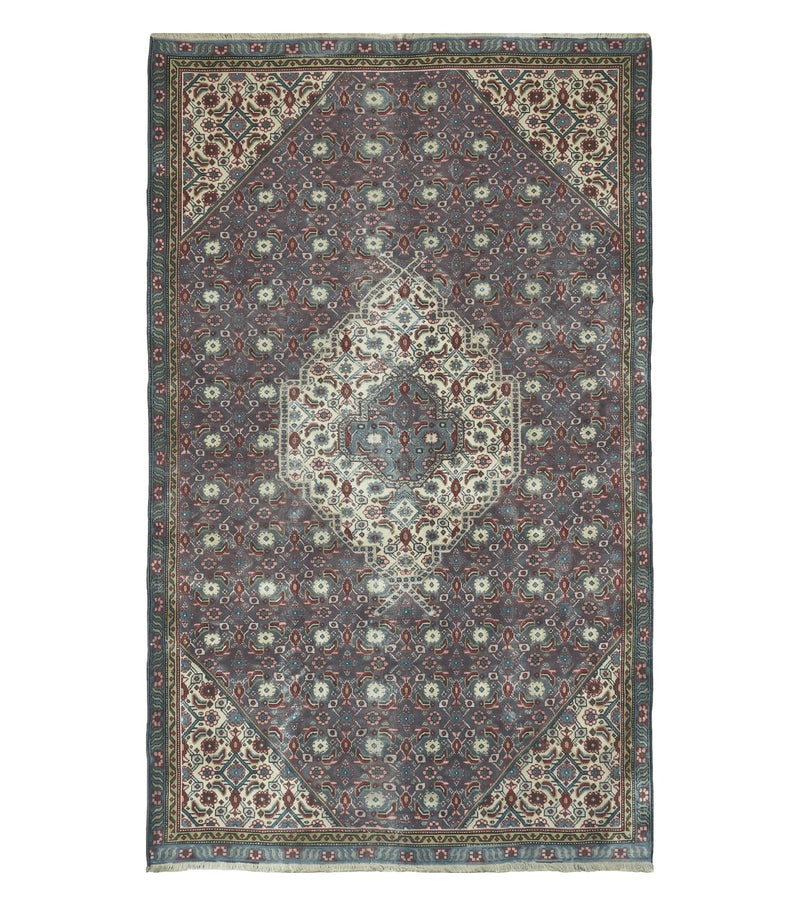


Pakistan became a major producer of hand-knotted rugs after its creation in 1947, building on the weaving traditions of the region and the skills of Turkmen, Afghan and other weavers who settled there. Pakistani rugs are best known for Bokhara designs, rows of repeating guls taken from Turkmen weaving, usually with a soft, lustrous finish. Pakistan also weaves fine rugs in Persian designs, known as Pak-Persian rugs, and the soft-colored Chobi rugs of Peshawar.
| Main centers | Lahore, Karachi, Peshawar |
|---|---|
| Knot | Usually asymmetric (Persian) |
| Materials | Wool pile on a cotton foundation; some silk highlights |
| Main types | Bokhara, Jaldar, Pak-Persian, Chobi (Peshawar), Kazak |
| Finish | Often washed for a soft sheen |
Bokhara rugs
The name comes from Bukhara, a city in present-day Uzbekistan that was a great market for Turkmen rugs. In the trade, "Bokhara" means a rug with rows of Turkmen-style guls, usually the elephant-foot or Tekke-style gul, on a plain field, rather than a rug woven in Bukhara. Pakistani Bokharas come in many colors: the traditional deep red, but also ivory, navy, rust, gold, green and black. Many are washed to give the wool a soft, silky sheen. See Persian Turkoman Rugs.
A related design, the Jaldar, has a lattice of diamond-shaped guls linked into a net. Its name is often said to come from a word for "net."
Pak-Persian rugs
Pak-Persian rugs are woven in Pakistan in Persian designs: Tabriz, Kashan and Kerman medallions, Herati and floral all-over patterns. The best are densely knotted with fine, clean drawing and soft, lustrous wool; some include silk highlights. See Indo-Persian, Sino-Persian and Pak-Persian Rugs.
Peshawar and Chobi rugs
From the 1980s, Peshawar in north-west Pakistan, home to many Afghan refugees, became the center for Chobi rugs, woven with hand-spun wool and natural dyes in soft colors and large-scale designs. See Chobi and Ziegler-Style Rugs.
Judging quality
- Knot density: Pakistani rugs are often described by a quality grade such as "16/18" or "9/18," referring to knots per inch across and down; higher numbers mean finer rugs.
- Wool: look for soft, springy wool with natural luster rather than a harsh, chemically bright sheen.
- Finish: heavy chemical washing can weaken wool; a good rug feels supple but strong.
- Shape: the rug should lie flat and square.
See also Afghan Rugs.