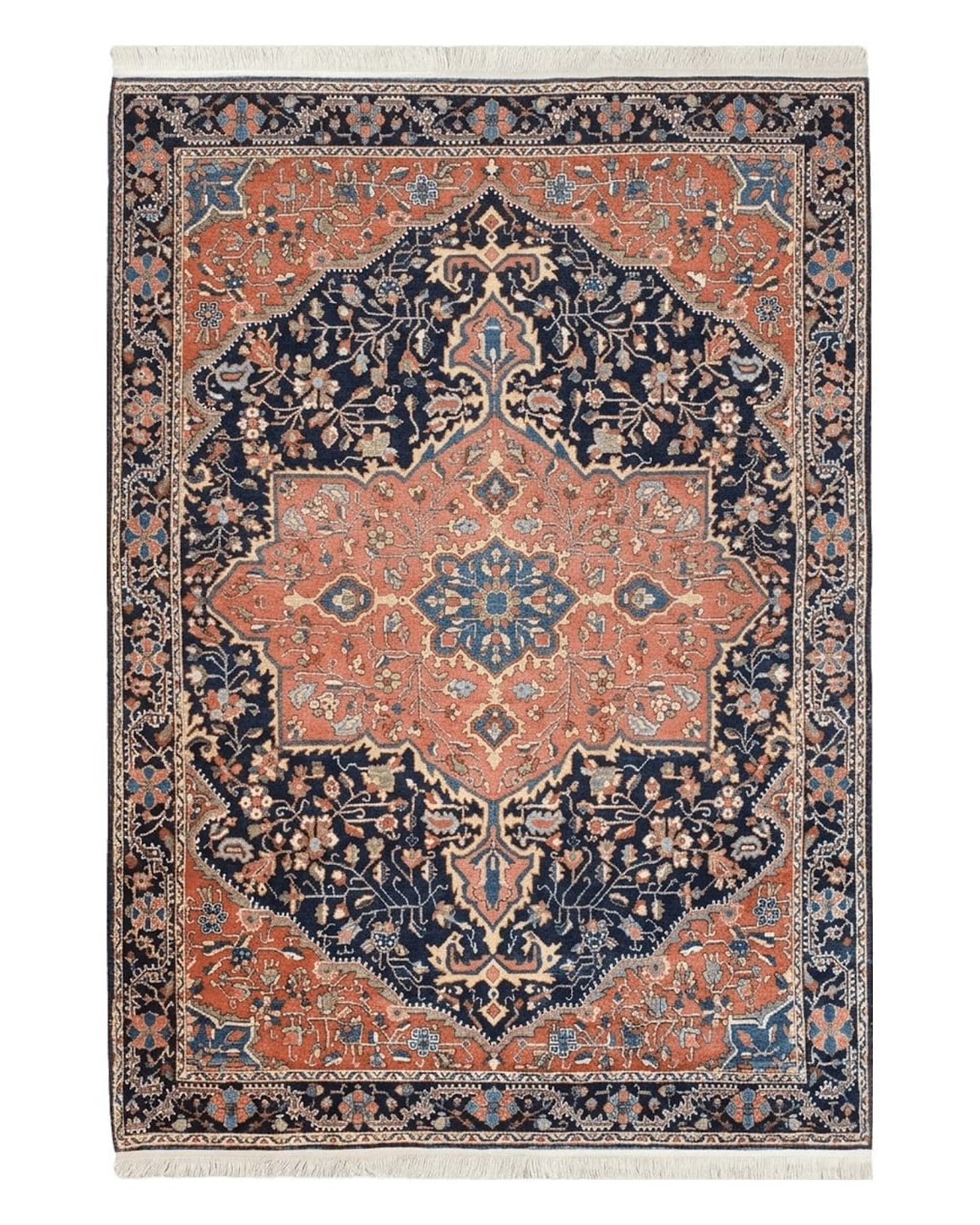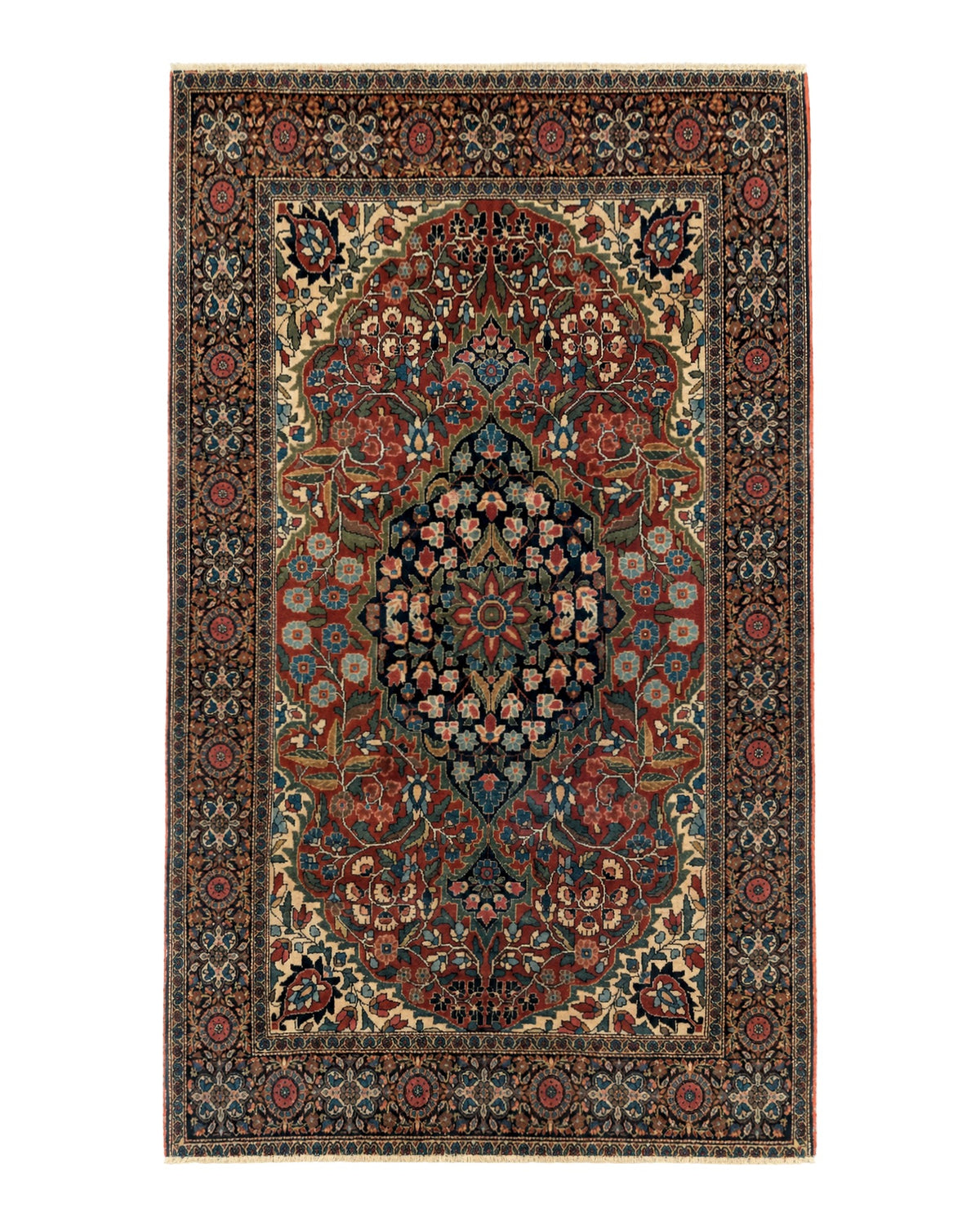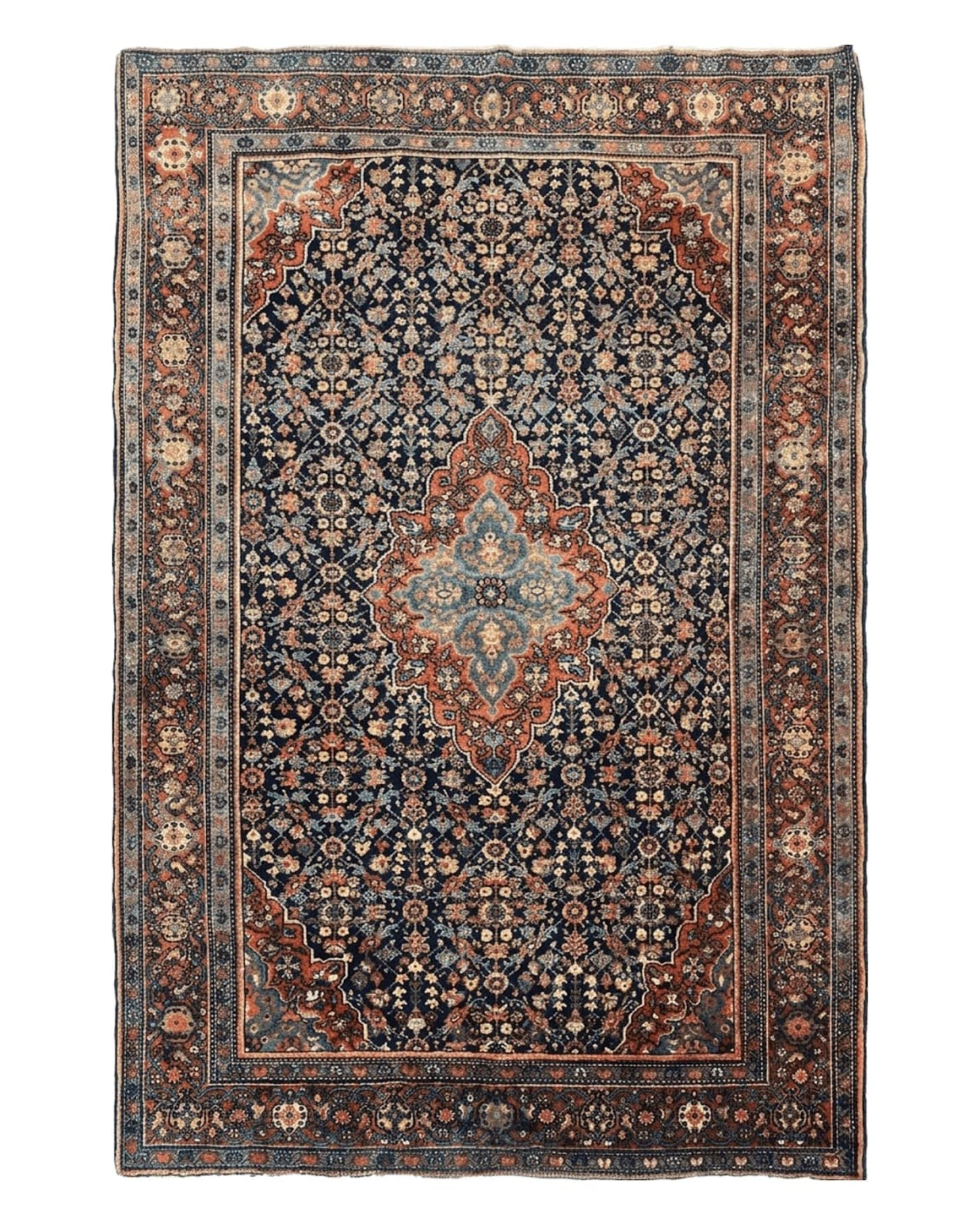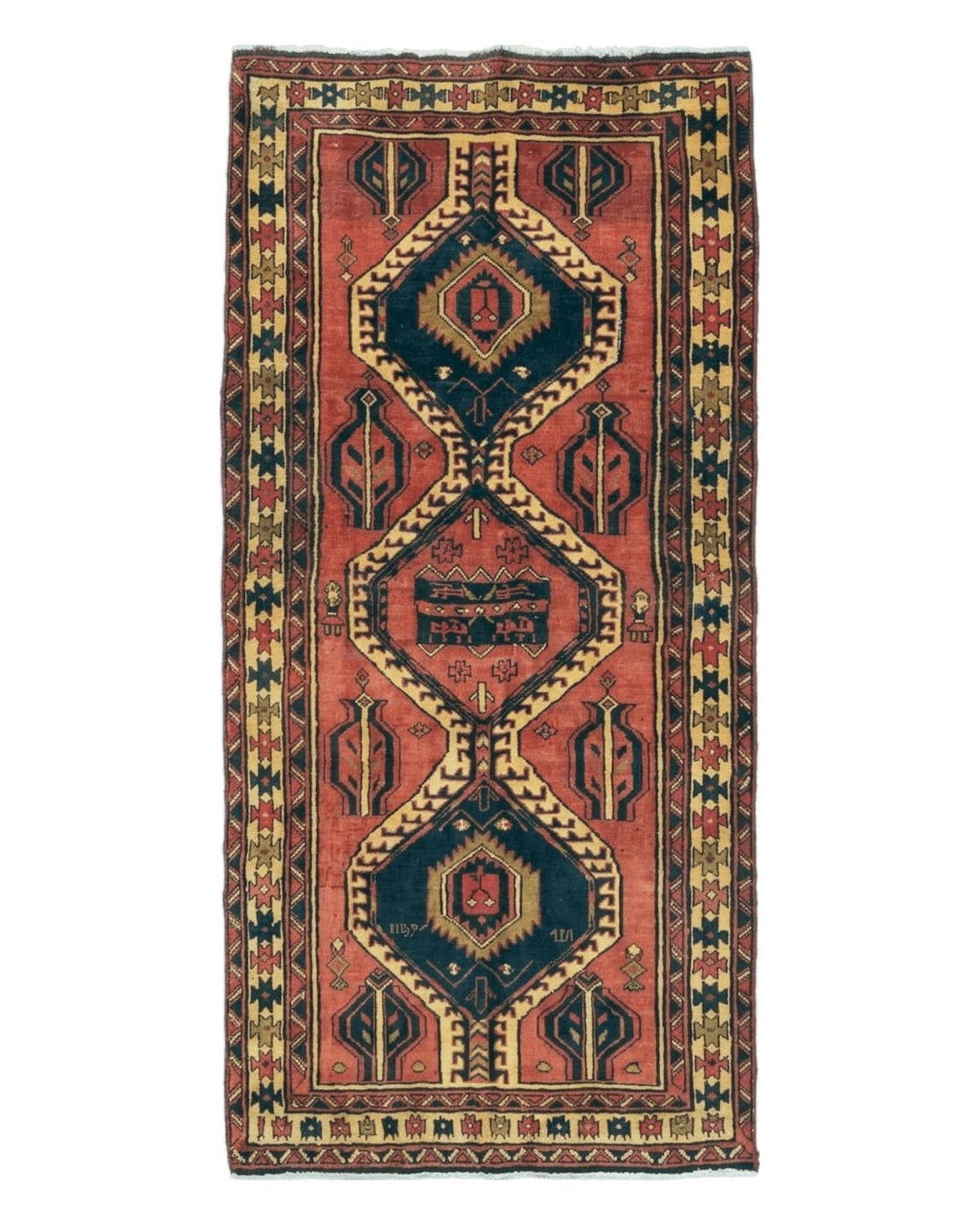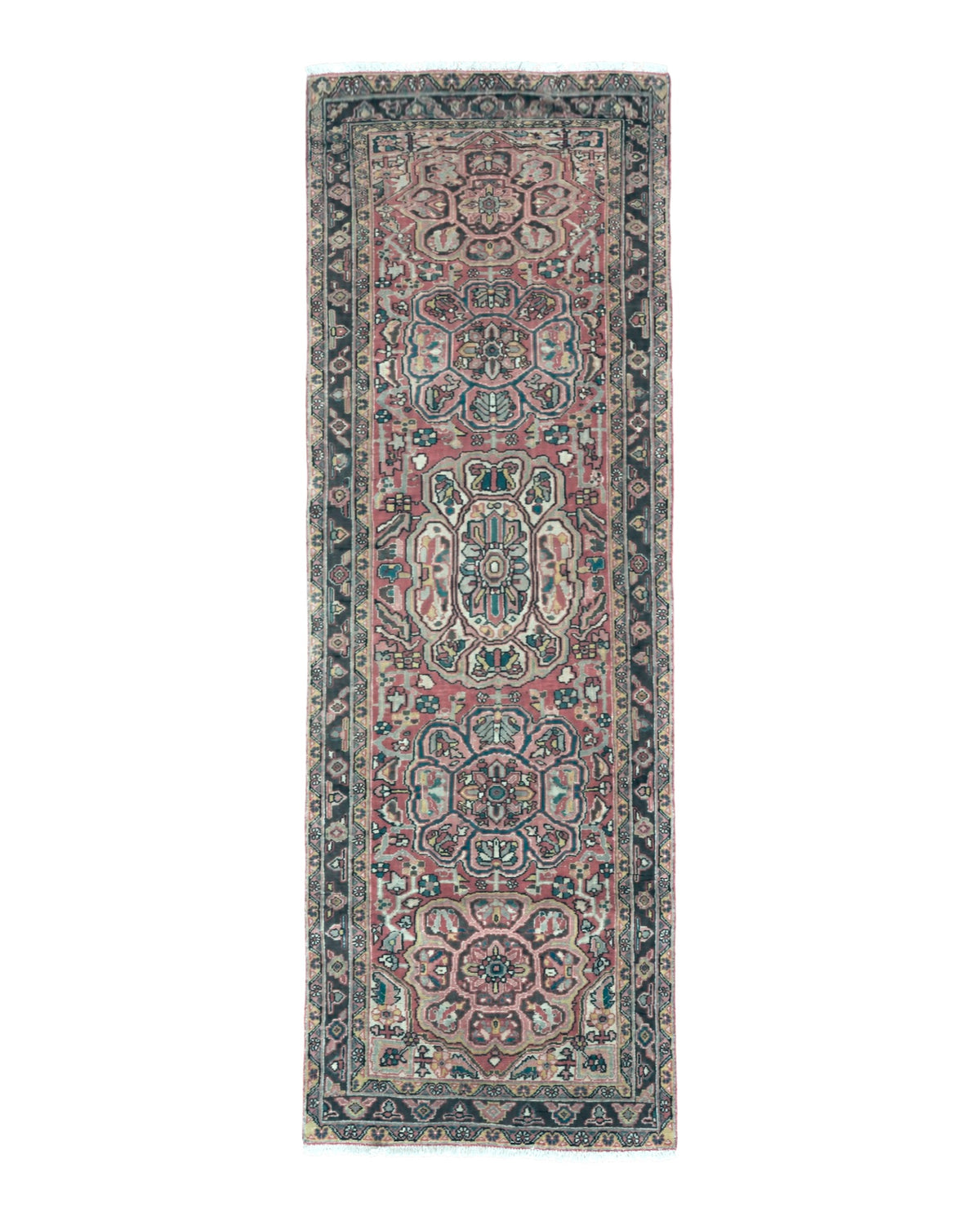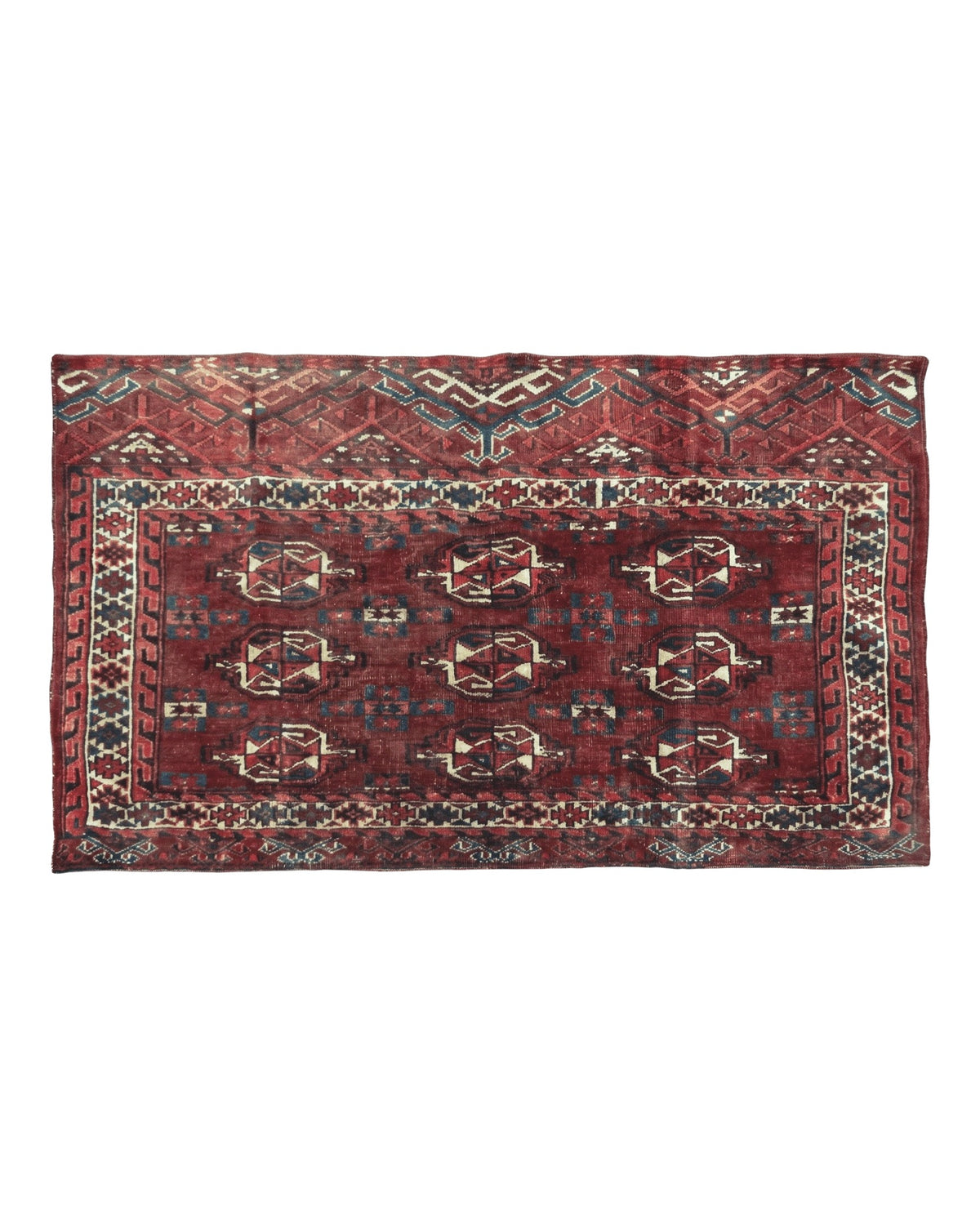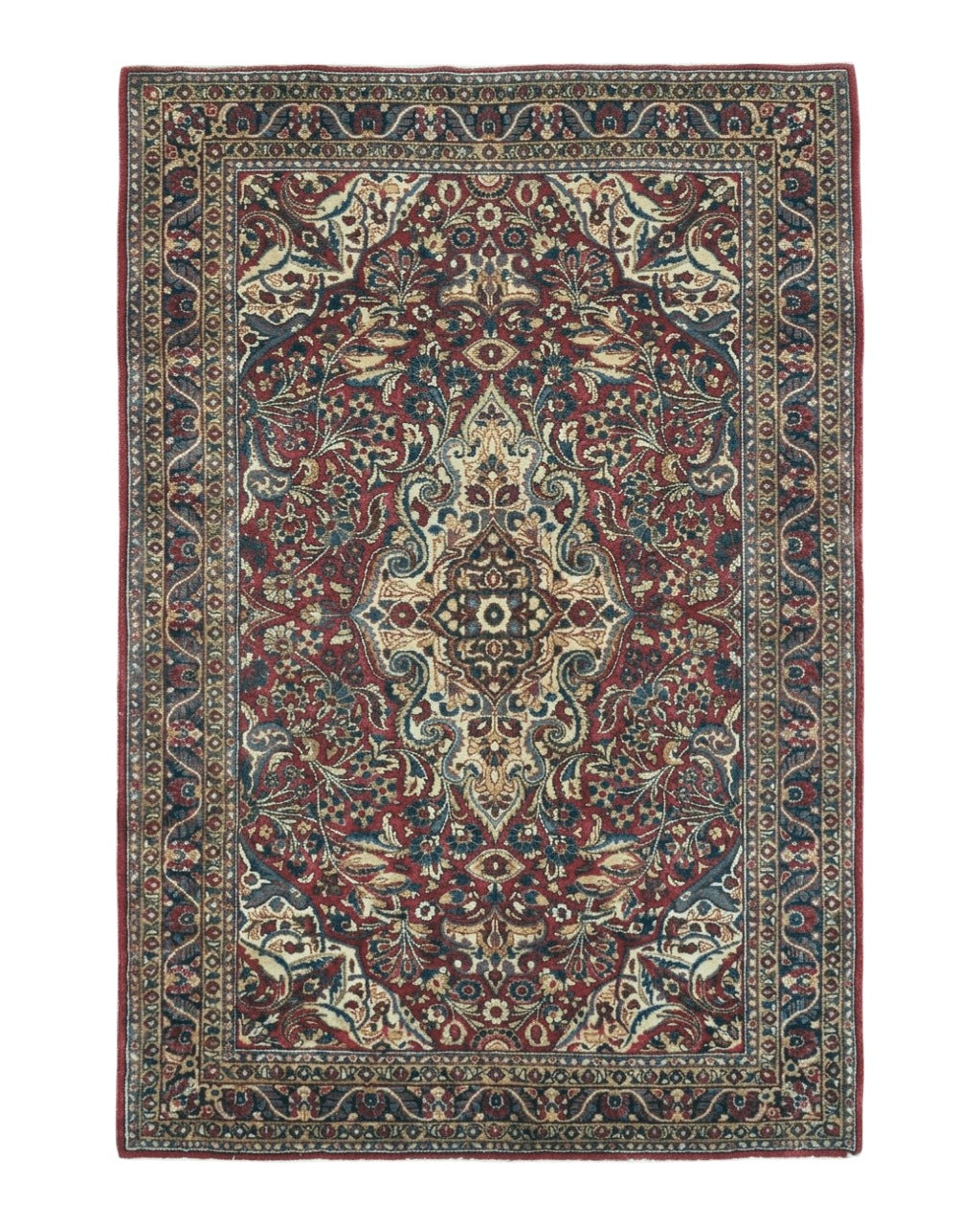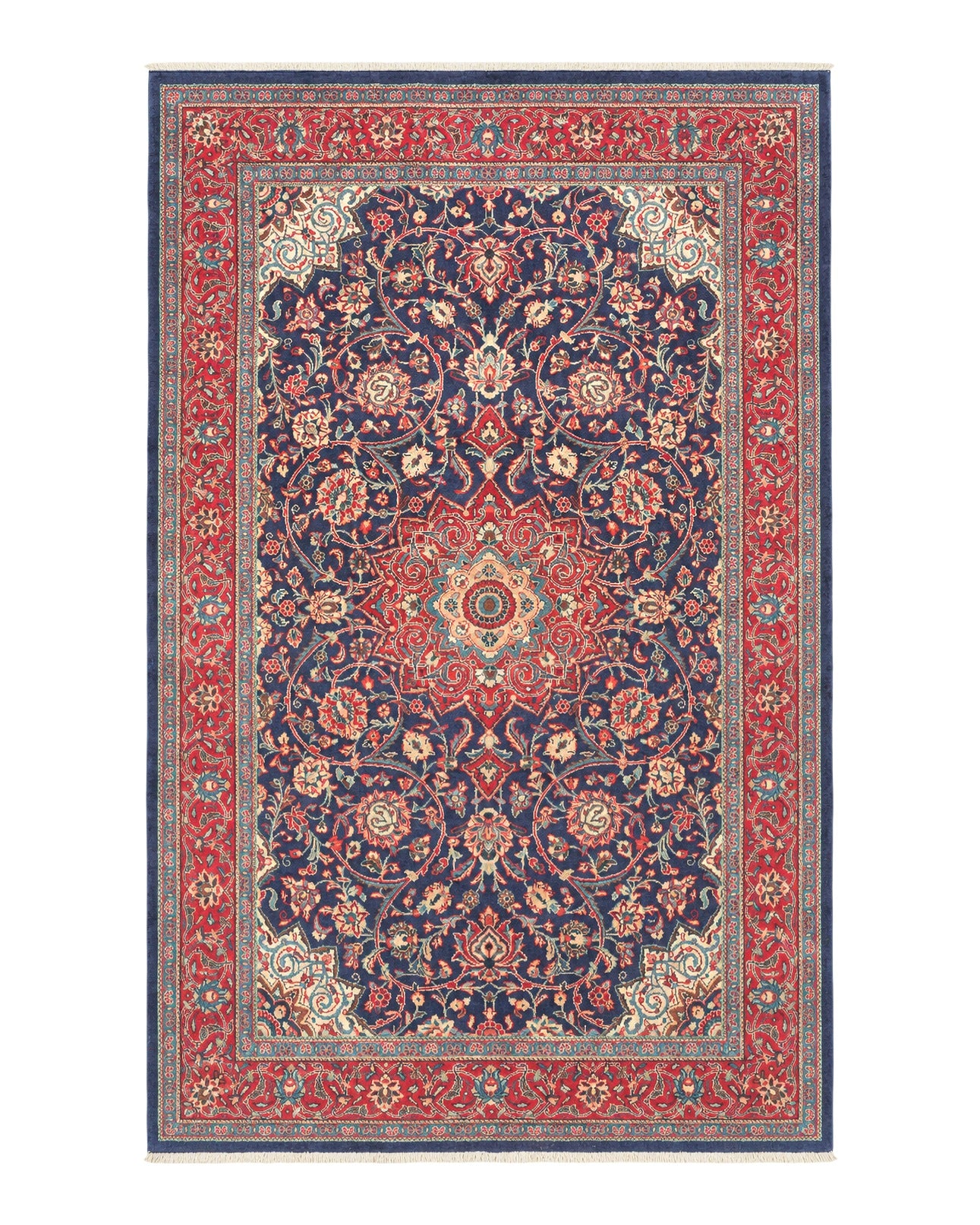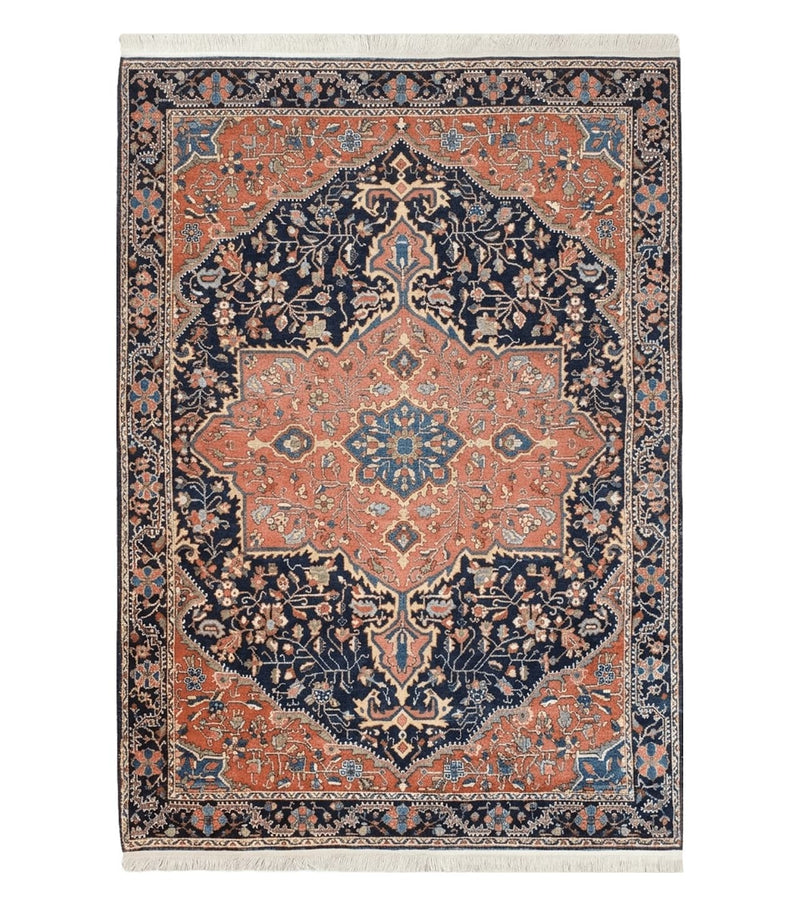


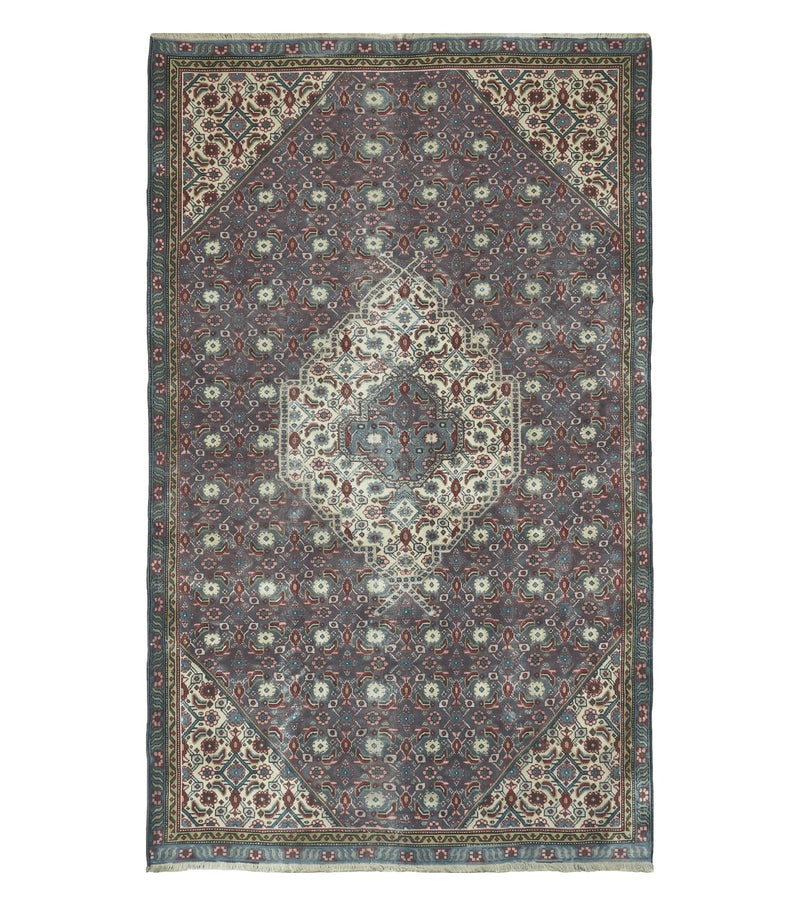


Sarouk (also Saruk) is a village in the Arak region of west-central Iran, and its name has been given to one of the best-known families of Persian rugs. Sarouks are dense, durable rugs with curvilinear floral designs, and they have been popular in America for more than a century. There are two main types: the earlier Farahan-Sarouks, with compact medallion designs, and the later American Sarouks, with their rose-red fields and floating floral sprays.
| Origin | Sarouk and the villages of the Arak (Sultanabad) region |
|---|---|
| Tradition | Village rugs, often woven for merchants to set designs |
| Knot | Asymmetric (Persian) |
| Materials | Good wool pile on a cotton foundation |
| Construction | Dense, firm and heavy for its size |
| Main types | Farahan-Sarouk (about 1880–1920); American Sarouk (about 1920–1960) |
| Classic colors | Rose-red or salmon field, navy border, ivory and green accents |
The Arak weaving region
From the late 19th century, the city of Sultanabad (now Arak) became one of the busiest rug markets in Iran. Foreign and Iranian firms commissioned rugs from the surrounding villages to designs that suited Western buyers. Sarouk was one of these villages, and its name came to stand for the finest, most densely woven rugs of the region. Neighboring villages, such as Lilihan, and the Farahan plain wove related types. See Mahal and Sultanabad Rugs.
Farahan-Sarouks
The earlier Sarouks, from about 1880 to 1920, are often called Farahan-Sarouks. They have a compact, often lobed or diamond-shaped medallion, frequently on an ivory, light blue or salmon field, with fine, delicate floral drawing and soft colors. They are thinner and finer than later Sarouks and are highly prized by collectors. See Farahan-Sarouk Rugs.
The American Sarouk
From around 1920, Sarouk weavers began making rugs specifically for the American market. American buyers preferred all-over floral designs to medallions, and the result was a new style: a deep rose-red or raspberry field covered with detached sprays of flowers, often without a medallion, surrounded by a dark navy border. The pile is thick and the weave very dense.
Many American Sarouks were "painted" in the United States: after a chemical wash softened the original colors, the red field was re-dyed by hand to the deep shade buyers wanted. Painted Sarouks are an accepted part of the type's history, though unpainted rugs with good original color are generally preferred.
Construction
Sarouks are woven with the asymmetric knot on a cotton foundation, with a thick, firmly packed pile. They are heavy for their size and hold their shape very well, and good Sarouks are among the most durable floral rugs made in Iran. Many semi-antique Sarouks are still in daily use after seventy or more years.
How to recognize a Sarouk
- Dense, firm weave and a thick, even pile.
- Curvilinear floral designs: compact medallions in earlier rugs, floating sprays in American Sarouks.
- Rose-red or salmon field and a navy border.
- Asymmetric knots on a cotton foundation.
See also How Rugs Are Dated and Persian Village Rugs.