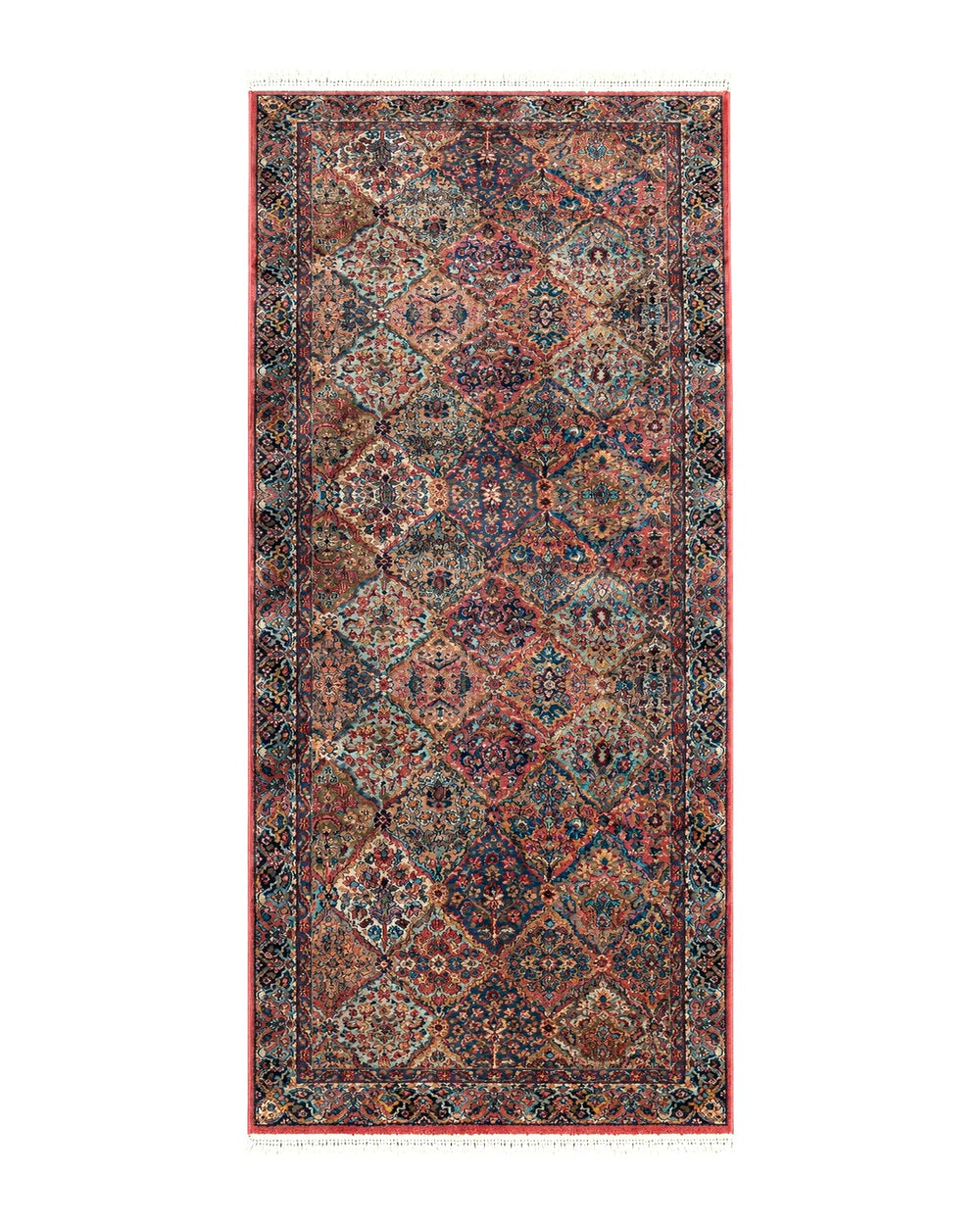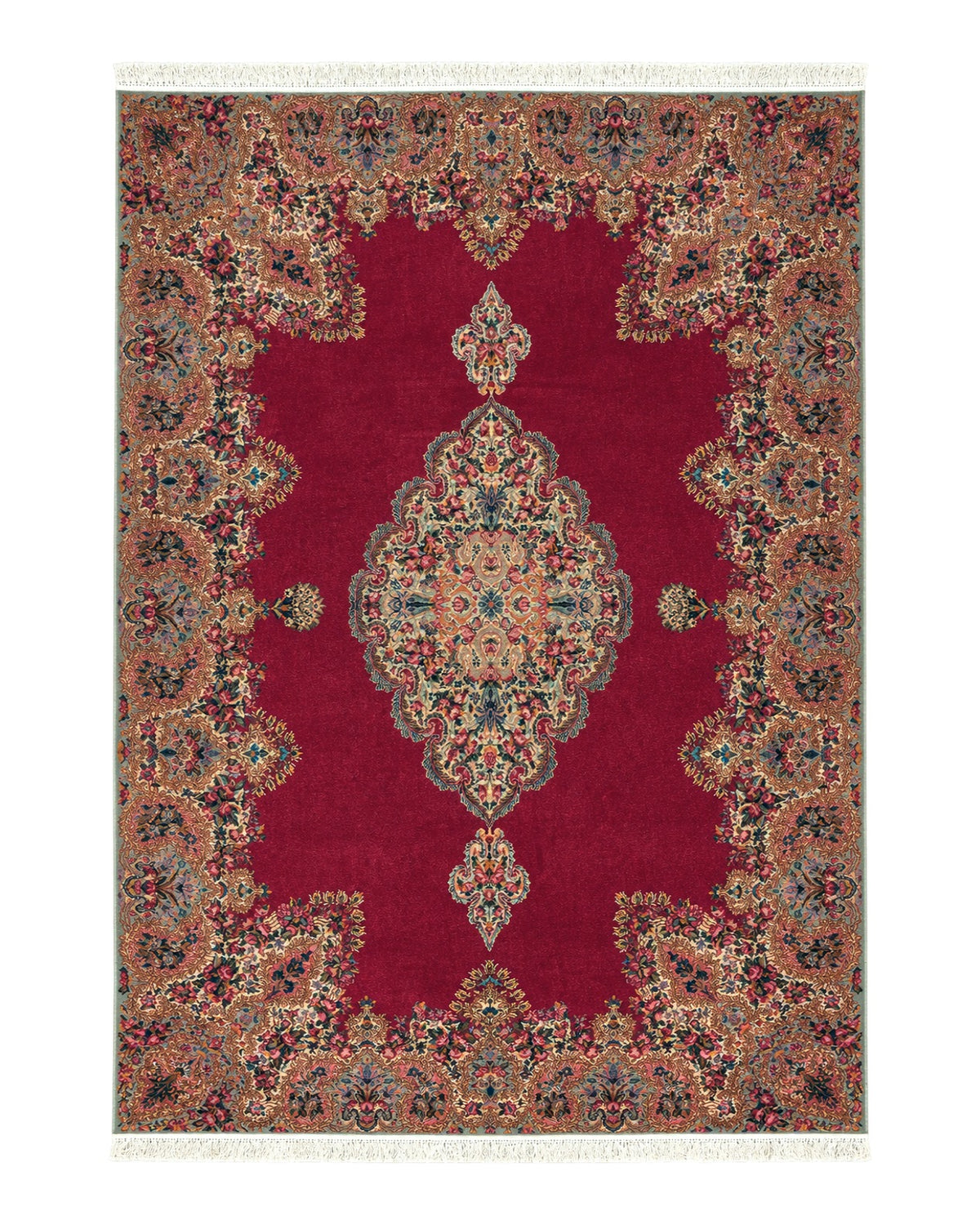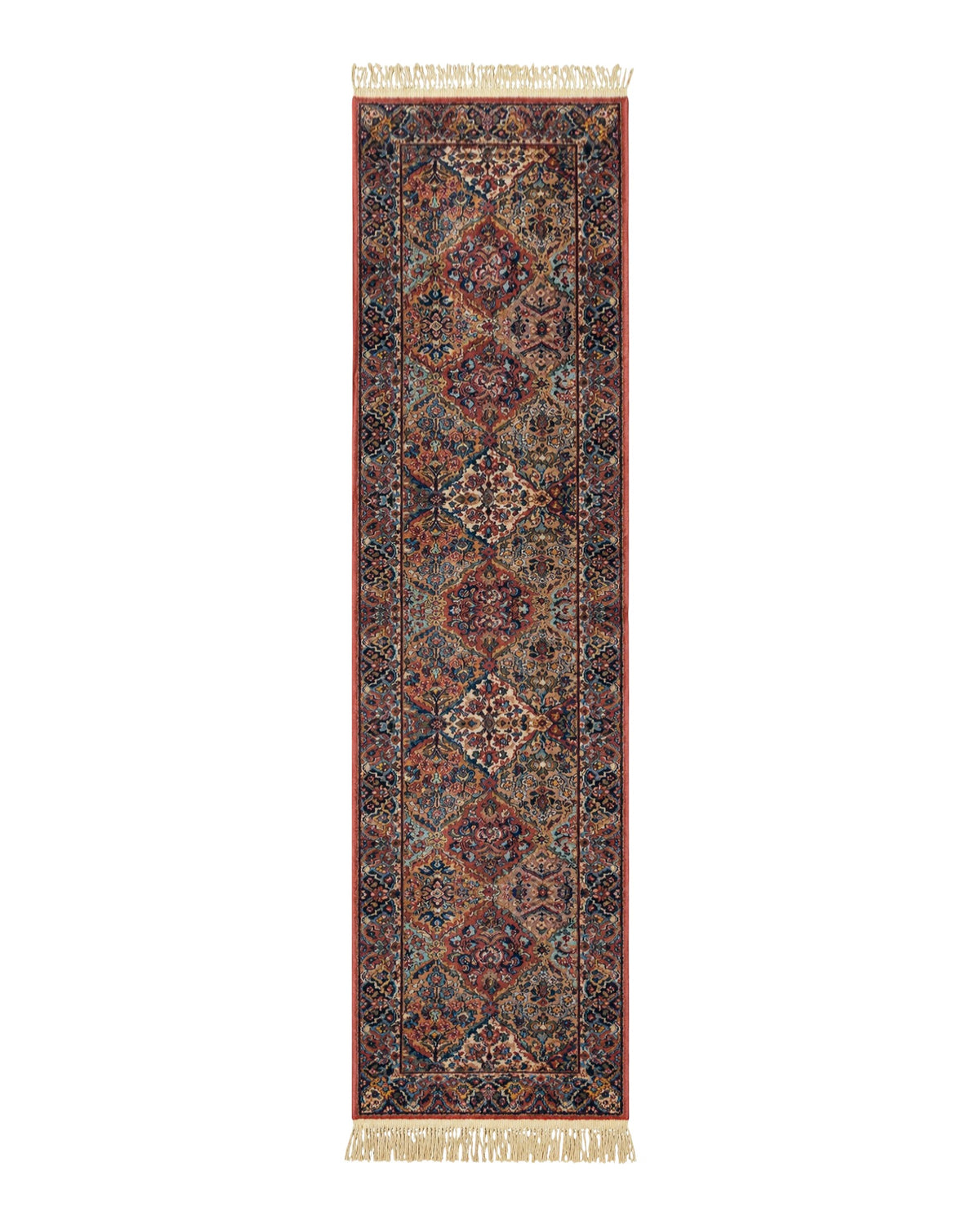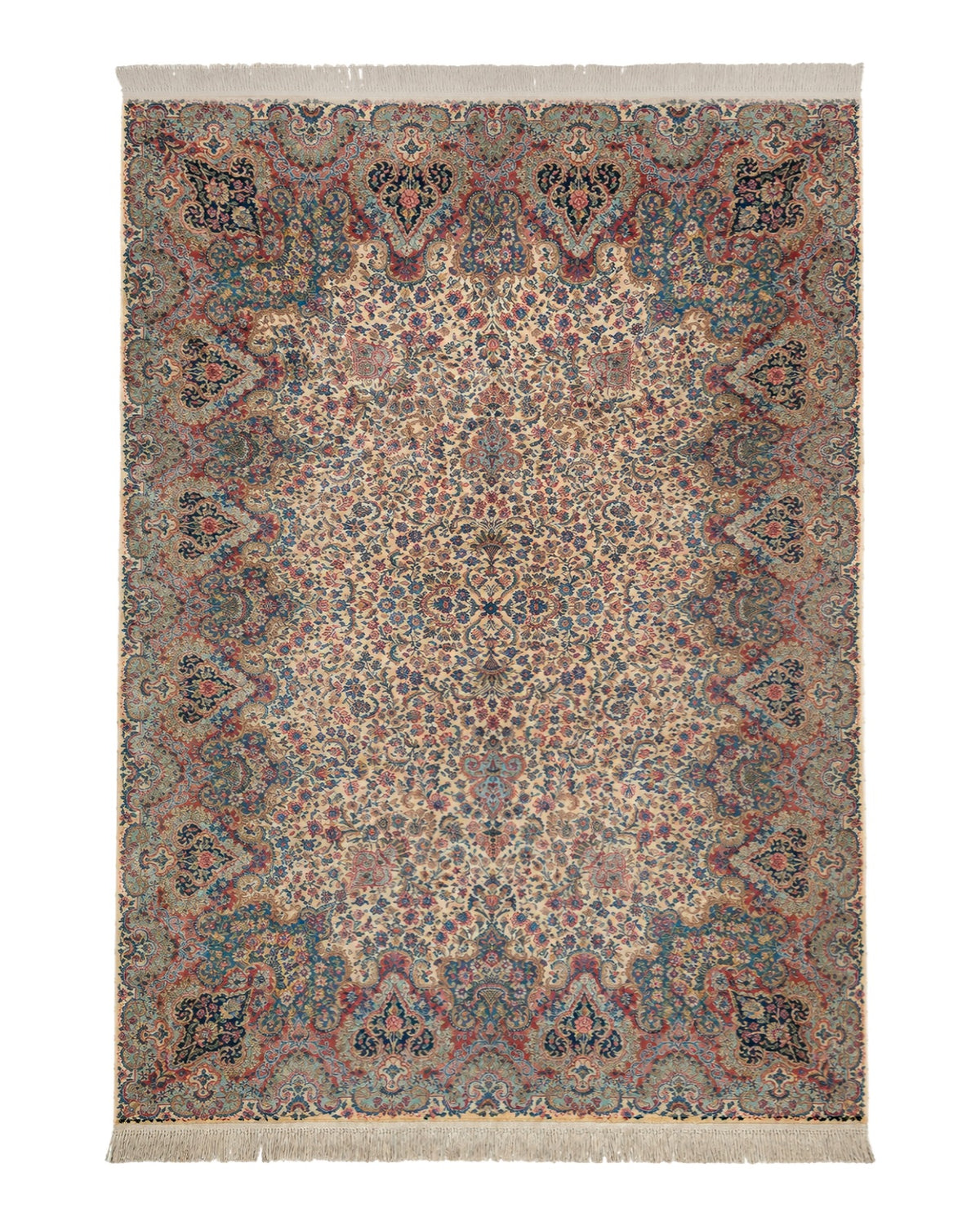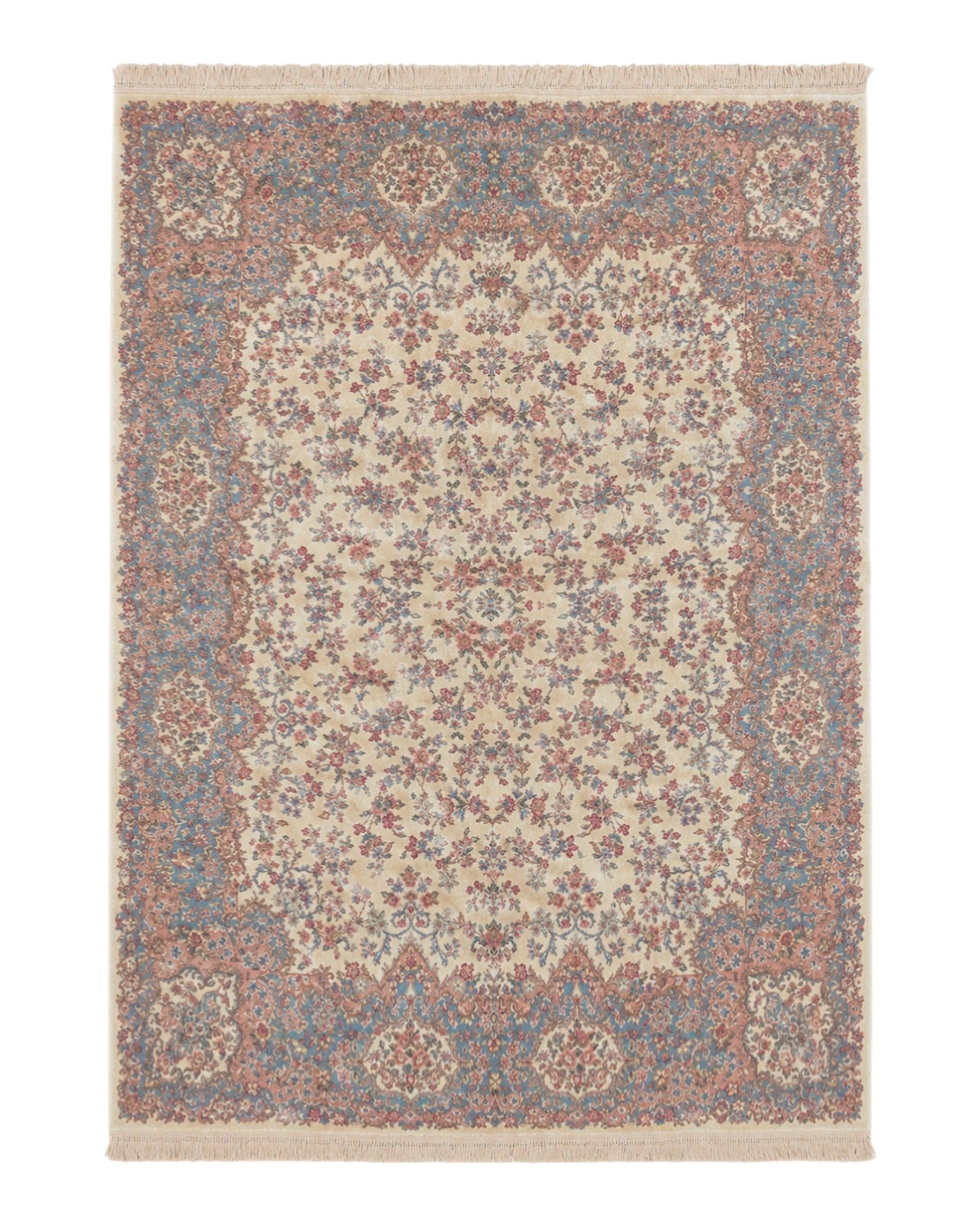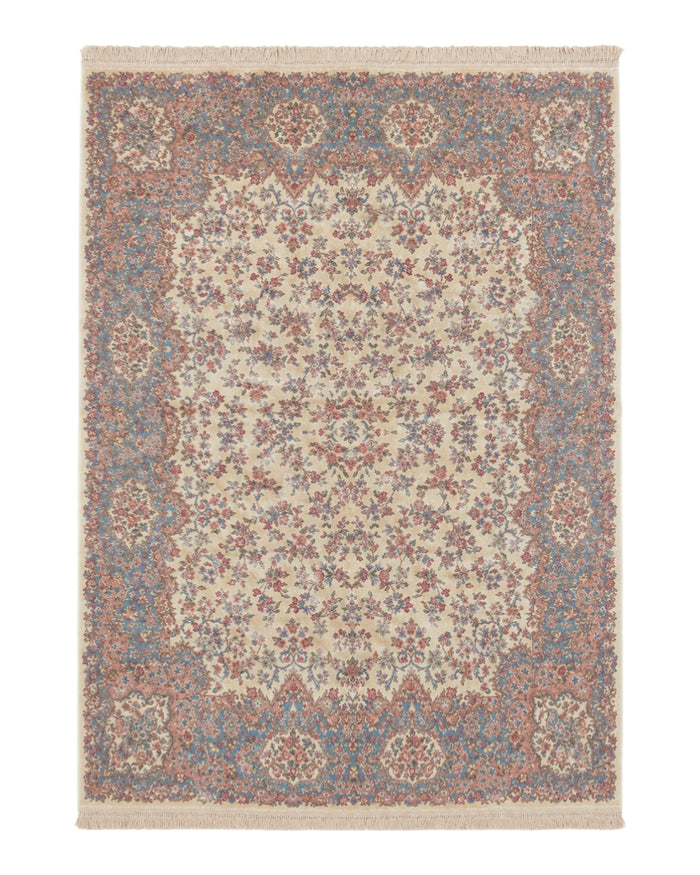




If one rug stands for Karastan, it is the #717. Introduced in 1937 as part of the Original Collection, the Multicolor Panel Kirman was woven in about fifty colors and became the company's best seller for some fifty years. A design executive at Mohawk, which later owned Karastan, called it "the rug that built the Karastan franchise," and it remains the most recognized and most collected Karastan design today.
| Number | #717, or 700/717 |
|---|---|
| Introduced | 1937 |
| Design | Panel (compartment) design after Persian Kerman rugs |
| Colors | About 50 |
| Sizes | Scatter rugs to 10' x 14', plus runners |
The design
The #717 is a panel design. Its field is divided into a lattice of small compartments, and each compartment is filled with its own floral motif. The idea comes from the panel, or kheshti, designs of Persian rugs, in which the field is laid out like the beds of a garden. The many compartments let the designers use an unusually wide palette, with deep reds, soft blues and warm earth tones set side by side, all held together by wide floral borders. See Garden, Panel and Tree of Life Designs.
Why it became the best seller
- Color: its many colors suit almost any room and hide everyday wear well.
- Interest: the compartments reward a close look; there is always another motif to find.
- Showmanship: weaving so many colors by machine showed off what Karastan's looms could do.
- Range: it was made in many sizes, so families could use it throughout a house.
Sizes
The #717 was woven in a full range of Karastan sizes, from small scatter rugs to 8' 8" x 12' room sizes. Large 10' x 14' rugs, runners and wide runners in this design are much less common and are especially sought after. See Karastan Sizes and Runners.
Recognizing a #717
The design is unmistakable once you have seen it: a field of small compartments, each filled with its own floral motif, in a wide range of colors. The label on the back usually reads 717 or 700/717. Because the design was produced over many decades, look at the label and the rug's condition and patina to judge its era. See How to Identify and Date a Vintage Karastan.
The Kirman connection
The design takes its name from Kerman (Kirman), the Persian city famed for refined floral rugs and a broad palette, where panel and garden layouts were also woven. See Kerman Rugs and Karastan Kirman Rugs.