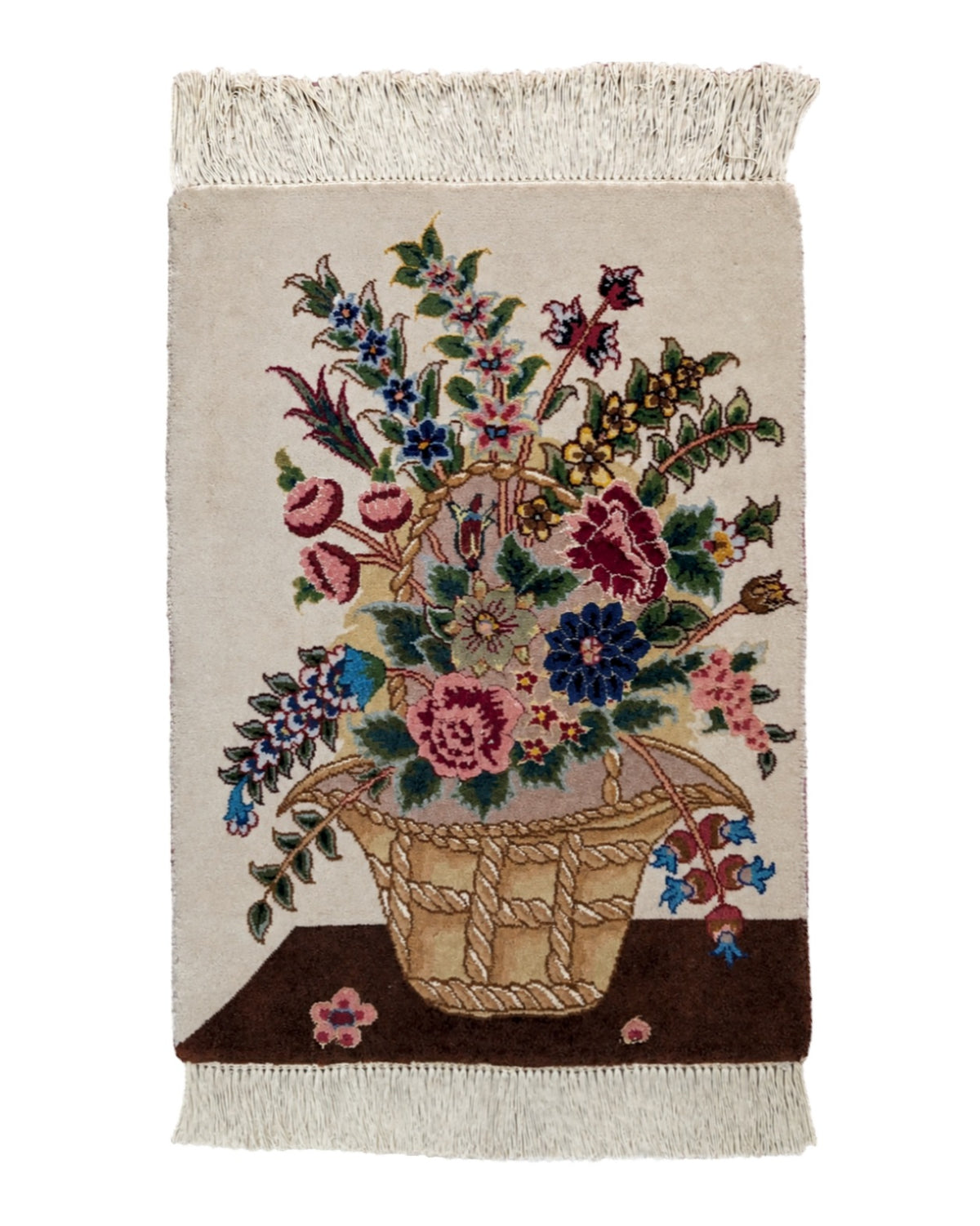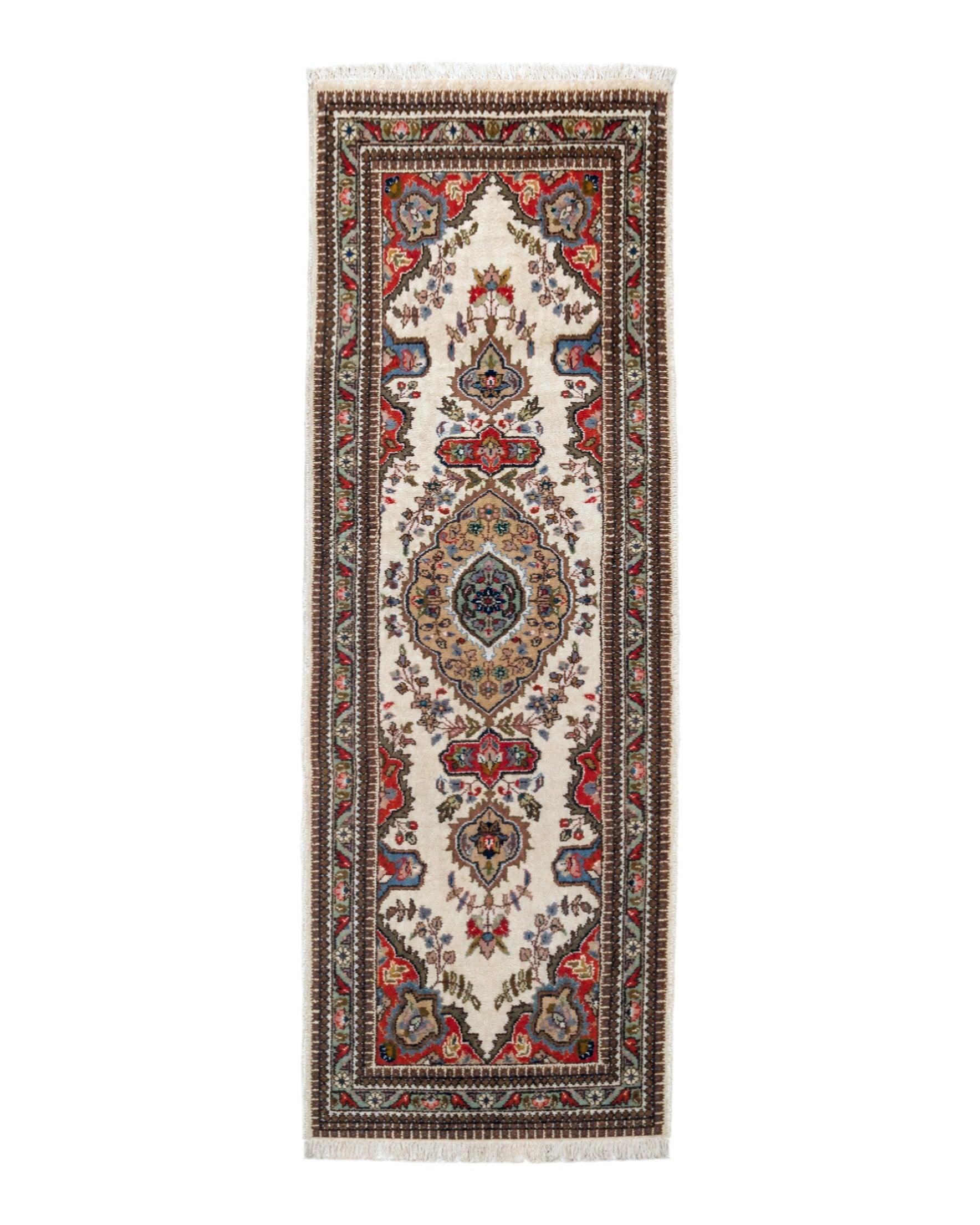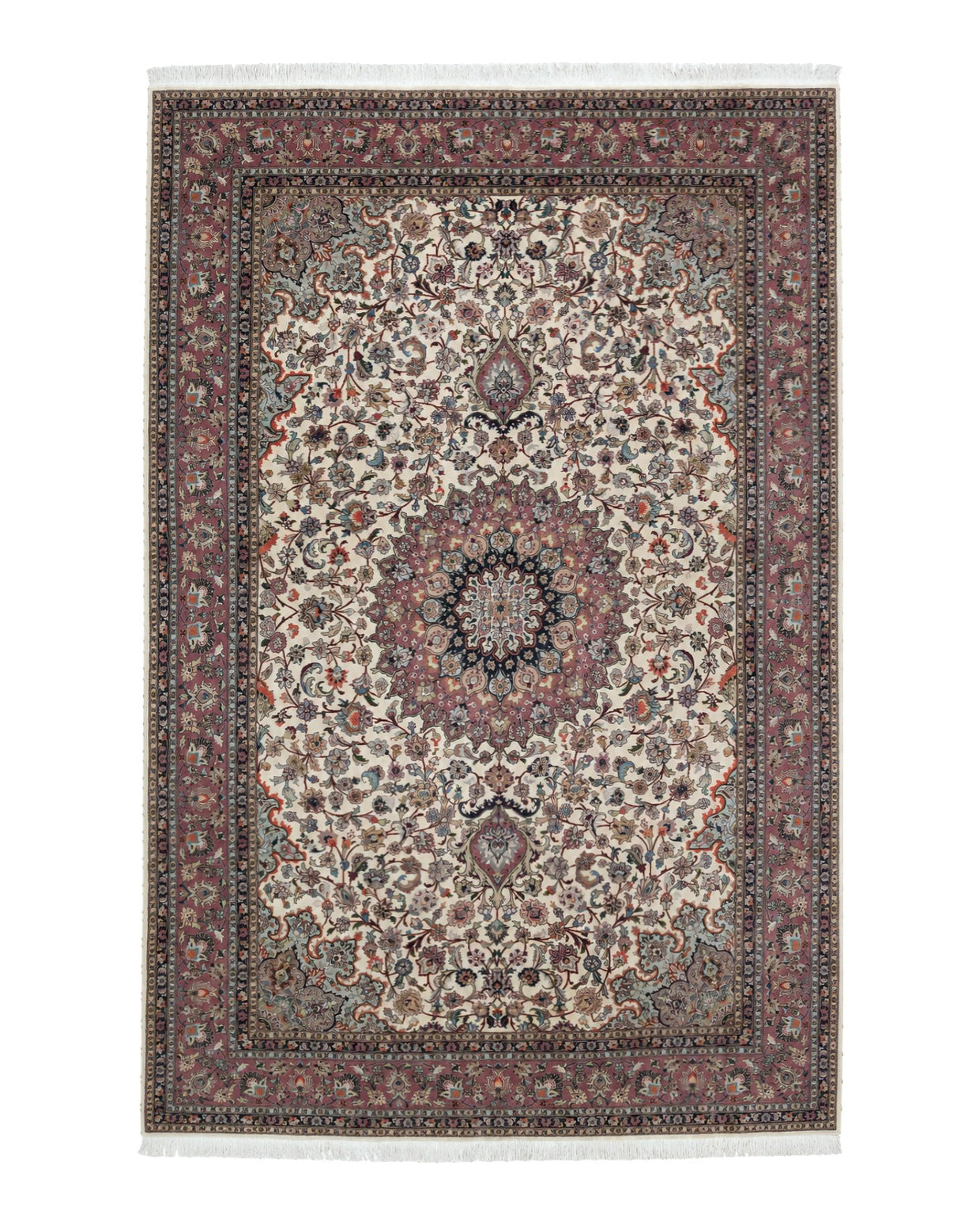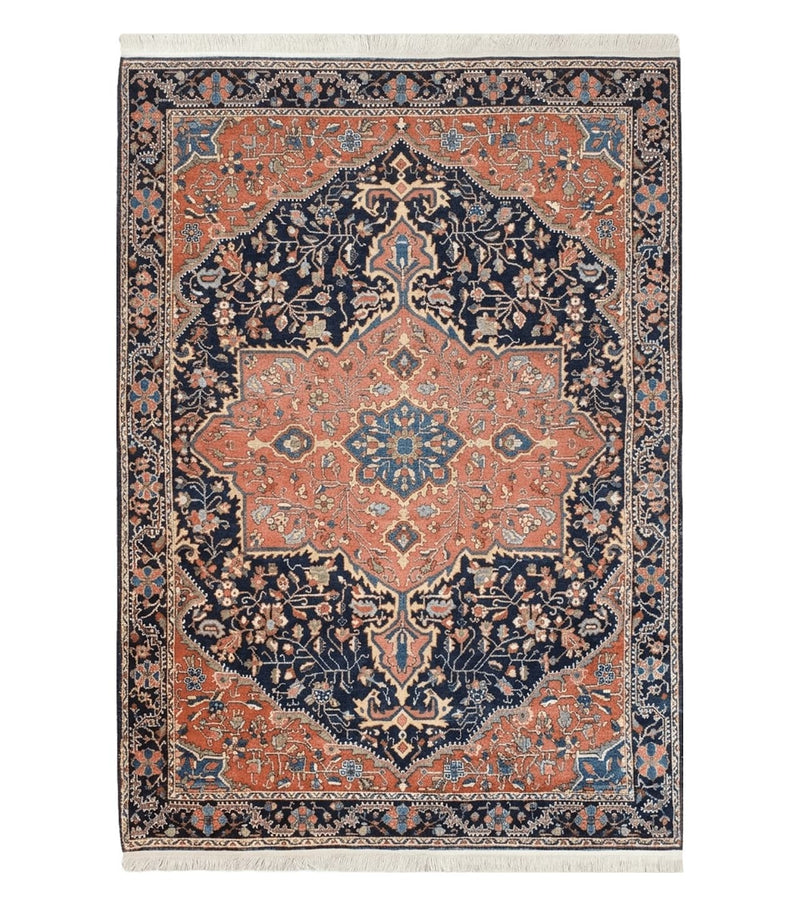


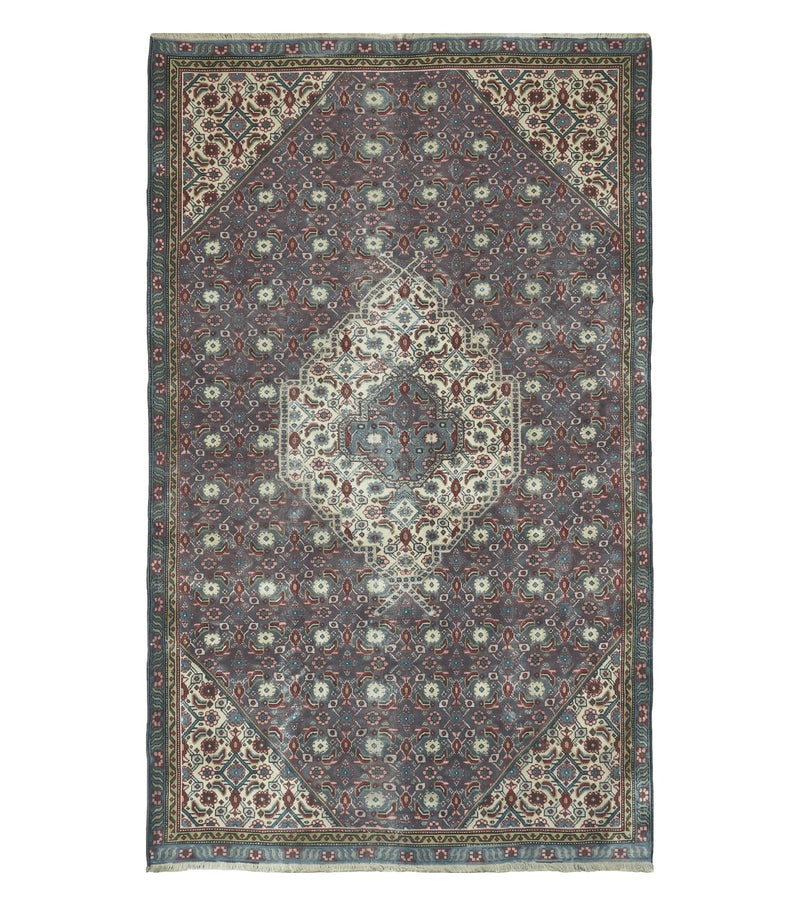


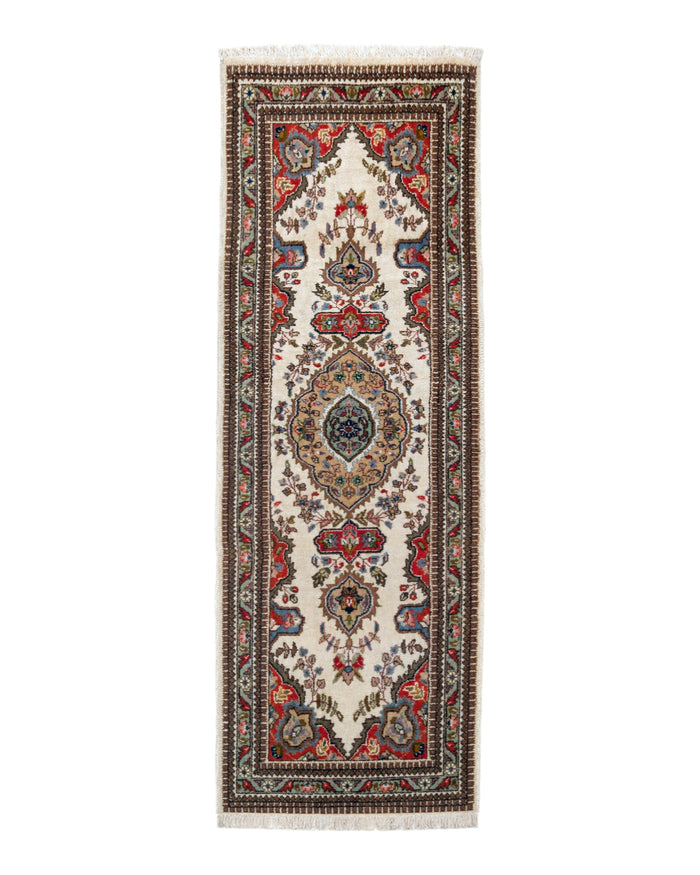

Tabriz rugs come from Tabriz, the largest city in north-west Iran and one of the oldest and most important weaving centers in the country. Tabriz workshops weave a wider range of designs than any other Persian city, from classic medallions to hunting scenes and portraits, in qualities that run from sturdy everyday rugs to some of the finest wool-and-silk pieces made in Iran.
| Origin | Tabriz, East Azerbaijan province, north-west Iran |
|---|---|
| Tradition | City (workshop) rugs |
| Knot | Symmetric (Turkish), tied with a hook-knife |
| Materials | Wool pile on a cotton foundation, often with silk highlights; some all-silk |
| Quality grading | In raj: knots across 7 cm, commonly from about 30 to 70 |
| Typical designs | Medallion, Mahi (fish), Herati, garden, pictorial and hunting scenes |
Where Tabriz rugs come from
Tabriz sits in the province of East Azerbaijan, close to the borders with Turkey, Armenia and the Republic of Azerbaijan. For centuries it was a major stop on the trade routes between Persia, the Caucasus, Anatolia and Europe, and it remains one of the main rug markets in Iran. Like most weaving in this Azeri Turkish-speaking region, Tabriz rugs use the symmetric "Turkish" knot, rather than the asymmetric knot common in central Iran.
The wider Tabriz region is also home to famous village weaving areas, including Heriz, Karajeh and Sarab, whose rugs are often traded through the Tabriz bazaar.
A short history
Tabriz was a royal capital several times, most notably at the start of the Safavid dynasty in the early 16th century, when court workshops produced some of the most celebrated carpets of the period. Some of the great surviving Safavid carpets are attributed by many scholars to north-west Persian workshops, possibly in Tabriz, although their exact origin is still debated.
In the second half of the 19th century, Tabriz merchants led the revival of Persian weaving for export to Europe and America. They organized workshops in the city and commissioned rugs in surrounding villages, and Tabriz became the hub of the modern Persian rug trade. Masters of this period, such as Haji Jalili, are still remembered for rugs with soft colors and beautifully balanced designs.
How Tabriz rugs are made
Tabriz weavers work on large vertical looms from a drawn design. A distinctive local tool is the hook-knife (tableh): a small knife with a hook at its tip, used to pull the yarn around the warps and cut it in one quick movement. Skilled Tabriz weavers tie knots very quickly, which allowed the city to produce fine rugs in large numbers.
The pile is wool on a cotton foundation. Better pieces use silk to outline motifs and highlight details, and some are woven entirely in silk. The pile on most Tabriz rugs is clipped short, which keeps detailed designs sharp.
Typical designs
- Medallion and corners. The classic Tabriz layout: a large central medallion, often with pendants, on a field of flowers and vines, with matching corner pieces.
- Mahi (fish). A small, dense version of the Herati pattern, with leaves that look like tiny fish around a diamond-shaped lattice. Very typical of Tabriz.
- Garden and panel designs. The field is divided into compartments, each holding a tree, flower or vase. See Garden, Panel and Tree of Life Designs.
- Pictorial and hunting rugs. Tabriz is famous for rugs showing horsemen and animals, scenes from Persian poetry, and portraits. See Pictorial and Hunting Rugs.
Colors range widely: deep reds and navy blues in traditional pieces, and ivory, beige, soft greens and pastels in many 20th-century and modern rugs.
Understanding raj
In the Tabriz bazaar, quality is described in raj: the number of knots across 7 centimeters of the rug's width. The higher the number, the finer the rug. As a rough guide, assuming the knotting is about the same in both directions:
| Raj | Approx. knots per square inch | Description |
|---|---|---|
| 30 | about 120 | Good, sturdy everyday quality |
| 40 | about 210 | Medium-fine |
| 50 | about 330 | Fine |
| 60 | about 470 | Very fine |
| 70 and up | about 650 or more | Exceptionally fine, often with silk |
These are approximate: the number of rows per inch can differ from the number of knots across, so the real count varies. Knots and Knot Density explains how to count them yourself.
How to recognize a Tabriz rug
- Symmetric knots on a cotton foundation: each knot shows as two small bumps on the back.
- Crisp, detailed drawing with clean curves, a sign of a workshop rug woven from a cartoon.
- A low, even pile, often clipped quite short.
- The Mahi pattern or a pictorial scene are strong hints, though both are also woven elsewhere.
Living with a Tabriz rug
A wool Tabriz is hard-wearing and suits living rooms, dining rooms and bedrooms; its short pile sits flat under chairs and tables. Finer pieces with a lot of silk are best in lighter-traffic rooms. With so many designs and palettes to choose from, there is a Tabriz for almost every interior, from traditional to contemporary.