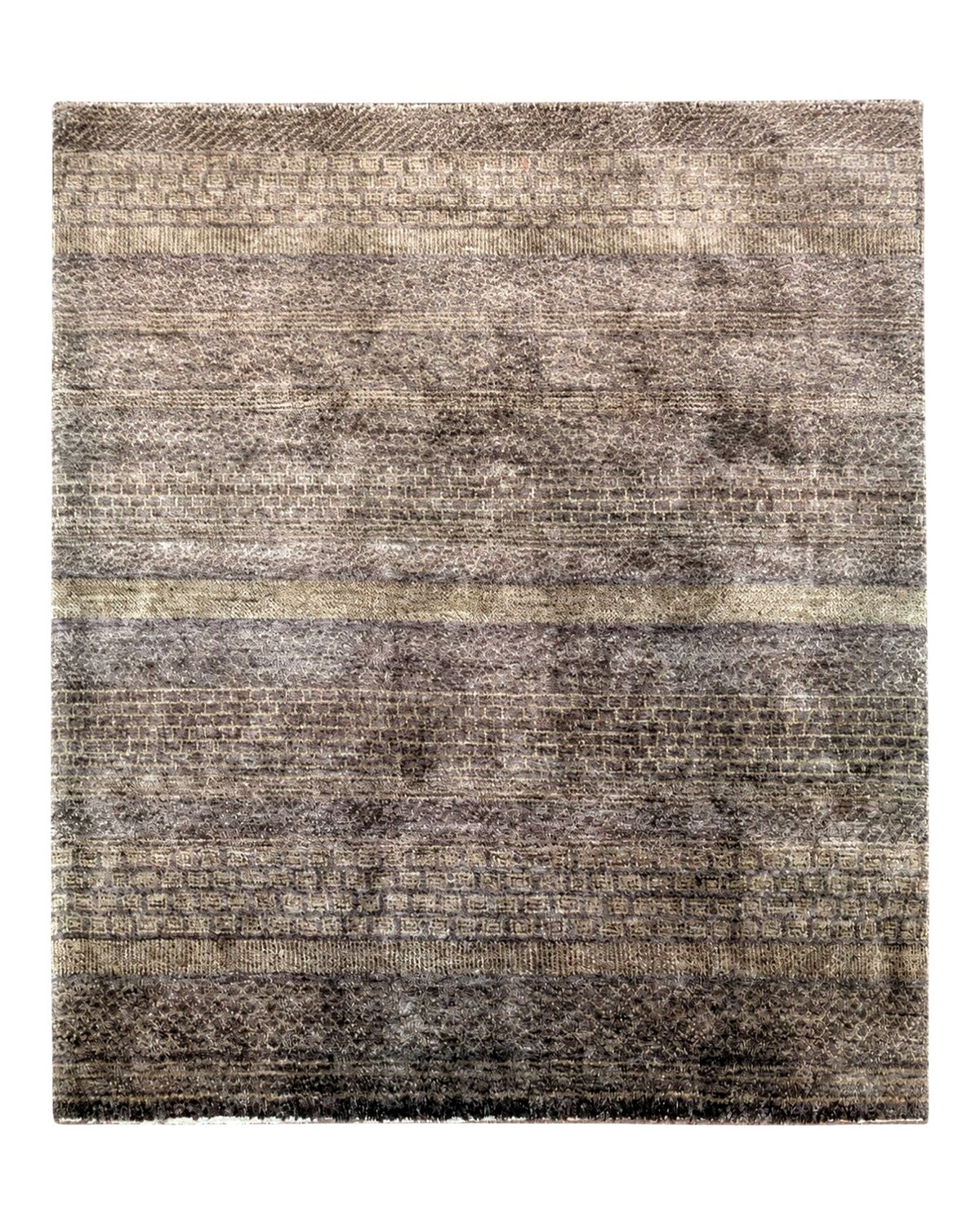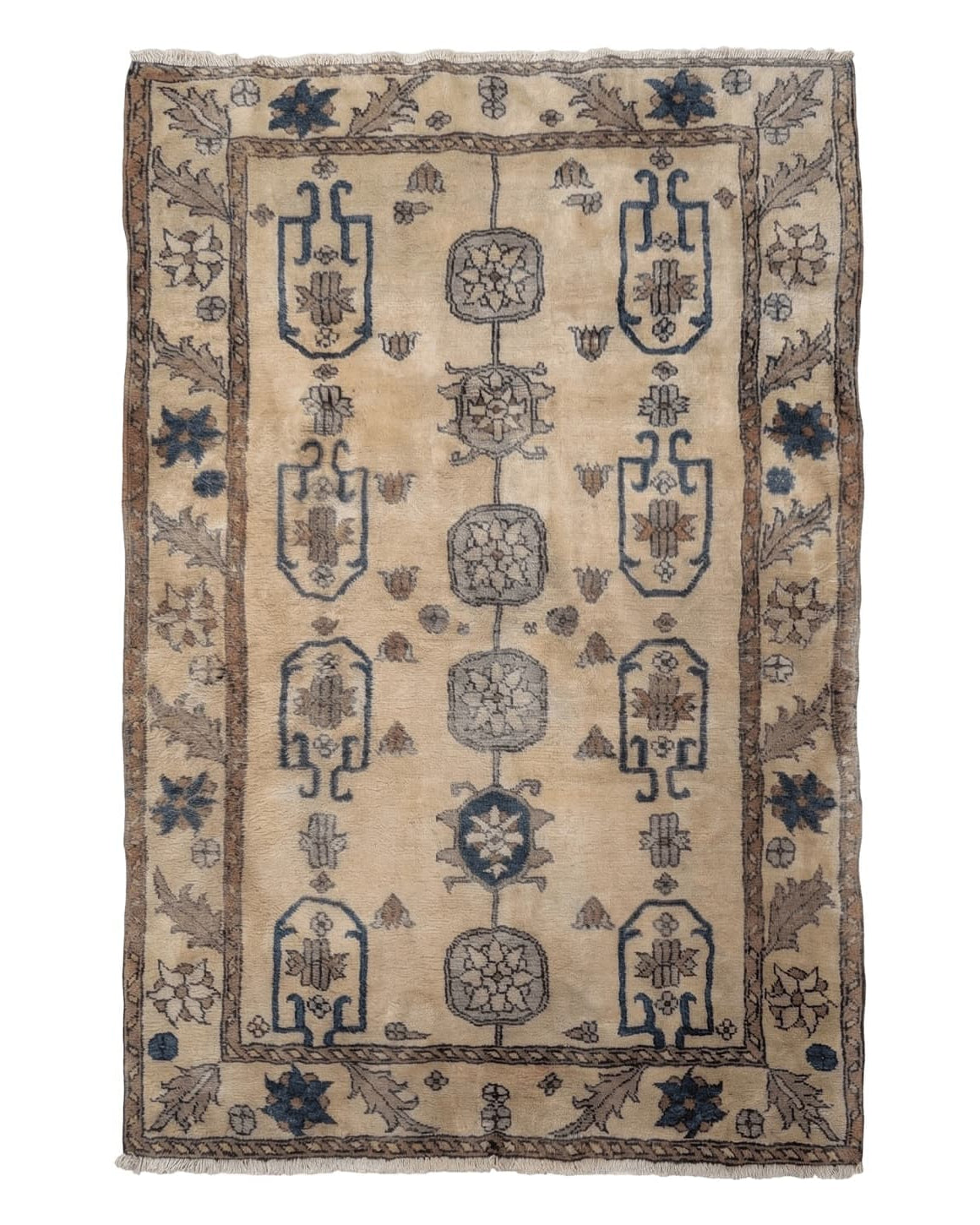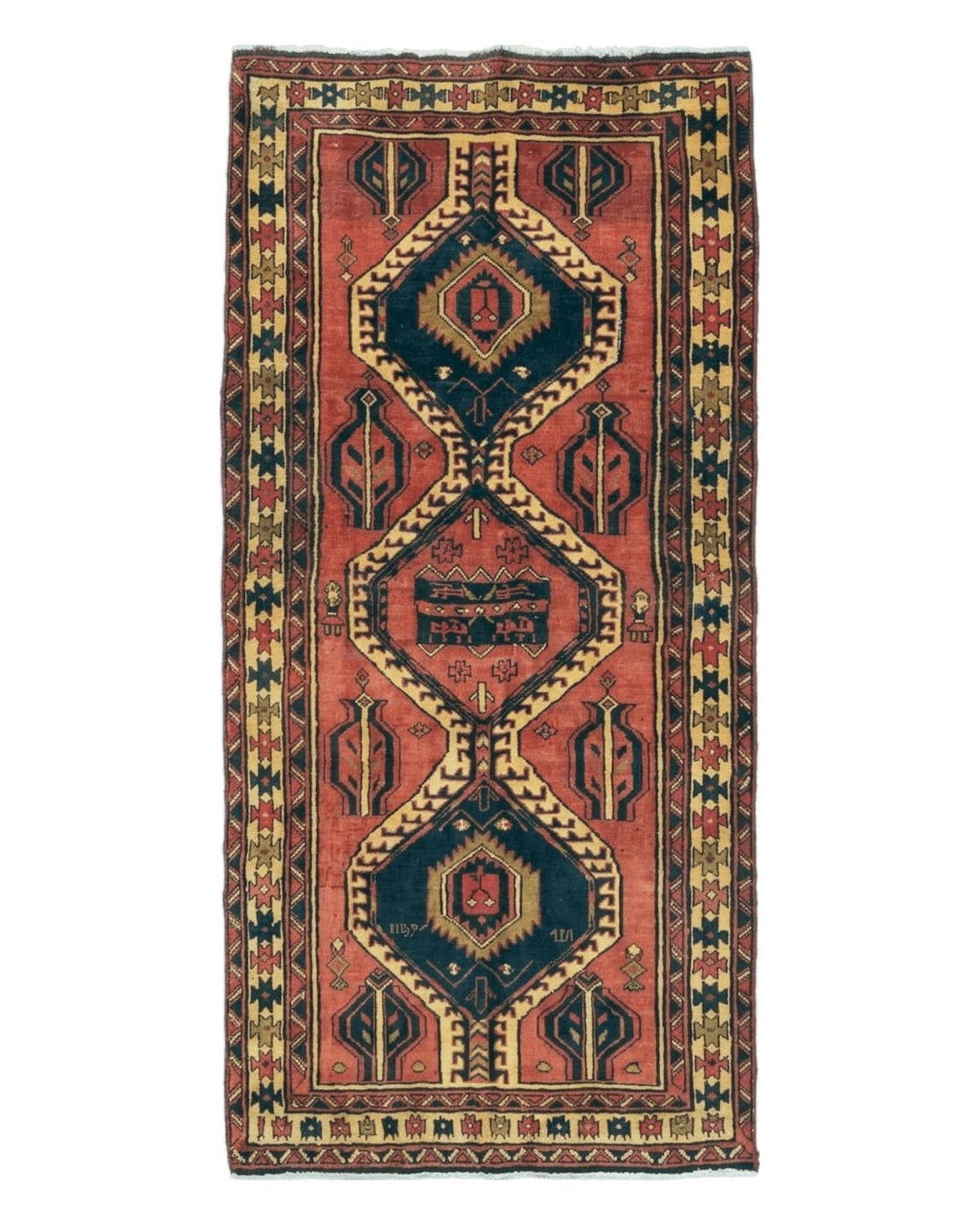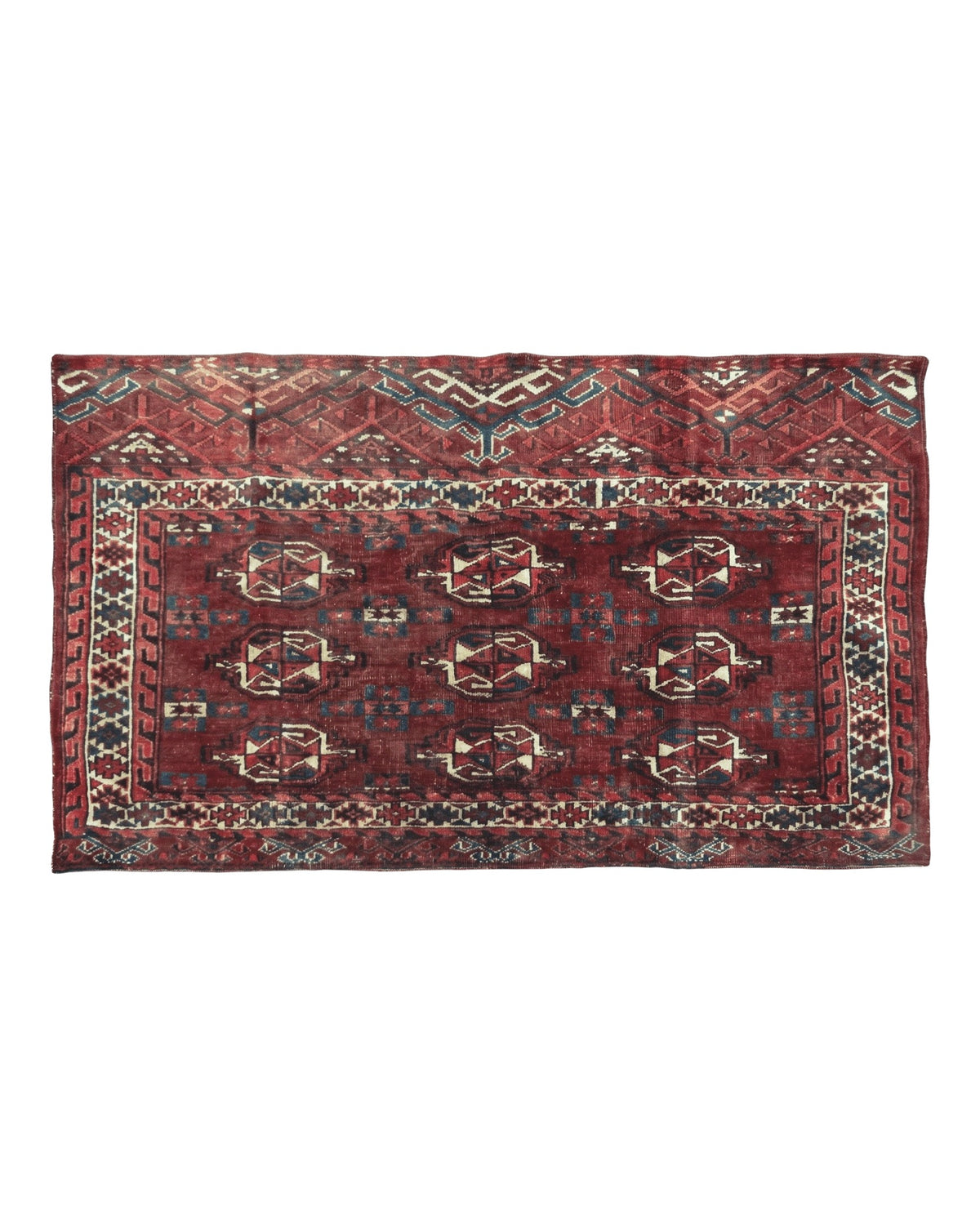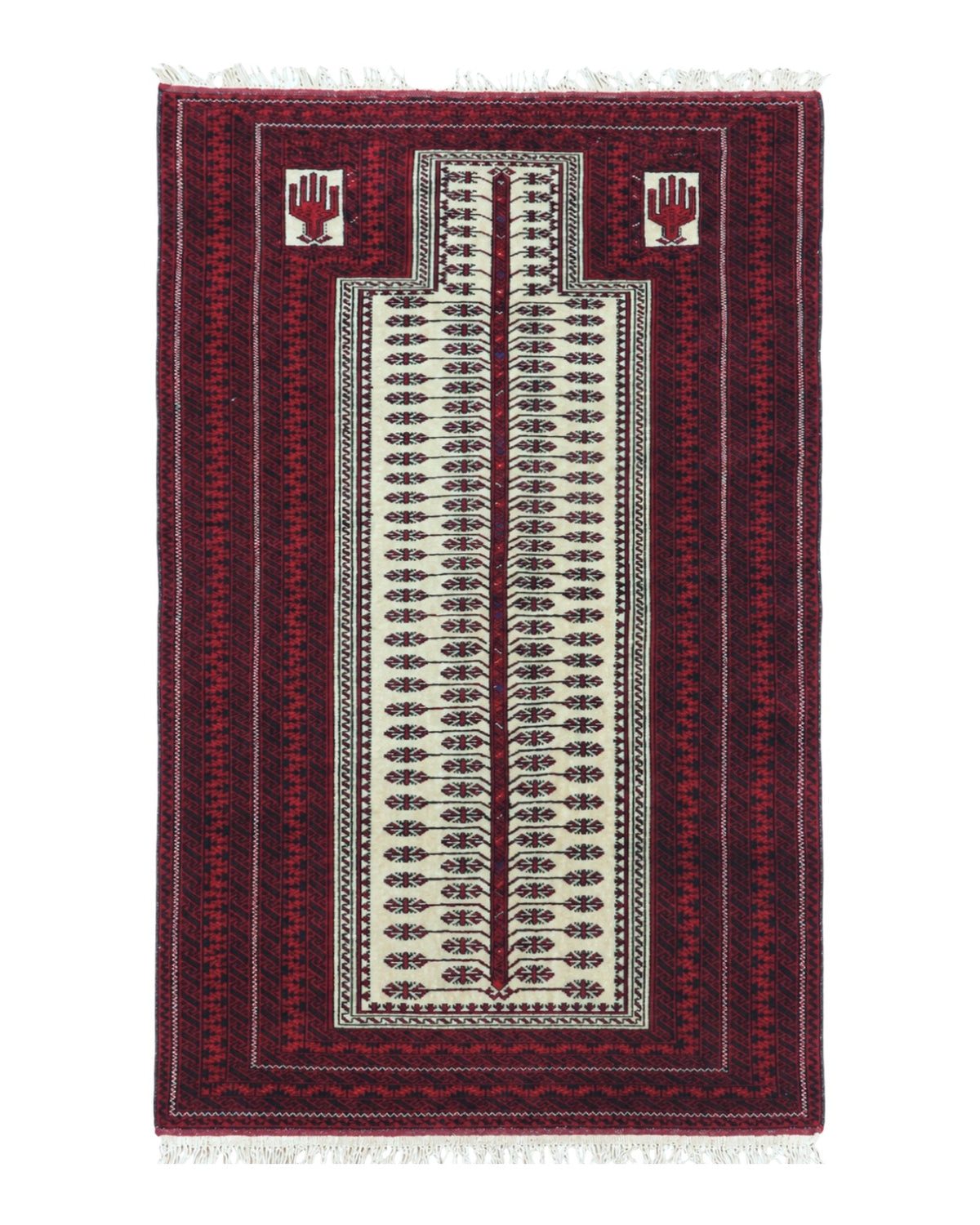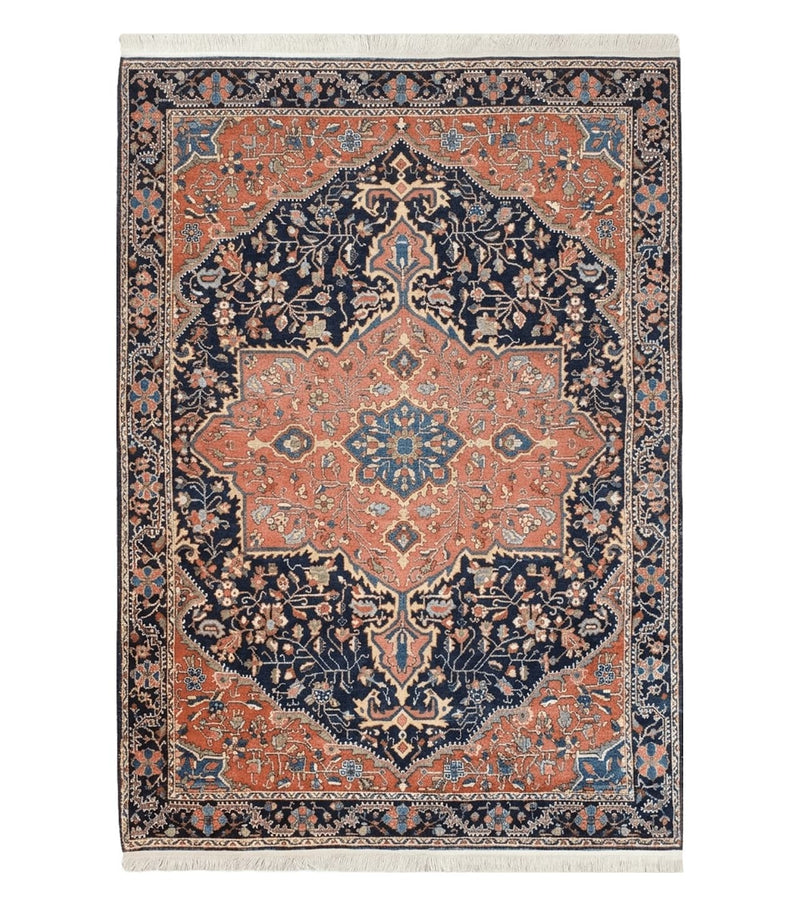


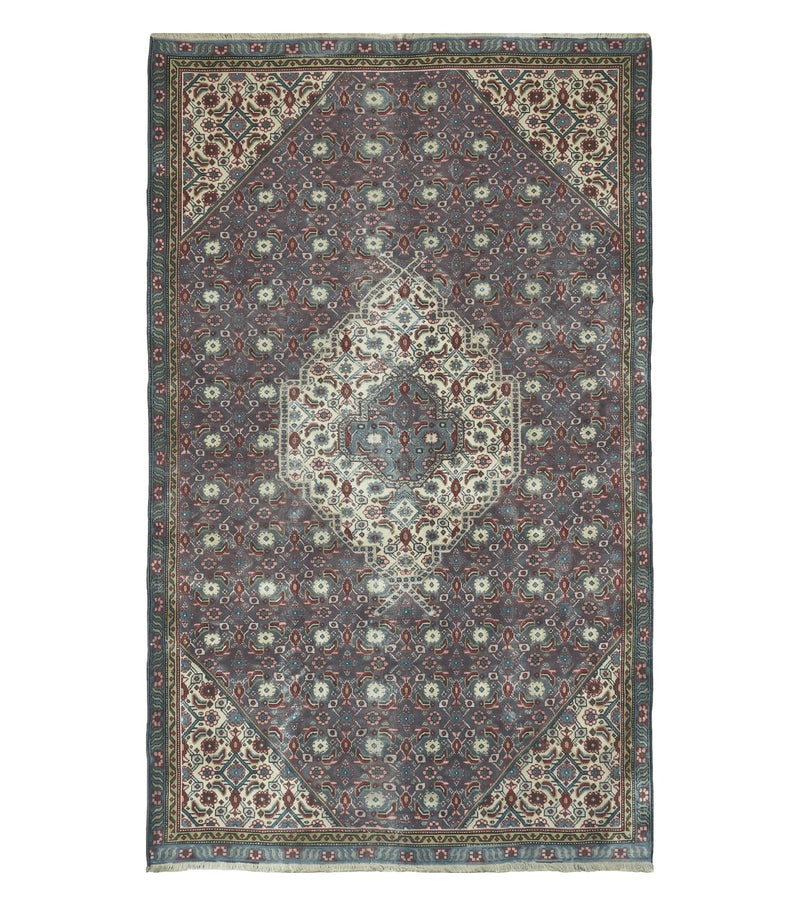


A Gabbeh is a thick, coarsely knotted tribal rug from south-west Iran, woven mainly by the Qashqai and Luri nomads of Fars and the Zagros mountains. The name is often said to mean "raw" or "unclipped," a reference to the long pile. Gabbehs were woven for the weavers' own tents rather than for sale, and their designs are simple: a largely open field of color, sometimes with a few small animals, trees, figures or geometric shapes. Their soft, deep pile and minimal look have made them popular in modern interiors.
| Origin | Qashqai and Luri tribes of Fars and the Zagros, south-west Iran |
|---|---|
| Tradition | Tribal (nomadic and semi-nomadic) |
| Knot | Symmetric or asymmetric; coarse |
| Construction | Many wefts between rows; long, thick pile |
| Materials | Wool pile on a wool foundation |
| Knot density | Low, often under 50 KPSI |
| Typical designs | Open fields, simple geometric shapes, small animals and figures |
How a Gabbeh is made
Gabbehs are woven with large knots and several wefts, sometimes as many as six or more, between each row of knots. This makes them quick to weave and gives them a thick, heavy, flexible structure. The pile is left long, often well over half an inch, so Gabbehs are soft and warm underfoot. Weavers use their own hand-spun wool, often in natural undyed shades or in colors from natural dyes, which gives Gabbehs strong abrash and a rich, textured surface. See Knots and Knot Density.
Designs
Traditional Gabbehs have very simple designs, woven freely from imagination:
- Open fields of a single color, often with abrash, sometimes with a few small motifs.
- Simple geometric shapes: squares, diamonds, stripes or small medallions.
- Animals and people: goats, deer, lions, horses and riders, drawn simply and charmingly.
- Trees and plants, especially the cypress and tree of life.
Lion Gabbehs, with a single lion often shown with a sun, are a well-known tribal theme, a symbol of power and protection.
Traditional and modern Gabbehs
Old tribal Gabbehs, woven for use in the tent, are now collectible. From the 1980s, Gabbehs became fashionable in the West, and weavers in Fars began producing them for export, often in bright solid colors or modern abstract designs while keeping the traditional thick construction. Gabbeh-style rugs are now also woven in India and elsewhere. A Persian Gabbeh woven by tribal weavers with hand-spun, naturally dyed wool is quite different from a commercial copy, even if the design is similar.
How to recognize a Gabbeh
- A thick, long pile and a heavy, flexible feel.
- Large, coarse knots with several wefts between rows, visible on the back.
- Simple designs with open areas of color.
- Wool foundation and often strong abrash.
See also Qashqai Rugs and Persian Tribal Rugs.