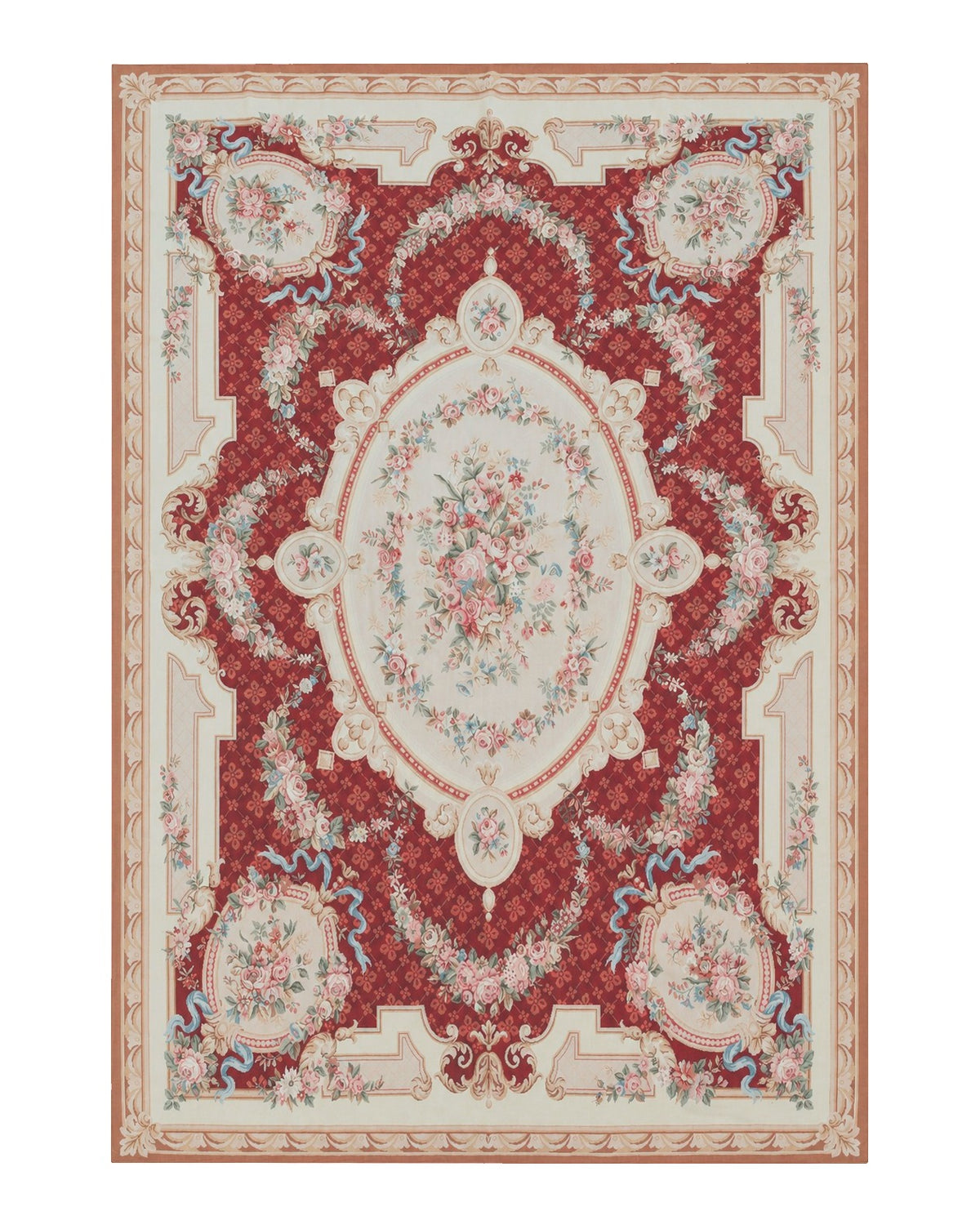
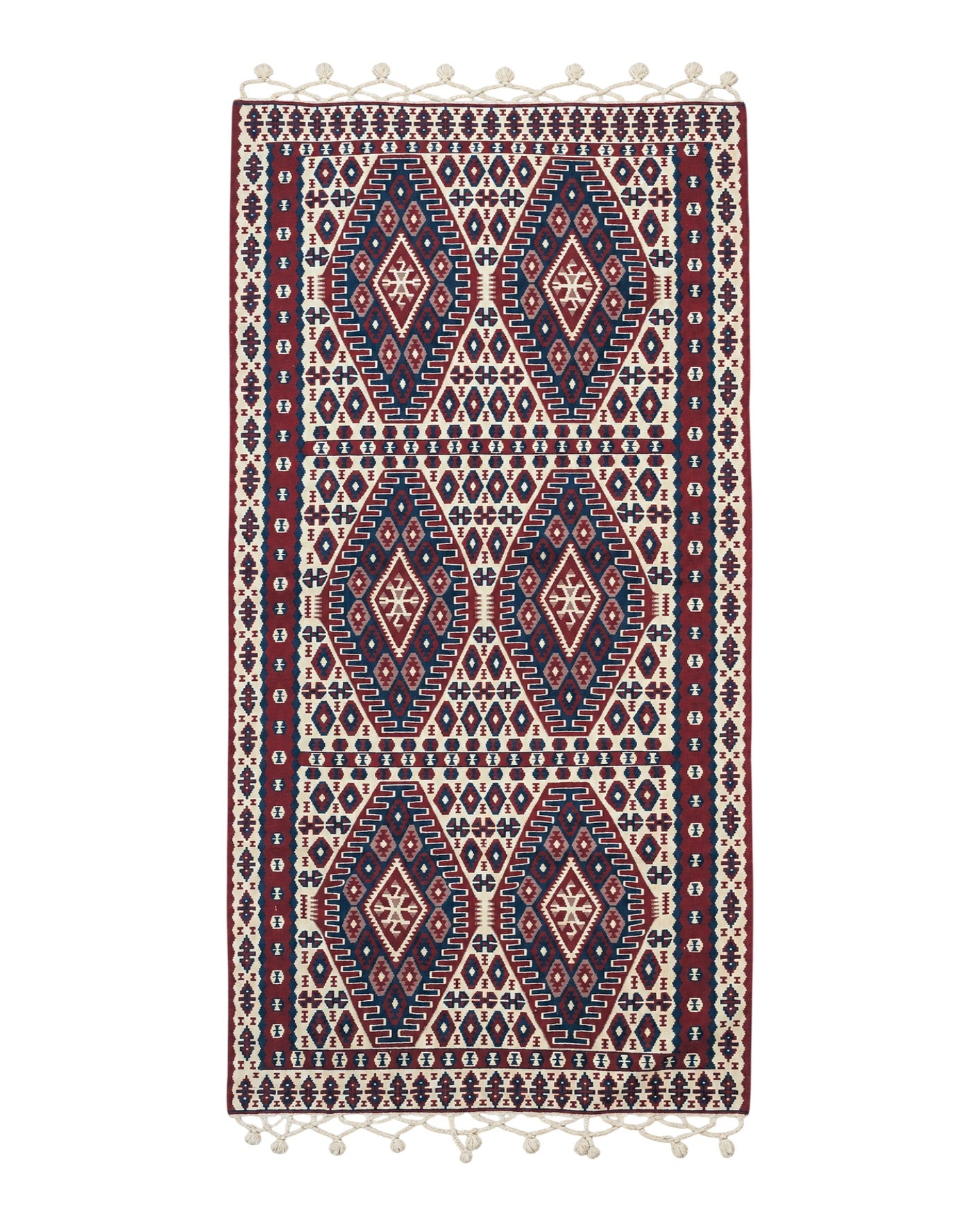
Handmade rugs fall into two great families. Pile rugs have a soft surface made from thousands of knotted tufts of yarn, like a Persian carpet. Flatweaves have no pile at all: the design is formed by the colored threads woven through the foundation, so the rug is thin, light and flat. Kilims are the best-known flatweaves, and many weaving peoples make both kinds.
| Pile rug | Knots tied around the warps; the cut ends form a soft pile |
|---|---|
| Flatweave | No knots or pile; the pattern is woven with the wefts |
| Main flatweaves | Kilim, soumak, jajim, verneh and sileh |
| Weight | Flatweaves are thinner, lighter and often reversible |
| Traditional uses | Floor covers, bags, tent hangings, bedding and animal covers |
How a pile rug is made
On a pile rug, the weaver ties a knot of yarn around each pair of warp threads, then passes one or more wefts across to lock the row in place. The ends of the knots stand up as pile, and the design is formed by the colors of the knots. Pile gives warmth, softness and durability, and very small knots allow detailed, curving designs. See Knots and Knot Density.
How a flatweave is made
A flatweave has no knots. The weaver passes colored weft threads over and under the warps, packing them tightly so that the wefts cover the warps completely. Each area of color is woven separately. Because the design is built from straight passes of yarn, flatweave designs are usually bold and geometric.
Kilim
In a kilim, each colored weft is woven back and forth only within its own area of the design. Where two colors meet along a vertical line, small gaps or slits appear between them, which is why kilims are also called slit-tapestry weaves. Kilims are often reversible. They are woven across Turkey, Iran, the Caucasus, Afghanistan and the Balkans. See Kilim Rugs.
Soumak
In a soumak, colored yarns are wrapped around the warps rather than simply passing over and under them. The wrapping gives a thicker, stronger fabric with a fine herringbone texture on the front and loose ends on the back. Soumaks are best known from the Caucasus and north-west Iran.
Jajim, verneh and sileh
A jajim is woven in long, narrow strips, often striped, which are then sewn together. Verneh and sileh are Caucasian flatweaves with brocaded designs, often of stylized animals. All three were made for use in nomadic and village homes.
Bags and trappings
Many weaving peoples used flatweave and pile techniques for practical objects: saddlebags, storage bags, salt bags, tent bands and animal covers. Some of the finest tribal weaving is found in these pieces, and saddlebag faces are often made into cushions today.
Choosing between them
- Feel: pile rugs are soft and cushioned; flatweaves are thin and firm.
- Durability: both last well with care. Pile protects the foundation; a flatweave's surface is the foundation, so it should be used with a good rug pad.
- Where to use: flatweaves lie flat under doors and work well in kitchens, hallways and summer rooms; pile rugs suit living rooms and bedrooms.
- Style: flatweaves are usually bold and geometric; pile rugs range from geometric to finely detailed florals.
- Price: flatweaves are quicker to weave and often cost less than pile rugs of the same size.