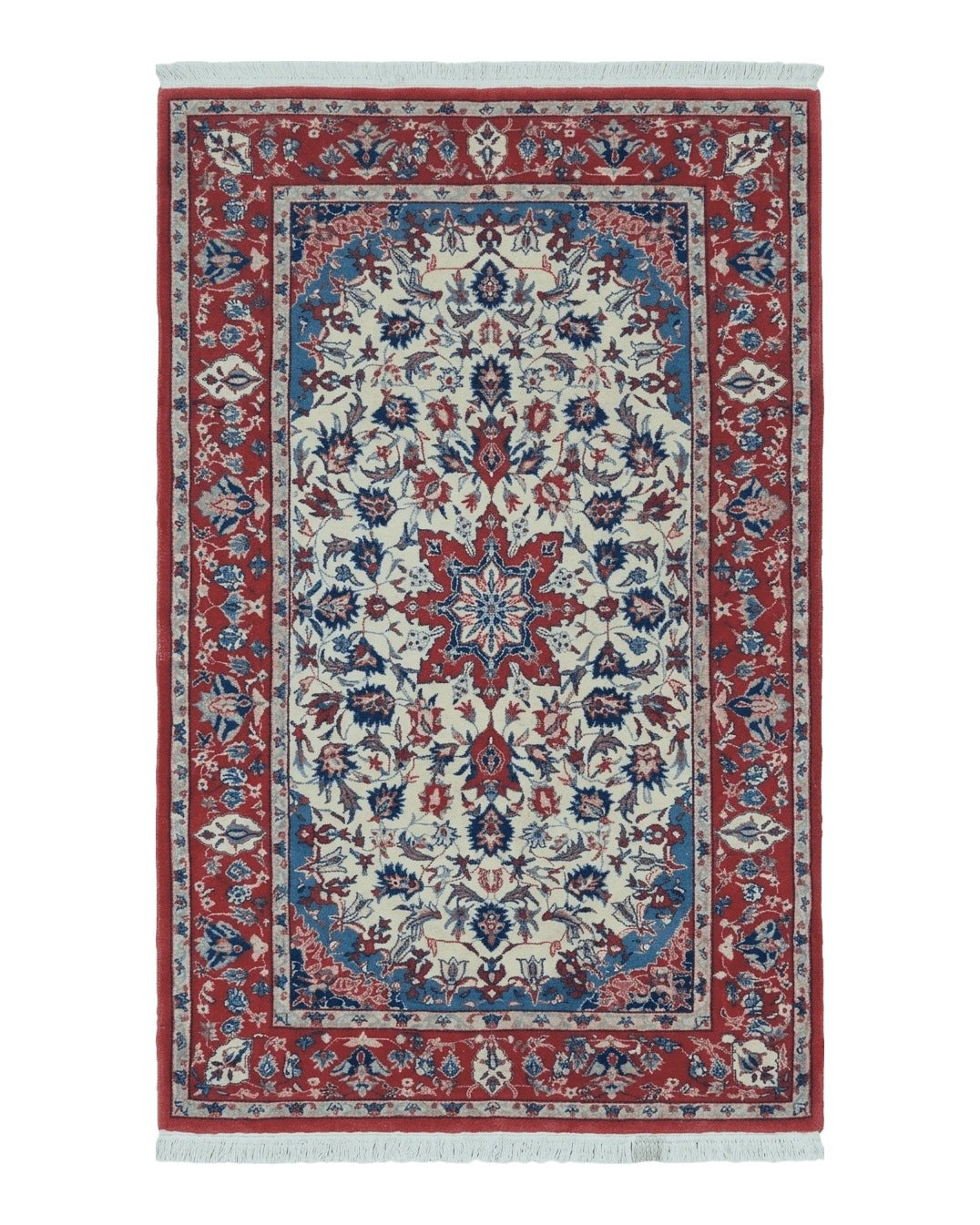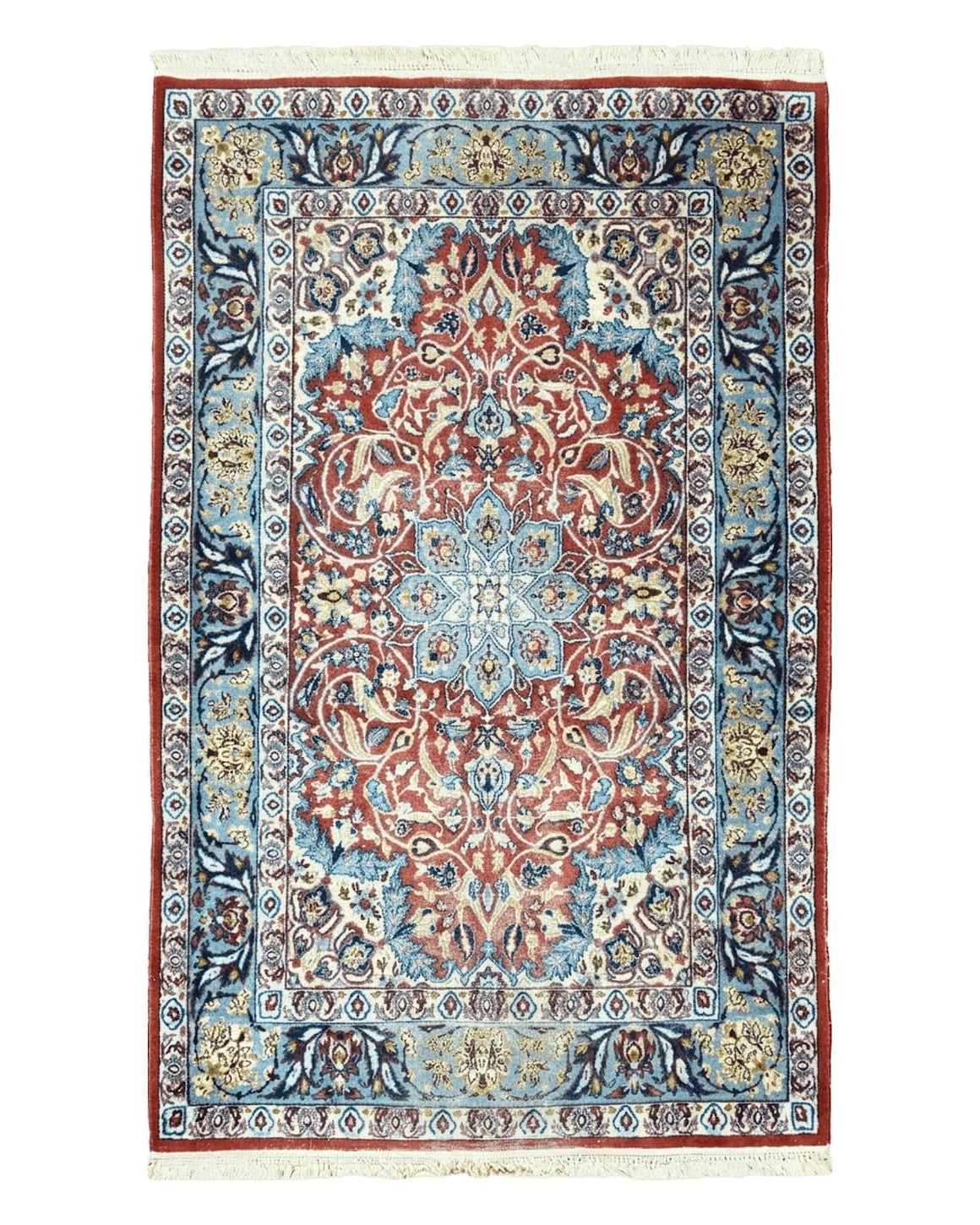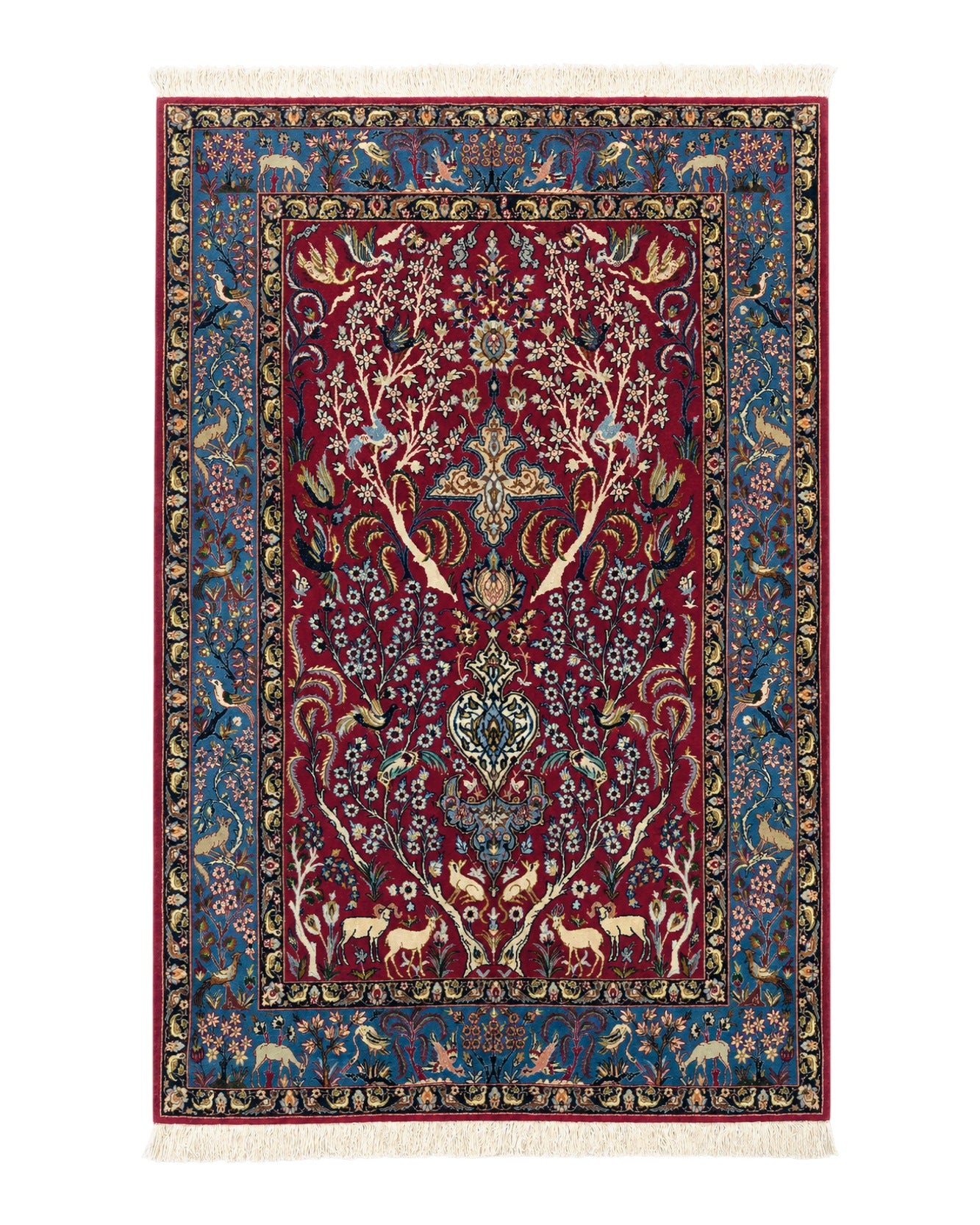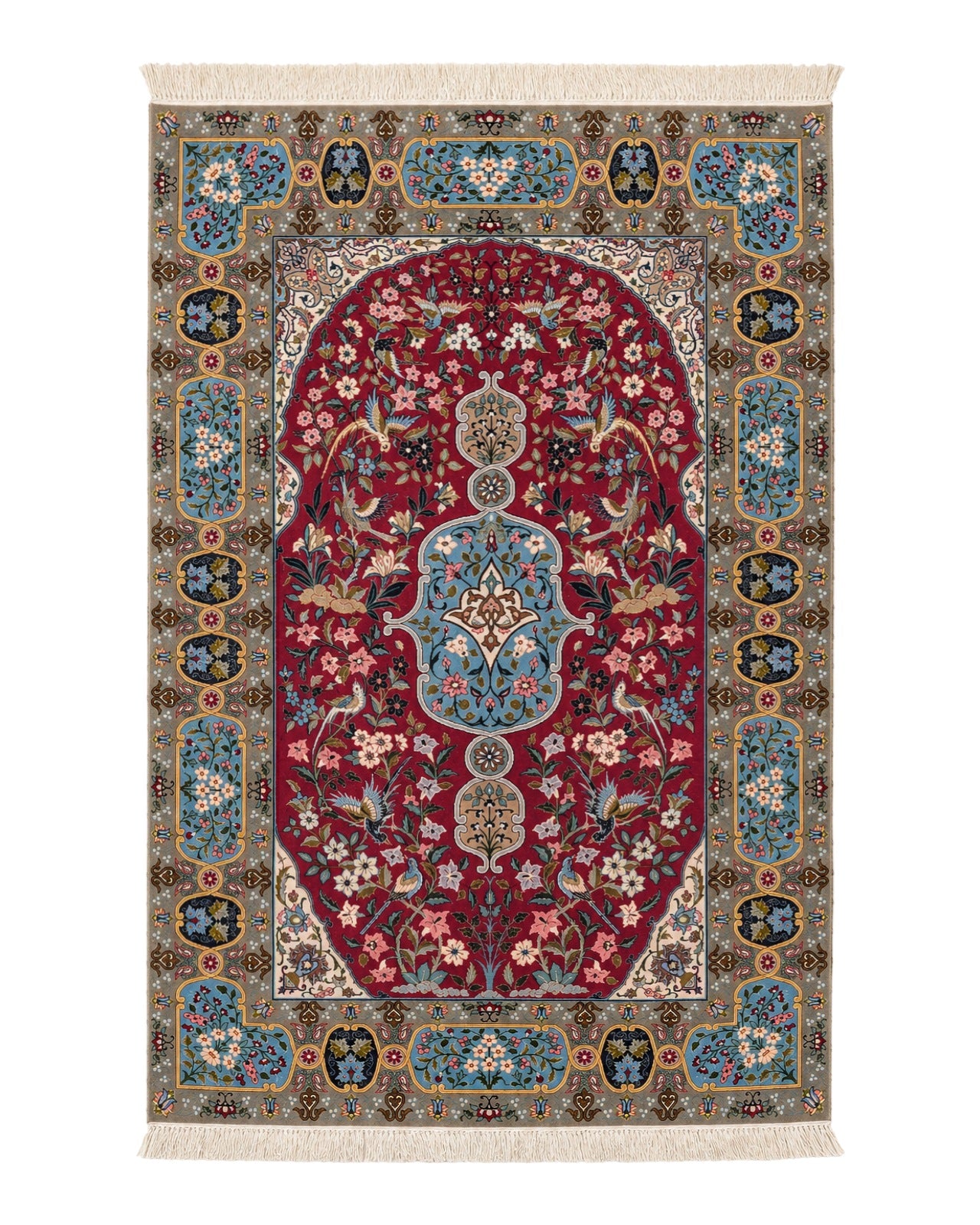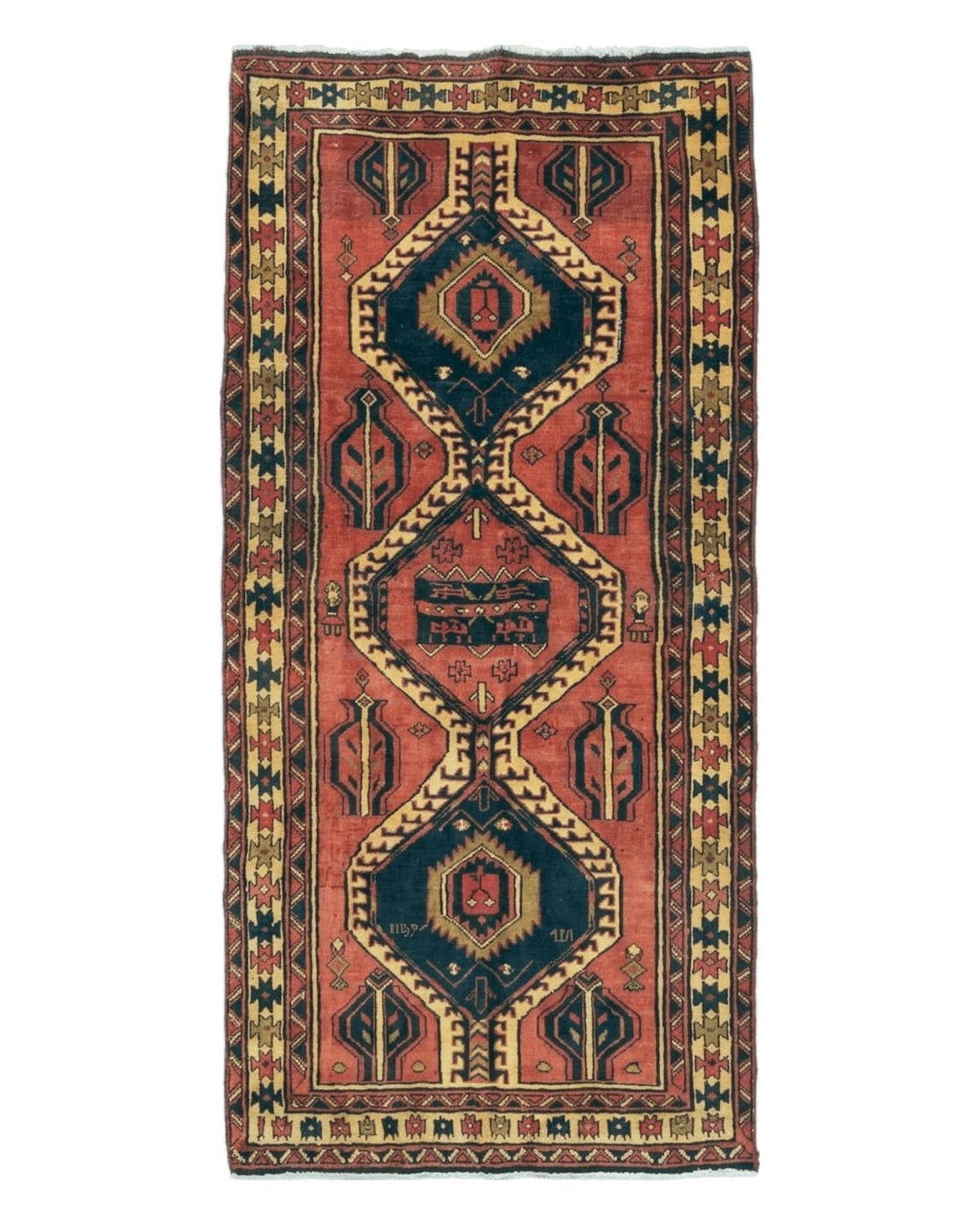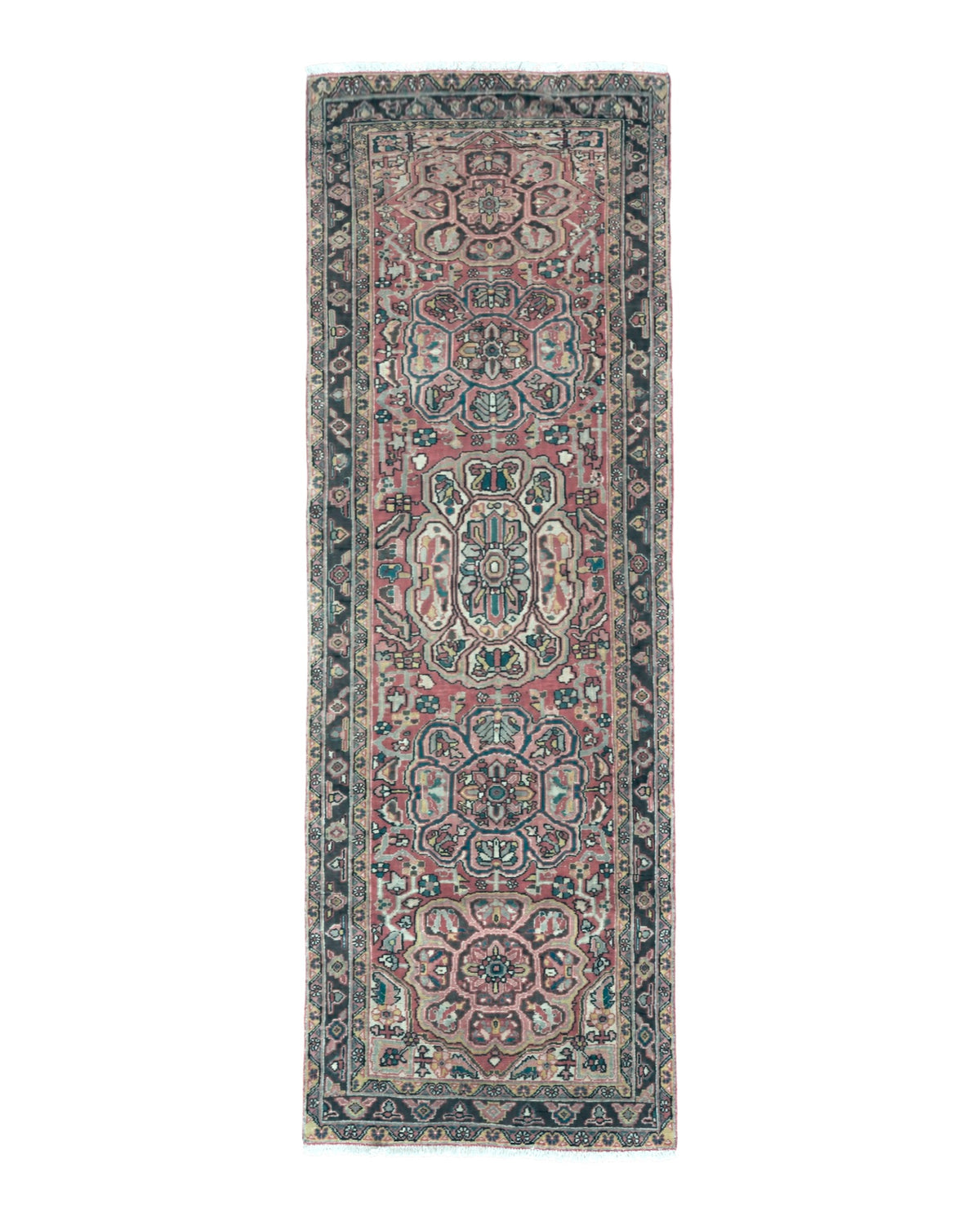




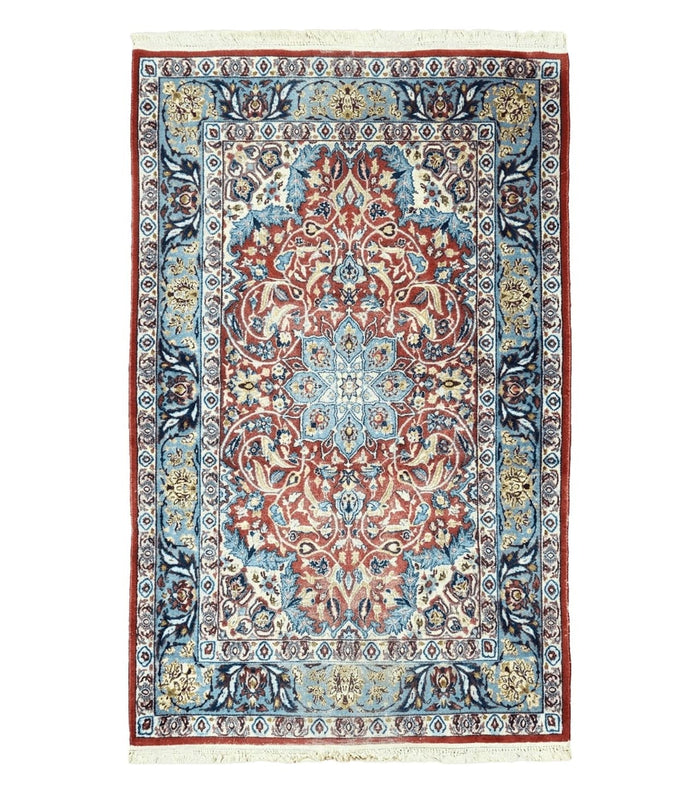

Isfahan rugs are woven in the city of Isfahan in central Iran, the capital of the Safavid dynasty and one of the most beautiful cities in the Islamic world. They are among the finest Persian city rugs: tightly knotted, precisely drawn, often woven in kork wool on a silk foundation, and frequently signed by the master workshops that made them. Their designs are often inspired by the tilework of the city's famous mosques.
| Origin | Isfahan, central Iran |
|---|---|
| Tradition | City (workshop) rugs |
| Knot | Asymmetric (Persian) |
| Materials | Kork wool pile, often on a silk foundation; also all silk |
| Knotting | Very fine; often 400 KPSI or more |
| Typical design | Floral medallion with arabesques; Shah Abbasi palmettes; pictorials |
| Common colors | Ivory, sky blue, navy, rose and soft red |
History
Shah Abbas I made Isfahan his capital in 1598 and established royal workshops that produced some of the most celebrated carpets of the Safavid golden age, including luxurious silk-and-metal-thread carpets often called "Polonaise" carpets, many of which went to European courts. After the fall of the Safavids in the 18th century, weaving in the city largely died out.
The modern Isfahan rug dates from a revival that began in the 1920s. Master weavers set up workshops dedicated to the highest quality, and by the mid-20th century Isfahan was again known for some of the finest rugs in Iran. Workshop names such as Seirafian became famous, and many of their rugs carry a woven signature. See Signed Rugs.
The Isfahan look
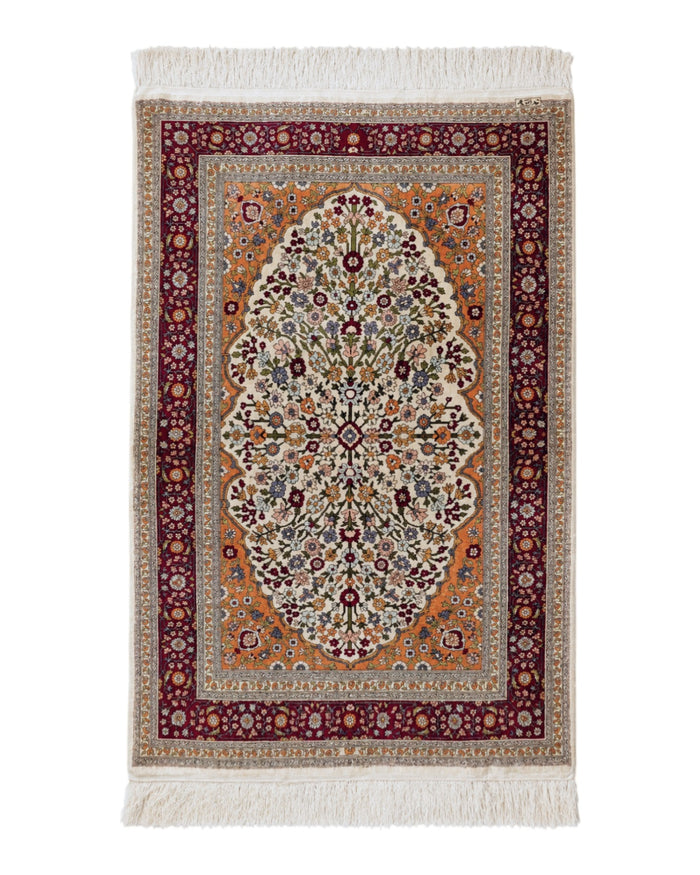
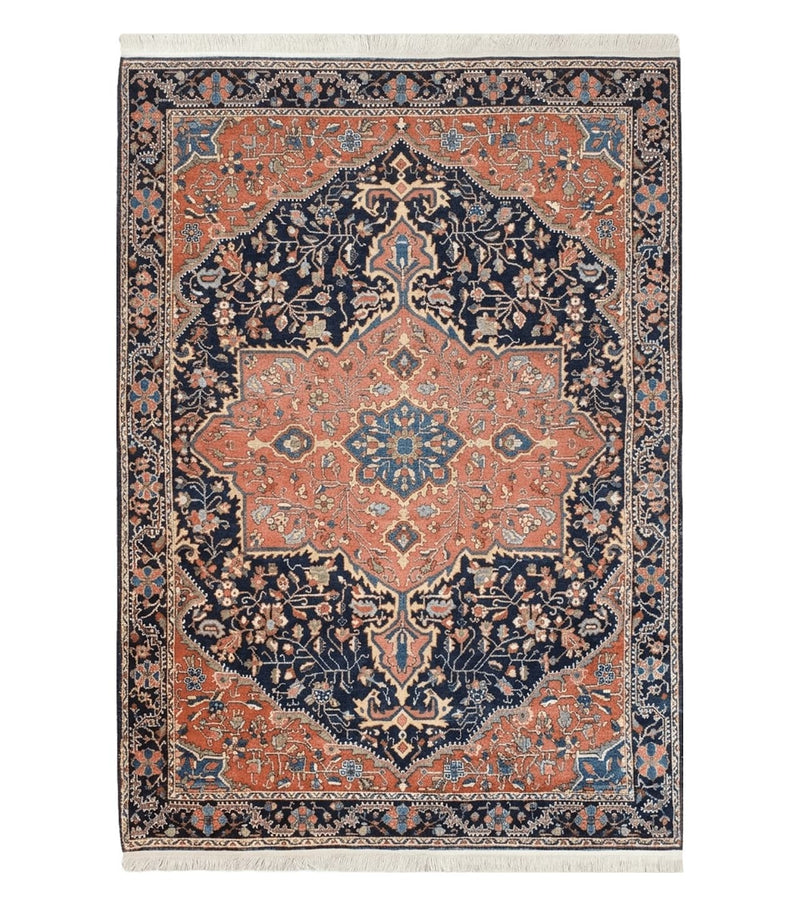
The classic Isfahan has a central medallion of arabesques and palmettes, often in a star or round shape, set in a field of scrolling vines, with matching corners. The design is symmetrical and drawn with great precision, and the palette is often light: ivory and sky blue with navy, rose, soft red and touches of gold. Many designs echo the domes and tilework of the Sheikh Lotfollah and Shah mosques.
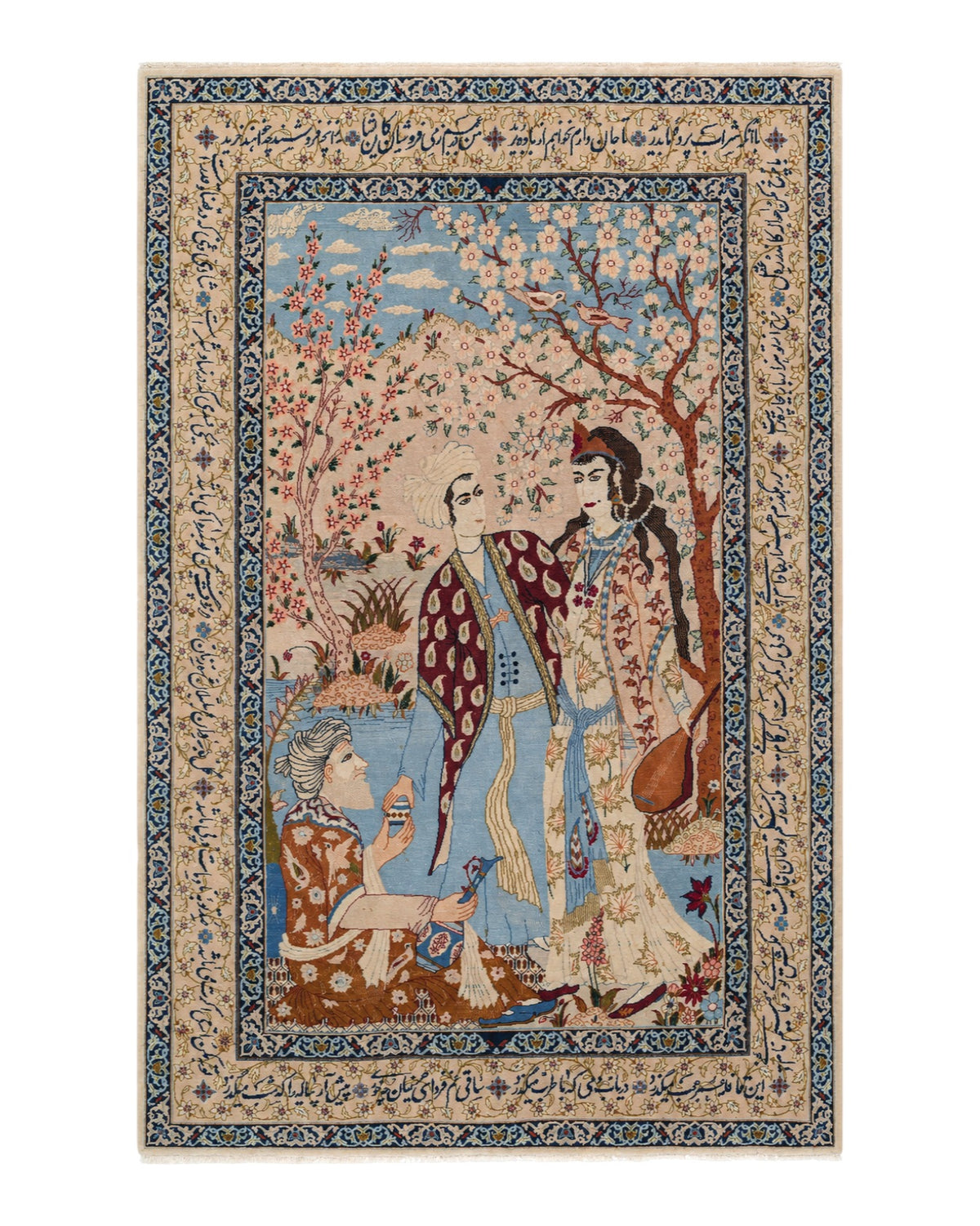
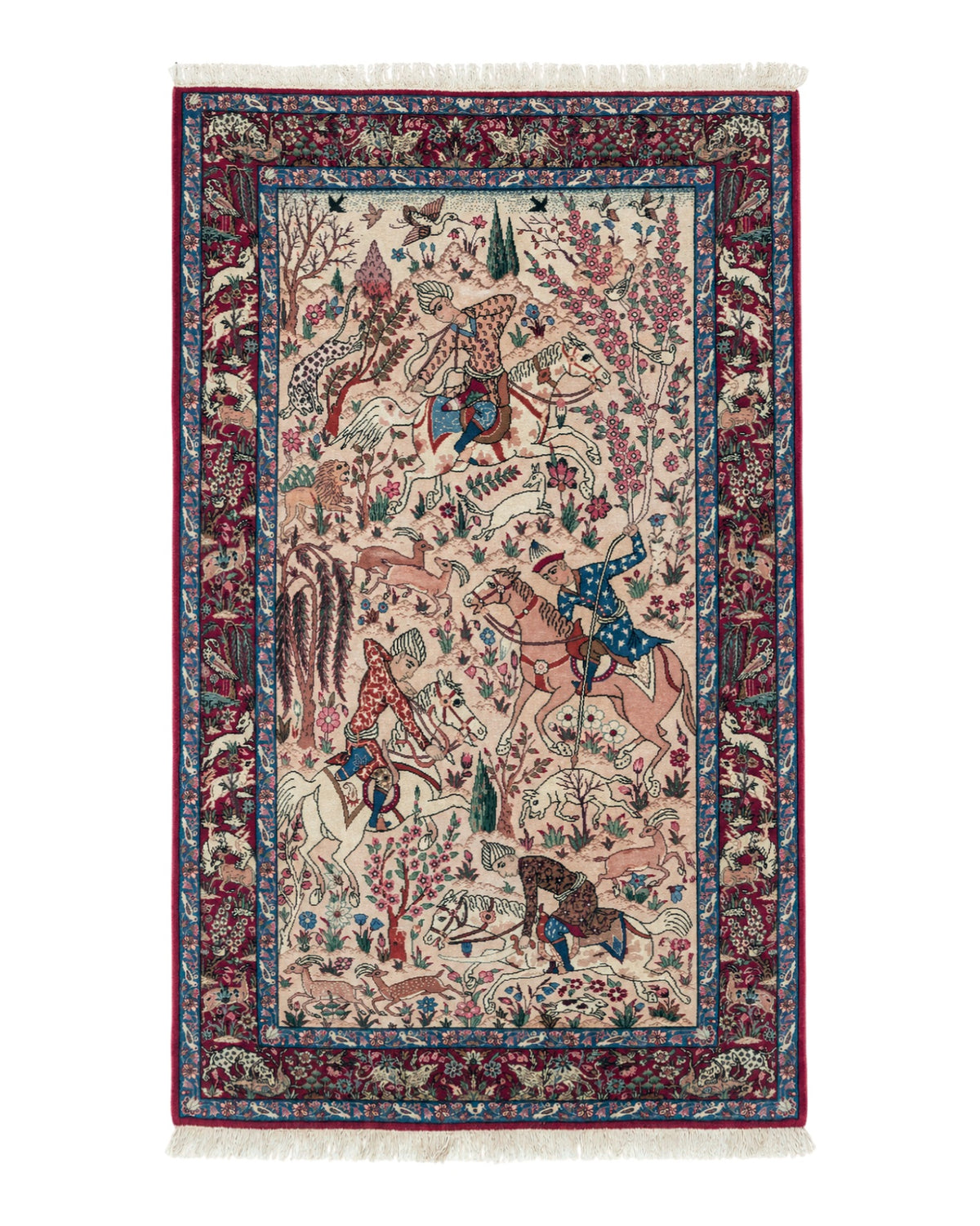
Isfahan workshops also weave all-over designs, vase and garden designs, and pictorial rugs showing scenes from Persian poetry, hunting scenes and historical buildings. See Pictorial and Hunting Rugs.
Materials and construction
Fine Isfahans are usually woven with kork wool, soft wool from the neck and shoulders of the sheep, on a silk foundation. The silk warps allow very small knots, which give the crisp detail Isfahans are known for. Silk is often added to the pile to outline motifs. Some Isfahans are woven entirely in silk. Knot counts of 400 to 600 KPSI or more are common in good pieces. See Rug Materials.
How to recognize an Isfahan
- Very fine, even knotting with crisp curves and tiny details.
- A silk fringe on rugs with a silk foundation.
- A light, harmonious palette of ivory, blues and rose.
- A short, dense pile that lies very flat.
- Often a woven signature in a cartouche at one end.
Isfahan and Nain
Isfahan and Nain rugs are often confused, since both are very fine and both favor ivory and blue. Nains typically use more ivory and beige, with silk outlining on a cotton foundation, and are graded in "la." Isfahans tend to have stronger colors and more often a silk foundation. Both are among the best examples of 20th-century Persian city weaving. See Persian City Rugs.