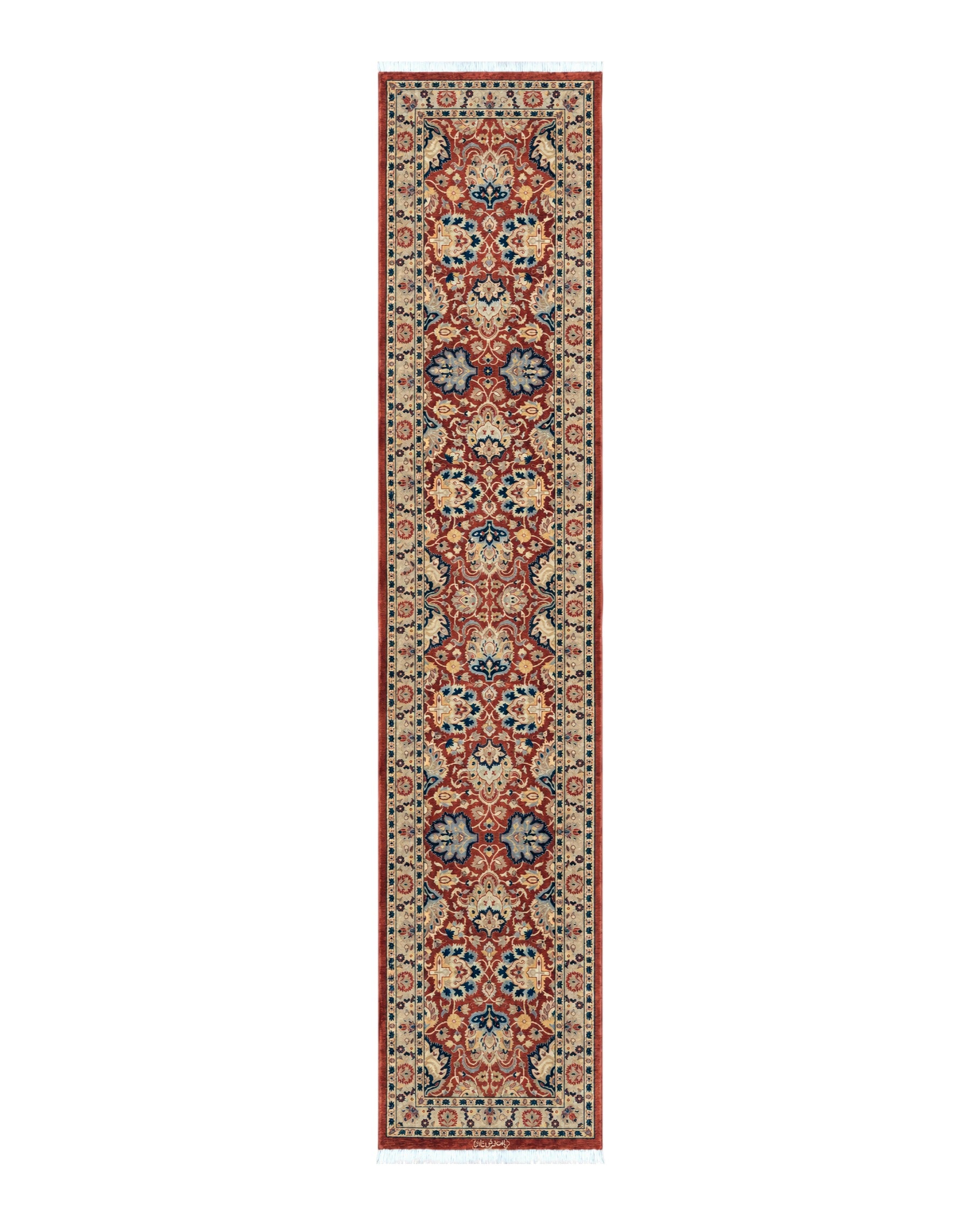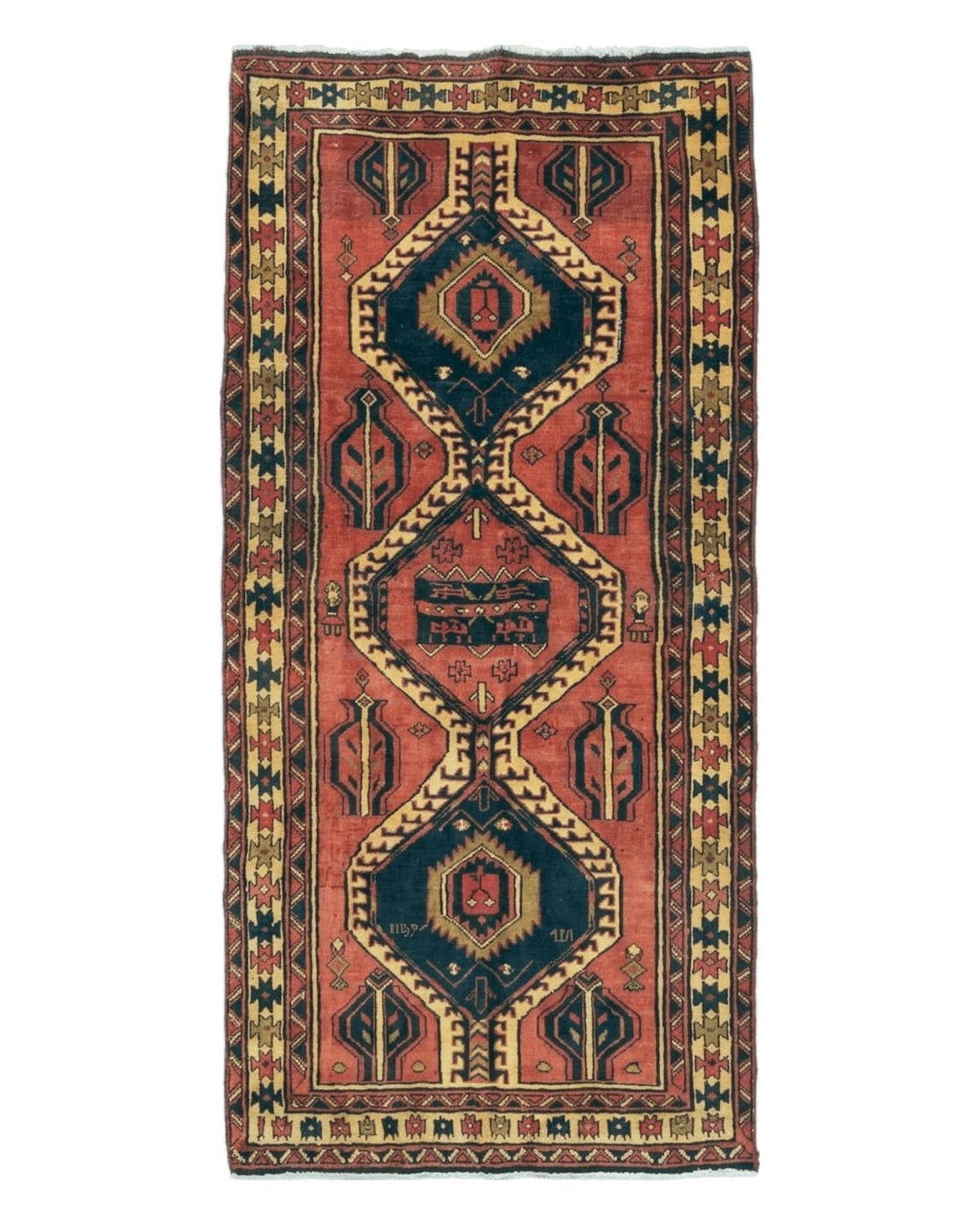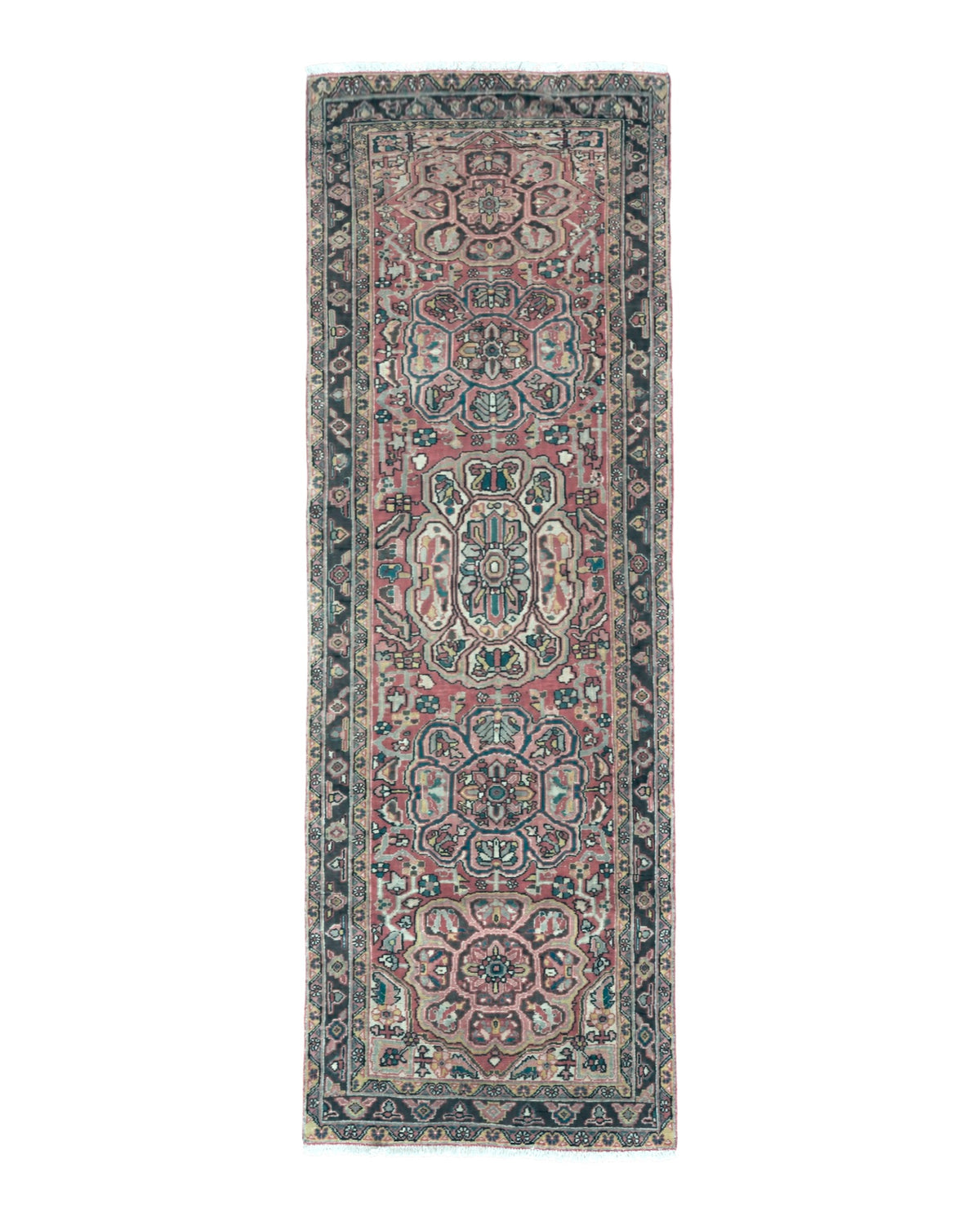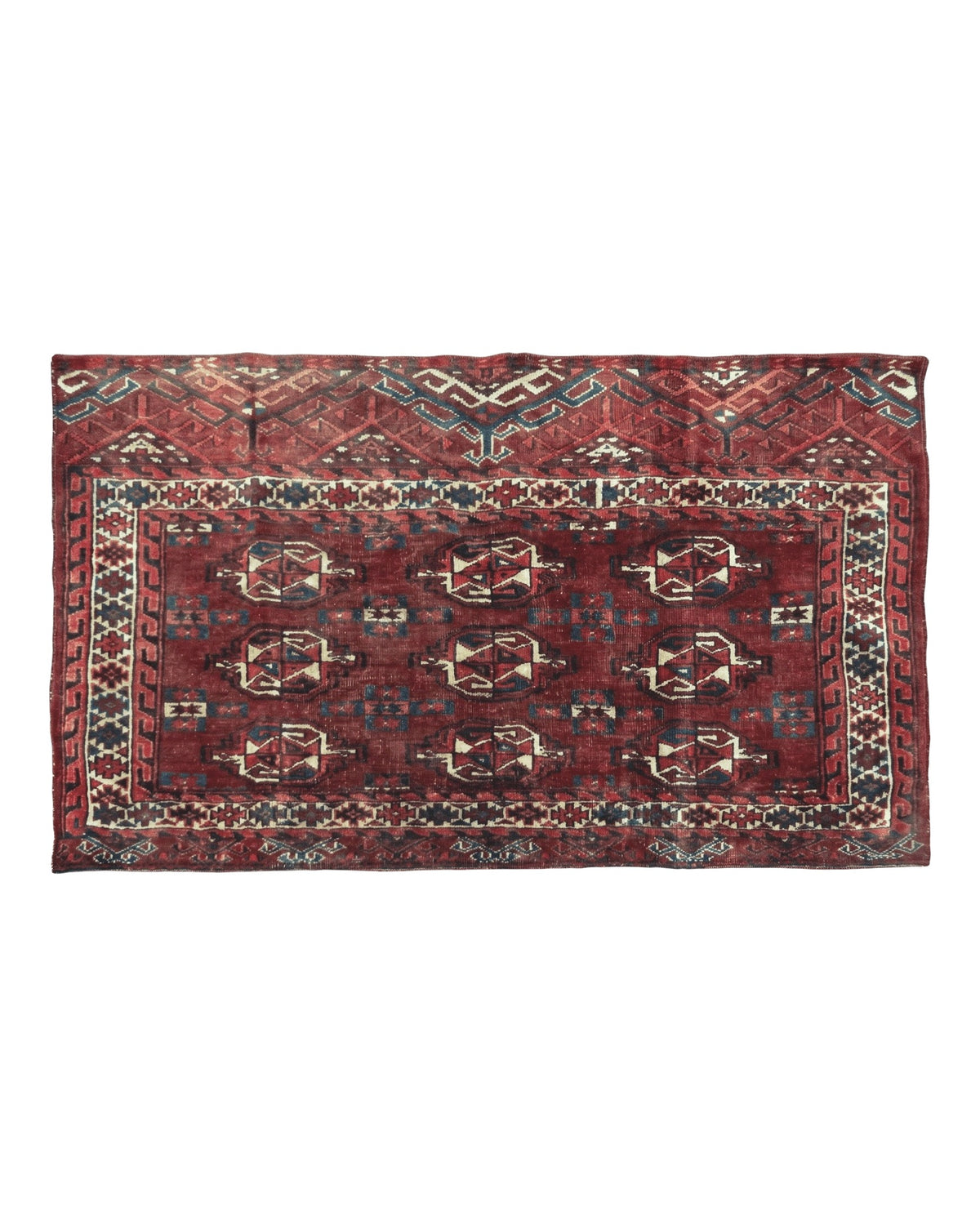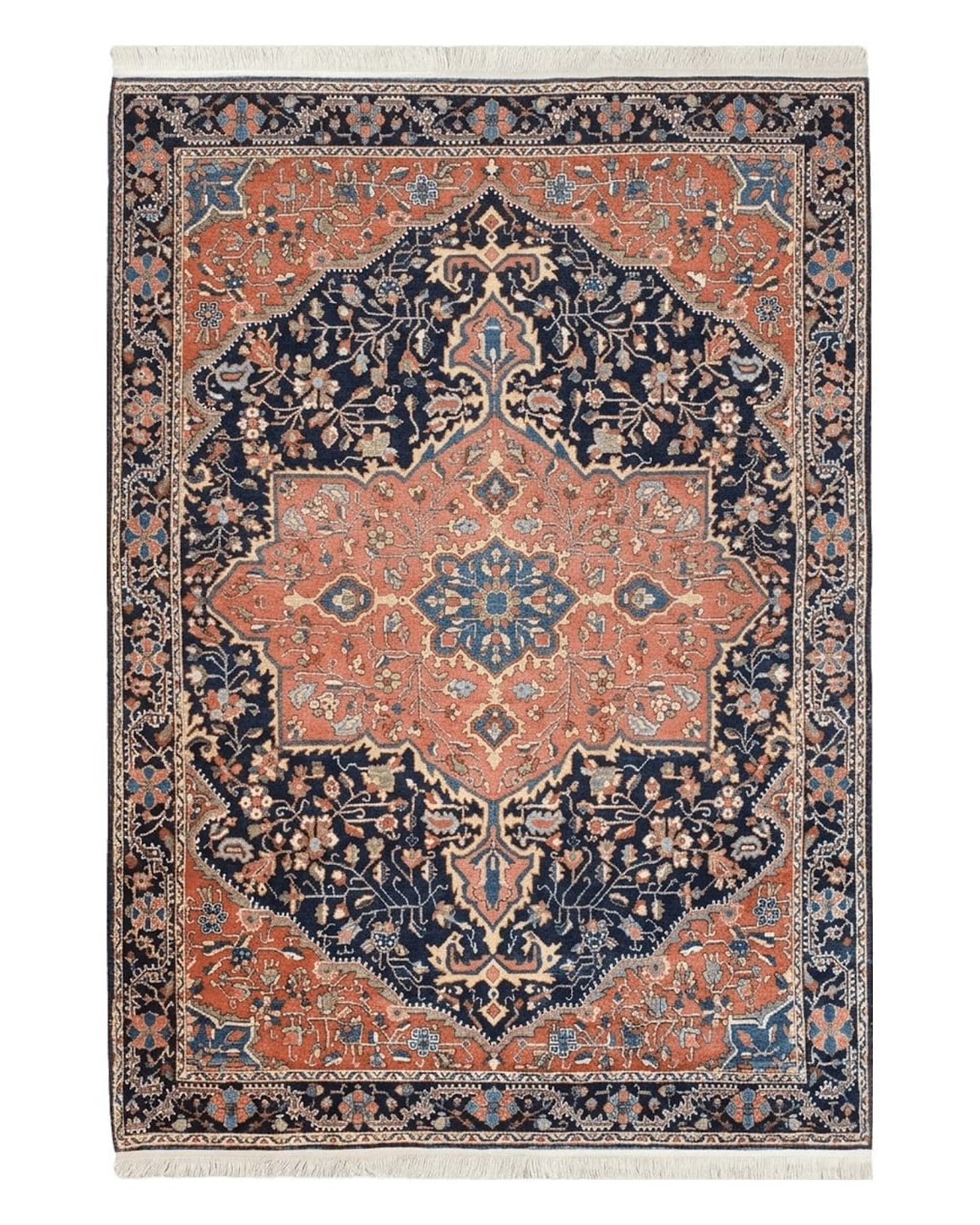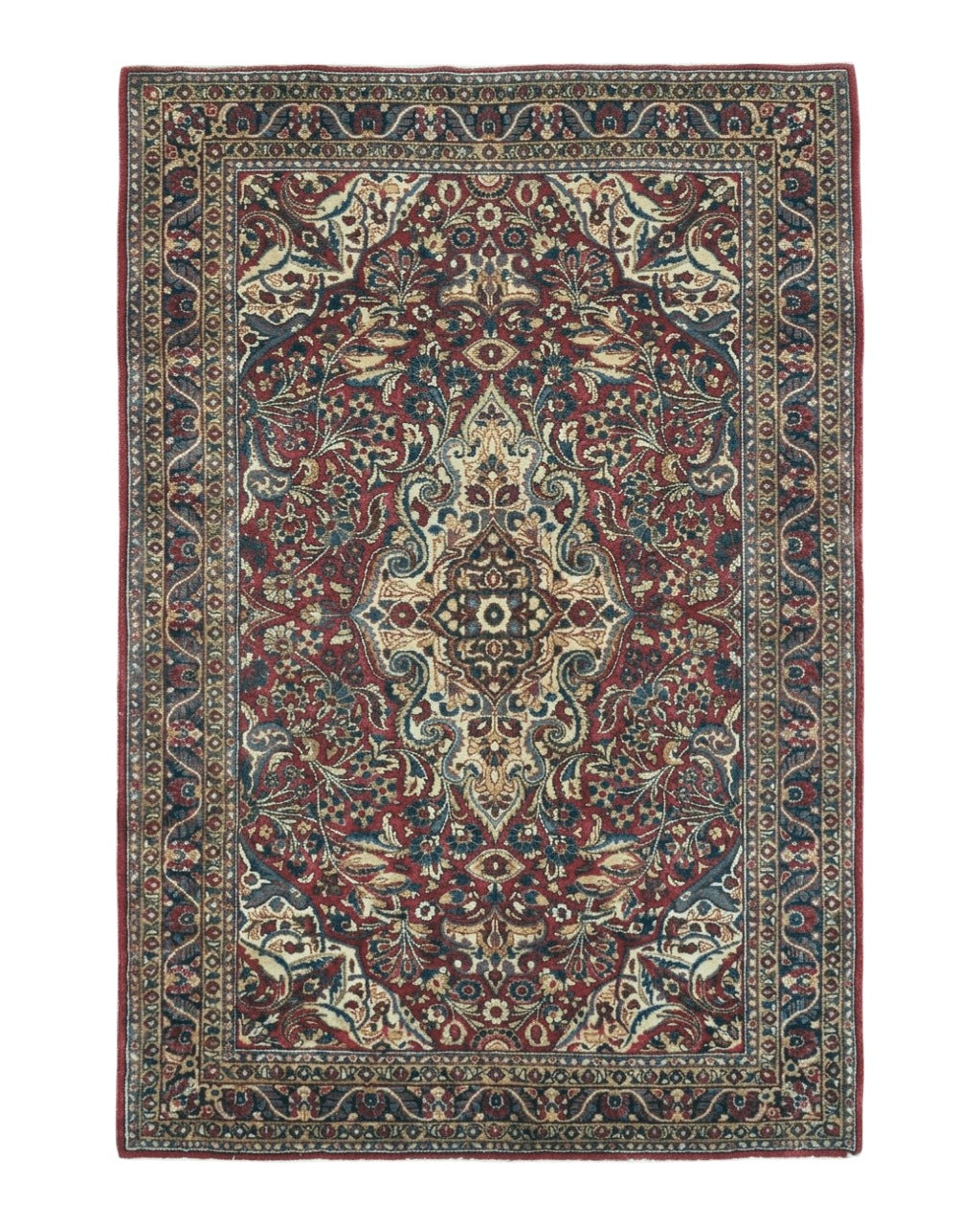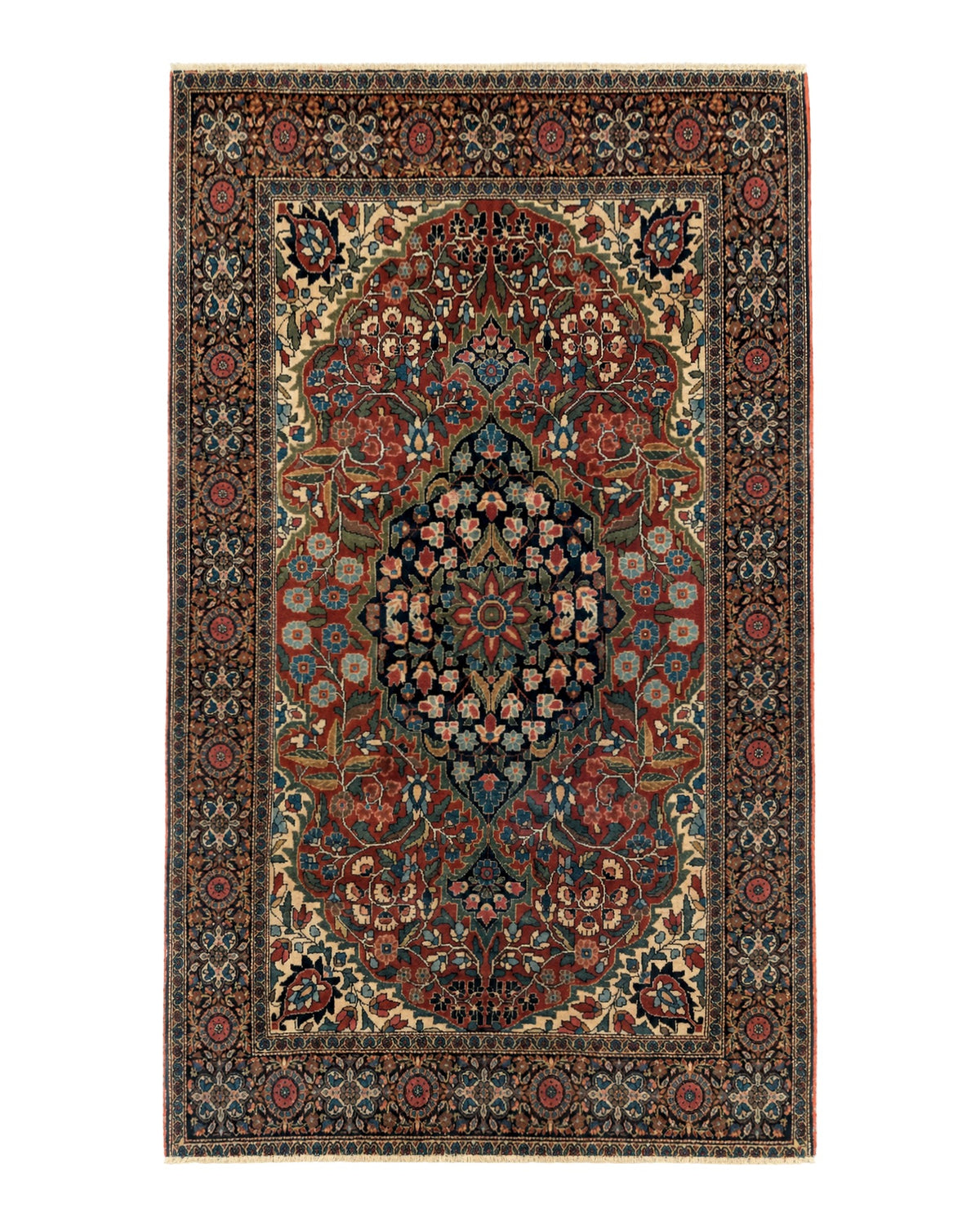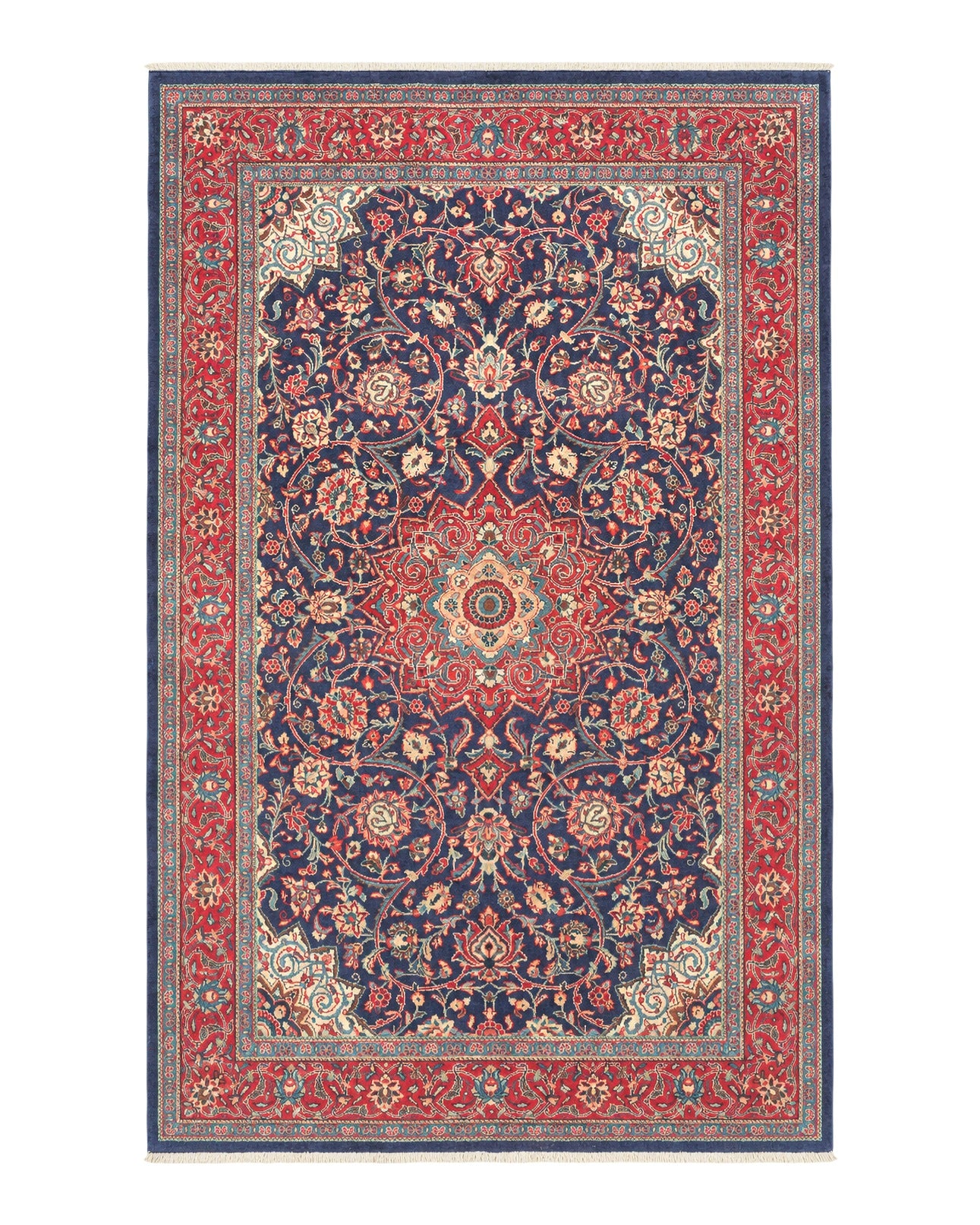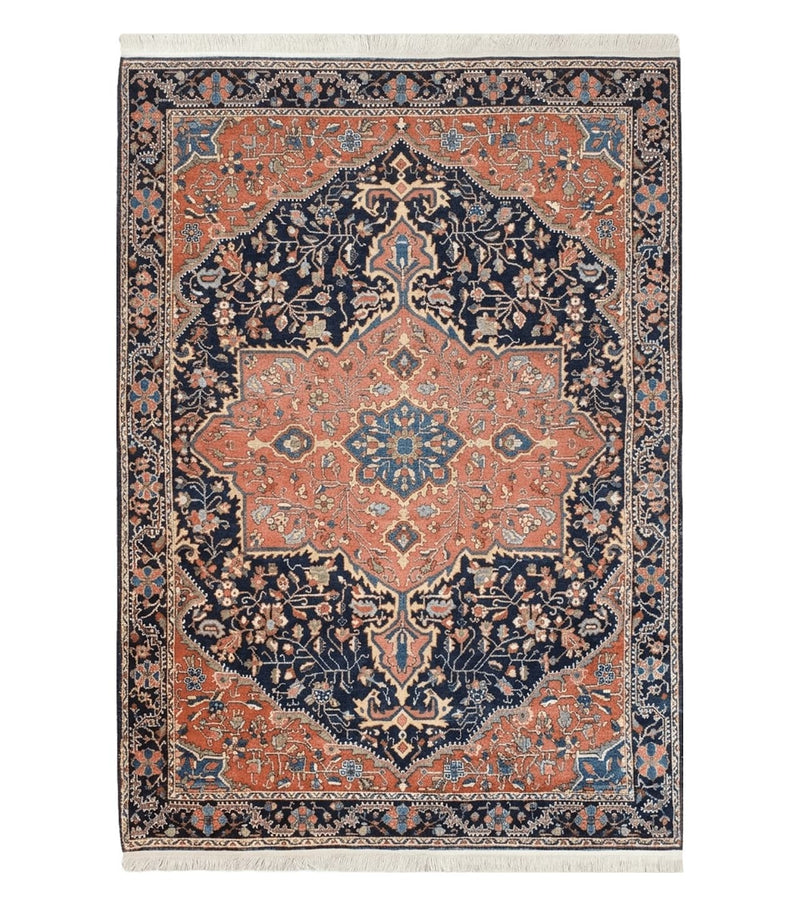


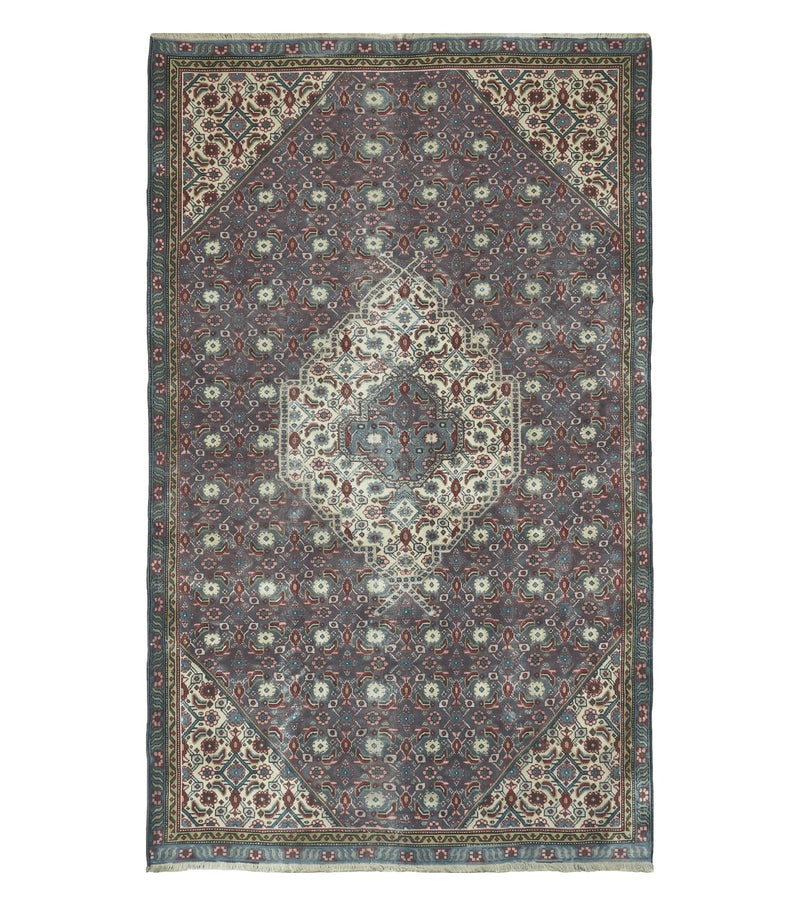


Sultanabad was the name of the city now called Arak, in west-central Iran, and in the late 19th century it became one of the great rug markets of Persia. "Sultanabad" is used in the trade for the large, decorative rugs woven in the surrounding villages for Western buyers, with bold, large-scale designs and soft colors. Mahal is the name given to a related, usually coarser grade from the same region. Both are especially valued today by interior designers.
| Origin | Villages around Arak (formerly Sultanabad), west-central Iran |
|---|---|
| Tradition | Village rugs, often commissioned by trading firms |
| Knot | Asymmetric (Persian), sometimes symmetric |
| Materials | Wool pile on a cotton foundation |
| Knotting | Coarse to medium |
| Typical designs | Large-scale all-over palmettes and vines; open medallions |
| Sizes | Mostly large room sizes and oversized rugs |
The Sultanabad rug trade
From the 1870s, foreign firms set up in Sultanabad to commission rugs for Europe and America. The best known was Ziegler & Co., a Manchester-based company with Swiss roots, which organized weaving in the surrounding villages, supplied wool and dyes, and provided designs adapted to Western rooms. Other firms followed, and for several decades the region produced large numbers of room-size rugs.
The rugs associated with Ziegler, often called "Ziegler Sultanabads" or "Ziegler Mahals," have large, widely spaced palmettes and vines, often with an all-over layout or a loose, open medallion, in soft colors such as rose, terracotta, ivory, sage green and light blue. Antique pieces are highly sought after, and the style has been widely reproduced. See Chobi and Ziegler-Style Rugs.
Mahal rugs
Mahal (also Mahallat, after a town in the region) is a trade name for village rugs from the Arak area that are more coarsely woven than Sarouks, with a looser, more open design. They are usually large and decorative, and their relaxed drawing and soft colors suit both traditional and modern rooms. The line between "Mahal" and "Sultanabad" is not precise, and dealers use the names somewhat interchangeably for rugs of this type.
Designs and colors
- Large-scale all-over designs of palmettes, rosettes and leafy vines, drawn on a big scale.
- Open medallion designs, with a loose medallion floating on a patterned field.
- Soft palettes of rose, brick, ivory, sage, light blue and gold, often mellowed by age.
How they differ from Sarouks
Sultanabads, Mahals and Sarouks come from the same region, but Sarouks are more densely knotted, with smaller-scale, more detailed floral designs and stronger reds. Sultanabads and Mahals are coarser, larger in scale, more open, and softer in color.
See also Farahan and Farahan-Sarouk Rugs and All-Over Designs.