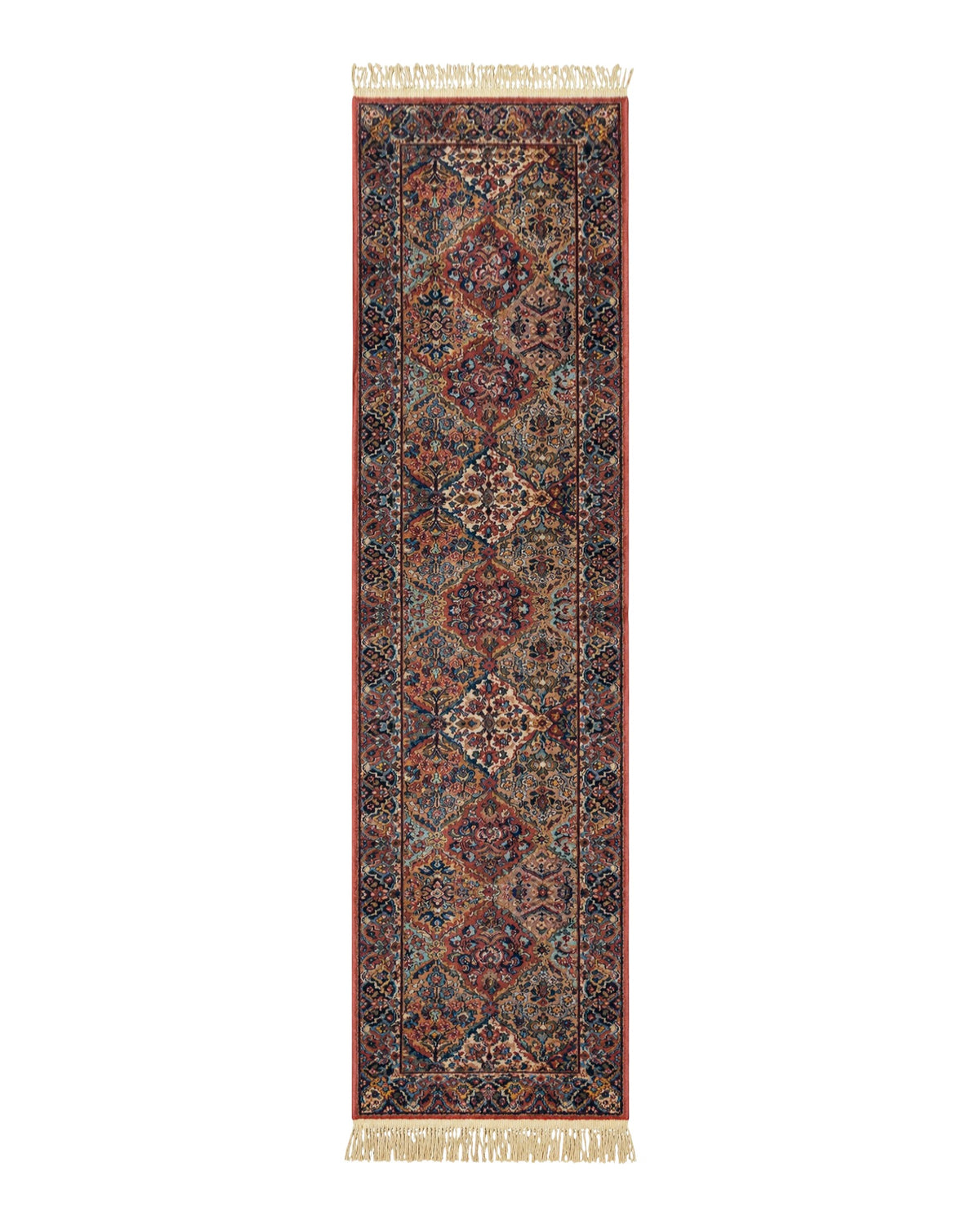
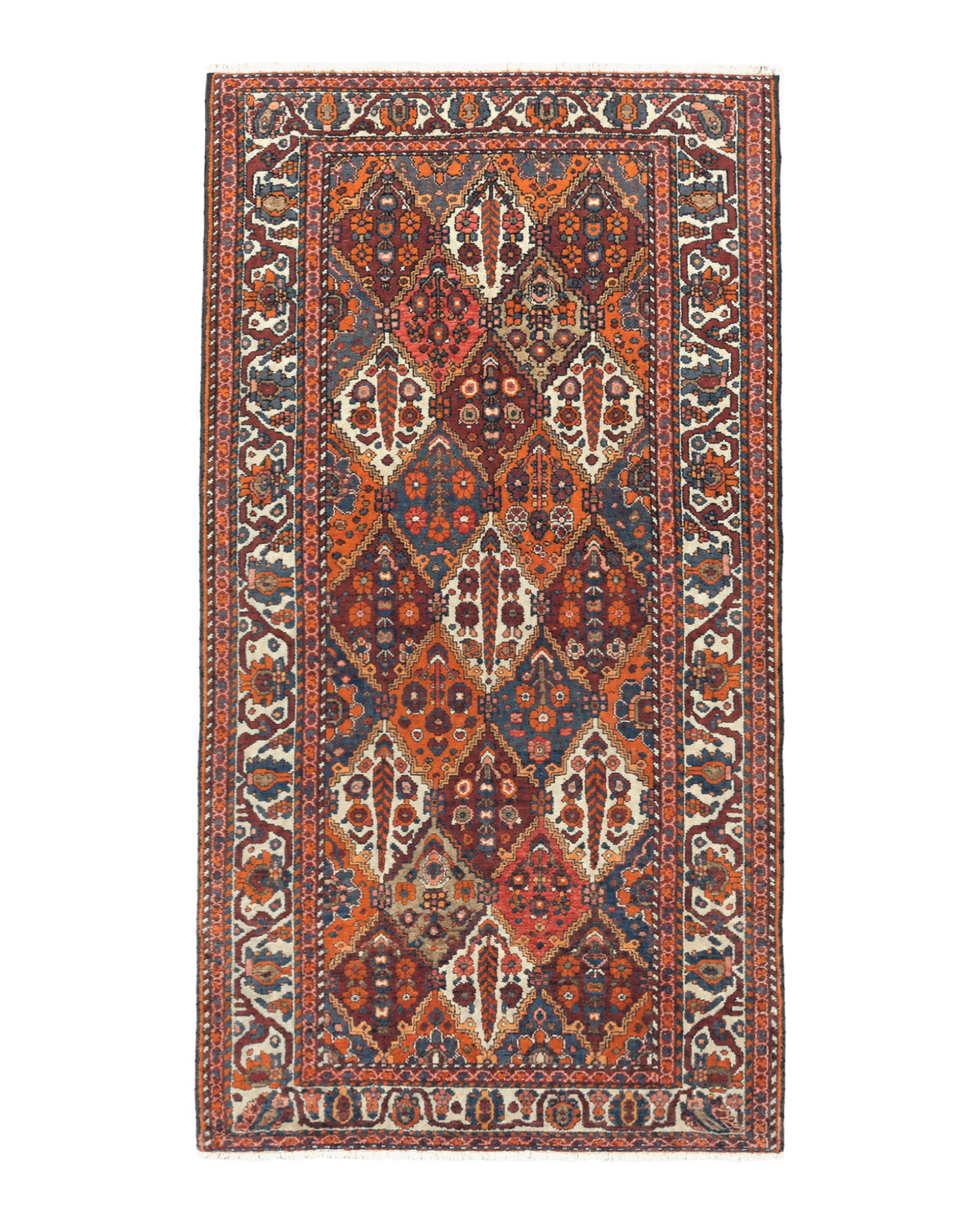
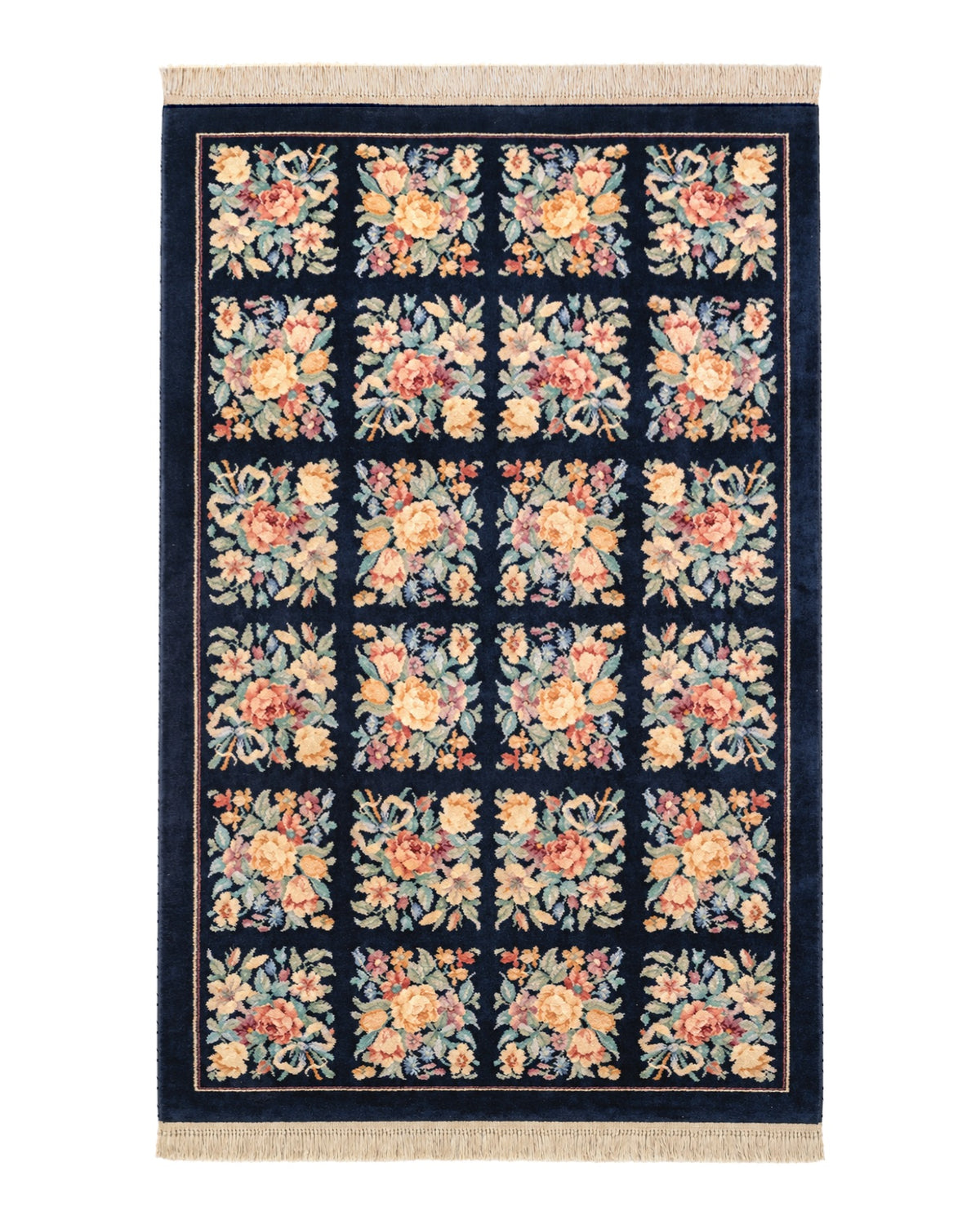
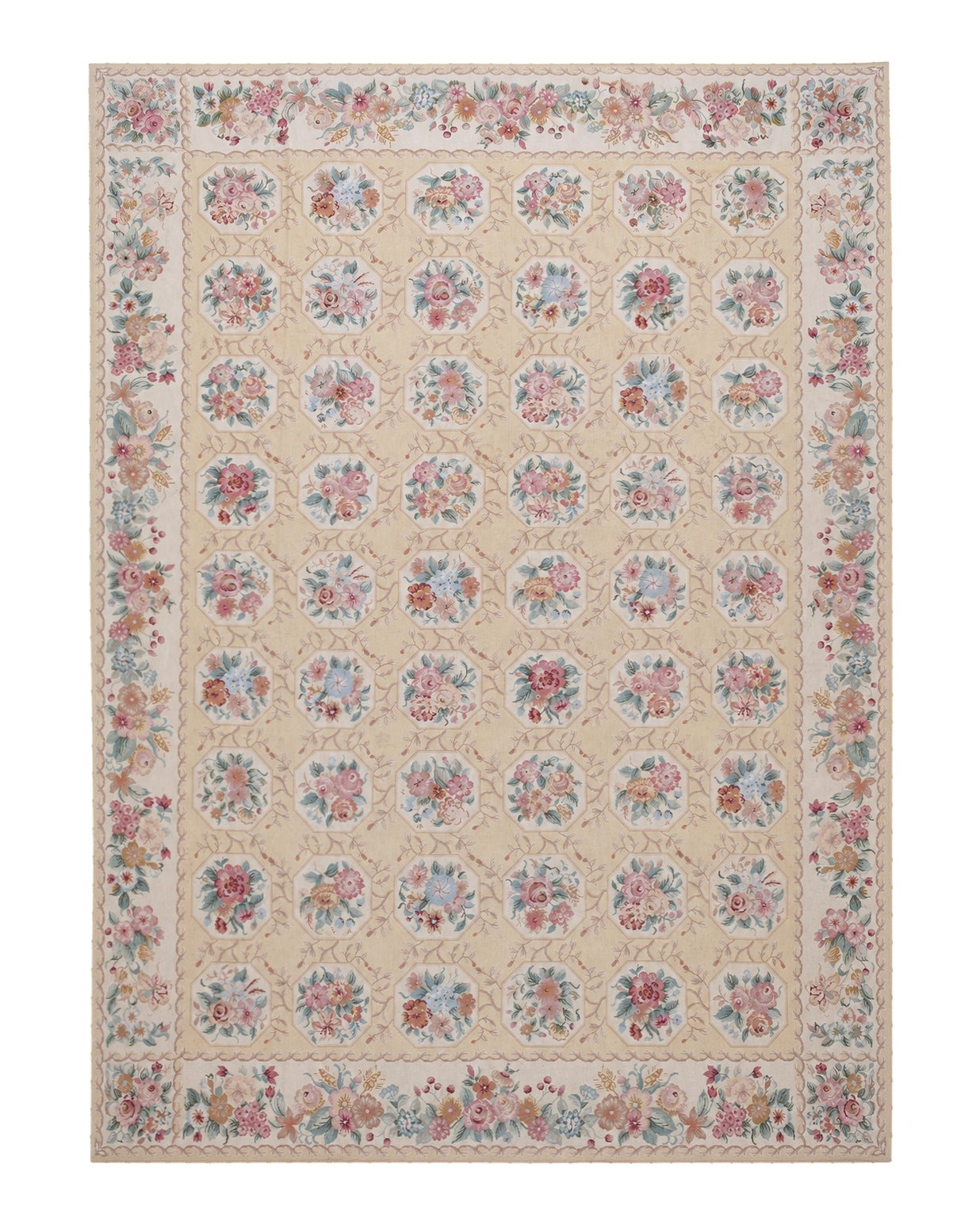
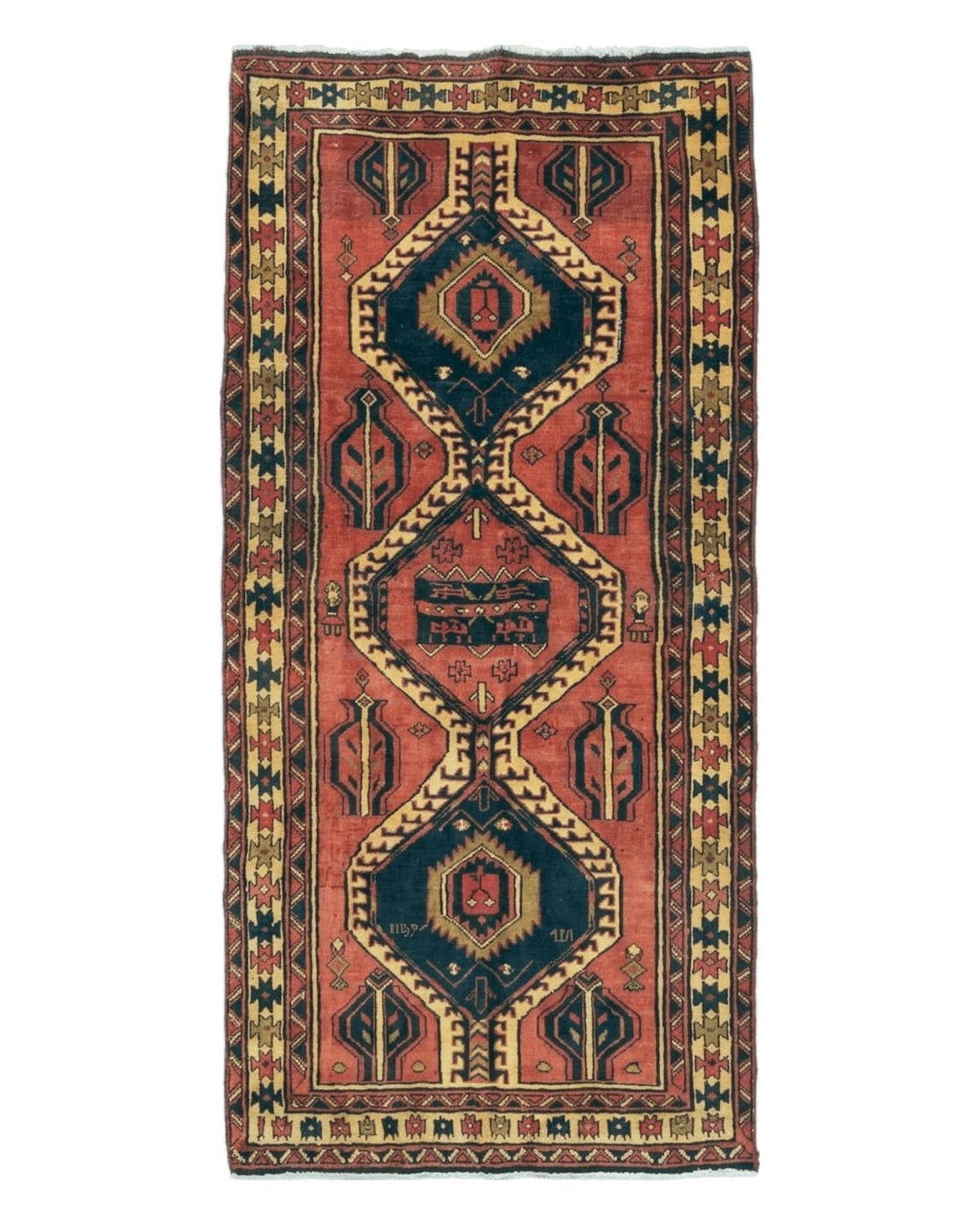
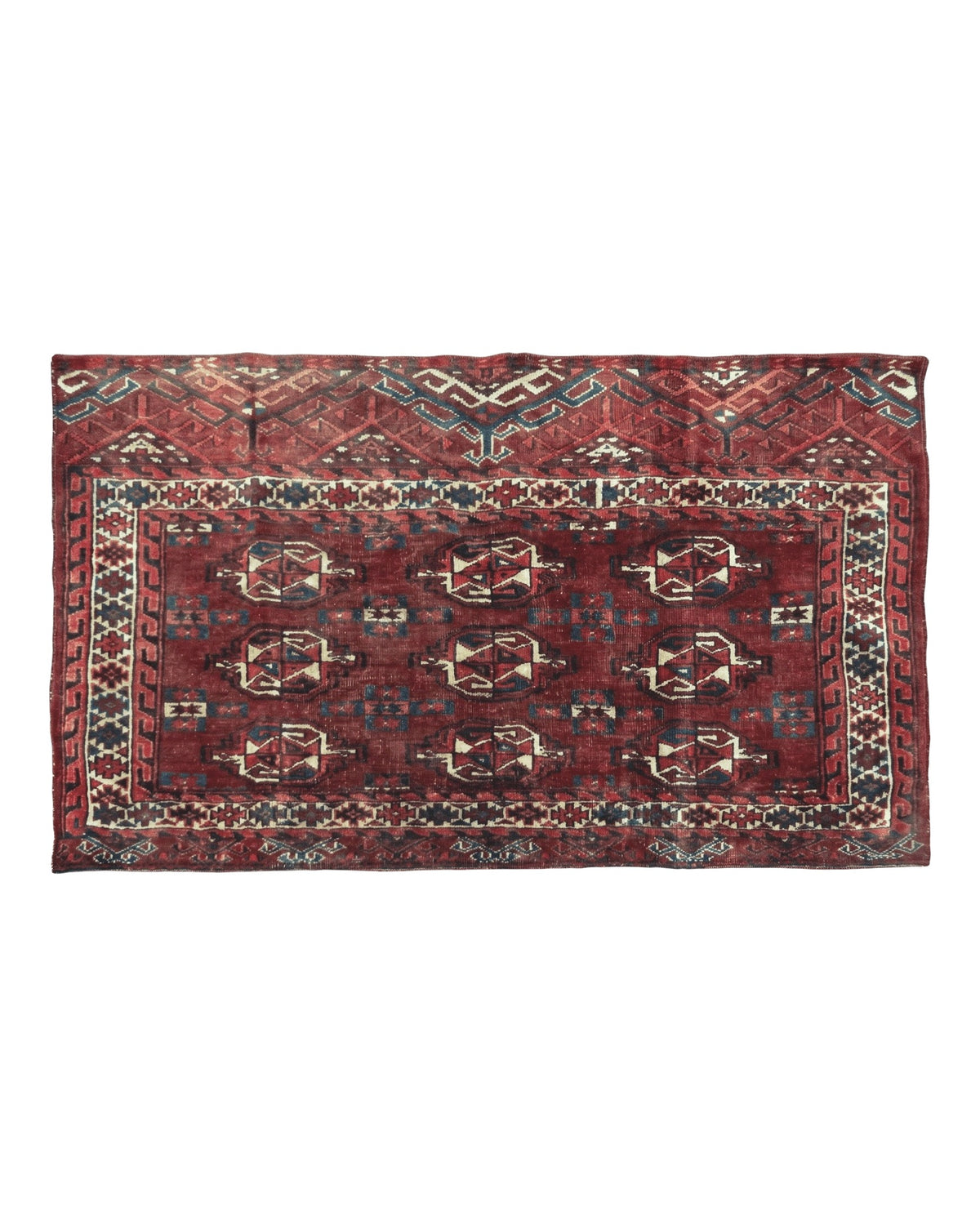
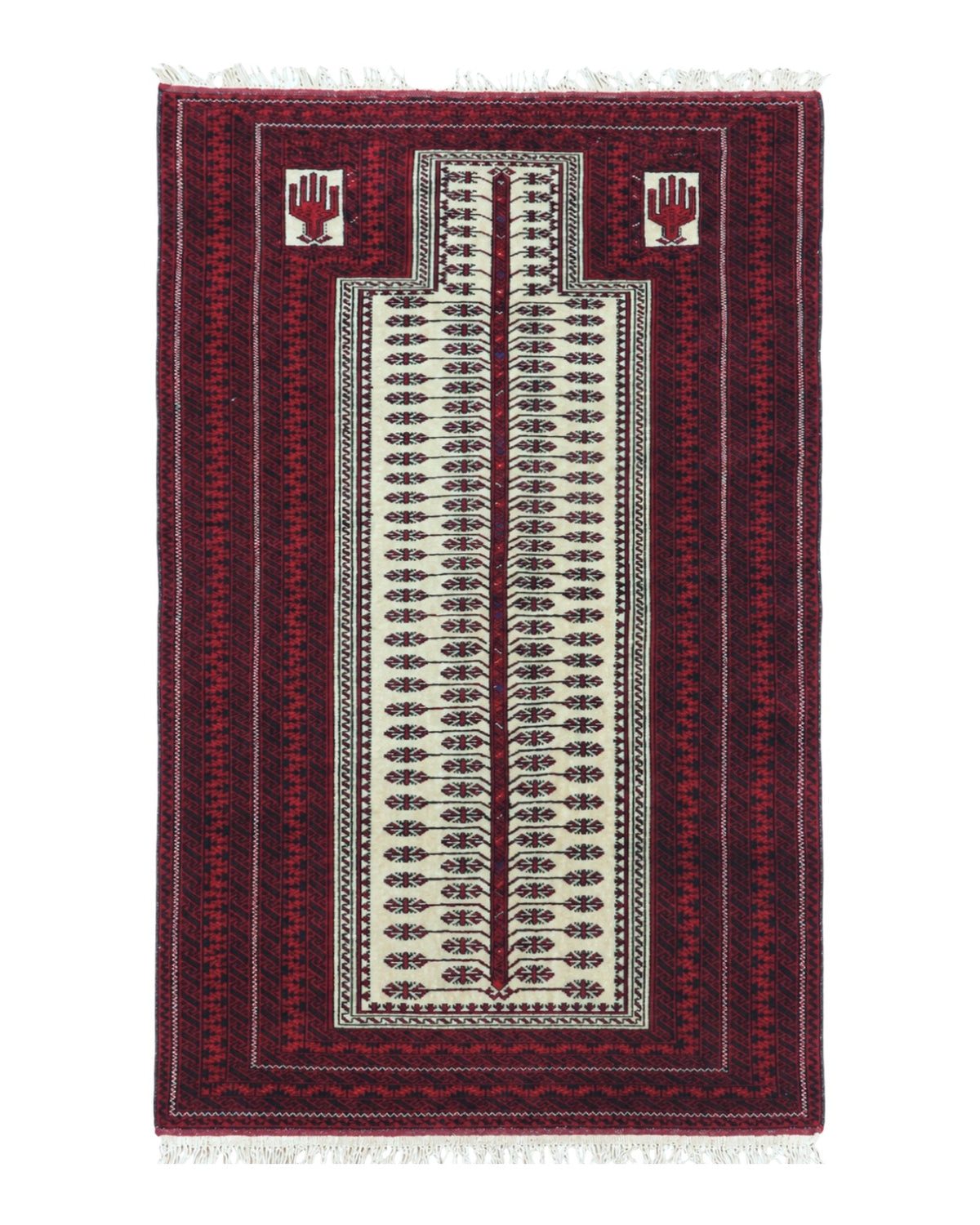
The Bakhtiari are one of the great tribal peoples of Iran, living in the Zagros mountains west of Isfahan, in the province of Chahar Mahal and Bakhtiari. Bakhtiari rugs are woven both by the nomadic tribe and, more often, by the villages of the region, many of them settled Bakhtiari. They are best known for the garden design, in which the field is divided into a grid of panels, each holding a tree, flower, vase or animal. Bakhtiari rugs are sturdy, colorful and full of charm.
| Origin | Chahar Mahal and Bakhtiari province, west of Isfahan |
|---|---|
| Tradition | Tribal and village rugs |
| Knot | Symmetric (Turkish) |
| Materials | Sturdy wool pile on a cotton foundation (village rugs) |
| Construction | Thick, firm and durable |
| Signature design | Garden panel (khesti) design |
| Village names | Shalamzar, Saman, Chalshotor, Bibibaff and others |
The garden design
The best-known Bakhtiari design divides the whole field into rectangles or diamonds, like a garden laid out in beds. It is often called the khesti ("brick" or "tile") design. Each compartment holds its own motif: a cypress, a willow, a flowering tree, a vase of flowers, a boteh, or a bird or animal. Neighboring panels are colored differently, so the rug forms a lively patchwork. The design recalls the walled gardens of Persian tradition, a symbol of paradise. See Garden, Panel and Tree of Life Designs.
Bakhtiari weavers also make medallion designs, often with large floral medallions on a patterned field, and all-over floral designs.
Village weaving
Most Bakhtiari rugs on the market were woven in the villages of Chahar Mahal, where weavers used fixed looms and cotton foundations. Some village names are associated with particular quality: Bibibaff ("woven by the lady") is used for especially fine pieces, and Saman and Shalamzar are known villages. True nomadic Bakhtiari pieces, with wool foundations, are less common and are mostly bags and smaller rugs.
Construction and colors
Bakhtiari village rugs are woven with the symmetric knot, with a thick, firm pile on a cotton foundation and a single or double weft. They are heavy and very durable, well suited to family rooms. Colors are rich and varied: red, navy, ivory and gold with plenty of green, orange and light blue, which keeps the panel designs lively.
How to recognize a Bakhtiari
- A field divided into panels, each with its own tree, flower or vase.
- A thick, firm, heavy rug with a durable pile.
- Symmetric knots on a cotton foundation in village pieces.
- Many colors, often including green and gold.
See also Persian Tribal Rugs and Persian Village Rugs.