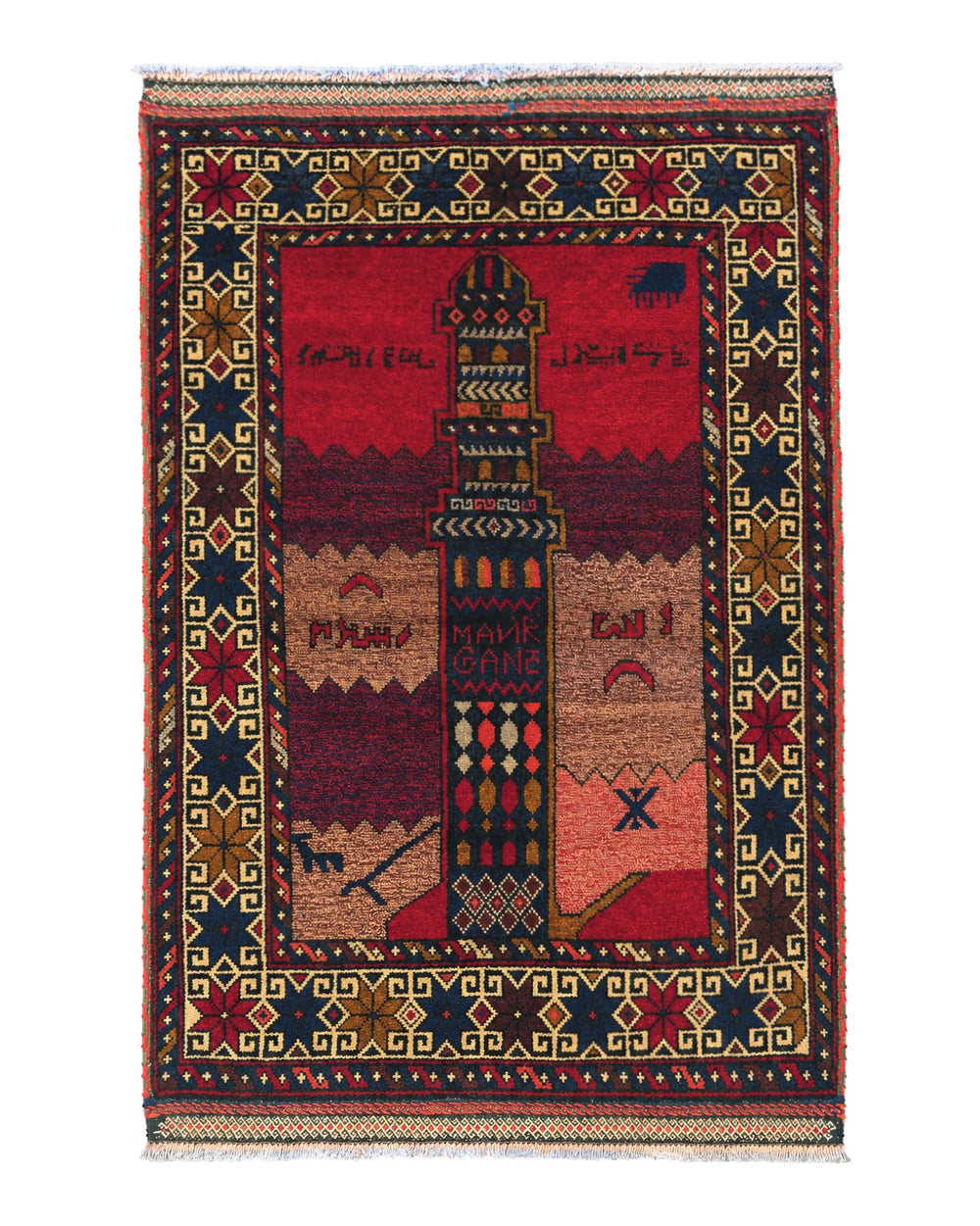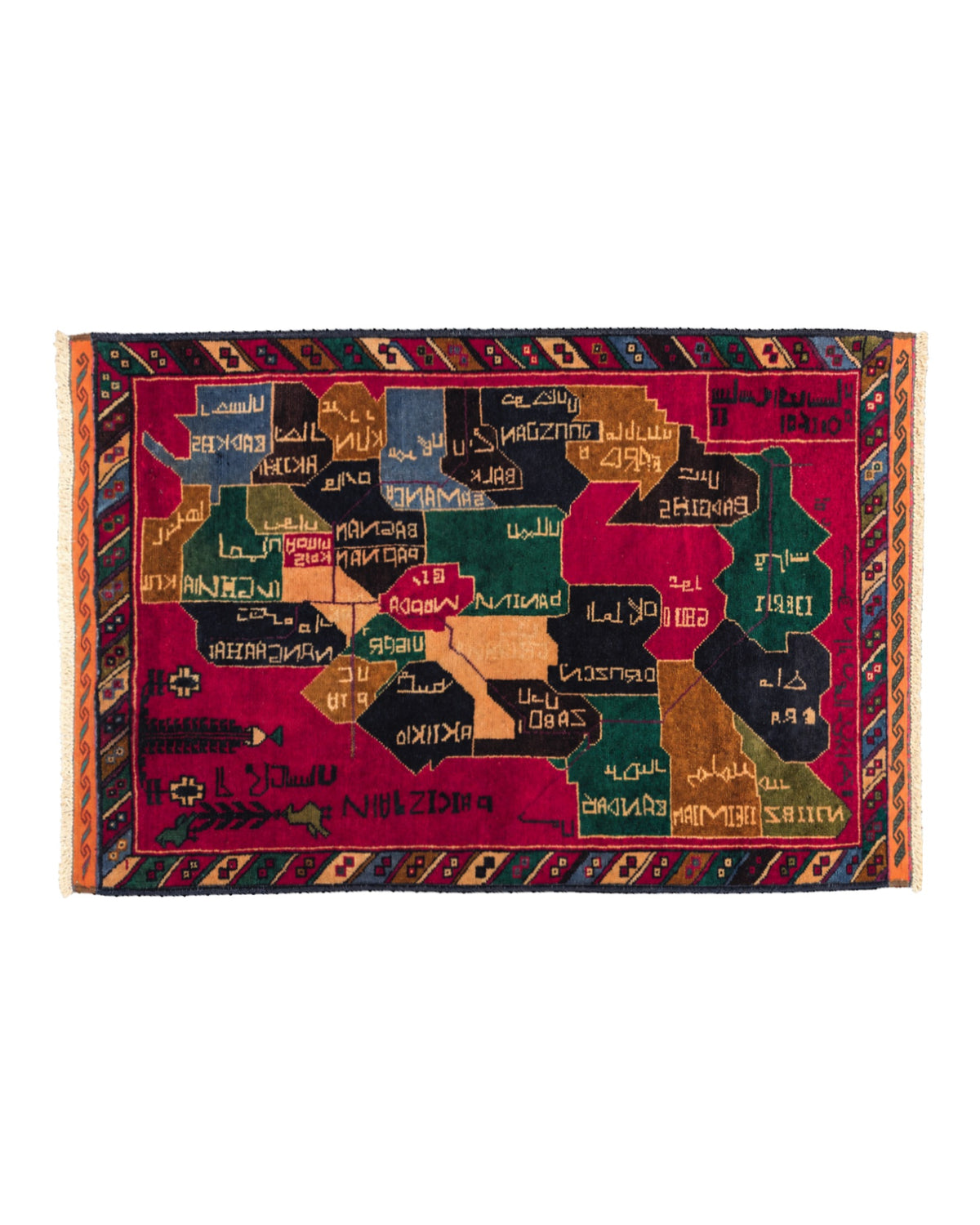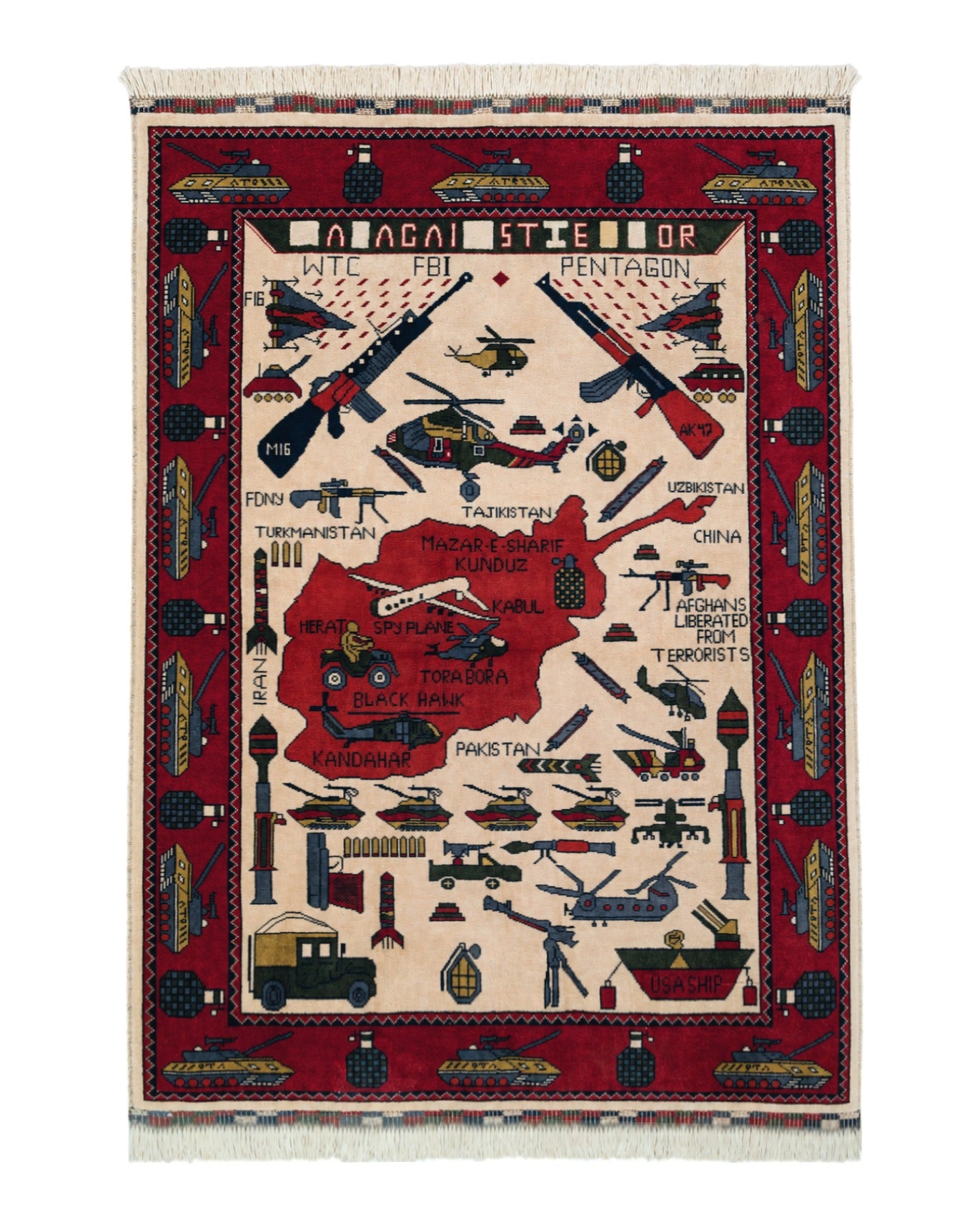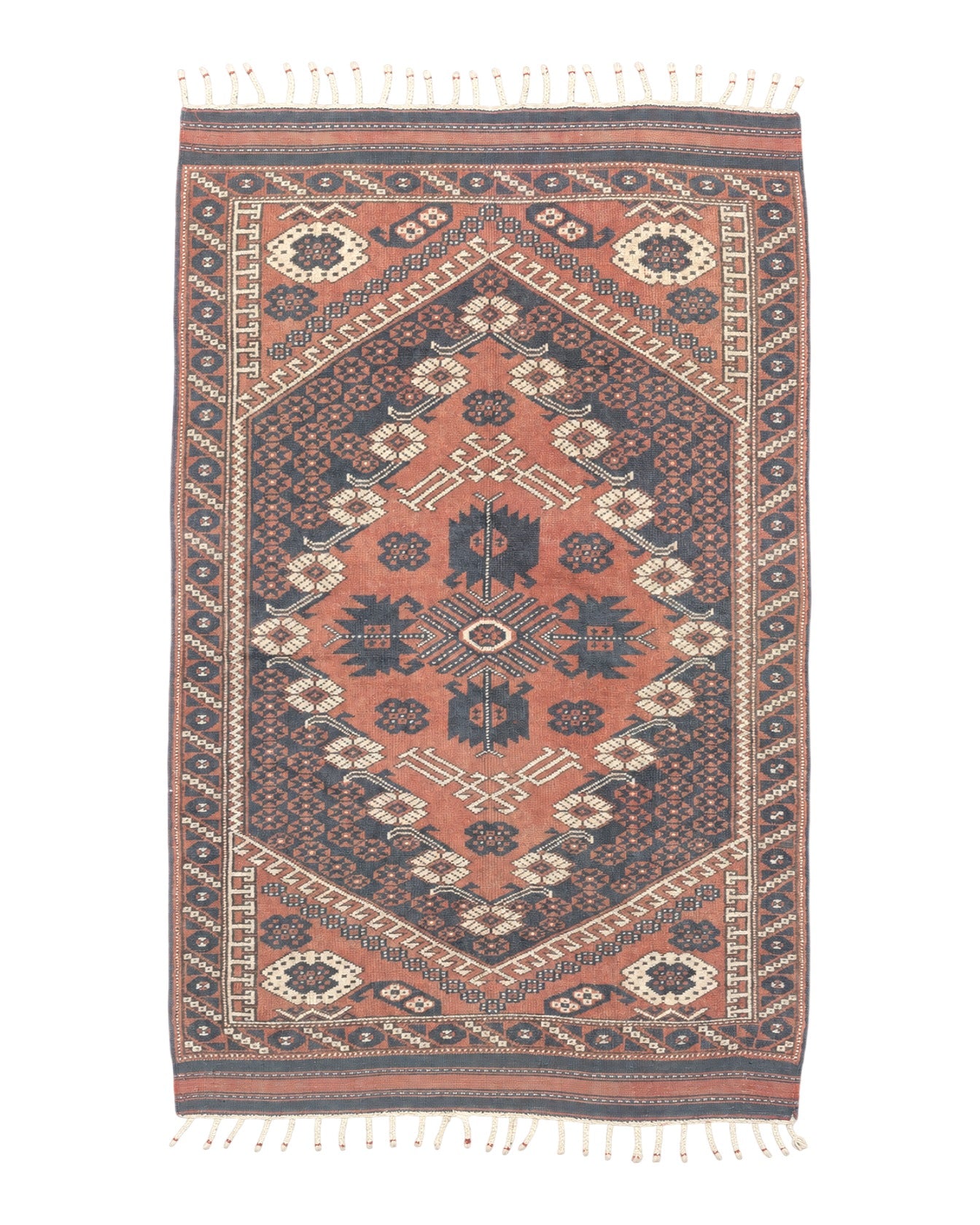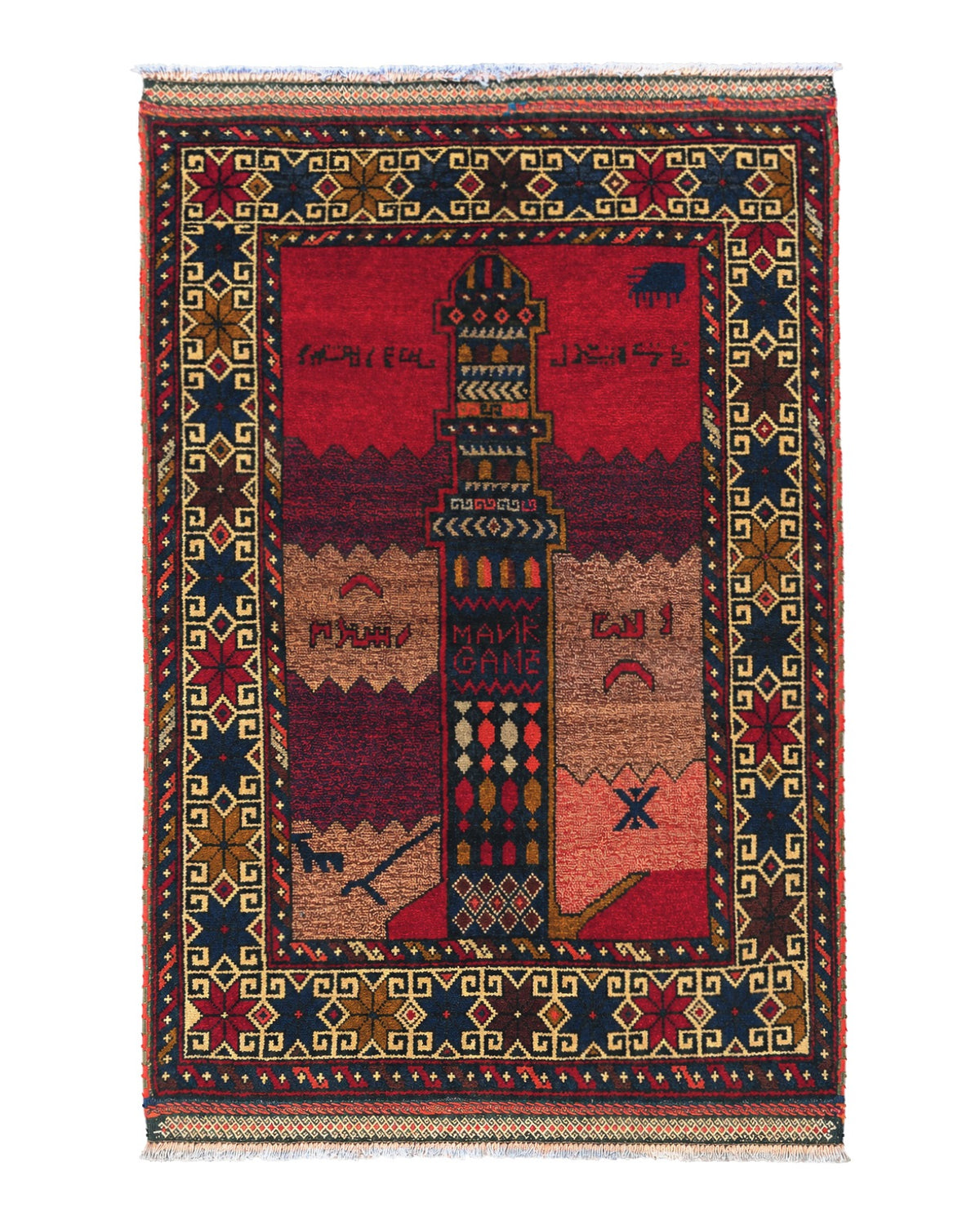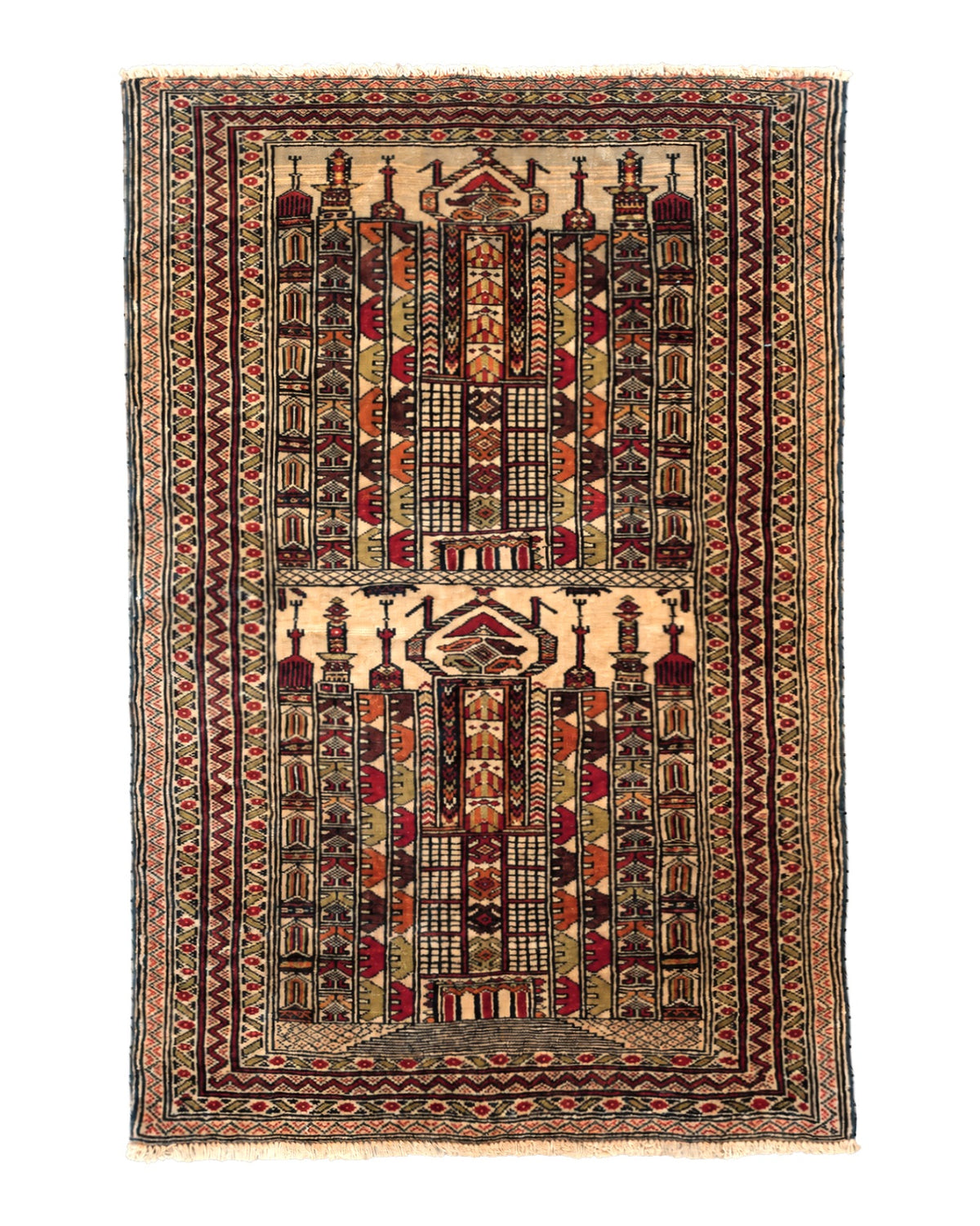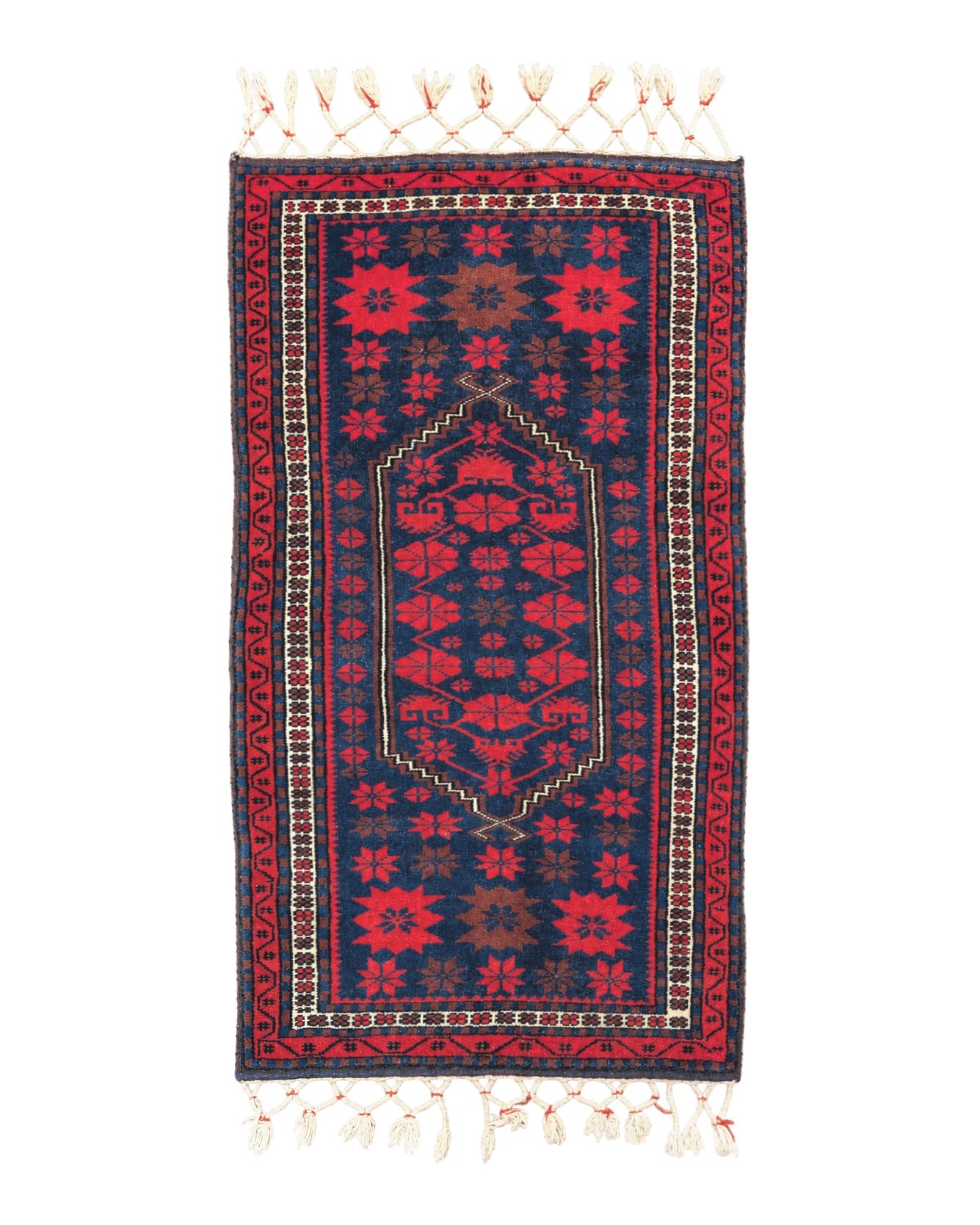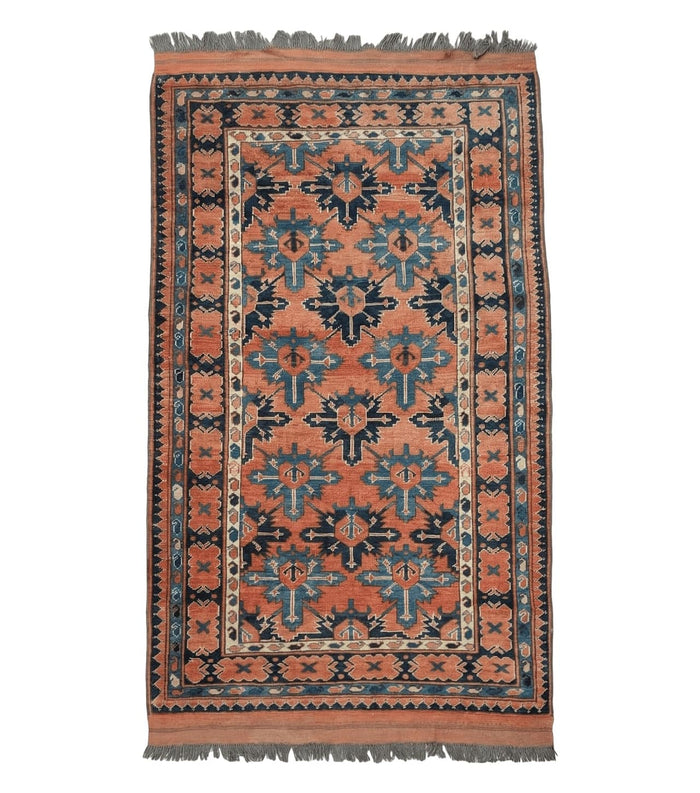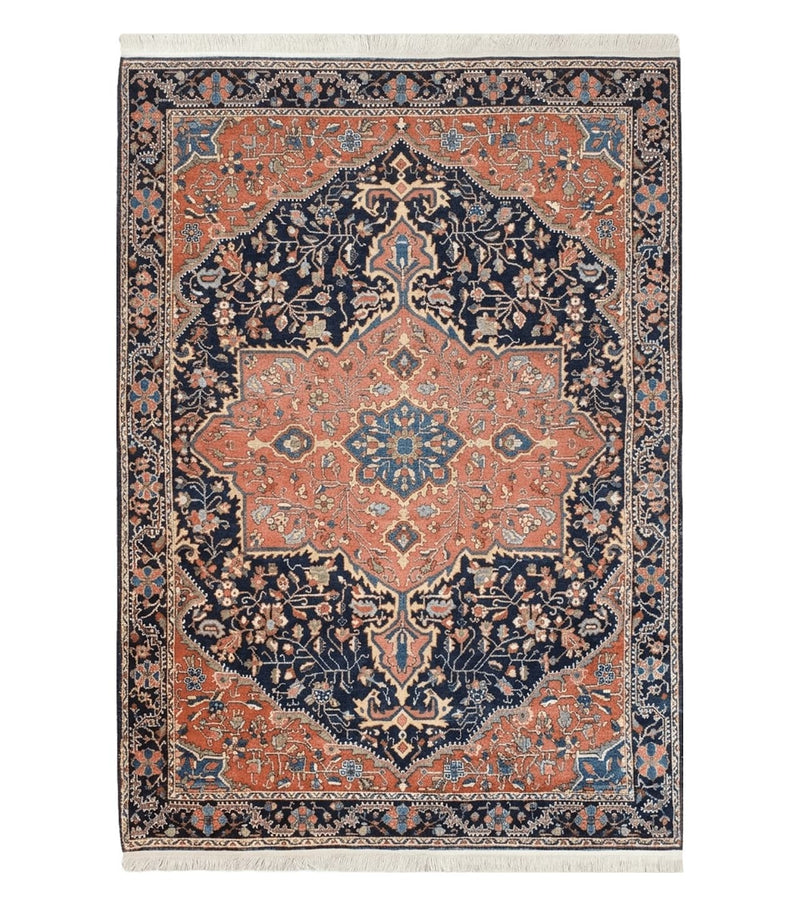


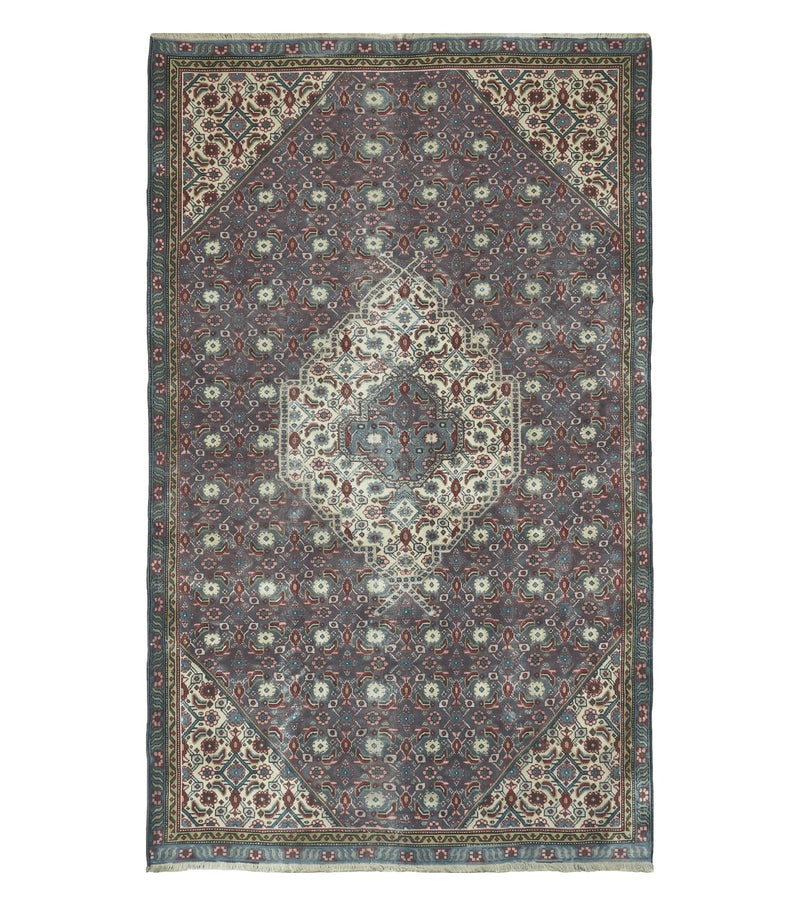


Baluch (also Baluchi, Balouch or Beluch) rugs are woven by Baluch and related tribal groups living in Khorasan in eastern Iran and across the border in western Afghanistan. They are among the most recognizable tribal rugs: small, with a deep, dark palette of madder red, navy blue and brown, lit up by small touches of ivory, and with a soft, lustrous wool that seems to glow. Baluch prayer rugs, often with a camel-colored field, are especially loved.
| Origin | Baluch and related tribes of Khorasan (Iran) and western Afghanistan |
|---|---|
| Tradition | Tribal (nomadic and semi-nomadic) |
| Knot | Asymmetric (Persian) |
| Materials | Lustrous wool pile on a wool or goat-hair foundation |
| Typical designs | Prayer rugs, tree of life, small medallions, all-over geometric patterns |
| Sizes | Mostly small: prayer rugs, bags, about 3 × 5 to 4 × 7 feet |
| Common colors | Dark red, navy, brown, aubergine, with ivory and camel |
Who weaves Baluch rugs
The name "Baluch" is used in the trade for rugs woven by a number of tribal groups in the borderlands of eastern Iran and western Afghanistan, not all of them ethnically Baluch. Weaving centers such as Torbat-e Heydarieh, Torbat-e Jam and Mashad in Iran, and Herat in Afghanistan, have long been markets for their rugs. The rugs are woven on horizontal ground looms, as in other nomadic traditions.
Designs
- Prayer rugs: a field with an arch (mihrab) at one end, often camel-colored and filled with a tree of life or small motifs, sometimes with stylized hands. See Prayer Rugs.
- Tree of life: a central tree with branches and leaves, on a camel or dark ground.
- Small medallions in rows, or all-over lattices of geometric motifs.
- Bags, such as saddlebags and storage bags, often with very fine weaving.
Borders are usually several bands of small geometric motifs, and the ends often have wide flatwoven bands, sometimes decorated.
Colors and wool
The Baluch palette is dark and rich: deep madder reds, navy and indigo blues, browns and aubergine, with ivory or camel used sparingly for contrast. Older rugs are often colored with natural dyes, and the soft, lustrous wool gives them a glowing, almost velvety look. Because the colors are dark, Baluch rugs are best seen in good light, where their depth becomes clear.
How to recognize a Baluch
- A dark palette of red, navy and brown with small ivory accents.
- Soft, lustrous wool and a fairly short pile.
- Small sizes, often prayer rugs.
- Wide flatwoven ends and wool or goat-hair foundations.
Baluch rugs share the region with the Turkmen, whose rugs use repeating guls rather than Baluch designs. See also Afghan Rugs and Persian Tribal Rugs.