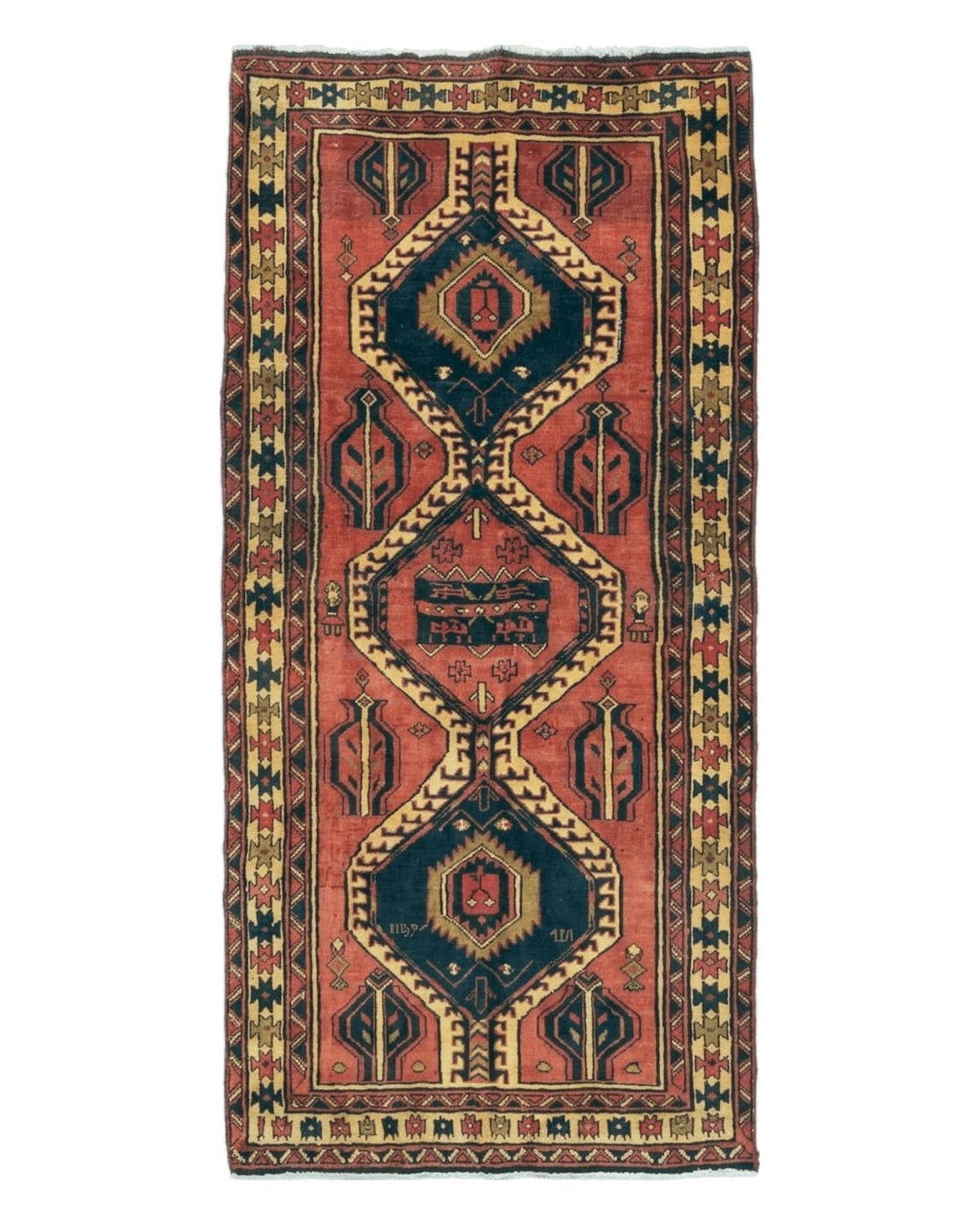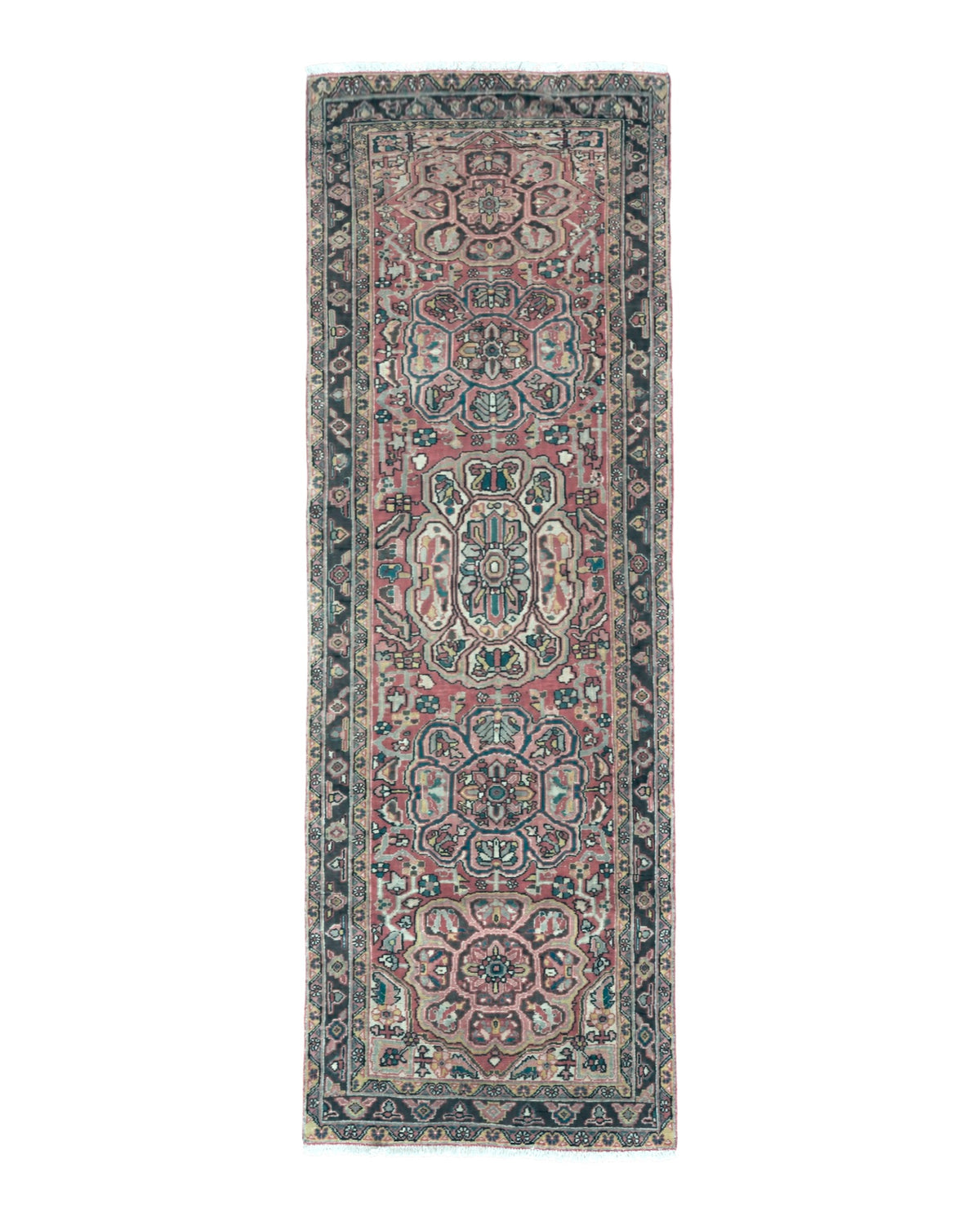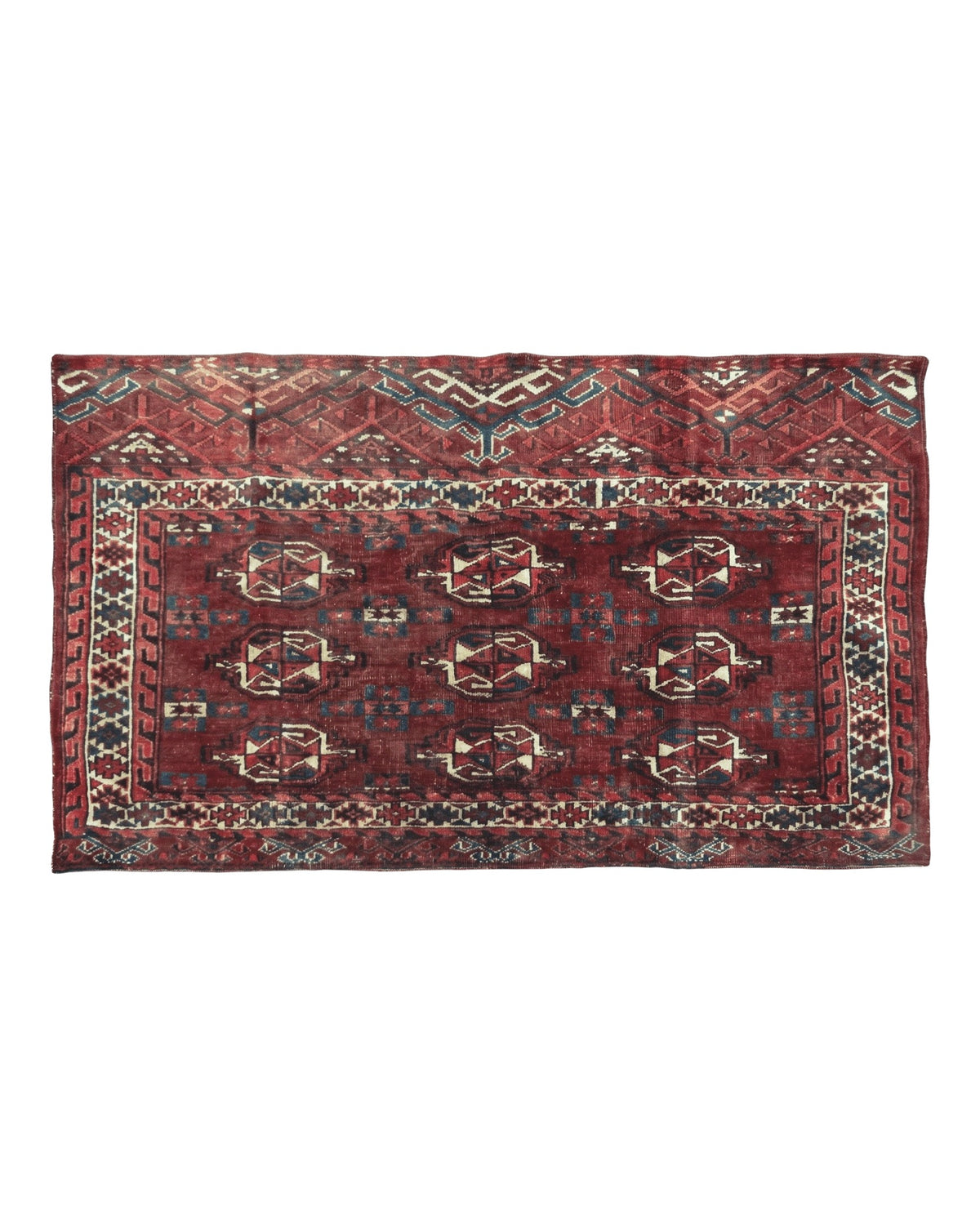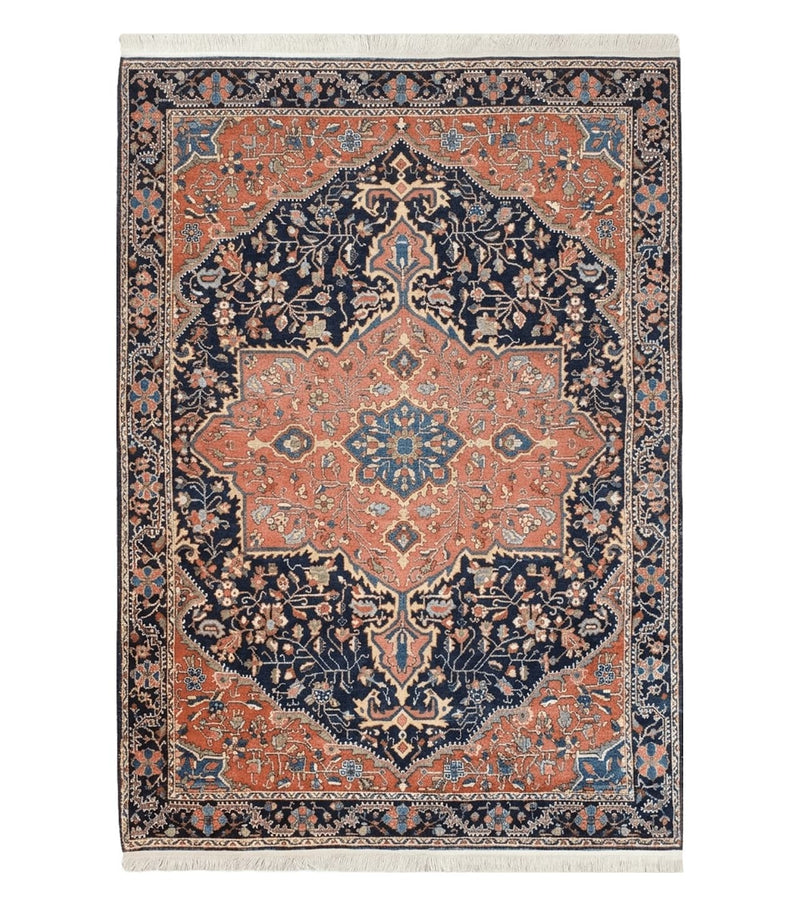


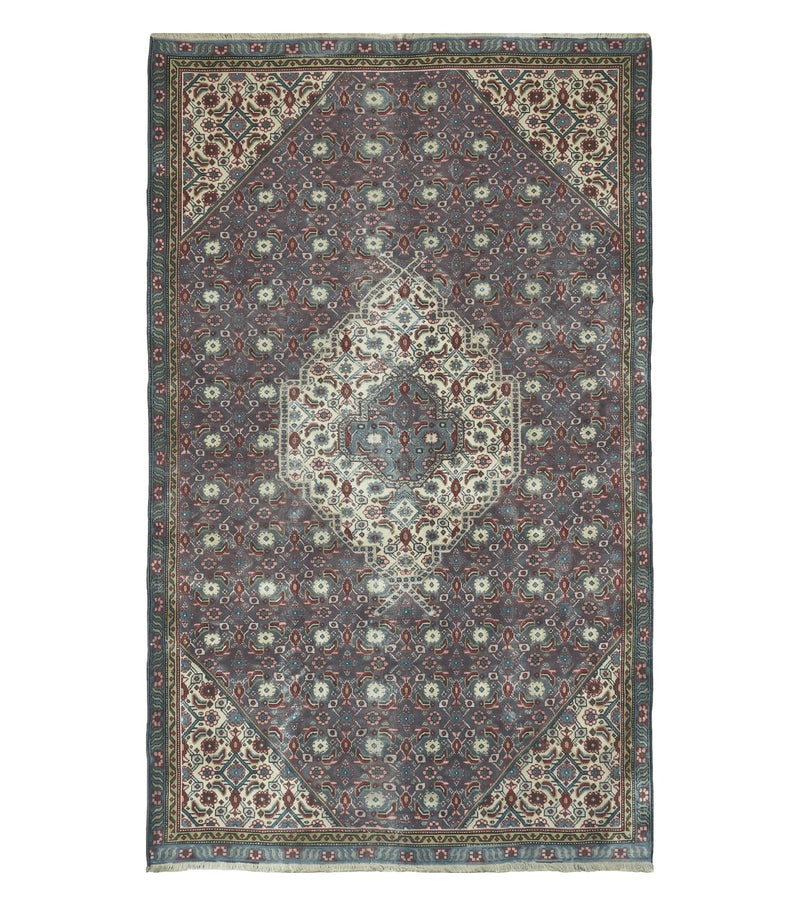


Rugs with the same design can be made in three very different ways. A hand-knotted rug is tied knot by knot on a loom. A hand-tufted rug is made by shooting yarn into a backing cloth with a hand-held tool and gluing it in place. A machine-made rug is woven on a power loom. From across a room they can look alike, but they differ greatly in how long they last and what they are worth.
| Hand-knotted | Each knot tied by hand around the warp threads; the most durable and the most valuable |
|---|---|
| Hand-tufted | Yarn punched into a cloth backing and held with glue; quicker and cheaper to make |
| Machine-made | Woven on a power loom; uniform and inexpensive |
| Quickest test | Turn the rug over and look at the back |
| Fringe | Part of the rug on hand-knotted rugs; usually sewn or glued on the others |
Hand-knotted rugs
A hand-knotted rug starts with a set of warp threads stretched on a loom. The weaver ties a short length of yarn around each pair of warps, cuts it, and moves on, row after row, with wefts passed between the rows to lock the knots in place. The pile is the cut ends of all those knots. Every Persian rug is made this way, as are traditional Turkish, Caucasian, Afghan, Indian, Pakistani, Chinese and Tibetan rugs.
Because the pile is tied into the structure, it cannot pull out, and a good hand-knotted rug can last a century or more. It can also be cleaned and repaired, which is why antique rugs are still in use. See Knots and Knot Density.
Hand-tufted rugs
A hand-tufted rug is made on a frame. The design is drawn on a cloth backing, and a worker pushes loops of yarn through the cloth with a tufting gun. The loops are often sheared to make a cut pile. A layer of latex glue is then spread on the back to hold the tufts, and a second cloth is glued over it to hide the work.
Tufting is much faster than knotting, so these rugs cost far less, and some are attractive and well designed. But the tufts are held only by glue. Over time the latex dries out and breaks down, the tufts can shed or pull out, and the backing may crumble. Most hand-tufted rugs have a working life measured in years rather than generations, and they are difficult to repair.
Machine-made rugs
Machine-made rugs are woven on power looms, often from wool, nylon, polypropylene or polyester. The best of them, such as the classic wool rugs made by American mills like Karastan, are sturdy and long-lasting, and some vintage pieces are collected in their own right. Many modern machine-made rugs, however, are made of synthetic fibers and are designed to be inexpensive rather than durable.
Machine-made rugs are perfectly regular: every motif is identical, the edges are straight, and the colors are even across the whole rug.
How to tell them apart
- Turn it over. On a hand-knotted rug the back shows the design clearly, made of tiny individual knots that are slightly uneven. A hand-tufted rug has a plain cloth backing that hides the back entirely. A machine-made rug shows the design on the back too, but in a perfectly regular grid.
- Look at the fringe. On a hand-knotted rug the fringe is the ends of the warp threads, which run the full length of the rug. On tufted and many machine-made rugs the fringe is a separate strip sewn or glued on.
- Fold back the pile. On a hand-knotted rug you can see the knots wrapped around the warps at the base of the pile. On a tufted rug you will see the backing cloth.
- Check the sides. Hand-knotted rugs have sides wrapped or overcast by hand. Machine-made rugs usually have a machine-stitched binding.
- Look for small irregularities. Slight differences in width, a motif that changes part-way through, or bands of color called abrash are signs of handwork. See Natural vs. Synthetic Dyes and Abrash.
Flatweaves
Not every handmade rug has a pile. Kilims, soumaks and other flatweaves are woven by hand without knots, with the design formed by the wefts themselves. They are a separate family, explained in Flatweaves vs. Pile Rugs.
Which should you choose?
For a rug you want to keep for many years, a hand-knotted rug is the better investment: it wears slowly, can be cleaned and repaired, and often holds its value. A tufted or machine-made rug can be a reasonable choice for a short-term or low-budget need, as long as you know what you are buying. See How to Buy a Persian Rug.