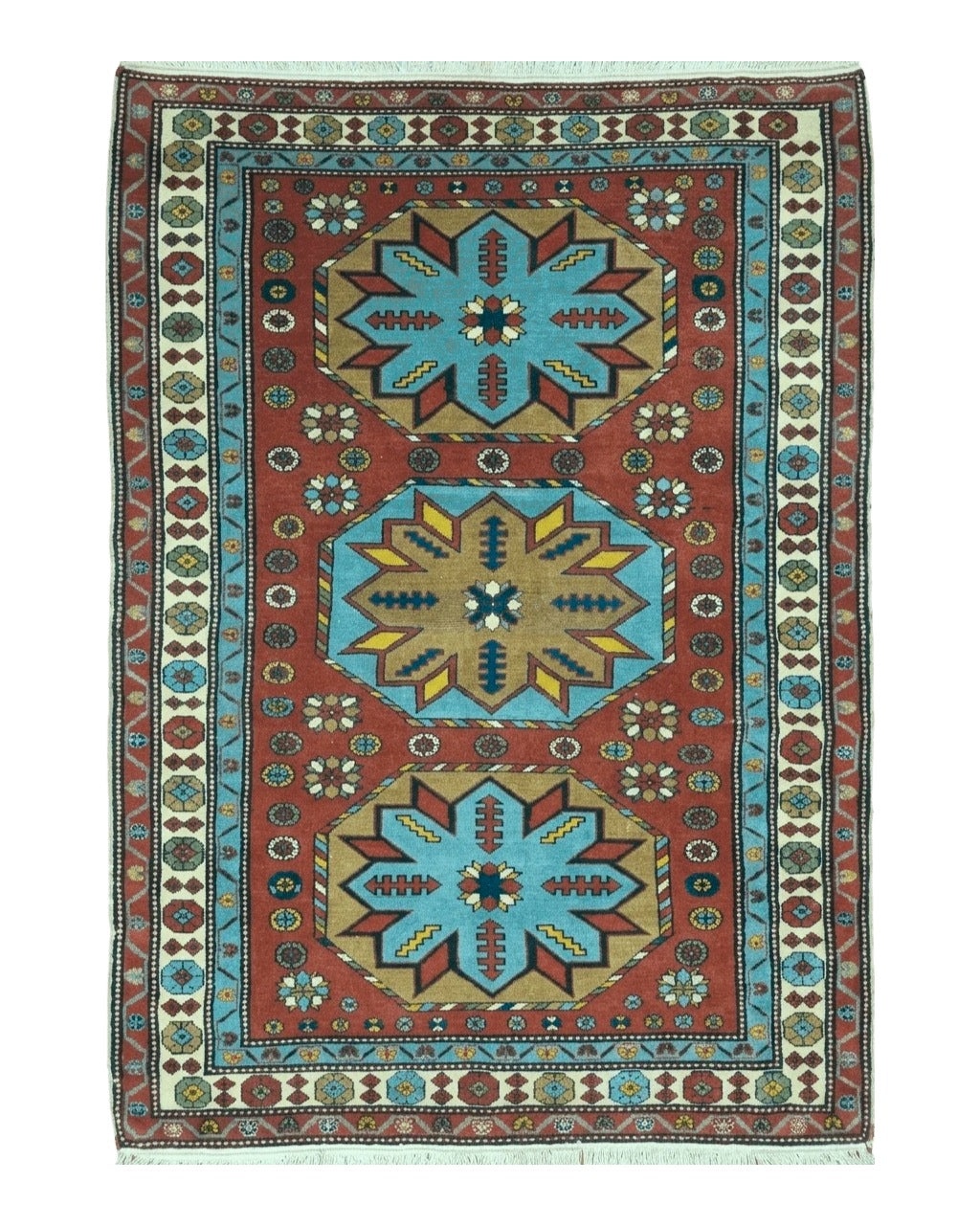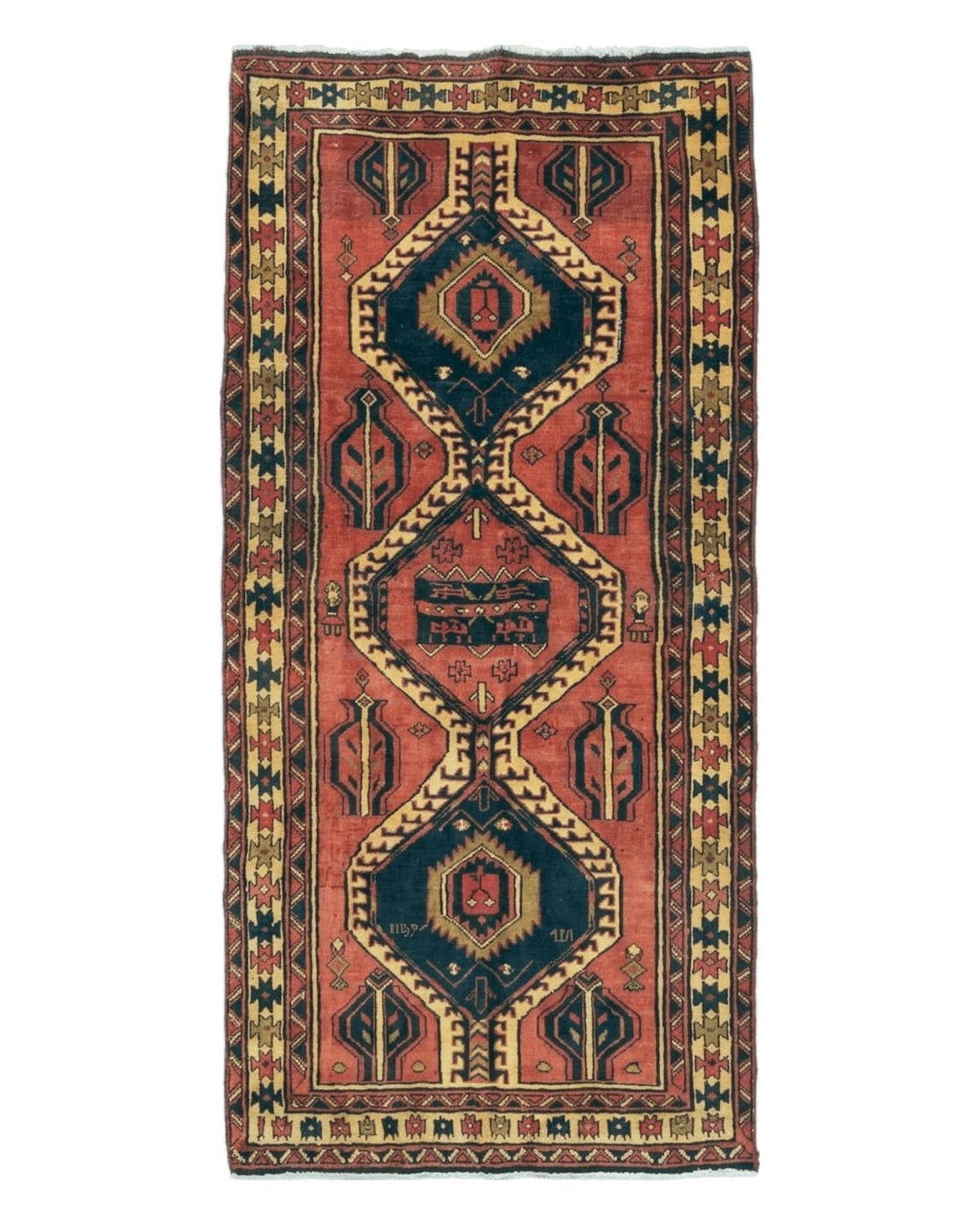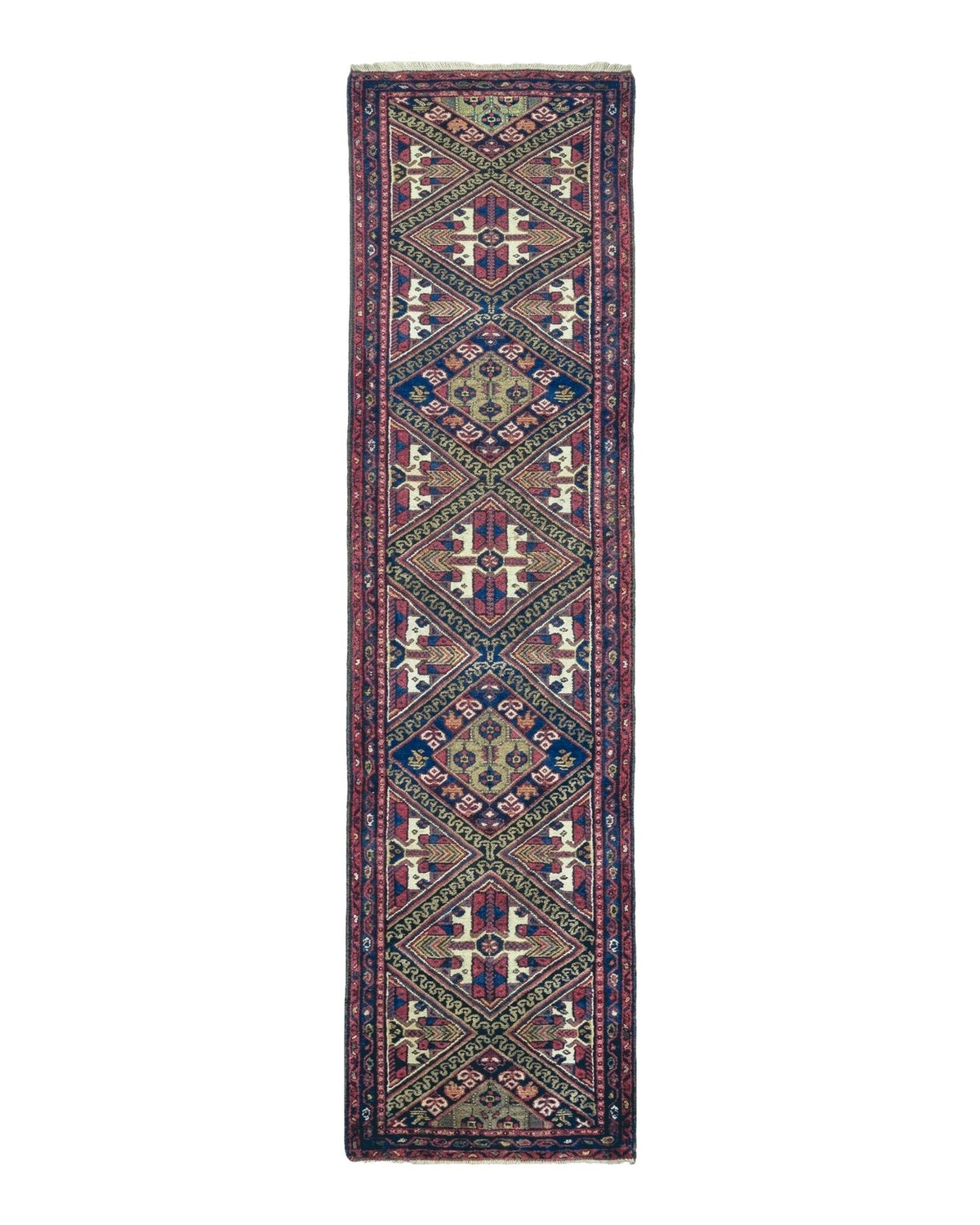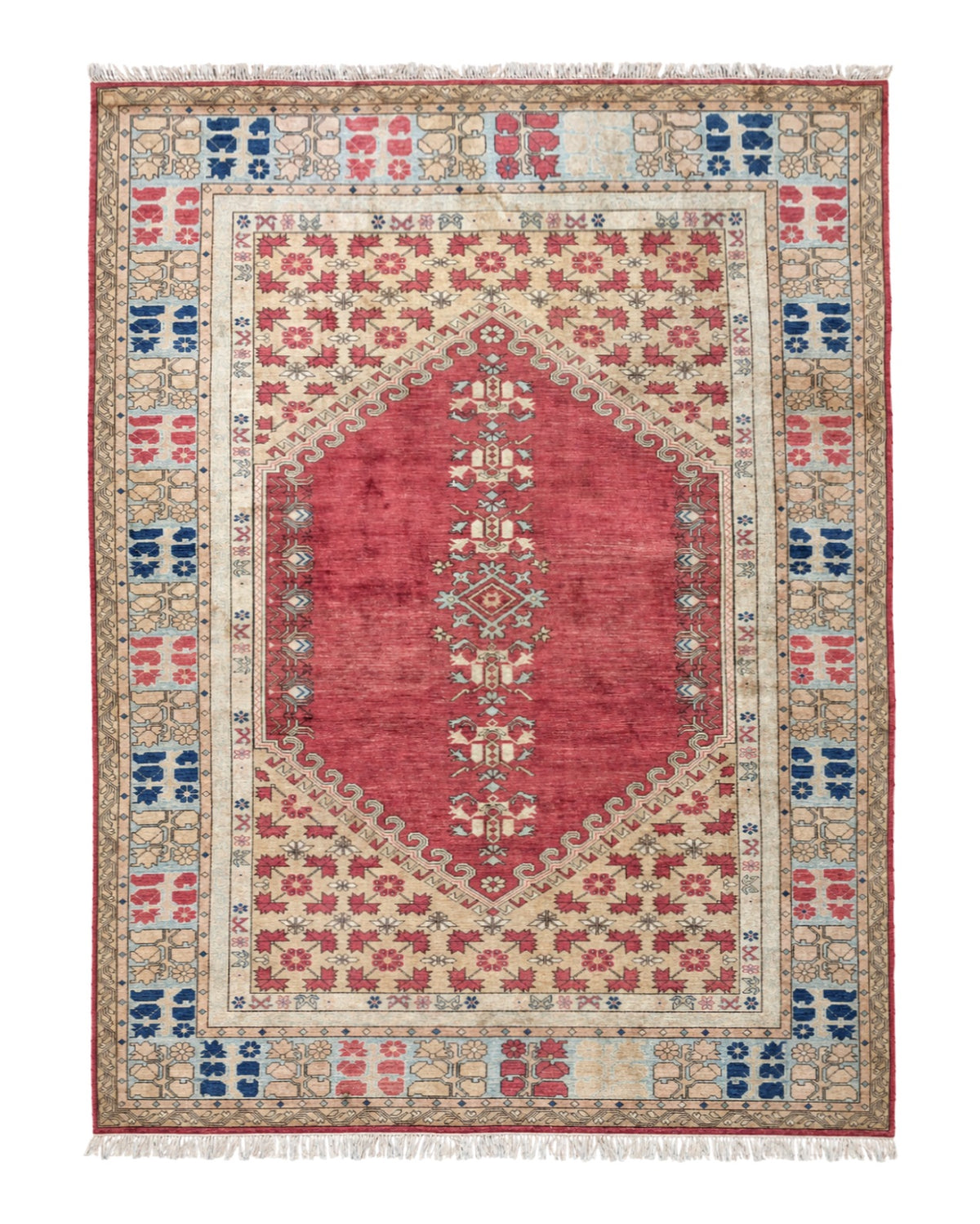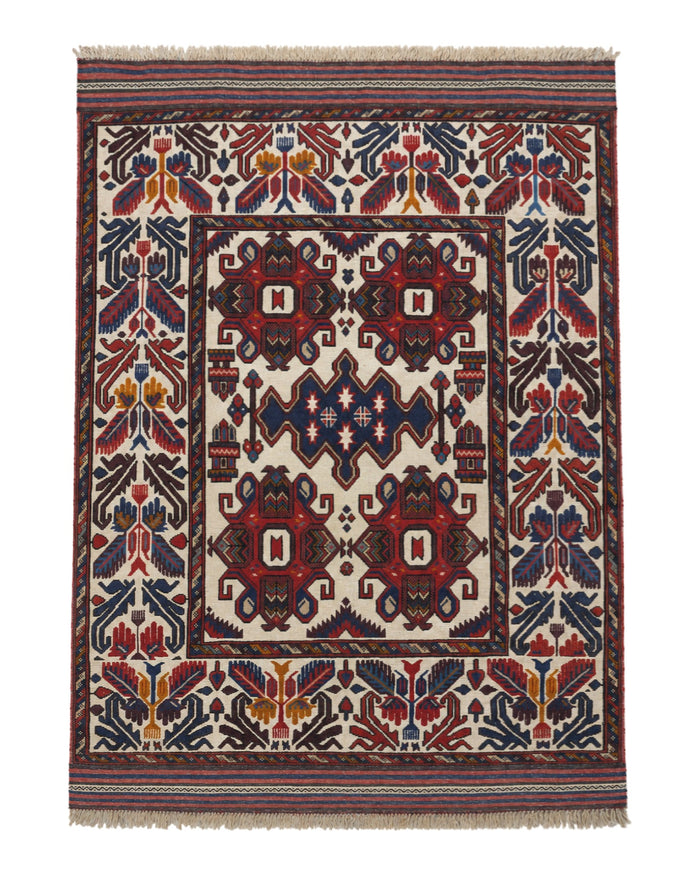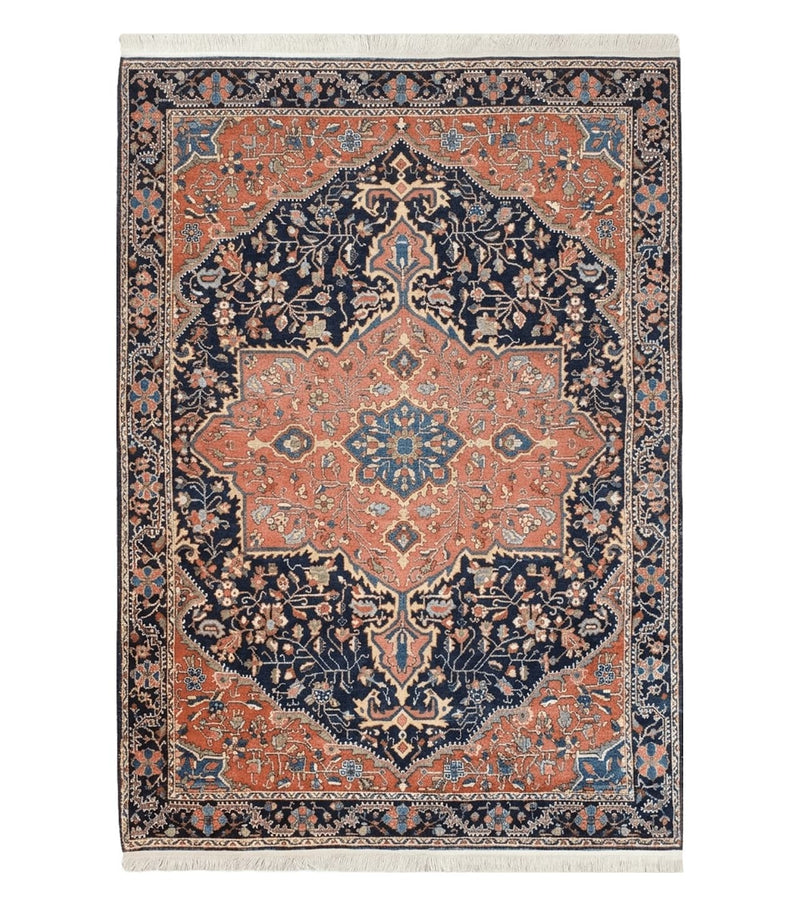


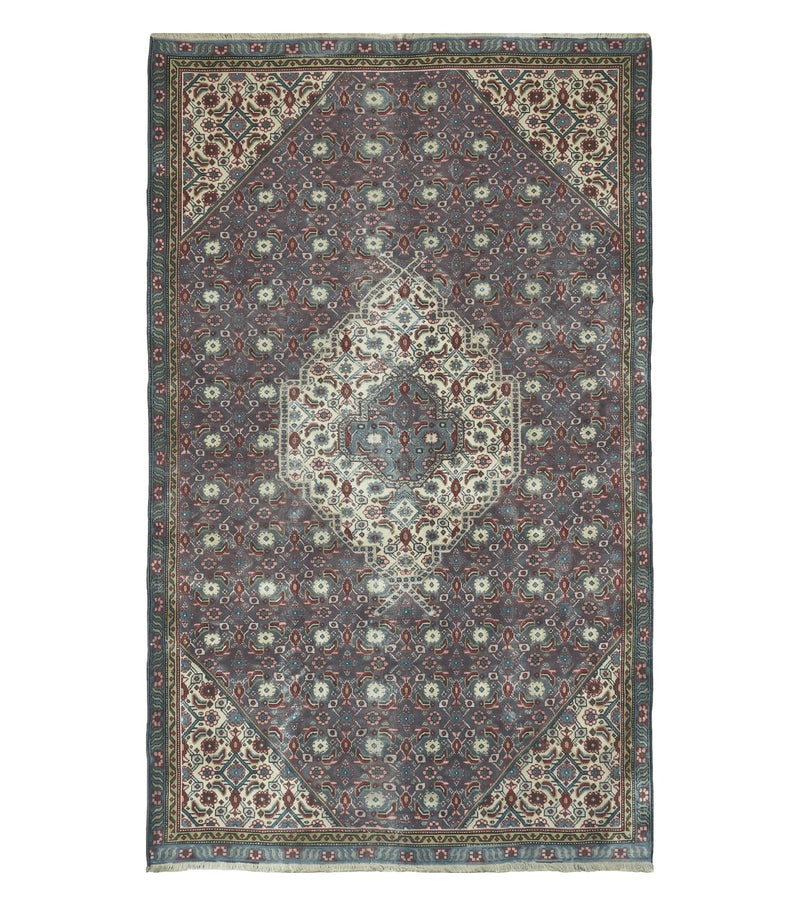


The Caucasus is a mountainous region between the Black Sea and the Caspian Sea, today divided among Azerbaijan, Armenia, Georgia and southern Russia. Its many peoples, Azeri, Armenian, Kurdish, Lezgi and others, wove some of the most striking rugs in the world: bold geometric designs in brilliant colors, full of stars, hooks, medallions and stylized animals. Most collectible Caucasian rugs were woven between about 1850 and 1920.
| Origin | The Caucasus: Azerbaijan, Armenia, Georgia, Daghestan |
|---|---|
| Main period | About 1850 to 1920 for most collectible pieces |
| Knot | Symmetric (Turkish) |
| Materials | Wool pile on a wool foundation (some cotton) |
| Typical designs | Geometric medallions, stars, hooked motifs, small animals |
| Main groups | Kazak, Karabagh, Genje, Shirvan, Kuba, Daghestan, Talish |
Main types
| Type | Character |
|---|---|
| Kazak | Thick, long pile; big, bold medallions; few, strong colors |
| Karabagh | Large medallions and floral designs, some influenced by European and Persian rugs |
| Genje | Long rugs with diagonal stripes or repeated medallions |
| Shirvan | Finer, shorter pile; detailed geometric medallions and prayer rugs |
| Kuba | Fine weave; intricate all-over designs and star motifs |
| Daghestan | Fine prayer rugs with lattice fields |
| Talish | Long, narrow rugs with open fields and rosette borders |
Designs and colors
Caucasian designs are geometric: stepped and hooked medallions, eight-pointed stars, crosses, latch hooks, stylized flowers and small animals and figures, often scattered freely across the field. Colors are bright and clear: madder red, indigo blue, ivory, yellow and green, with strong contrasts. Many designs have names given by the trade, such as "Eagle Kazak," "Star Kazak" and "Dragon Soumak." See Geometric vs. Curvilinear Designs.
Soumaks and flatweaves
The Caucasus is also famous for soumaks, flatweaves made by wrapping colored yarns around the warps, and for kilims, verneh and sileh. See Flatweaves vs. Pile Rugs.
The 20th century and today
Weaving in the Caucasus changed after the Russian Revolution, when production was organized into state workshops. Rugs from the Soviet period are often more standardized, with synthetic dyes. Today, Caucasian designs are woven widely in Turkey, Iran, Afghanistan and Pakistan, and the region of north-west Iran around Ardabil weaves rugs very close to Caucasian styles.
How to recognize a Caucasian rug
- Bold geometric designs with hooks, stars and stepped medallions.
- Bright, contrasting colors.
- Symmetric knots on a wool foundation.
- Mostly small to medium sizes and long, narrow formats.
See also Persian vs. Oriental Rugs.