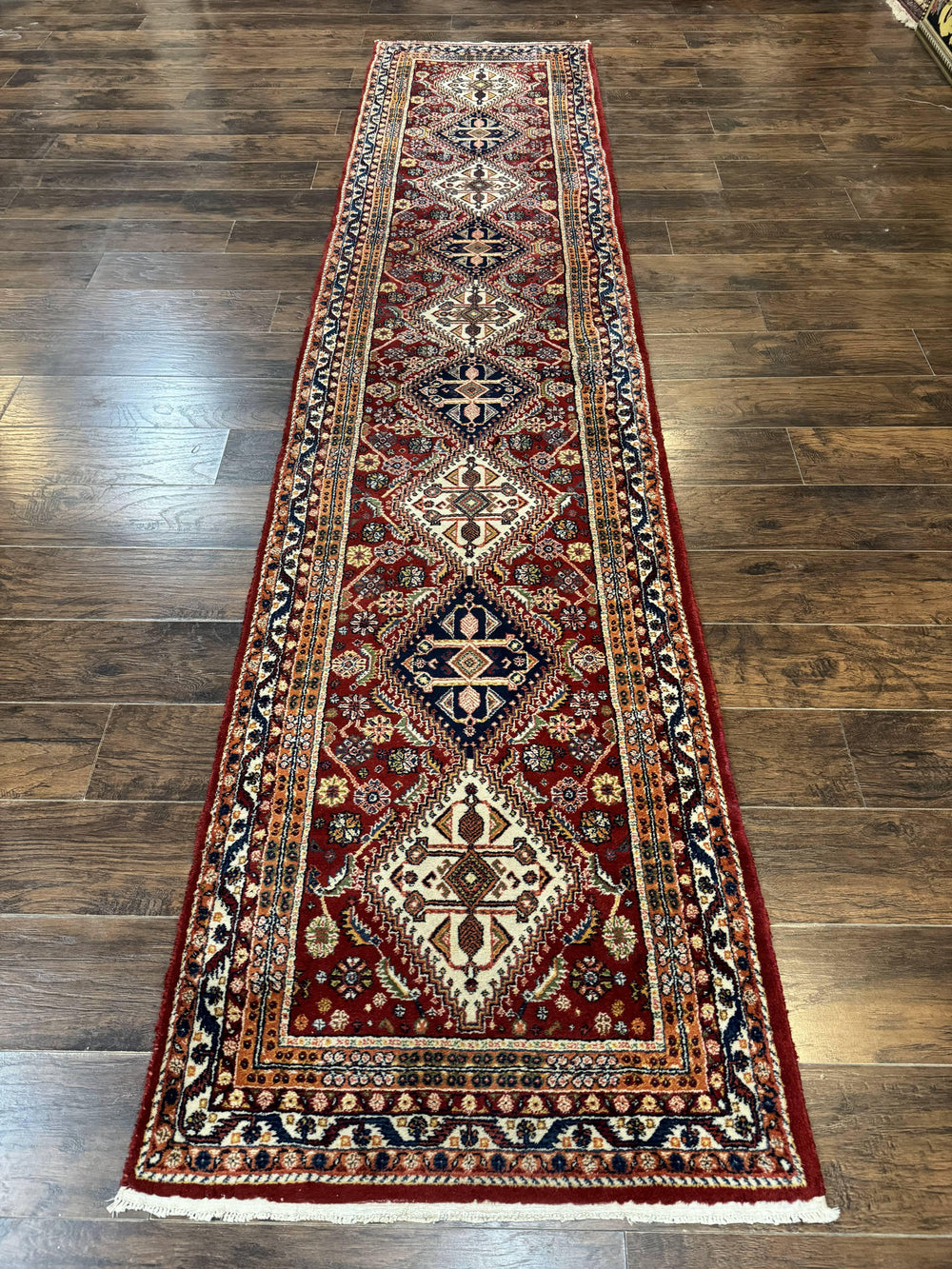
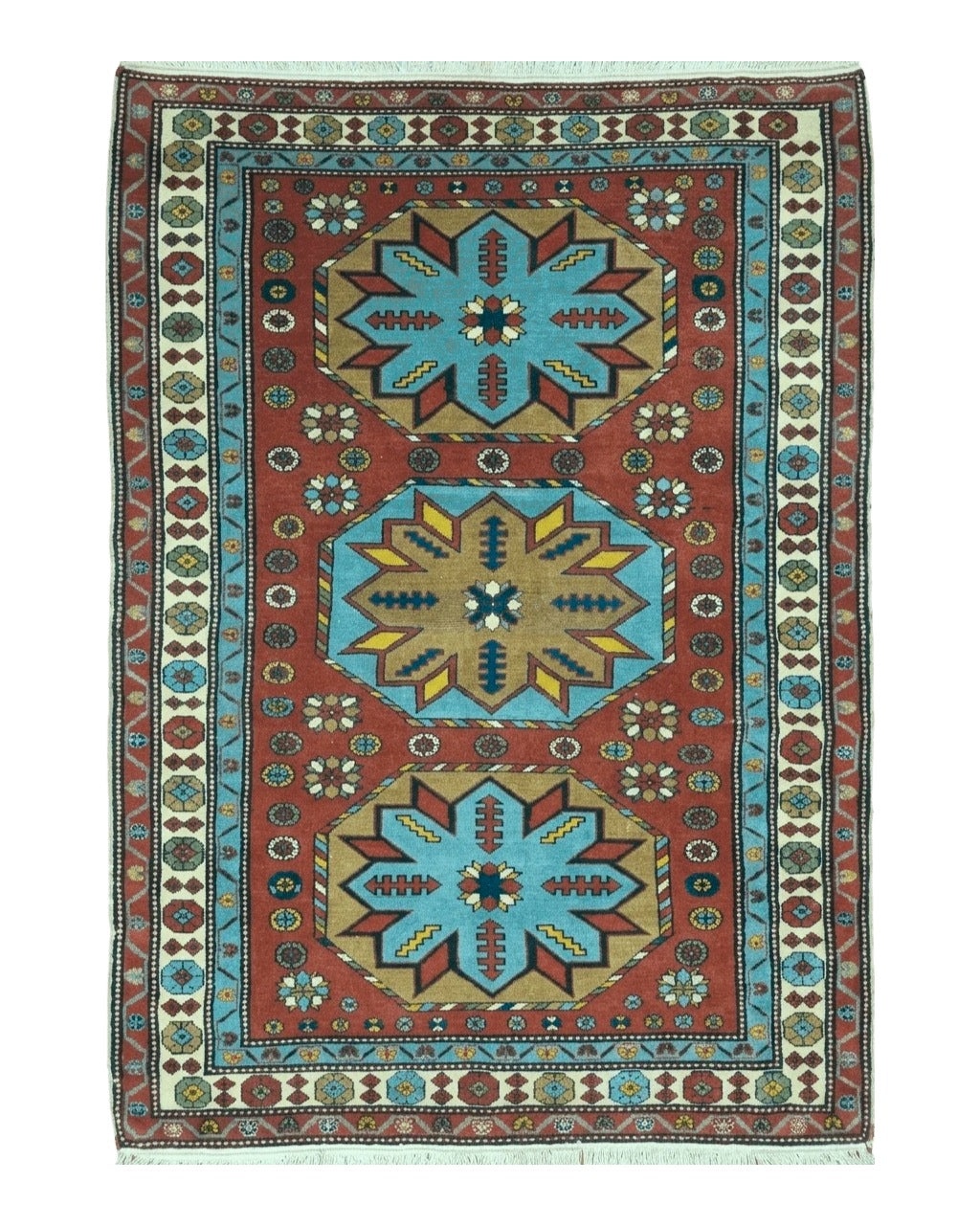
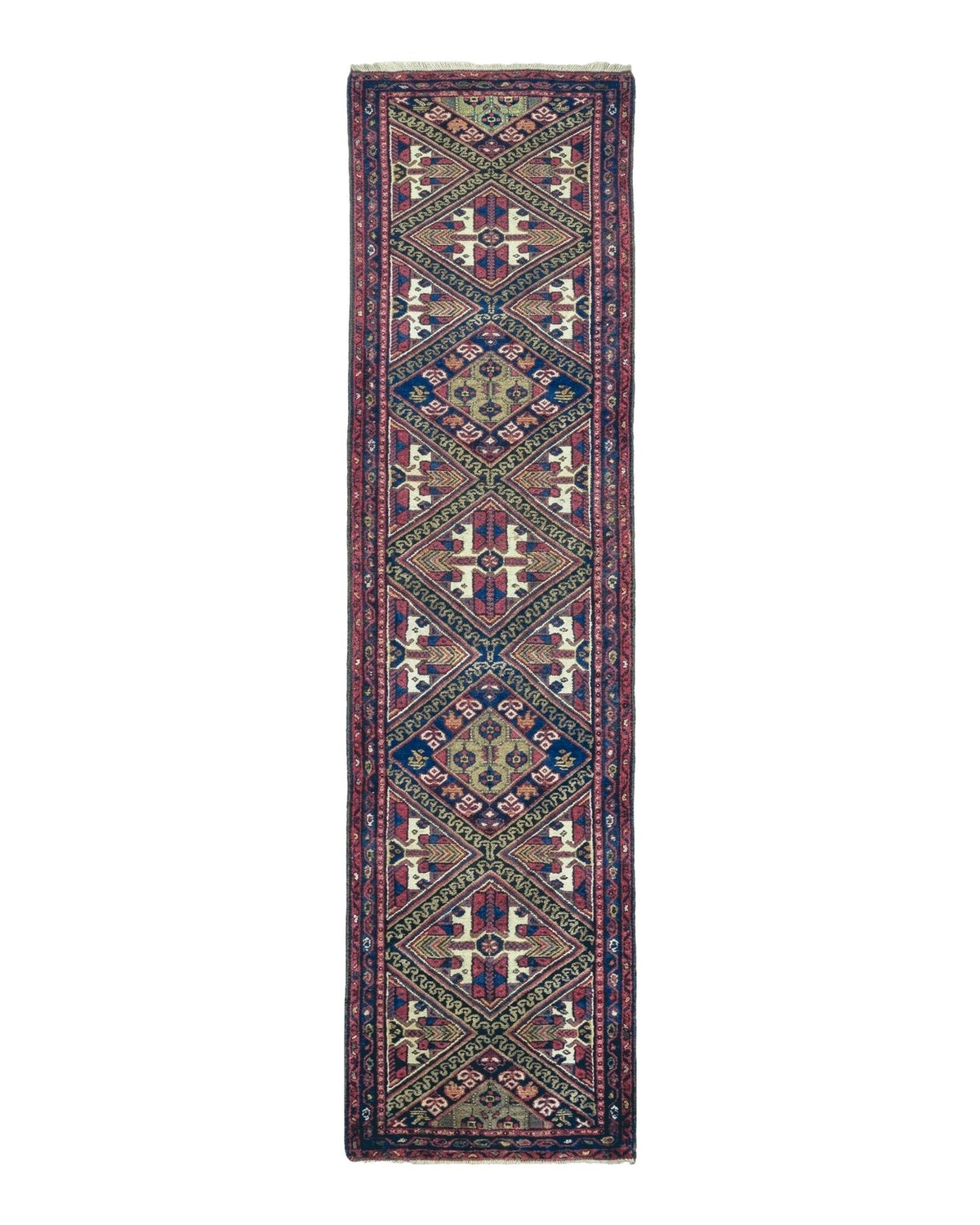
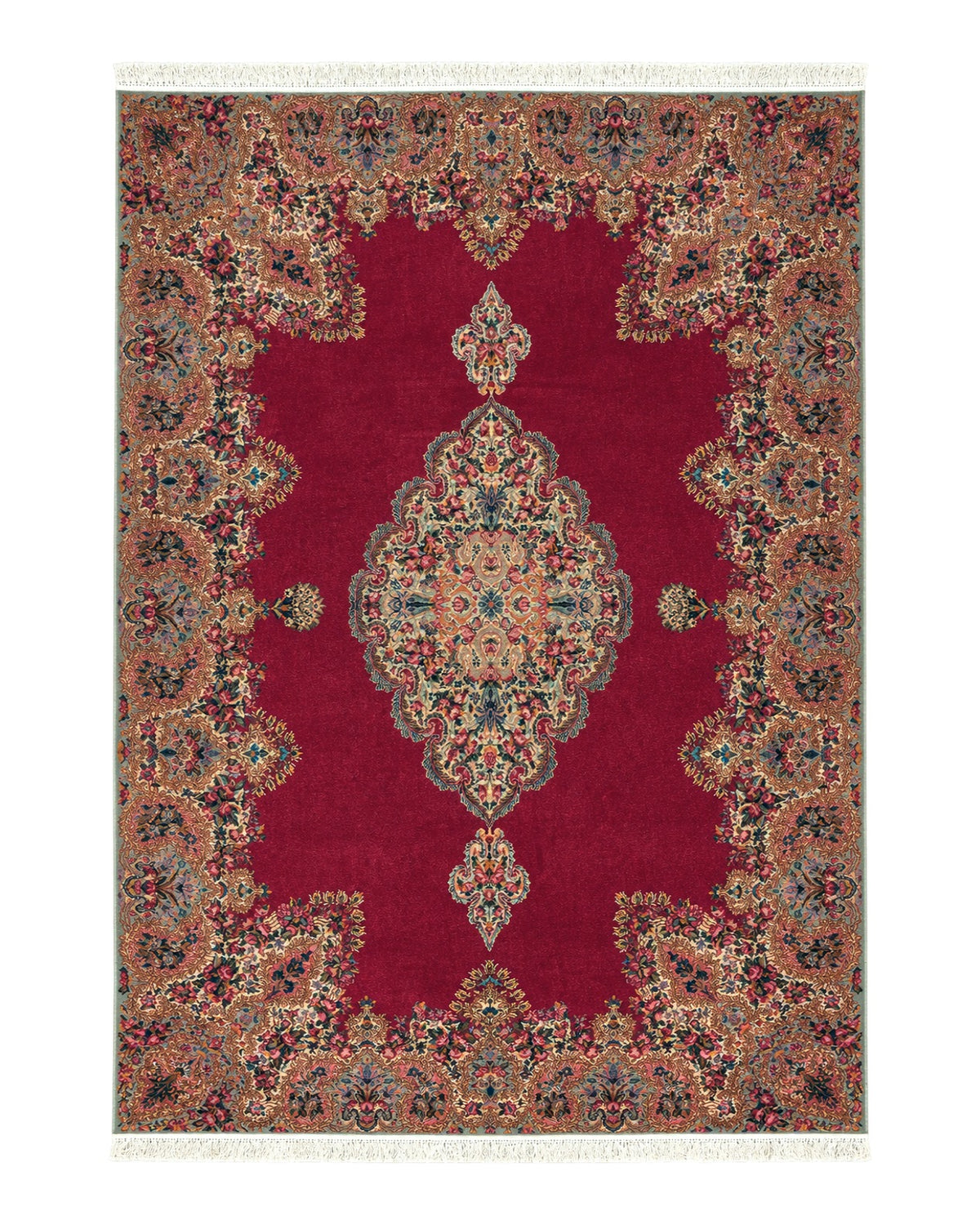
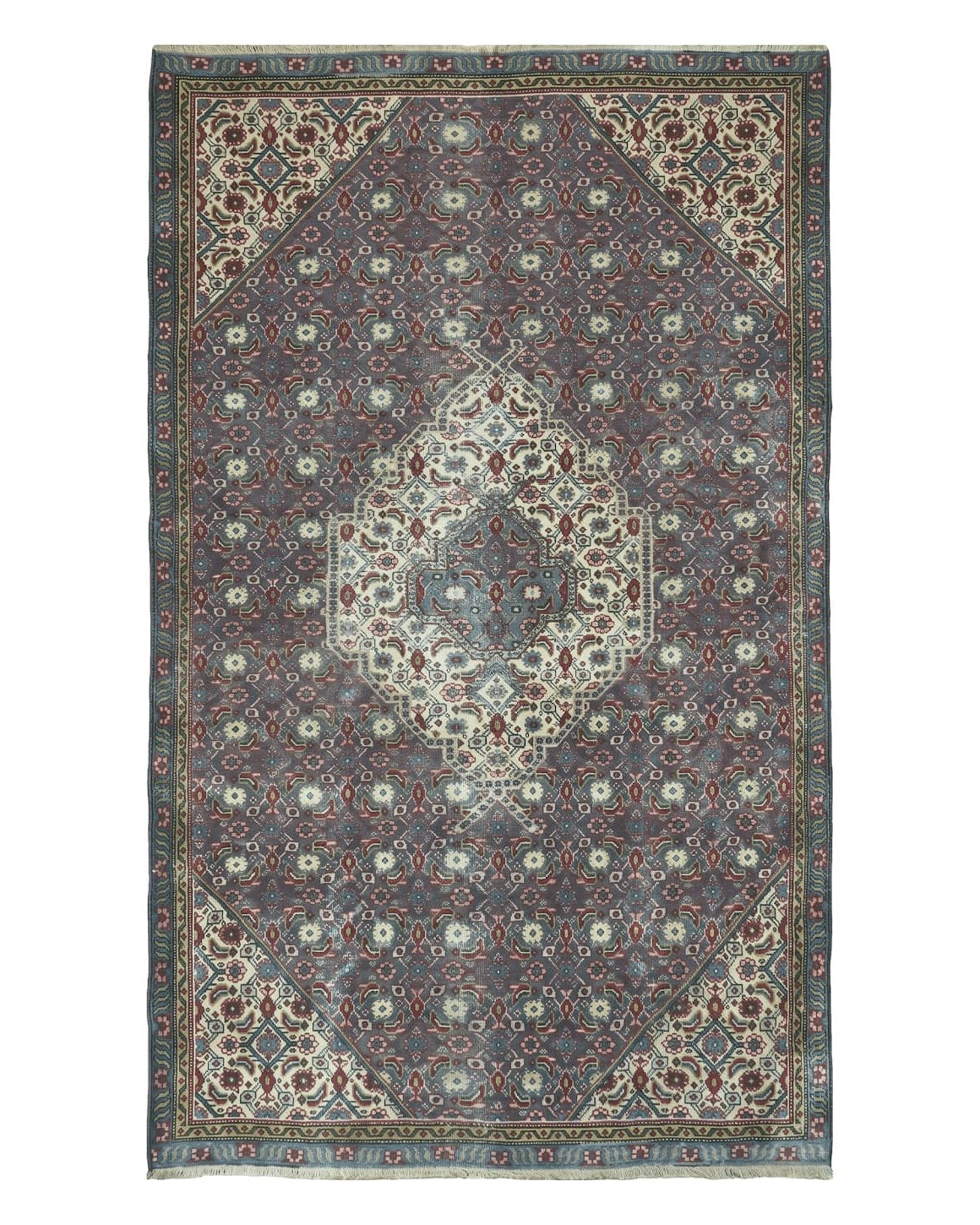
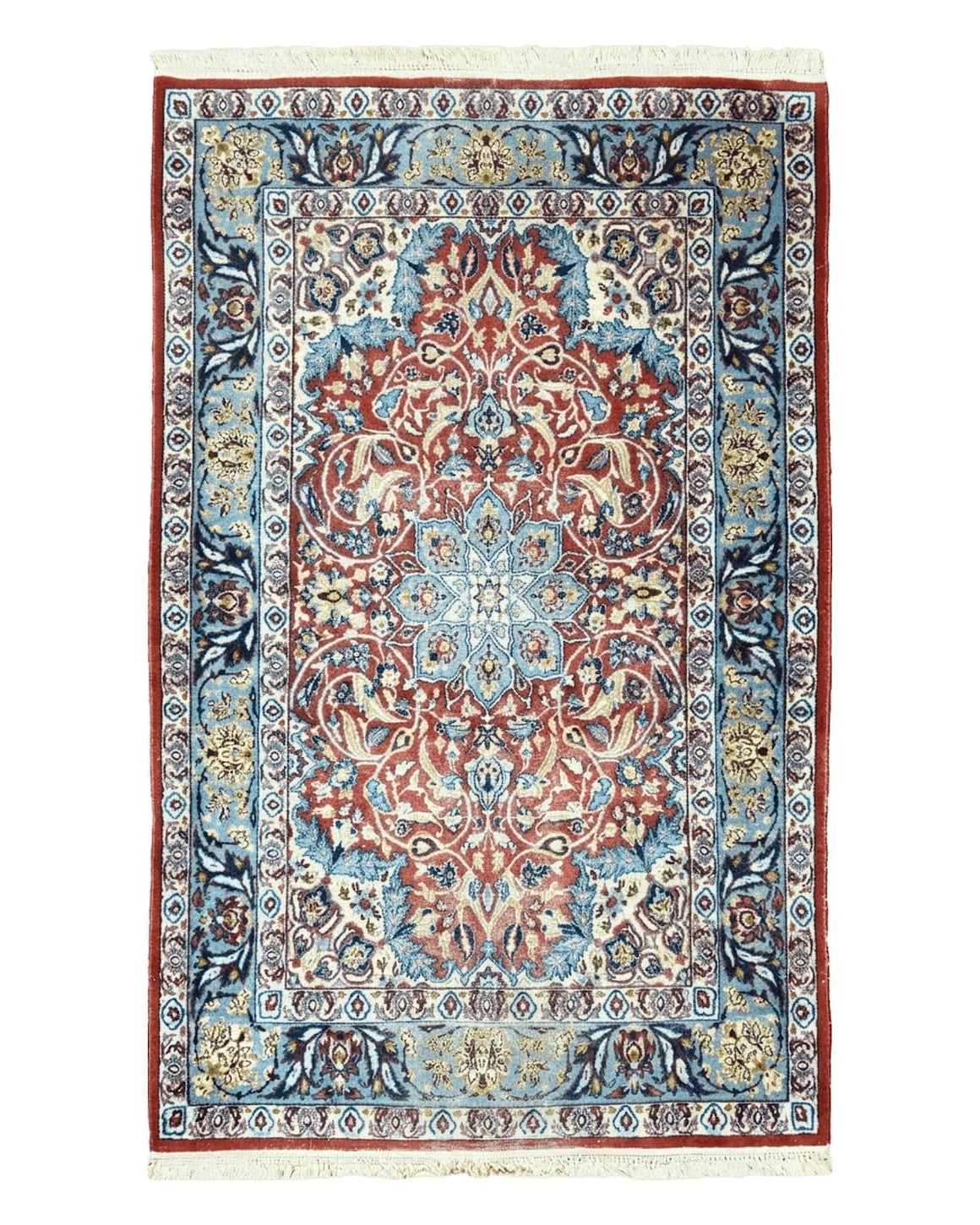
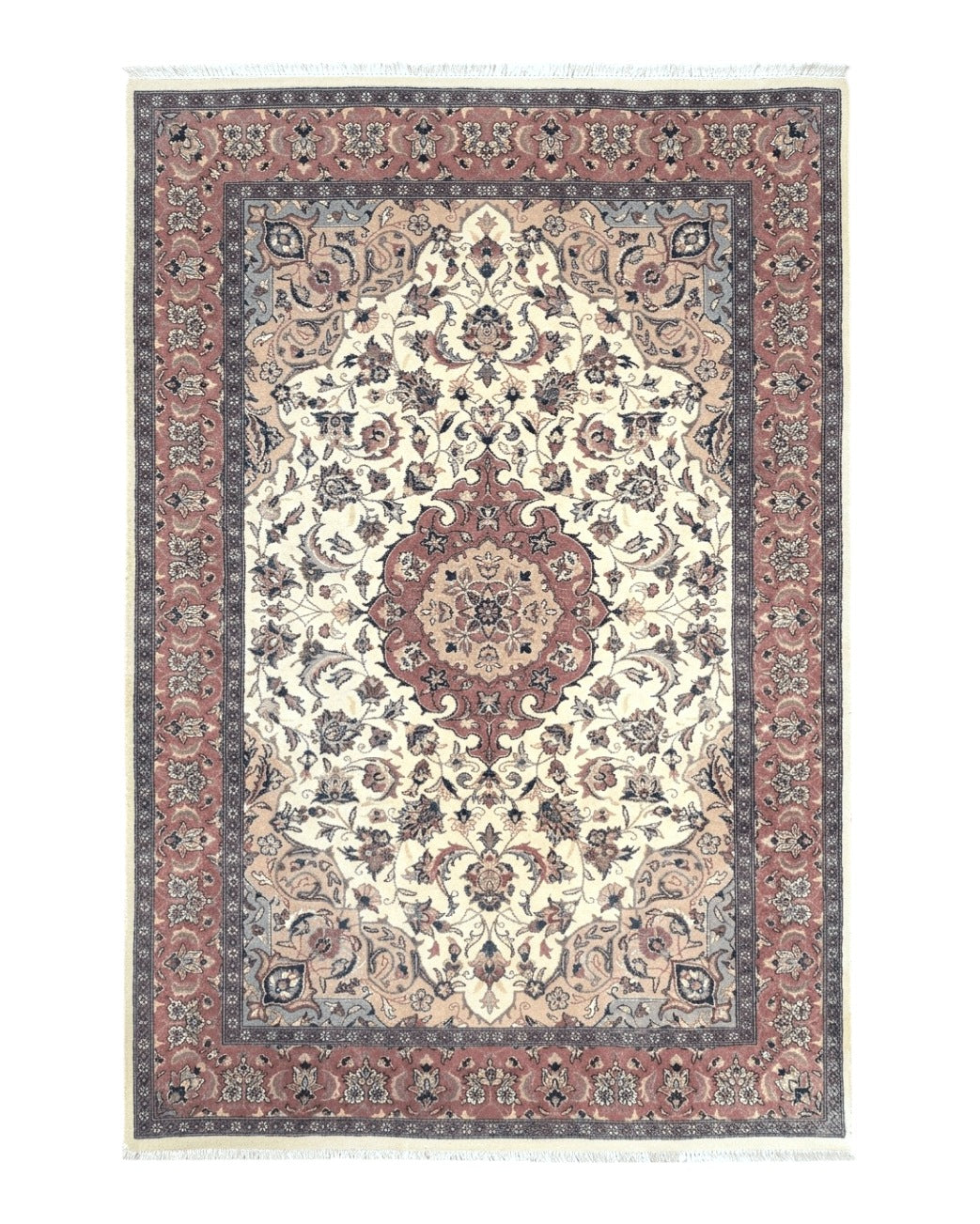
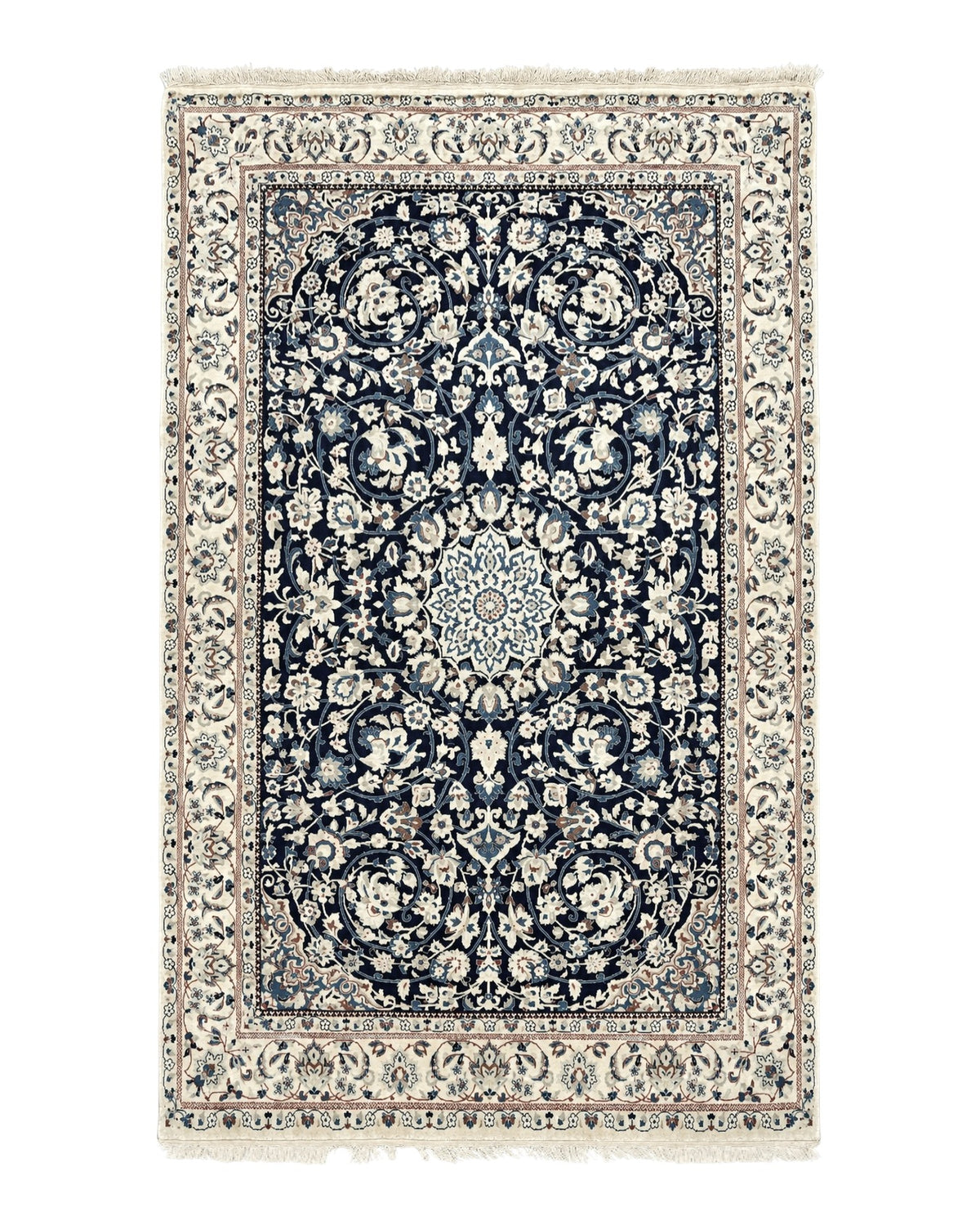
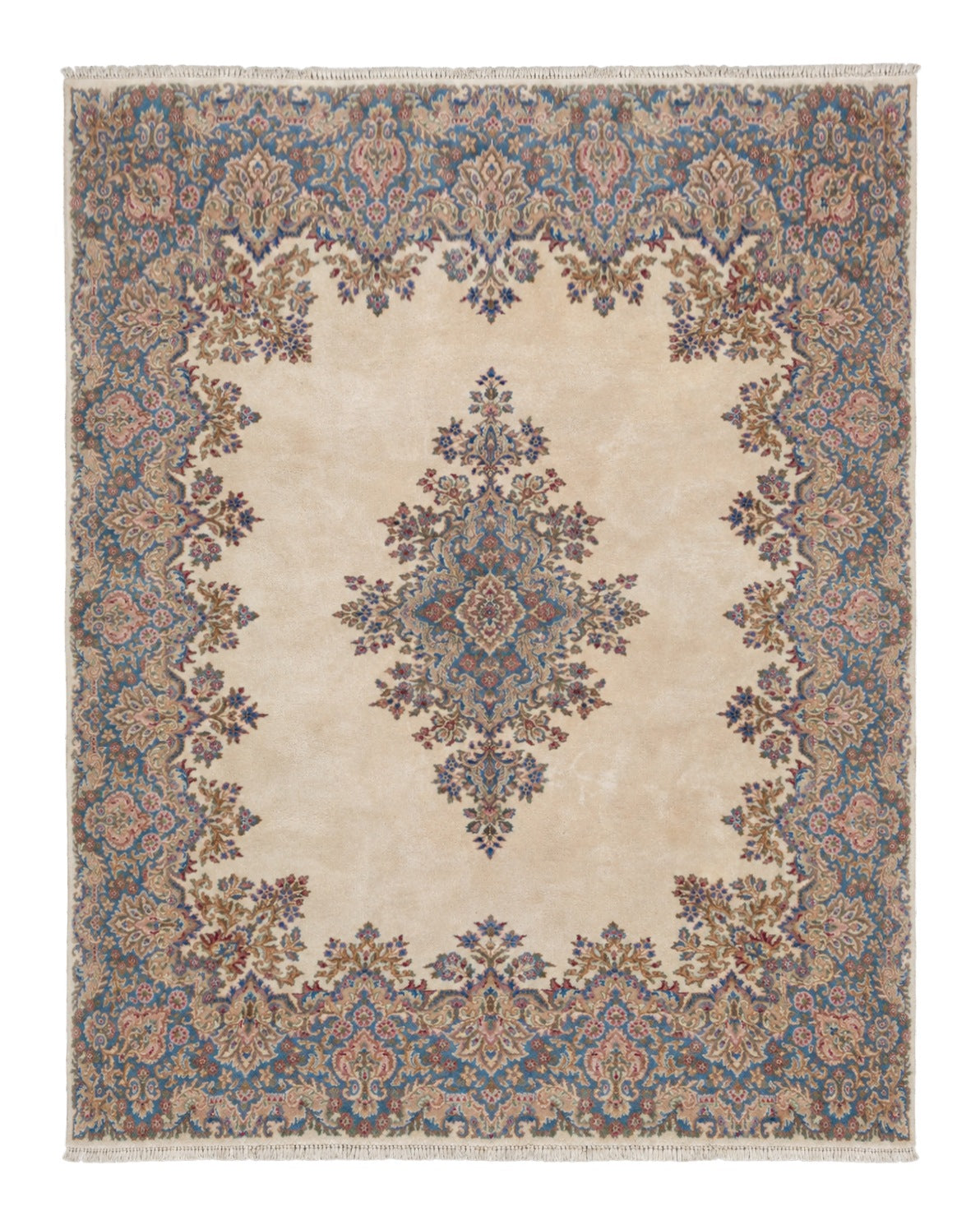
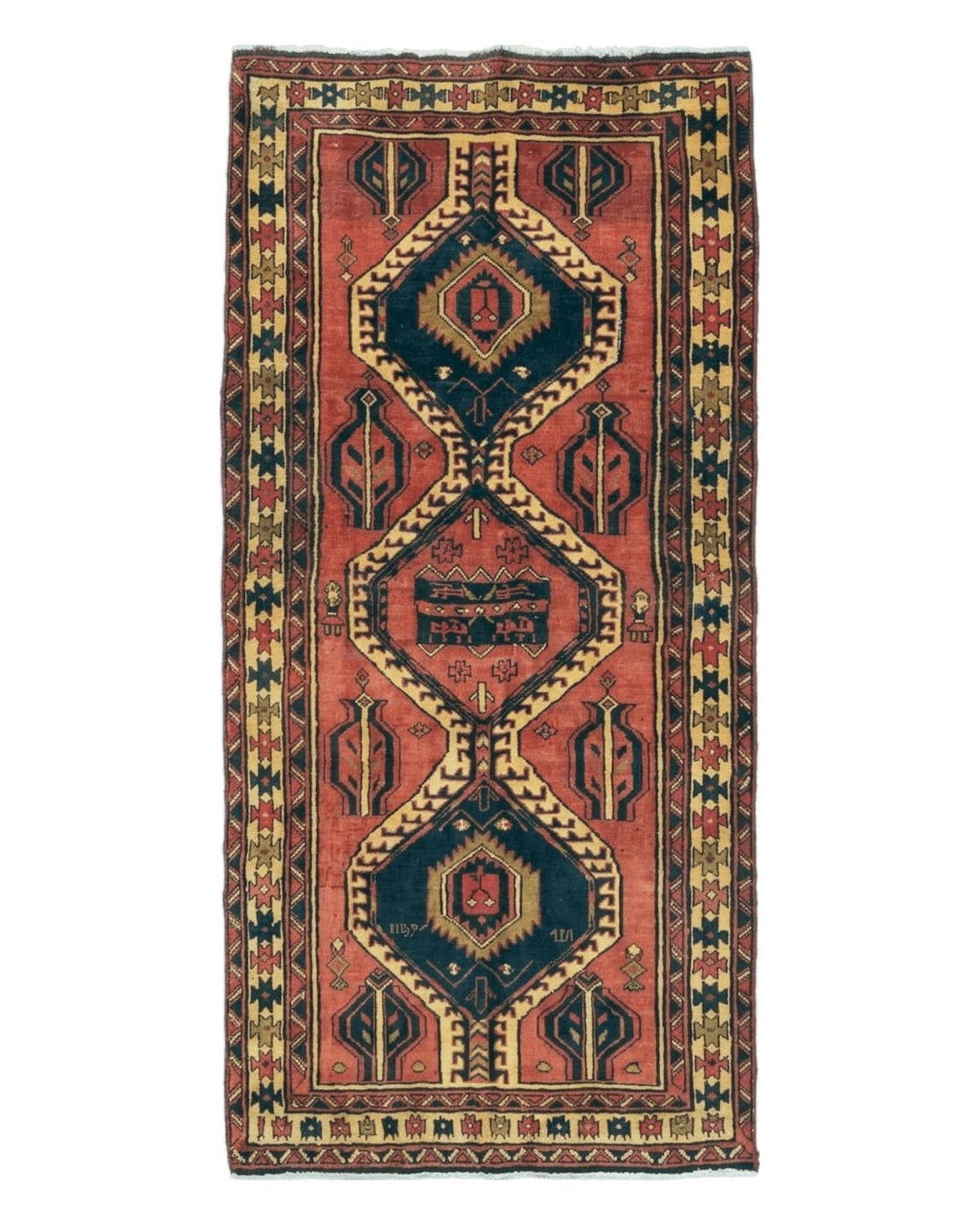
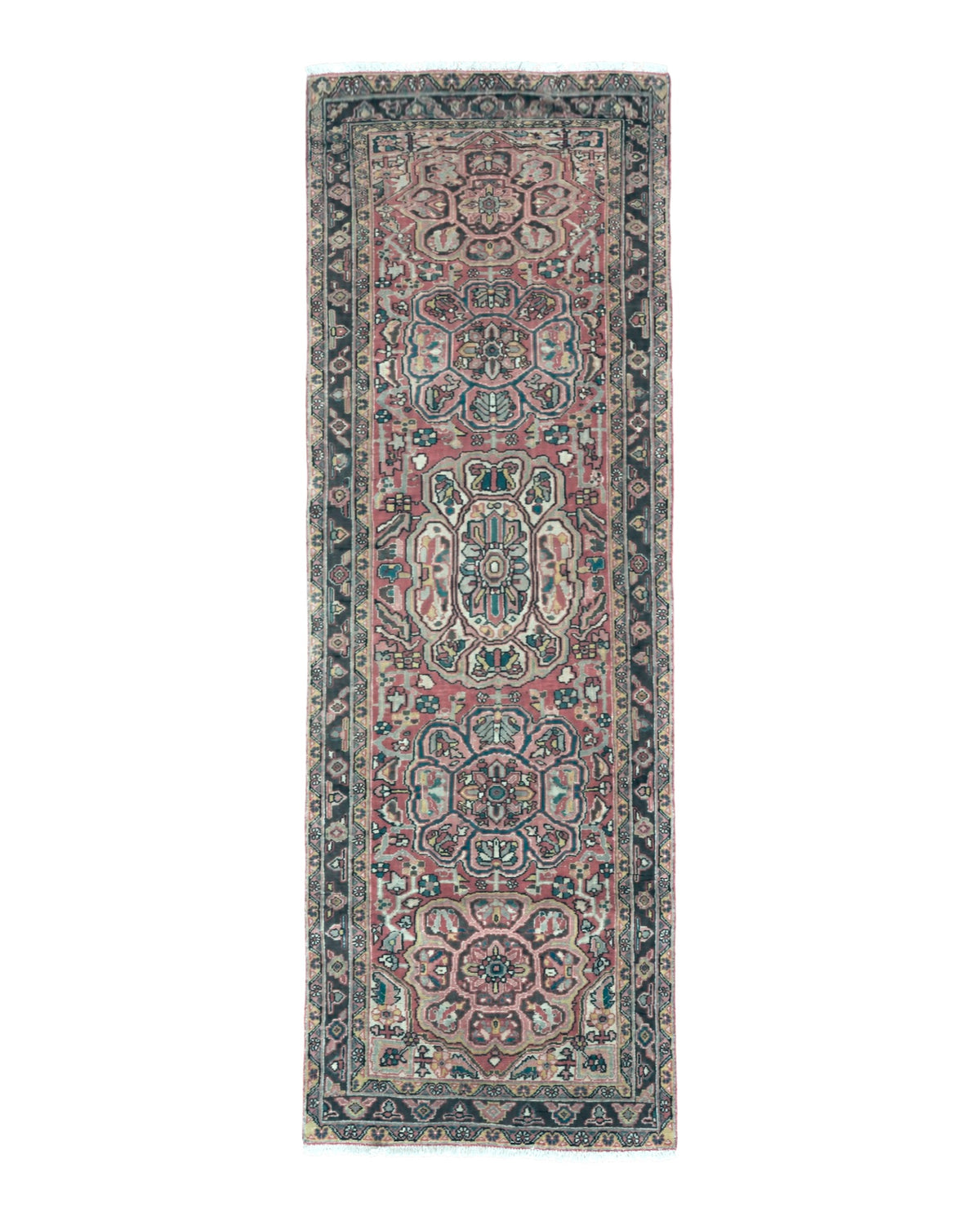
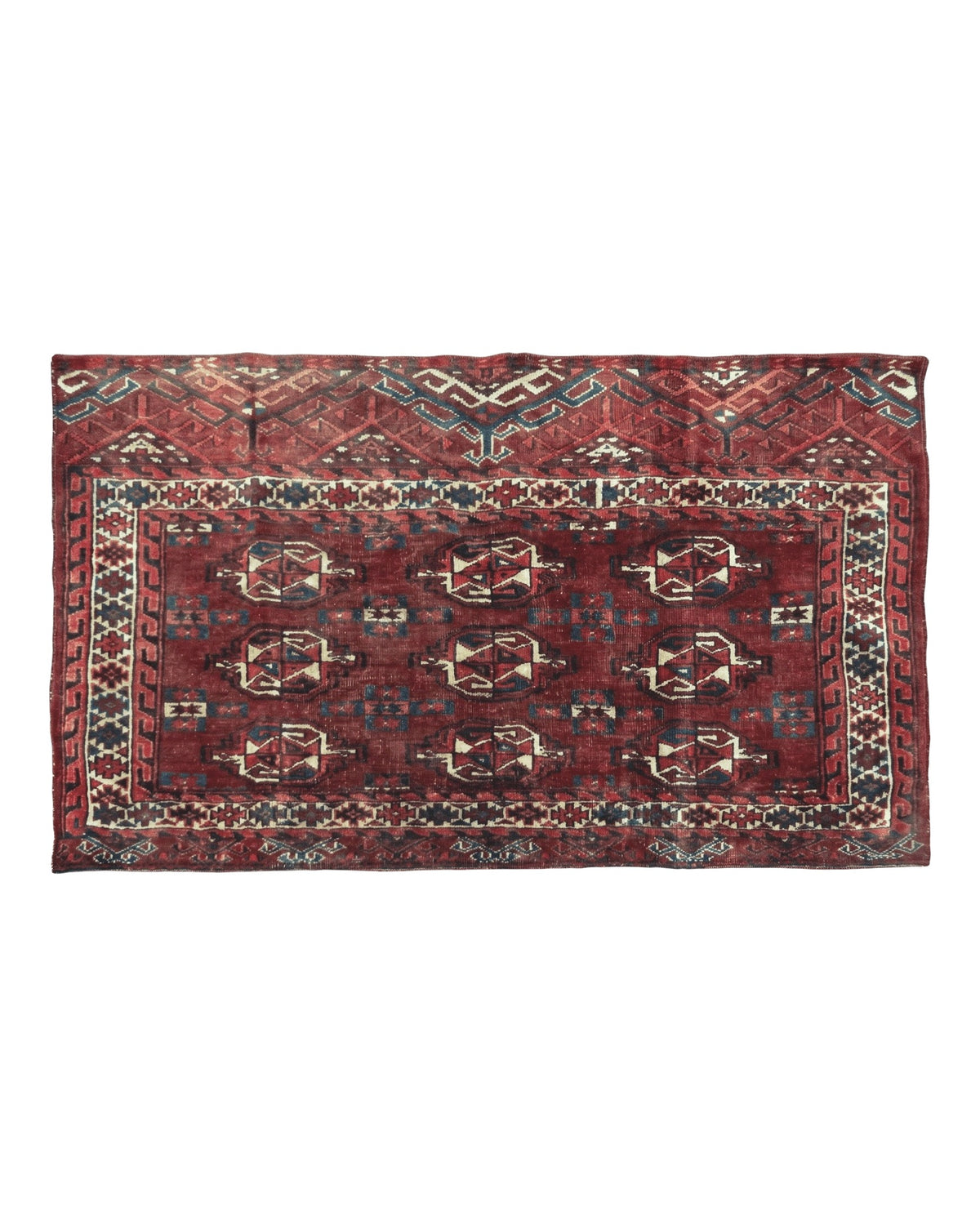
The medallion design is the best-known layout in Persian rugs. A large motif sits at the center of the field, often with smaller motifs at each end called pendants, and the four corners are filled with corner pieces that echo it. The arrangement gives a rug a strong focal point and a sense of balance, which is why medallion rugs suit formal rooms and are often placed under a dining table or at the center of a seating area.
| Layout | A central medallion, usually with pendants and matching corners |
|---|---|
| Origins | Developed in Persian court workshops in the 15th and 16th centuries |
| Common shapes | Round, oval, lobed, diamond, star, hexagon, octagon |
| Variations | Single medallion; several medallions in a row; open field |
| Opposite | All-over designs, which repeat across the field |
Where the medallion came from
Early Oriental rugs mostly had repeating patterns. The large central medallion became prominent in the court workshops of Persia in the late 15th and 16th centuries, when designs were drawn by artists who also illuminated books. A medallion with corner pieces is a familiar layout on the covers of fine Persian books of the time, and many scholars think rug designers adopted it from there. Others have compared the medallion to the view up into a mosque dome. Whatever its source, the layout spread from the court workshops to city, village and tribal weavers across the region. See What Is a Persian Rug?
The parts of a medallion design
- Medallion: the central motif, which may be small and delicate or large enough to fill most of the field.
- Pendants: smaller motifs above and below the medallion, extending it along the length of the rug.
- Corner pieces (spandrels): quarter-designs in the four corners, usually repeating the shape and colors of the medallion.
- Field: the ground around the medallion, which may be patterned or left open.
See Anatomy of a Rug.
City medallions and village medallions
The medallion looks very different depending on who wove it:
- City rugs, woven from a drawn cartoon, have curving, finely detailed medallions, often lobed ovals or rosettes surrounded by arabesques and flowers, as in Kashan, Isfahan and Tabriz rugs.
- Village rugs, woven from memory, turn the curves into straight lines and steps, giving bold, angular medallions, as in Heriz rugs.
- Tribal rugs often have several geometric medallions in a row, as in Qashqai, Shiraz and Yalameh rugs.
See Geometric vs. Curvilinear Designs.
Variations
Open field
In an open-field design, the medallion floats on a plain or lightly patterned ground, giving a calm, spacious look. Open-field rugs were popular in American-market Kermans and are prized today for their simplicity.
Medallion on an all-over field
Many rugs combine a medallion with an all-over pattern in the field, such as the Herati. The medallion and corners are then set against a rich, busy background.
Multiple medallions
Village and tribal rugs often have two, three or more medallions in a column, linked to each other, as in Karajeh, Sarab and Shiraz rugs.
Living with a medallion rug
A medallion rug looks best when the medallion is visible, so it works well in the center of a room, under a round or rectangular table, or in front of a fireplace. If most of a rug will be covered by furniture, an all-over design may be a better choice, since it looks complete from any angle. See All-Over Designs and Choosing the Right Rug Size.