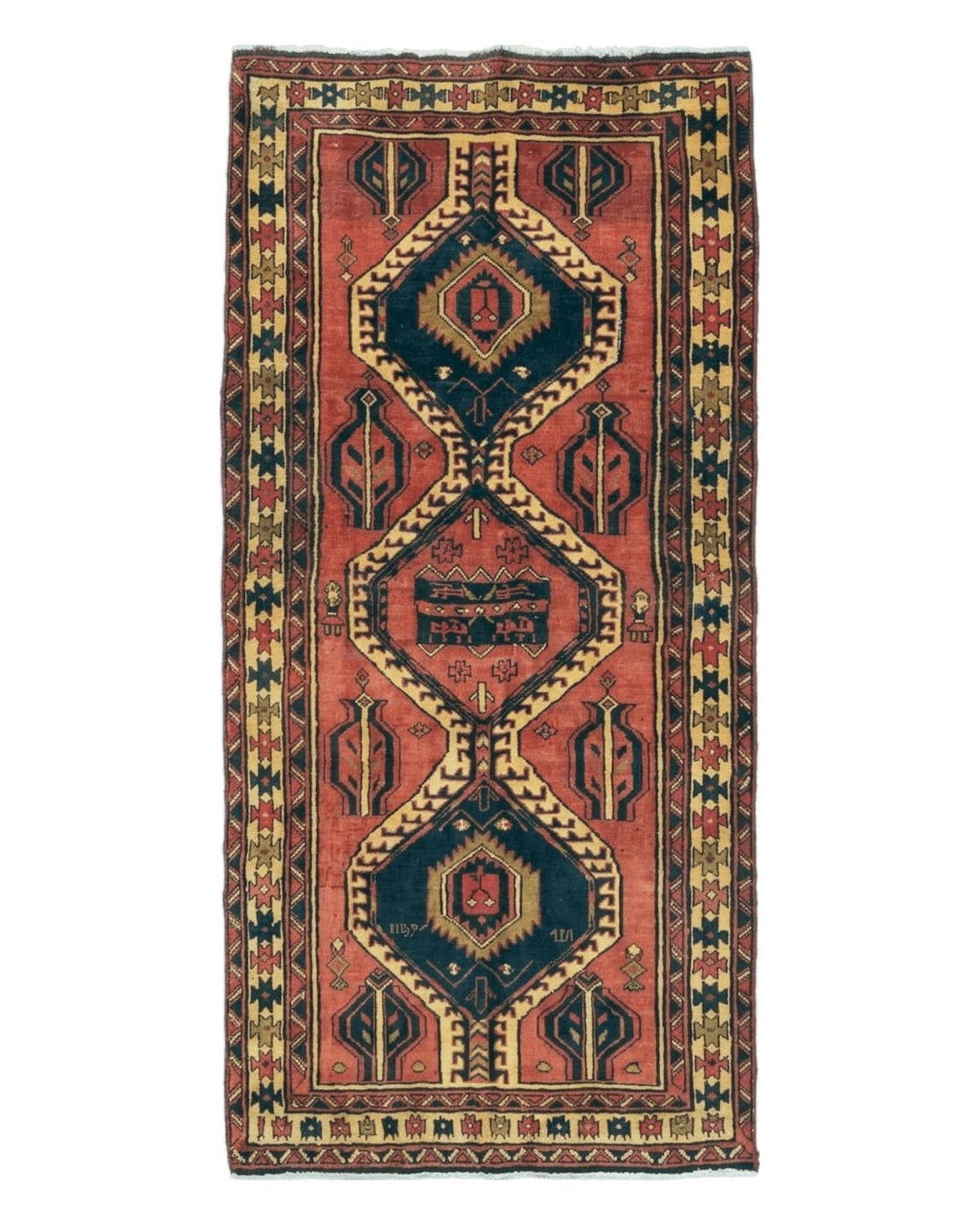
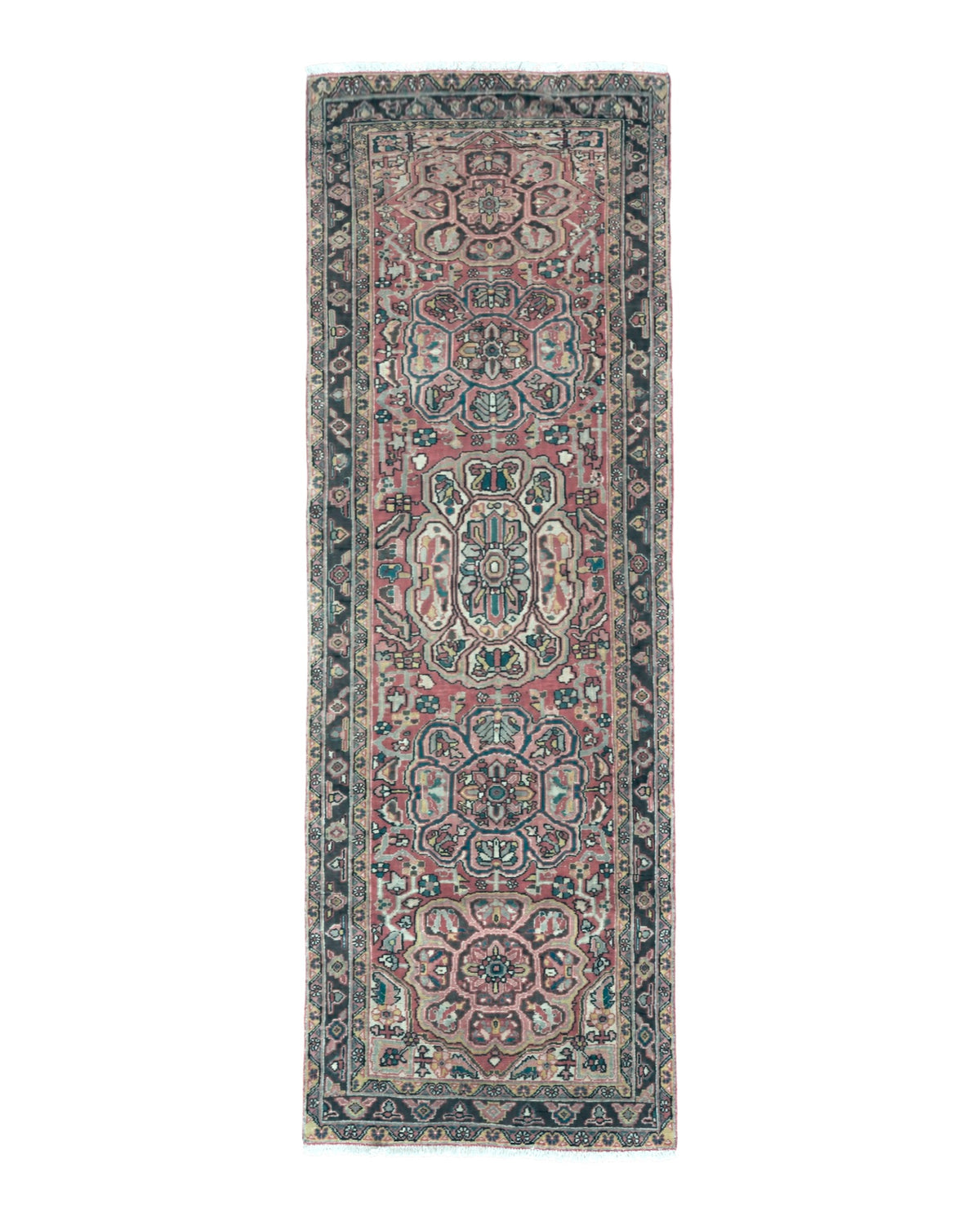
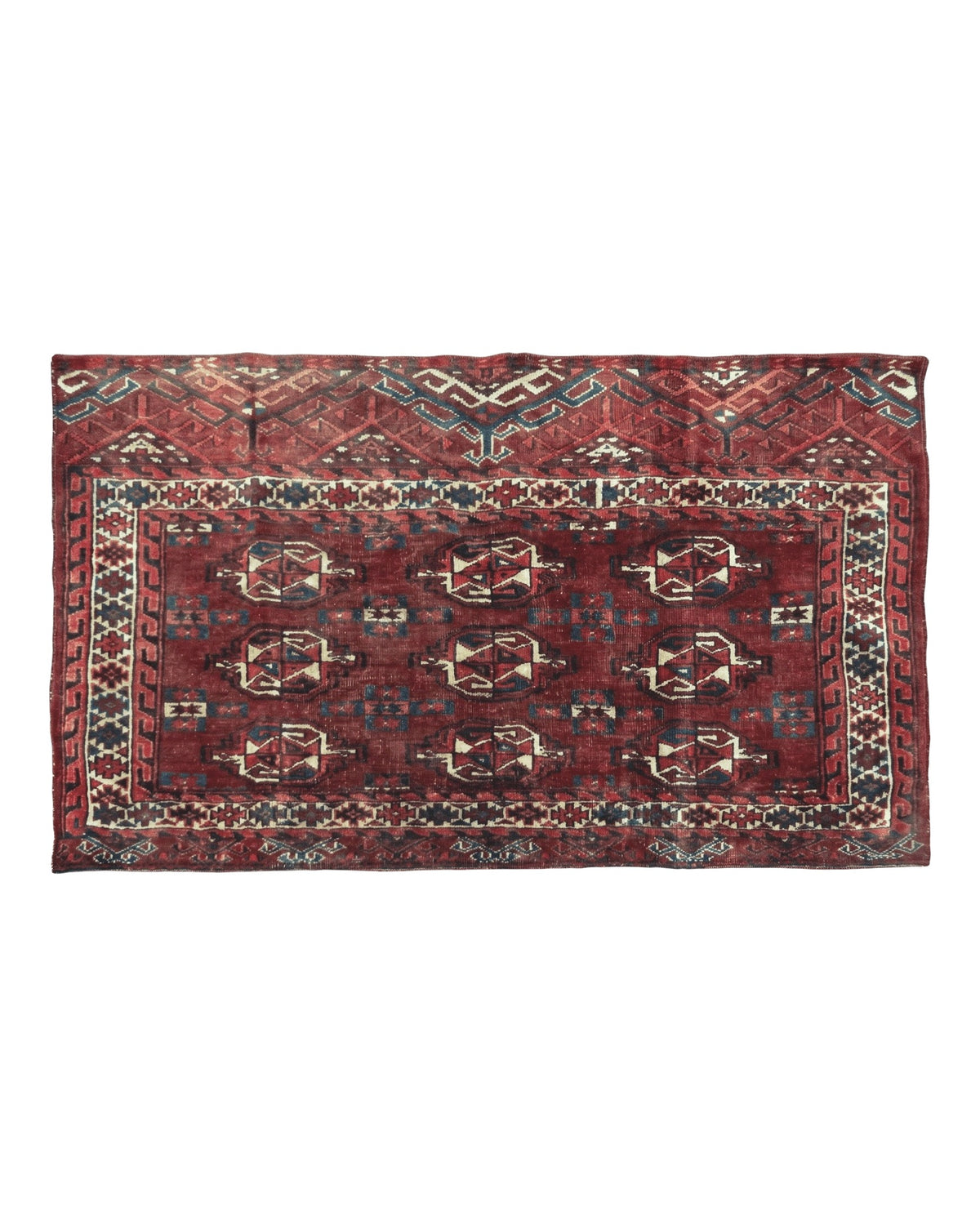
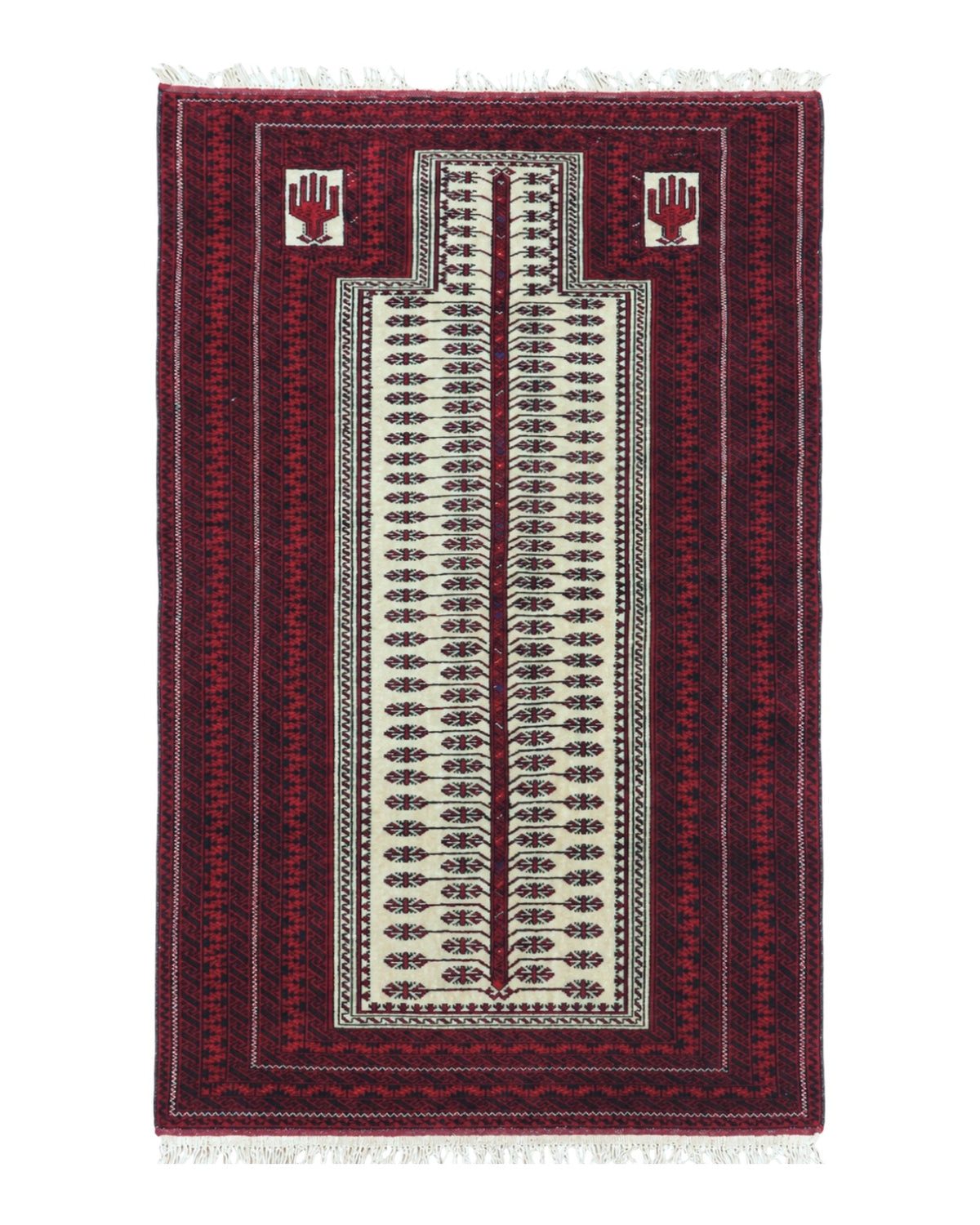
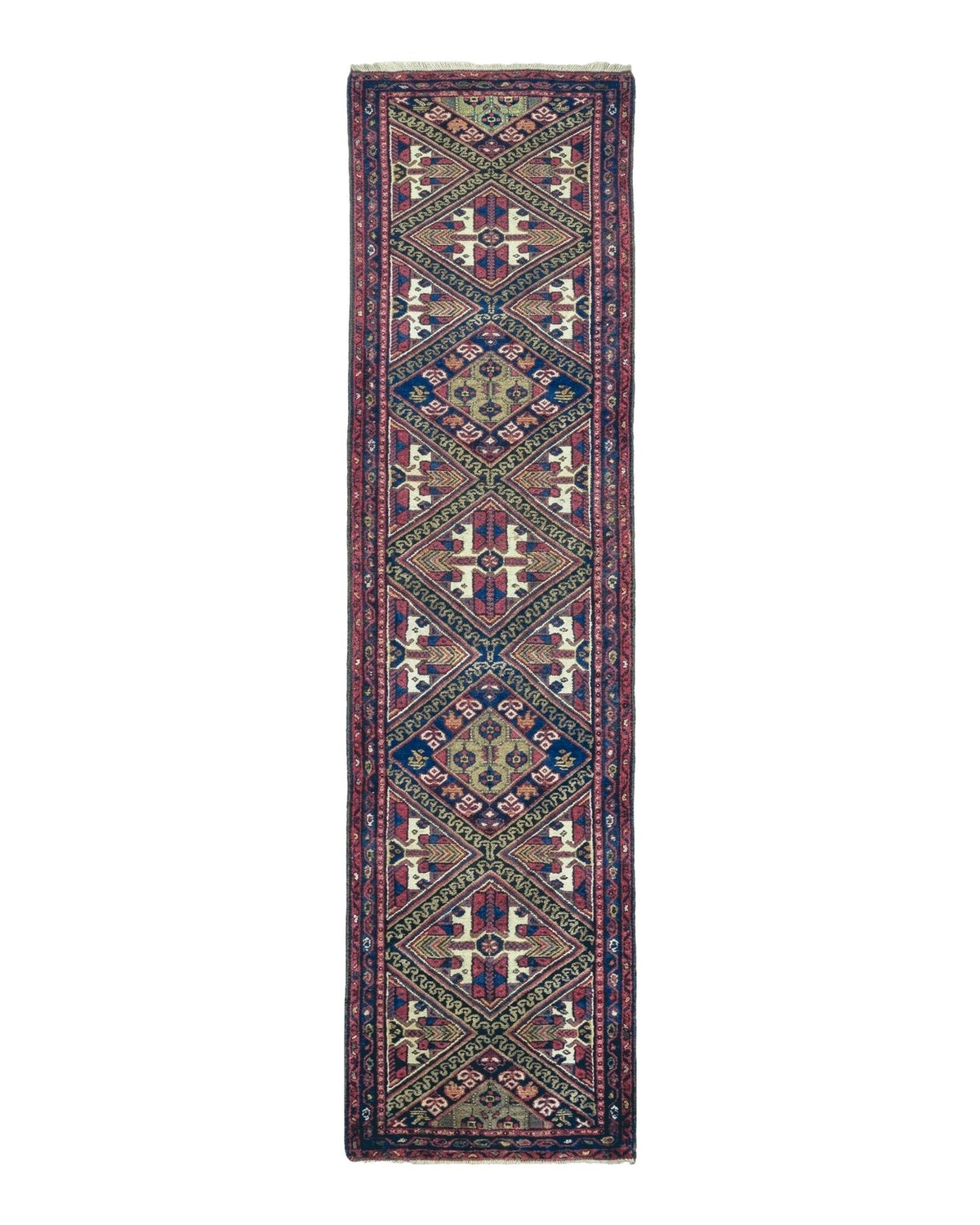
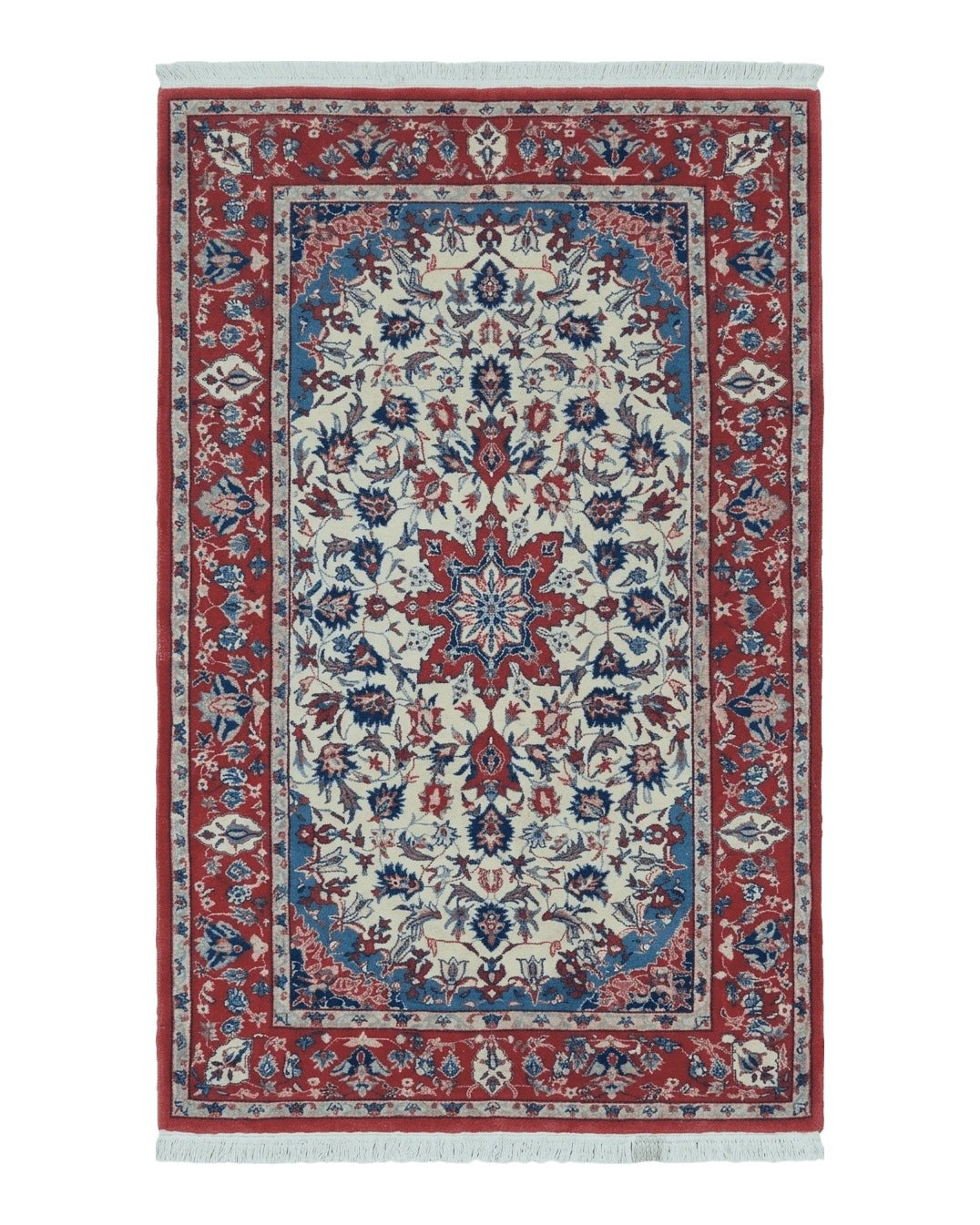
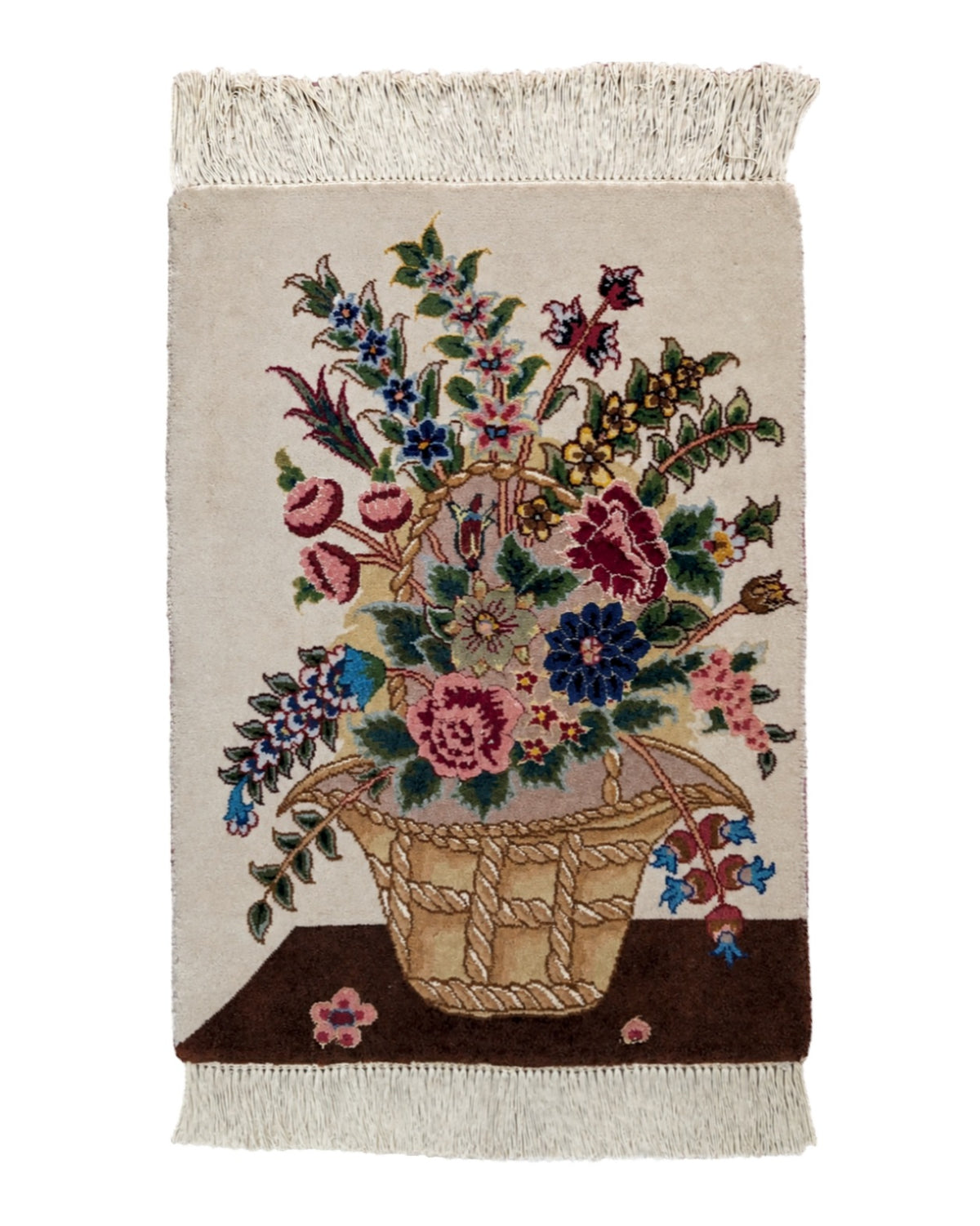
Veramin (also Varamin) is a town on the plain south-east of Tehran, surrounded by farming villages and by communities of settled tribal peoples. Its rugs combine the careful drawing of a city rug with the sturdy construction and deep colors of village weaving. Veramin is best known for one design in particular: the Mina Khani, an all-over lattice of flowers linked by vines, usually on a deep navy ground.
| Origin | Veramin and surrounding villages, south-east of Tehran |
|---|---|
| Tradition | Town and village workshops |
| Knot | Asymmetric (Persian) |
| Materials | Good wool pile on a cotton foundation |
| Knotting | Medium to fine, firmly woven |
| Signature design | Mina Khani; also boteh and other all-over designs |
| Common colors | Deep navy, red, ivory, gold |
The Mina Khani design
The Mina Khani is an all-over pattern built from a lattice of large and small flowers, often daisy-like rosettes and palmettes, linked by fine vines into a diamond network that repeats across the whole field. In Veramin rugs it is usually drawn on a dark navy or deep blue ground, with red, ivory and gold flowers, which gives the rug a rich, jewel-like look. The design is also woven by Kurdish and other weavers, but Veramin's versions are among the most admired. See All-Over Designs.
Other designs
Veramin weavers also make boteh designs, Herati patterns, and medallion rugs, as well as flatweaves and bags woven by the settled tribal communities of the area. Many Veramin rugs have a tribal or village character in their colors and proportions even when the drawing is fine.
Construction
Veramins are firmly woven with the asymmetric knot on a cotton foundation, using good, lustrous wool. They are known as hard-wearing rugs that hold their shape well, which, together with their dark, practical grounds, makes them a good choice for busy rooms.
How to recognize a Veramin
- A Mina Khani lattice or another all-over floral design.
- A deep navy or dark blue field with red, ivory and gold.
- A firm, solid handle and a medium pile.
- Village or tribal character in color and border, combined with careful drawing.
See also Tehran Rugs and Persian Village Rugs.