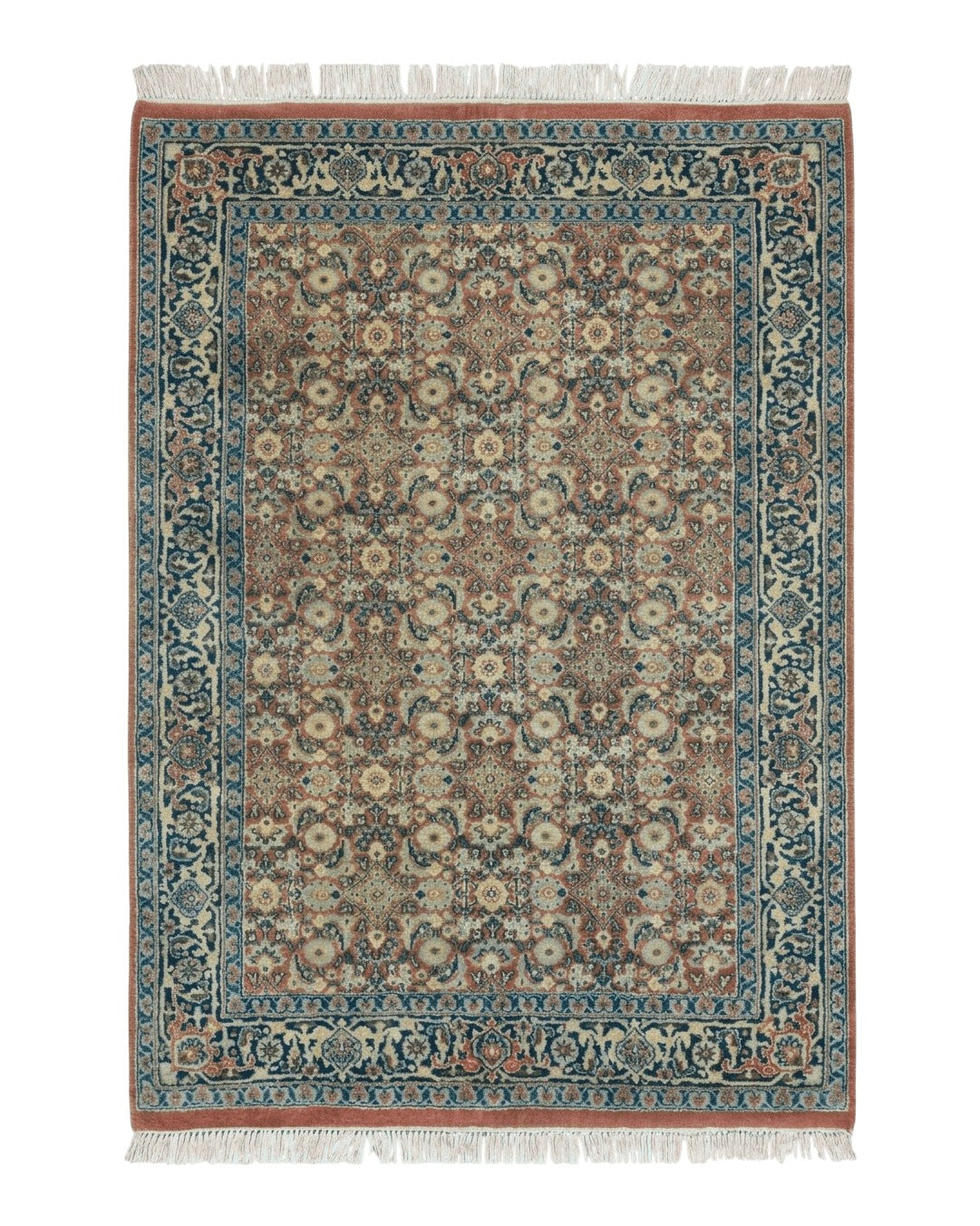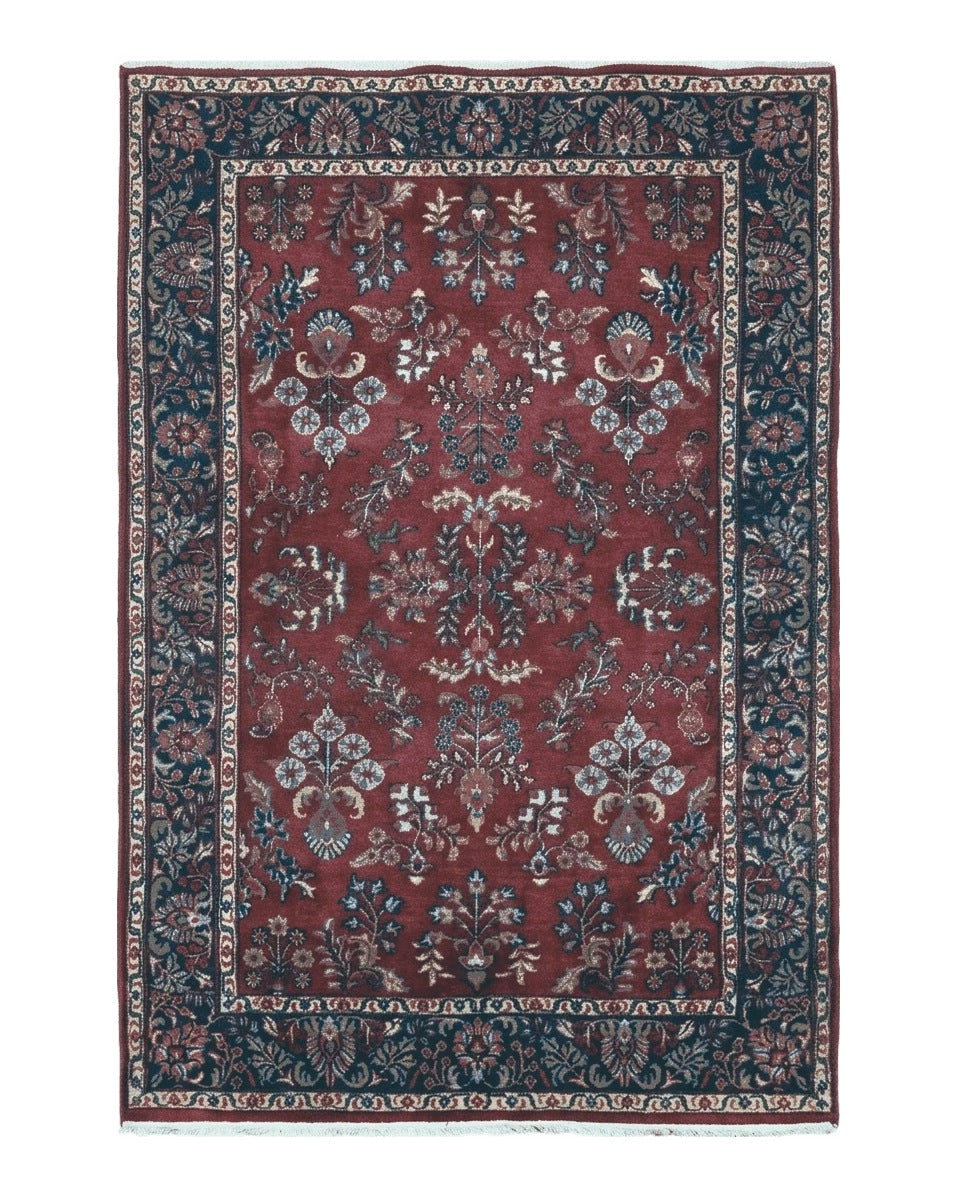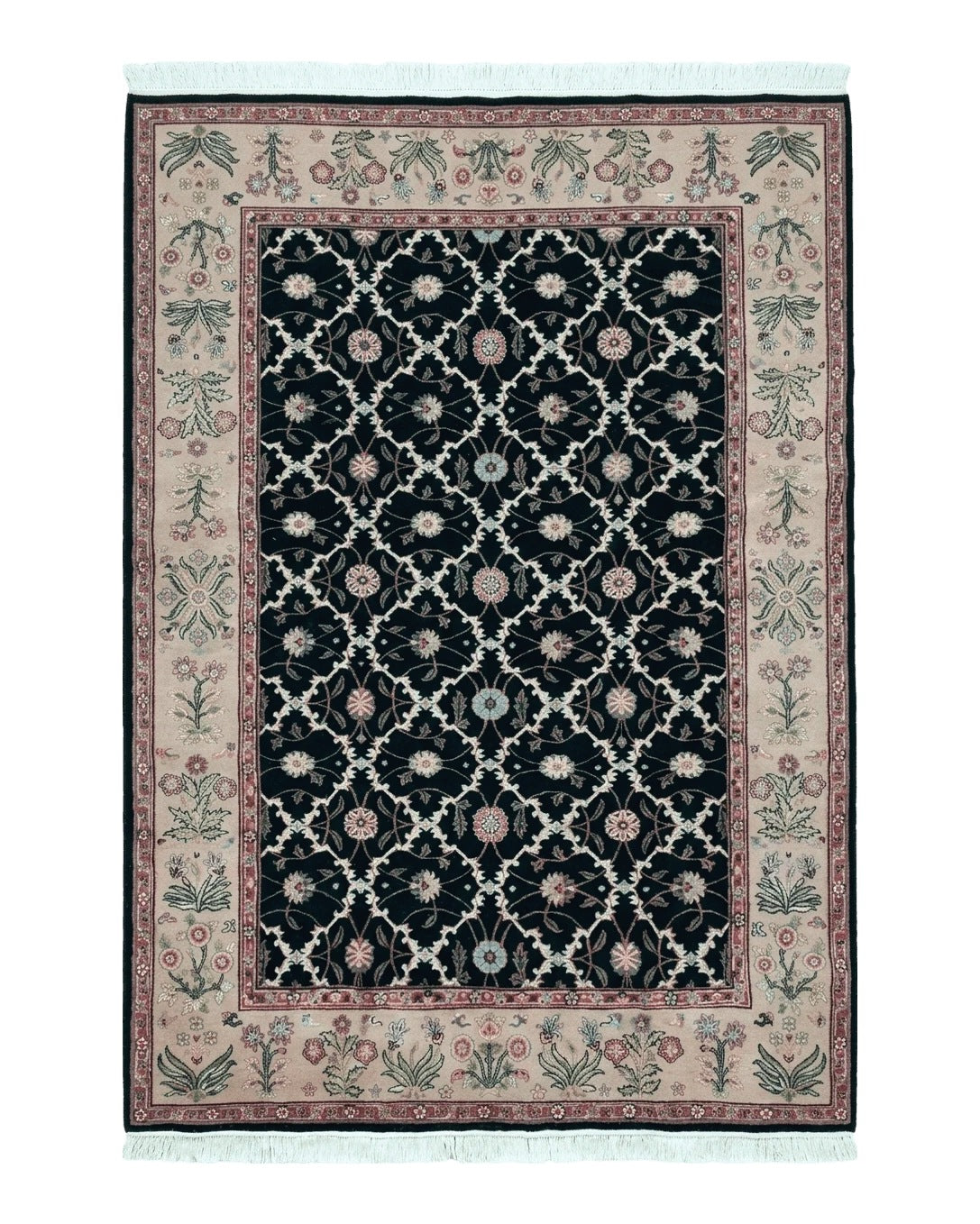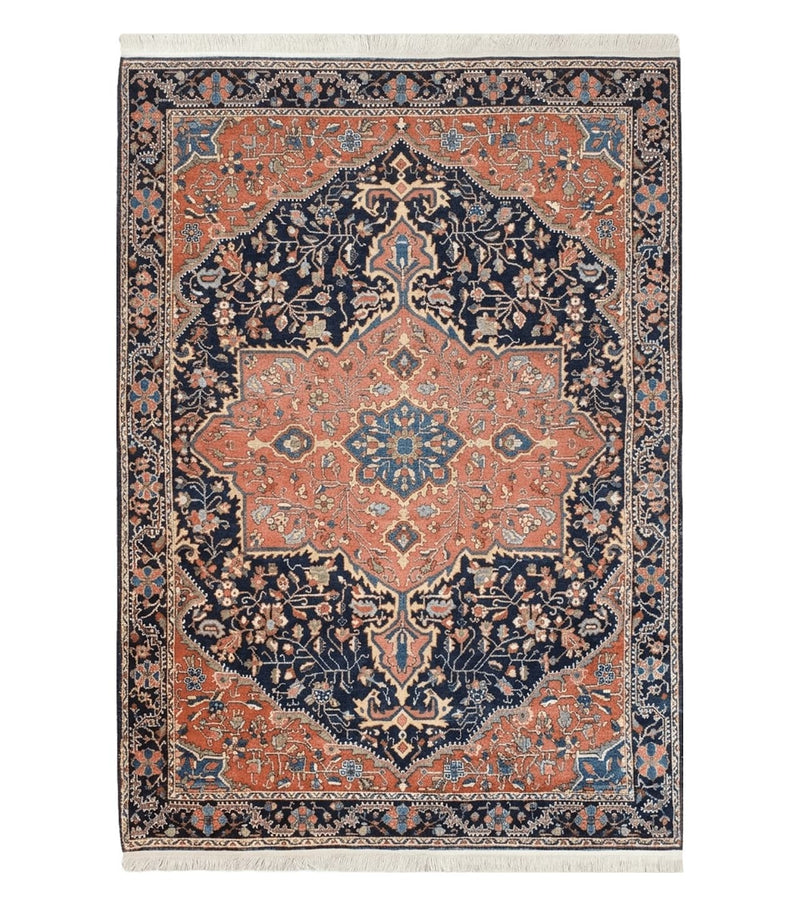


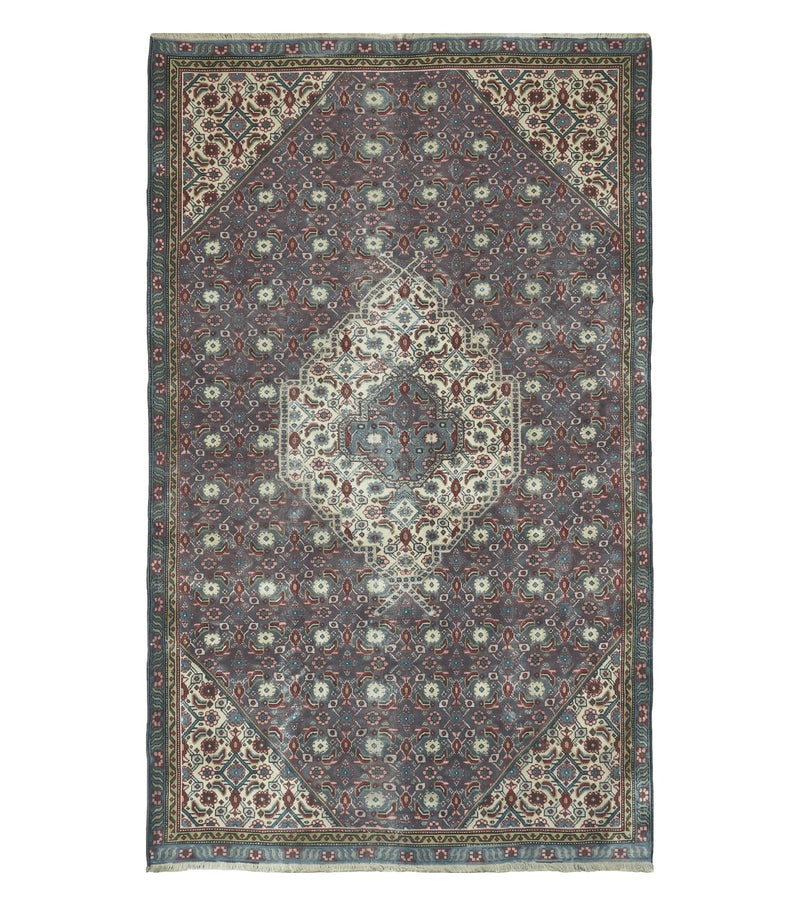


India has woven fine carpets for more than four centuries, and today it is one of the world's largest producers of handmade rugs. Indian rugs range from the celebrated carpets of the Mughal emperors and the antique rugs of Agra to modern Indo-Persian rugs, fine silk rugs from Kashmir, and contemporary designs made for homes around the world.
| Main centers | Agra, Jaipur, Bhadohi and Mirzapur, Kashmir, Amritsar |
|---|---|
| Knot | Mostly asymmetric (Persian); some symmetric |
| Materials | Wool on cotton; silk in Kashmir; also jute and viscose in modern rugs |
| Typical designs | Persian designs, Mughal florals, Oushak and decorative styles, contemporary |
| Production | Hand-knotted, hand-tufted, flatwoven and machine-made |
Mughal carpets
Carpet weaving was established at the Mughal court in the 16th century, when Emperor Akbar brought Persian weavers to set up workshops in cities including Agra, Fatehpur Sikri and Lahore. Mughal carpets of the 17th century are famous for their naturalistic flowers, often drawn with almost botanical accuracy, and for their extraordinary fineness. Their designs still influence Indian weaving today.
Agra rugs
In the 19th century, Agra became a center for large, sturdy rugs, some woven in prison workshops, for British and other Western buyers. Antique Agra rugs, often with large-scale Persian or Mughal floral designs and soft colors, are now collectible.
Modern Indian weaving
- Indo-Persian rugs: Persian designs such as Tabriz, Kashan, Kerman and Mahal, woven in many qualities. See Indo-Persian, Sino-Persian and Pak-Persian Rugs.
- Jaipur: known for decorative and contemporary hand-knotted rugs, often with hand-spun wool and natural or soft colors.
- Bhadohi and Mirzapur: the largest rug-producing area in India, making hand-knotted, hand-tufted and flatwoven rugs in every style.
- Kashmir: fine silk rugs in Persian designs. See Kashmir Silk Rugs.
Designs
Indian weavers work in almost every design tradition: Persian medallions and all-over patterns, Mughal florals and tree-of-life designs, the boteh, which has deep roots in Indian textiles, Oushak and other decorative styles, and modern abstract and minimalist designs. See The Boteh (Paisley) Motif.
Judging an Indian rug
- Construction: India makes hand-knotted, hand-tufted and machine-made rugs; check which one you are buying. See Hand-Knotted vs. Hand-Tufted vs. Machine-Made.
- Knot density: often described by a grade such as "9/9" or "10/10" (knots per inch across and down).
- Wool: good Indian rugs often use New Zealand or fine Indian wool; it should feel soft and springy.
- Drawing: fine rugs show crisp curves and clean corners.