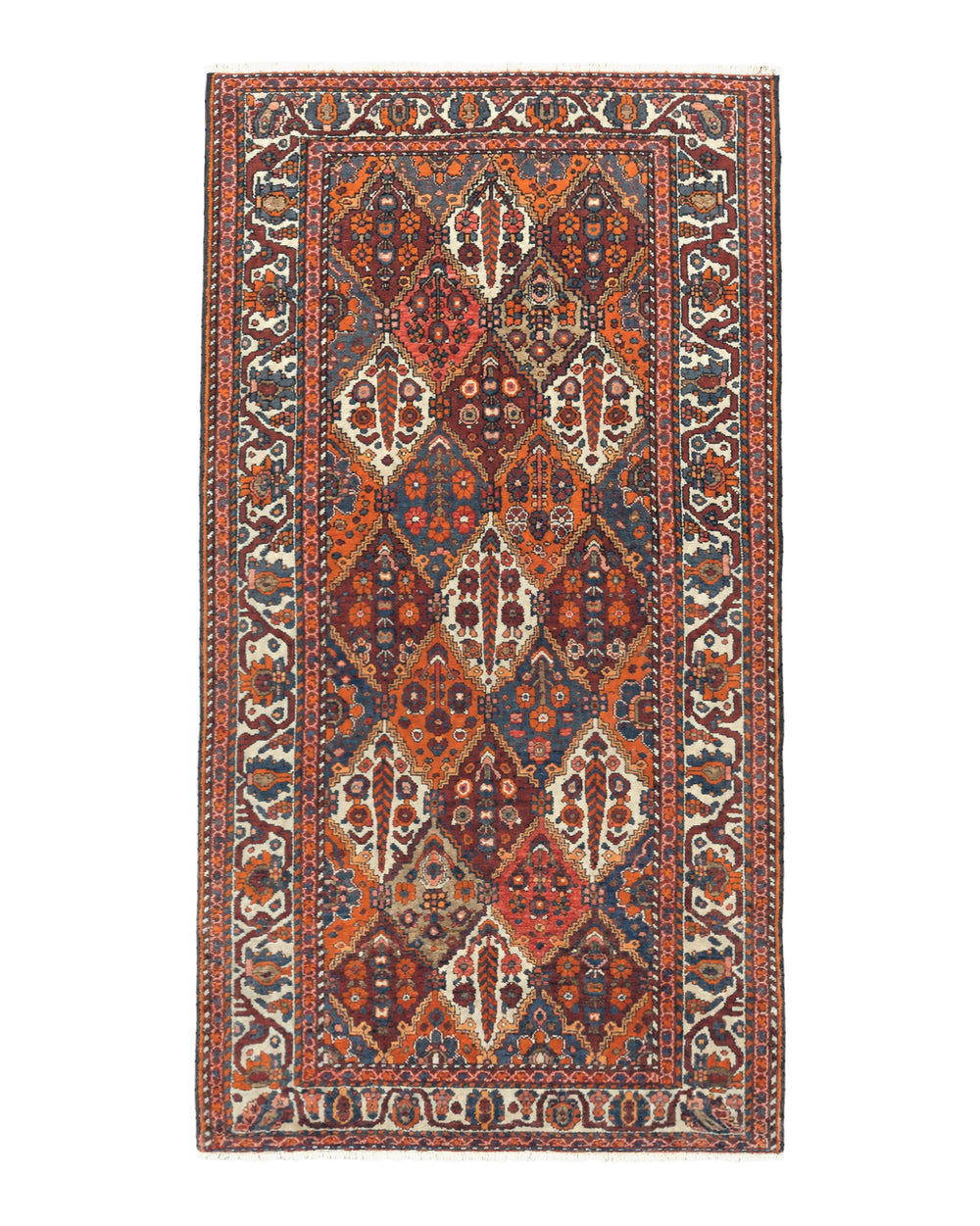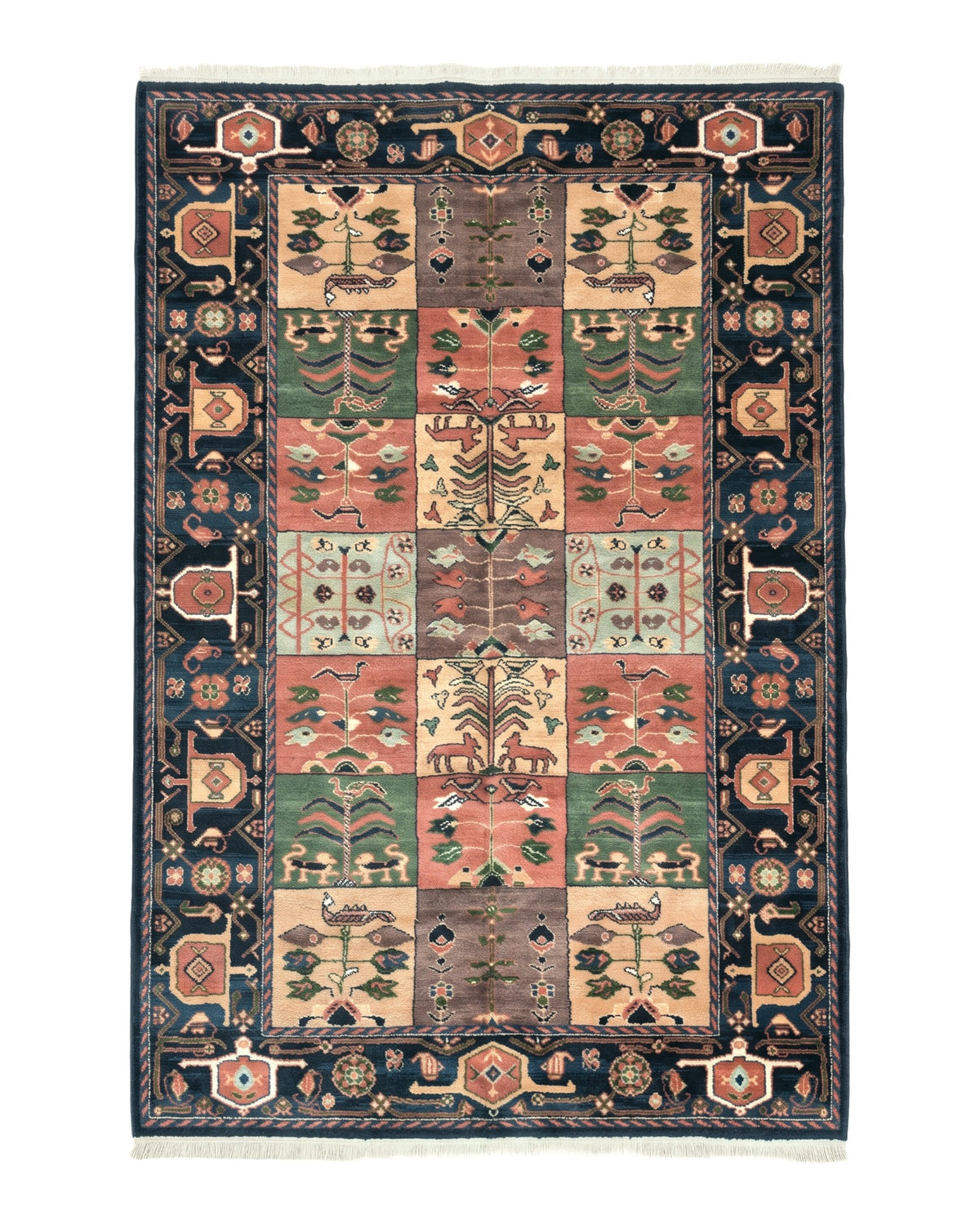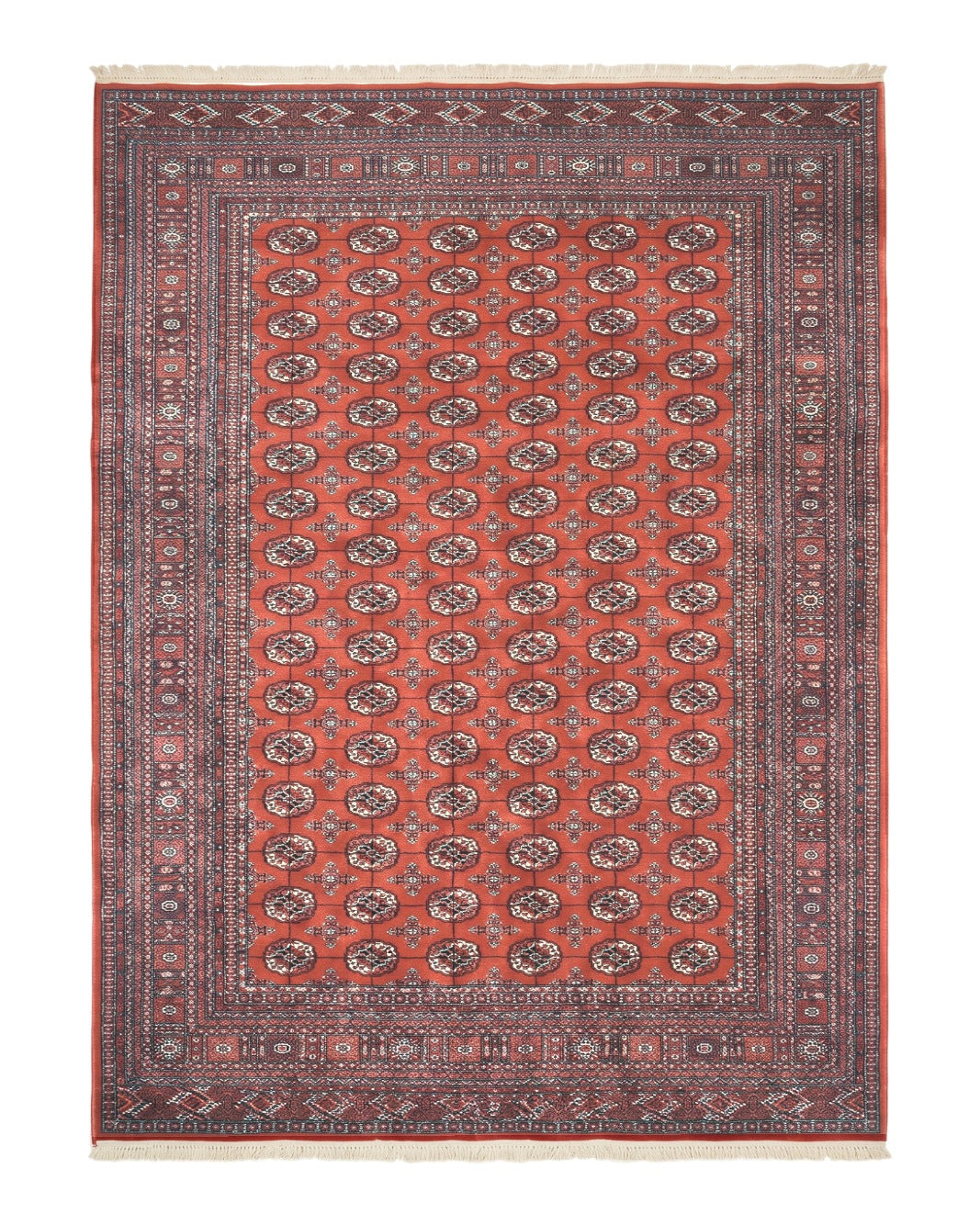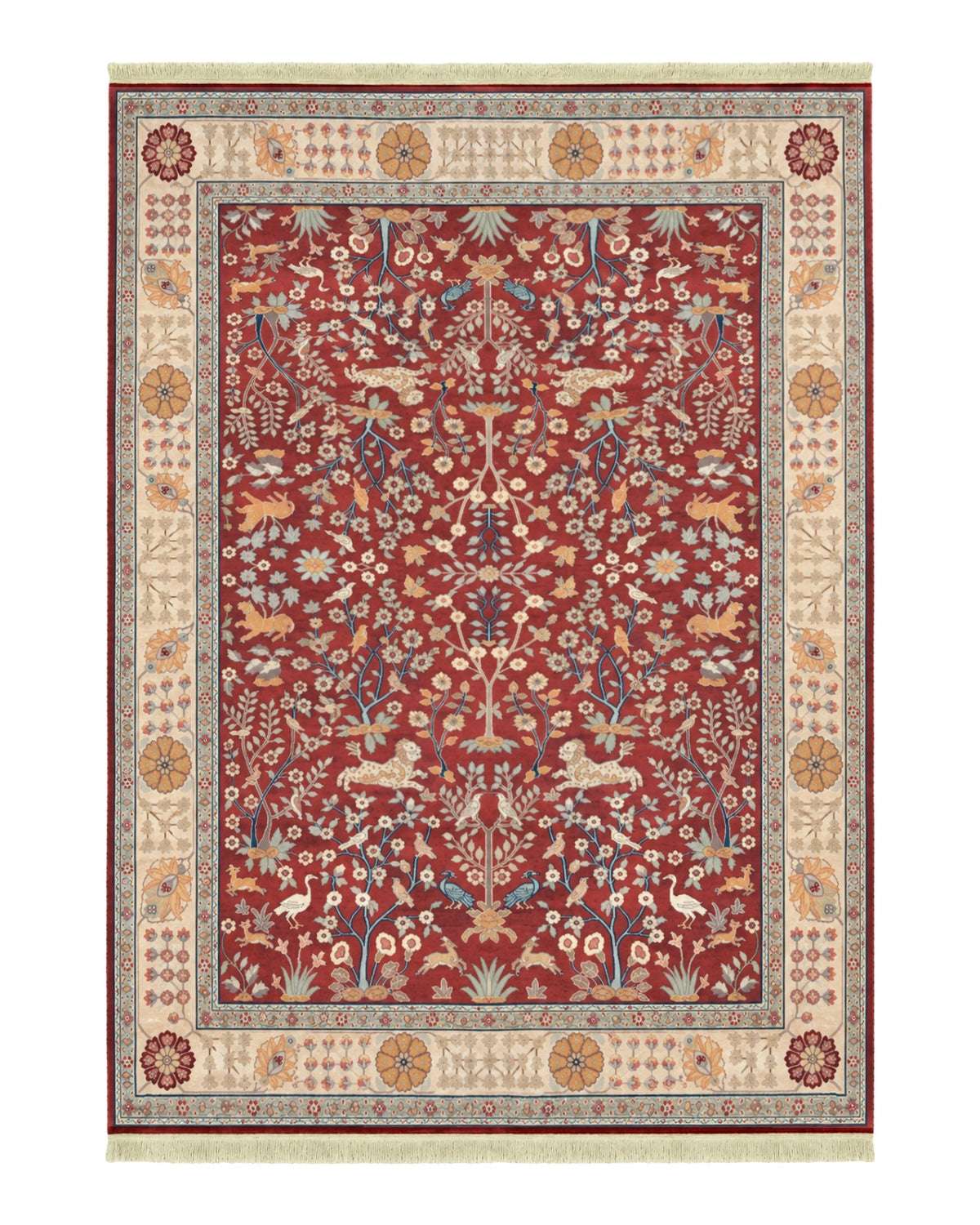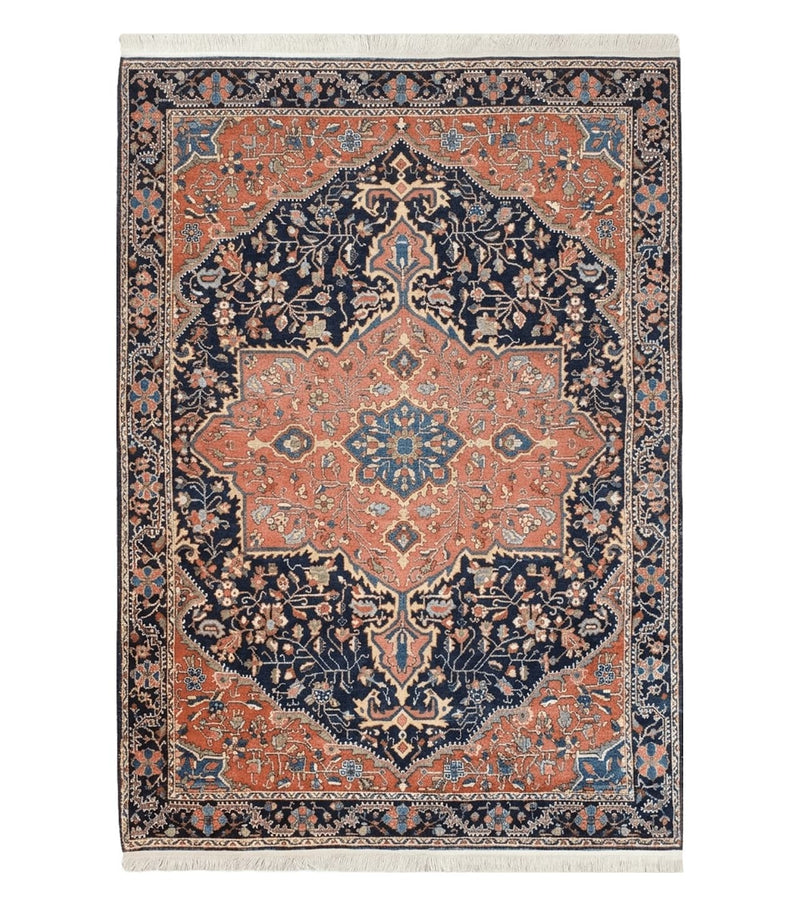


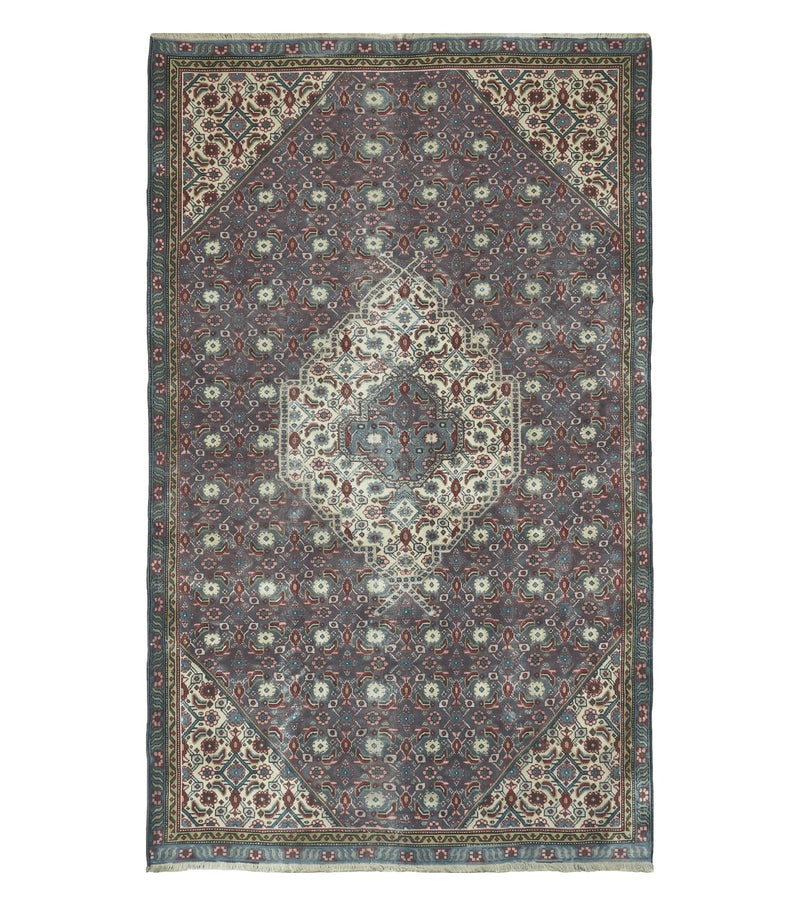


The Chahar Mahal collection is named after Chahar Mahal, a region of west central Iran that is home to many Bakhtiari villages and is famous for garden rugs whose fields are divided into compartments. Karastan's Chahar Mahal designs, numbered in the 600 series, bring that village tradition to its worsted-wool rugs, with panel layouts, botanical motifs and warm, lively colors. It is one of the later Karastan collections, dating from around the 2000s.
| Numbers | The 600s |
|---|---|
| Designs | Village Green (#602), #604, Village Garden (#605), Sultanabad (#608) |
| Inspired by | Village and garden rugs of Chahar Mahal and the Arak region |
| Made | Around the 2000s |
Village Green #602, #604 and Village Garden #605
These designs follow the garden panel layout of Chahar Mahal rugs. The field is divided into compartments, each filled with stylized flowers and plants, and in the #605 also with birds and animals. The #602 is often found as a runner, with a lively palette of rose, ivory and navy, and the #604 is a further village design in the same spirit. See Garden, Panel and Tree of Life Designs.
Sultanabad #608
Sultanabad is the old name of Arak, the city at the center of the Persian rug trade in the late 19th century, whose large, softly colored rugs with spacious designs were much admired in Europe. The #608 follows that style. See Mahal and Sultanabad Rugs.
The Chahar Mahal connection
The full name of the region is Chaharmahal and Bakhtiari. Its village rugs are sturdy and colorful, and the garden design, with its rows of compartments, is the best known. See Bakhtiari Rugs.