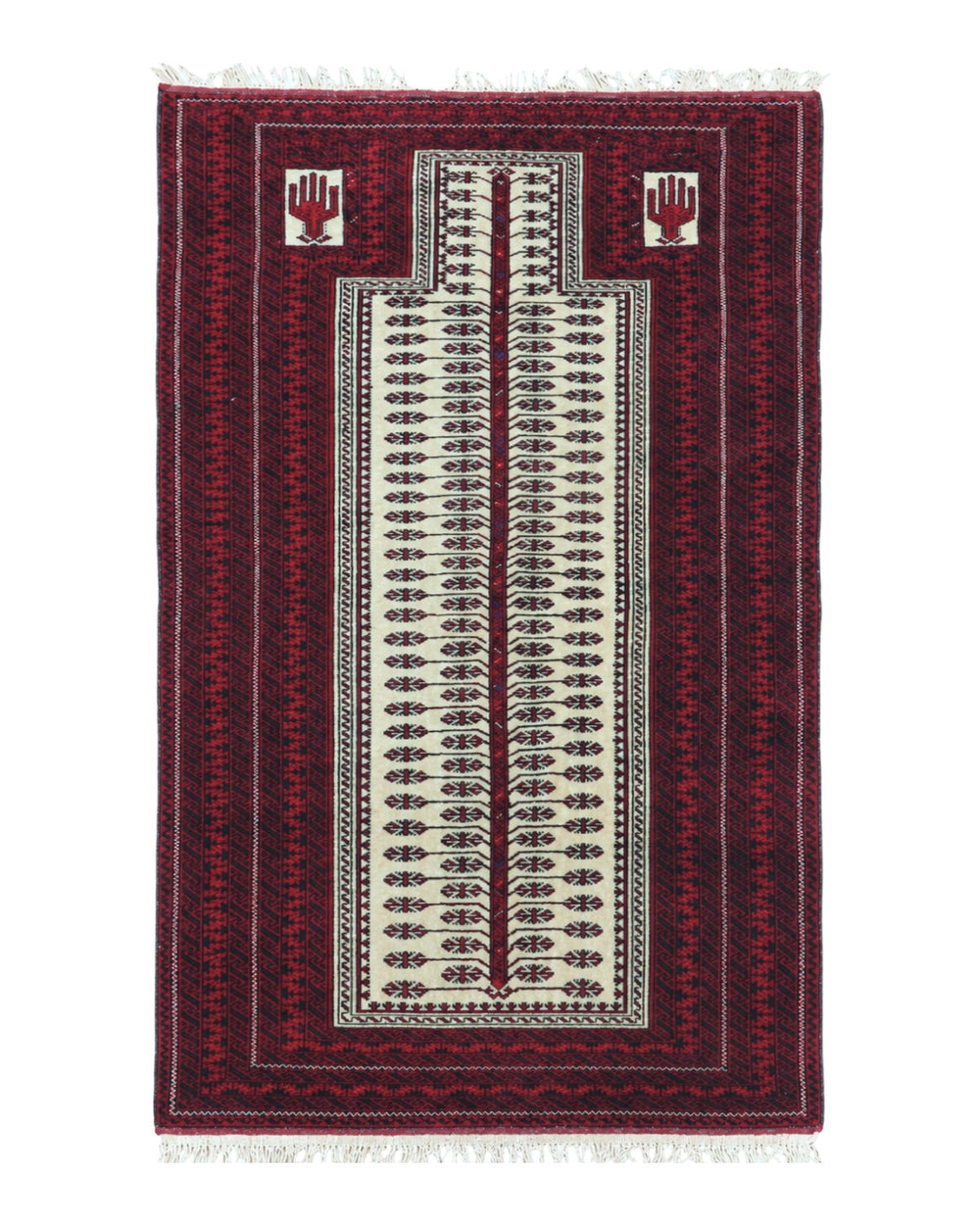
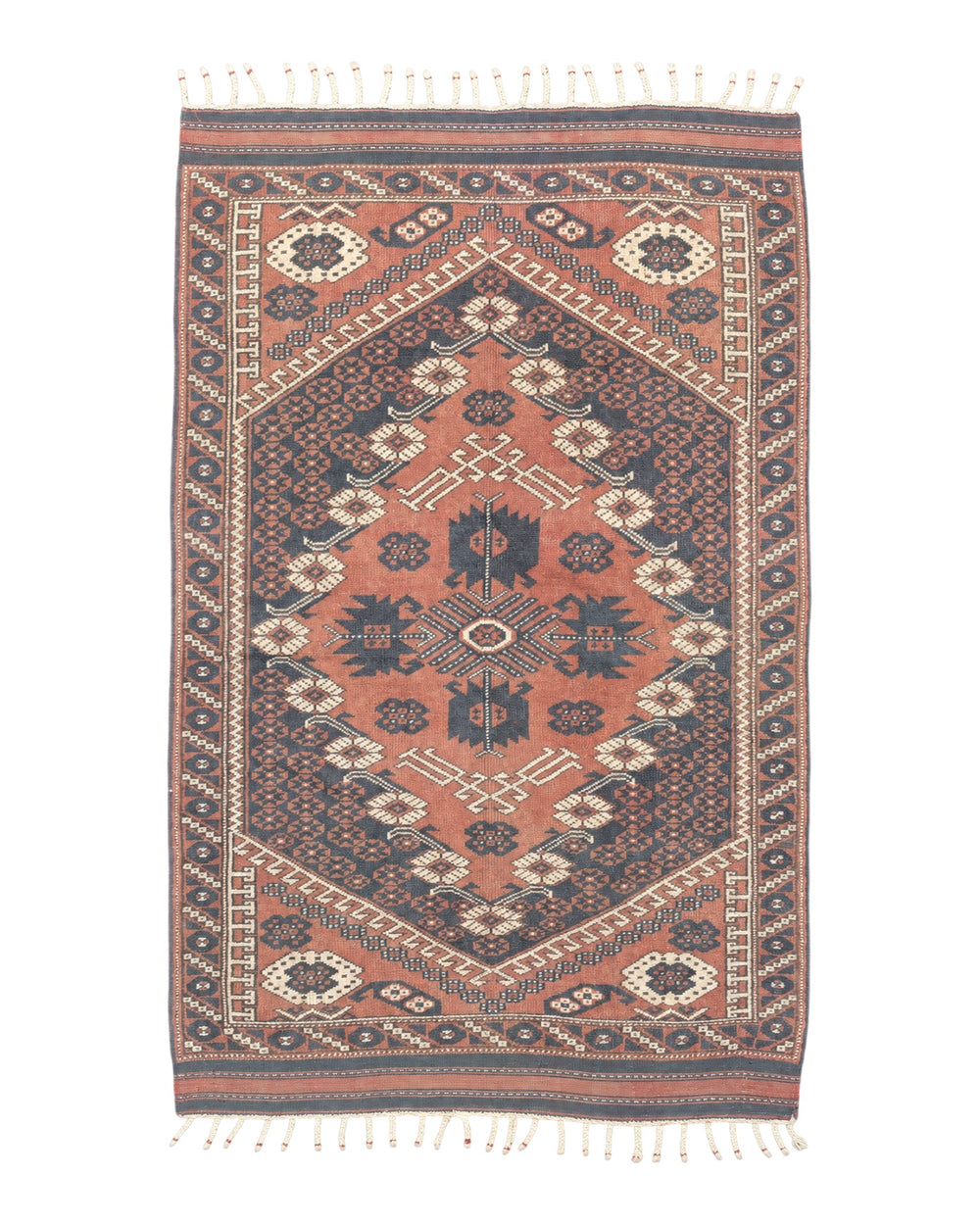
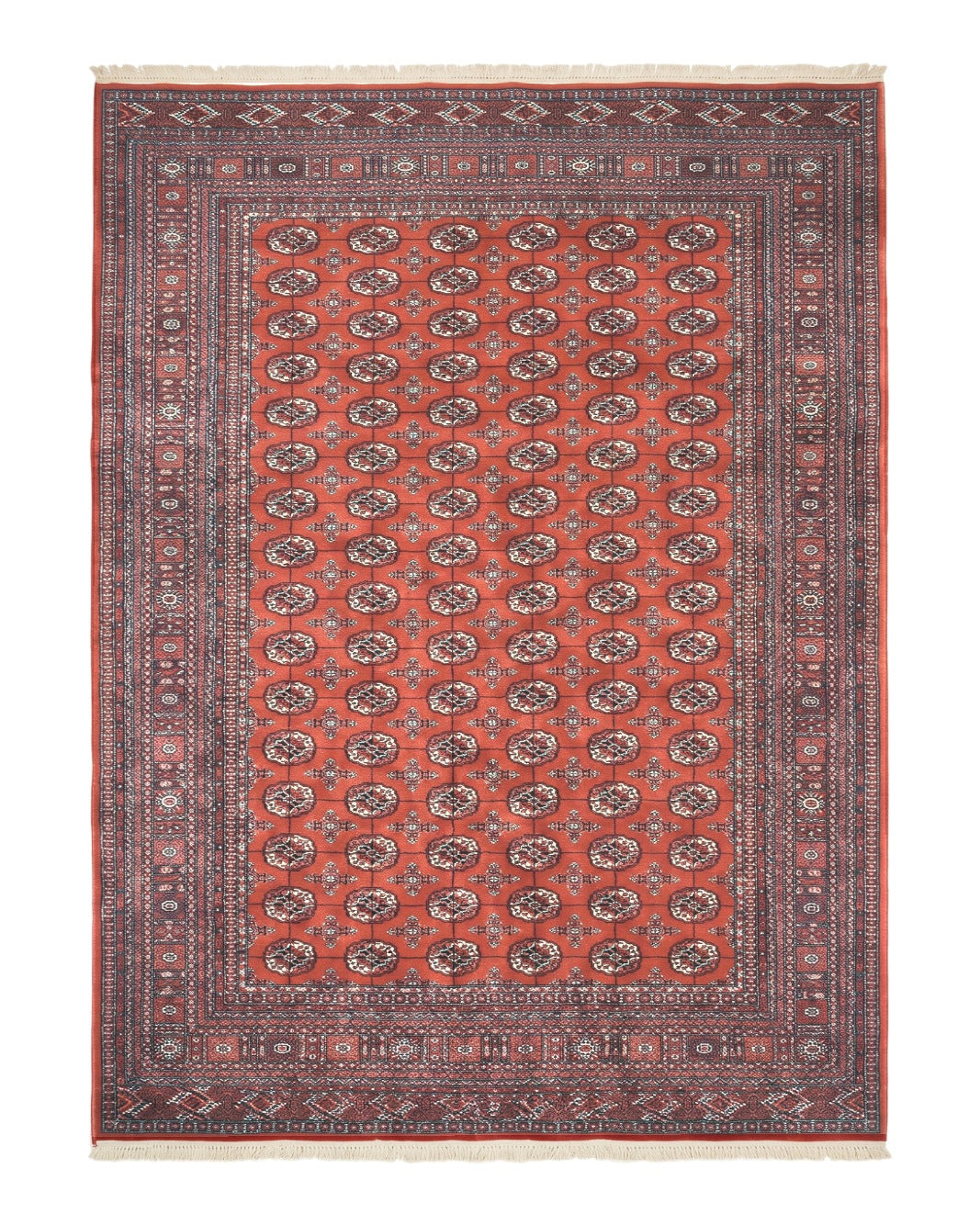
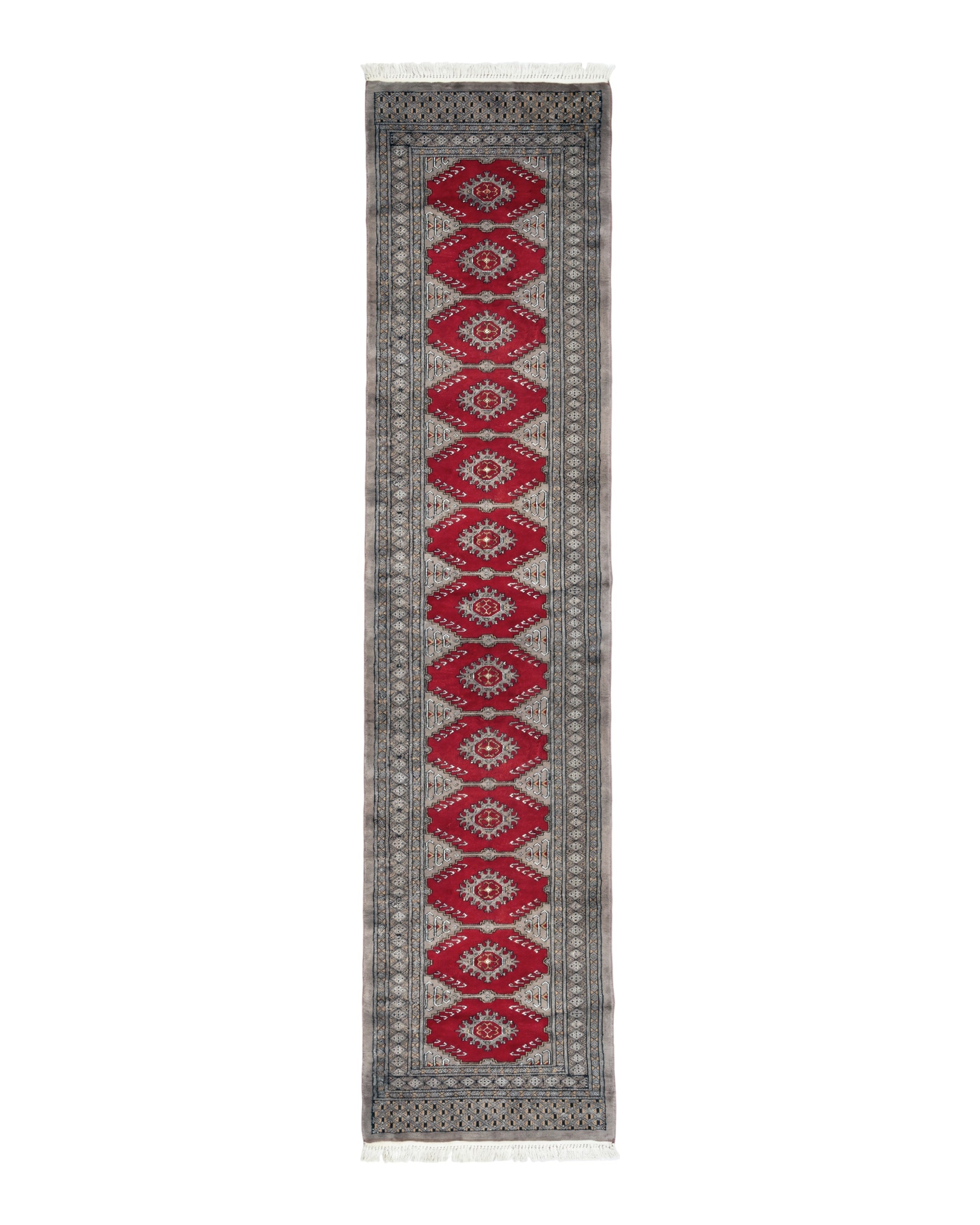
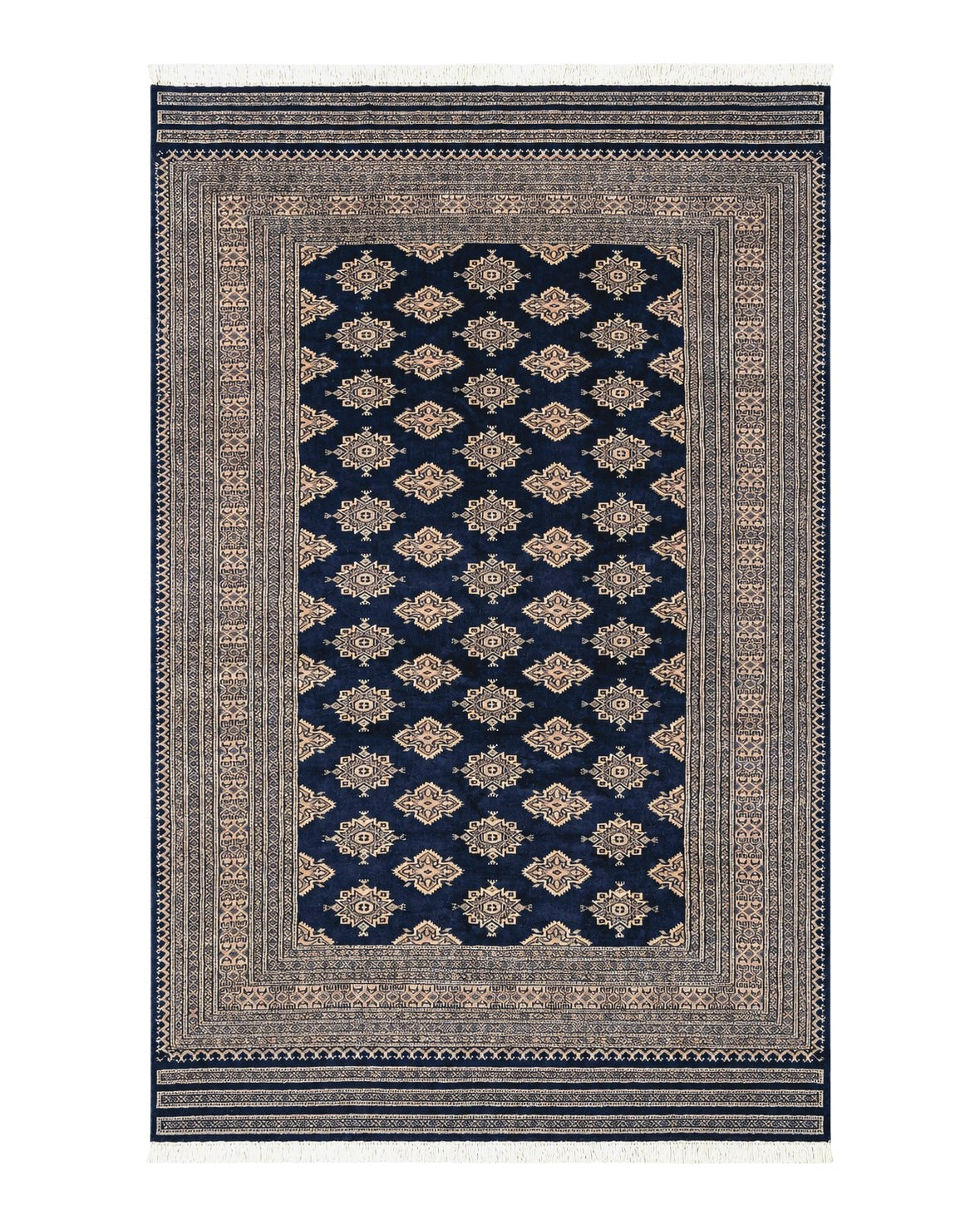
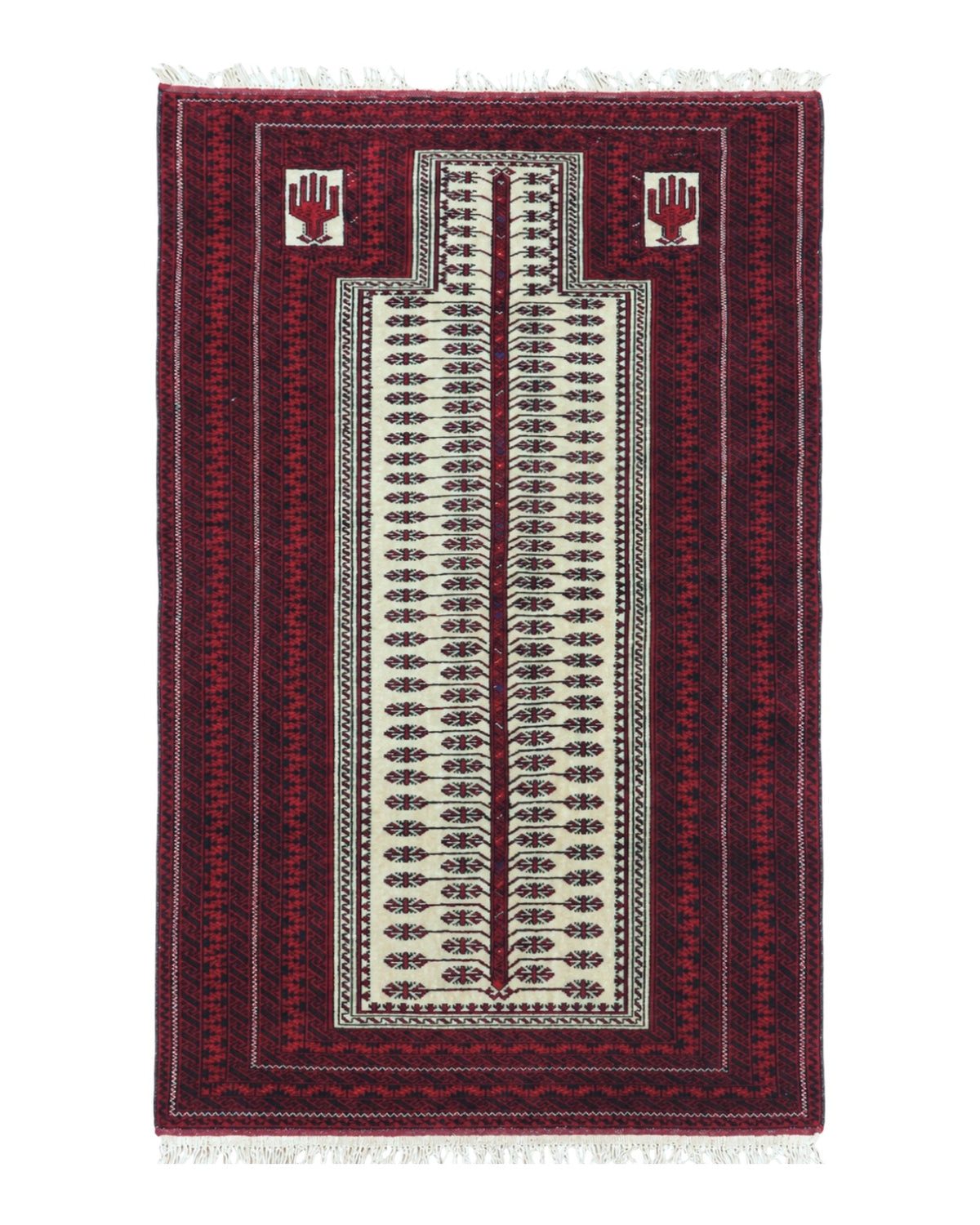
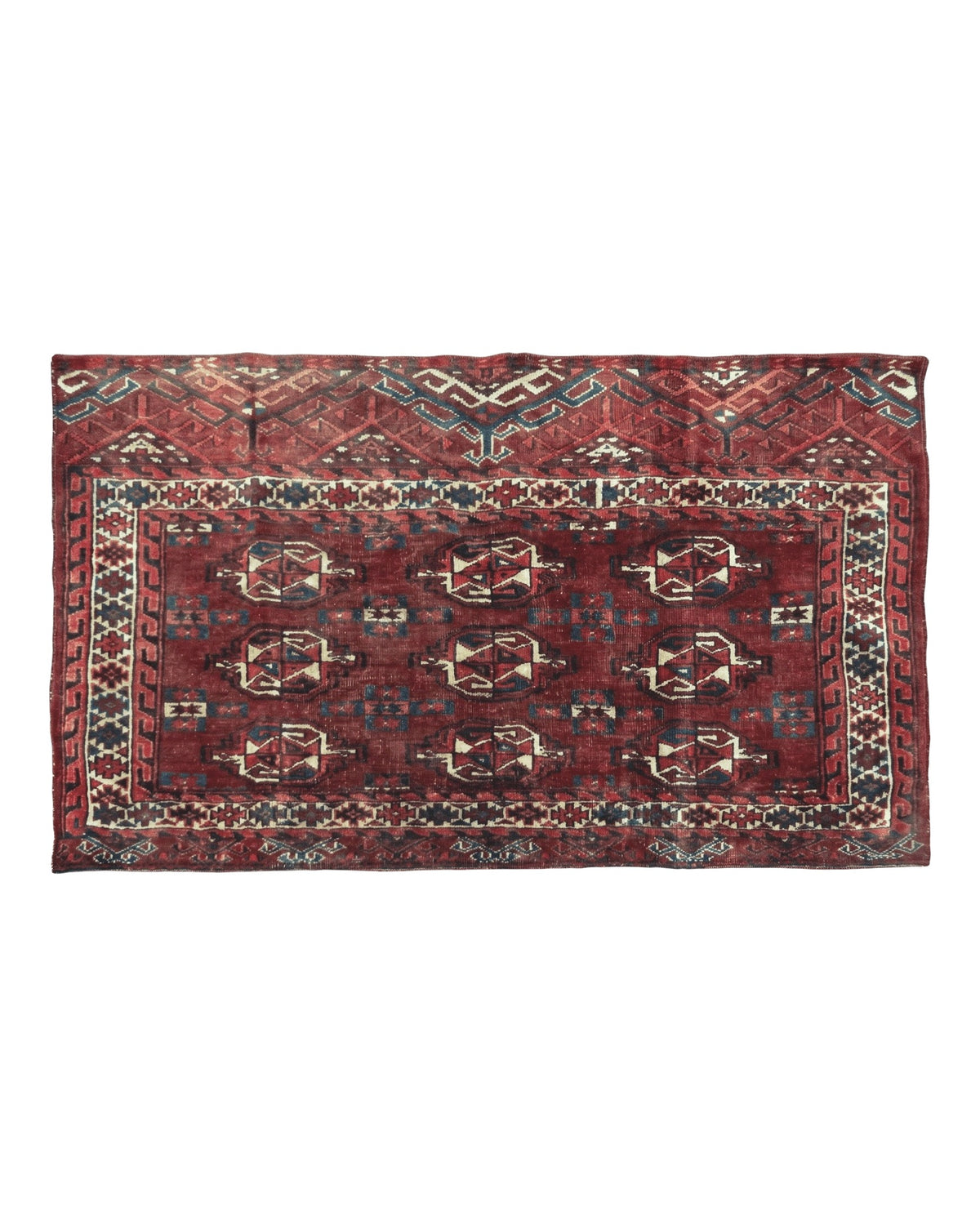
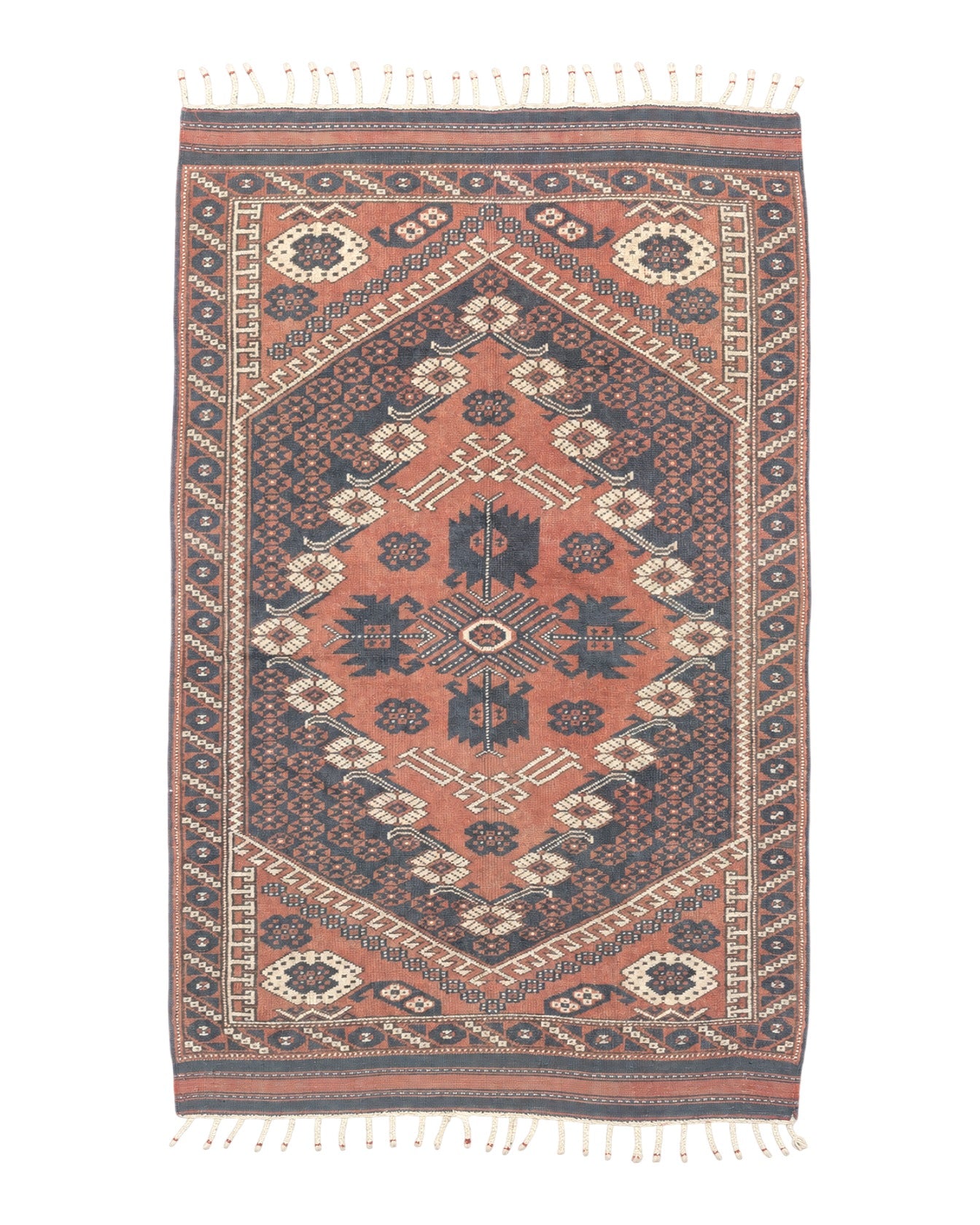
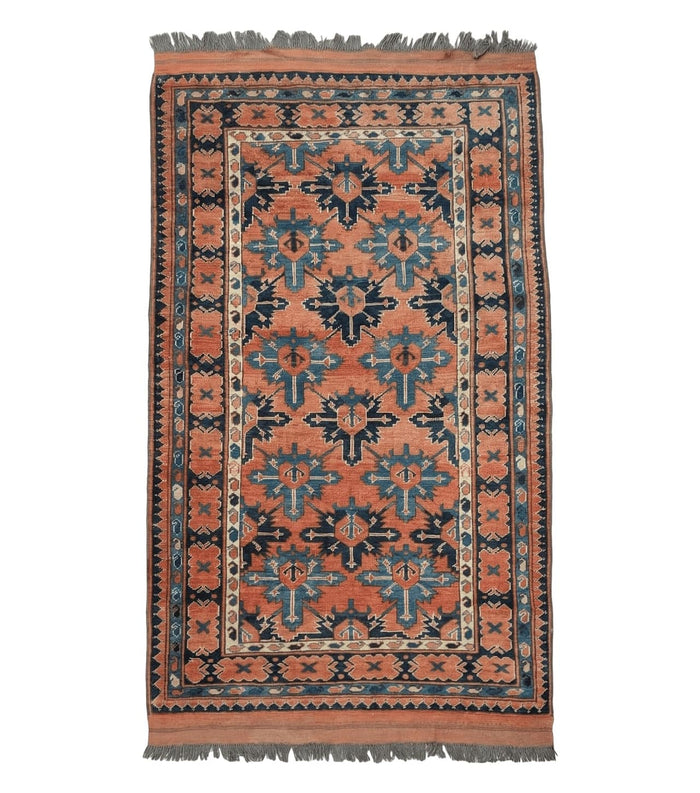
The Turkmen are a Turkic people of Central Asia whose homeland spans Turkmenistan, northern Afghanistan and north-east Iran. Their weaving is one of the great tribal traditions of the rug world, and Persian Turkoman rugs are those woven by Turkmen tribes living in Iran, mainly in Golestan province near the Caspian Sea. Turkmen rugs are instantly recognizable: rows of repeating polygonal motifs called guls on a deep red ground, woven with fine, lustrous wool.
| Origin | Turkmen tribes of north-east Iran (Golestan, around Gonbad-e Kavus) |
|---|---|
| Main tribes | Yomud (Yomut), Tekke and others |
| Tradition | Tribal |
| Knot | Symmetric or asymmetric, depending on the tribe |
| Materials | Fine, lustrous wool on a wool foundation |
| Typical design | Rows of guls on a red ground |
| Also woven | Bags (chuval, torba), door rugs (engsi), tent bands |
The gul
A gul is an octagon or other polygon, divided into quarters and filled with small stylized motifs, repeated in rows across the field, often alternating with smaller secondary guls. Each Turkmen tribe traditionally used its own guls, a little like a coat of arms, so experts can often tell which tribe wove a rug from its gul. The Tekke gul, the Yomud's dyrnak and kepse guls, and others each have their own shapes. See Rug Motifs and Their Meanings.
Colors and wool
The ground of most Turkmen rugs is red, from bright madder red to deep brownish or purplish red, with the guls in darker red, navy, ivory and orange. The wool is fine and lustrous, and the weave usually tight, so Turkmen rugs have a smooth, velvety surface and crisp drawing.
Bags and special pieces
Much of the finest Turkmen weaving is found in pieces made for the tent: chuval and torba storage bags hung around the walls, engsi rugs that hung in the tent doorway, often with a design divided into four panels, and long tent bands. Many bag faces were later separated from their backs and are sold as small rugs or made into cushions.
Persian Turkoman and Bokhara
Turkmen designs have been widely copied, especially in Pakistan, where "Bokhara" rugs use gul designs, often with a softer, lustrous finish and a range of colors, including ivory, blue and gold grounds. These are a different thing from tribal Turkmen weaving. See Pakistani Rugs and Bokhara Designs. Turkmen rugs are also woven in northern Afghanistan. See Afghan Rugs.
How to recognize a Persian Turkoman
- Rows of guls on a red ground.
- Fine, lustrous wool and a tight, smooth weave.
- Wool foundation and narrow, often flatwoven ends.
- Deep reds with navy, ivory and orange details.
See also Persian Tribal Rugs.