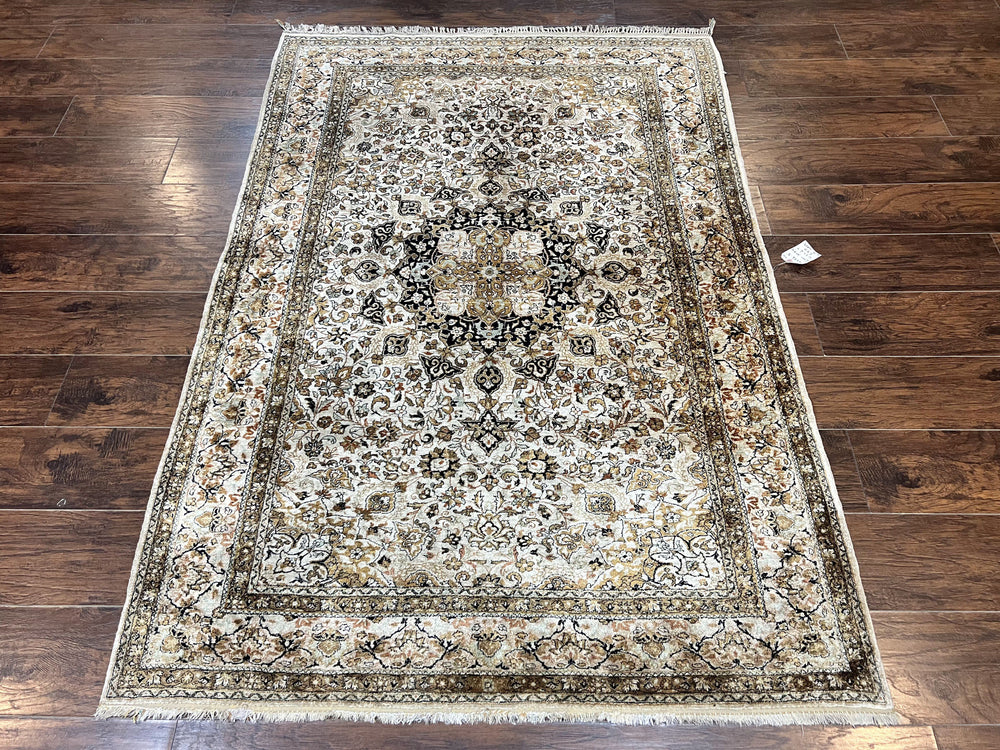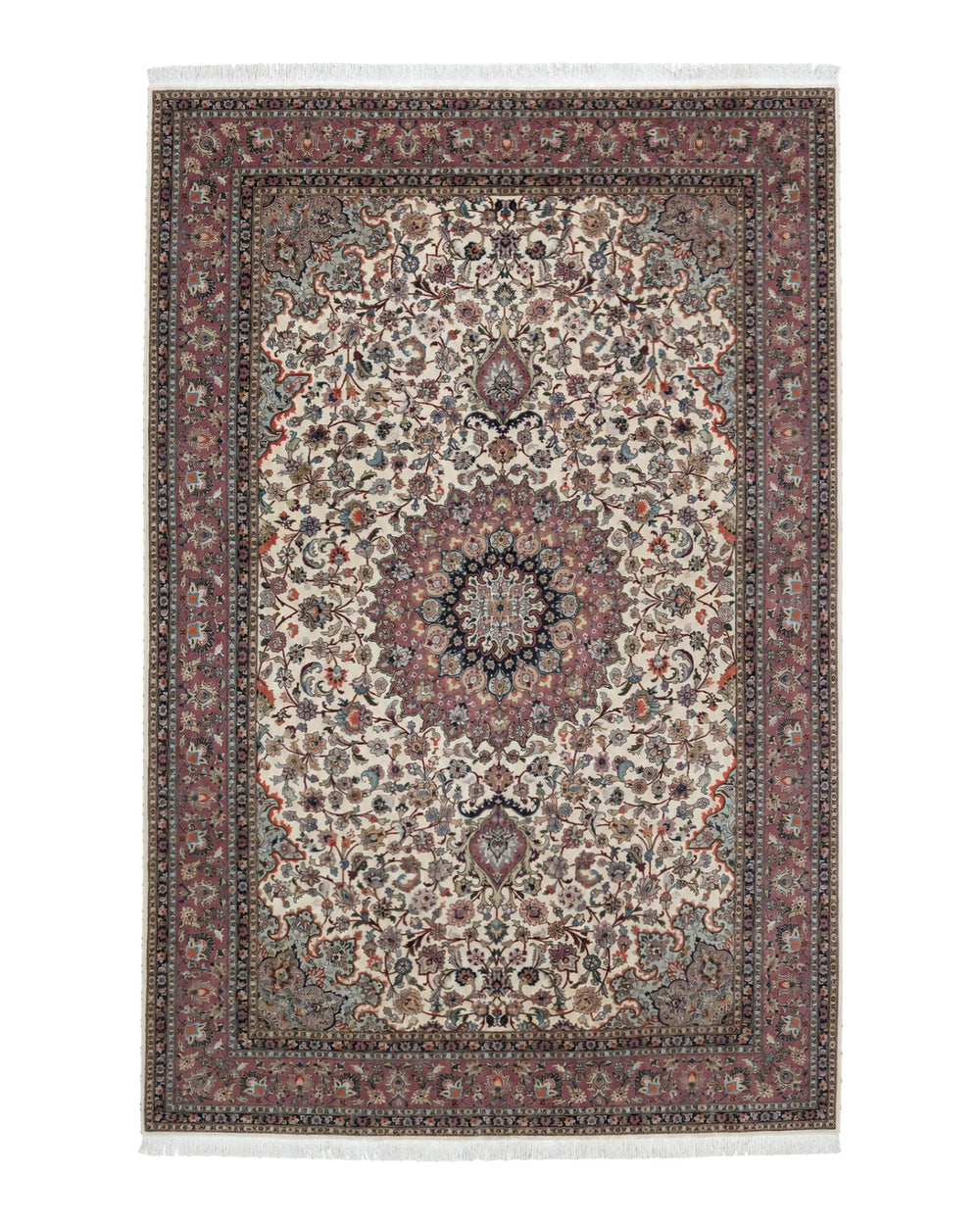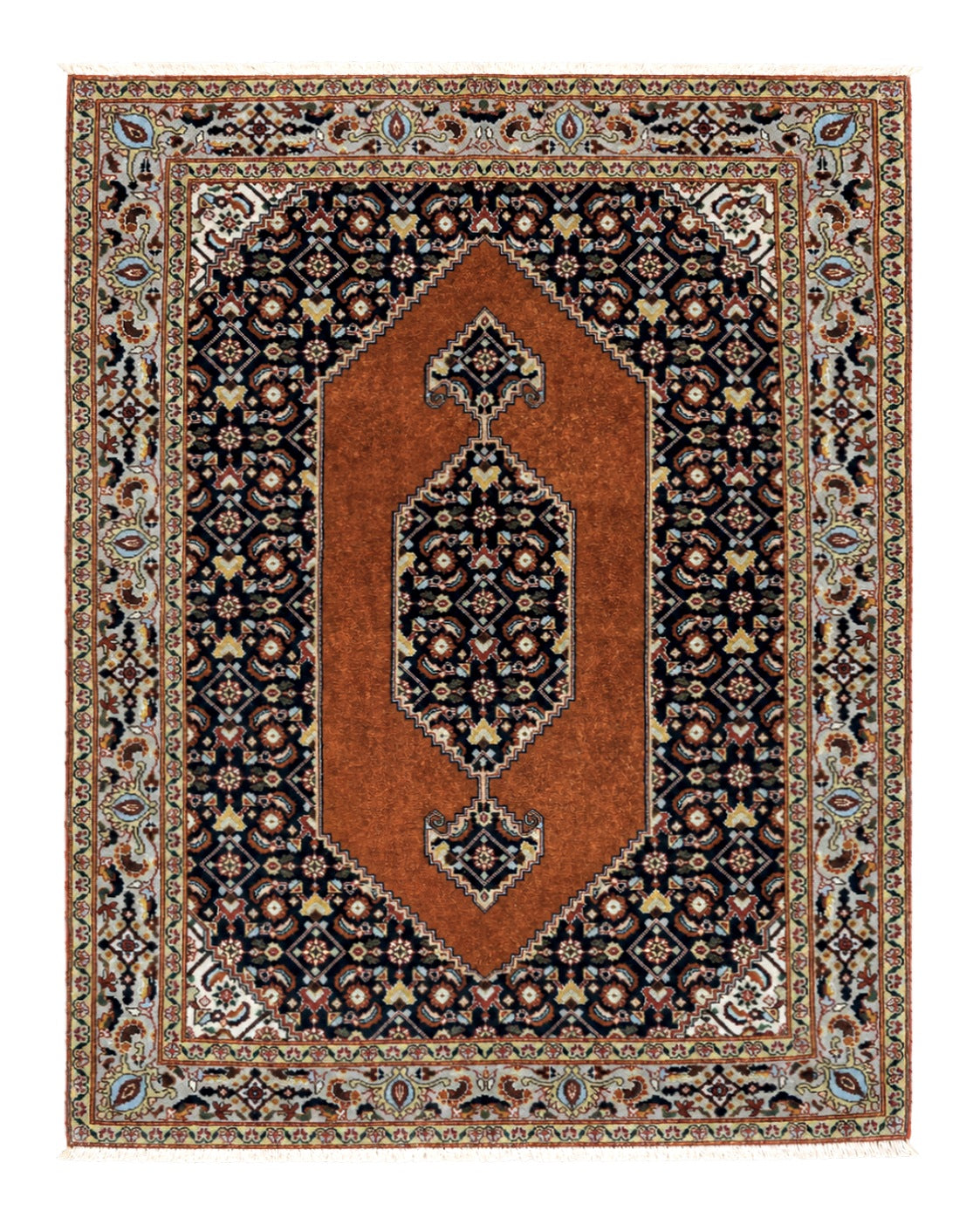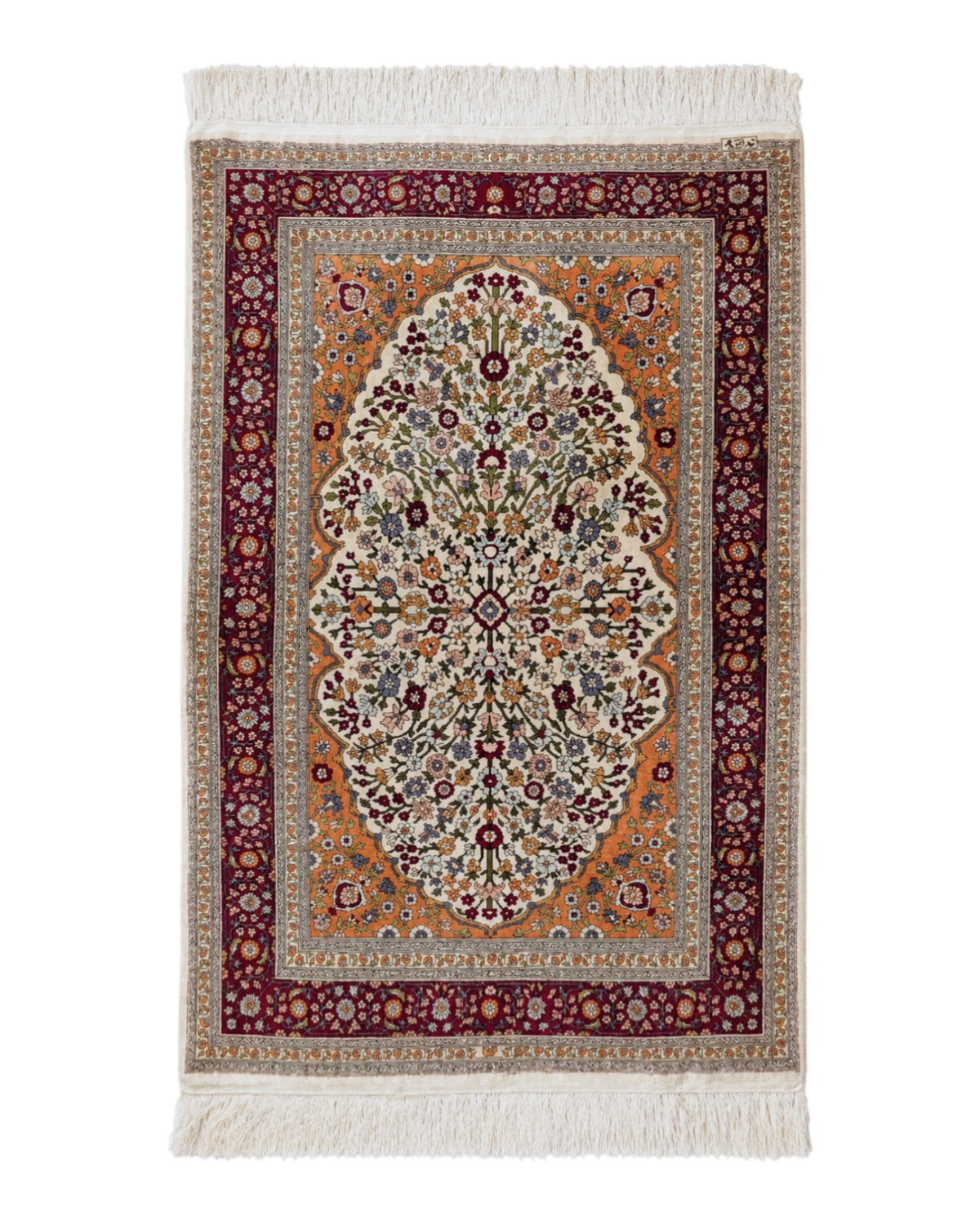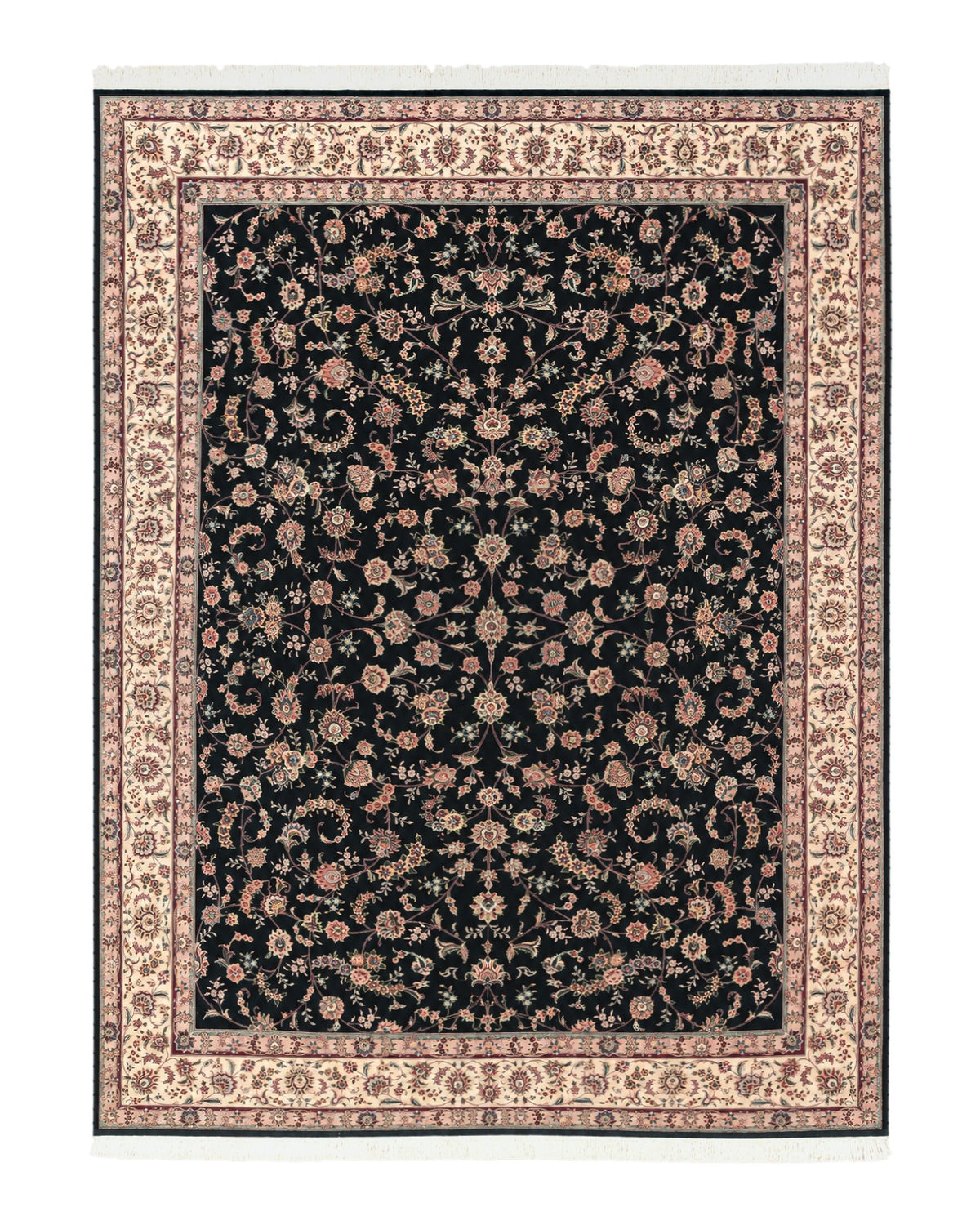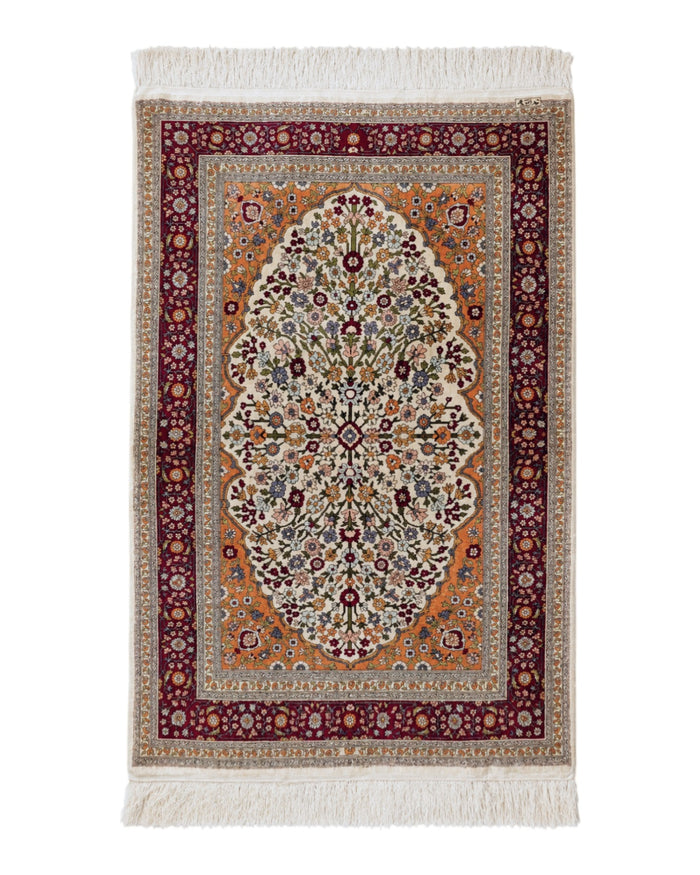
The materials a rug is made from affect how it looks, how it feels underfoot and how long it lasts. Most hand-knotted rugs use one material for the pile, the soft surface you see and walk on, and another for the foundation, the warps and wefts that hold the knots. A typical Persian rug has a wool pile on a cotton foundation; a very fine one may have silk in the pile, the foundation, or both.
| Wool | The most common pile fiber: resilient, warm and long-lasting |
|---|---|
| Kork wool | Fine, soft wool from the neck and shoulders of the sheep |
| Silk | Used for pile, highlights or foundation in fine rugs; lustrous but delicate |
| Cotton | The usual foundation in city and village rugs; strong and stable |
| Wool foundation | Common in tribal rugs woven on portable looms |
| Art silk | Viscose or mercerized cotton sold for its sheen; not real silk |
Wool
Wool is the traditional pile material of almost every rug-weaving region, and for good reason. It is springy, so the pile recovers after it is walked on; it holds dye well; and it contains natural lanolin, which helps it resist dirt and stains. Good wool from mountain sheep has a natural luster and wears slowly for decades.
Wool varies a great deal. Hand-spun wool, still used in many village and tribal rugs, is slightly uneven and takes dye in subtle variations. Machine-spun wool is more uniform. Wool from sheep raised at high altitude, such as the wool of north-west Iran and Tibet, is often especially resilient.
Kork wool
Kork (or kurk) wool is fine, soft wool taken from the neck and shoulders of the sheep. It is prized for fine city rugs, especially from Isfahan, Nain, Kashan and Tabriz, because it can be spun into a thin yarn for small knots and has a soft sheen. Listings that mention "kork wool" are describing this higher grade.
Silk
Silk has a brilliant luster and great strength for its weight, and it can be spun extremely fine. It is used in three ways:
- Silk highlights: small areas of silk pile in a wool rug, used to outline motifs or add sparkle. Common in Nain, Tabriz, Qum and fine Kashan rugs.
- Silk foundation: silk warps and wefts under a wool pile. A silk foundation allows very small, tight knots, which is why many of the finest Isfahan and Nain rugs are woven this way.
- All silk: silk pile on a silk foundation, the finest and most delicate construction, best known from Qum, Kashan and Hereke in Turkey.
Silk shows wear more quickly than wool and is sensitive to water and strong sunlight, so all-silk rugs are best used in low-traffic rooms or hung on a wall.
Cotton
Cotton is the usual foundation material in city and village rugs. It is strong and does not stretch much, so a rug with a cotton foundation lies flat and keeps its shape. Cotton is rarely used for pile in traditional rugs, though white cotton is sometimes knotted into the pile of Turkmen and Caucasian rugs for bright white details.
Wool foundations
Many tribal rugs, such as Qashqai, Baluch and Gabbeh rugs, have a foundation of wool, often dark goat or sheep wool. Nomads used the wool of their own flocks, and wool warps suit portable ground looms. Wool foundations make a rug softer and more flexible, but more likely to curl or lose its shape. See Persian Tribal Rugs.
Bamboo silk, art silk and mercerized cotton
"Bamboo silk" and "art silk" are names for viscose, a fiber made from plant cellulose such as bamboo or wood pulp. Mercerized cotton is cotton treated to give it a sheen. These fibers have a bright, silk-like luster at a much lower price than silk, which makes them popular for rugs with a soft, shimmering look.
They need a little more care than wool or silk. Viscose is weaker when wet, so spills should be blotted quickly and the rug cleaned by a specialist, and the pile can crush in busy areas. They are best suited to bedrooms, living rooms and other rooms with light foot traffic.
Caring for different materials
Wool rugs are forgiving and need only regular vacuuming and occasional professional cleaning. Silk and silk-foundation rugs should be kept away from heavy traffic, moisture and direct sun, and cleaned only by a specialist. See Caring for a Handmade Rug.