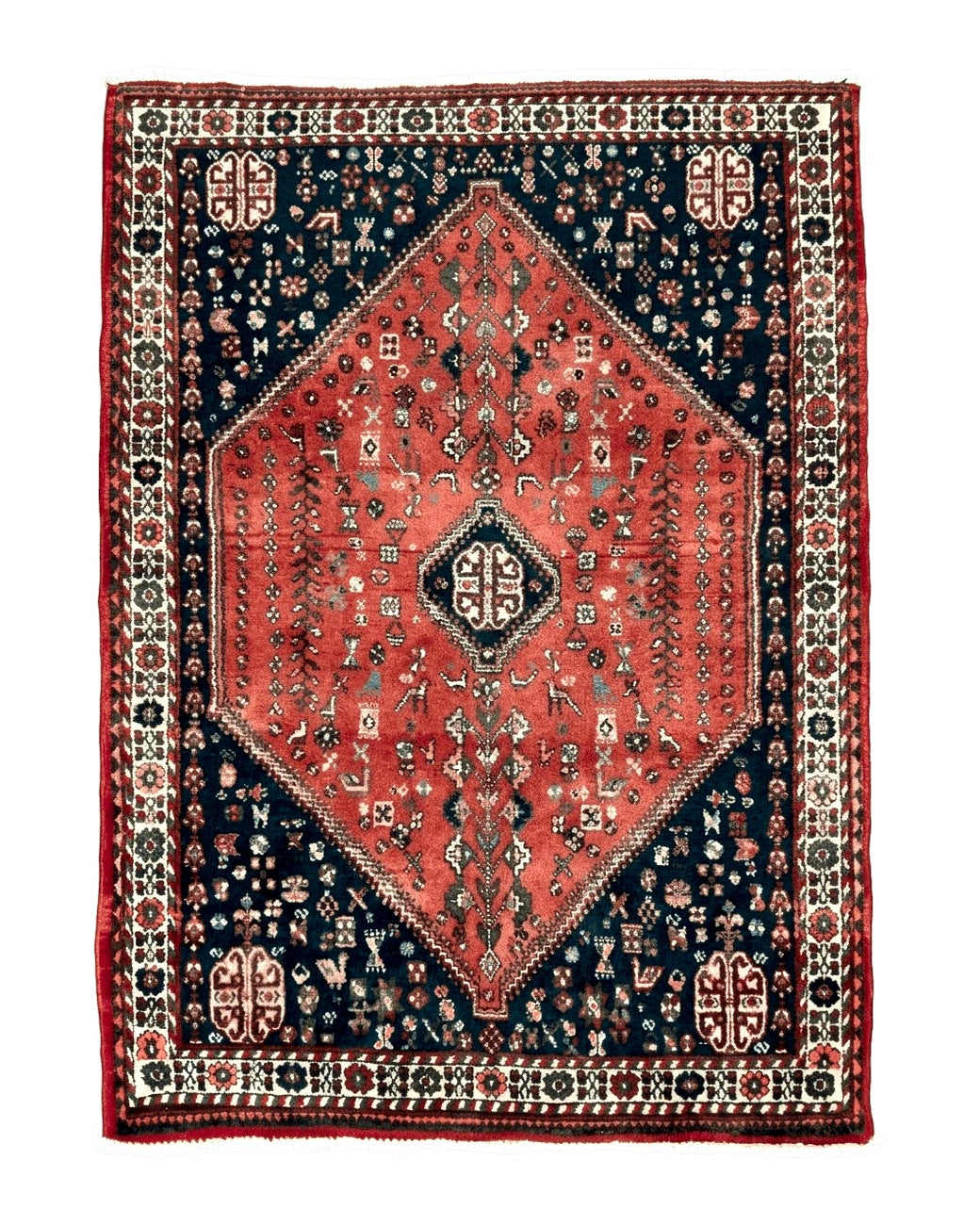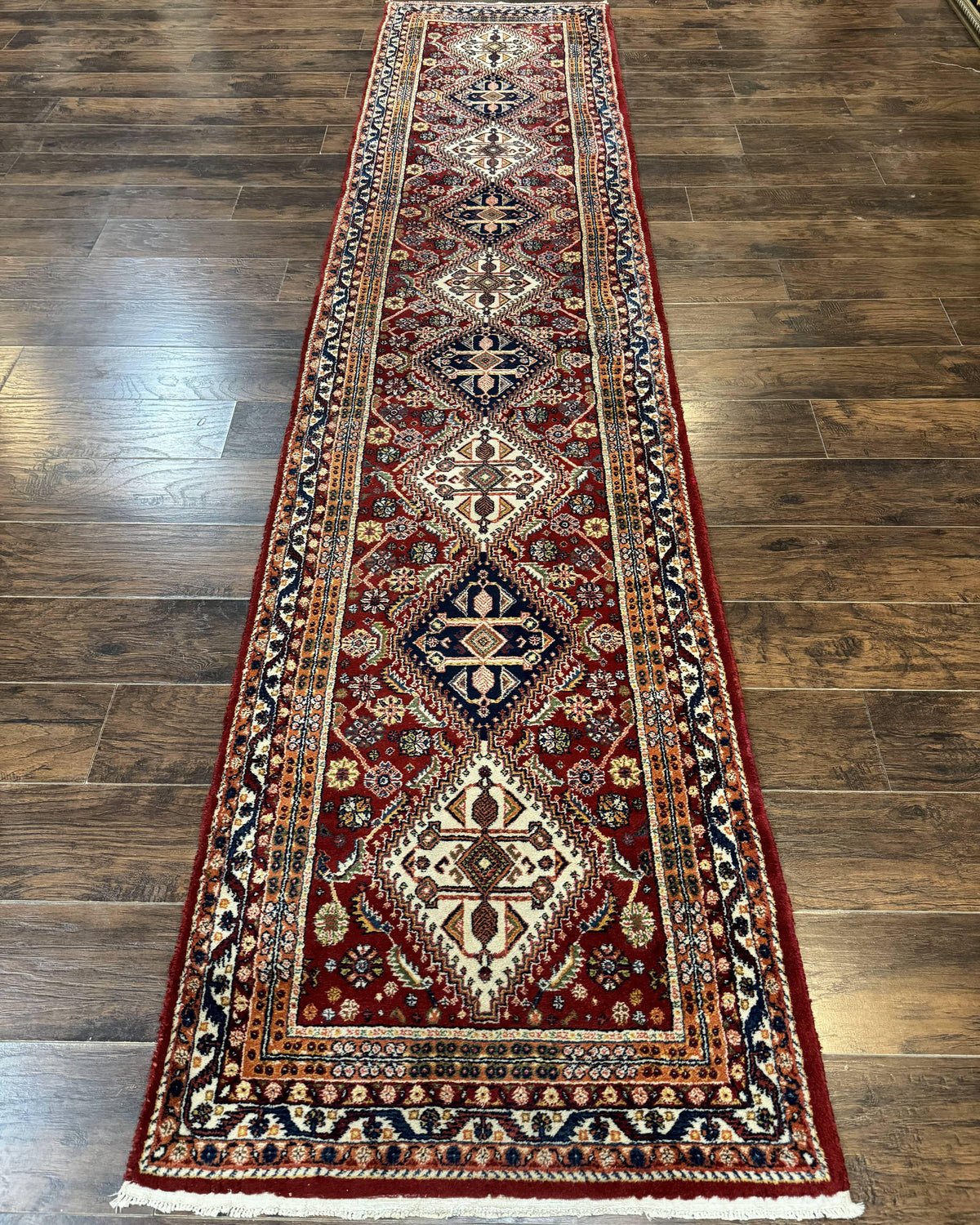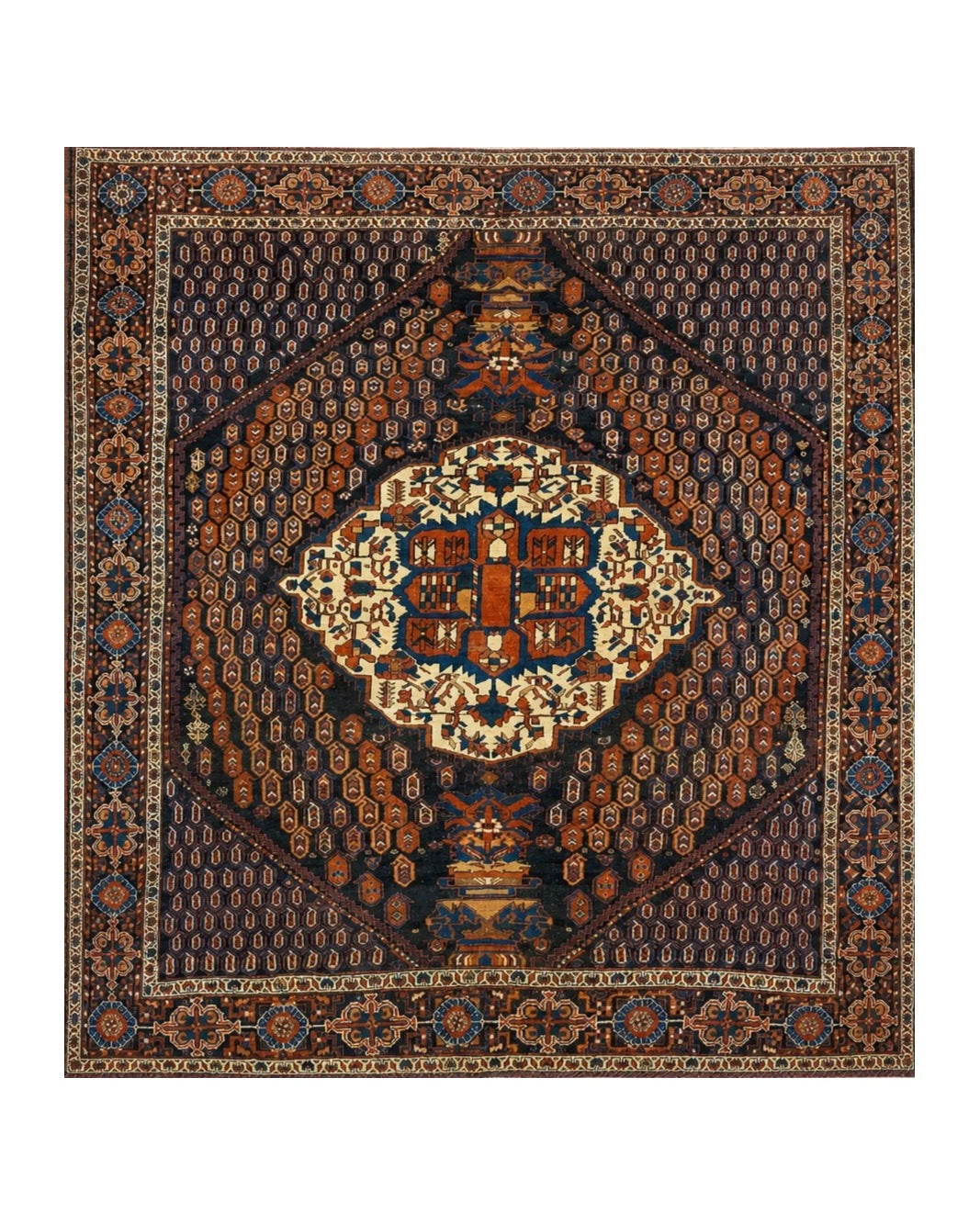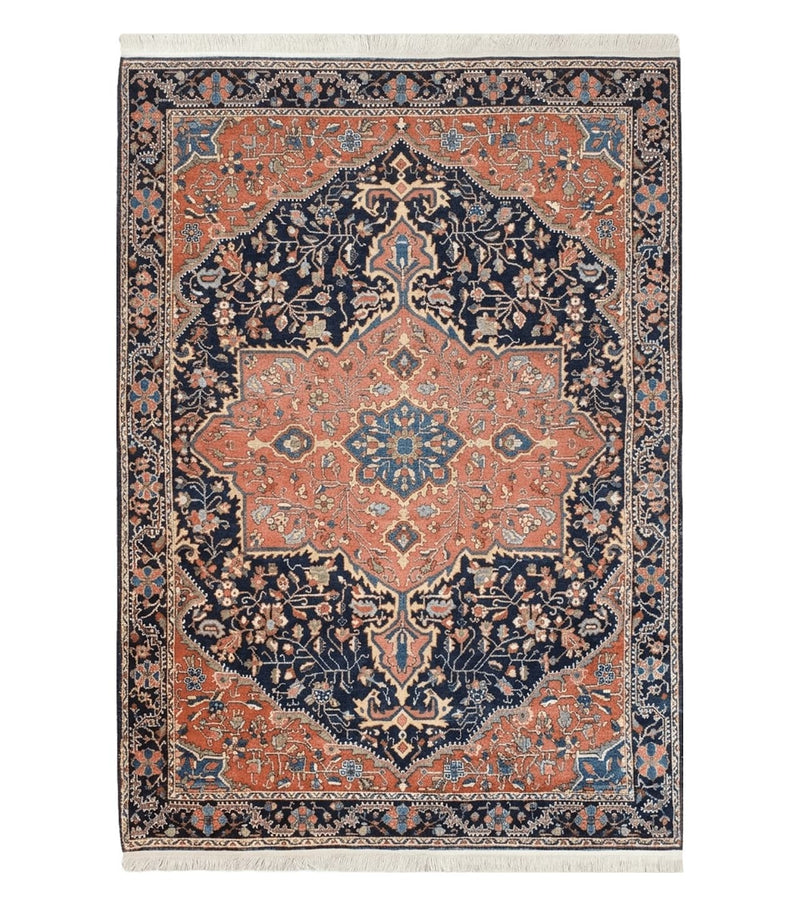


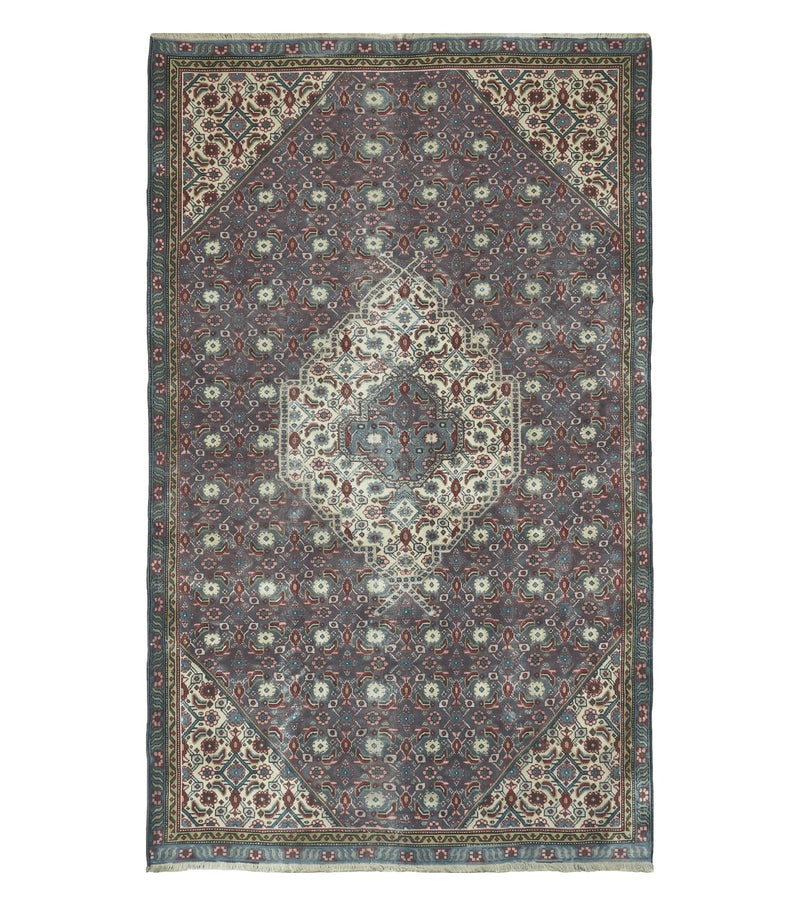


Abadeh is a town in southern Iran, on the road between Isfahan and Shiraz. Its rugs are woven by Qashqai families who settled in and around the town, and they combine the bold motifs and colors of Qashqai tribal weaving with the neat, regular construction of a village workshop. Abadeh rugs are known for two designs above all: a central diamond medallion with small motifs scattered around it, and the Zil-i-Sultan, a repeated pattern of vases of flowers.
| Origin | Abadeh and nearby villages, Fars province, southern Iran |
|---|---|
| Woven by | Settled Qashqai families |
| Knot | Symmetric (Turkish) |
| Materials | Good wool pile on a cotton foundation |
| Knotting | Medium to fine, very regular |
| Typical designs | Central diamond medallion; Zil-i-Sultan vases |
| Common colors | Red, navy, ivory, gold and green |
From tent to town
The Qashqai are nomadic and semi-nomadic people of southern Iran whose rugs are among the most expressive in the country. In the 20th century, many Qashqai families settled, and those around Abadeh began weaving on fixed looms with cotton foundations. Their rugs kept the Qashqai designs and colors, but became more regular in shape and more even in weave than the tribal rugs woven on portable ground looms. See Qashqai Rugs.
Designs
The classic Abadeh has a central diamond medallion, often a diamond within a diamond, sometimes with smaller diamonds at each end, set on a red or ivory field. The field around it is scattered with small motifs: stylized animals, birds, flowers, trees and geometric figures. The corners are often filled with triangular spandrels. The layout is simple and bold, and the motifs have the charm of tribal weaving.
The Zil-i-Sultan design, named after a Qajar prince who was governor of Isfahan, is a repeated pattern of vases holding flowers, often with birds, arranged in rows across the field. Abadeh weavers are among its best-known makers. See Garden, Panel and Tree of Life Designs.
Construction
Abadeh rugs are woven with the symmetric knot on a cotton foundation, with good, lustrous wool from the region. They are evenly knotted, lie flat and square, and wear well. Most are in smaller sizes, from about 3 × 5 to 7 × 10 feet.
How to recognize an Abadeh
- A central diamond medallion with small tribal motifs around it, or a Zil-i-Sultan vase design.
- Qashqai colors and motifs in a neat, regular rug.
- A cotton foundation, unlike the wool foundations of most Qashqai tribal rugs.
- Mostly small and medium sizes.
See also Persian Village Rugs.