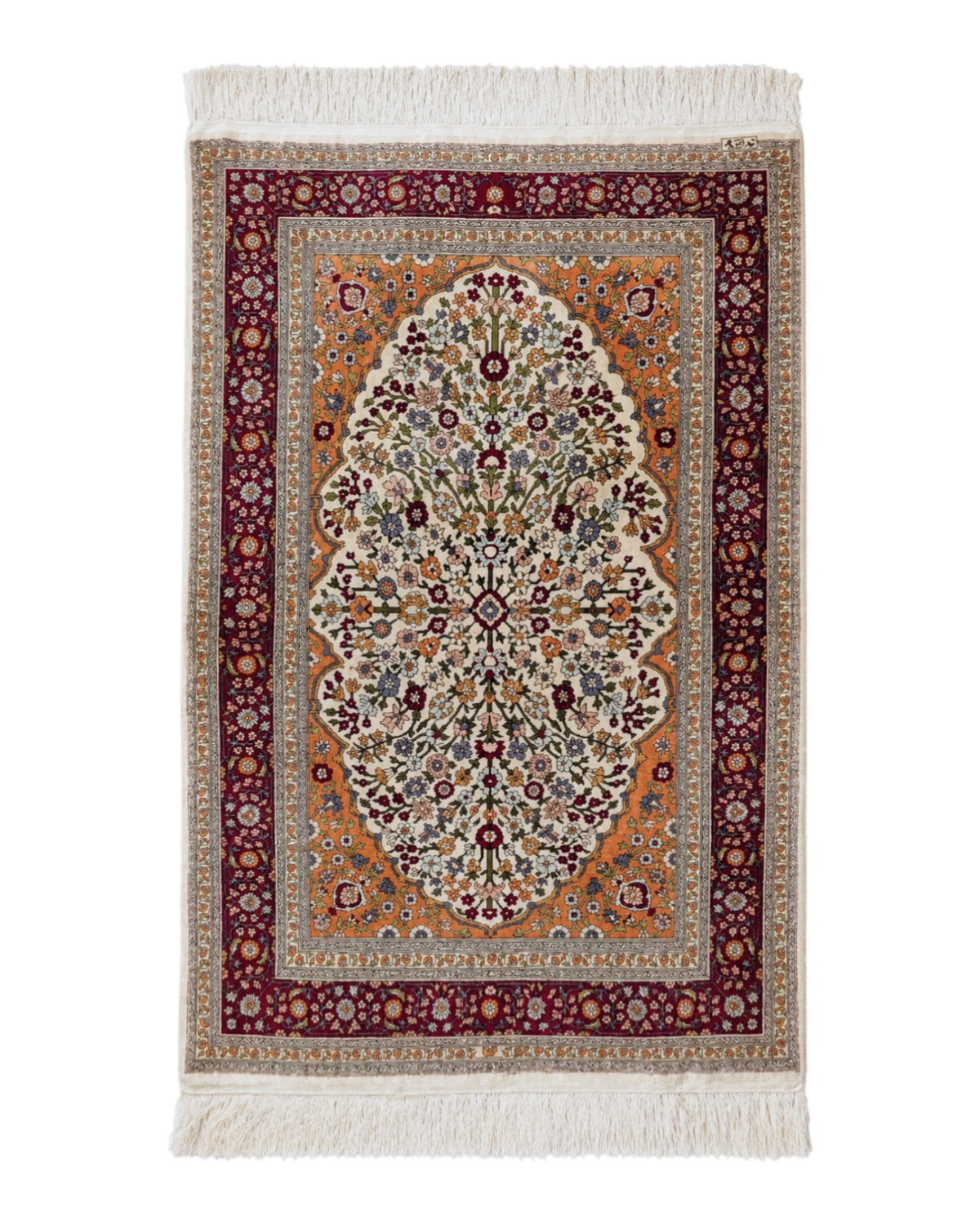
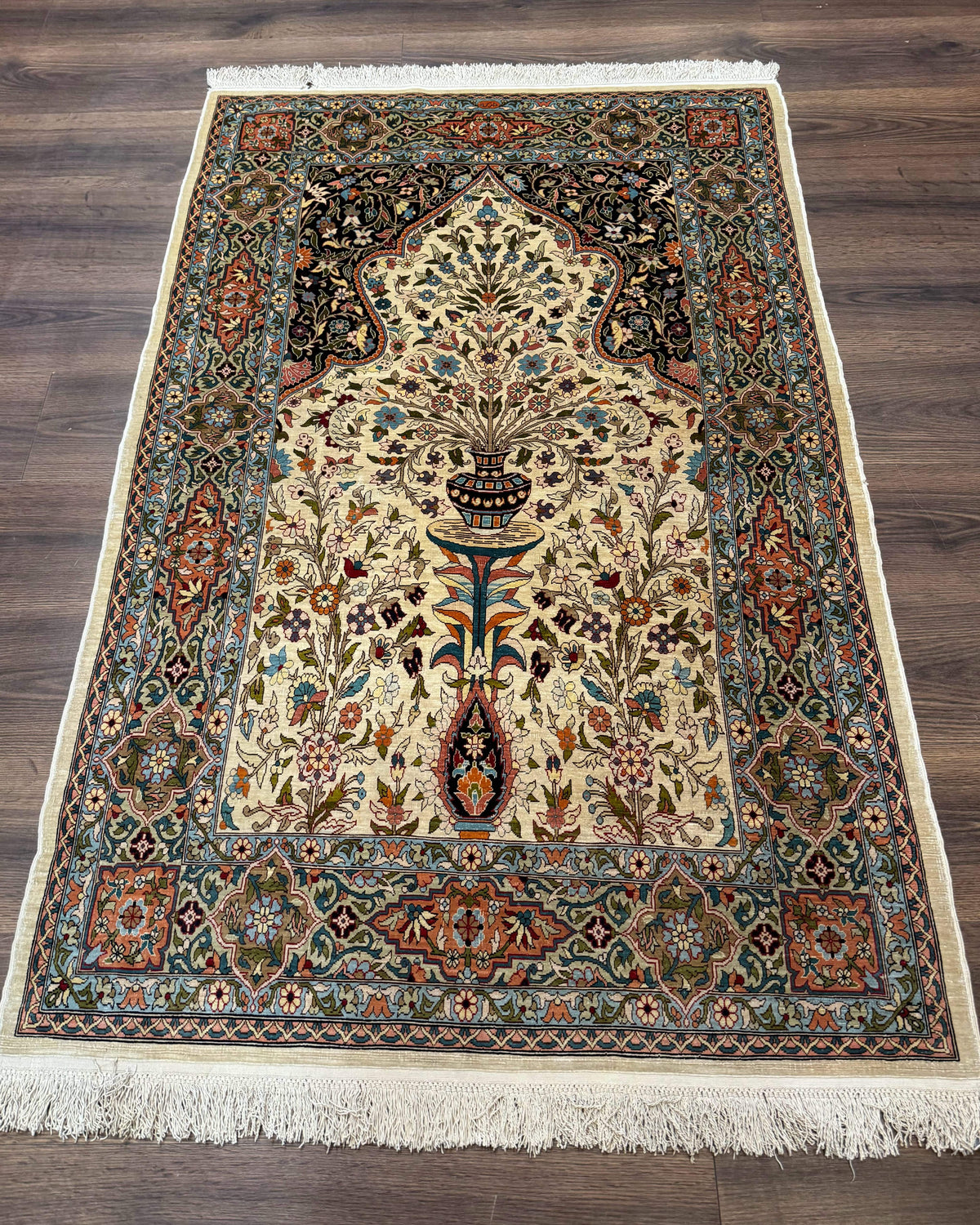
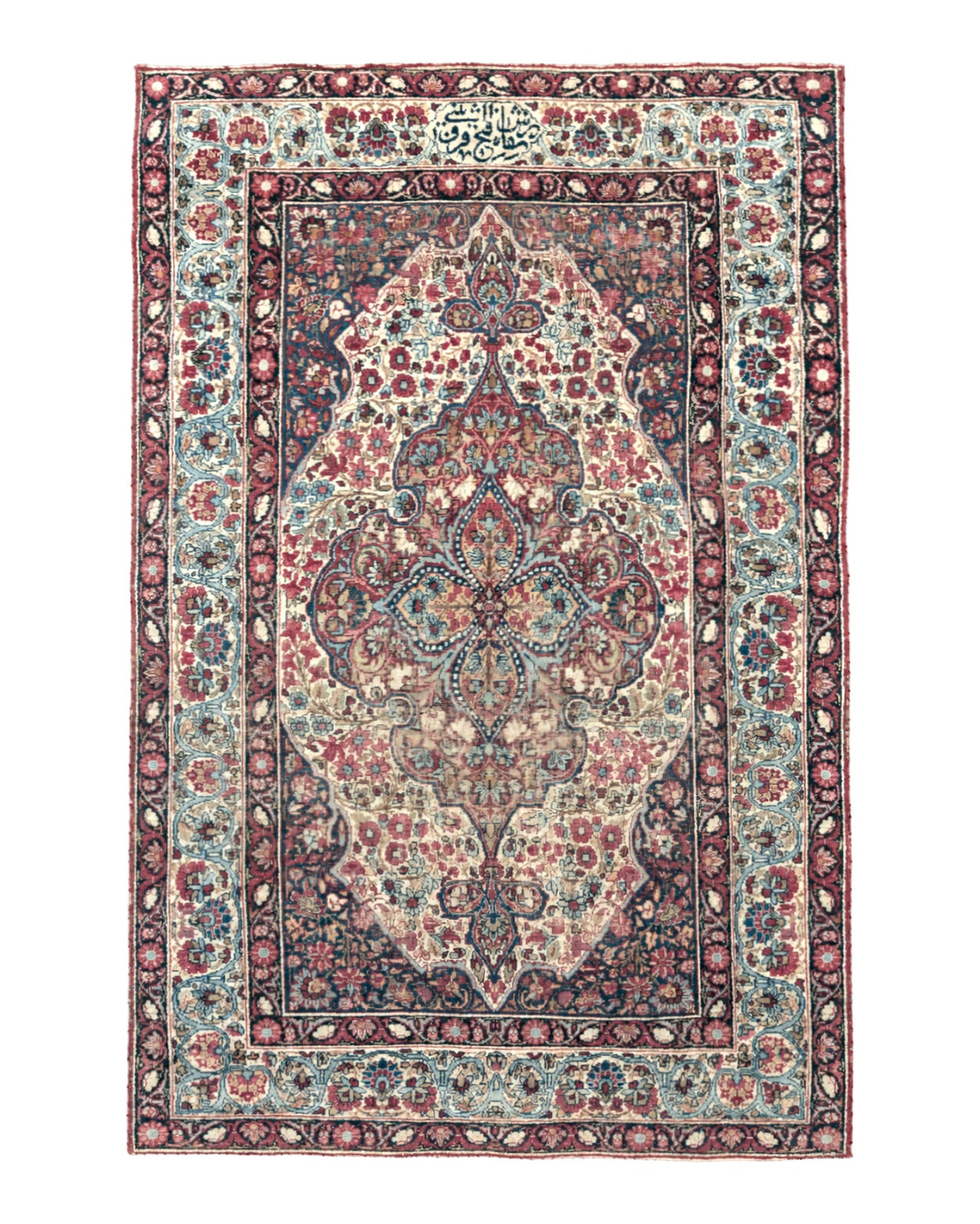
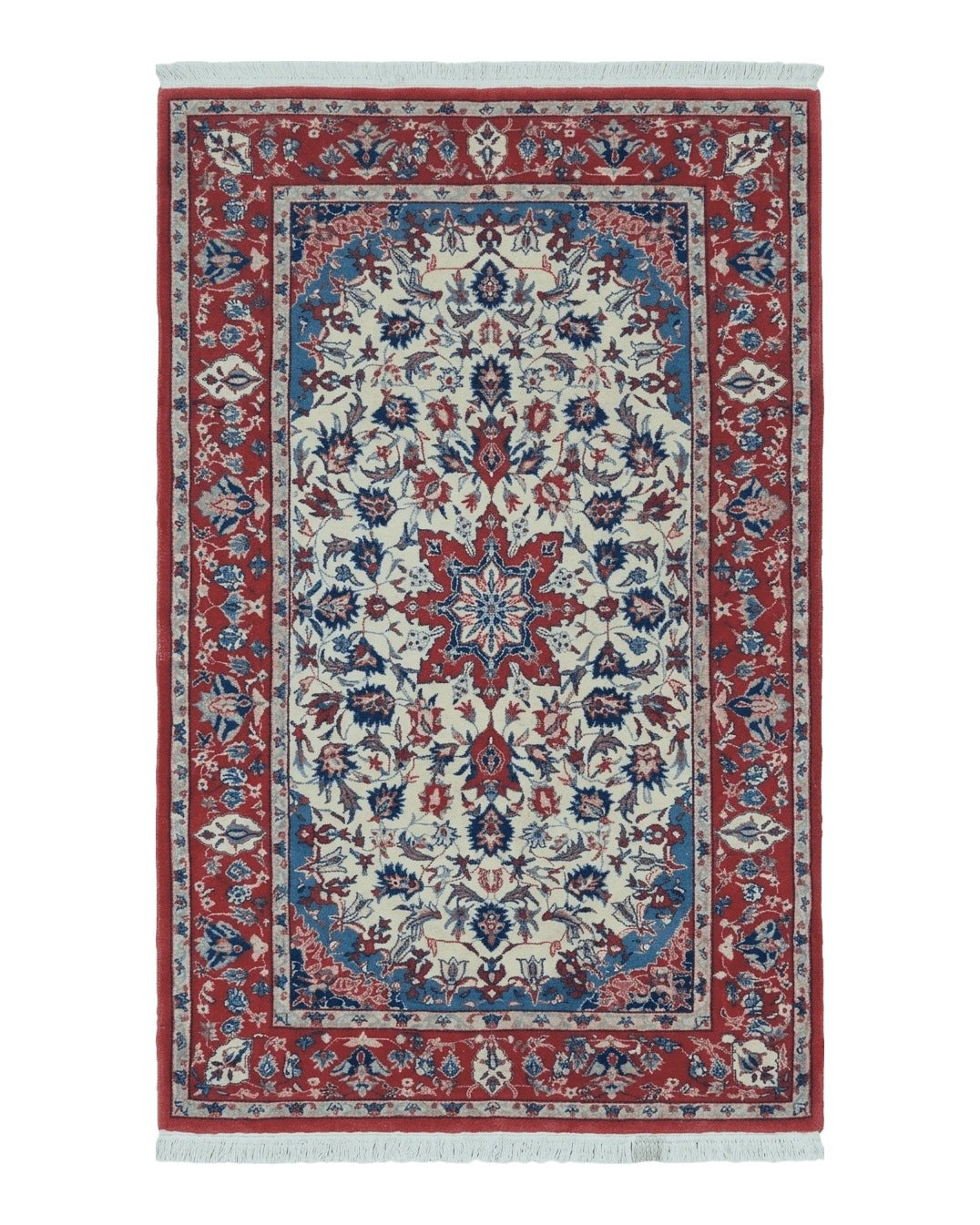
A signed rug carries a name woven into the pile, usually in a small panel called a cartouche near one end. The signature most often names the workshop or the master who designed or supervised the rug, rather than the individual weaver who tied the knots. Signatures are found mainly on fine city rugs and on rugs woven for special commissions, and a genuine signature from a respected workshop can add to a rug's interest and value.
| Where to look | A small panel in the border or at one end of the field |
|---|---|
| Script | Usually Persian (Farsi) script; Turkish rugs may use Latin letters |
| Who is named | Usually the workshop, master weaver or designer |
| Where common | Isfahan, Nain, Qum, Kashan, Tabriz, Kerman; Hereke in Turkey |
| Caution | Signatures can be copied; they must agree with the rug's quality |
Why rugs are signed
Most rugs were never signed. Village and tribal weavers worked within a shared tradition, and the idea of signing a rug belongs mainly to the workshops of the great cities, where a master designer or workshop owner was responsible for the rug's design and quality. A signature was a mark of pride and a guarantee to buyers, much like a maker's mark on silver. Some rugs also carry the name of the person who commissioned them, or a dedication.
Where signatures appear
The signature is usually in a small rectangular or lobed panel set into the top or bottom border, or just inside the field at one end. It may be accompanied by a date or the name of the city. Because it is woven into the pile, the signature appears in reverse on the back of the rug.
Well-known signed rugs
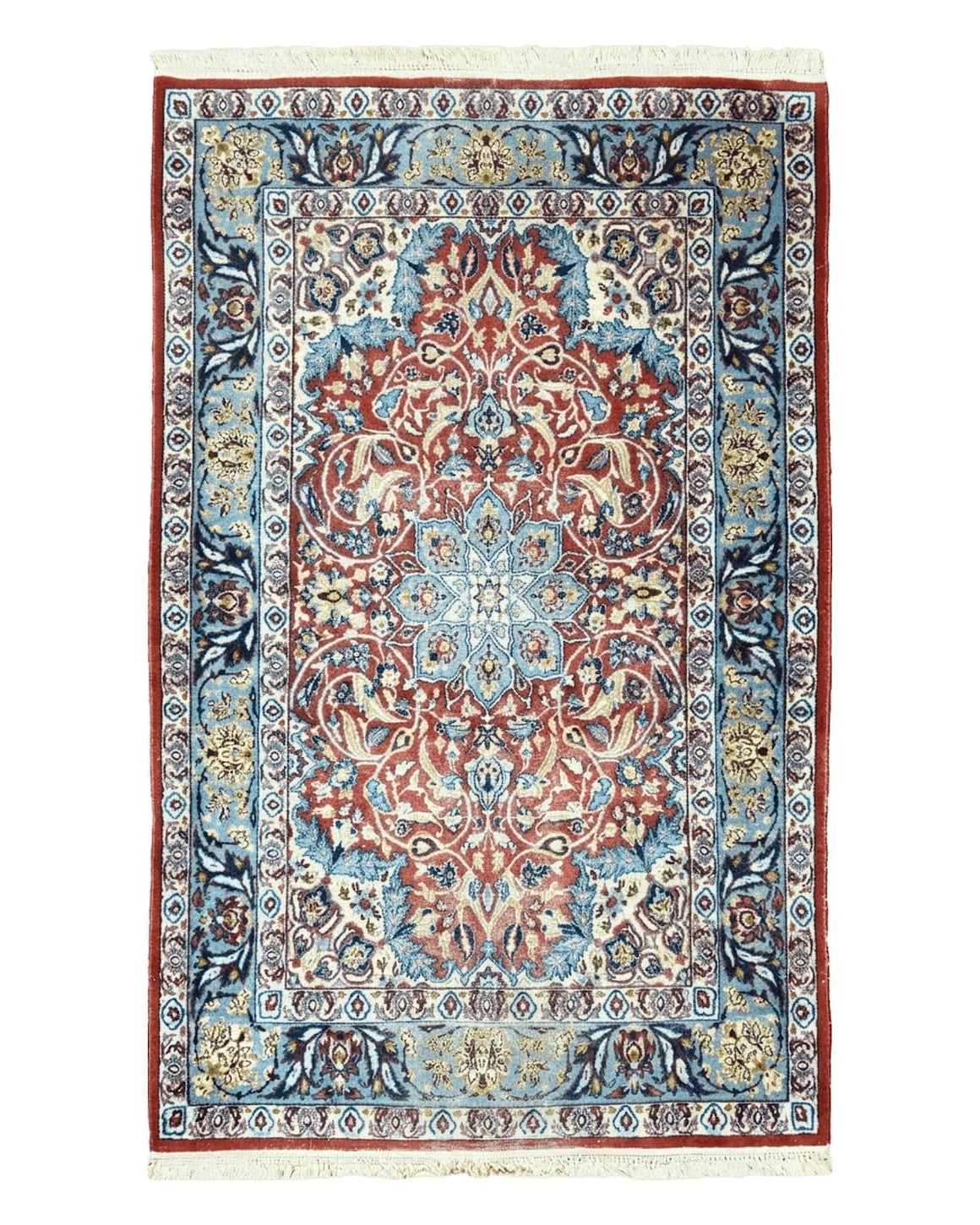
- Isfahan: the 20th-century revival of Isfahan weaving was led by master workshops, and the Seirafian family is among the most famous names. Signed Isfahans are often very finely knotted, frequently on a silk foundation. See Isfahan Rugs.
- Nain: leading workshops, such as Habibian, signed many of their finest pieces. See Nain Rugs.
- Qum, Kashan and Tabriz: fine silk and wool-and-silk rugs from these cities often carry workshop signatures.
- Kerman: antique "Lavar" (Ravar) Kerman rugs, among the most refined Persian rugs of the late 19th century, are sometimes signed by their master weavers. See Kerman Rugs.
- Hereke: fine silk and wool rugs from the Turkish town of Hereke traditionally carry a "Hereke" signature in a cartouche. See Hereke Rugs.
What a signature tells you
A genuine signature from a respected workshop tells you where and by whom the rug was designed or made, and it often points to a high standard of weaving. It can add to a rug's value, especially when the workshop is well known and the rug's quality matches the name.
What a signature does not do is prove quality or authenticity on its own. Signatures have been copied for as long as they have existed: lesser workshops have woven famous names, and rugs from other countries have been given Persian-looking signatures. The signature should always agree with everything else about the rug, including the fineness of the knotting, the quality of the materials, and the style of the design.
Dates and inscriptions
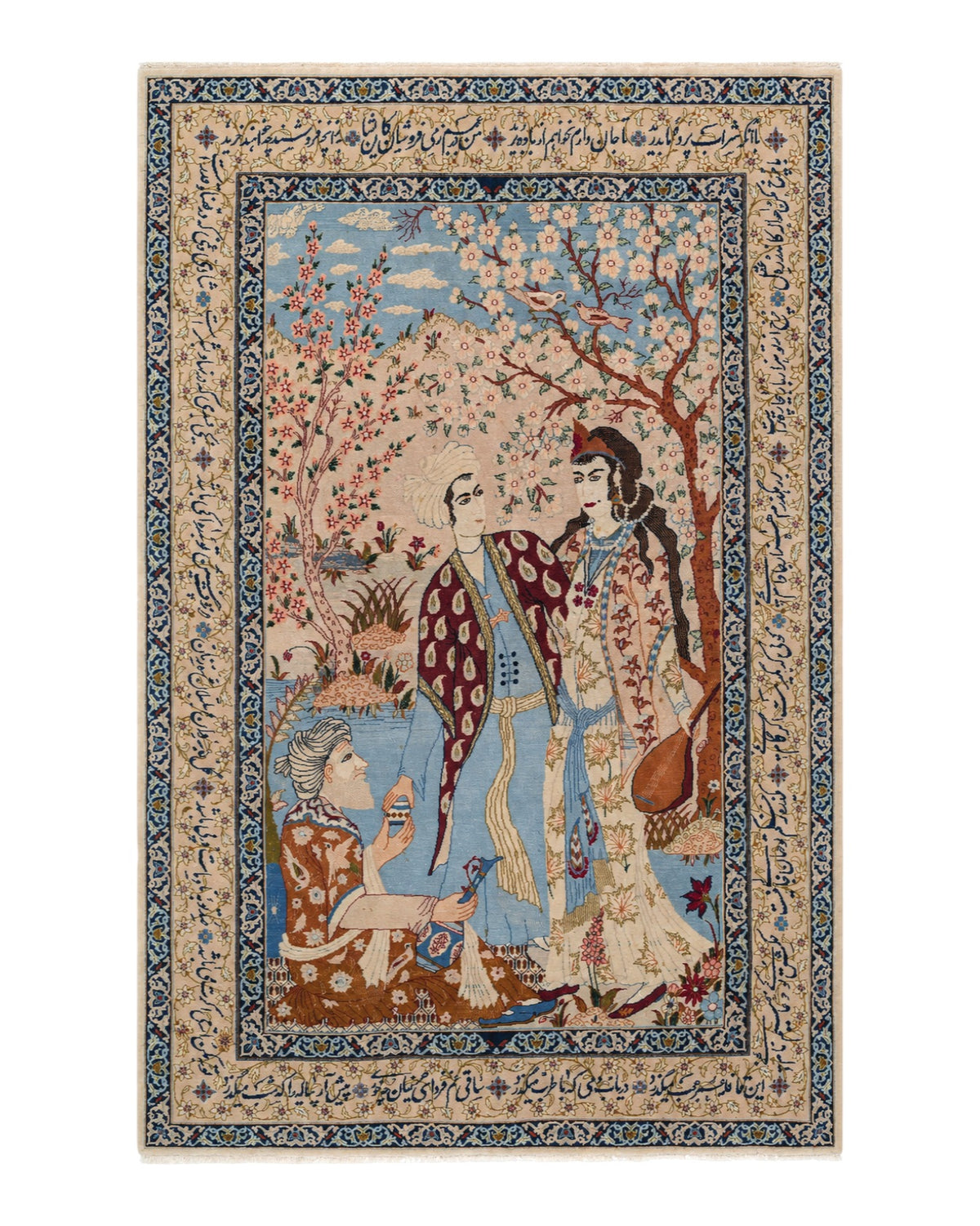
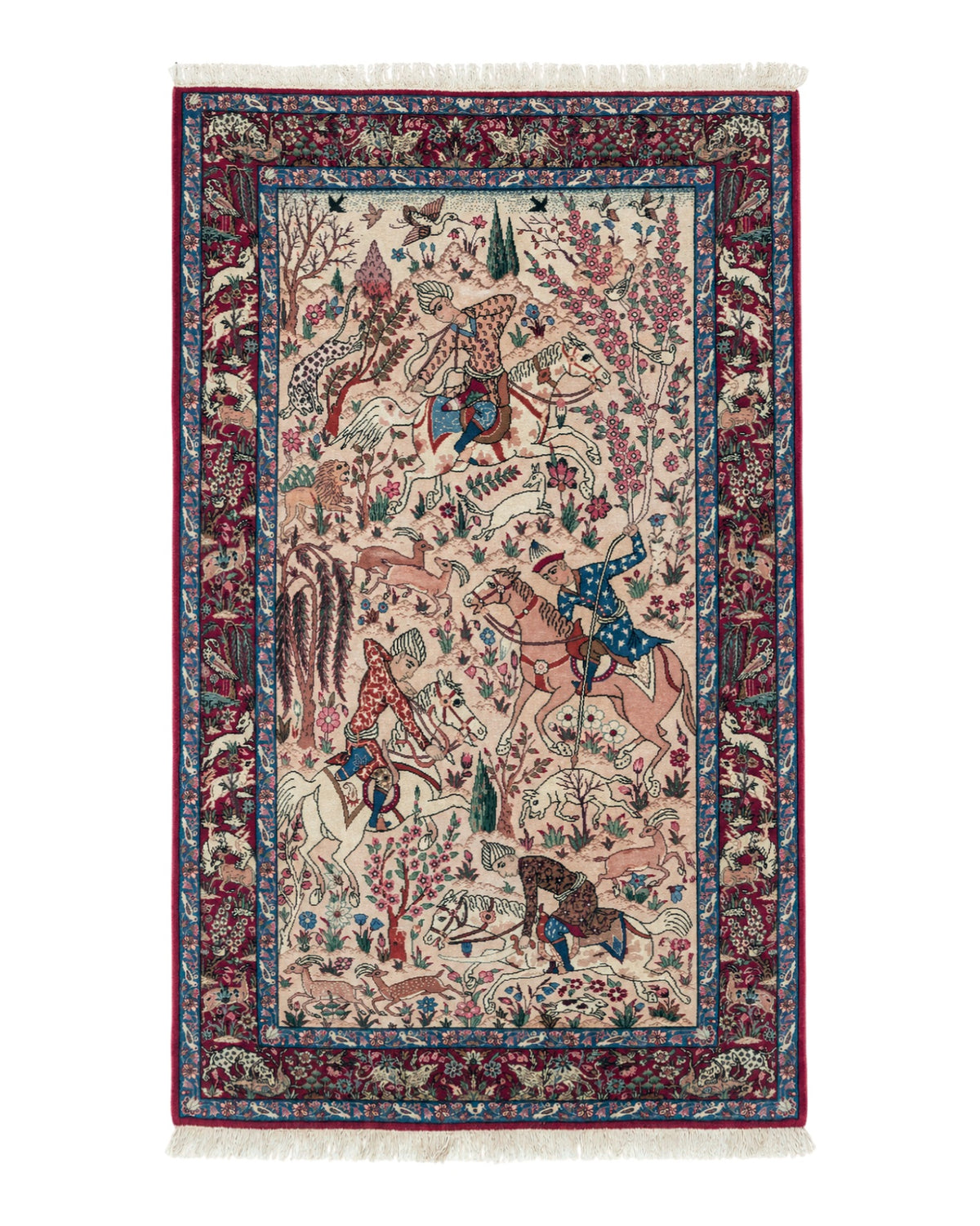
Signed rugs sometimes include a date, and some rugs carry verses of poetry or dedications in their borders, especially pictorial rugs. Dates are usually in Persian numerals and based on the Islamic calendar. See How Rugs Are Dated and Pictorial and Hunting Rugs.