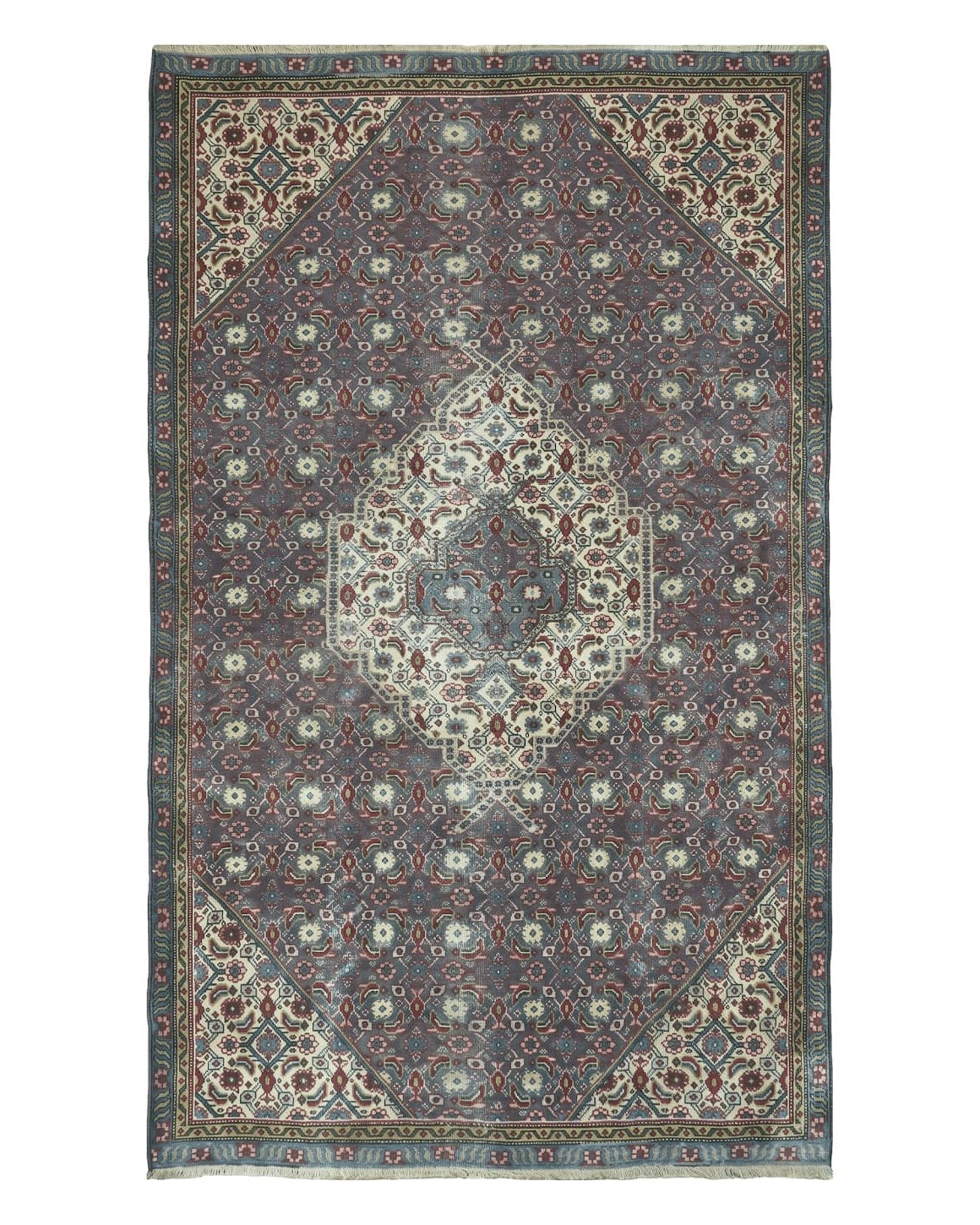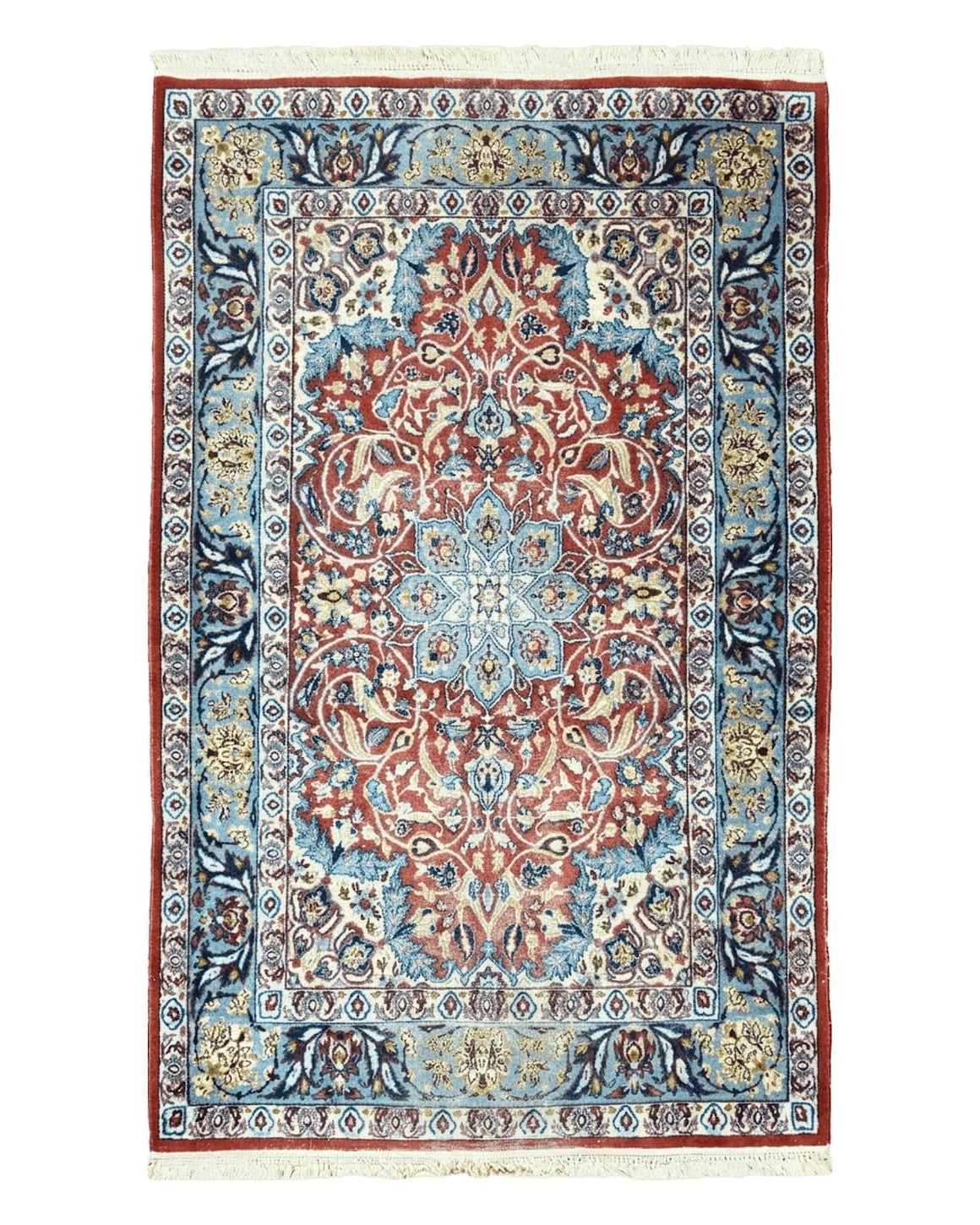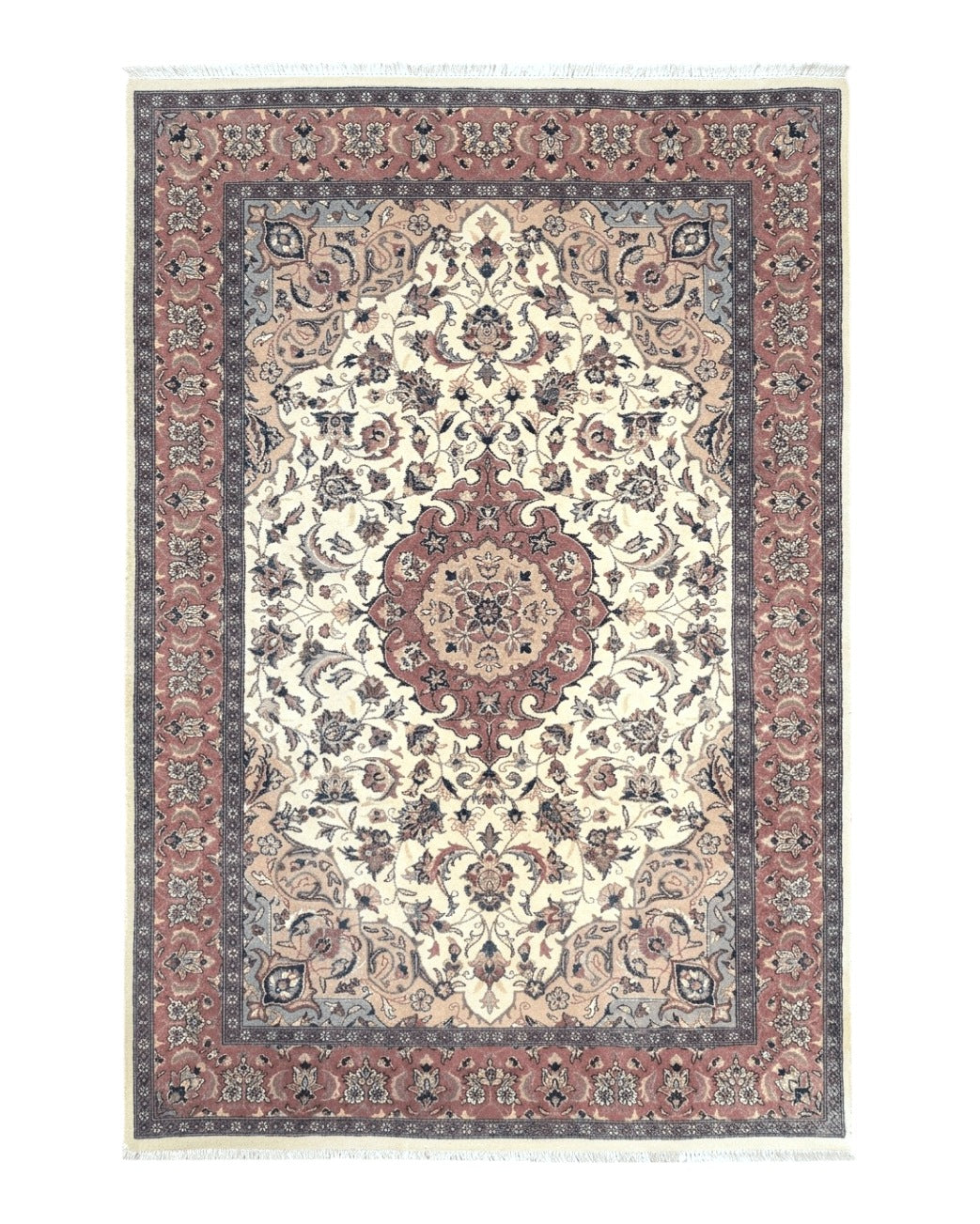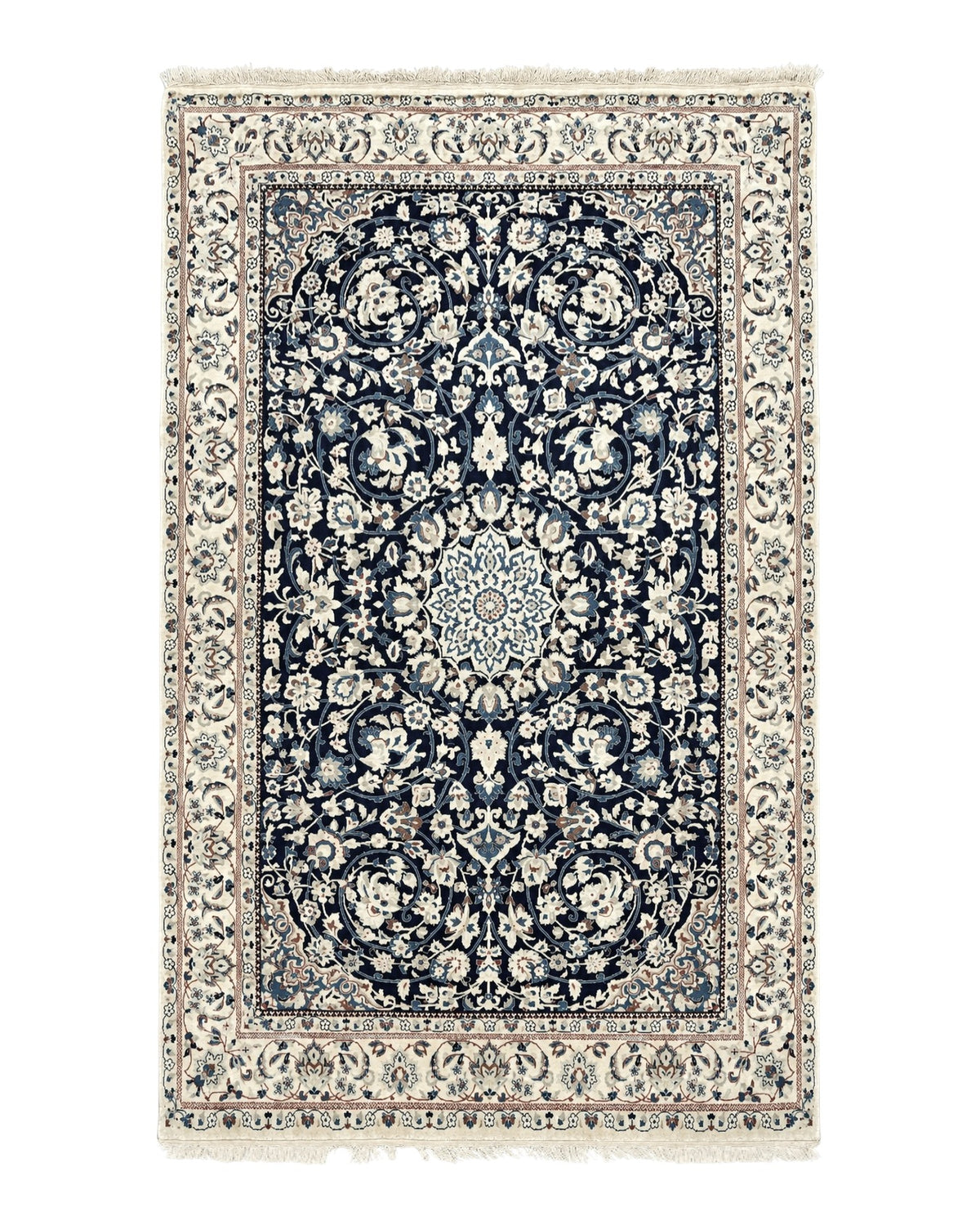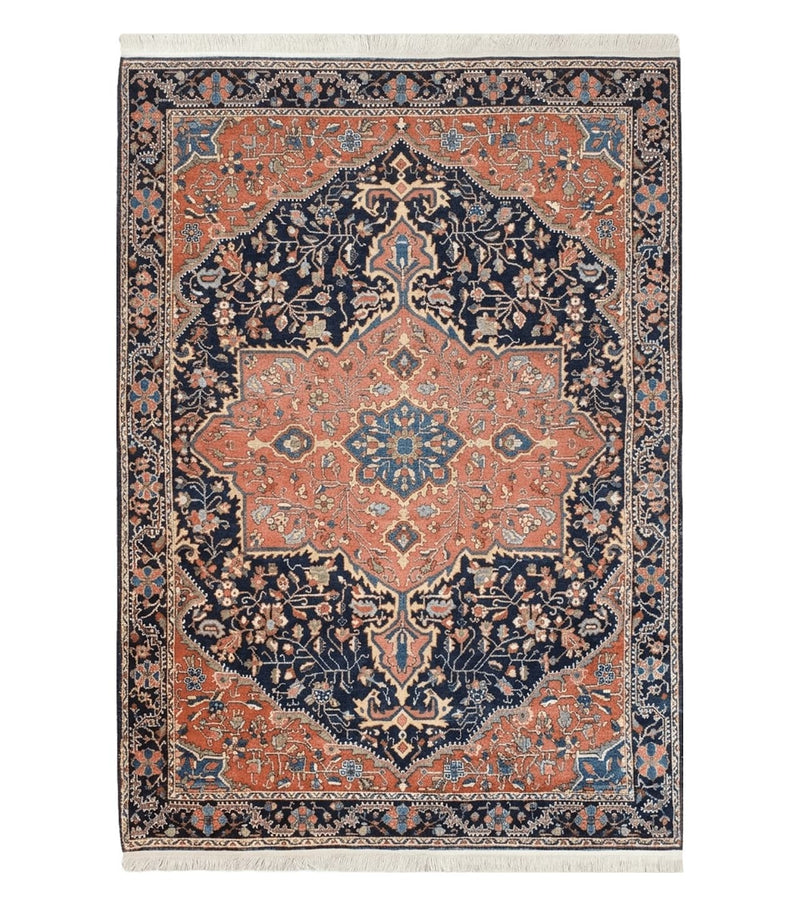


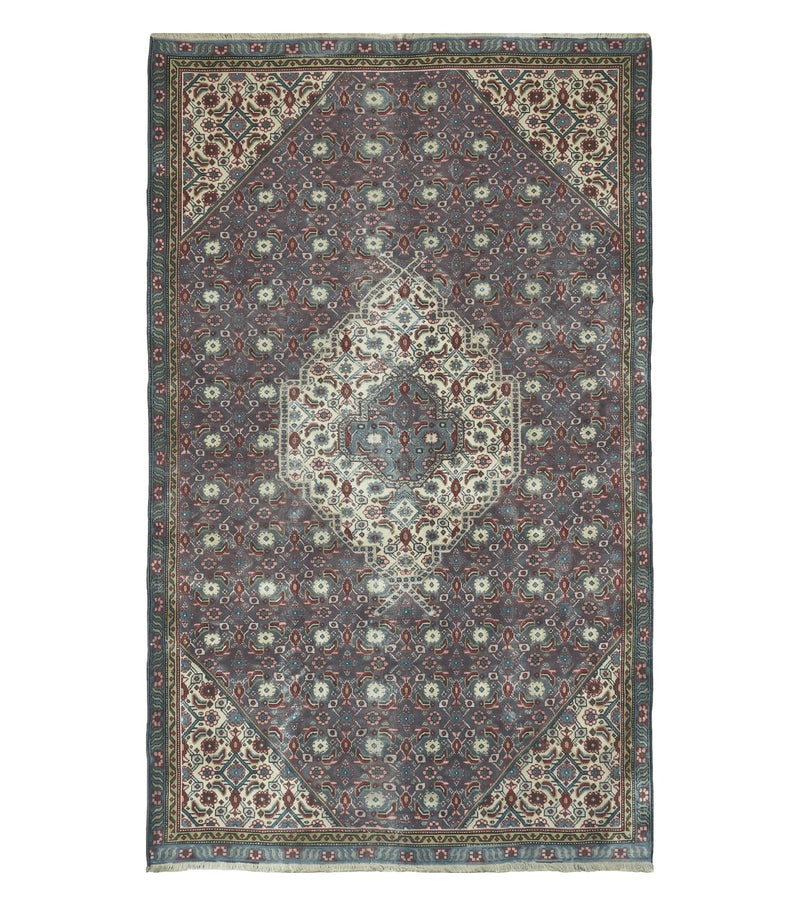


Every hand-knotted rug is built from the same parts, and dealers, books and listings use the same words to describe them. Knowing them makes it much easier to read a description, compare two rugs, or see what makes a particular rug special. The parts fall into two groups: the parts of the design you see on the front, and the parts of the structure that hold the rug together.
| Field | The large central area inside the borders |
|---|---|
| Medallion | A large central motif in the field, often with pendants |
| Spandrels | The corner pieces of the field |
| Borders | The main border and the narrow guard stripes around the field |
| Structure | Warps, wefts and knots, which form the pile |
| Ends and sides | Fringe and kilim ends; selvedges along the sides |
The parts of the design
Field
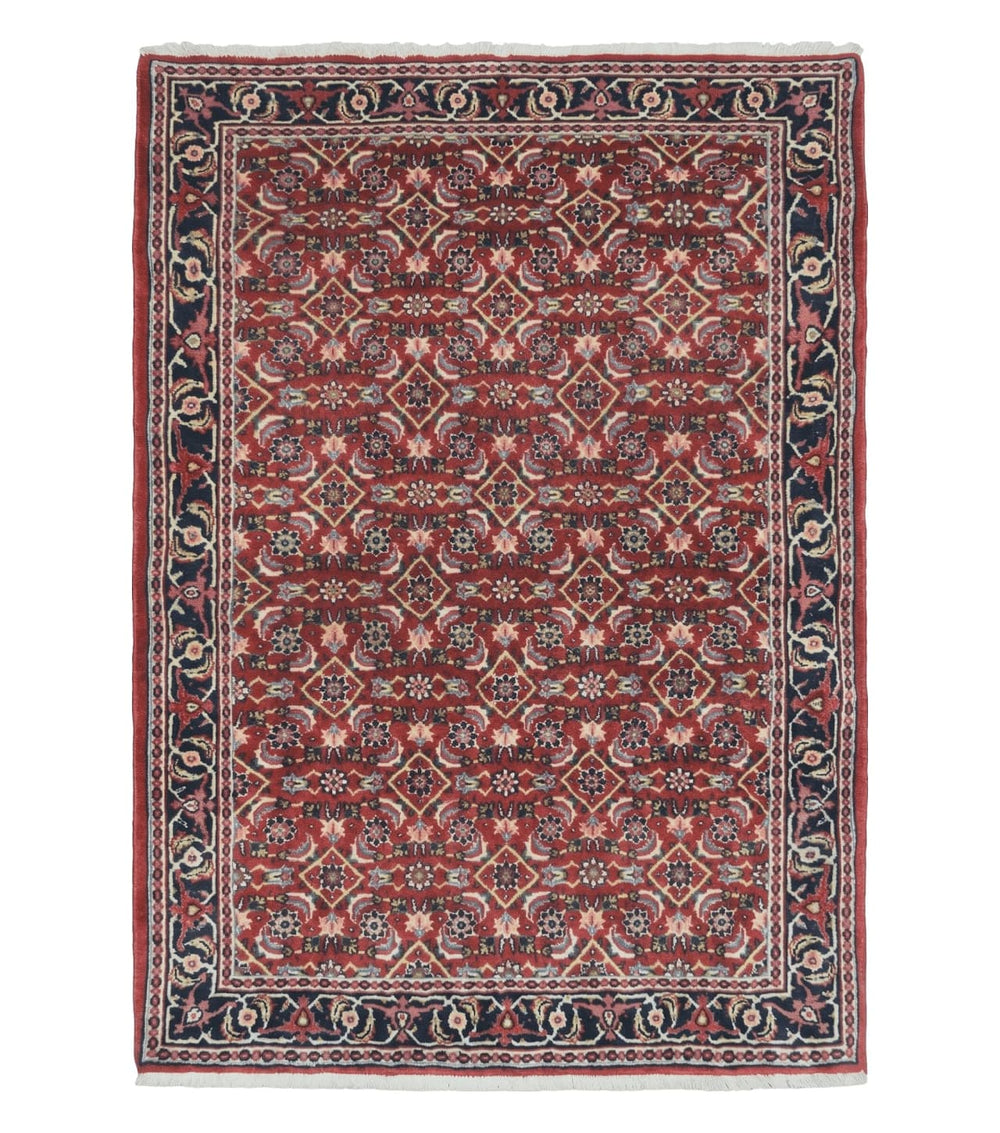
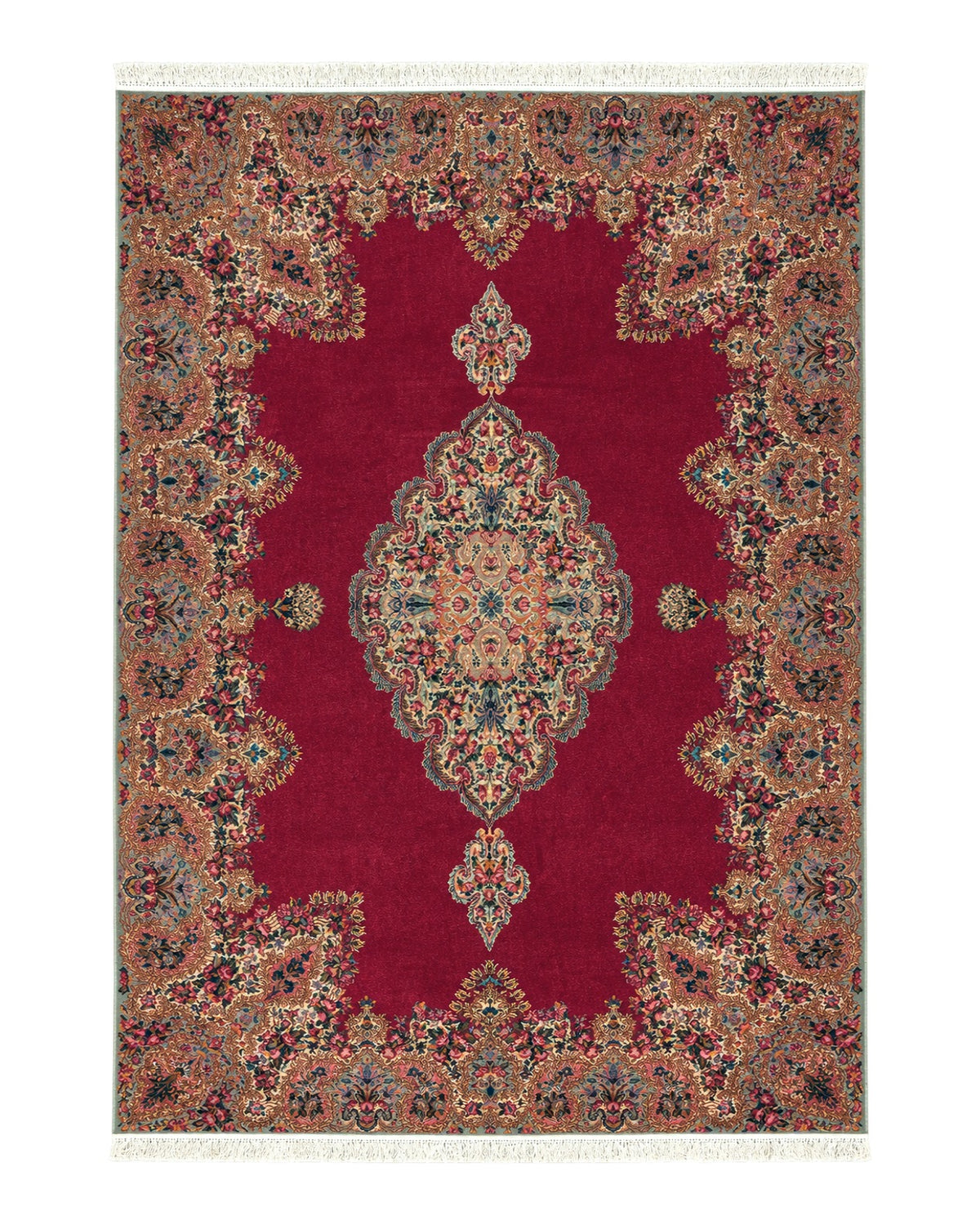
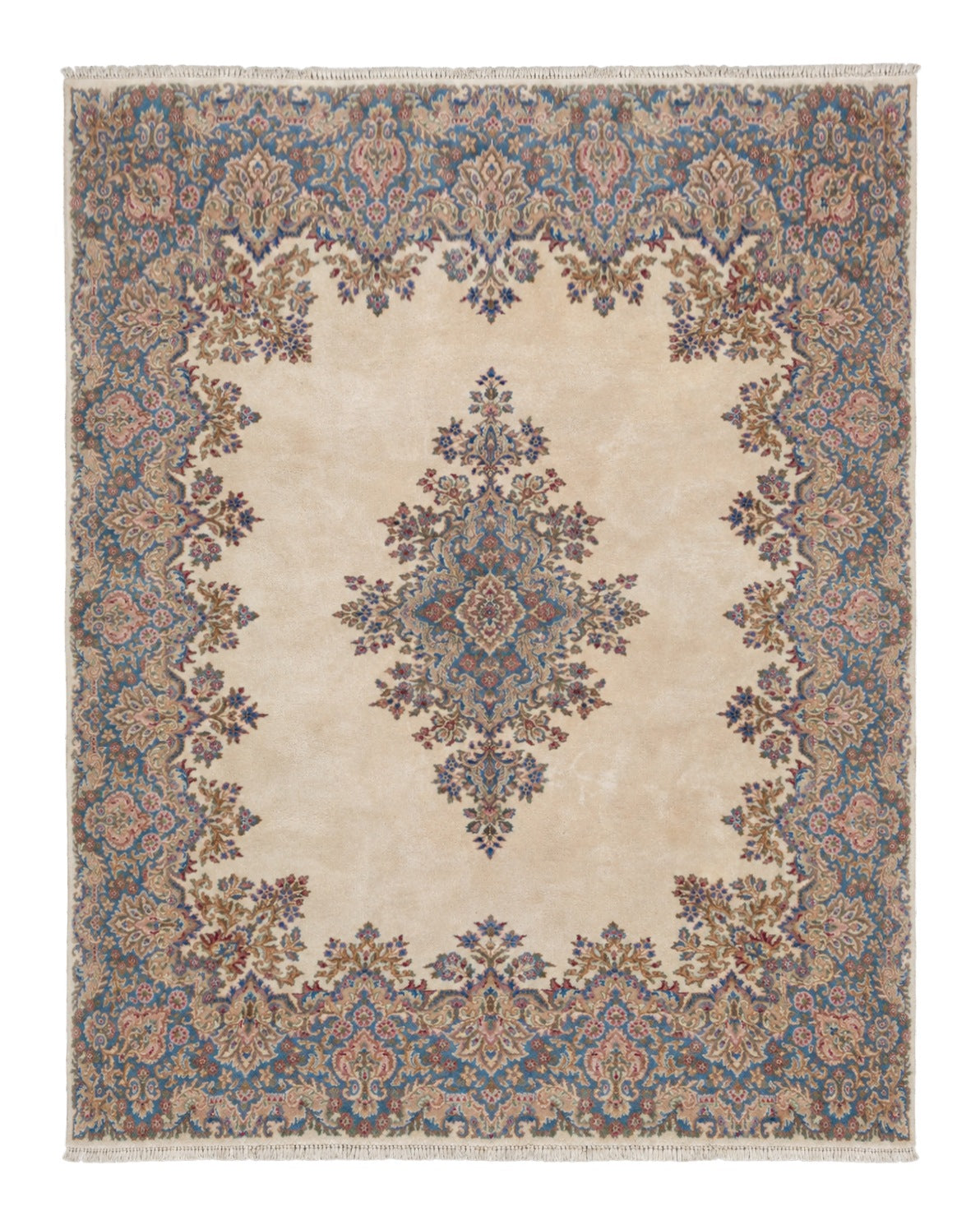
The field is the main area of the rug, inside the borders. It may be filled with a single large design, a repeating pattern, or left largely plain. The color of the field, often called the "ground," is one of the first things used to describe a rug, as in "a red-ground Heriz" or "an ivory-field Nain." A field with little or no pattern is called an open field.
Medallion, pendants and corners
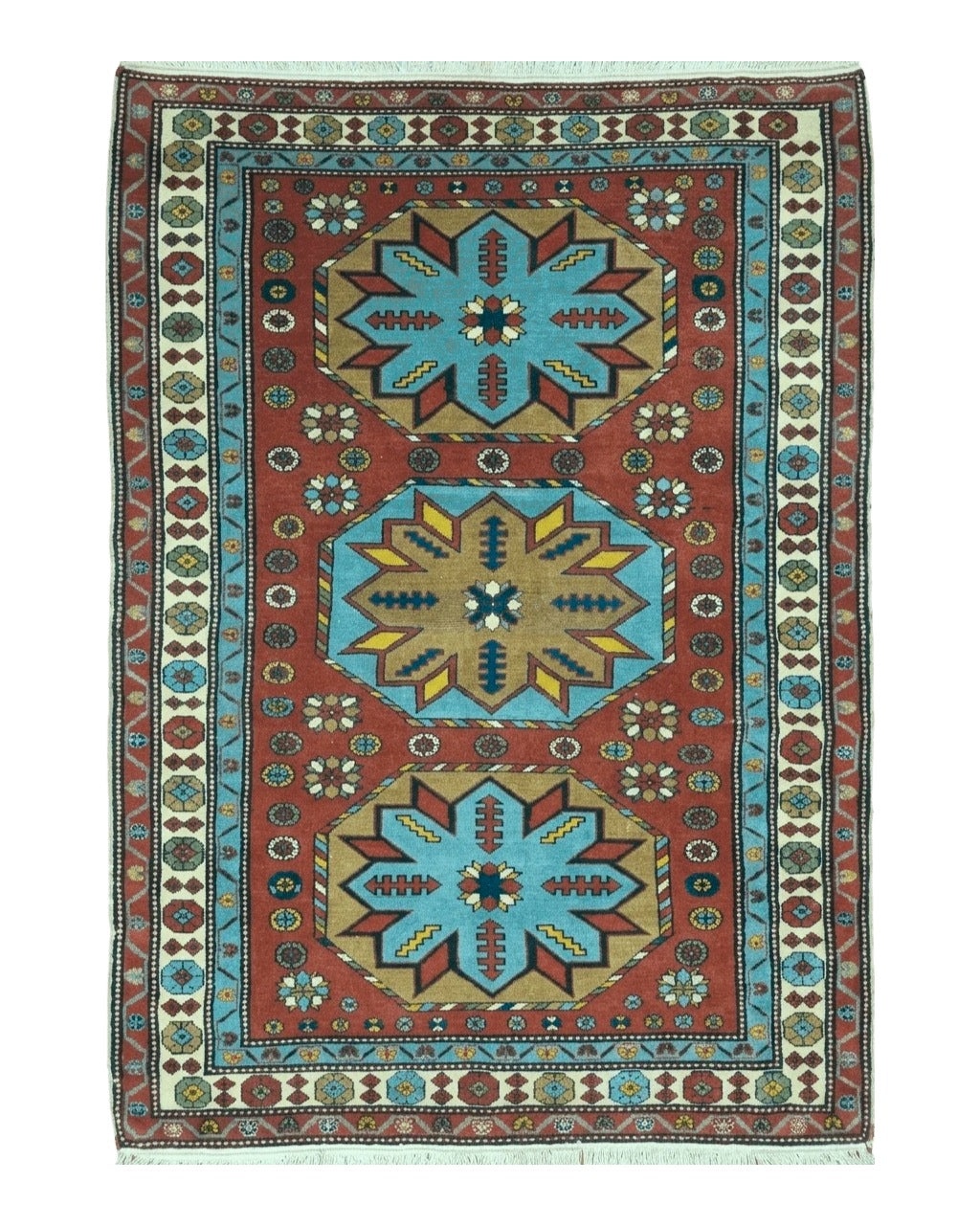
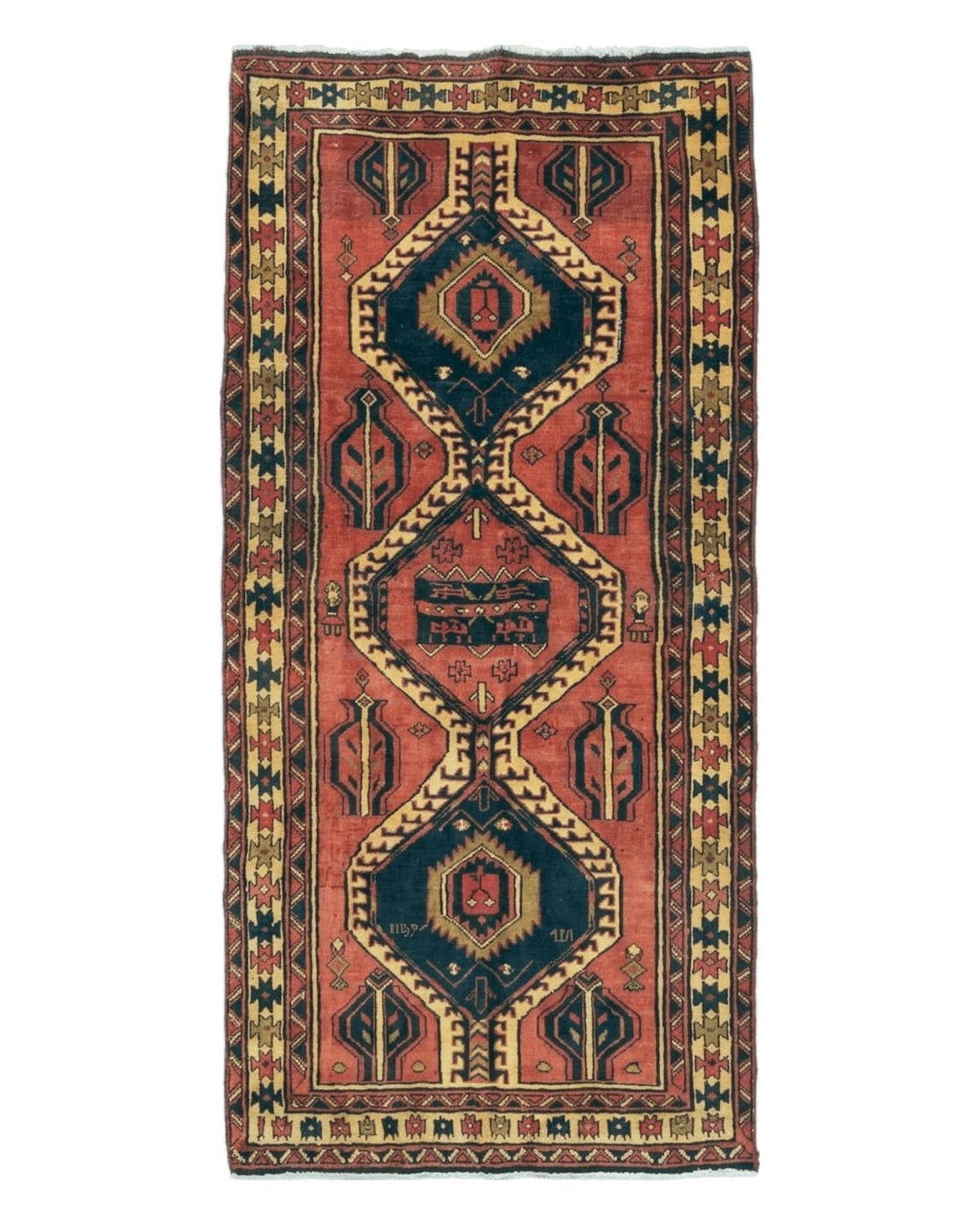
Many rugs have a medallion, a large motif in the center of the field. It may be round, oval, diamond-shaped or star-shaped, and it often has smaller motifs at each end called pendants. The four corners of the field are frequently filled with quarter-sections of a design that echoes the medallion. These are called corner pieces or spandrels. See Medallion Designs.
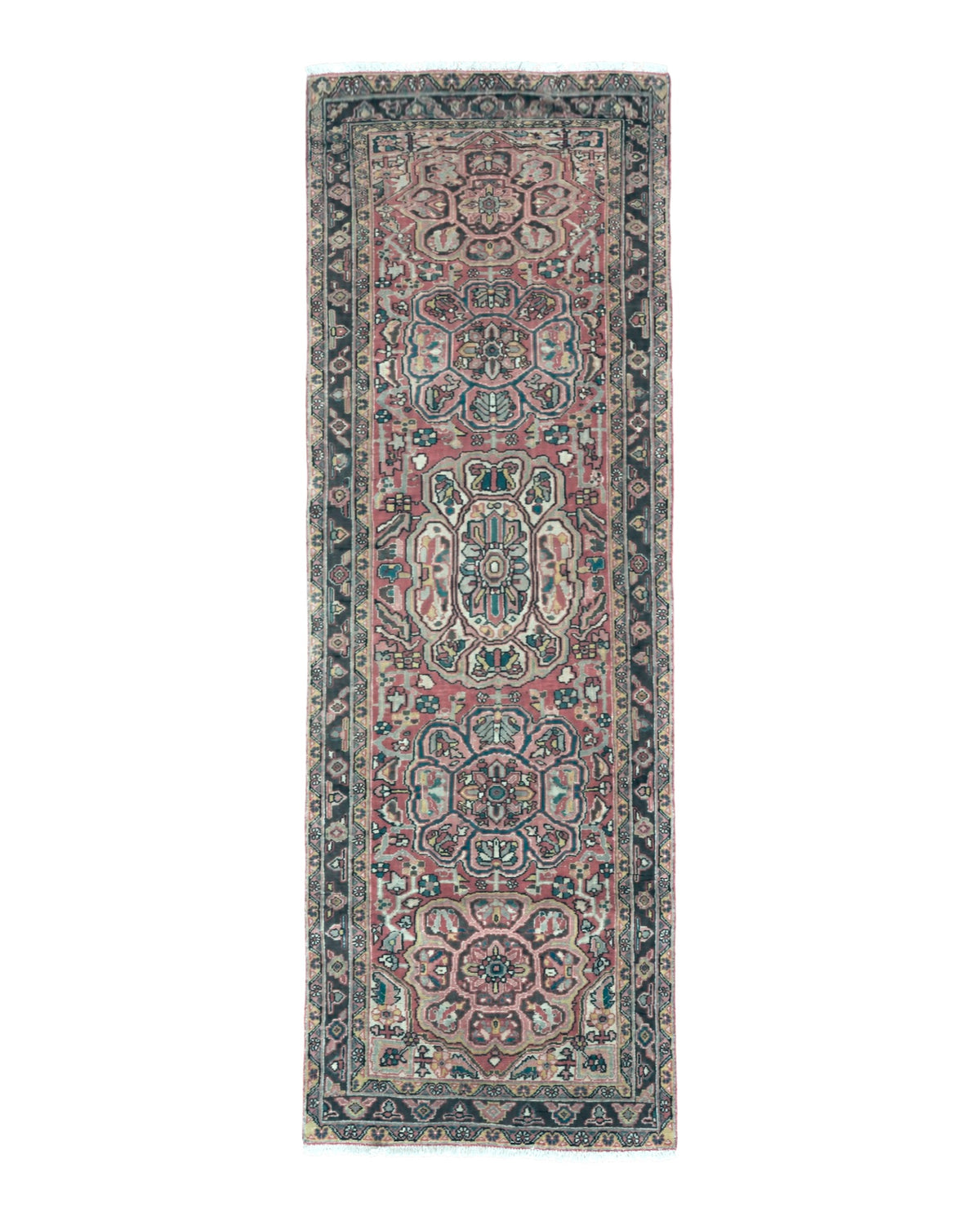
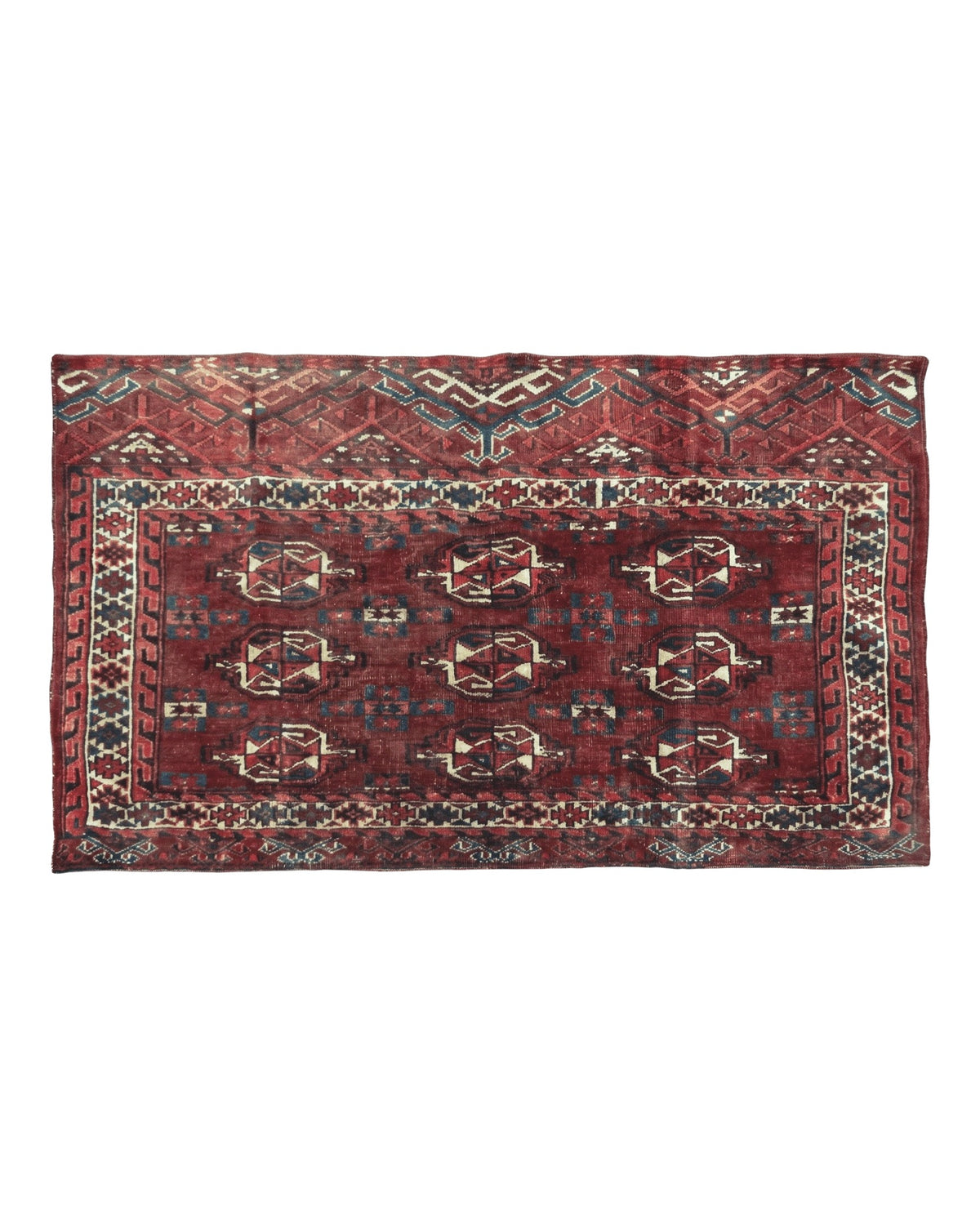
Rugs without a medallion usually have an all-over design, where a pattern repeats across the whole field. See All-Over Designs.
Borders and guard stripes
Around the field runs a frame of borders. The widest is the main border, usually filled with a repeating motif such as palmettes, rosettes or vines. On each side of it are narrower bands called minor borders or guard stripes. A rug may have just one guard stripe on each side of the main border, or many. How the border design turns the corner is a good sign of skill: in fine city rugs the corners are carefully planned, while in village and tribal rugs the pattern often has to be squeezed or cut off.
The parts of the structure
Warps
Warps are the strong threads that run the length of the rug, from one end to the other. They are stretched on the loom before weaving begins, and every knot is tied around them. Warps are usually cotton in city and village rugs and wool in many tribal rugs; silk is used in very fine pieces.
Wefts
Wefts are the threads that run across the rug. After each row of knots, one or more wefts are passed from side to side and beaten down to hold the knots in place. The number of wefts between rows, and how tightly they are pulled, varies from region to region and is a useful clue to where a rug was made.
Knots and pile
The pile is the soft surface of the rug, made from the cut ends of thousands of knots. The type of knot and how closely the knots are packed together affect how fine the design can be and how the rug feels. See Knots and Knot Density.
Selvedges
The selvedges are the long sides of the rug. The outermost warps are wrapped, or overcast, with yarn to protect the edges. Selvedges wear with use and are one of the most commonly repaired parts of an older rug.
Fringe and kilim ends
On a hand-knotted rug, the fringe is simply the ends of the warp threads, tied or knotted to stop the wefts and knots from unravelling. Many rugs also have a short band of flat weave, called a kilim end or apron, between the fringe and the pile. A fringe that is sewn on separately is a sign that a rug may not be hand-knotted. See Hand-Knotted vs. Hand-Tufted vs. Machine-Made.
Other terms you may see
- Abrash: gentle changes of color across the field from batches of hand-dyed wool.
- Cartouche: a framed panel, often holding an inscription, a date or a weaver's signature.
- Mihrab: the arch shape at one end of a prayer rug.
- Nap: the direction the pile leans; a rug looks lighter from one end and darker from the other.
Many more terms are explained in the Rug Glossary.