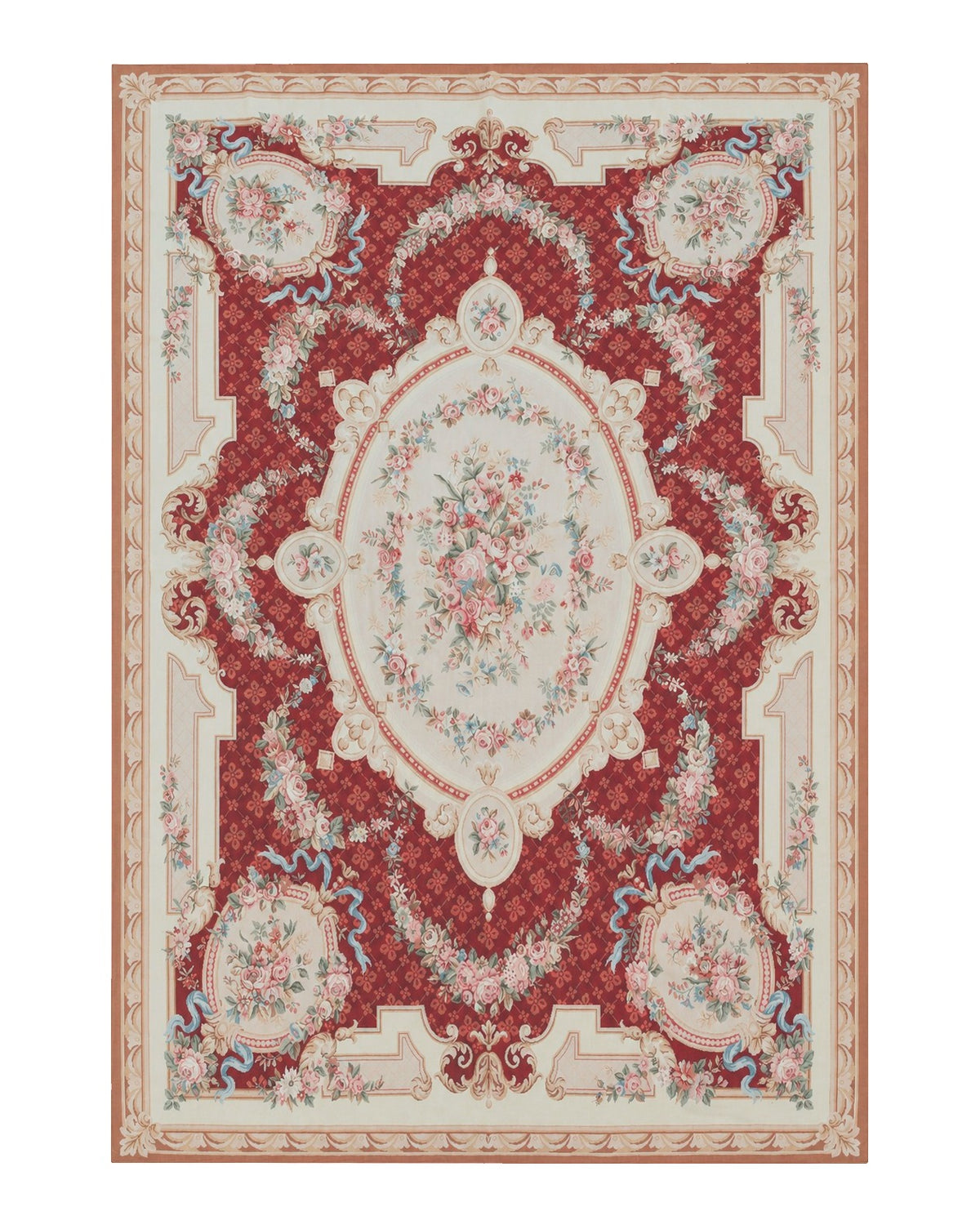
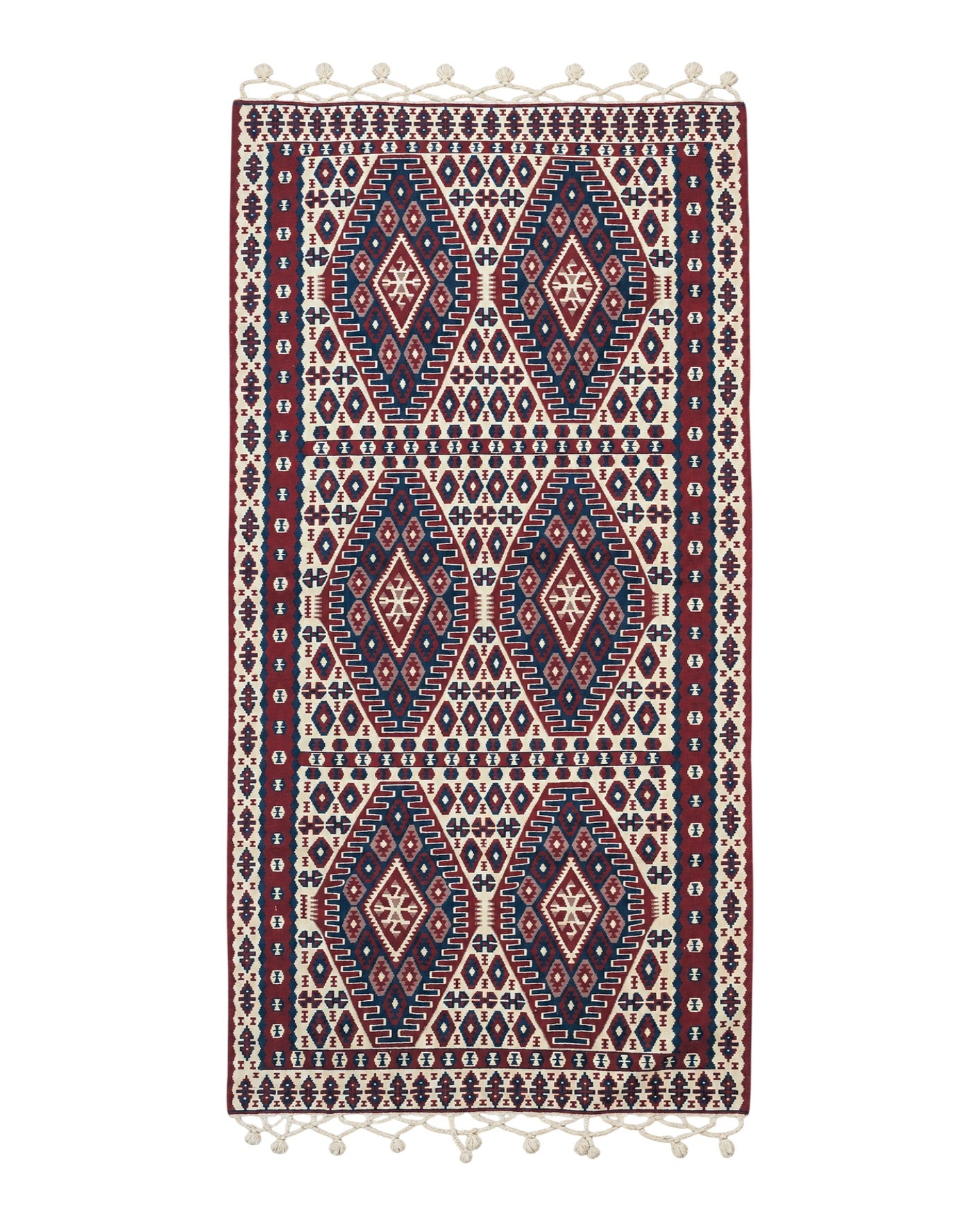
A kilim is a flatwoven rug with no pile. Instead of knots, the design is made by colored weft threads passed back and forth through the warps and packed tightly so that they hide the warps completely. Kilims are woven across a huge area, from the Balkans through Turkey and the Caucasus to Iran and Afghanistan, and they are among the oldest forms of weaving. They are light, thin, often reversible, and usually decorated with bold geometric designs.
| Technique | Slit-tapestry flatweave; no knots or pile |
|---|---|
| Origins | Turkey, Iran, the Caucasus, Afghanistan, the Balkans, North Africa |
| Materials | Wool, sometimes with cotton or goat hair |
| Designs | Geometric: diamonds, hooks, stepped motifs, stripes |
| Weight | Thin and light; often reversible |
| Traditional uses | Floor covers, blankets, tent hangings, bags |
How kilims are woven
Each area of color is woven separately: the weaver passes a colored weft back and forth only within its own section of the design. Where two colors meet along a vertical line, they turn back around neighboring warps, leaving a small gap or slit. This is why kilims are called slit-tapestry weaves, and why their designs favor diagonals and stepped outlines, which avoid long slits. See Flatweaves vs. Pile Rugs.
Kilims by region
- Turkish (Anatolian): some of the best-known kilims, with bold medallions, hooks and the "elibelinde" motif, often in two-panel formats sewn together.
- Persian: from fine Senneh kilims with tiny boteh and Herati designs to bold Qashqai and Bakhtiari kilims.
- Caucasian: bright kilims from Kuba and Shirvan with rows of stepped medallions.
- Afghan: Maimana and other kilims with bold, simple patterns.
- Balkan: kilims from Serbia (Pirot), Bulgaria and Romania, often with floral and curvilinear designs.
Colors and designs
Kilim designs are geometric: diamonds, hexagons, hooked motifs, zigzags, stripes and stepped medallions, often arranged in bands or in a central column. Colors are usually strong: madder red, indigo, ivory, yellow, green and orange. Many kilim motifs are shared with pile rugs of the same region.
Using a kilim
- On floors: kilims lie flat, slide under doors, and suit kitchens, hallways and summer rooms. A non-slip pad is essential. See Rug Pads.
- On walls and furniture: kilims make excellent wall hangings, throws and upholstery.
- Cushions: fragments and bag faces are often made into cushions.
See also Turkish Rugs.