



Ardabil is a city in north-west Iran, near the border with the Republic of Azerbaijan and the Caspian Sea. Its name is famous in the rug world for two quite different reasons. It gave its name to the Ardabil Carpet, one of the most celebrated carpets in the world, woven in the 16th century for the city's great shrine. And today, the Ardabil region weaves sturdy, geometric rugs whose designs are close to those of the Caucasus just to the north.
| Origin | Ardabil and surrounding area, north-west Iran |
|---|---|
| Tradition | Town and village rugs today |
| Knot | Symmetric (Turkish) |
| Materials | Wool pile on a cotton foundation |
| Knotting | Medium |
| Typical designs | Geometric medallions and motifs in a Caucasian style |
| Famous for | The 16th-century Ardabil Carpet |
The Ardabil Carpet
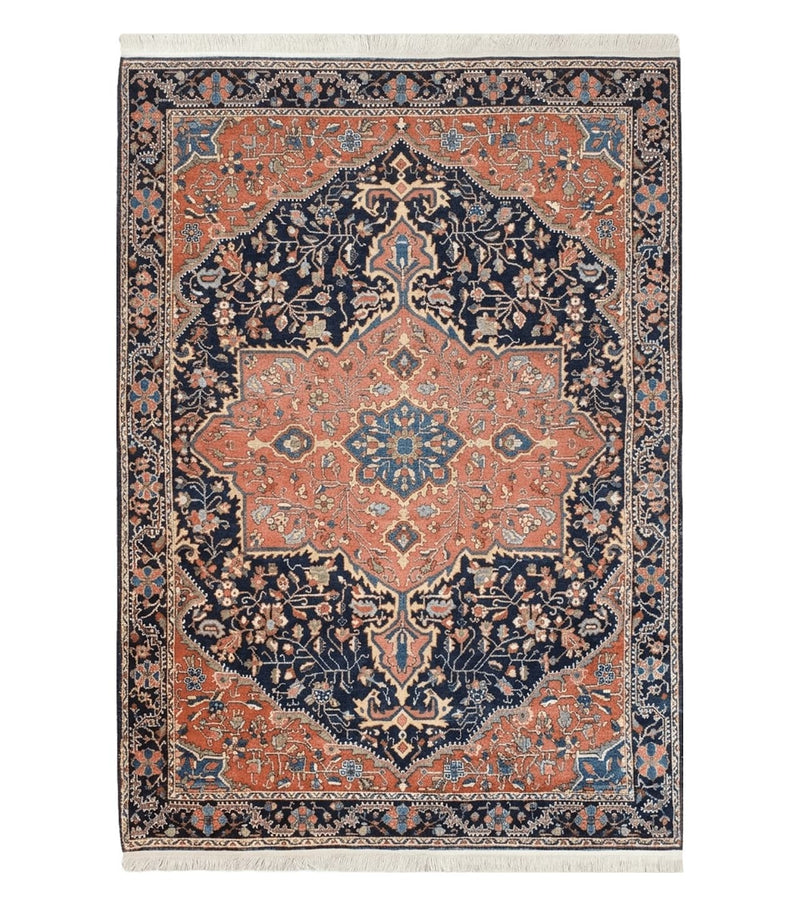
The Ardabil Carpet is a pair of large Safavid carpets made for the shrine of Sheikh Safi al-Din in Ardabil, the founder of the Safavid line. One bears an inscription with a line of poetry and a date equivalent to 1539–40. The better-preserved carpet is in the Victoria and Albert Museum in London; the other, smaller because it was used to repair the first, is in the Los Angeles County Museum of Art. Its design, a large central sunburst medallion with sixteen pendants and two hanging lamps on a deep blue field, has been copied countless times, and "Ardabil design" rugs are woven around the world.
The carpet was probably woven in a royal workshop, possibly in Tabriz or Kashan, rather than in Ardabil itself, but it has carried the city's name since it came to Europe in the 19th century.
Ardabil rugs today
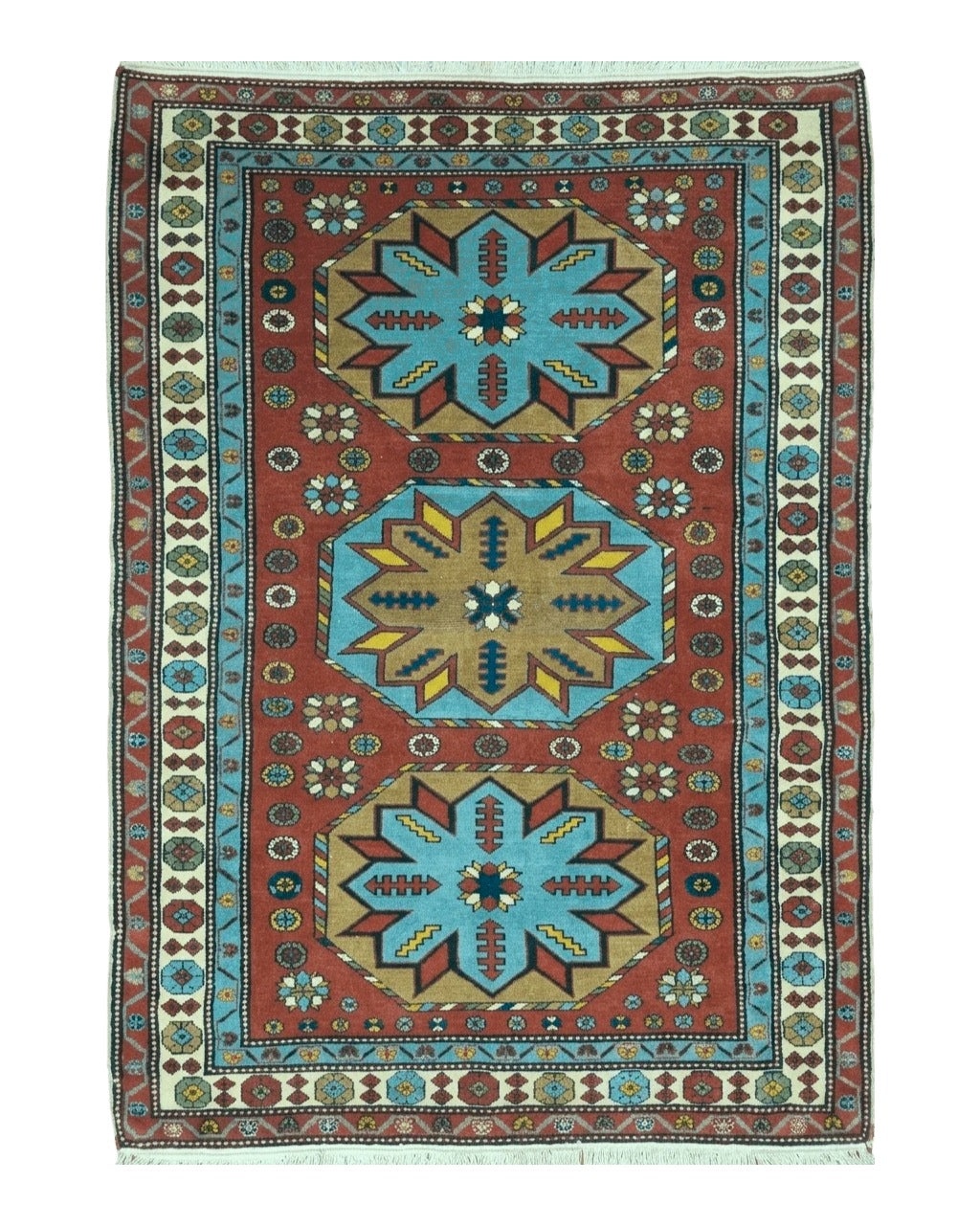
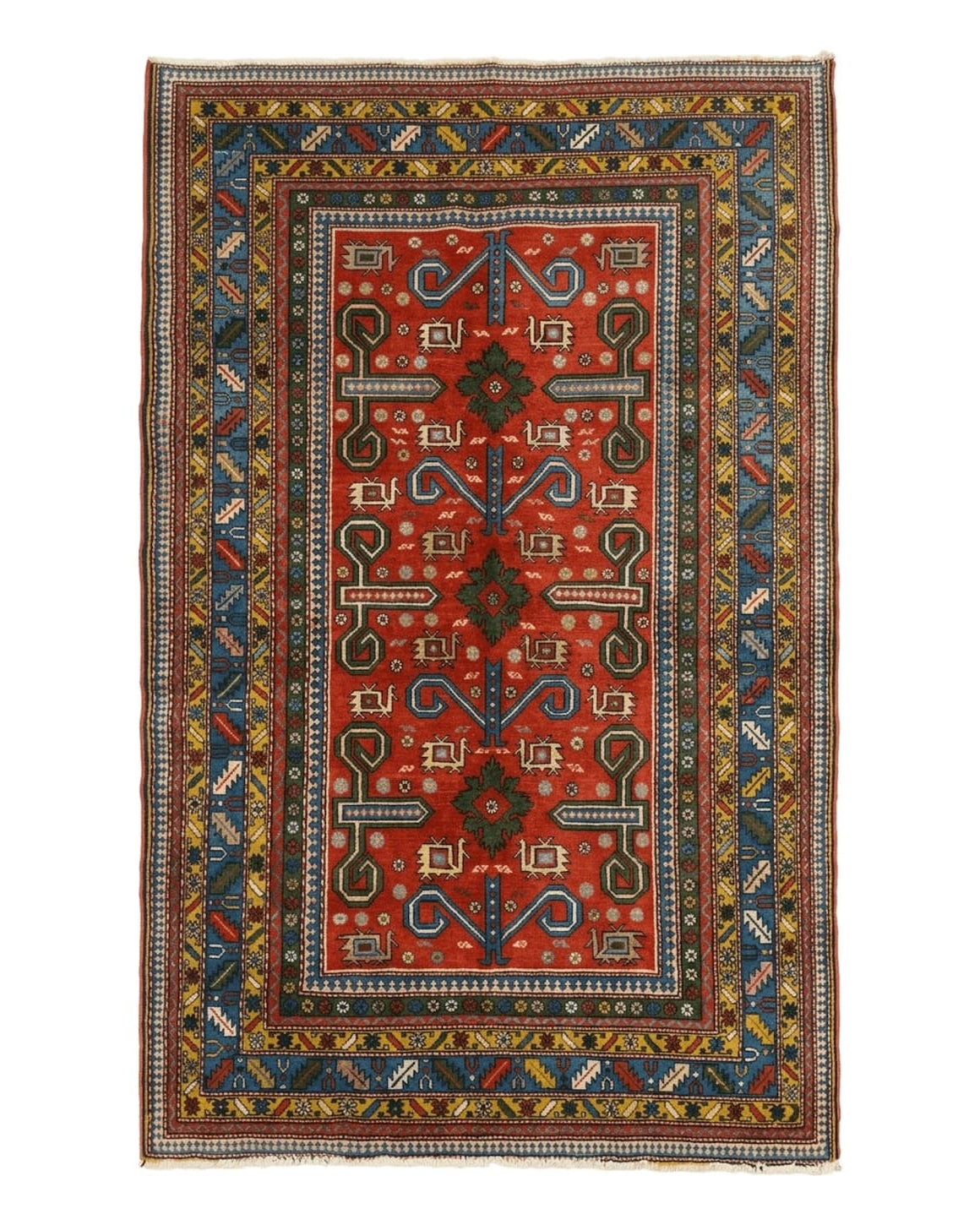
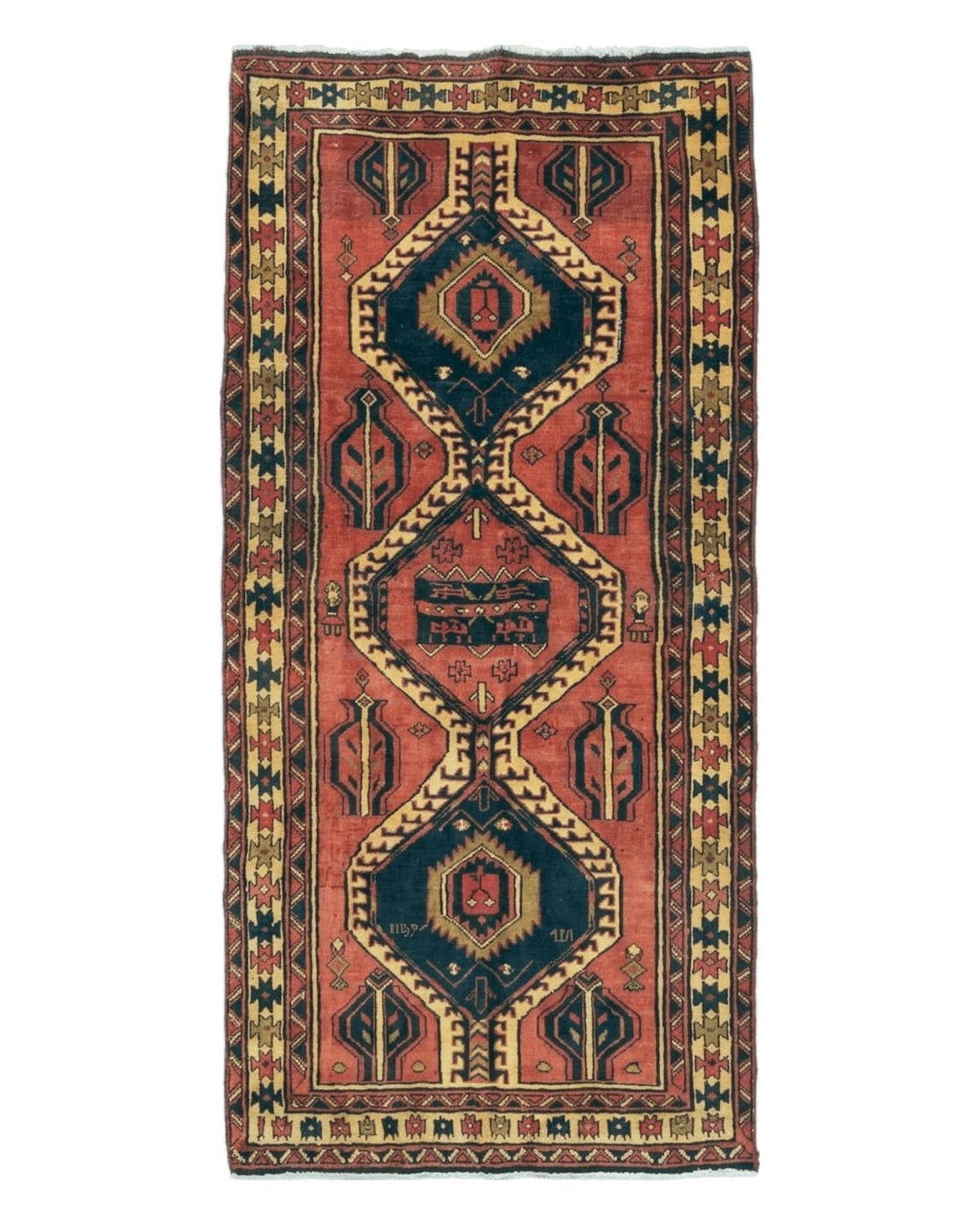
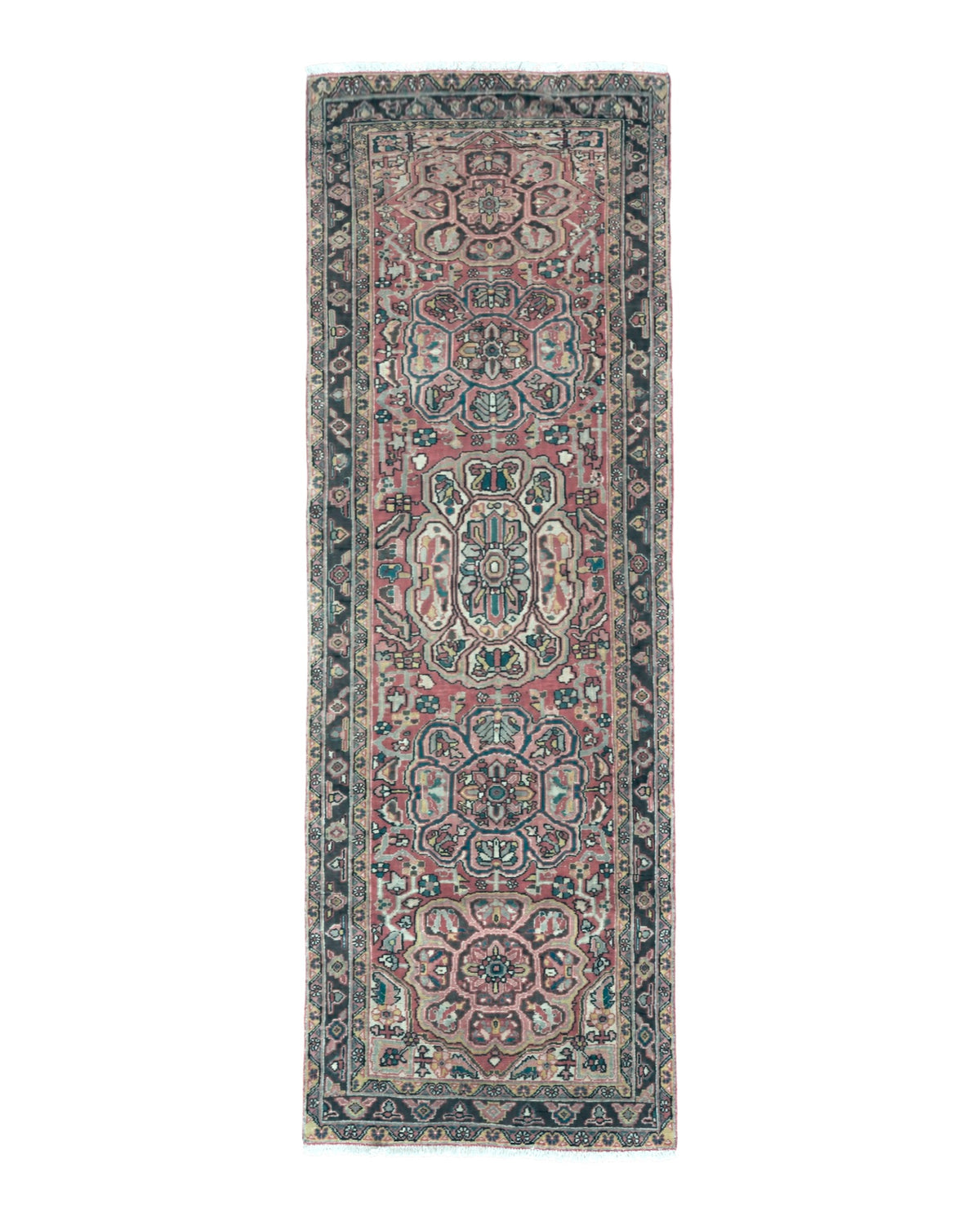
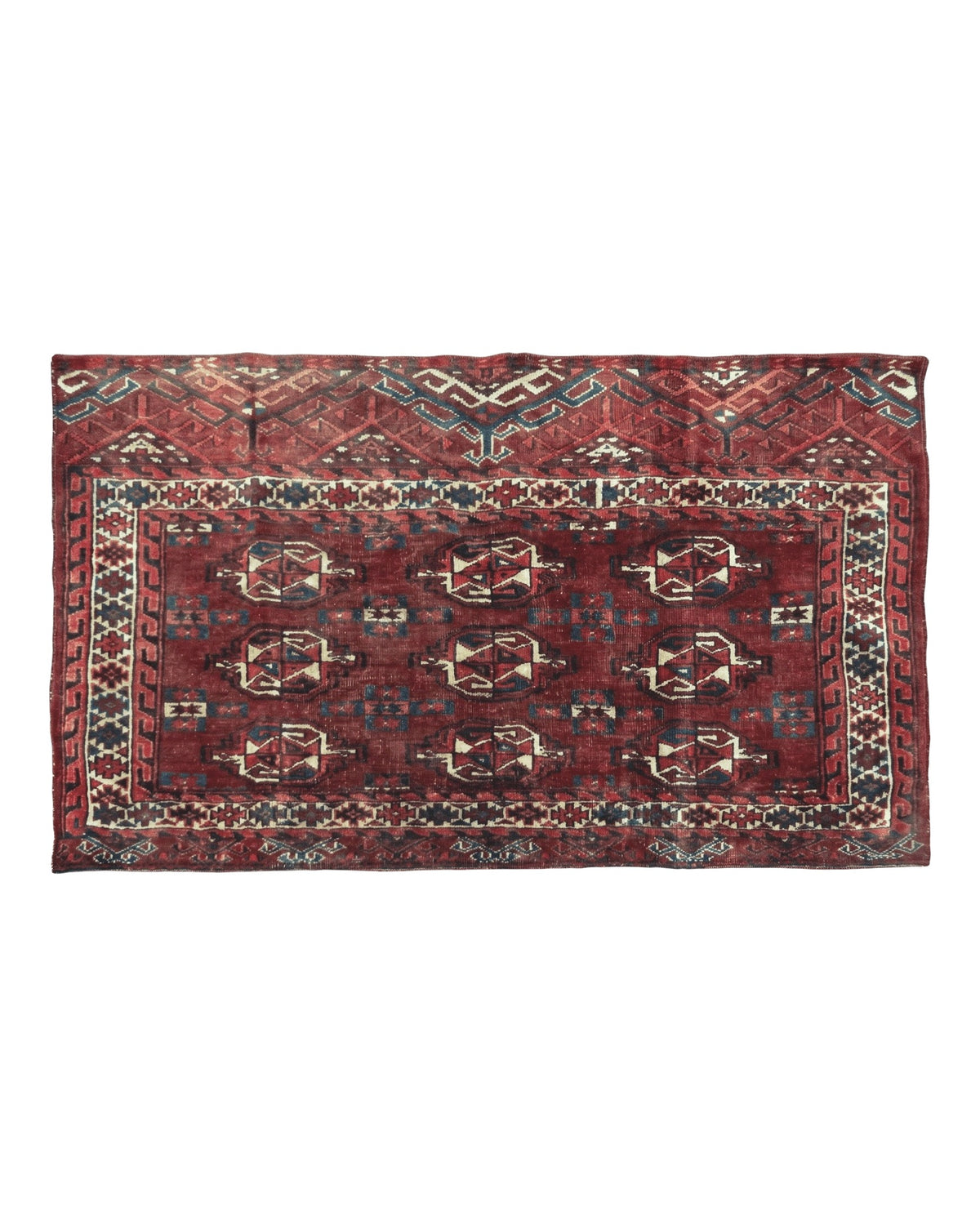
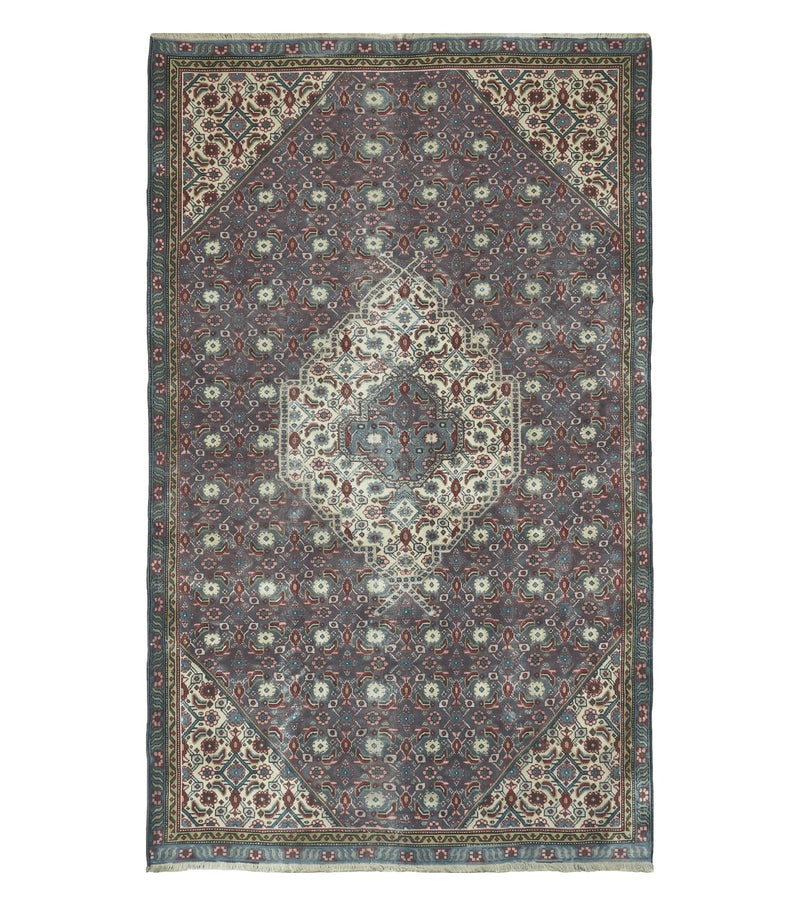
The rugs woven in the Ardabil region in the 20th century are quite different from the Safavid carpet. Ardabil lies close to the Caucasus, and its weavers share the region's geometric tradition. Typical Ardabil rugs have bold geometric medallions, often hooked diamonds or stepped polygons, and small geometric motifs scattered across the field, in designs that resemble Caucasian Shirvan and Kazak rugs. Colors are often lighter and softer than in Caucasian rugs, with ivory, pale blue, rust and green. See Caucasian Rugs.
Construction
Ardabil rugs are woven with the symmetric knot, as are most rugs of north-west Iran, on a cotton foundation, with good, sturdy wool and a medium, even pile. They are generally well made and practical, and often found in smaller sizes and runners.
How to recognize an Ardabil
- Geometric, Caucasian-style designs with stepped or hooked medallions.
- Symmetric knots on a cotton foundation; Caucasian rugs more often have wool foundations.
- Softer colors than most Caucasian rugs, often with ivory and pale blue.
- Often small sizes and runners.
See also Geometric vs. Curvilinear Designs.