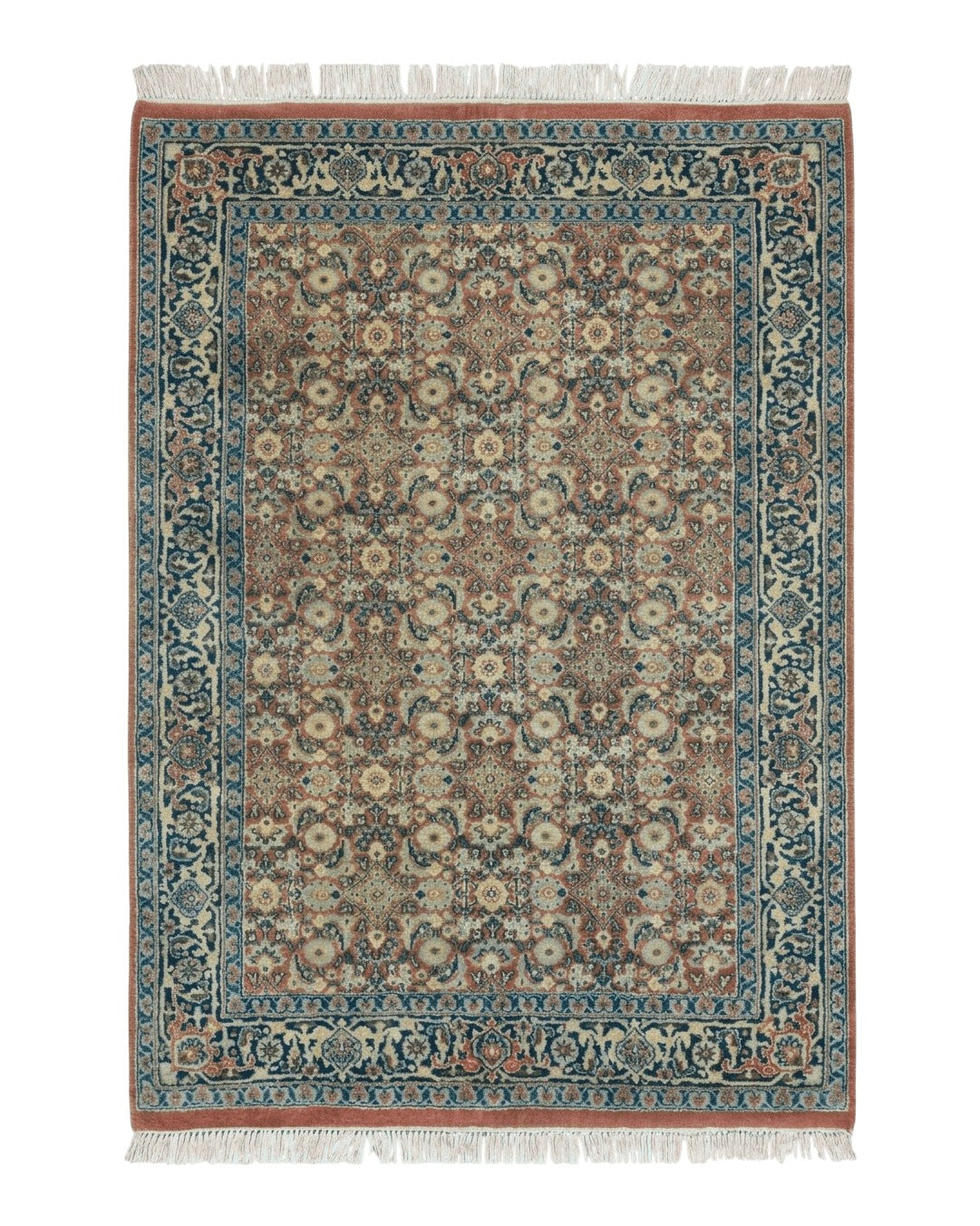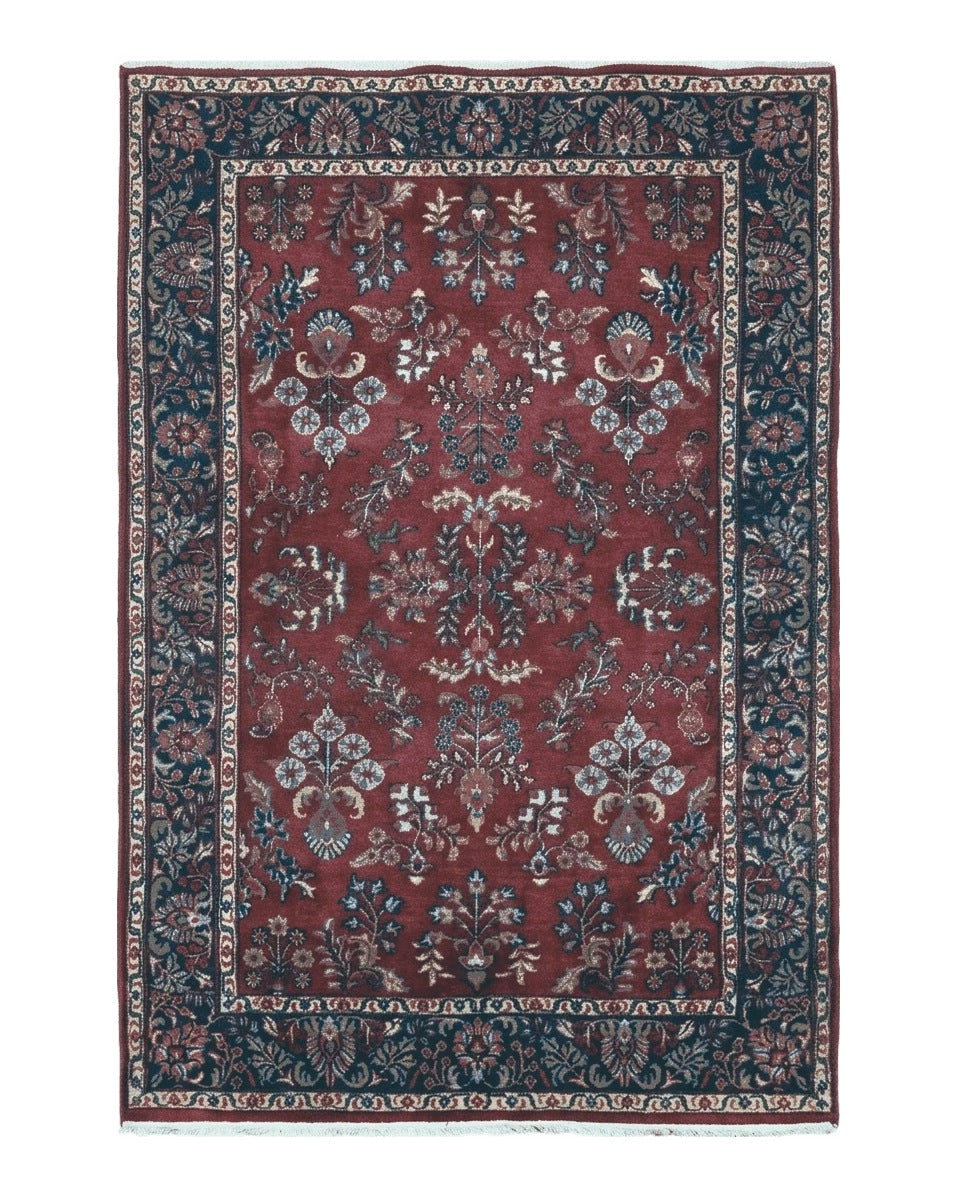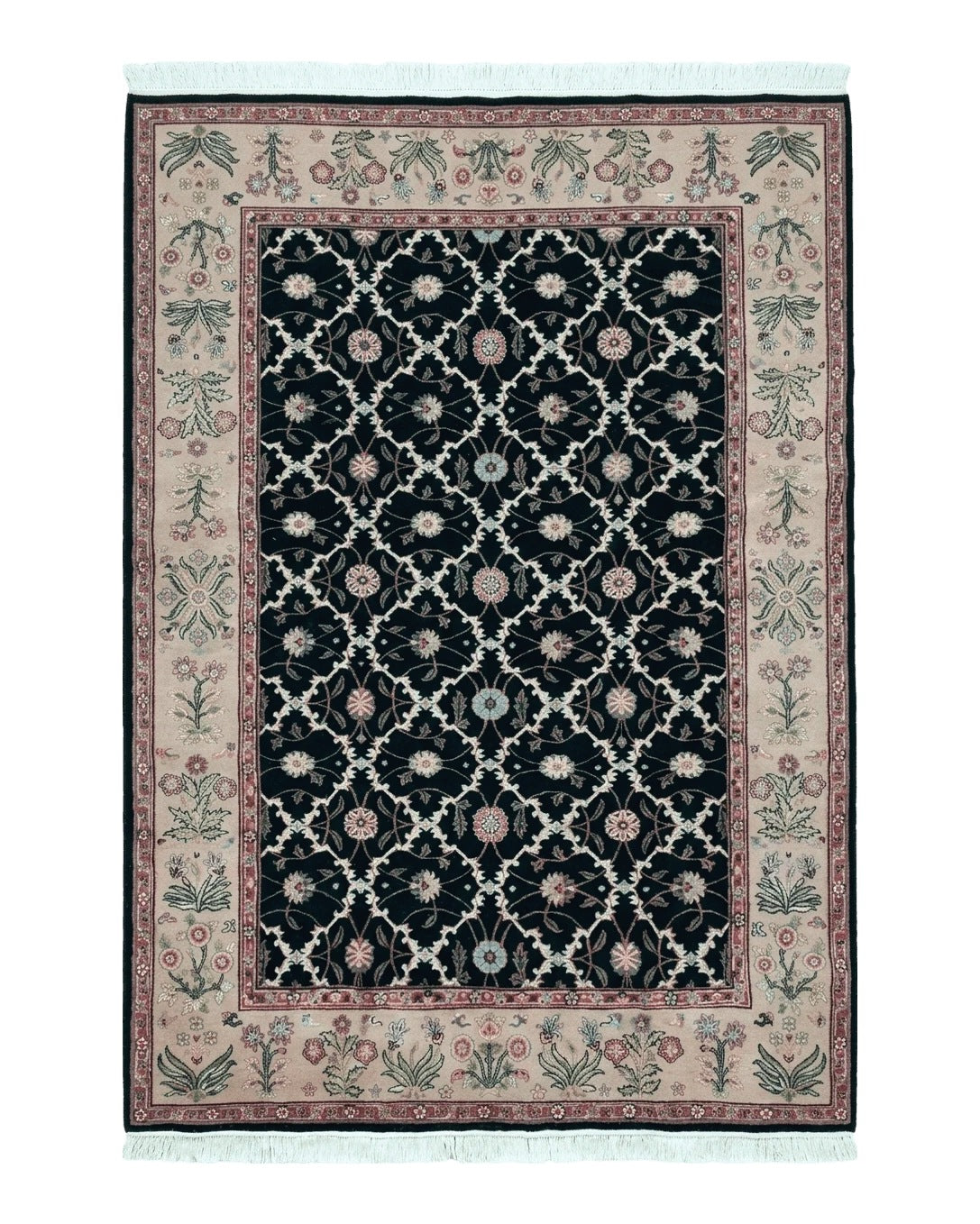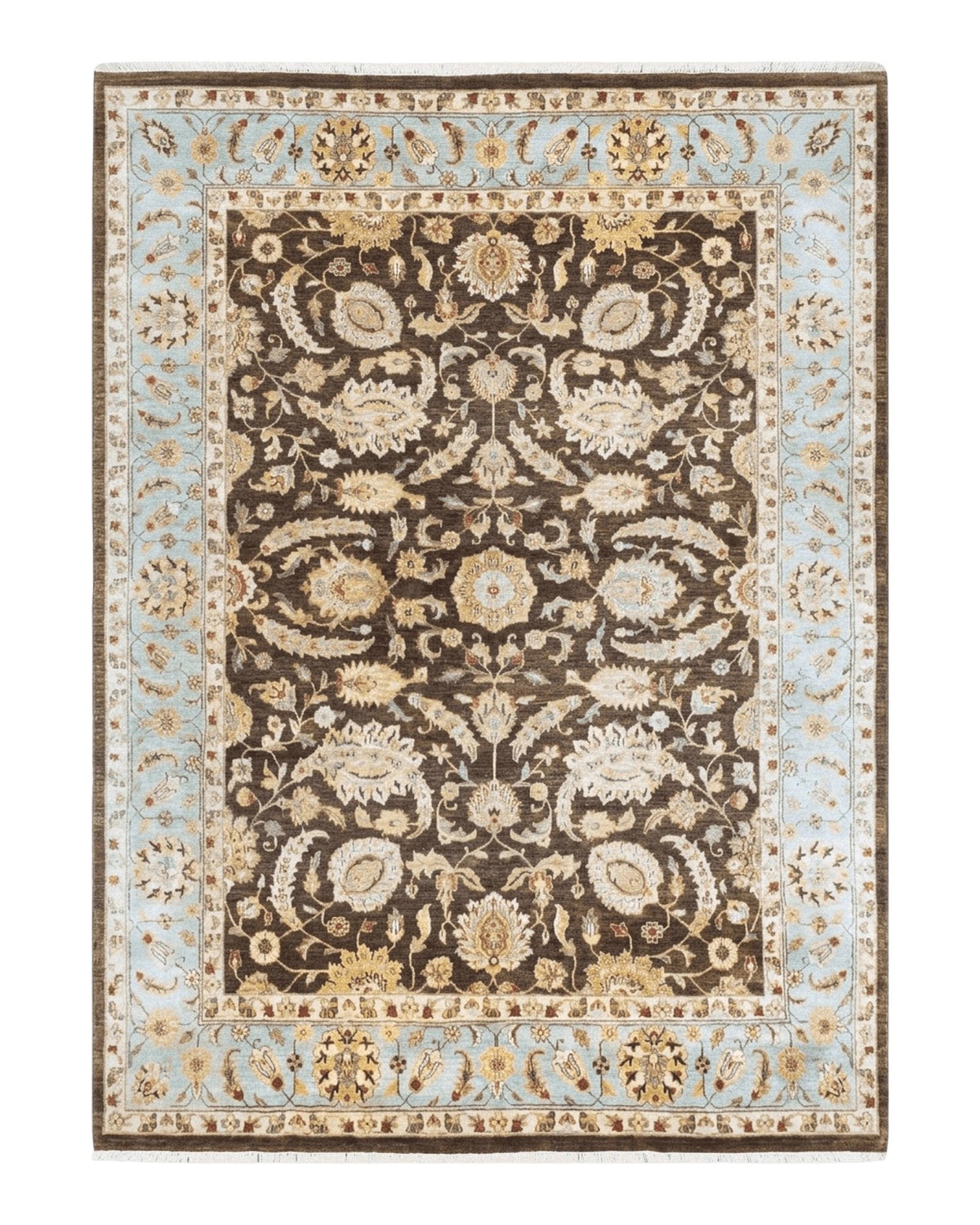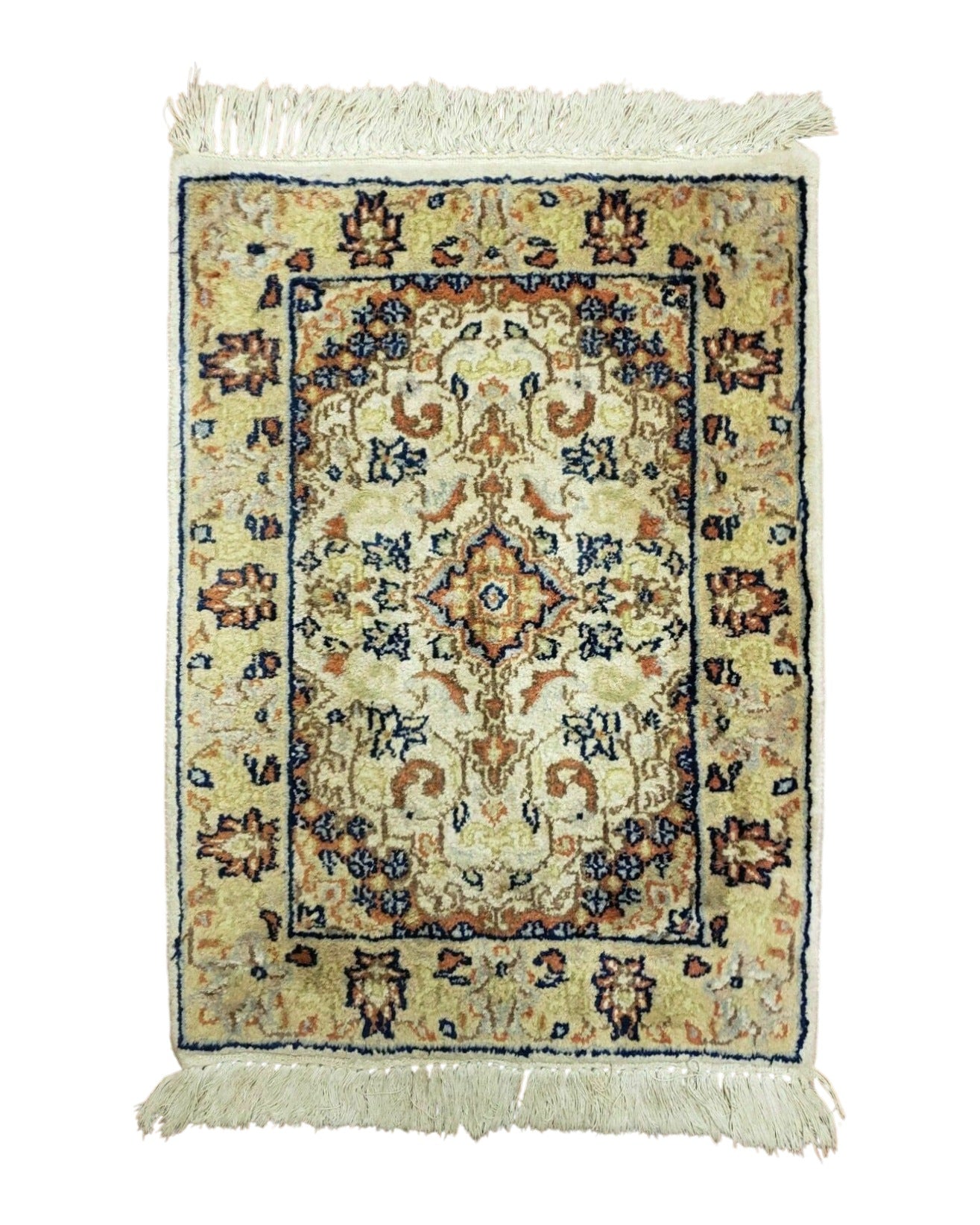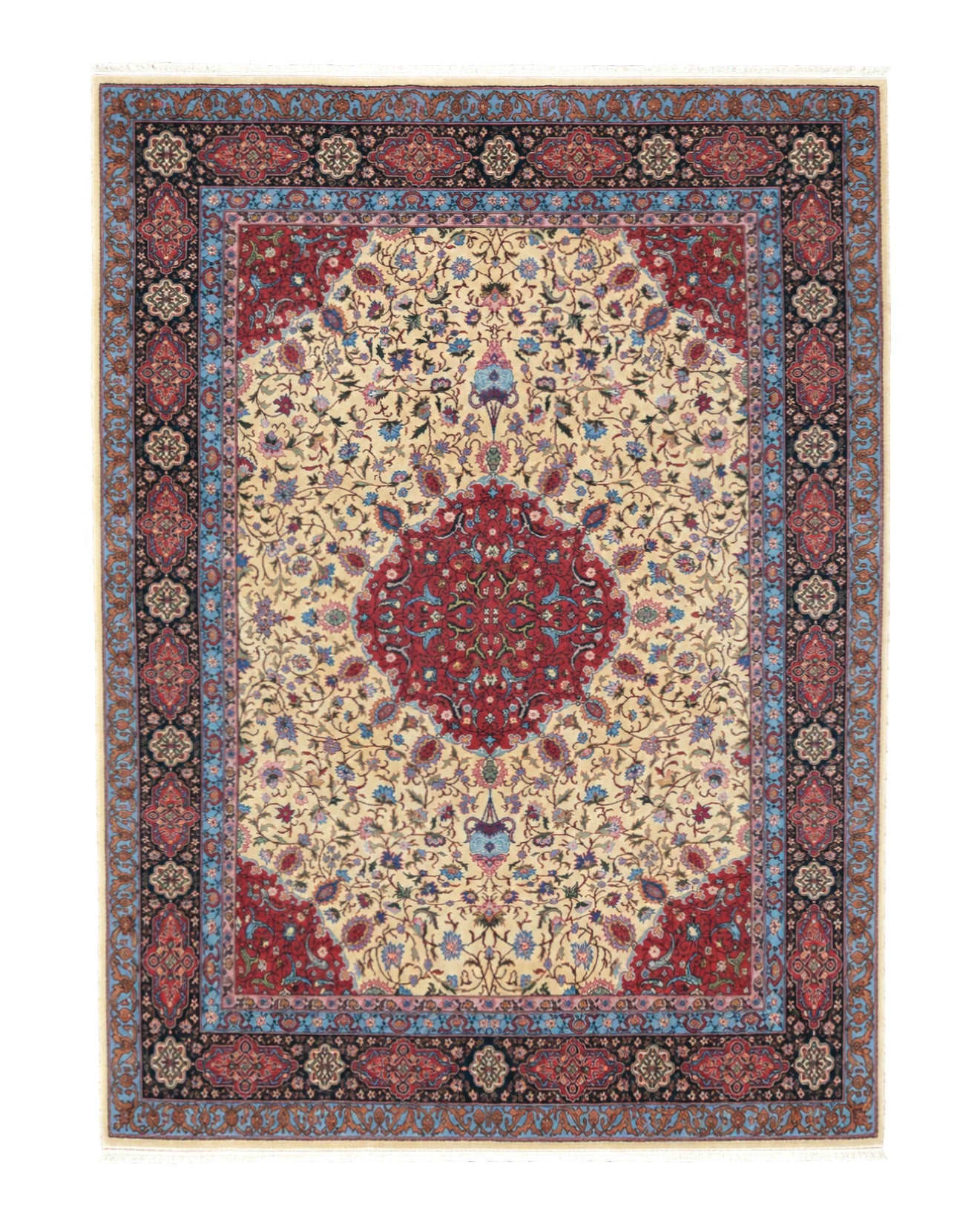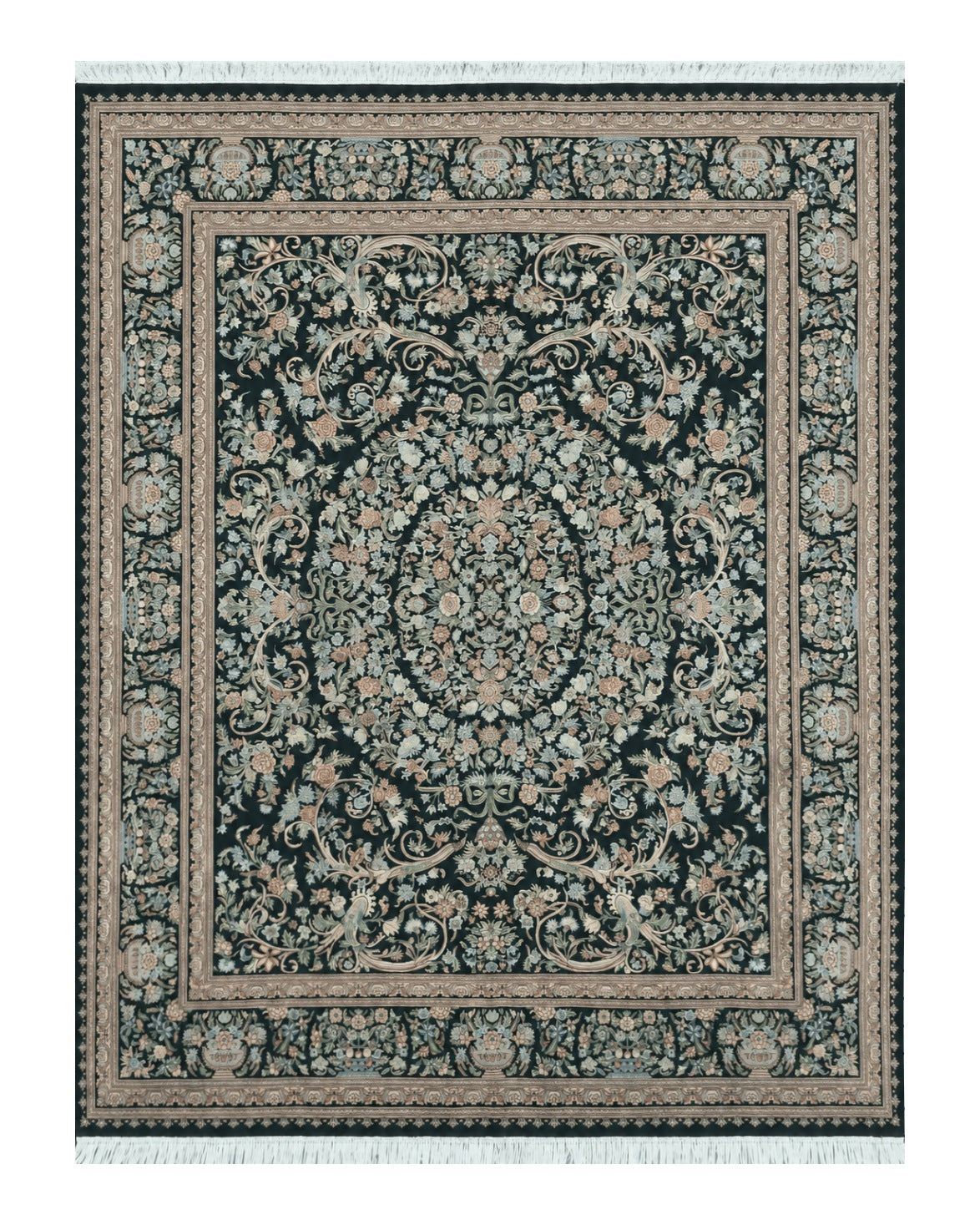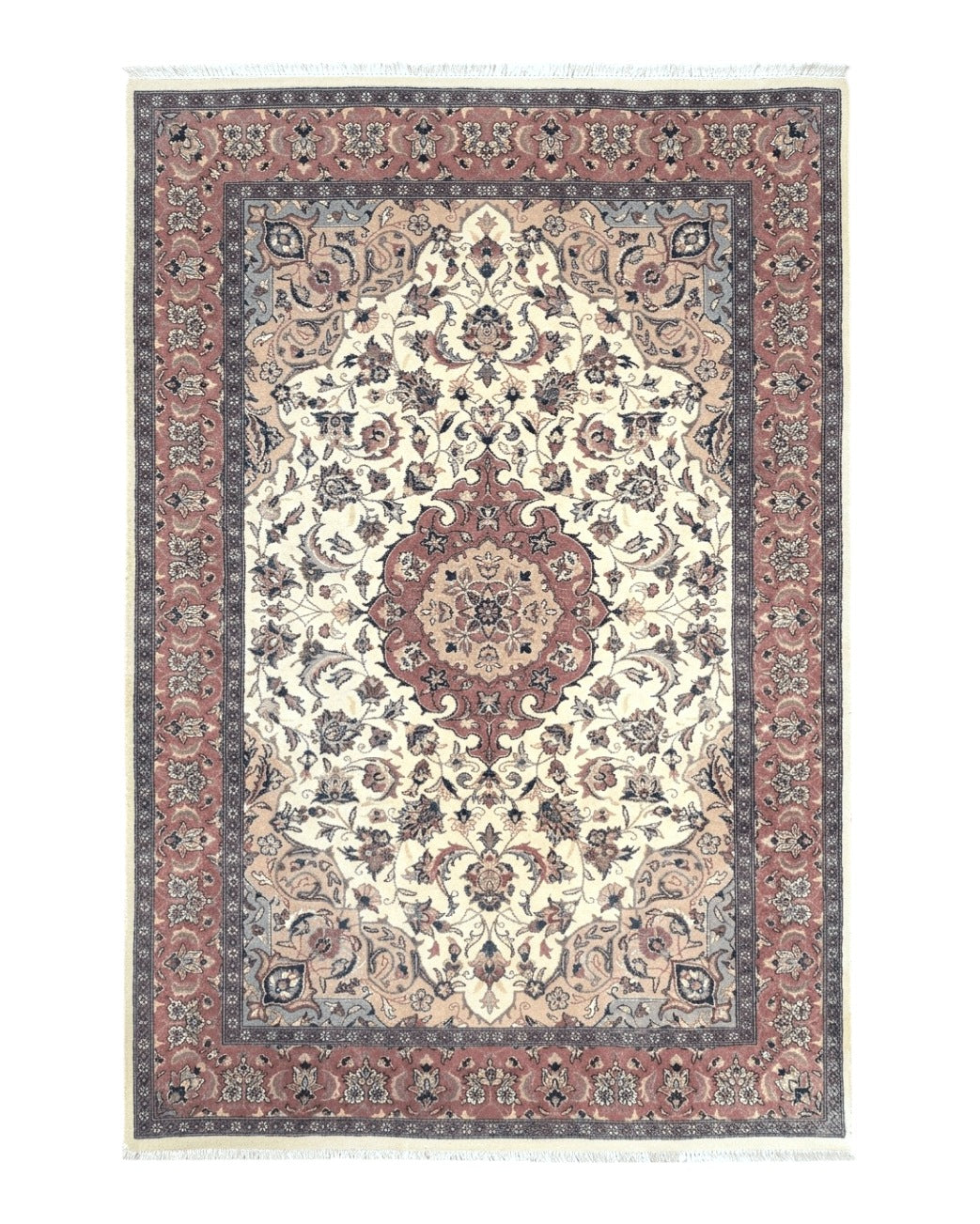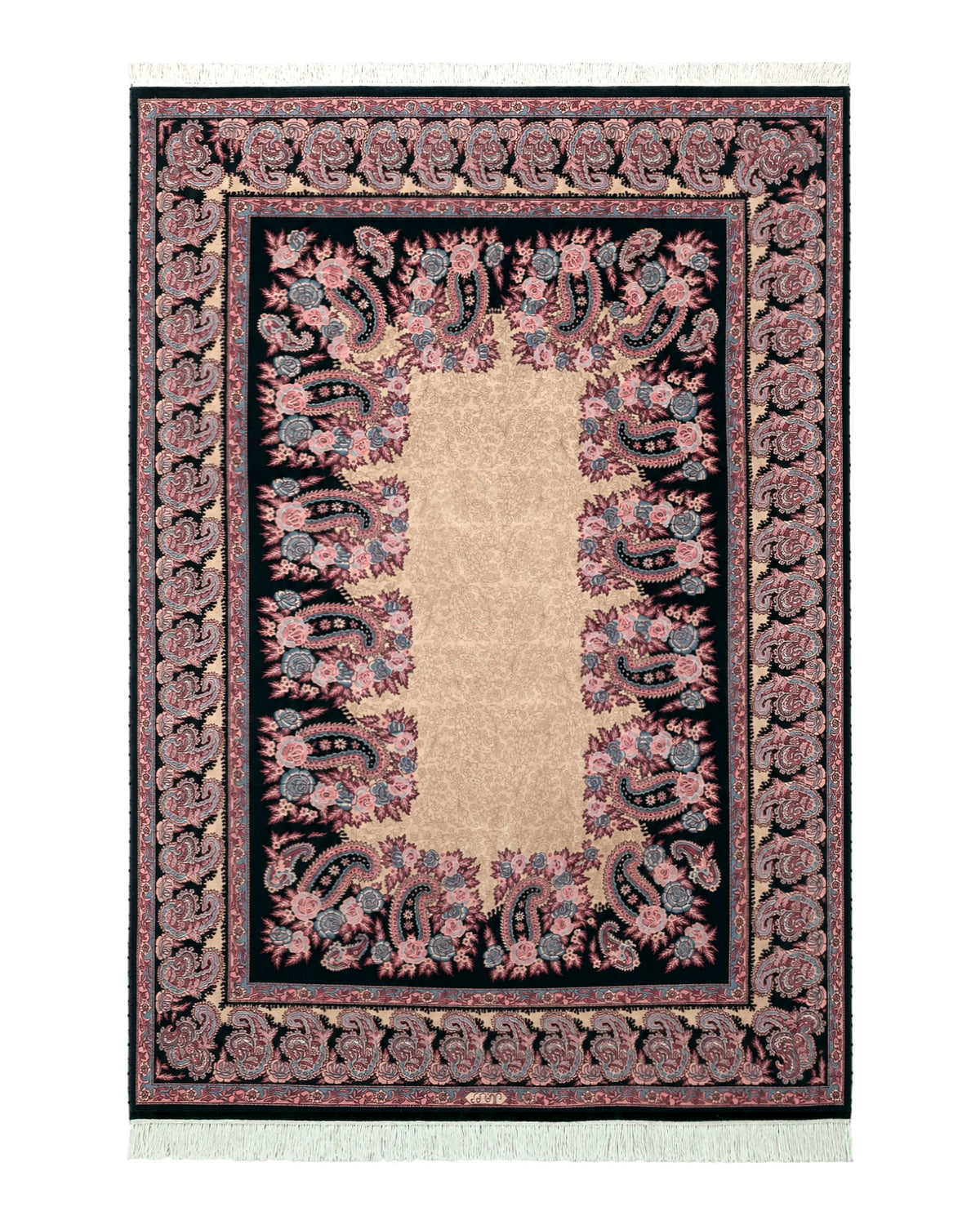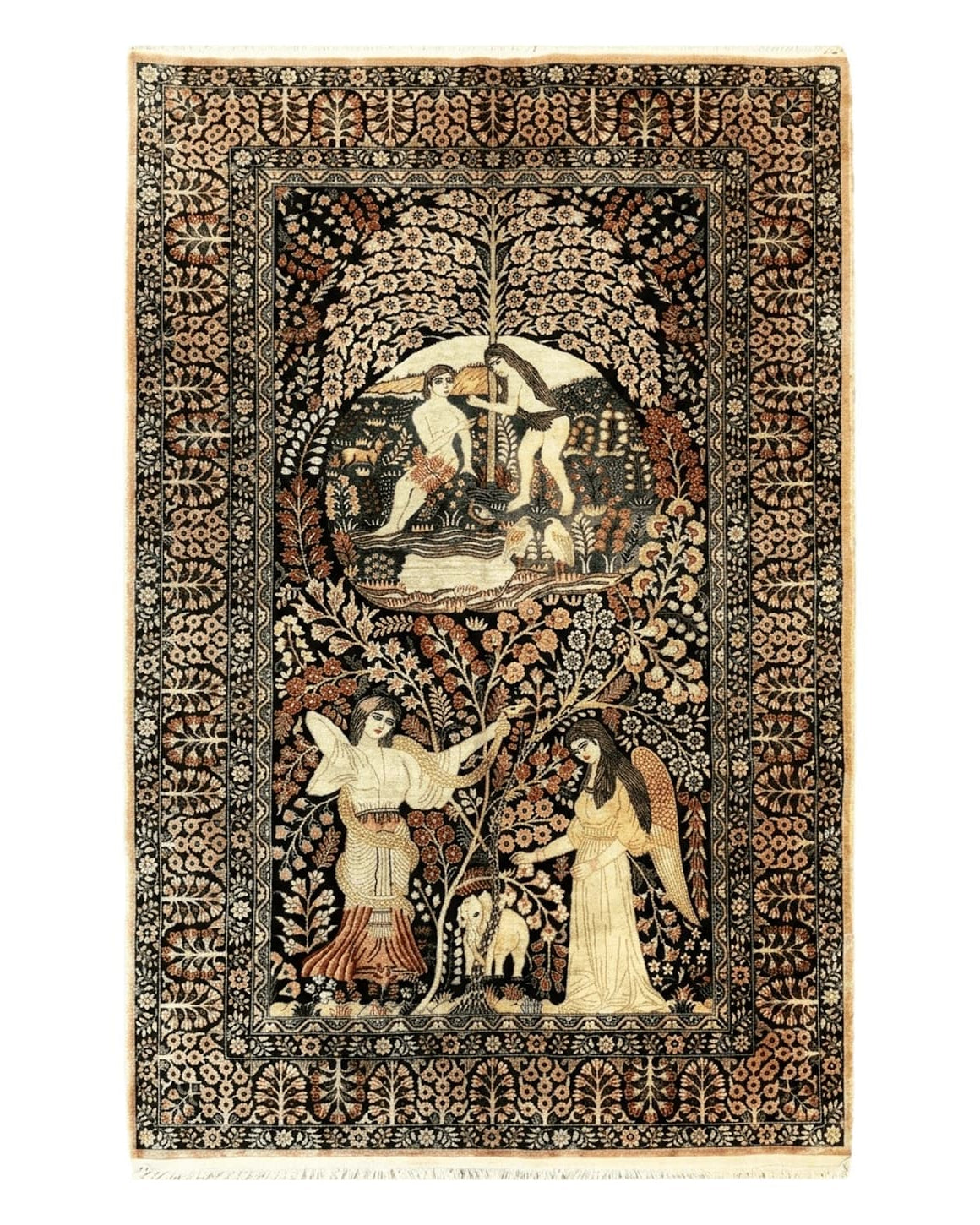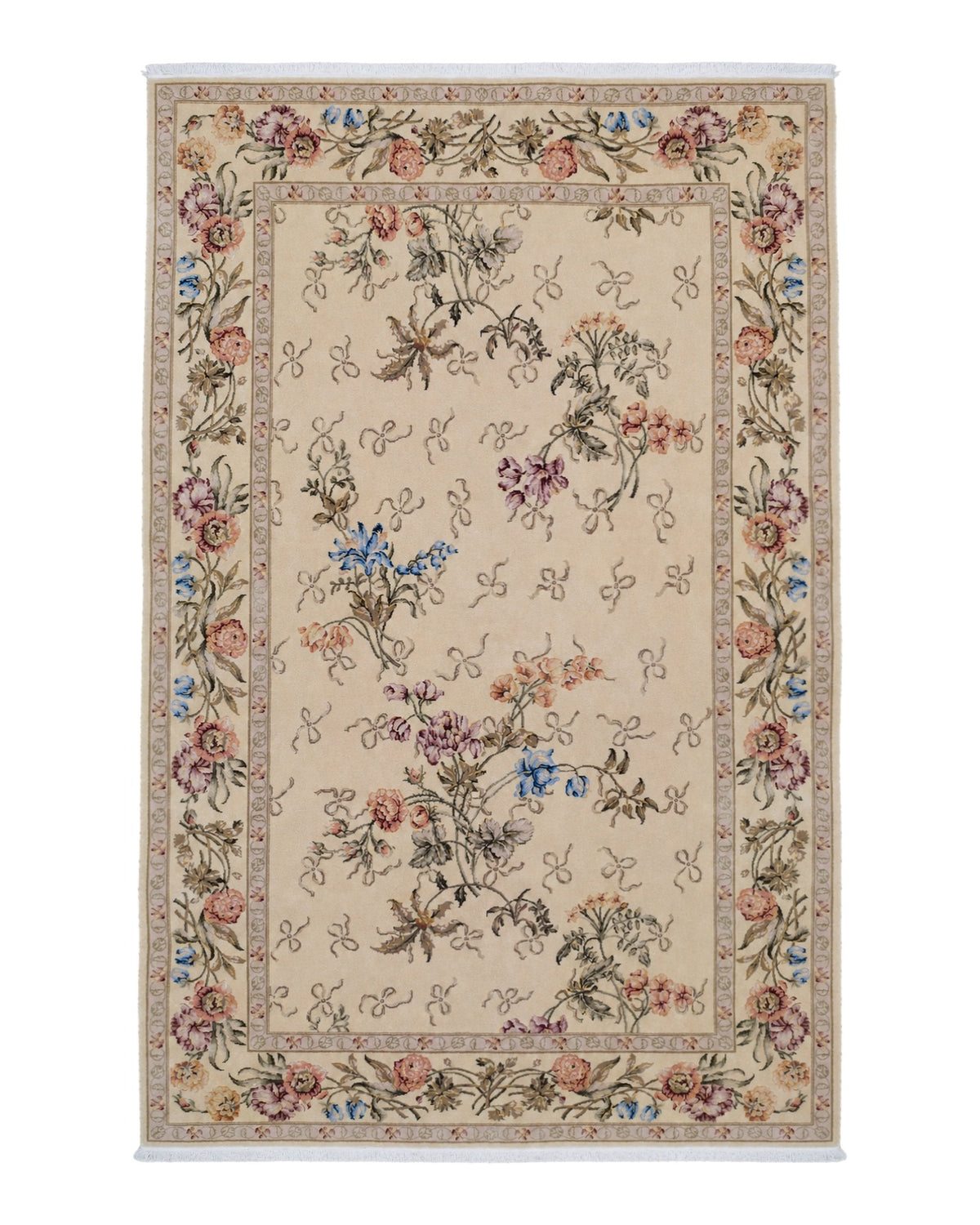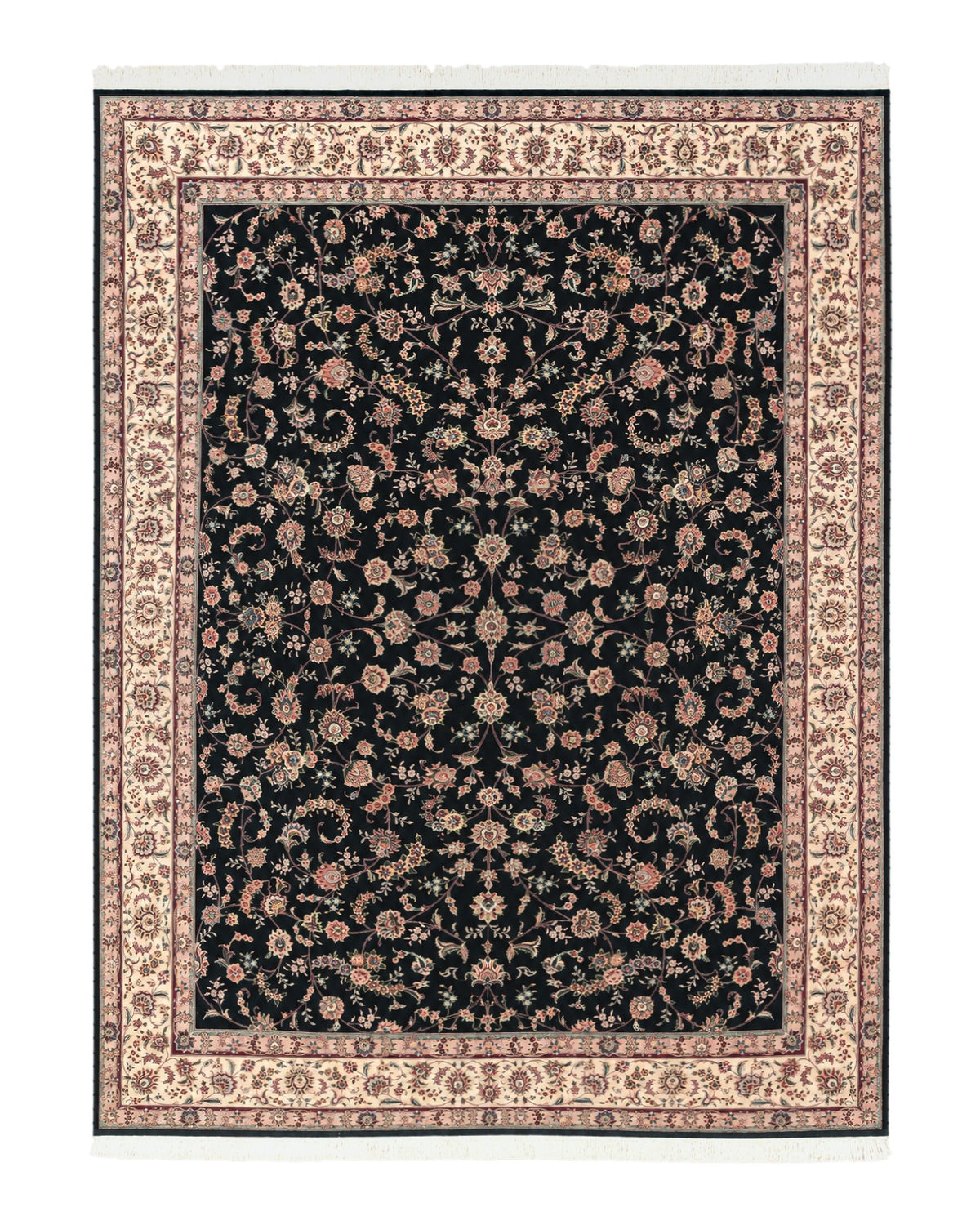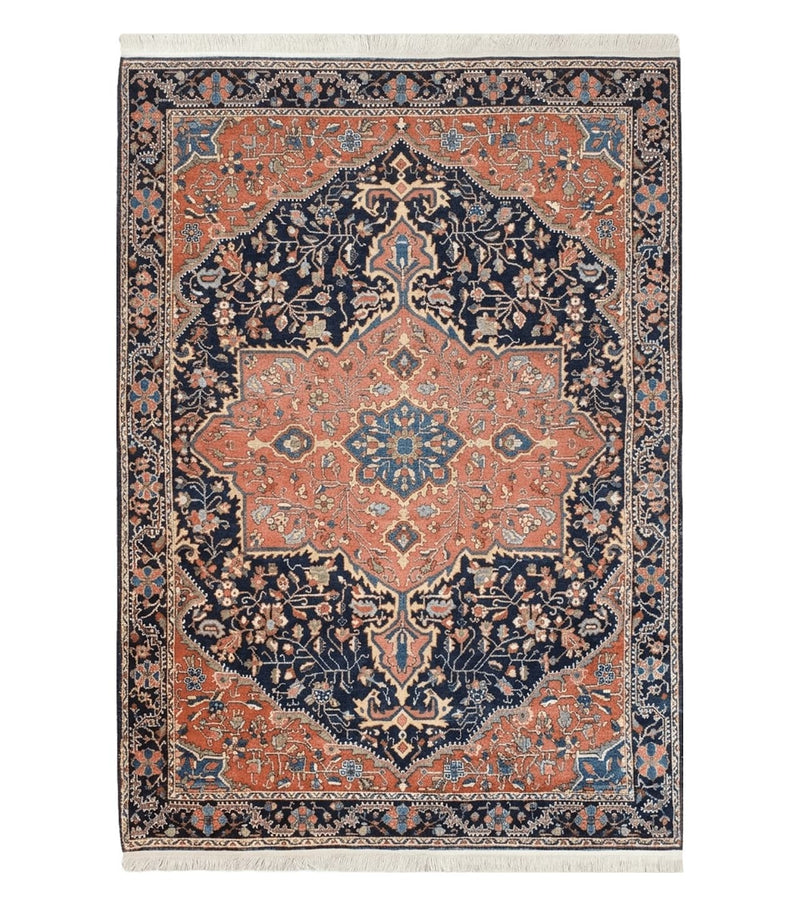


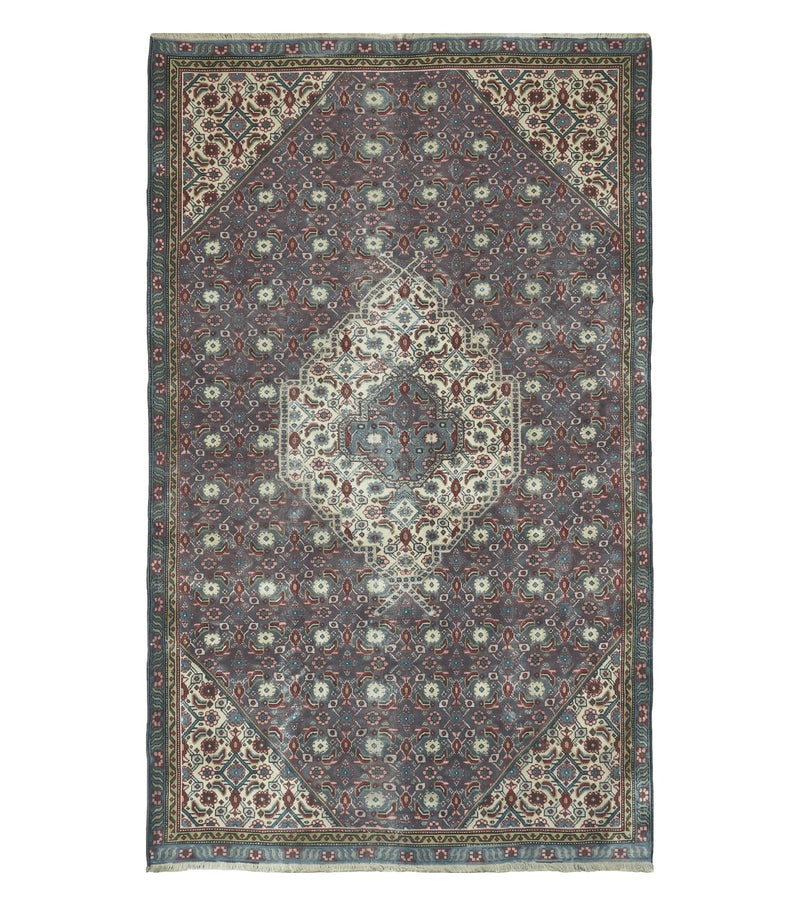


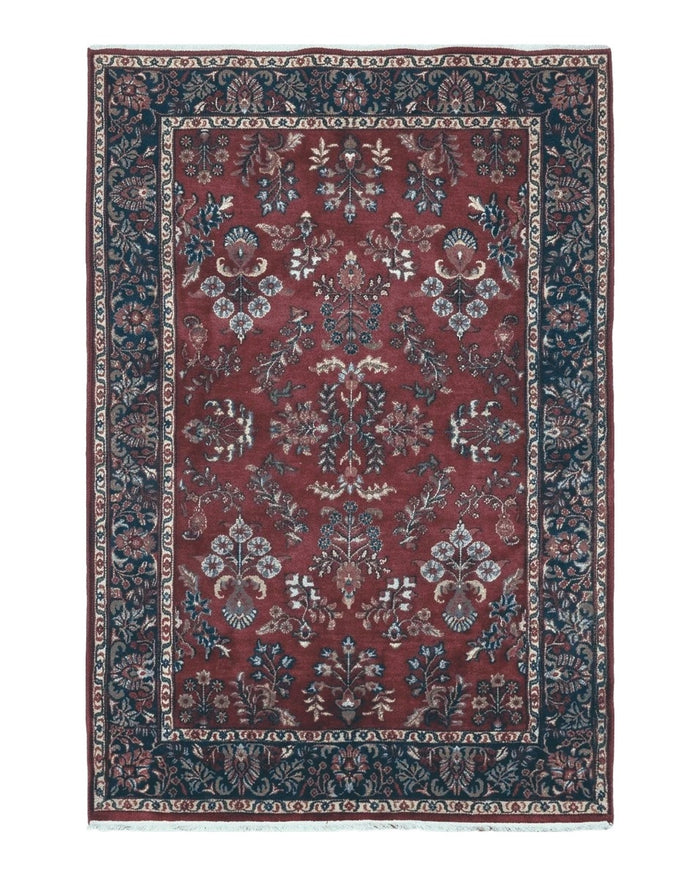
Indo-Persian, Sino-Persian and Pak-Persian rugs are hand-knotted rugs woven in India, China and Pakistan in designs that come from the Persian tradition. The first part of the name tells you where the rug was made; "Persian" tells you the style. They are real handmade rugs, often of very good quality, but they are not Persian rugs in the strict sense, because a Persian rug is one woven in Iran.
| Indo-Persian | Woven in India in Persian designs |
|---|---|
| Sino-Persian | Woven in China in Persian designs |
| Pak-Persian | Woven in Pakistan in Persian designs |
| Construction | Hand-knotted pile, usually wool on a cotton foundation |
| Common designs | Tabriz, Kashan, Kerman, Isfahan, Heriz and Herati patterns |
| Main difference | Where the rug was made, not how it looks |
Why these rugs exist
Persian designs have been admired and copied for centuries. In India, the Mughal emperors brought Persian weavers to their court workshops in the 16th century, and Persian-style carpets have been woven there ever since. In the 20th century, weaving centers in Pakistan and China began producing large numbers of rugs for export, and many of them used Persian designs because those were what buyers in Europe and America wanted.
Political events also played a part. When trade with Iran was restricted at various times, dealers turned to India, Pakistan and China for rugs in the familiar Persian styles. The result is a large family of rugs that look Persian but come from elsewhere.
Indo-Persian rugs
India has one of the longest-running traditions of weaving Persian designs, centered in Agra, Jaipur, Mirzapur and Bhadohi, and in Kashmir for fine silk rugs. Indo-Persian rugs range from everyday qualities to very fine pieces that rival good Persian city rugs. Common designs include Tabriz and Kashan medallions, Kerman florals, and the Mahal and Sultanabad styles of central Iran. Older Indian rugs, especially from Agra, are collected in their own right. See Indian Rugs.
Sino-Persian rugs
Sino-Persian rugs are woven in China in Persian designs, mostly from the 1980s onward. They are often finely knotted, with a short, even pile and crisp drawing, and many use silk or mercerized highlights for sheen. Black, navy and ivory grounds are popular, as are all-over Herati and Mahi patterns. They are a different thing from traditional Chinese rugs such as Peking and Art Deco designs, which have their own style. See Chinese Rugs.
Pak-Persian rugs
Pakistan is best known for Bokhara rugs with repeating gul motifs, but it also weaves a great many Persian designs. Pak-Persian rugs are usually wool on a cotton foundation, and many are given a soft, lustrous finish by washing. Qualities range widely; the finest have dense knotting and very clean drawing. See Pak-Persian Rugs and Pakistani Rugs and Bokhara Designs.
How they differ from Persian rugs
Because the designs are shared, the best clues come from construction and finish rather than pattern:
- Knot and foundation. Many Indian and Pakistani rugs use the asymmetric knot on a cotton foundation, like many Persian city rugs, so this alone does not settle it. Chinese rugs are often very evenly knotted, with a perfectly regular back.
- Regularity. Rugs woven for export in large workshops tend to be extremely even in size, color and drawing. Persian rugs, even fine ones, usually show small variations.
- Wool and finish. A heavy chemical wash gives some Pakistani and Chinese rugs a bright sheen that differs from the natural luster of good Persian wool.
- Color. Export rugs are often colored to suit Western rooms, with softer or more fashionable palettes than the traditional colors of the region whose design they borrow.
Are they a good choice?
Very often, yes. A well-made Indo-Persian, Sino-Persian or Pak-Persian rug is hand-knotted, durable and can be very beautiful, and it often costs less than a Persian rug of similar size and fineness. What matters is that the rug is described honestly, so you know what you are buying. Collectors who value regional character and traditional dyes usually prefer rugs woven in Iran; buyers who want a particular look in a particular size often find these rugs a practical alternative.
For the broader picture, see Persian vs. Oriental Rugs and What Is a Persian Rug?