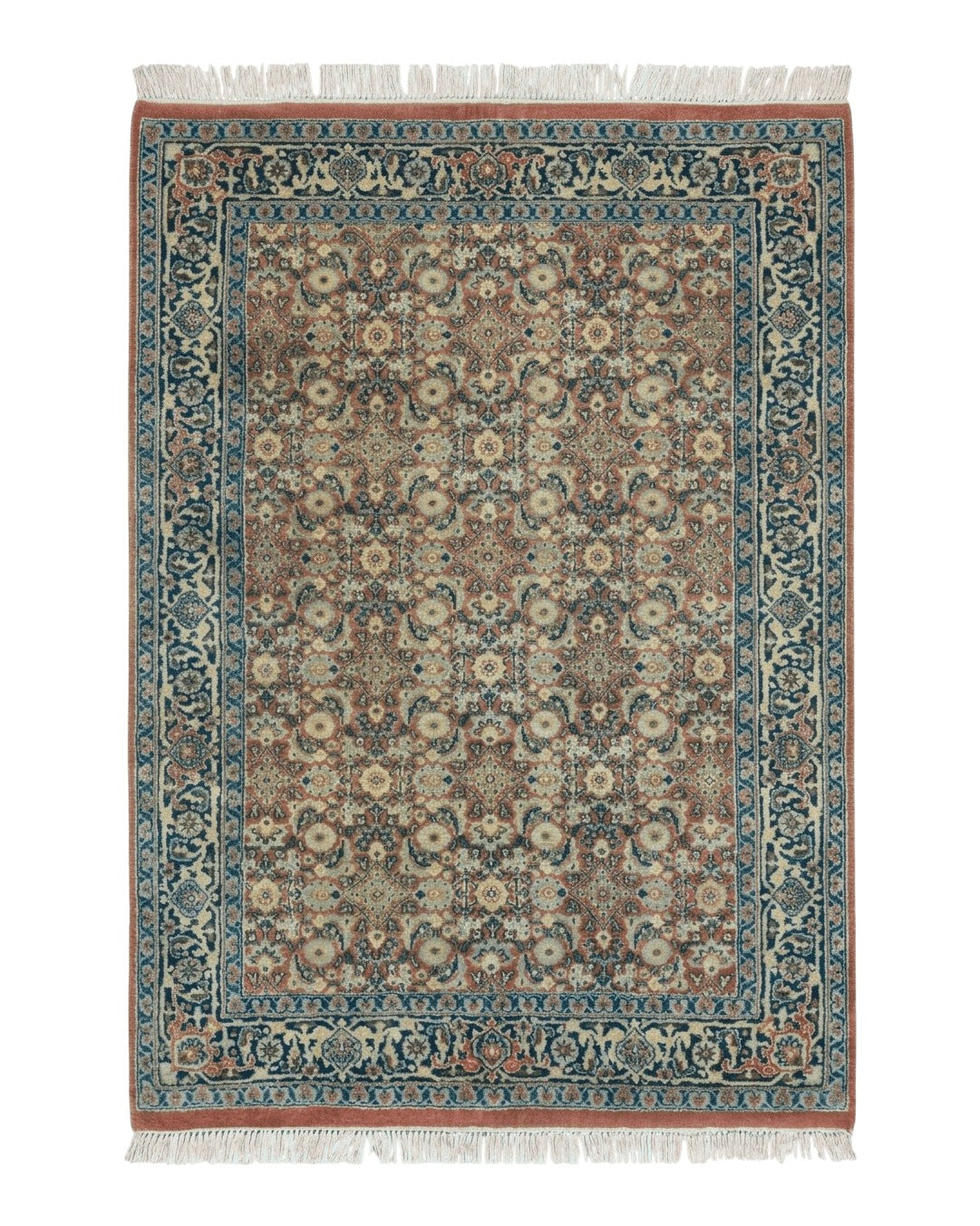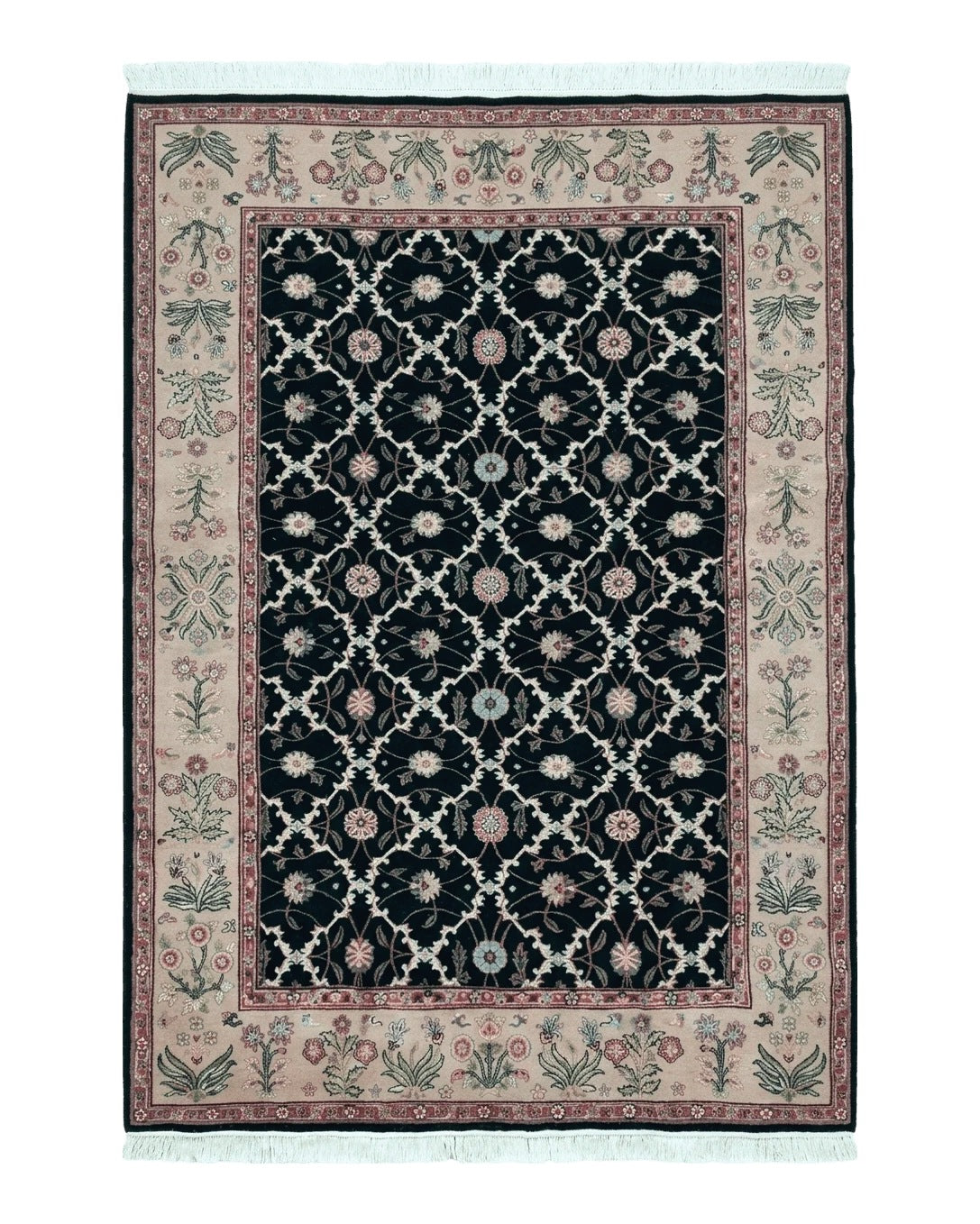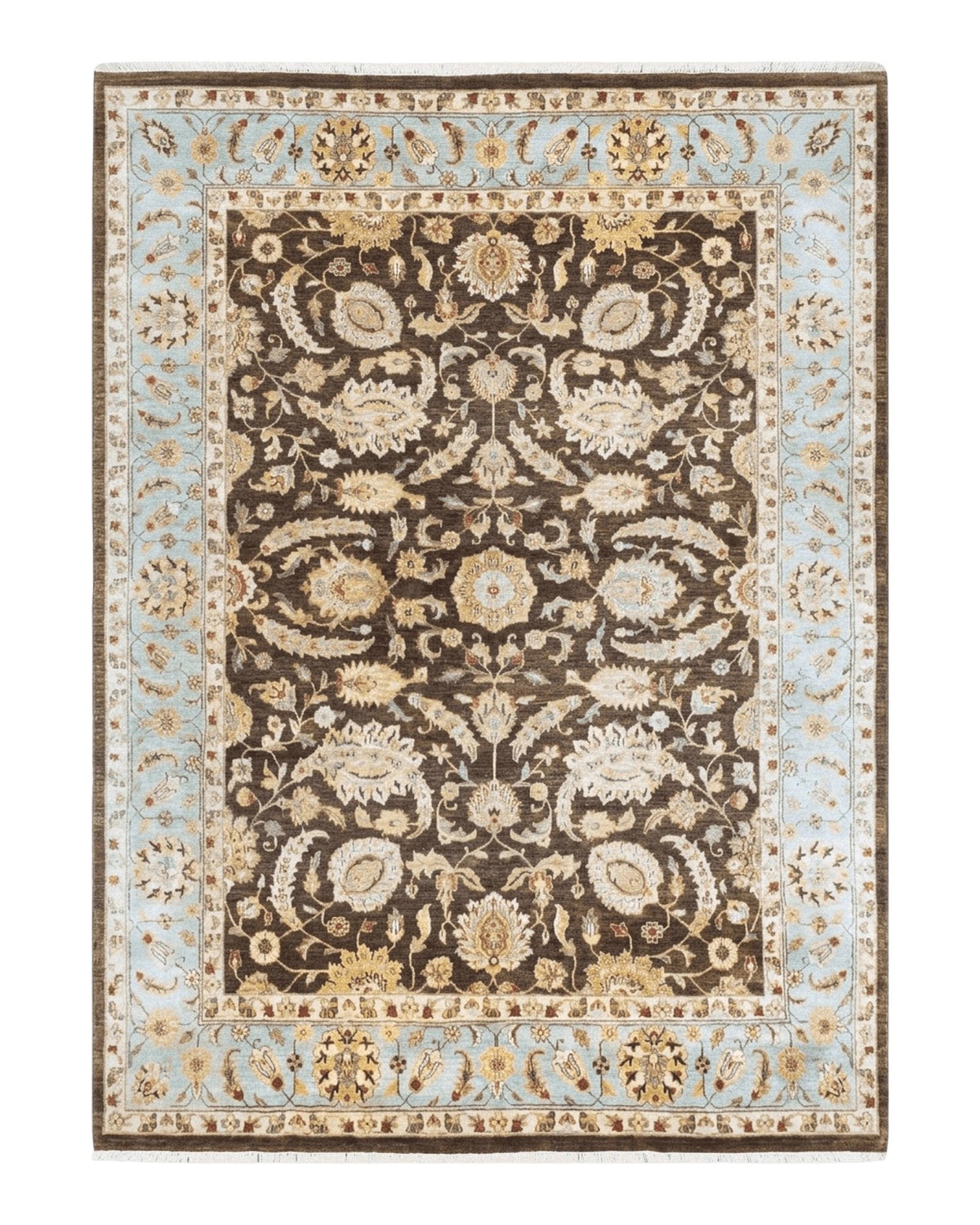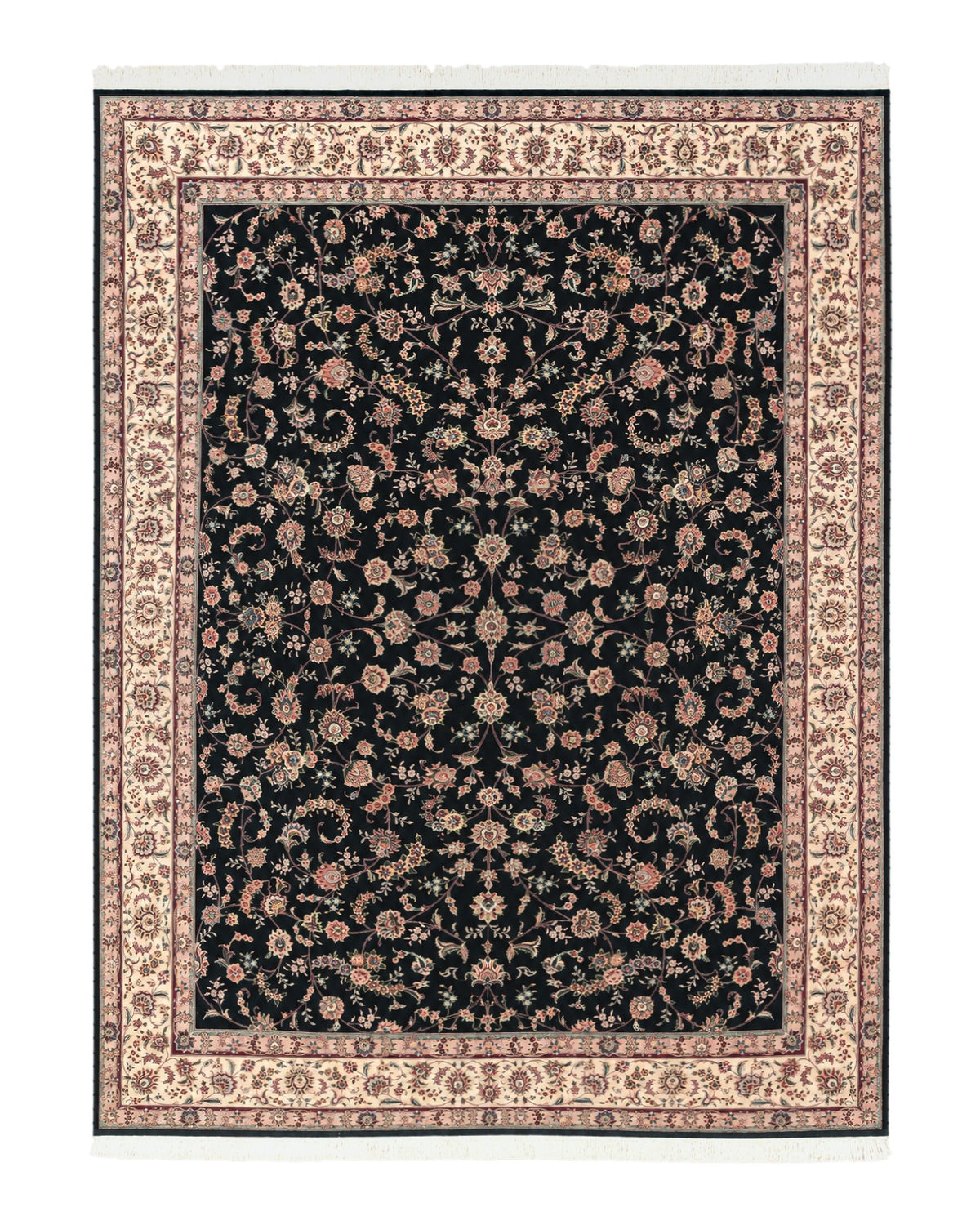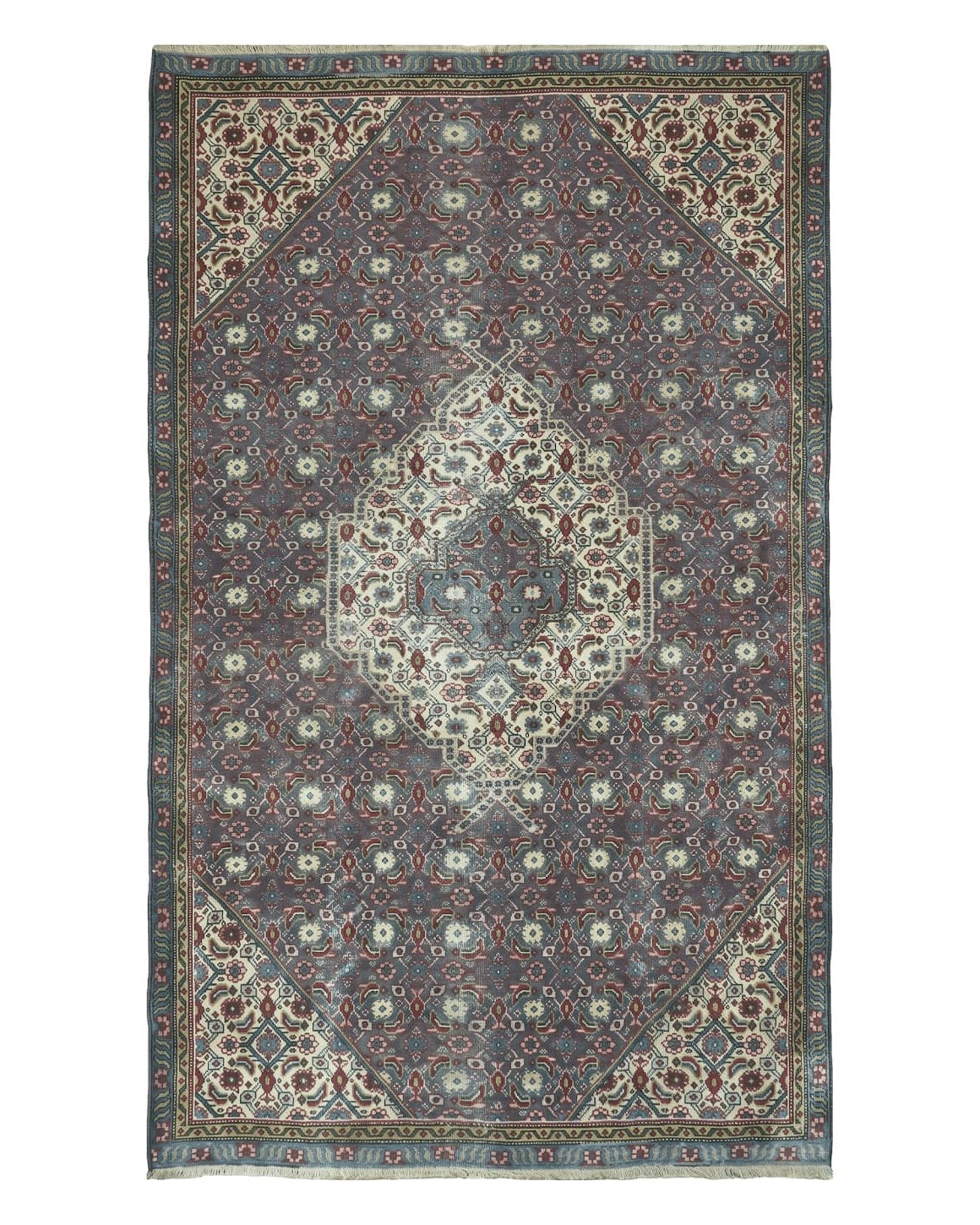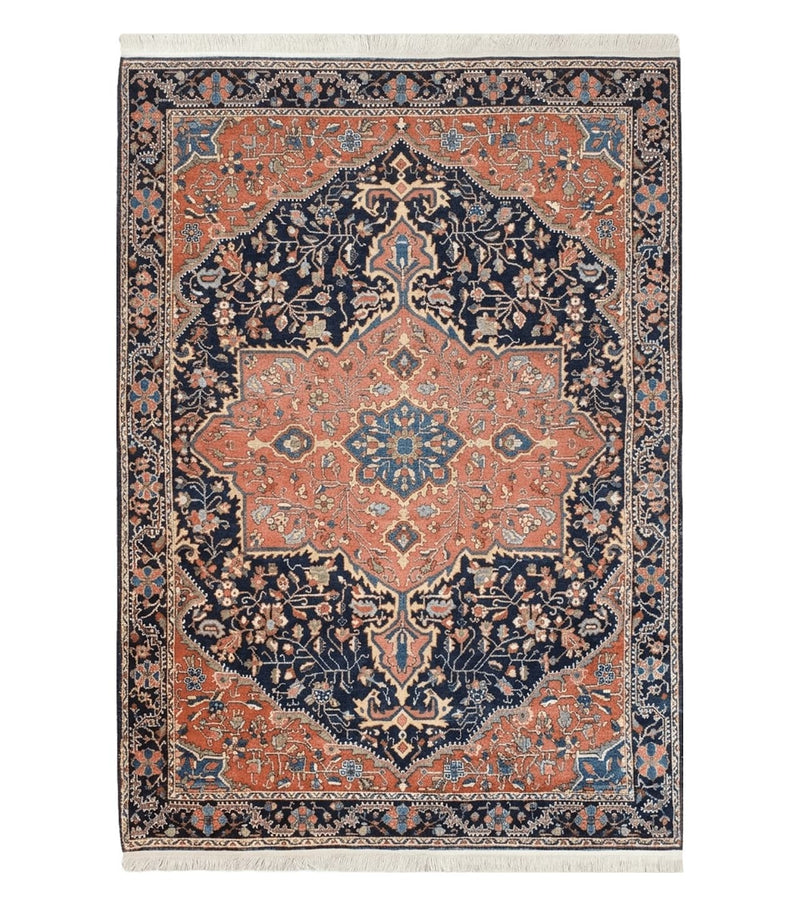


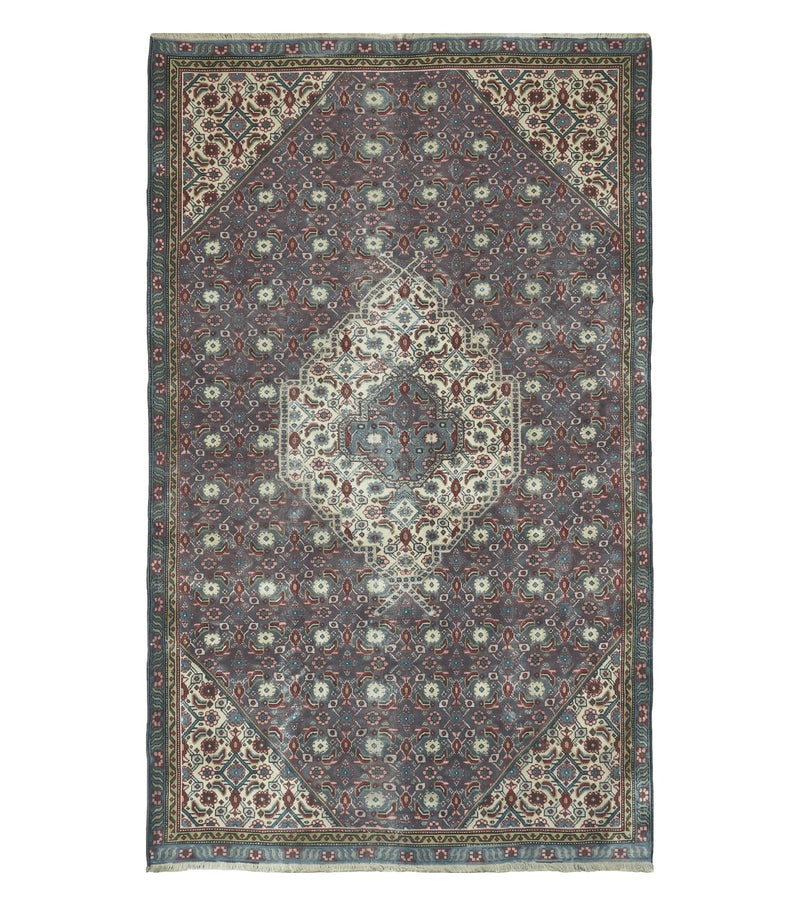


An all-over design is a pattern that repeats across the whole field of a rug, without a central medallion. Some all-over designs are made of small, closely packed motifs, others of large, flowing palmettes and vines. Because the pattern has no single focal point, an all-over rug looks complete from any direction and still looks good when partly covered by furniture, which makes it one of the most practical layouts for living and dining rooms.
| Layout | A pattern repeated across the field, without a central medallion |
|---|---|
| Classic designs | Herati (Mahi), Mina Khani, boteh, Shah Abbasi, Zil-i-Sultan, Joshaqan |
| Scale | From tiny repeats to large, open palmettes |
| Practical plus | Looks complete even when partly covered by furniture |
The Herati
The Herati is the most widely woven all-over pattern in Persian rugs. Its unit is a small diamond lattice with a rosette at the center, surrounded by four curving, serrated leaves. Repeated across the field, it creates a dense, shimmering pattern. The name links it to the city of Herat, now in Afghanistan, which was part of Persia when the design developed. In its small, tight form, especially in Tabriz and Bidjar rugs, the curling leaves look like tiny fish, and the pattern is called Mahi, the Persian word for fish.
The Mina Khani
The Mina Khani is a lattice of flowers: large rosettes, often daisy-like, linked by vines to smaller flowers around them, forming a diamond network across the field. It is especially associated with Veramin rugs, where it is usually drawn on a deep navy ground, and with Kurdish weaving.
The boteh
Rows of boteh, the teardrop or paisley motif, fill the field of many Persian rugs, from fine Senneh and Kerman pieces to bold Afshar and Hamadan village rugs. See The Boteh (Paisley) Motif.
Shah Abbasi and large-scale designs
The Shah Abbasi designs, named after the Safavid ruler Shah Abbas, are made of large, elaborate palmettes linked by scrolling vines and cloud bands. Used as an all-over pattern, they give a flowing, generous look, common in Isfahan, Kashan, Nain and Mashad rugs. Large-scale all-over designs of palmettes and vines are also typical of the decorative Mahal and Sultanabad rugs.
Vase and lattice designs
- Zil-i-Sultan: rows of vases filled with flowers, often with birds, woven in Abadeh and elsewhere. See Abadeh Rugs.
- Joshaqan: a lattice of diamonds, each filled with stylized flowers, named after a town north of Isfahan where it has been woven for centuries.
- Garden and panel designs divide the field into compartments. See Garden, Panel and Tree of Life Designs.
Tribal all-over designs
Tribal weavers have their own all-over patterns: rows of Turkmen guls, lattices of small geometric motifs, and fields scattered with animals, birds and stars. See Persian Turkoman Rugs and Rug Motifs and Their Meanings.
Medallion or all-over?
A medallion rug draws the eye to the center of a room; an all-over rug spreads interest evenly and hides furniture placement well. For a large living room with sofas and chairs on the rug, or a dining room where the table covers the center, an all-over design is often the more satisfying choice. See Medallion Designs.