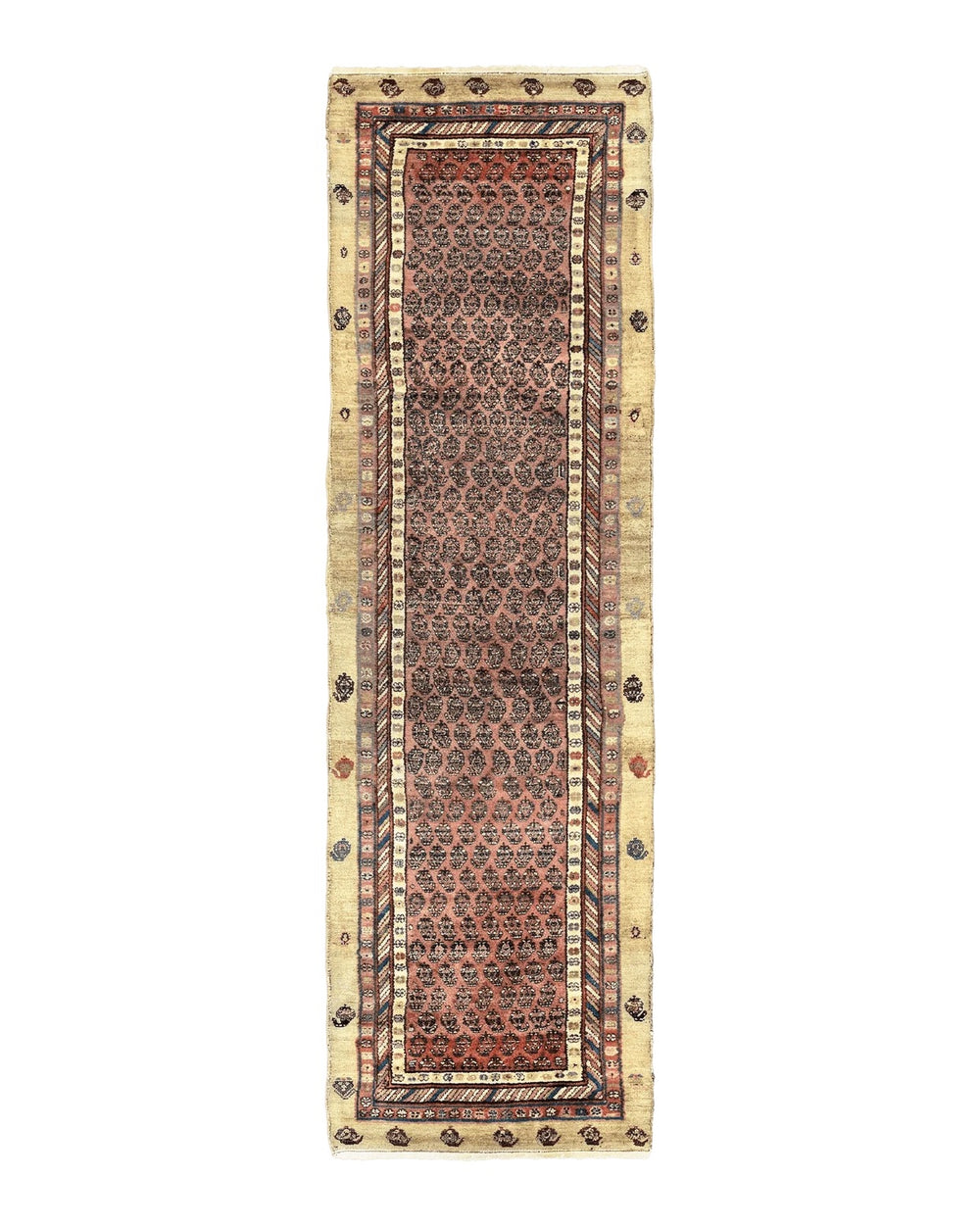
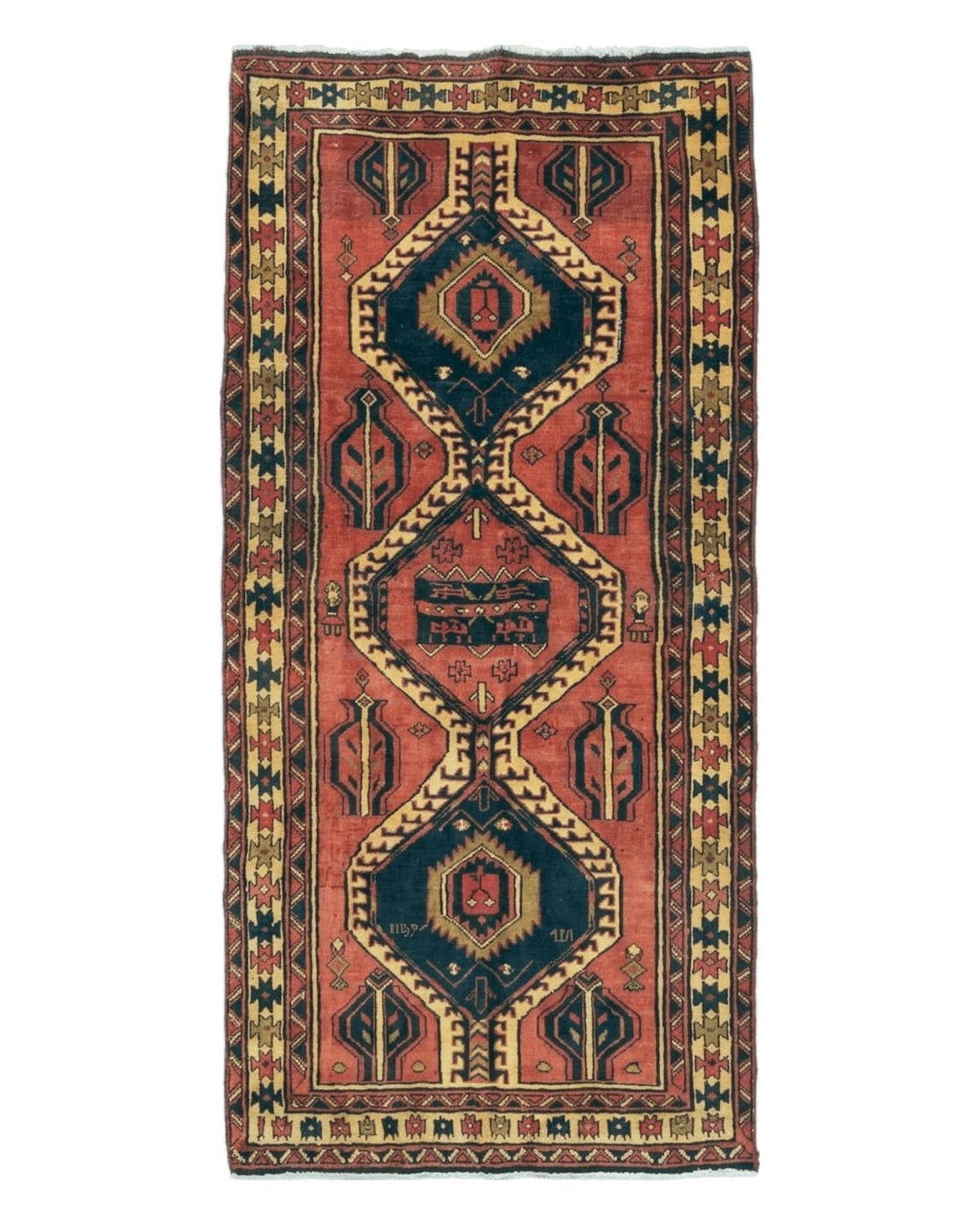
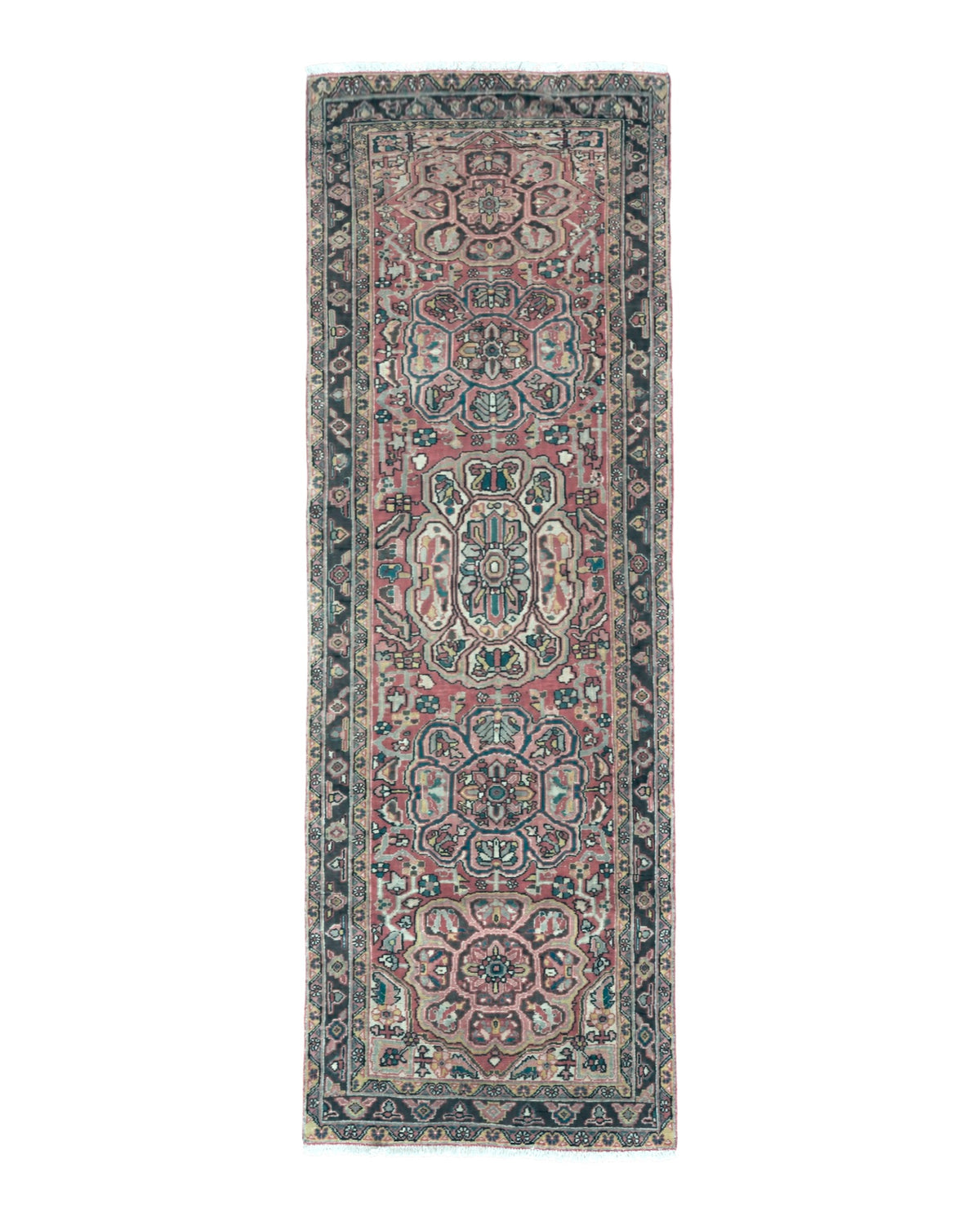
Sarab (also Serab) is a town in north-west Iran, east of Tabriz on the road to Ardabil, at the foot of Mount Sabalan. Its village rugs are among the most recognizable in Iran: long rugs and runners with a field of natural camel color, or wool dyed to look like it, set with a row of bold, geometric medallions in red, blue and ivory. Antique Sarab runners are especially admired for their warm, simple beauty.
| Origin | Sarab and nearby villages, north-west Iran |
|---|---|
| Tradition | Village rugs |
| Knot | Symmetric (Turkish) |
| Materials | Wool, often camel-colored, on a cotton foundation |
| Typical design | A row of hooked geometric medallions on a camel field |
| Sizes | Runners and long kelleh rugs especially |
The Sarab look
The classic Sarab has a field of tan, camel or golden-brown, sometimes undyed camel hair but more often wool dyed or chosen to match it, with a row of medallions running down the center. The medallions are geometric, usually hooked diamonds or stepped polygons, linked one to the next, in red, navy, ivory and light blue. The borders are often simple and bold, sometimes with a wide band of camel color framing the field. The effect is warm, quiet and very graphic.
Some Sarab rugs have red or blue fields instead, but the camel ground is what the type is best known for.
Sizes
Sarab weavers made many runners and kelleh rugs, long rugs wider than a runner. Their long, narrow formats suited Persian homes, where rugs were laid around the edges of a room, and they suit hallways and long rooms today. Room-size Sarabs exist but are less common. See Rug Sizes Explained.
Construction
Sarab rugs are woven with the symmetric knot, like most rugs of north-west Iran, on a cotton foundation, though some older pieces have wool foundations. The wool is good and sturdy, and the weave is firm, which makes them hard-wearing.
Sarab and its neighbors
Sarab lies between Heriz and Ardabil, and its rugs share the region's geometric vocabulary. Compared with Heriz rugs, Sarabs are usually smaller and longer, with a row of medallions rather than one large one, and with their distinctive camel grounds. Compared with Karajeh rugs, they are often longer and quieter in color.
See also Persian Village Rugs.