



Color is usually the first thing anyone notices about a rug, and the palette of a rug is closely tied to where it was made and what dyes the weavers had. Over centuries, colors also gained traditional meanings, some shared across the Islamic world and some particular to one region. This entry looks at the main colors of Oriental rugs, where they came from, what they are said to mean, and how to choose a palette for a room.
| Red | Madder root; the most common ground color |
|---|---|
| Blue | Indigo; navy borders and blue fields |
| Ivory and camel | Undyed or lightly dyed wool |
| Yellow and gold | Weld, saffron, pomegranate rind |
| Green | Indigo over yellow; used sparingly |
| Brown and black | Walnut husks, oak galls, iron; or natural dark wool |
Red
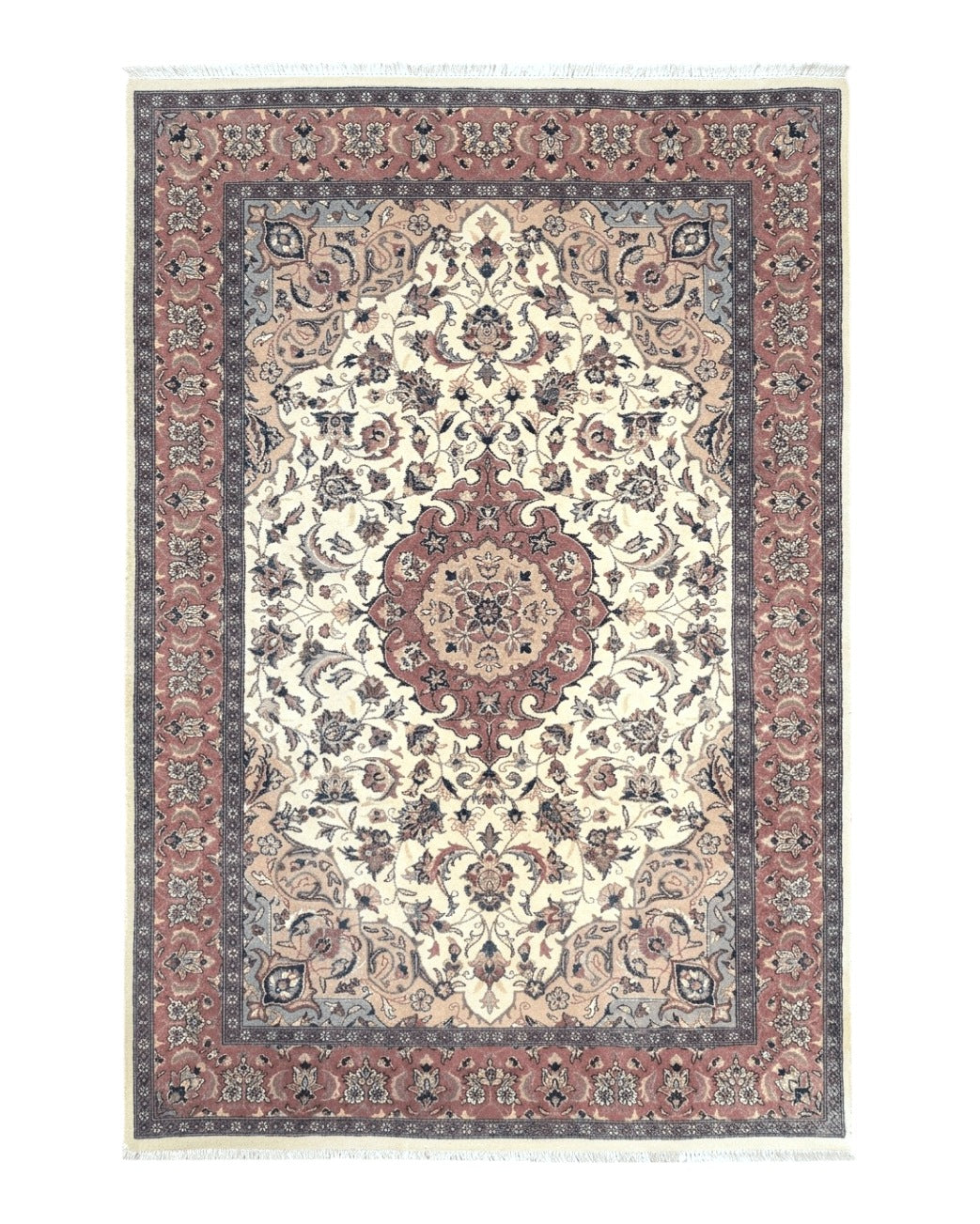
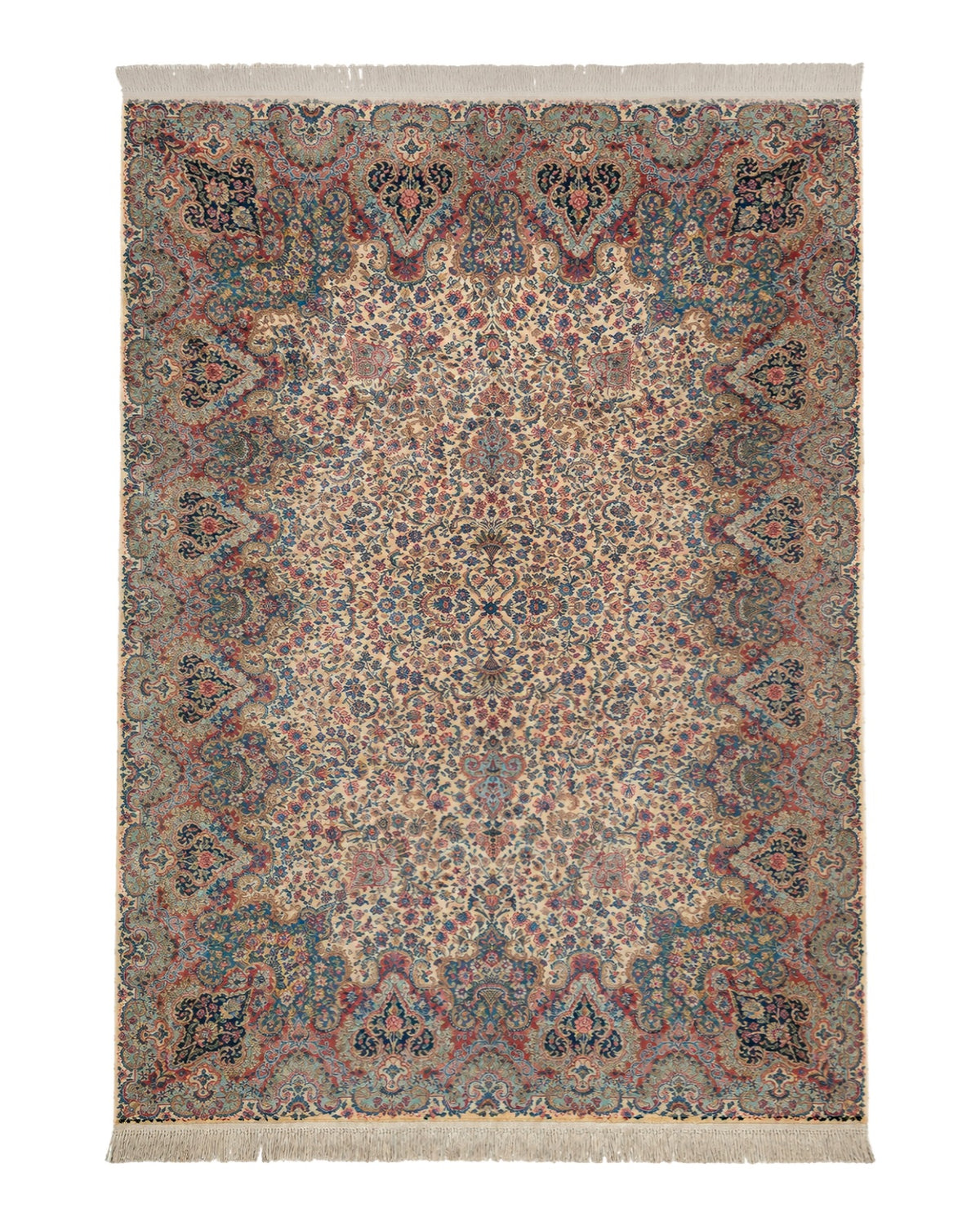
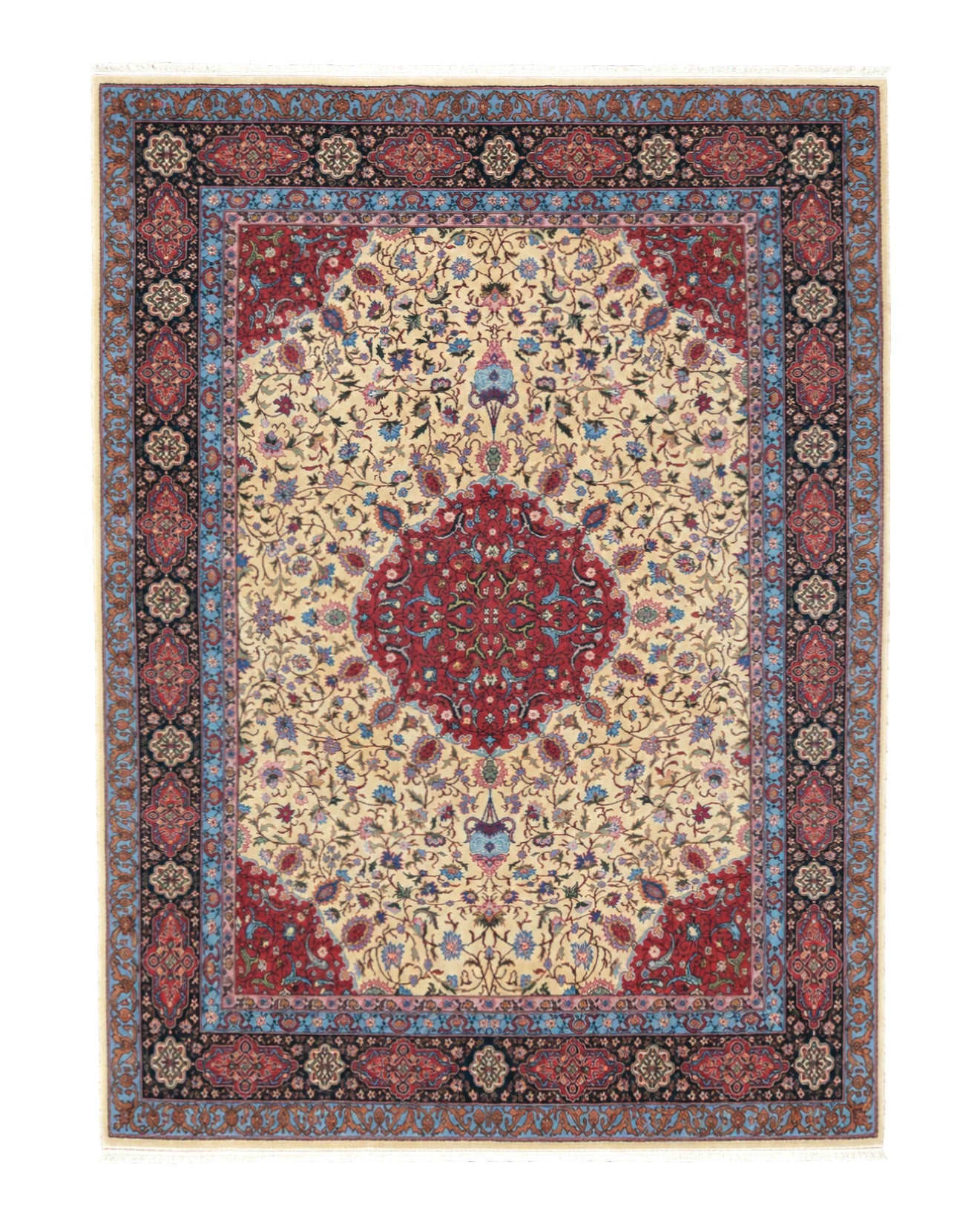
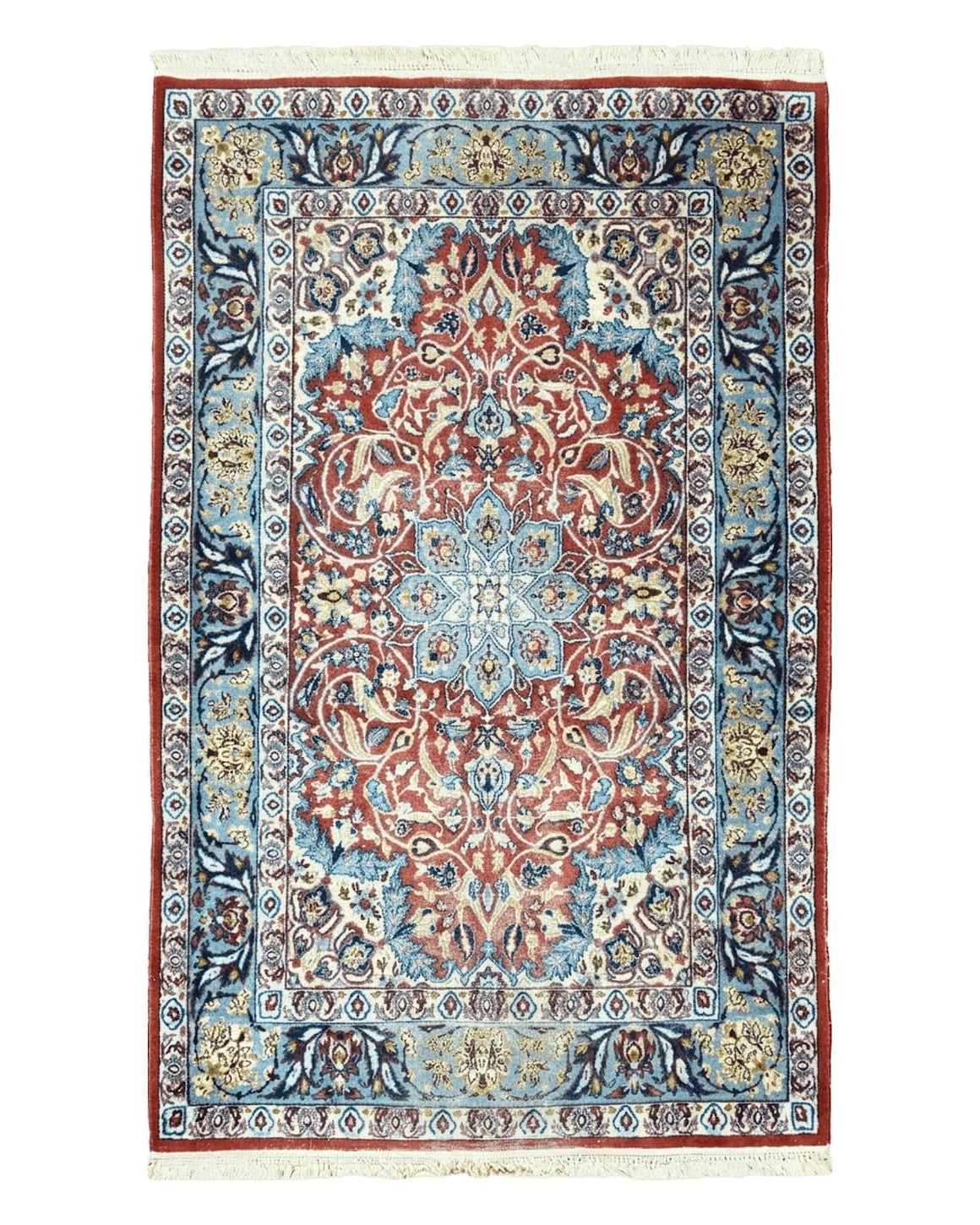
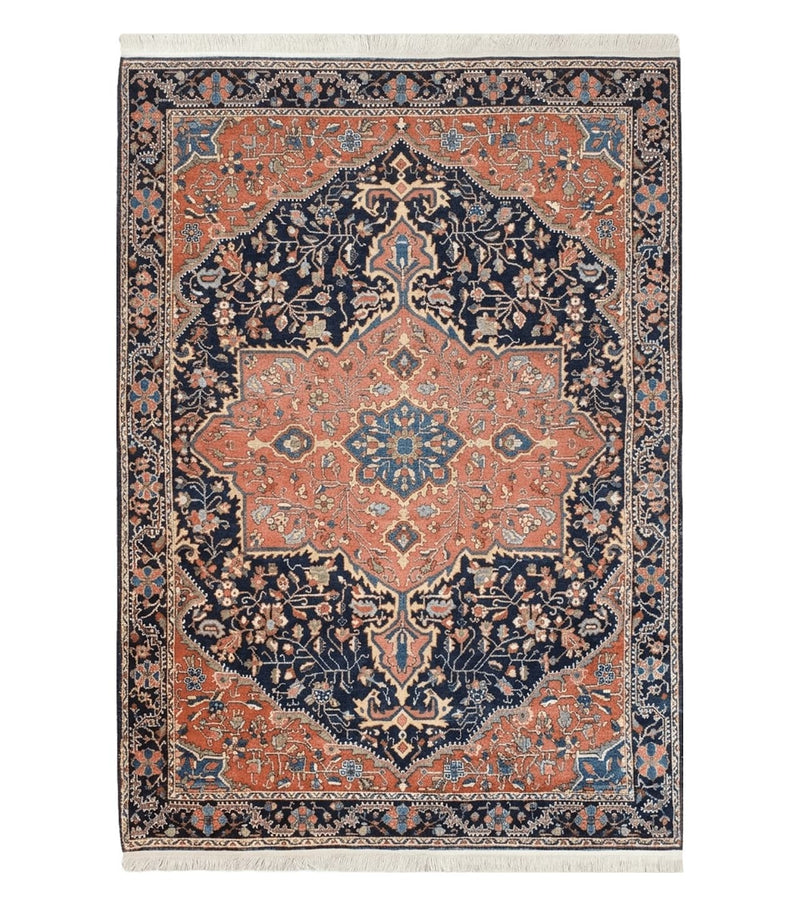
Red is the defining color of Oriental rugs. It came from madder, a root grown across the rug belt, which can give everything from pale pink and salmon to brick, rust and deep wine red. Red is traditionally associated with happiness, joy, courage and wealth, and in many regions it is a color of celebration and weddings. The deep reds of Kashan, the brick reds of Heriz, and the madder reds of Turkmen rugs are each characteristic of their region.
Blue
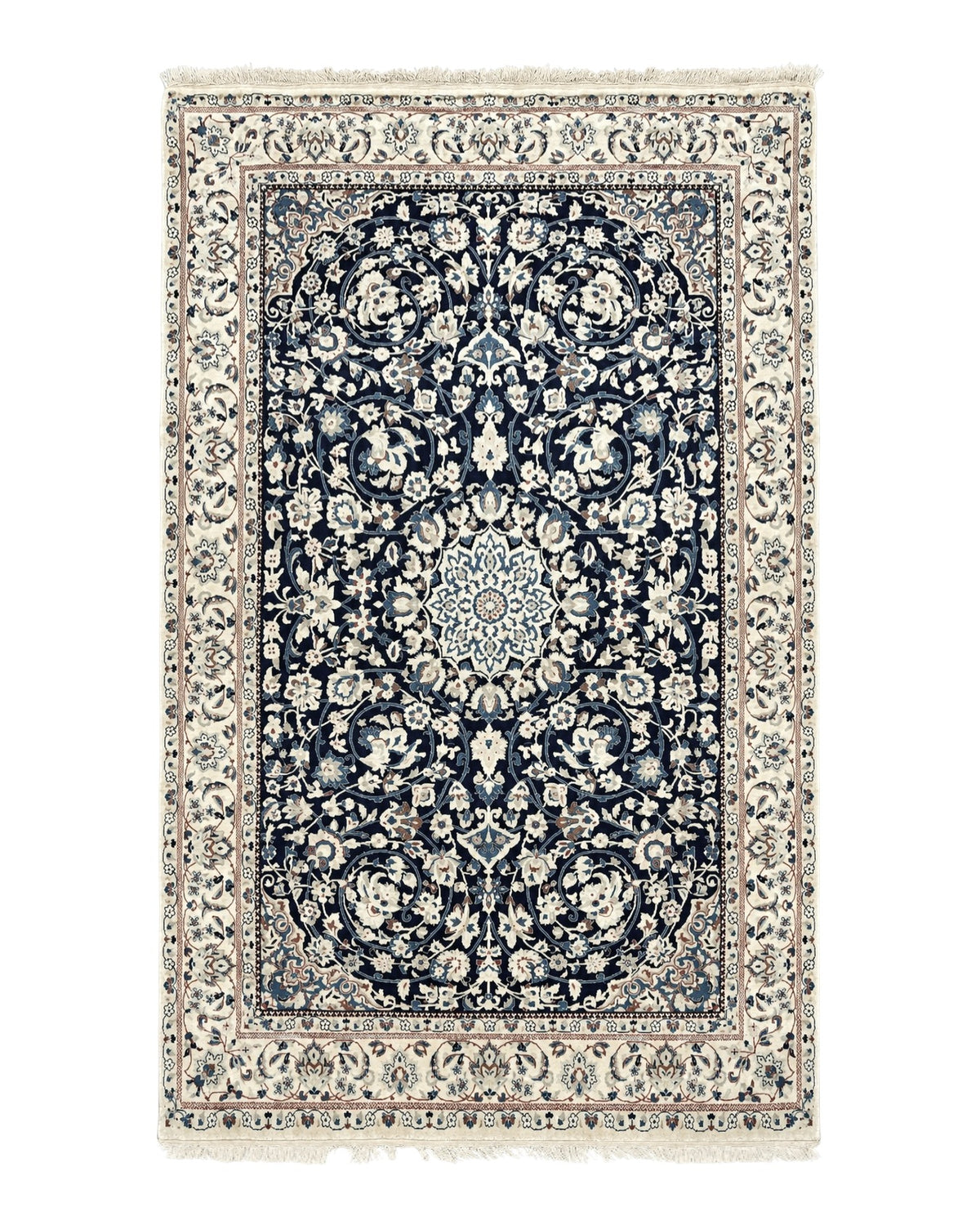
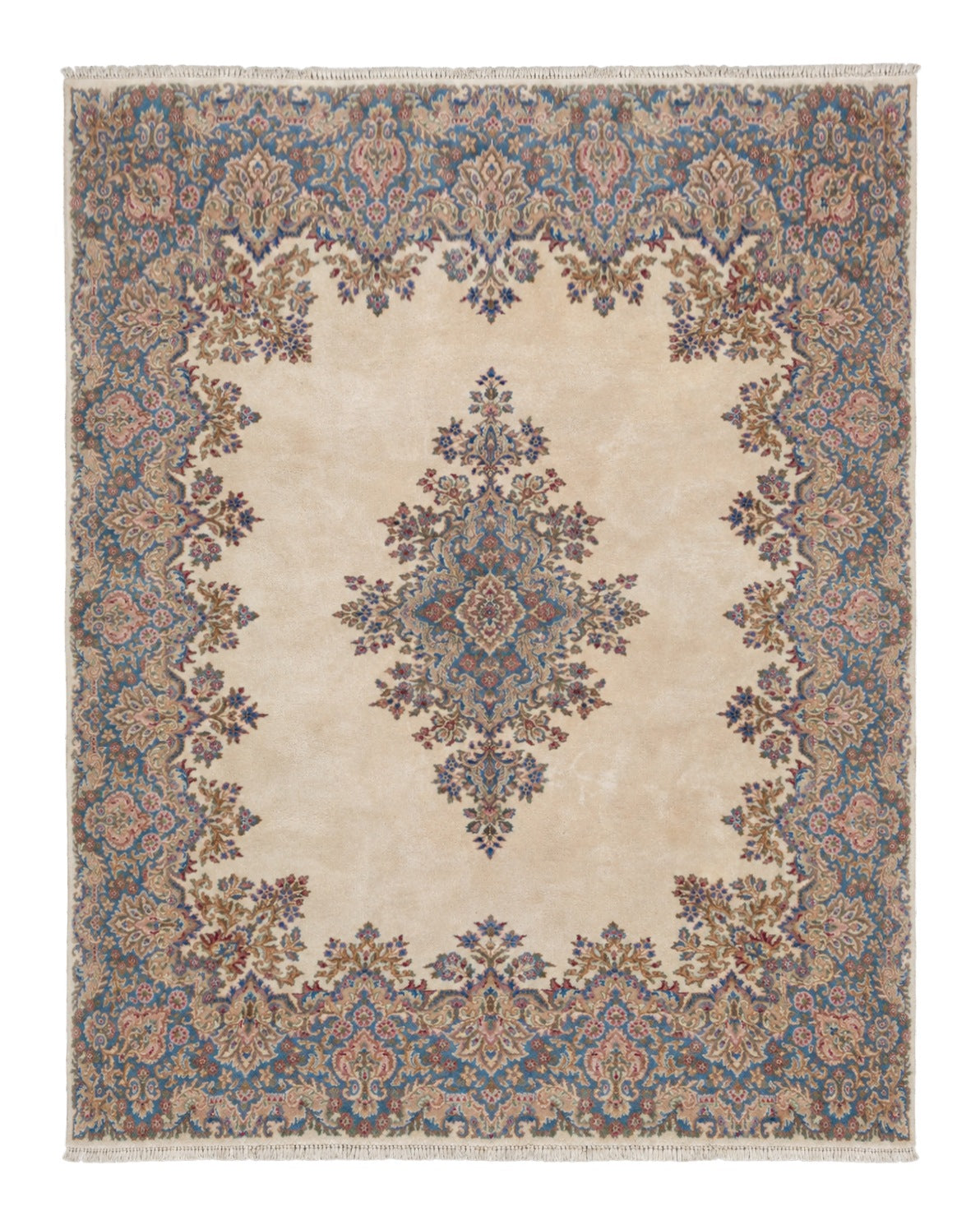
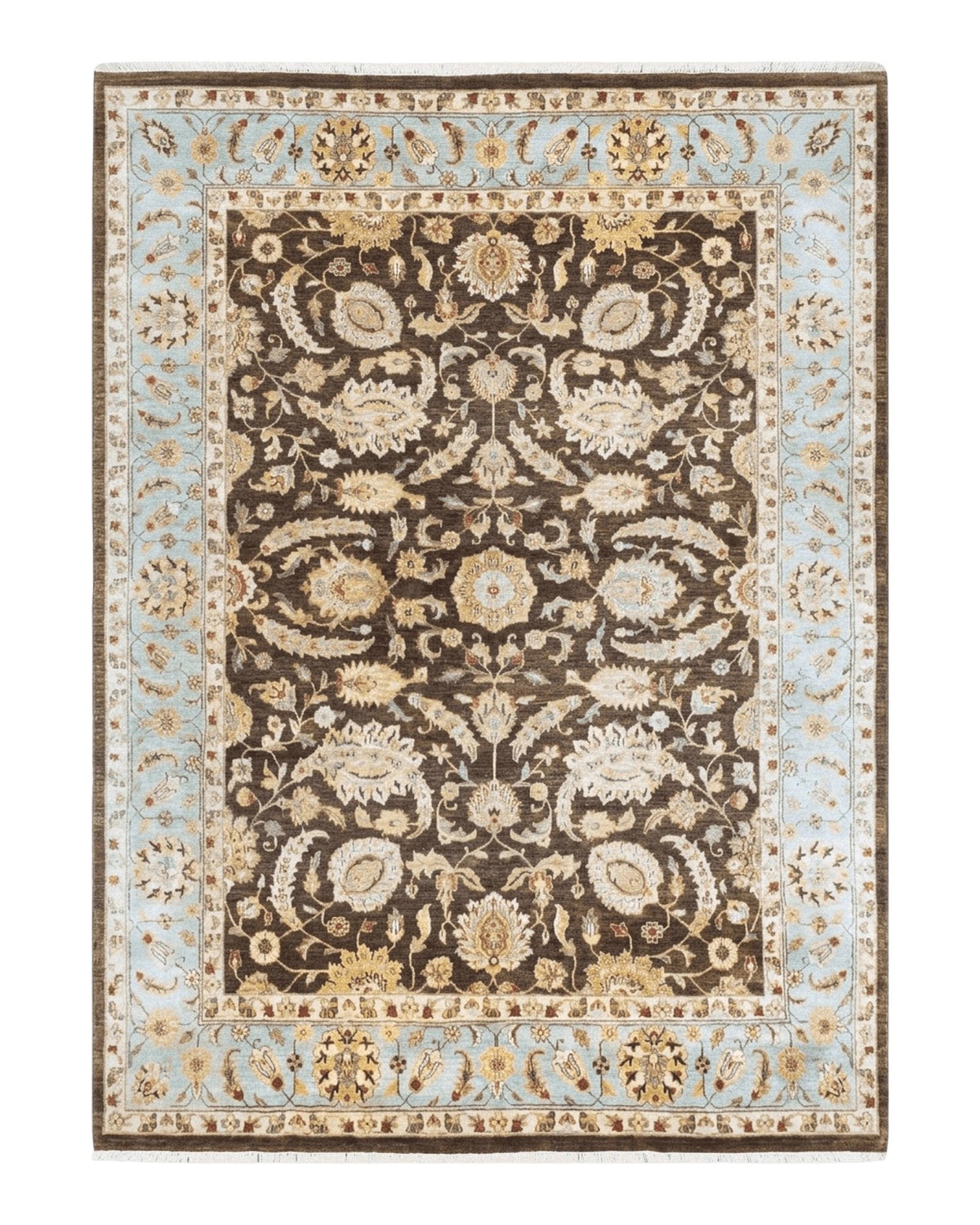
Blue came from indigo, and it ranges from pale sky blue to navy so dark it looks black. It is often used for borders, framing a red field, and for whole fields in rugs such as Veramin and many Kashans. Blue is traditionally linked to the sky, solitude and truth, and to protection against the evil eye. Light blue is especially associated with the tilework of Isfahan and with Nain rugs.
Ivory, beige and camel
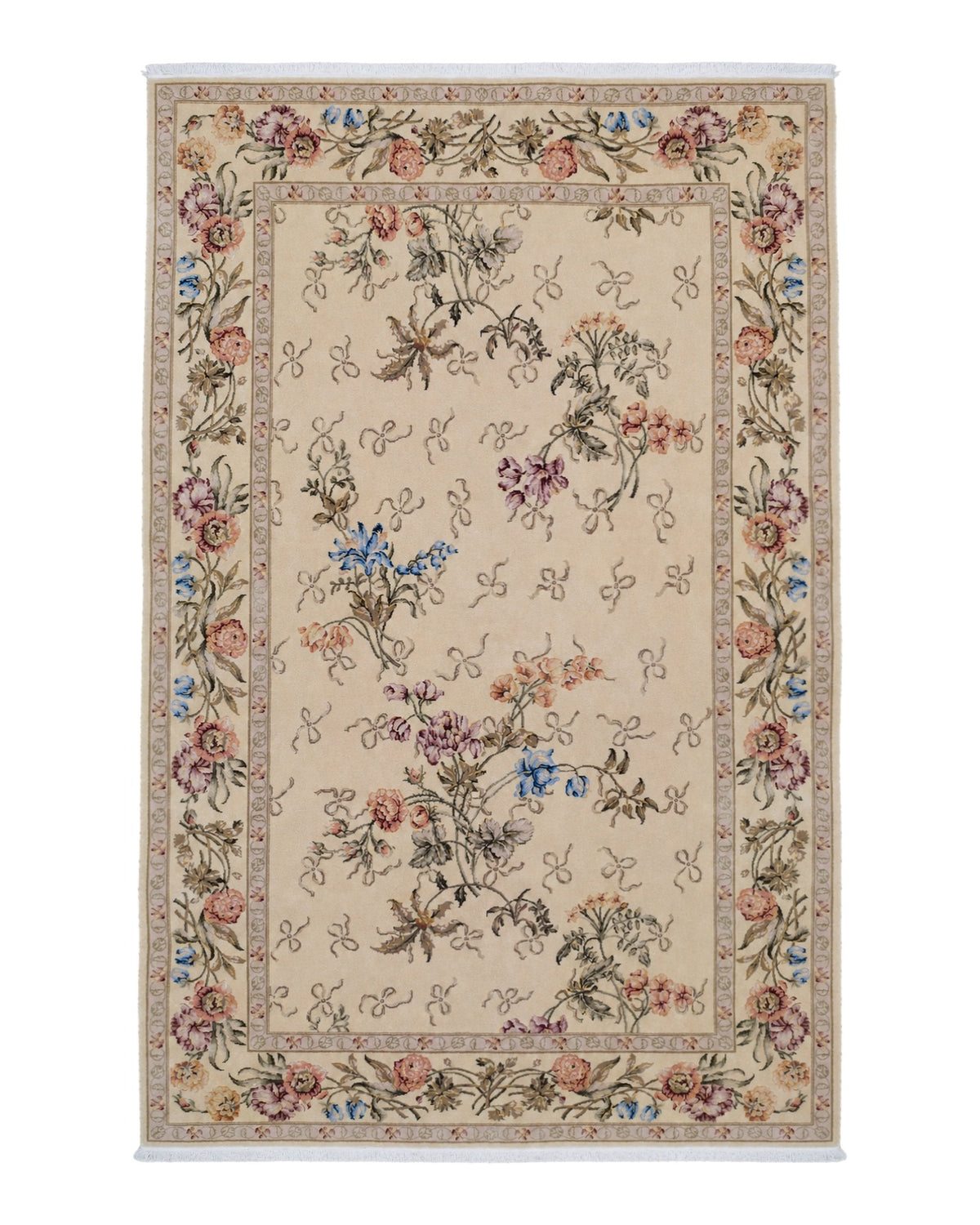
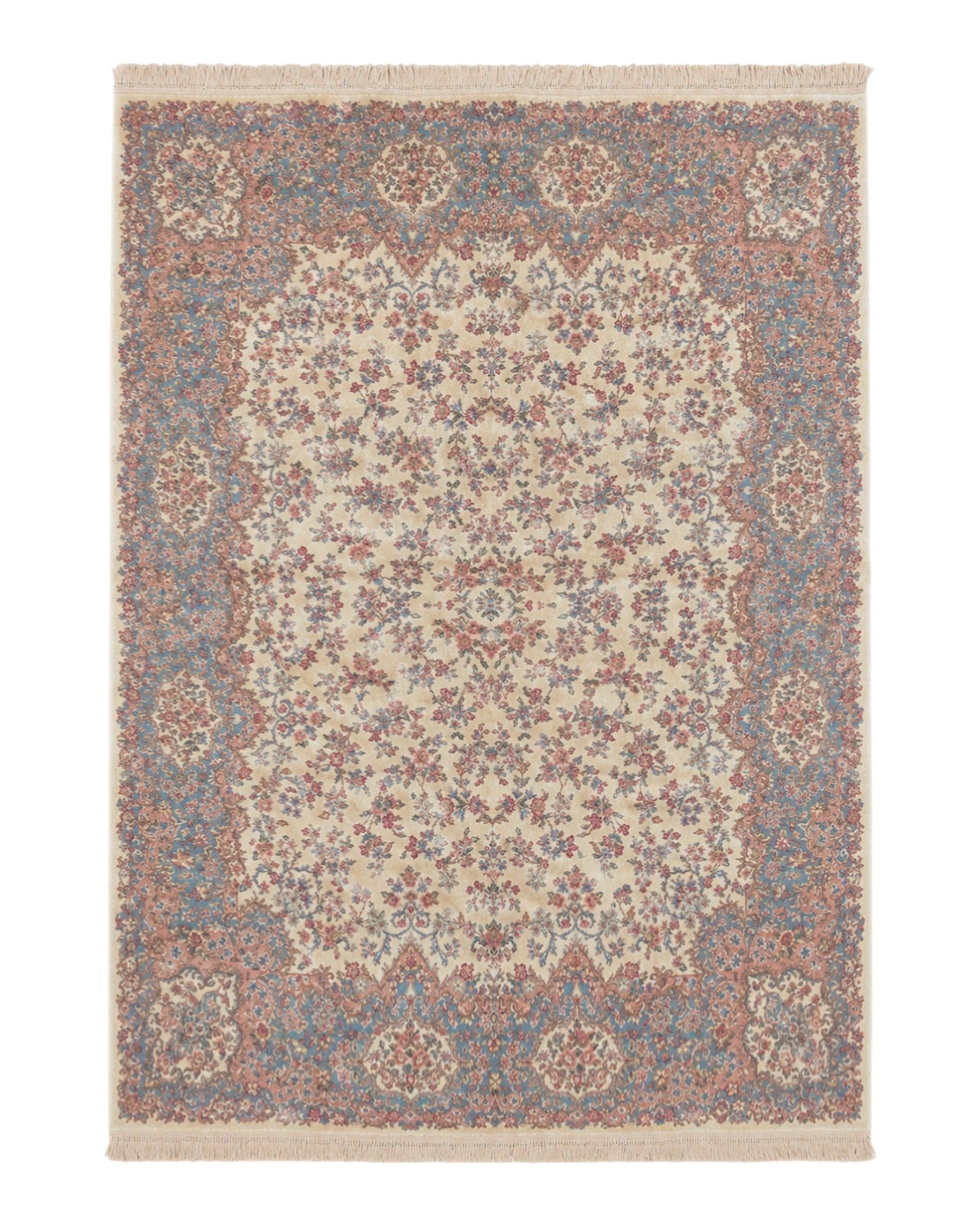
Ivory and beige are often the natural color of undyed sheep's wool, and camel shades come from camel hair or naturally colored wool. Ivory is associated with peace and purity. Ivory-field rugs, such as Nain, Isfahan and many Kermans, look light and elegant; camel grounds, as in Sarab and Baluch prayer rugs, are warm and quiet.
Green
Green was usually made by dyeing wool twice, with indigo and a yellow, and it is used more sparingly than red or blue. As the color traditionally associated with Islam and paradise, green was sometimes kept for special places in a design and avoided where it would be walked on. In many Persian rugs it appears as a soft sage or as small accents.
Yellow, gold and orange
Yellows came from plants such as weld, saffron, and pomegranate rind, and oranges from combining madder with yellow. Gold is associated with power and wealth, and yellow with the sun. Bright yellows and oranges are typical of tribal weaving, especially Qashqai and Afshar rugs.
Brown and black
Dark browns and blacks came from natural dark wool or from dyes such as walnut husks, oak galls and iron compounds. The iron-based blacks and browns in older rugs slowly corrode the wool, so these areas often wear lower than the rest of the pile, which can give an attractive embossed look.
Choosing colors for a room
- Start with the rug. A rug has many colors; picking wall and fabric colors from it is easier than finding a rug to match a finished room.
- Light and dark fields. Ivory and light fields make a room feel larger but show soiling more; red and navy fields are warm and forgiving.
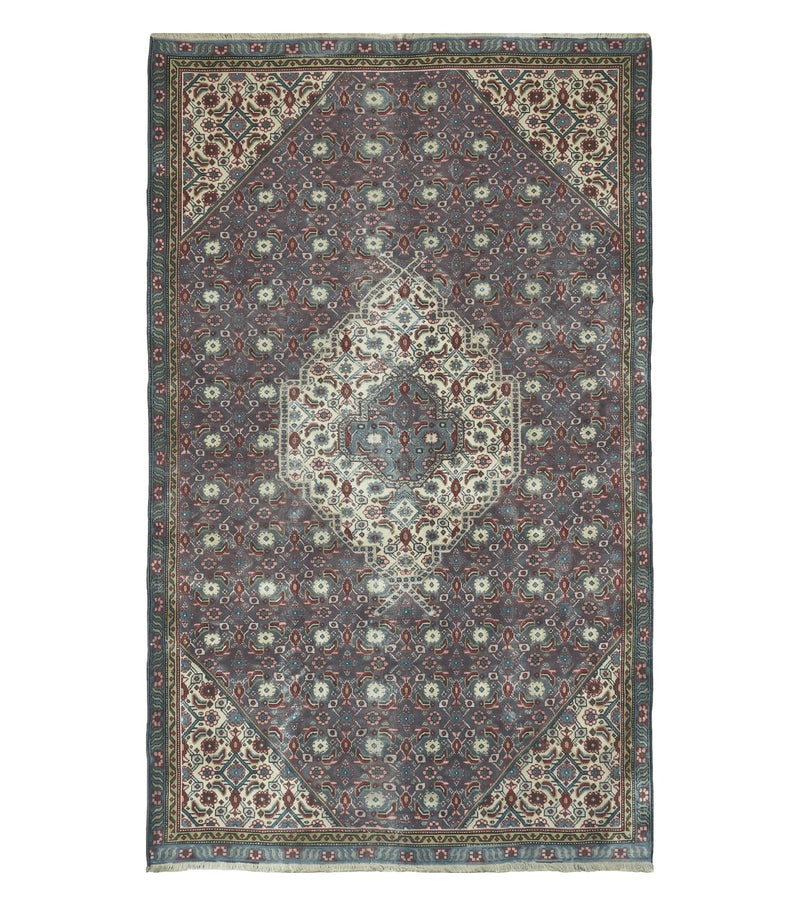
- Softened colors. Older rugs and rugs with mellow, faded tones sit easily with modern furniture.
- Light matters. Look at a rug in the room's own light; north light makes colors cooler, south light warmer.
See Natural vs. Synthetic Dyes and Abrash and Rug Motifs and Their Meanings.