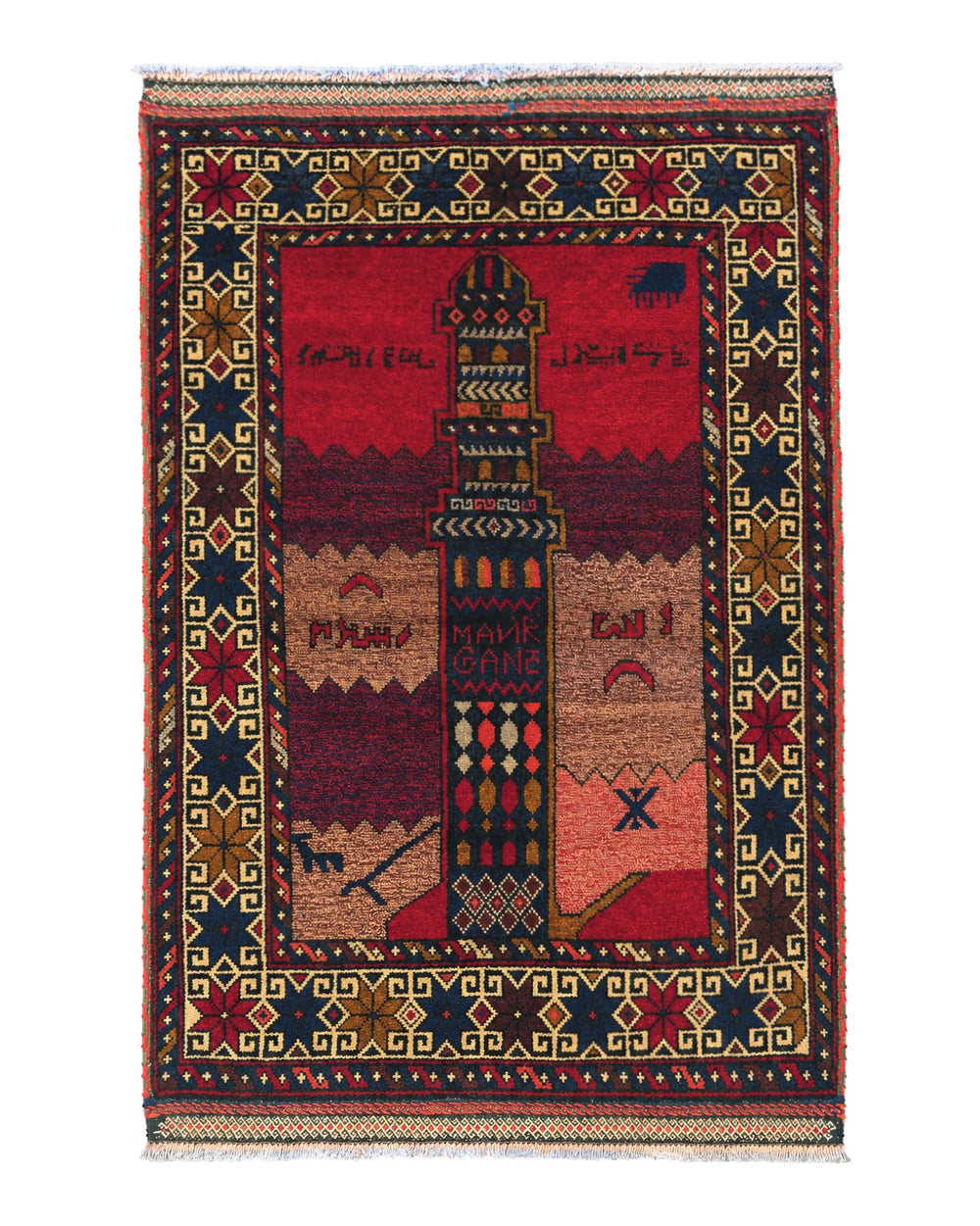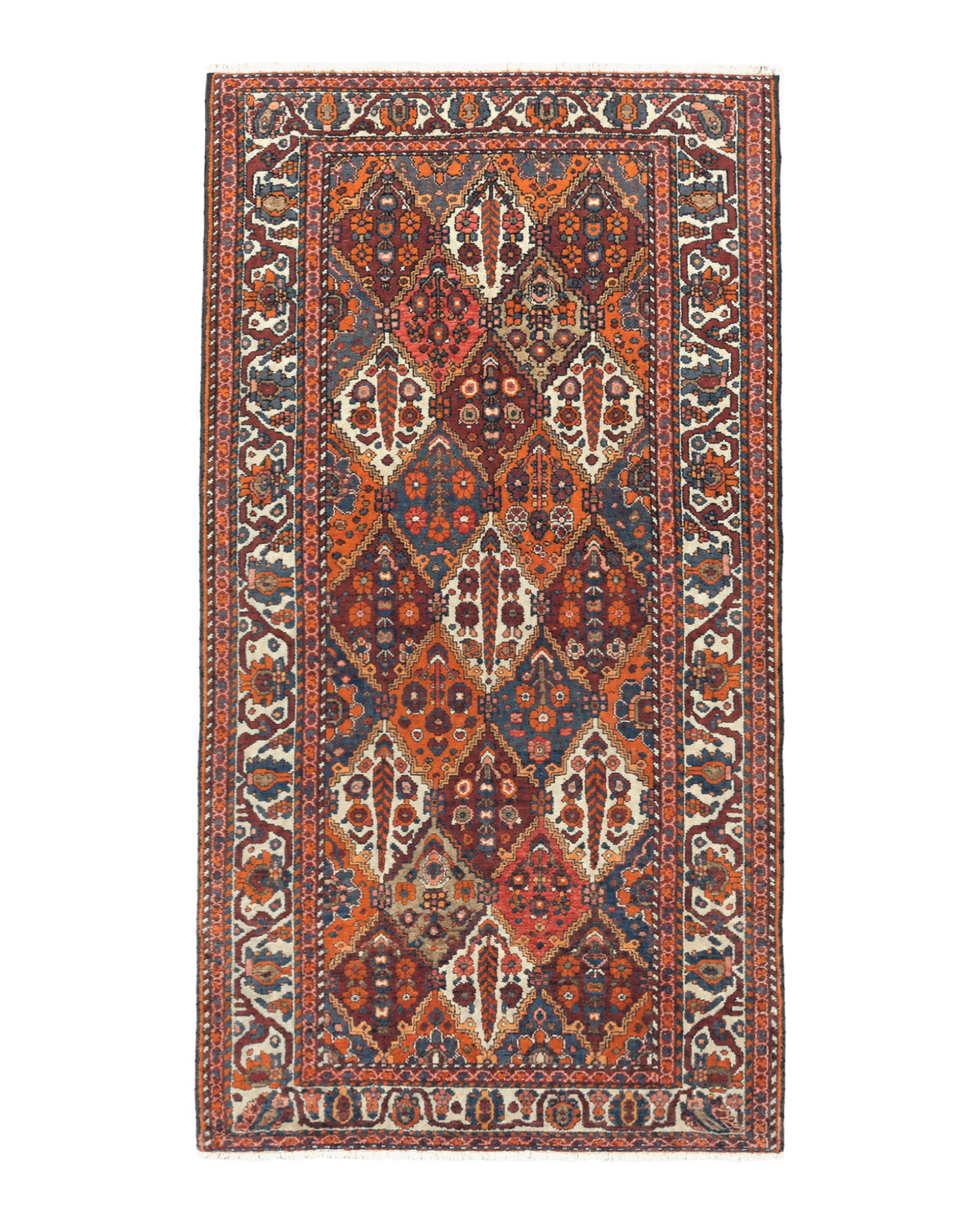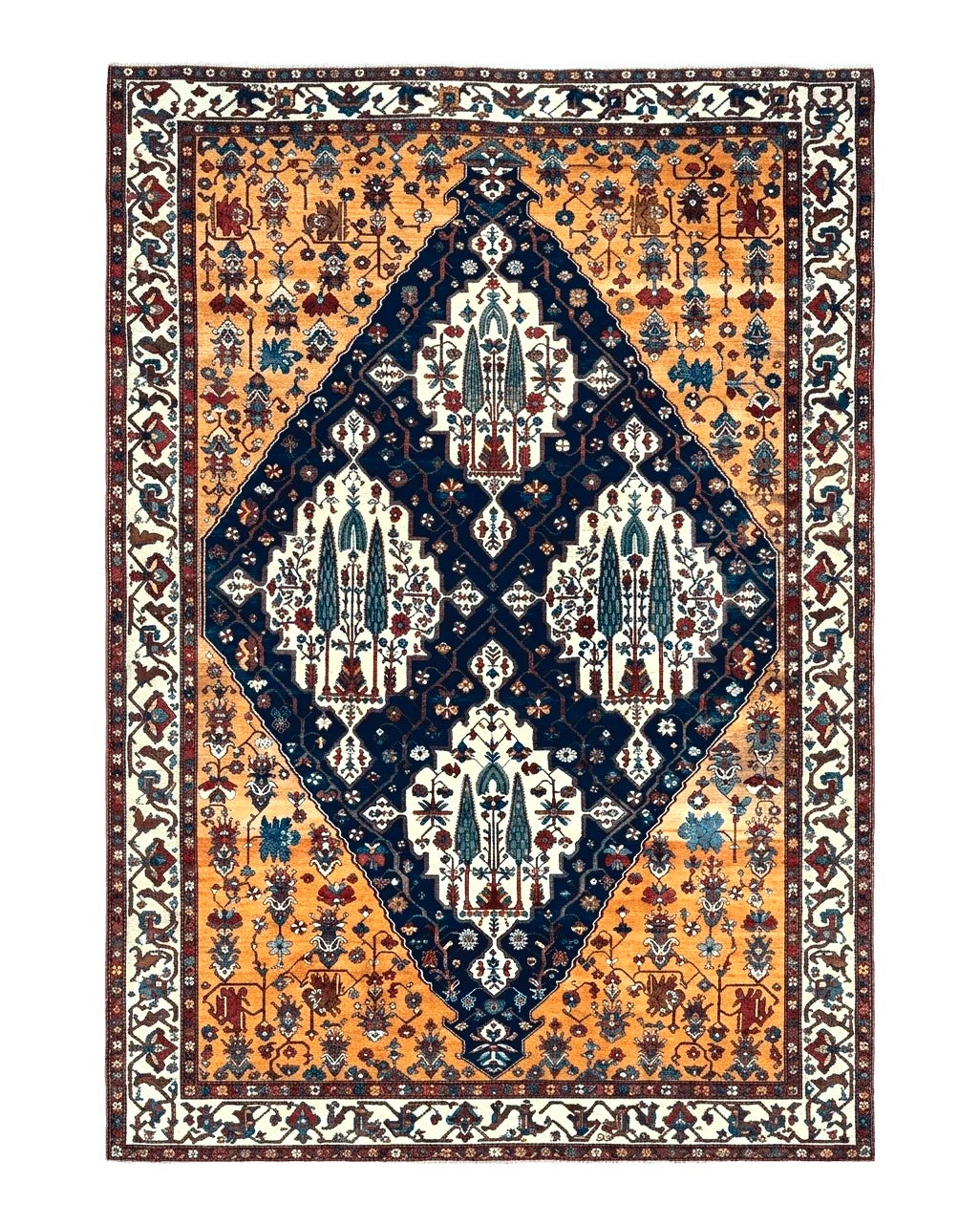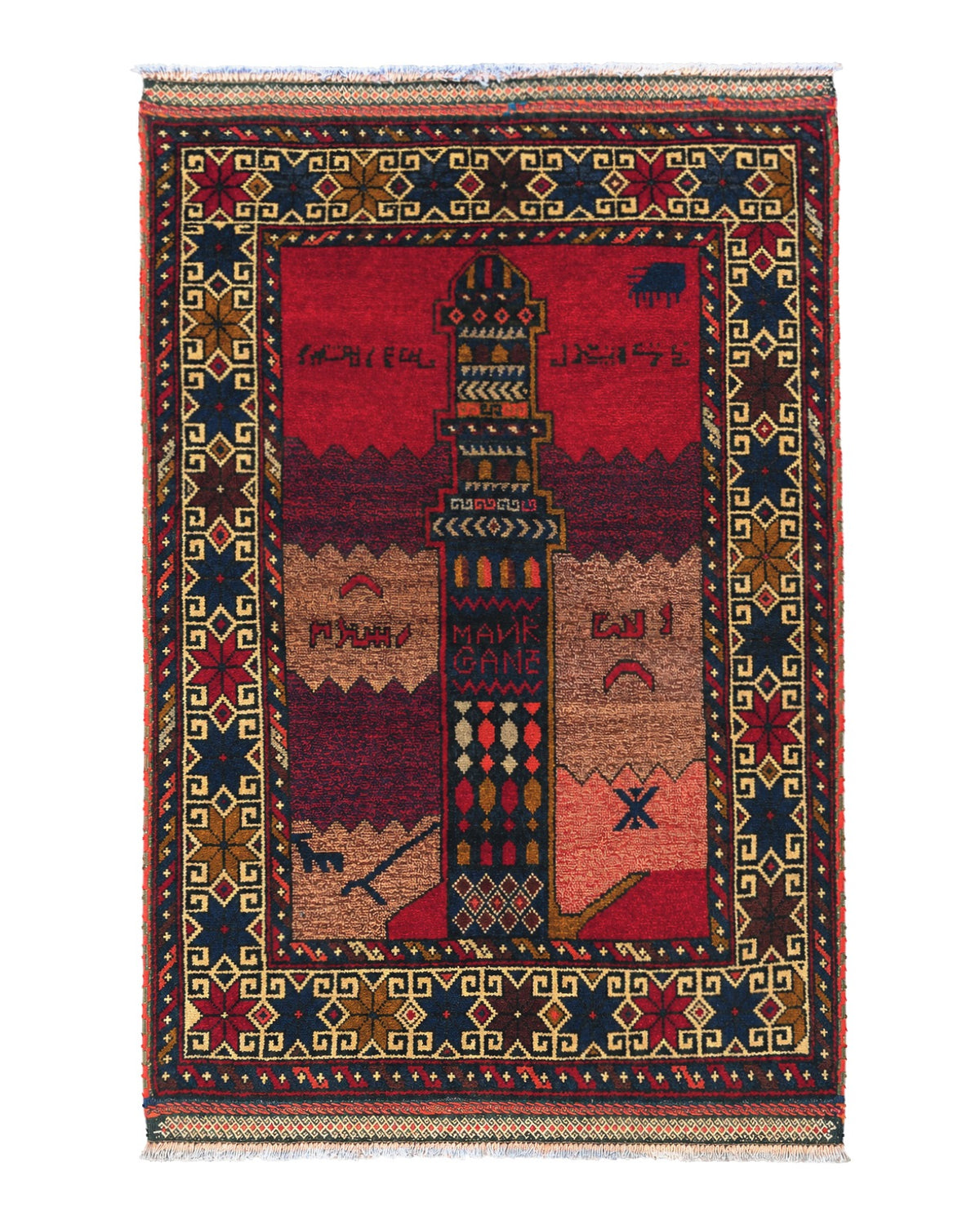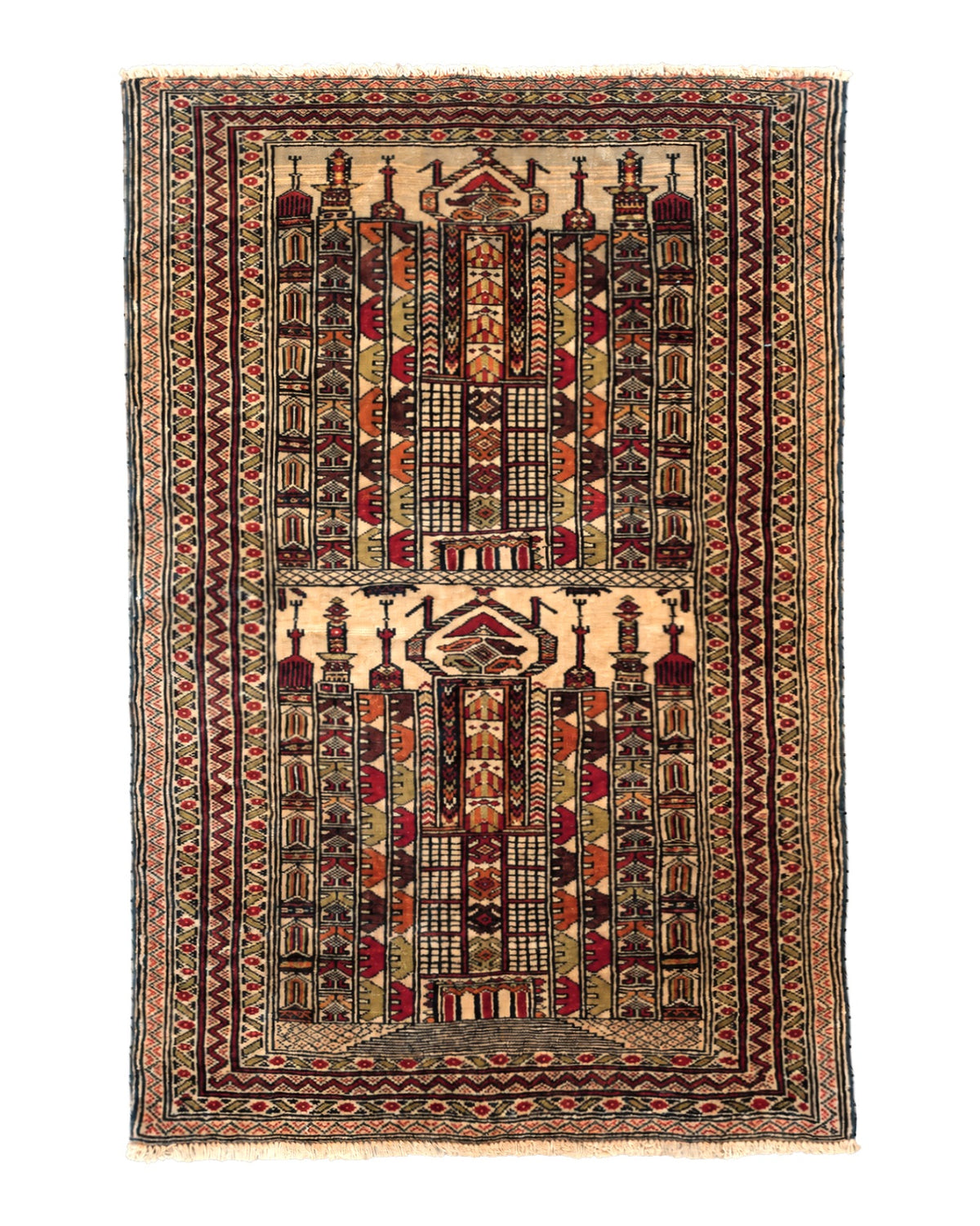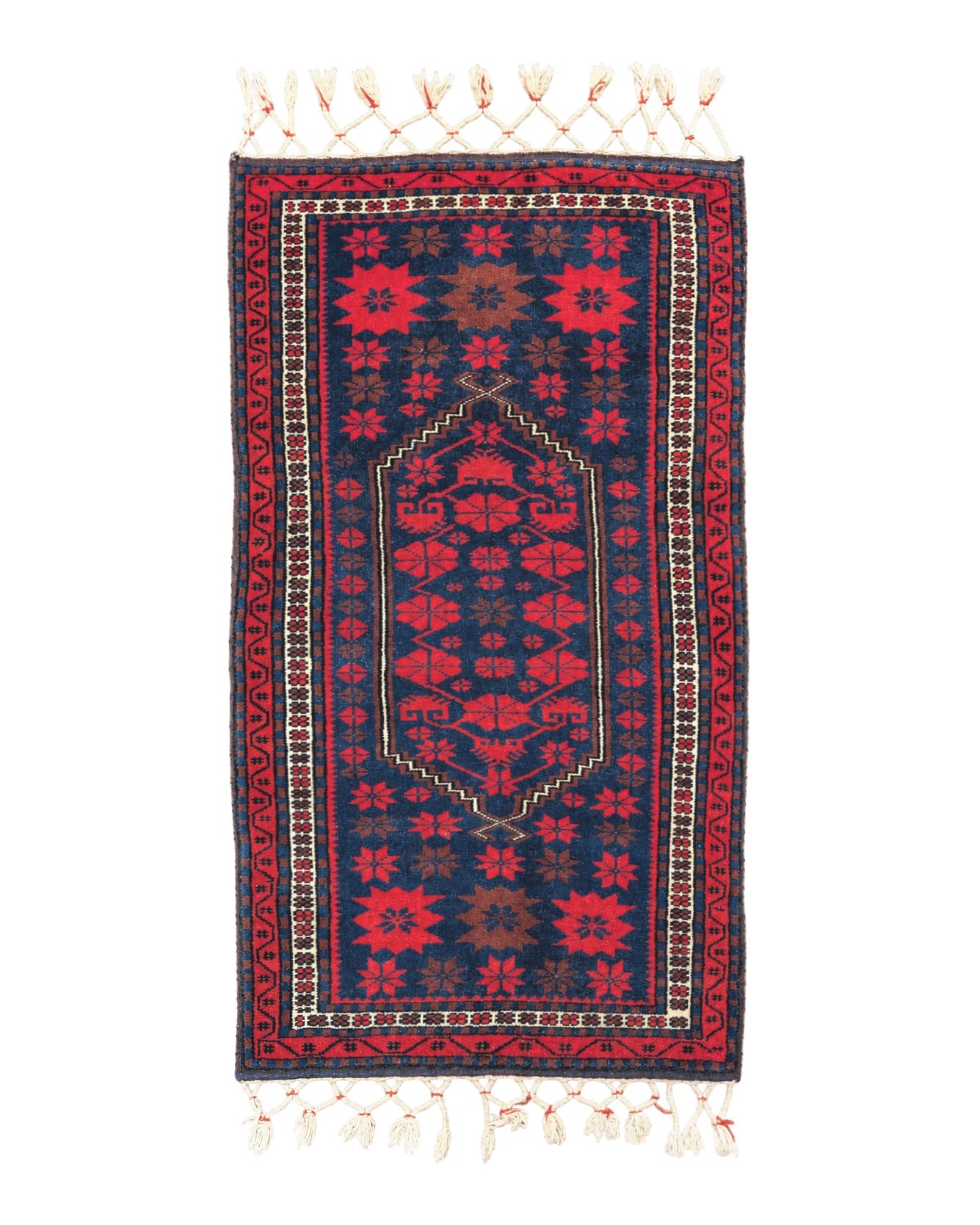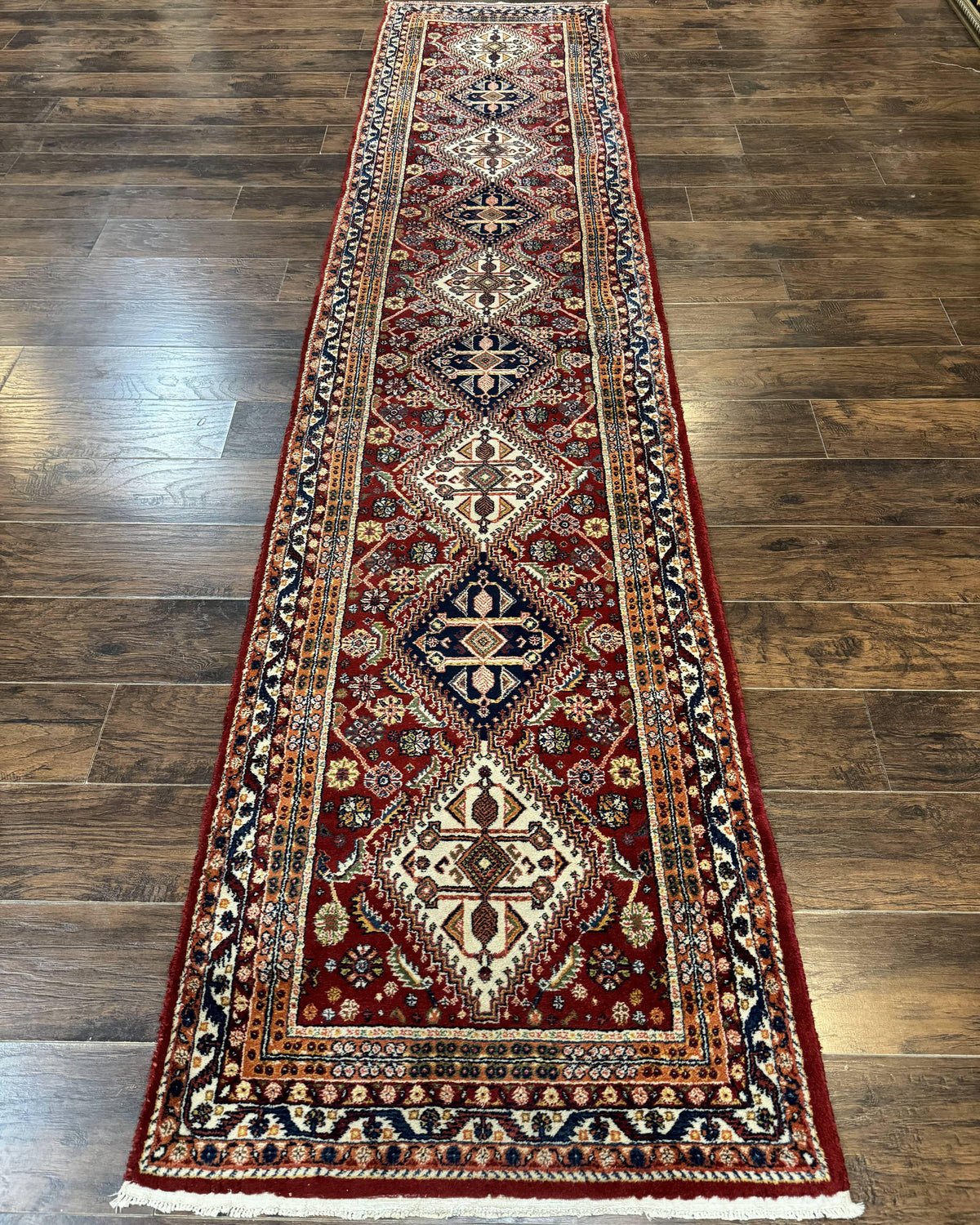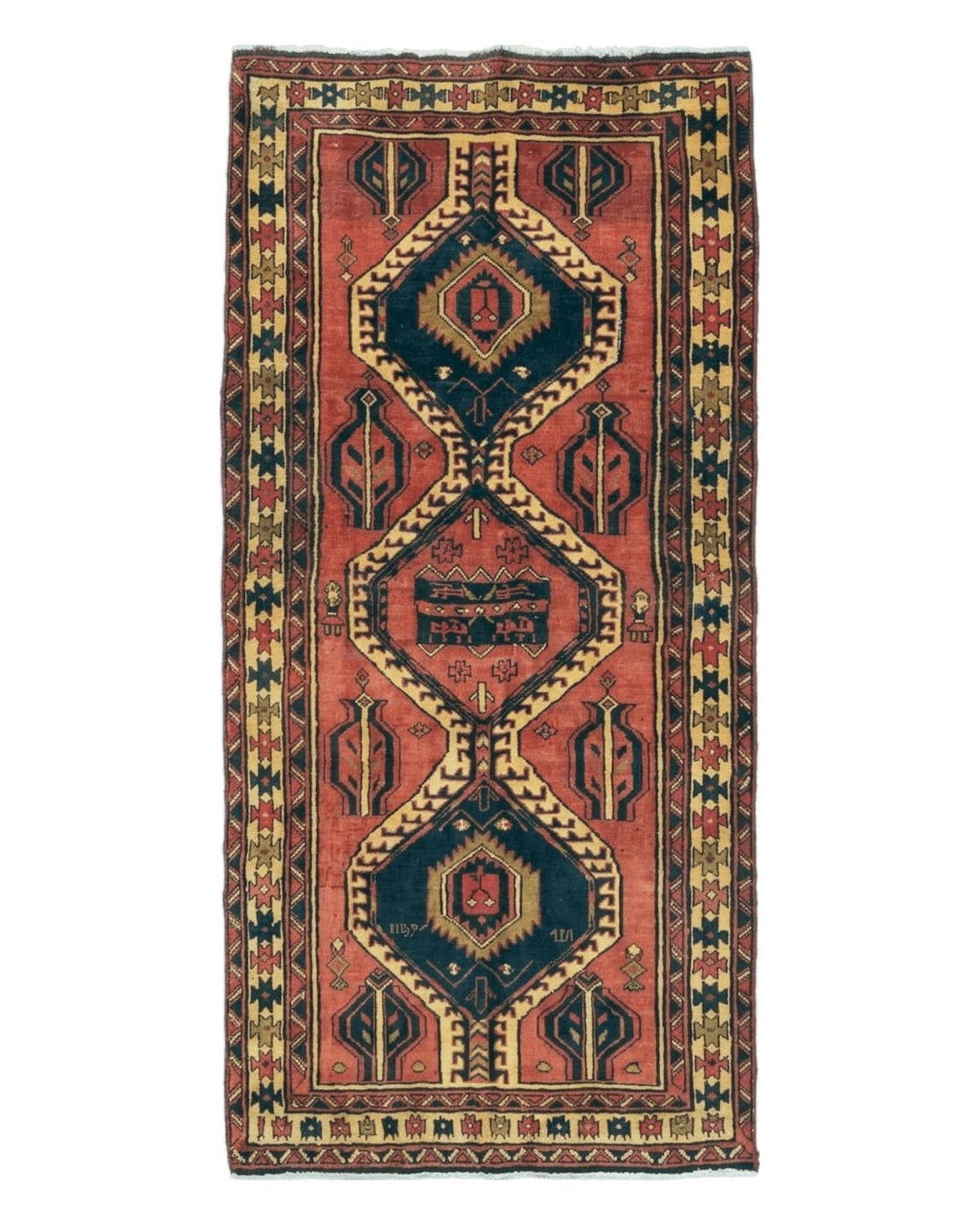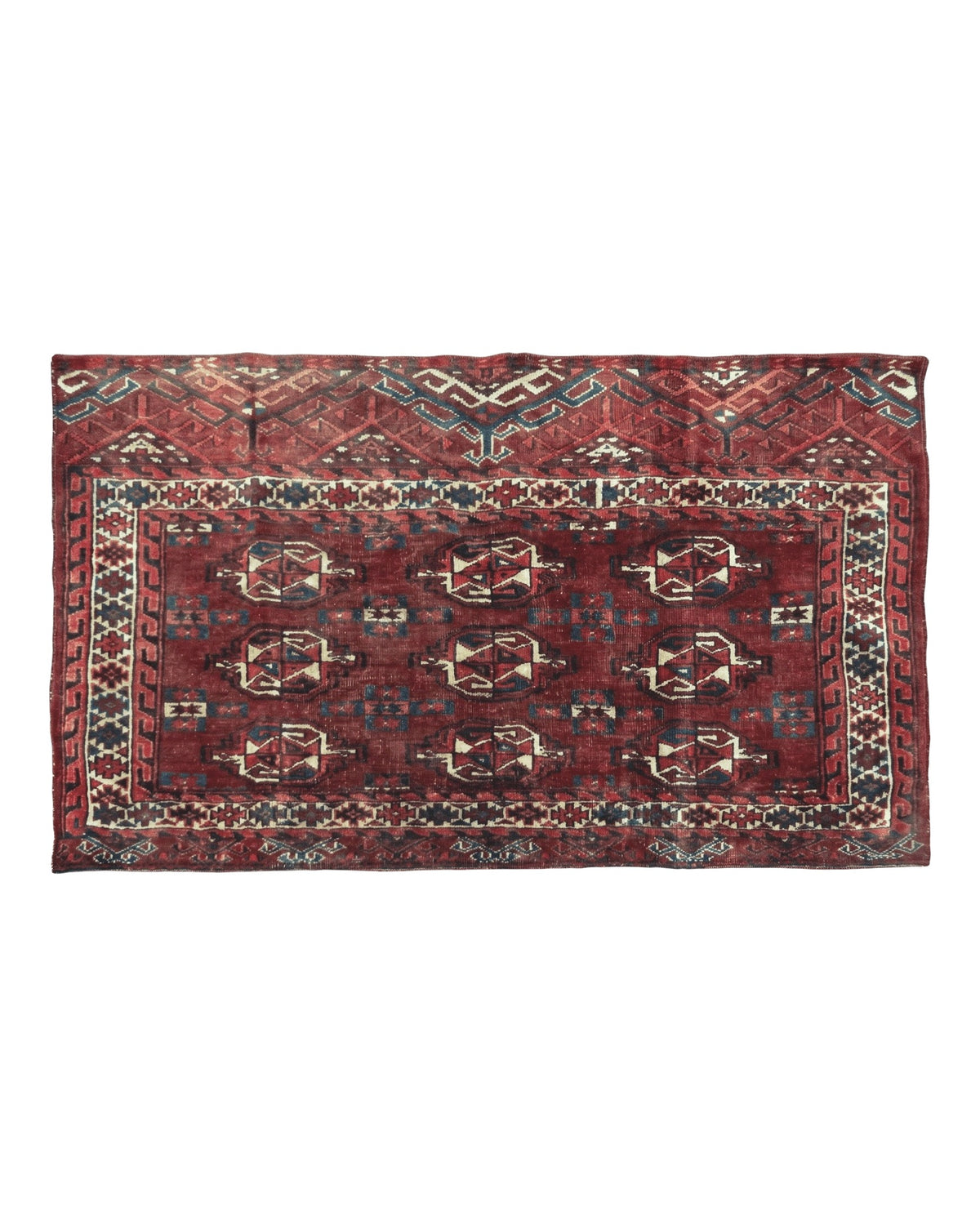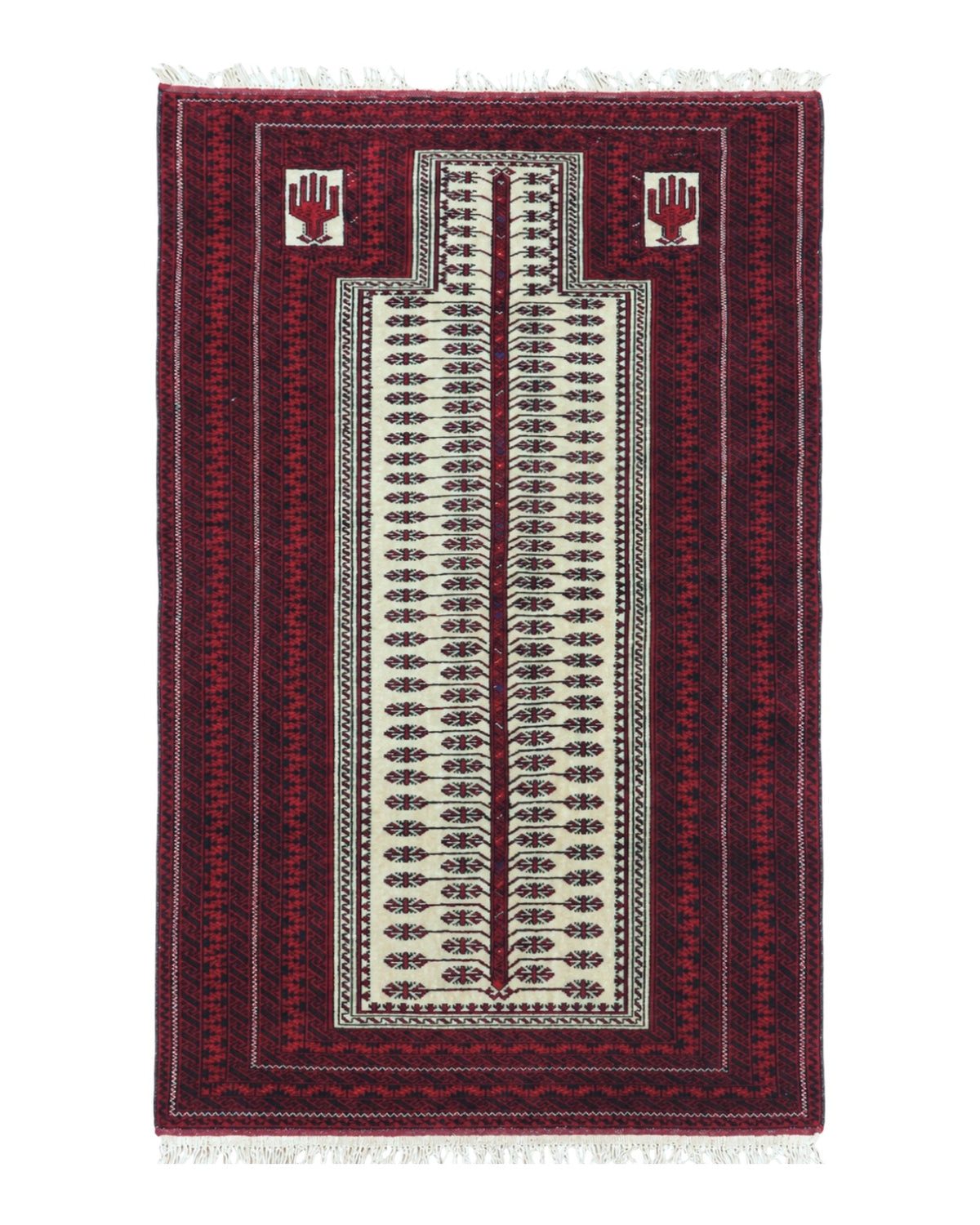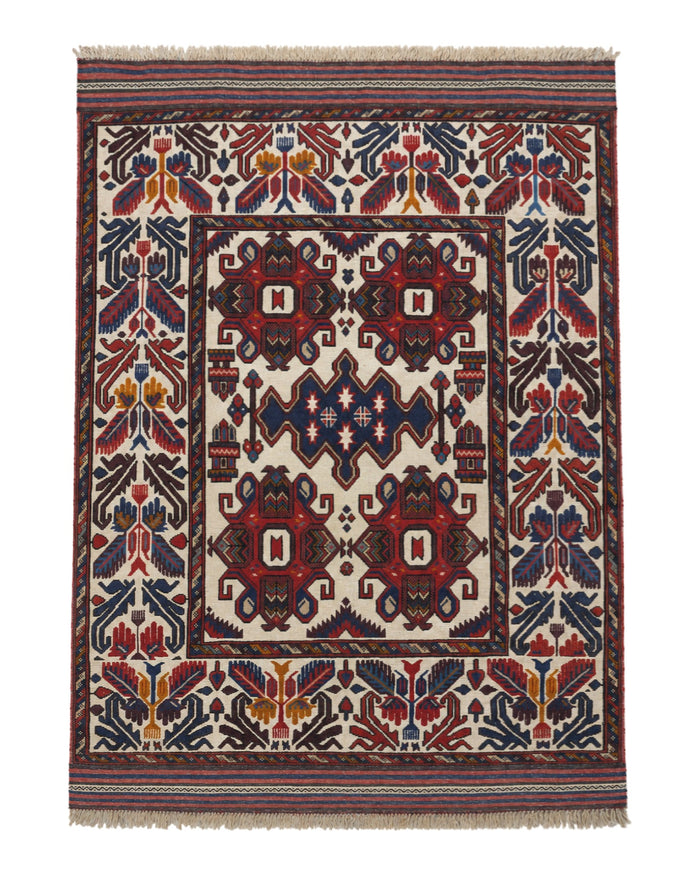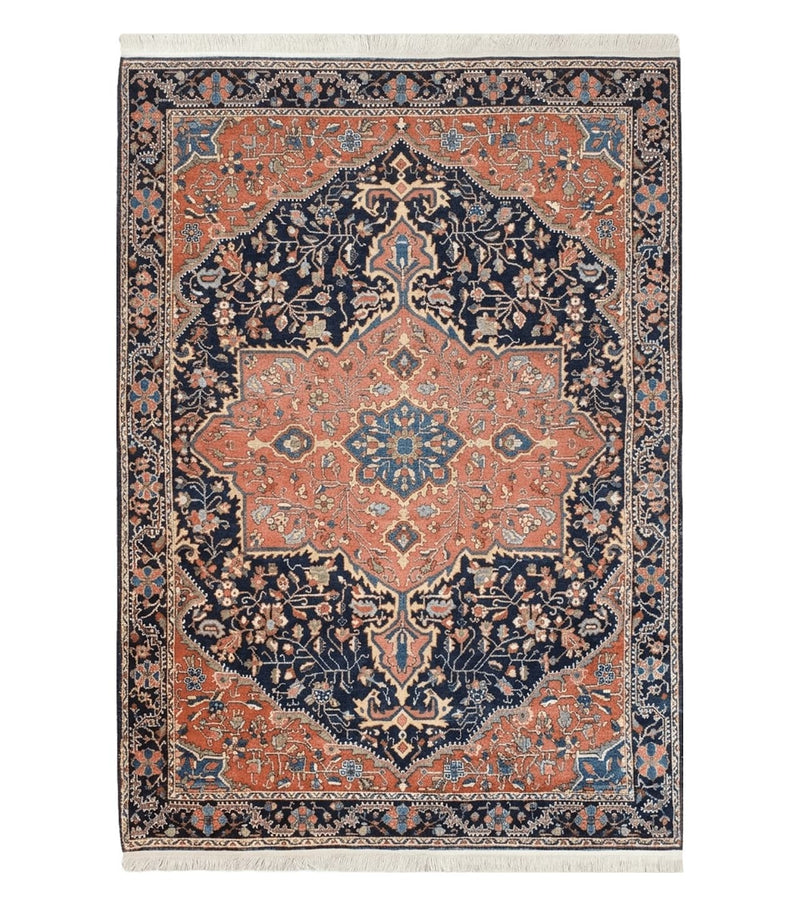


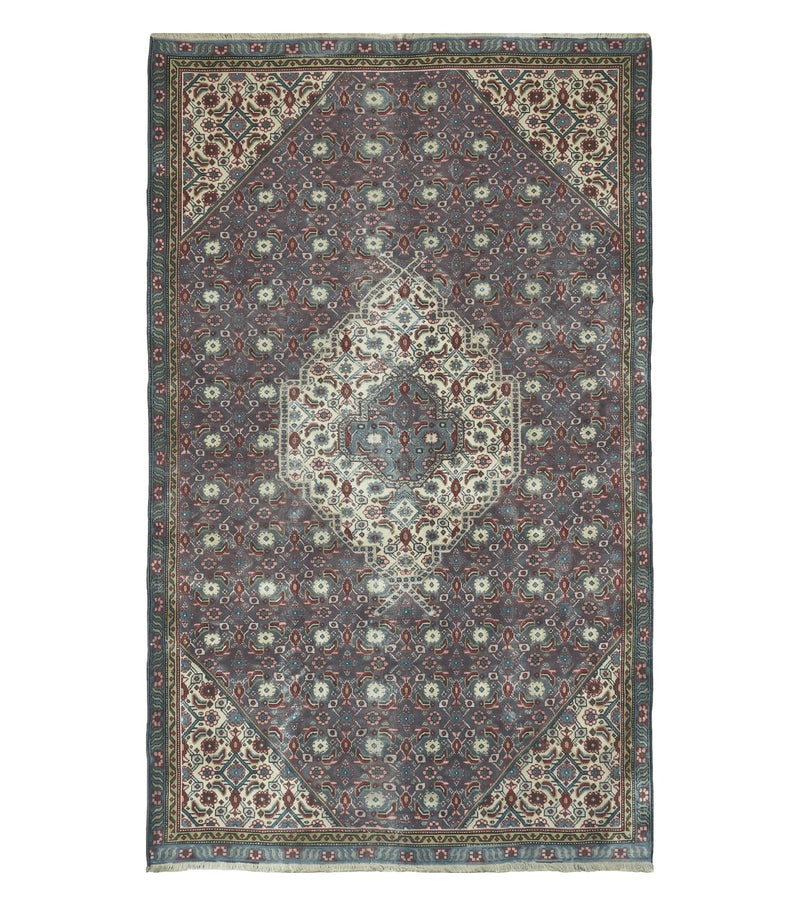


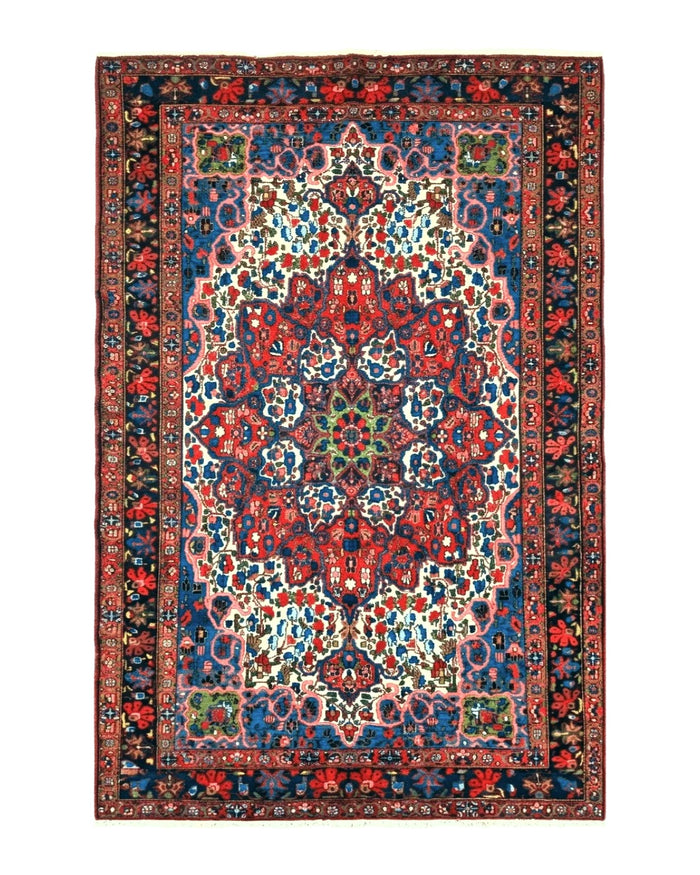

Persian tribal rugs are woven by the nomadic and semi-nomadic peoples of Iran, such as the Qashqai, Bakhtiari, Afshar, Baluch, Kurds and Turkmen. For centuries these groups moved with their flocks between summer and winter pastures, and they wove rugs, bags and tent furnishings for their own use from the wool of their own sheep and goats. Tribal rugs are the most personal and expressive of Persian rugs: woven from memory, full of symbols and animals, and rich in natural color.
| Woven by | Nomadic and semi-nomadic tribes, mostly women |
|---|---|
| Loom | Horizontal ground loom that can be rolled up and moved |
| Design source | Memory, passed down within the tribe |
| Foundation | Usually wool, often dark goat or sheep wool |
| Knotting | Coarse to medium |
| Main groups | Qashqai, Khamseh, Bakhtiari, Afshar, Baluch, Kurdish, Turkmen, Luri |
How tribal rugs are made
Nomadic weavers use a horizontal loom laid on the ground, with the warps stretched between two wooden beams held by stakes. When the group moves on, the loom can be rolled up with the unfinished rug still on it and set up again at the next camp. This affects the rug: tension changes each time the loom is moved, so tribal rugs are often slightly irregular in shape, and their sizes are limited by the size of the loom and the tent.
Wool comes from the tribe's own flocks and is often hand-spun and dyed with natural dyes, giving strong, glowing color and plenty of abrash. Foundations are usually wool, sometimes goat hair, which makes the rug supple and soft.
Designs and symbols
Tribal designs are bold, geometric and full of life. Typical features include:
- Geometric medallions, often diamonds or hooked polygons, sometimes several in a row.
- Animals and birds scattered across the field: lions, dogs, goats, peacocks, roosters.
- Trees, flowers and boteh, drawn as simple geometric shapes.
- Small symbols such as stars, combs, hands and amulets, many of which carried protective meaning.
No two tribal rugs are alike, and charming irregularities, a motif left unfinished or a sudden change of color, are part of their appeal. See Rug Motifs and Their Meanings.
The main tribal groups
| Group | Region | Known for |
|---|---|---|
| Qashqai | Fars, south | Fine tribal rugs with medallions, animals and bright natural colors |
| Shiraz (Khamseh) | Fars, south | Market name for Fars tribal rugs; Khamseh bird motifs |
| Bakhtiari | Zagros, west-central | Garden panel designs; sturdy village and tribal rugs |
| Afshar | Kerman, south-east | Bold boteh and medallion designs, near-square sizes |
| Yalameh | Near Isfahan | Rows of stepped diamond medallions in bright colors |
| Baluch | Khorasan, east | Dark, glowing palettes, prayer rugs and small rugs |
| Gabbeh | South-west | Thick, simple rugs with open fields |
| Kurdish | West and north-east | Bold, robust rugs in strong colors |
| Turkmen | North-east | Repeating gul motifs on deep red grounds |
Settled tribal weaving
Through the 20th century, many tribal families settled in villages and towns. Their rugs often kept tribal designs and colors but were woven on fixed looms, sometimes with cotton foundations, and became more regular. Abadeh rugs, woven by settled Qashqai families, are a good example. See City, Village and Tribal Rugs.
Living with a tribal rug
Tribal rugs bring warmth and personality to a room and suit both traditional and modern interiors. Their soft wool foundations make them comfortable underfoot, and their size range, mostly small to medium, makes them easy to use in bedrooms, studies and hallways. See Natural vs. Synthetic Dyes and Abrash.