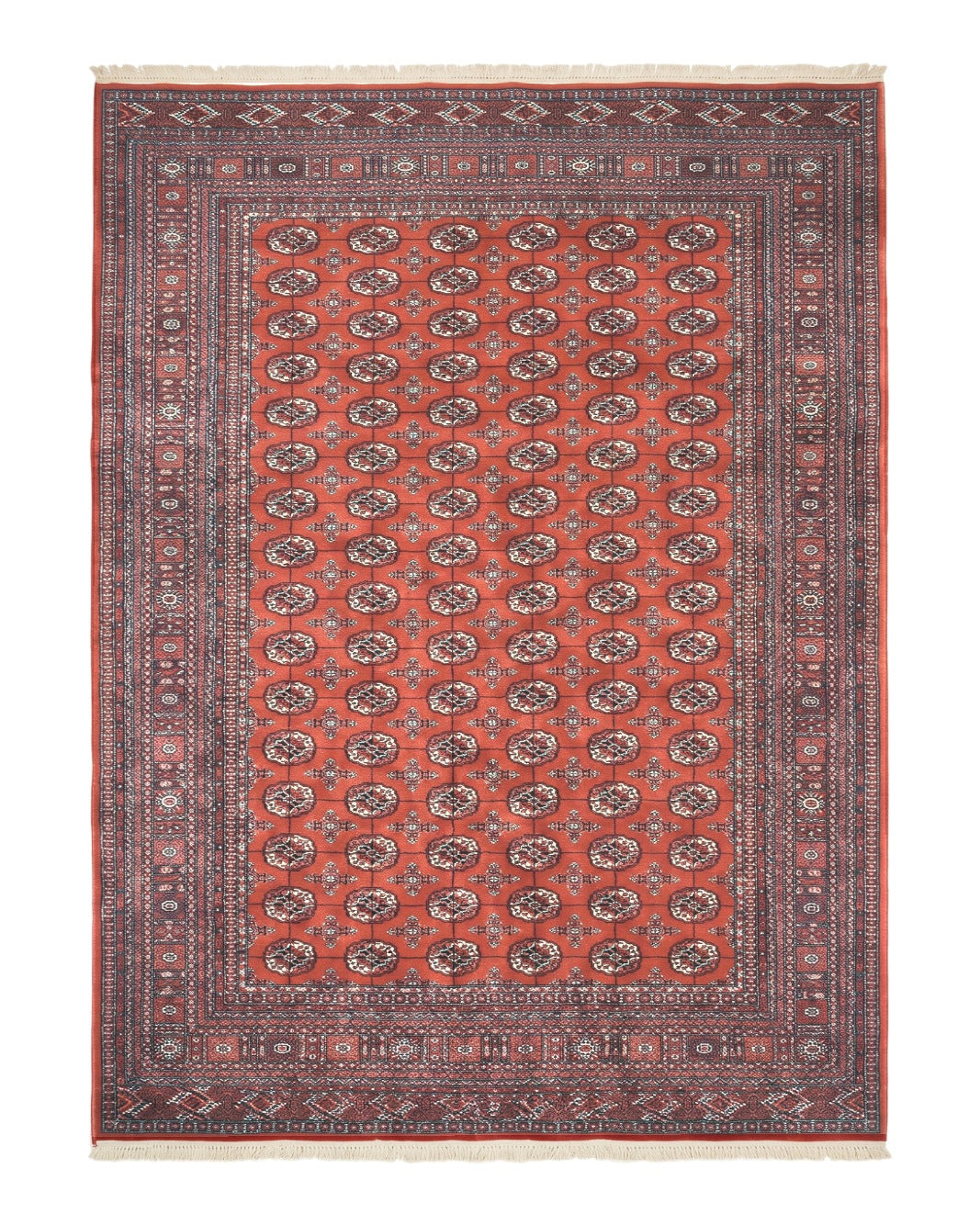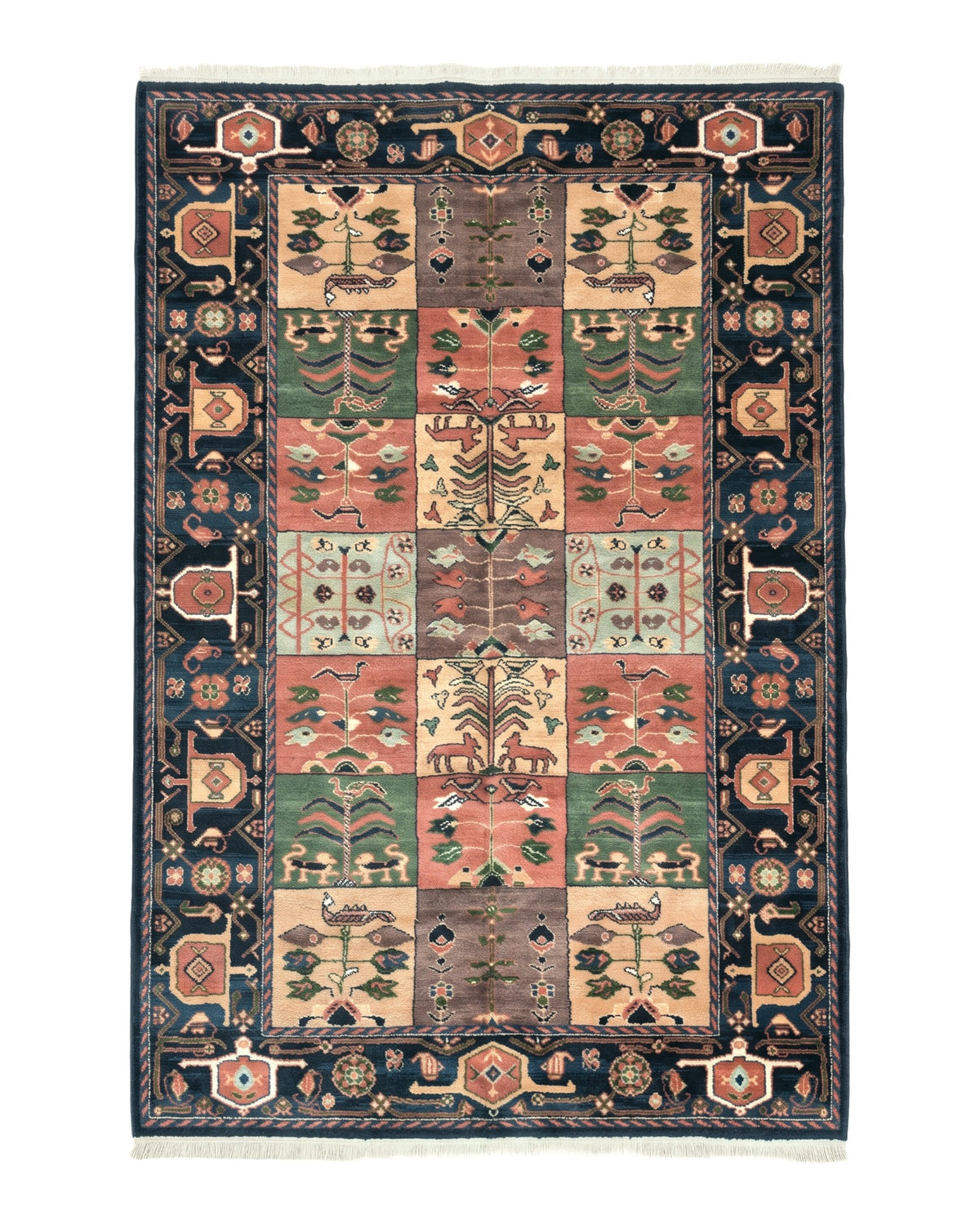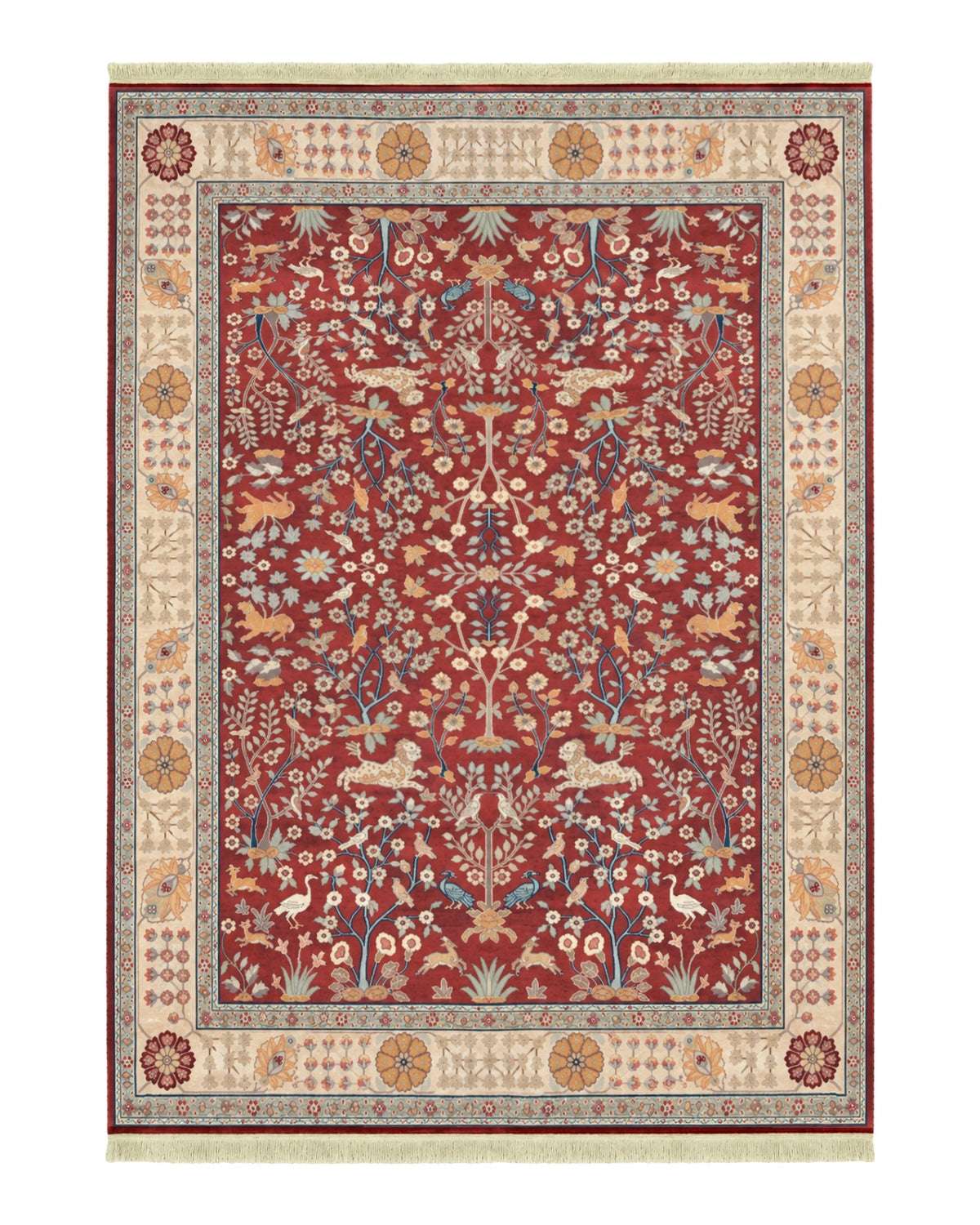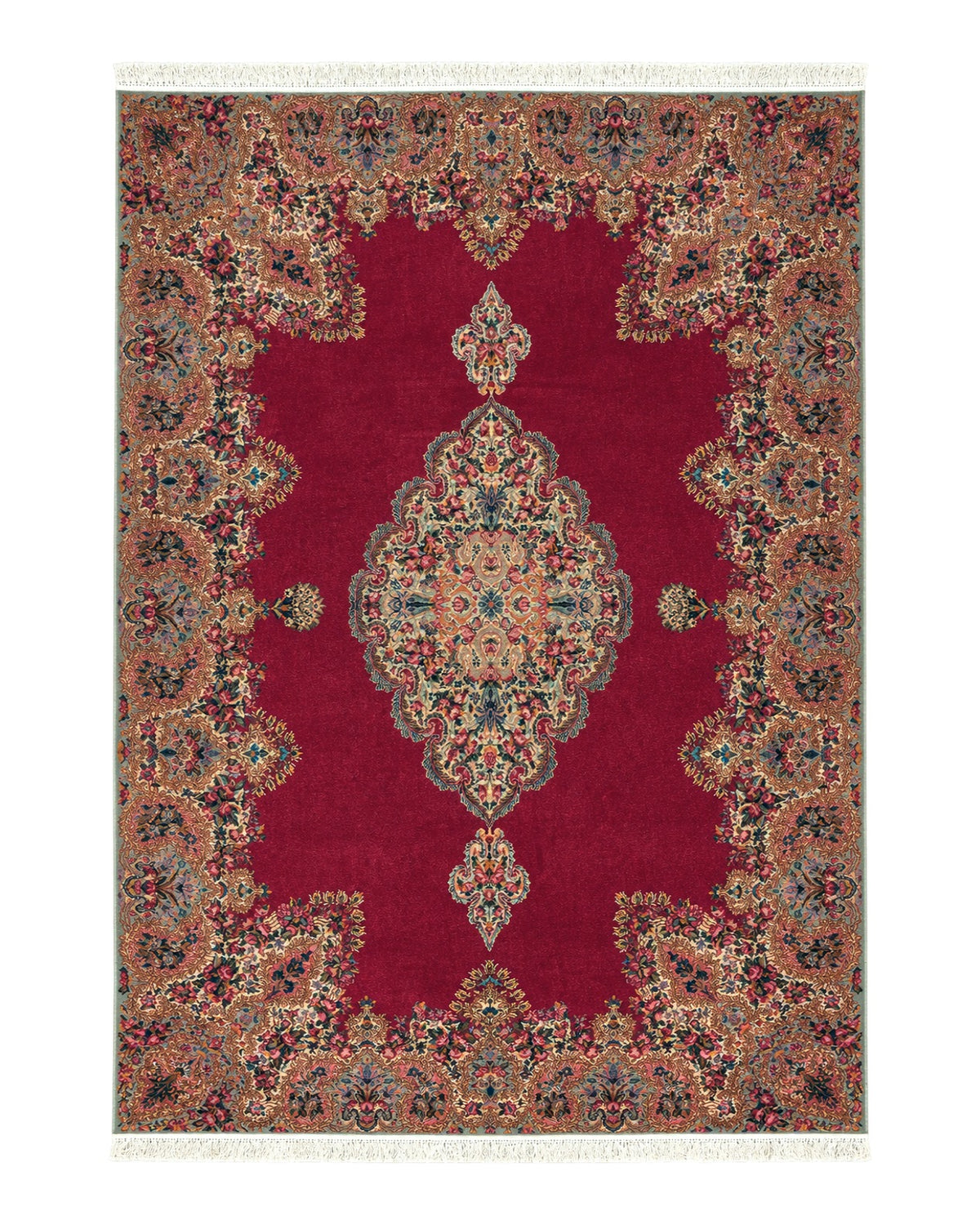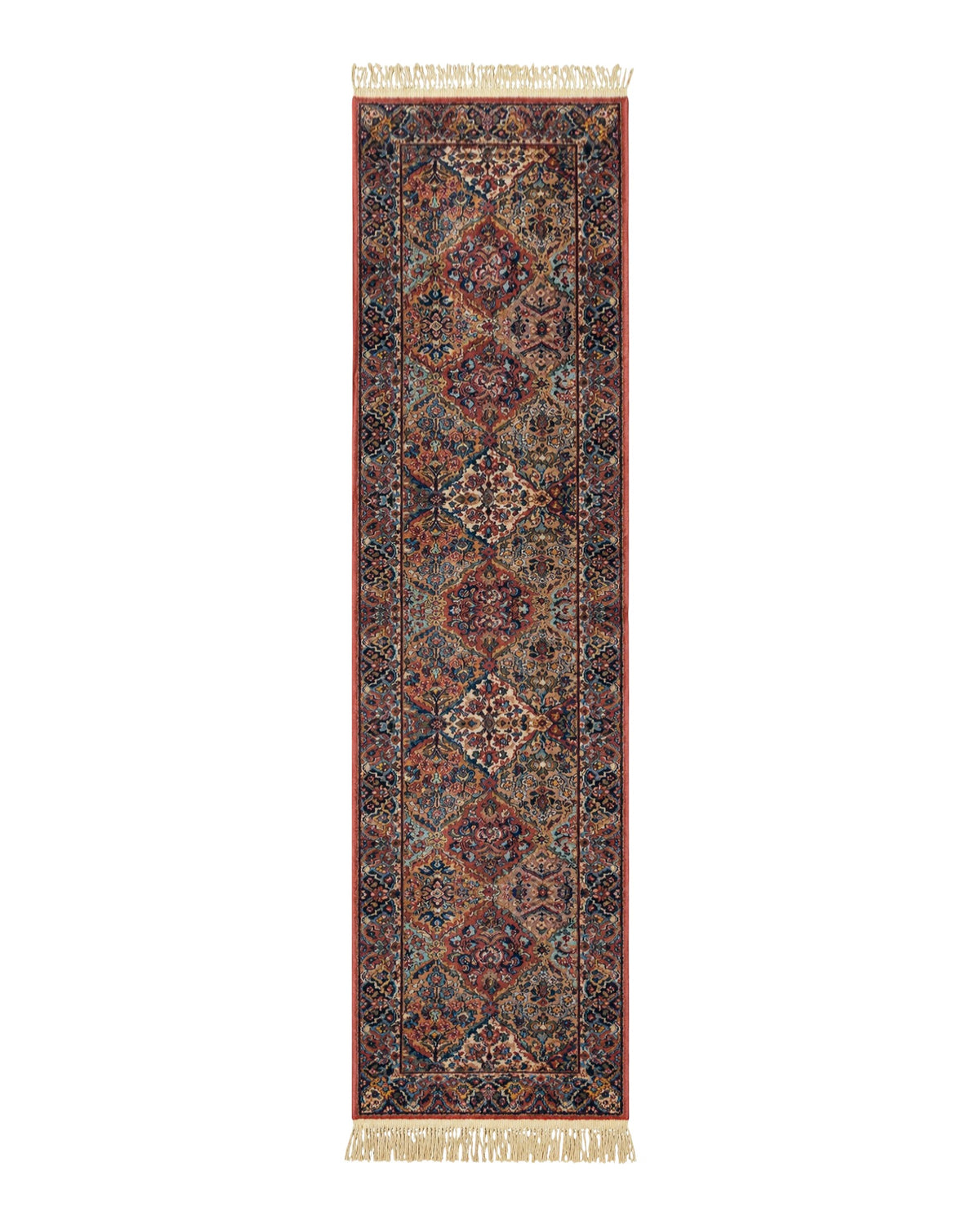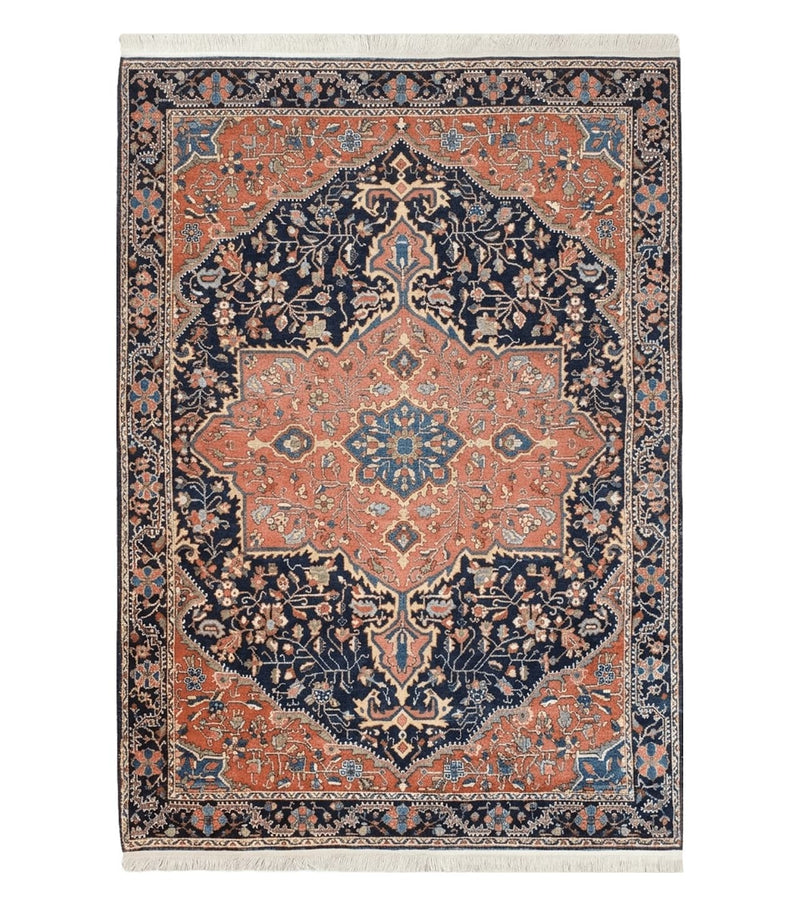


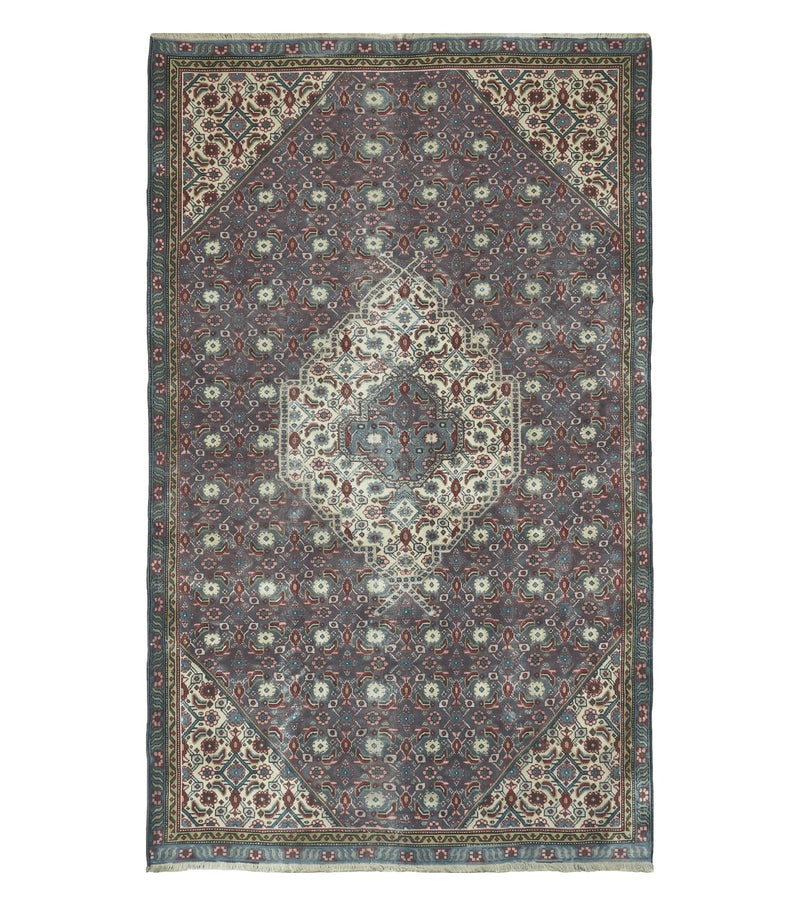


A Karastan is woven by machine, yet it is built very differently from most machine-made rugs sold today. Its pile is woven into the rug rather than glued or punched in, its design shows through on the back, and its colors are softened by washing in the way an Oriental rug's are. This entry explains how that is done and why it makes a Karastan so durable.
| Loom | Axminster power loom, adapted by Karastan |
|---|---|
| Colors | Up to about 50 in a single design |
| Pile | Worsted wool, woven into the foundation |
| Back | Shows the design, with fine warp threads running lengthwise |
| Finish | Washed to soften the colors and add sheen |
| Fringe | Machine-made and sewn onto the ends |
The Axminster loom
The Axminster loom takes its name from the English town of Axminster, a center of carpet making. Unlike looms that weave pile from a few continuous yarns, an Axminster loom inserts each tuft of pile separately from a set of colored yarns, much as a weaver ties each knot by hand. That makes it possible to weave detailed designs in many colors. Karastan's engineers adapted these looms so that the yarn was carried through to the back of the rug and the pile was dense and firmly held.
Many colors
Karastan used the spool method of Axminster weaving, in which each row of the design is wound onto its own spool in the right sequence of colors. This allowed a single design to use up to about fifty colors, which is how a pattern as rich as the #717 Multicolor Panel Kirman could be woven by machine.
Worsted wool
From 1928 until the end of wool weaving at Eden in 2021, Karastan pile was made of worsted wool. Worsted yarn is combed so that its fibers lie parallel, which makes it smooth, strong and lustrous. It sheds less than loosely spun wool, holds dye well and gives the pile the sheen that many people associate with a Karastan. See Rug Materials.
The washing
New Karastans were given a wash after weaving, much as many hand-knotted rugs are, to soften the colors and bring out the luster of the wool. This is part of why a Karastan looks mellow rather than bright and new. The Samovar Teawash collection took the idea further, with a deliberately aged, tea-washed look. See The Karastan Samovar Teawash Collection.
The back, the sides and the fringe
- The back shows the design clearly, which is why Karastans are sometimes mistaken for handmade rugs. Look closely and you will see fine warp threads running the length of the rug and a regular, slightly ribbed texture that no hand-knotted rug has.
- The sides are overcast with yarn over a strip of colored cloth.
- The fringe is made separately and sewn onto the ends, rather than formed from the warp threads as on a hand-knotted rug.
How it differs from other machine-made rugs
Most inexpensive machine-made rugs today are tufted, with yarn punched into a backing and held in place by glue and a second backing, or are printed. A Karastan is woven: its pile and foundation are made together on the loom, so there is no glue to dry out and no backing to separate. That is the main reason a well-kept Karastan can last for many decades. See Hand-Knotted vs. Hand-Tufted vs. Machine-Made and Karastan vs. Hand-Knotted Persian Rugs.