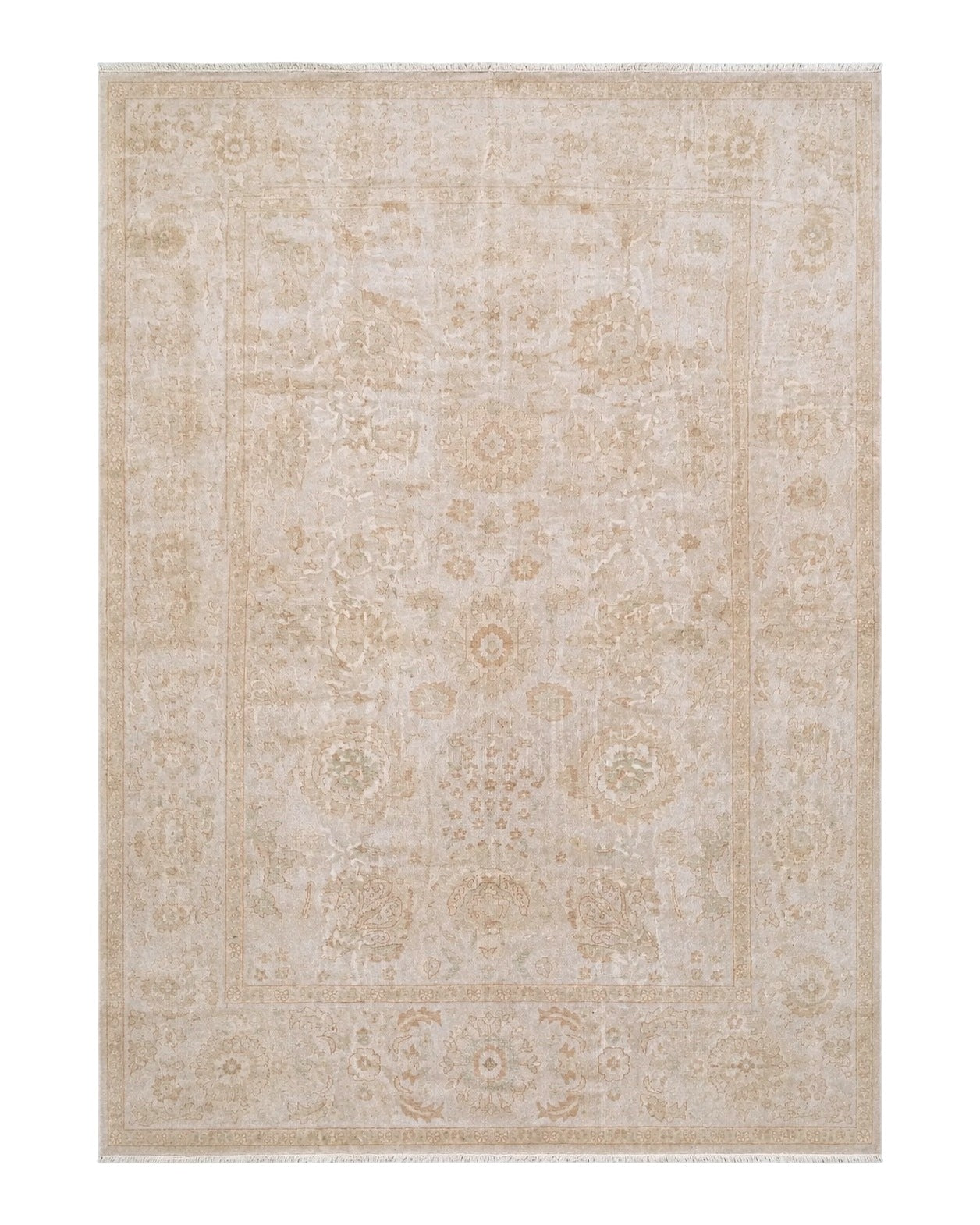
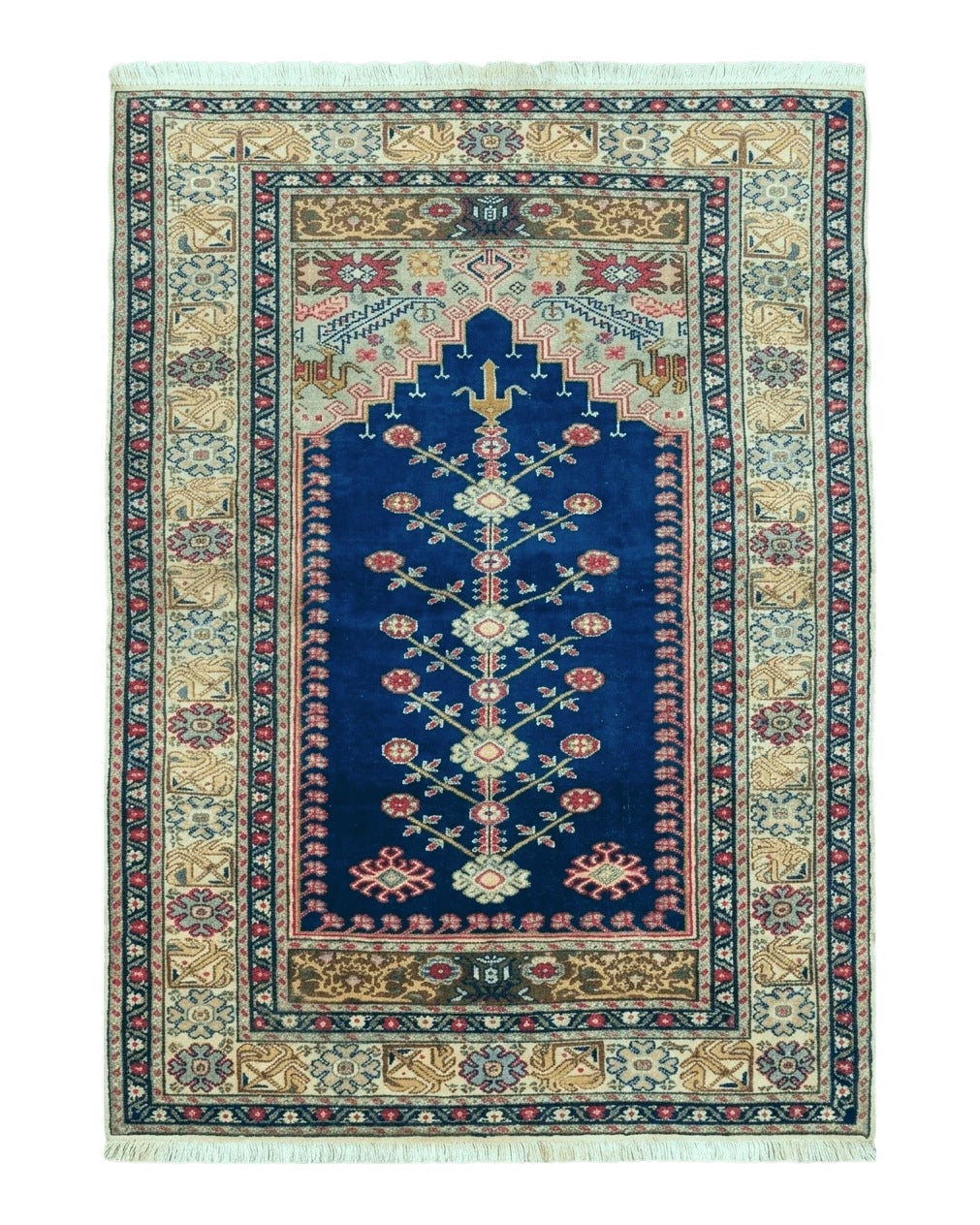
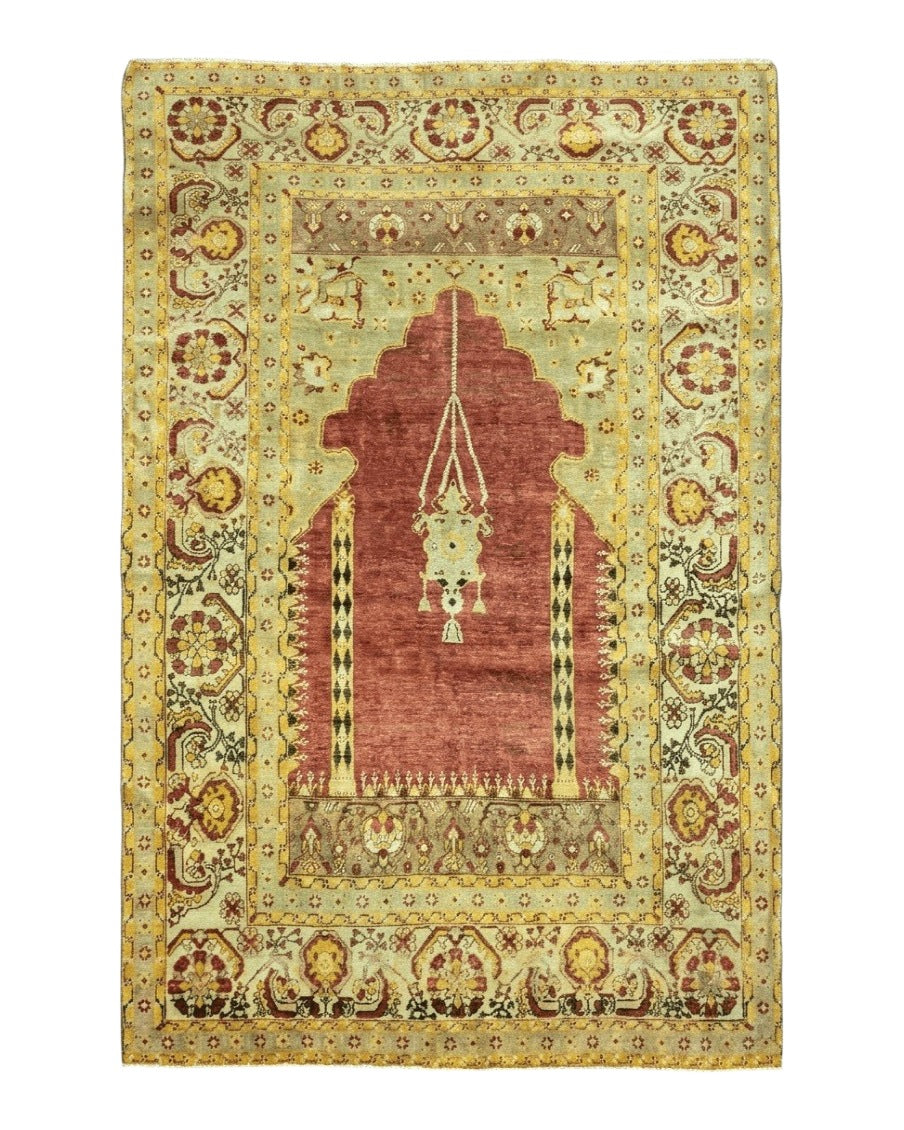
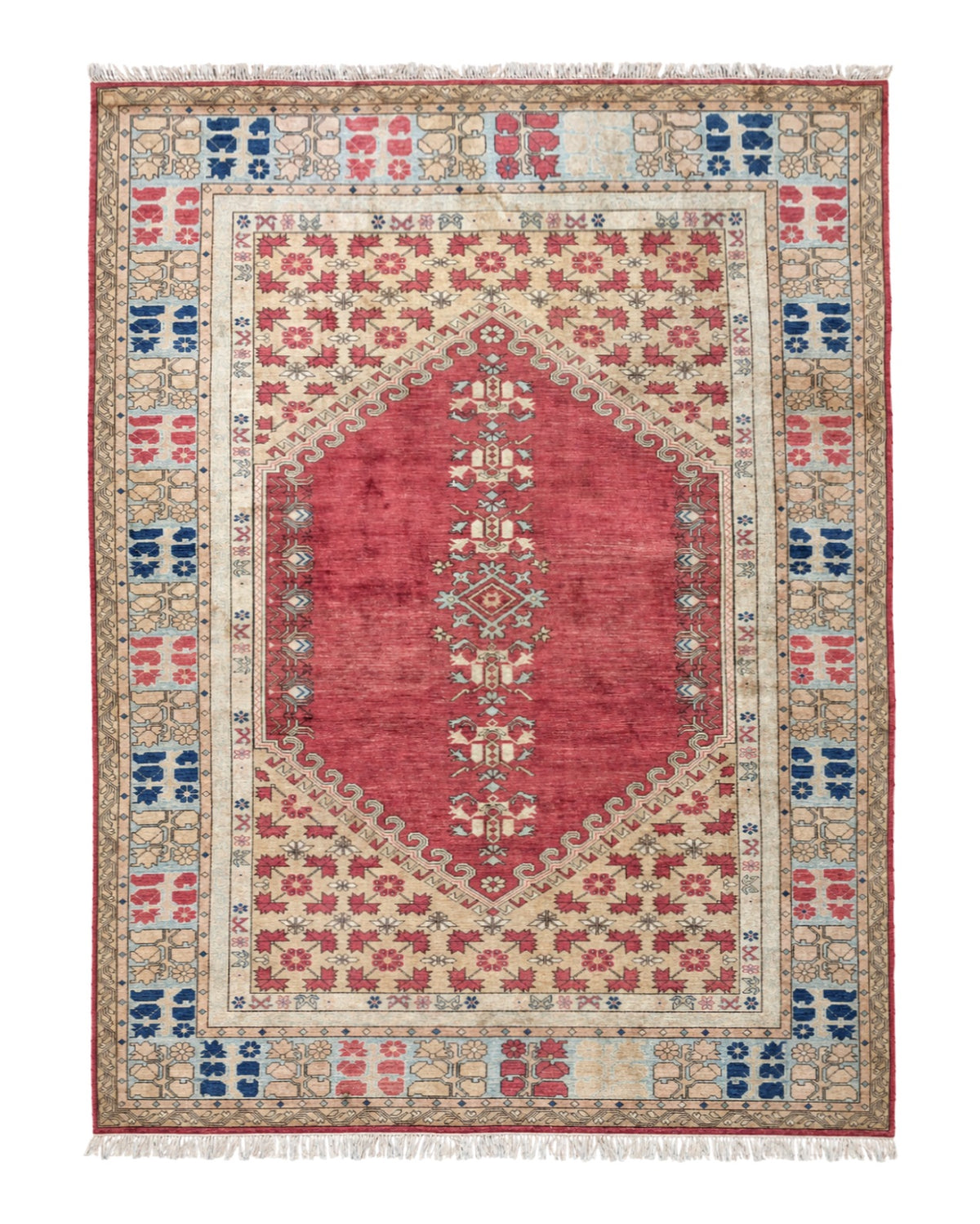
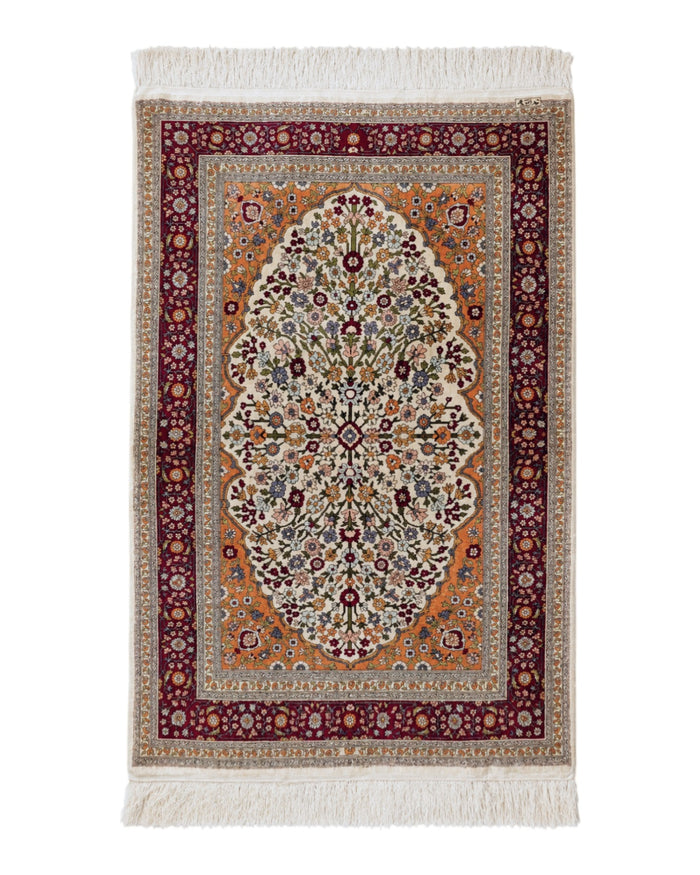
Turkey, and especially the great plateau of Anatolia, has one of the oldest and richest rug-weaving traditions in the world. Turkish rugs range from bold village and tribal pieces in bright, geometric designs to the soft, decorative carpets of Oushak and the extraordinarily fine silk rugs of Hereke. Anatolia is also famous for its kilims. Turkish weavers almost always use the symmetric knot, which for that reason is often called the Turkish knot.
| Origin | Anatolia (Asian Turkey) |
|---|---|
| Knot | Symmetric (Turkish or Ghiordes) |
| Materials | Wool on wool in village rugs; wool on cotton; silk in Hereke and Kayseri |
| Main types | Oushak, Hereke, Kayseri, Bergama, Melas, Ladik, Konya, Kazak-style, kilims |
| Typical designs | Geometric medallions, prayer designs, large-scale florals, Caucasian-style rugs |
History
Anatolian rugs were traded to Europe from at least the 14th century, and they appear in many Renaissance paintings. Rug types are even named after painters: "Holbein" and "Lotto" carpets are named for the artists who painted them on tables and floors. From the 15th to 17th centuries, the town of Ushak (Oushak) made large carpets for the Ottoman court and for export. In the 19th century, Ottoman workshops such as Hereke began producing fine silk rugs, and Anatolian villages wove large numbers of rugs for export. See Oushak Rugs and Hereke Rugs.
Main types
- Oushak: decorative rugs with large-scale designs in soft apricot, gold and green.
- Hereke: extremely fine silk and wool rugs from the former imperial workshops.
- Kayseri: a central Anatolian city known for silk and "art silk" rugs in Persian and prayer designs.
- Village and tribal rugs: Bergama, Melas (Milas), Ladik, Konya, Yahyali and many others, with bold geometric designs.
- Prayer rugs: some of the most famous prayer rugs come from Ghiordes, Kula, Ladik and Melas. See Prayer Rugs.
- Kilims: slit-tapestry flatweaves with bold geometric designs. See Kilim Rugs.
Designs and colors
Village and tribal Turkish rugs are mostly geometric, with bold medallions, stepped and hooked motifs, stars and stylized flowers, in strong reds, blues, yellows and greens. Workshop rugs such as Oushak and Hereke are curvilinear, with large palmettes and floral designs. Many 20th-century Turkish rugs also reproduce Caucasian and Persian designs.
Modern Turkish weaving
In the late 20th century, projects in western Turkey revived hand-spinning and natural dyes in village weaving, producing rugs in traditional designs with the depth of color of older pieces. Modern Turkish production also includes decorative rugs, washed and "vintage" style rugs, and rugs in silk and viscose.
How to recognize a Turkish rug
- Symmetric knots, often with a wool foundation in village rugs.
- Bright, saturated colors and geometric designs in village pieces.
- A slightly longer, looser pile than most Persian city rugs.
- Red wefts in many Anatolian rugs, visible on the back.