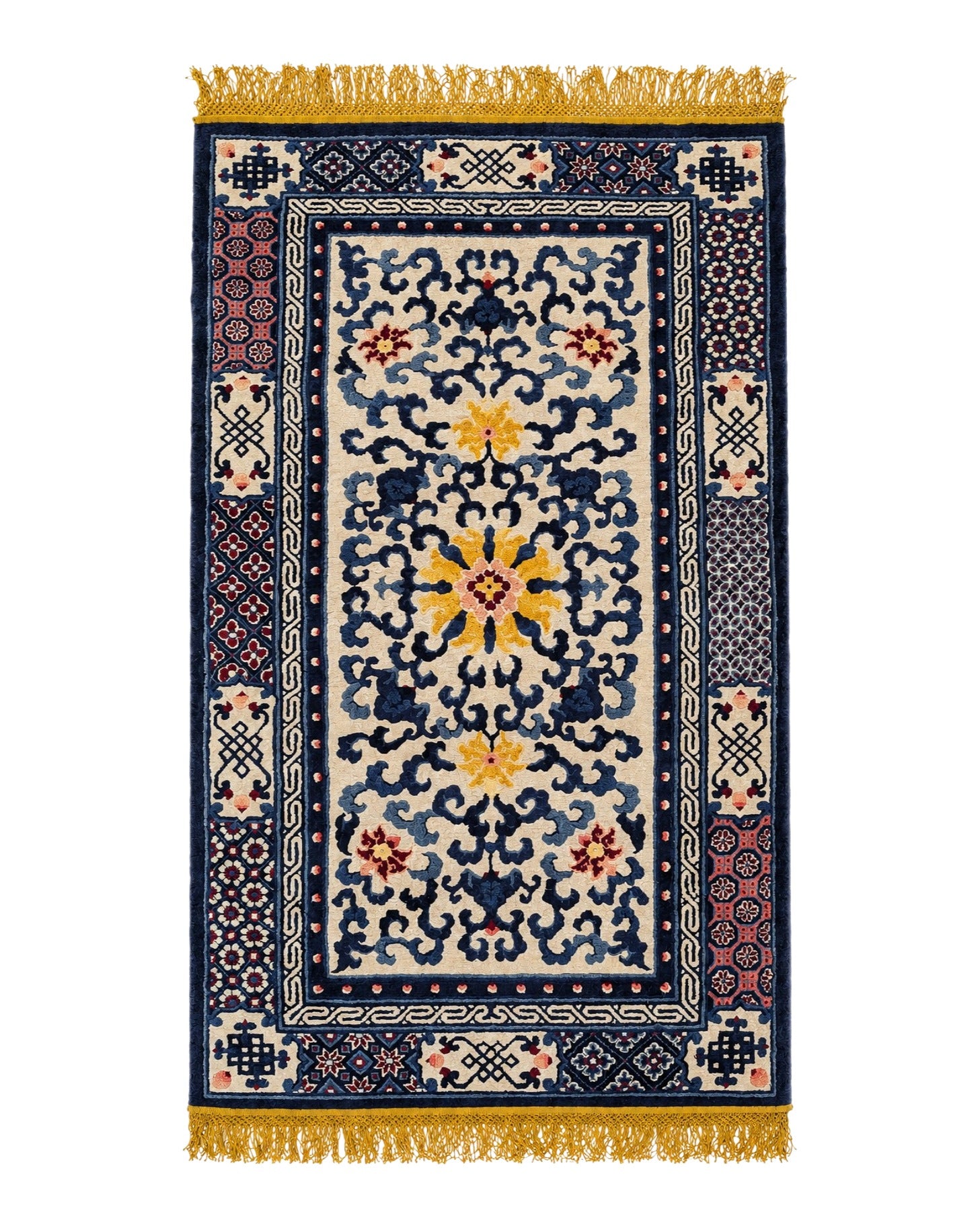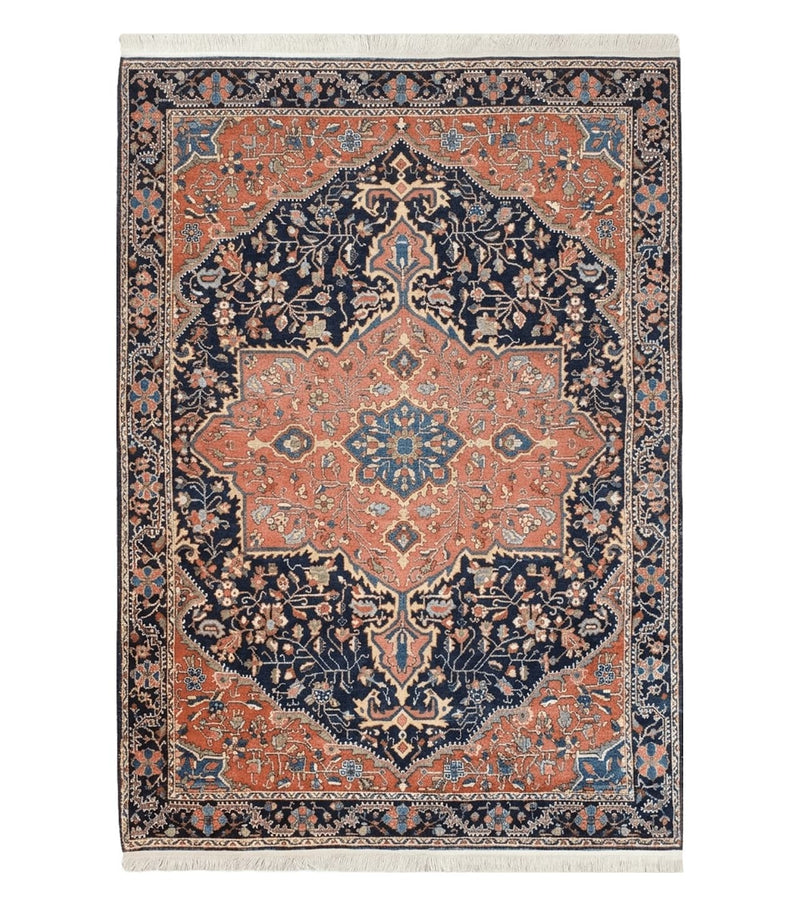


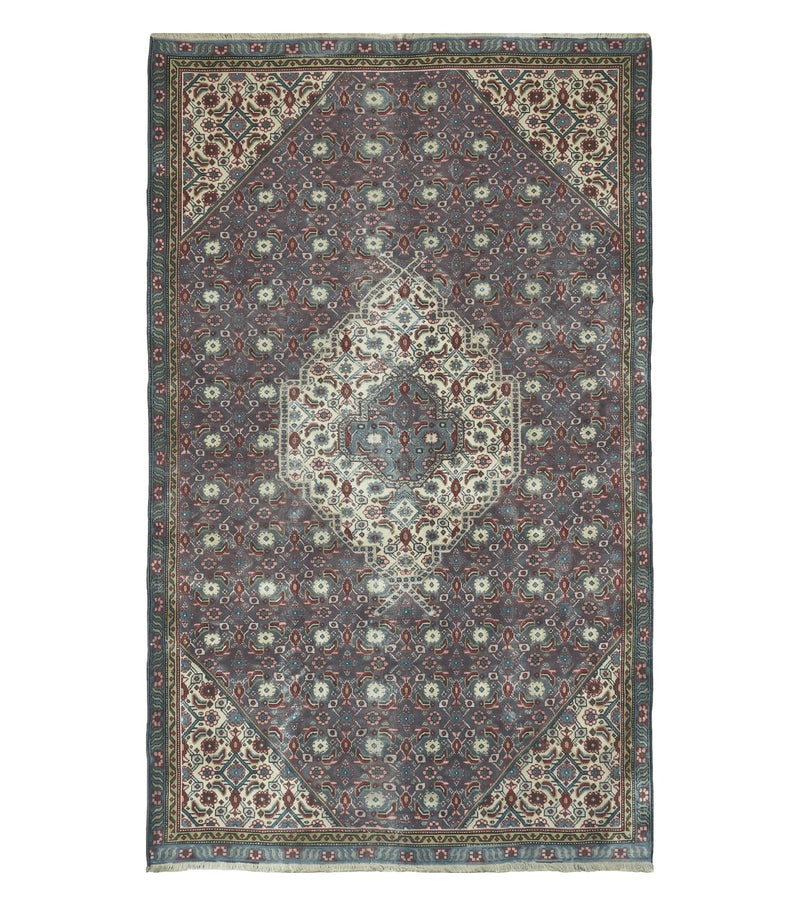


China has its own rug-weaving tradition, quite separate from the Persian and Turkish styles that dominate most of the rug belt. Traditional Chinese rugs have open fields, Chinese symbols and a palette built around blue, ivory and gold, and many have a carved, sculpted pile. In the 20th century China also became known for Art Deco rugs, for needlepoint, and for large numbers of rugs in Persian designs.
| Traditional centers | Ningxia, Baotou, Beijing (Peking), Tianjin; Khotan in the far west |
|---|---|
| Knot | Asymmetric (Persian), usually |
| Materials | Wool on a cotton foundation; silk in fine pieces |
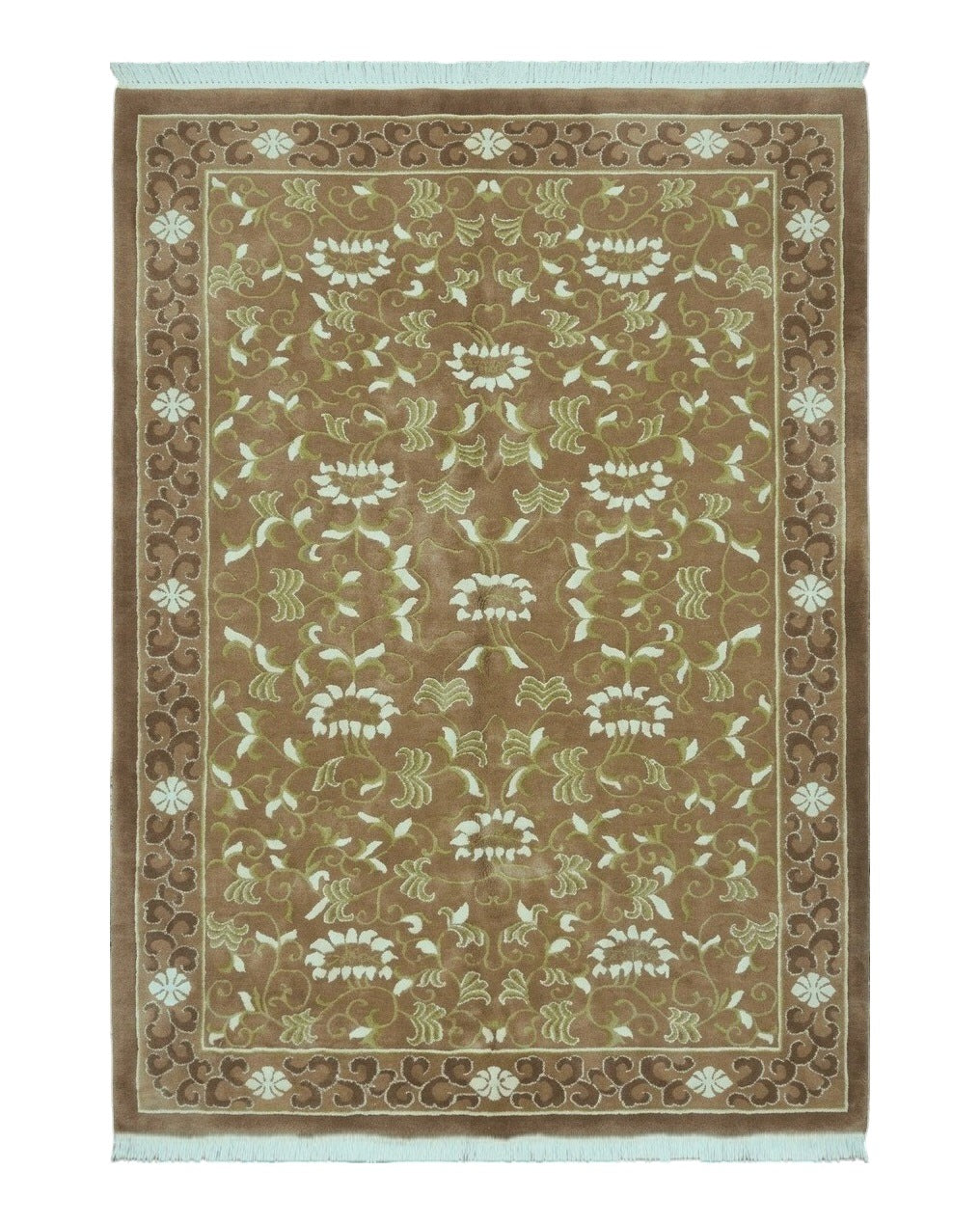
| Typical designs | Open fields, Chinese symbols, medallions, Art Deco, floral |
| Special feature | Carved (sculpted) pile around motifs |
| Other types | Art Deco, needlepoint, Sino-Persian |
Traditional Chinese rugs
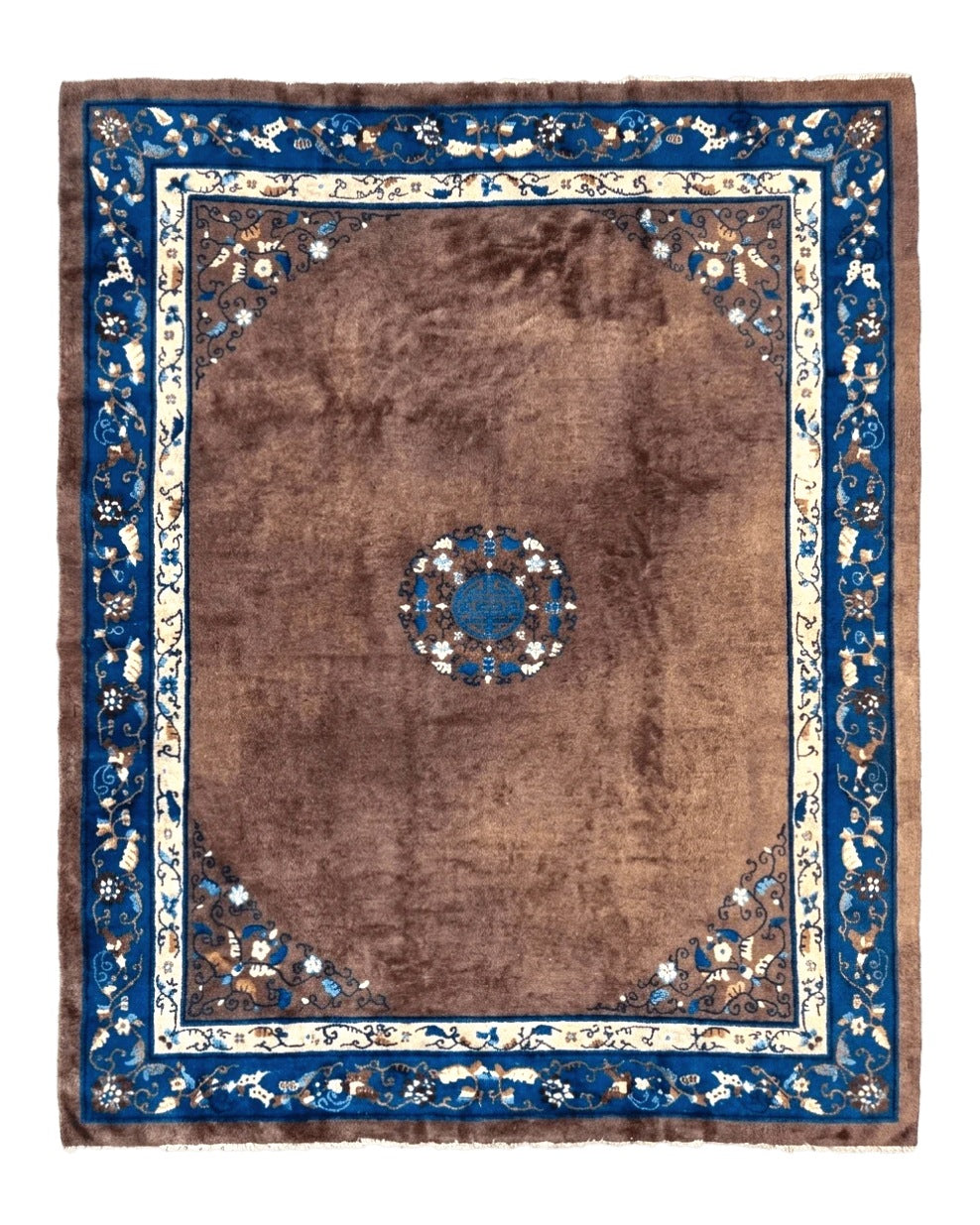
Older Chinese rugs from Ningxia, Baotou and the Beijing area, many from the 19th and early 20th centuries, have a distinctive look: an open or lightly patterned field, a central roundel or medallion, small motifs scattered around it, and borders of fretwork or meanders. The classic colors are shades of blue and ivory, with apricot, gold and brown. These rugs were used on floors, on platforms, and as covers for pillars and chairs.
Chinese symbols
- Dragon: imperial power and good fortune.
- Phoenix: grace, often paired with the dragon.
- Bat: happiness, because the word for bat sounds like the word for good fortune.
- Shou character: a stylized sign for long life.
- Clouds, waves and mountains: heaven and earth.
- Peony and lotus: wealth and purity.
See Rug Motifs and Their Meanings.
Art Deco rugs
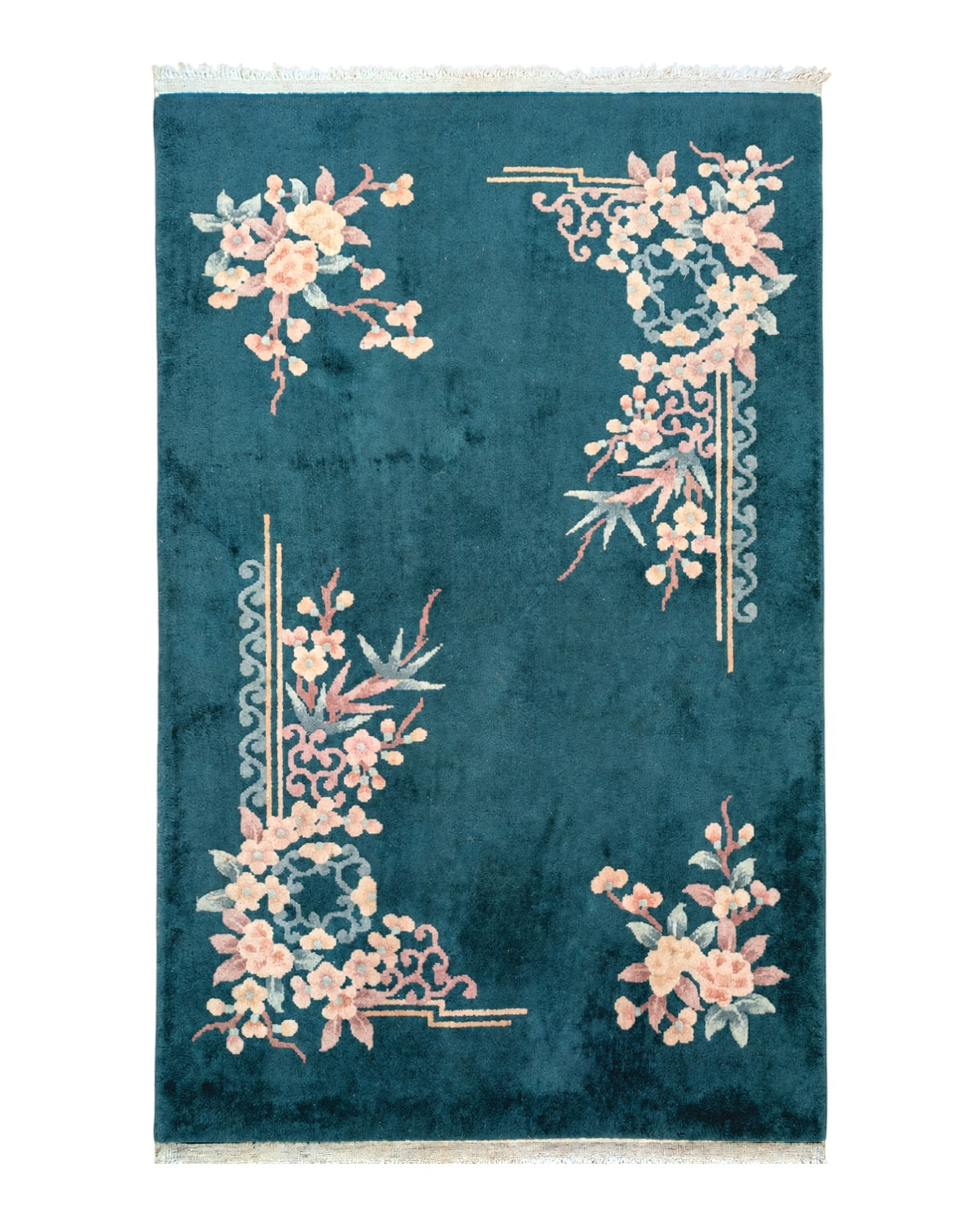
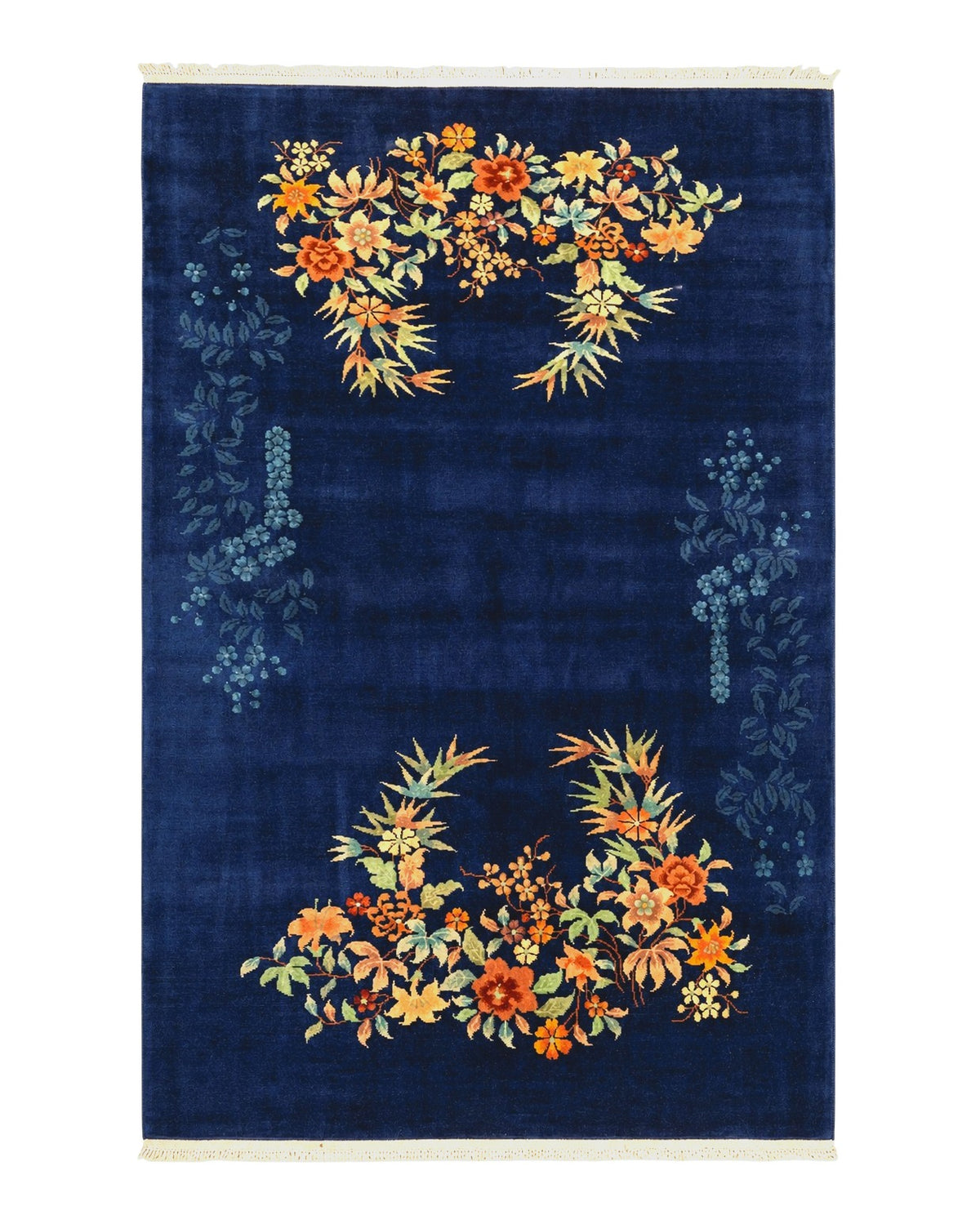
In the 1920s and 1930s, workshops in Tianjin and Beijing, the best known run by the American Walter Nichols, made rugs for Western buyers in a bold new style: strong colors such as deep purple, teal, magenta and gold, open fields, and asymmetric sprays of flowers, vases or branches. These Chinese Art Deco rugs are now highly collectible.
Carved pile
Many Chinese rugs have a carved or sculpted pile: after weaving, the pile is clipped at an angle around the outlines of motifs, so the design stands out in relief. This technique is typical of 20th-century Chinese rugs and gives them a distinctive, three-dimensional look.
Needlepoint and Sino-Persian rugs
China is also a major source of needlepoint rugs, flat rugs stitched on canvas in European floral designs, and of Sino-Persian hand-knotted rugs in Persian designs. See Aubusson Rugs and Indo-Persian, Sino-Persian and Pak-Persian Rugs.
See also Tibetan Rugs.