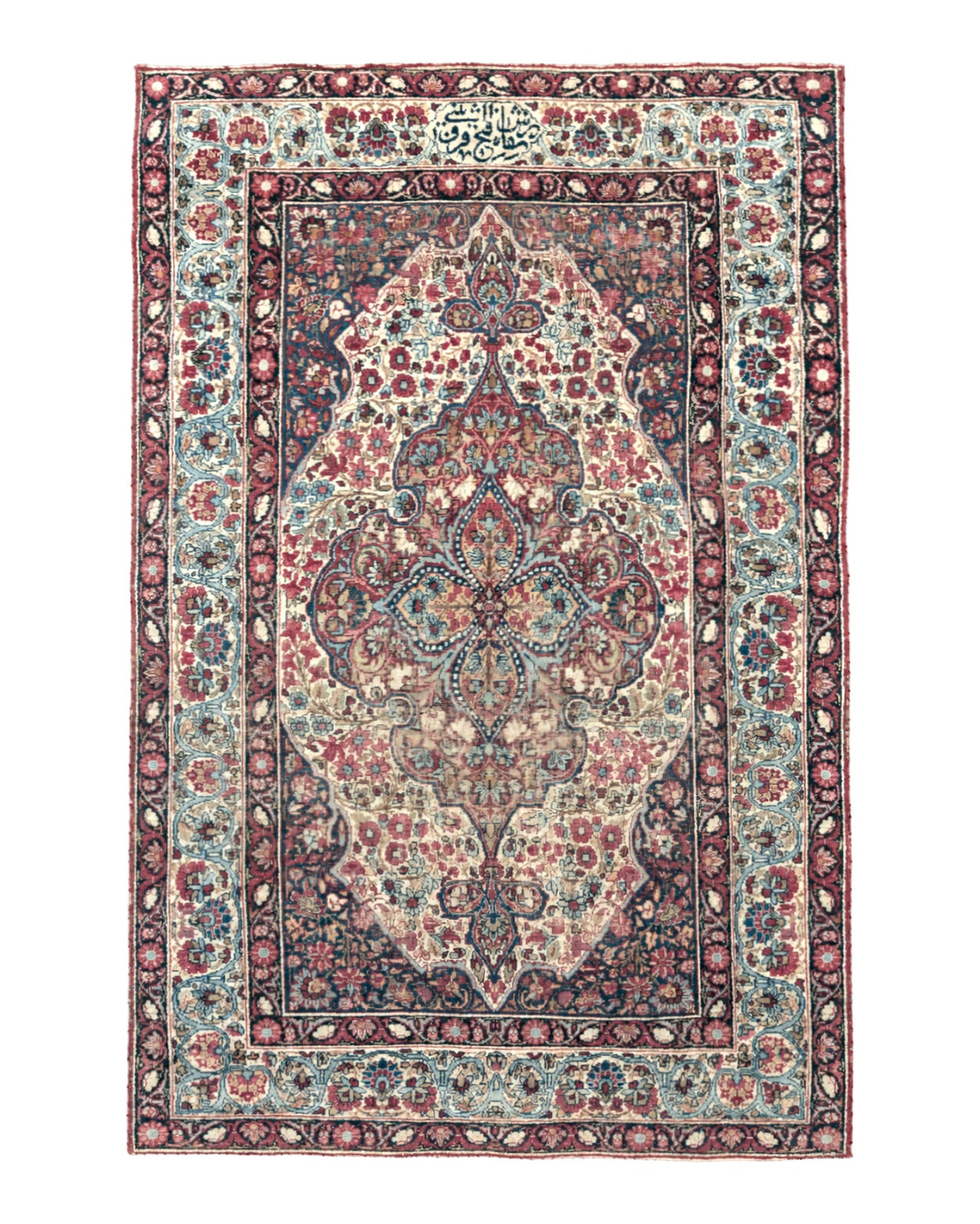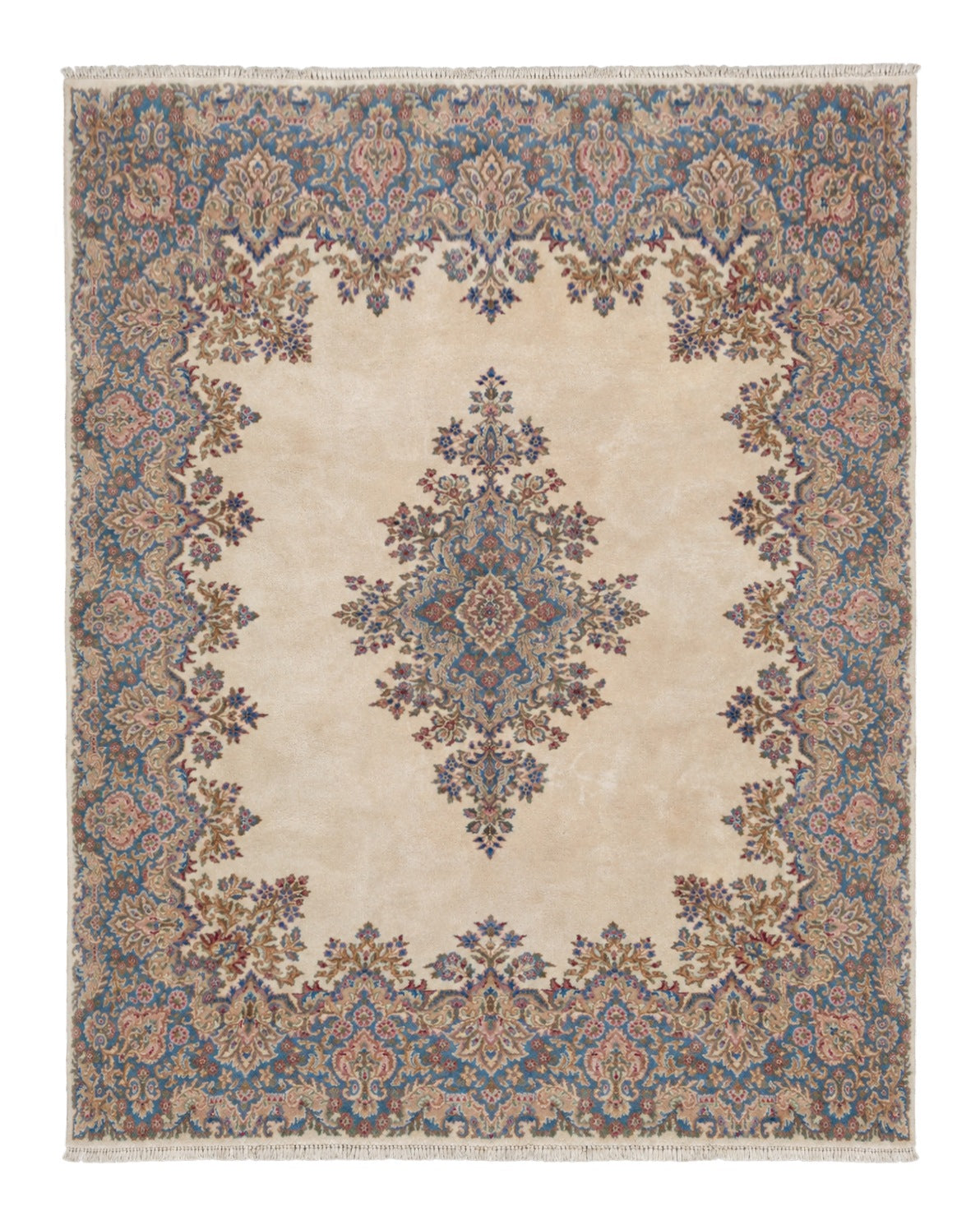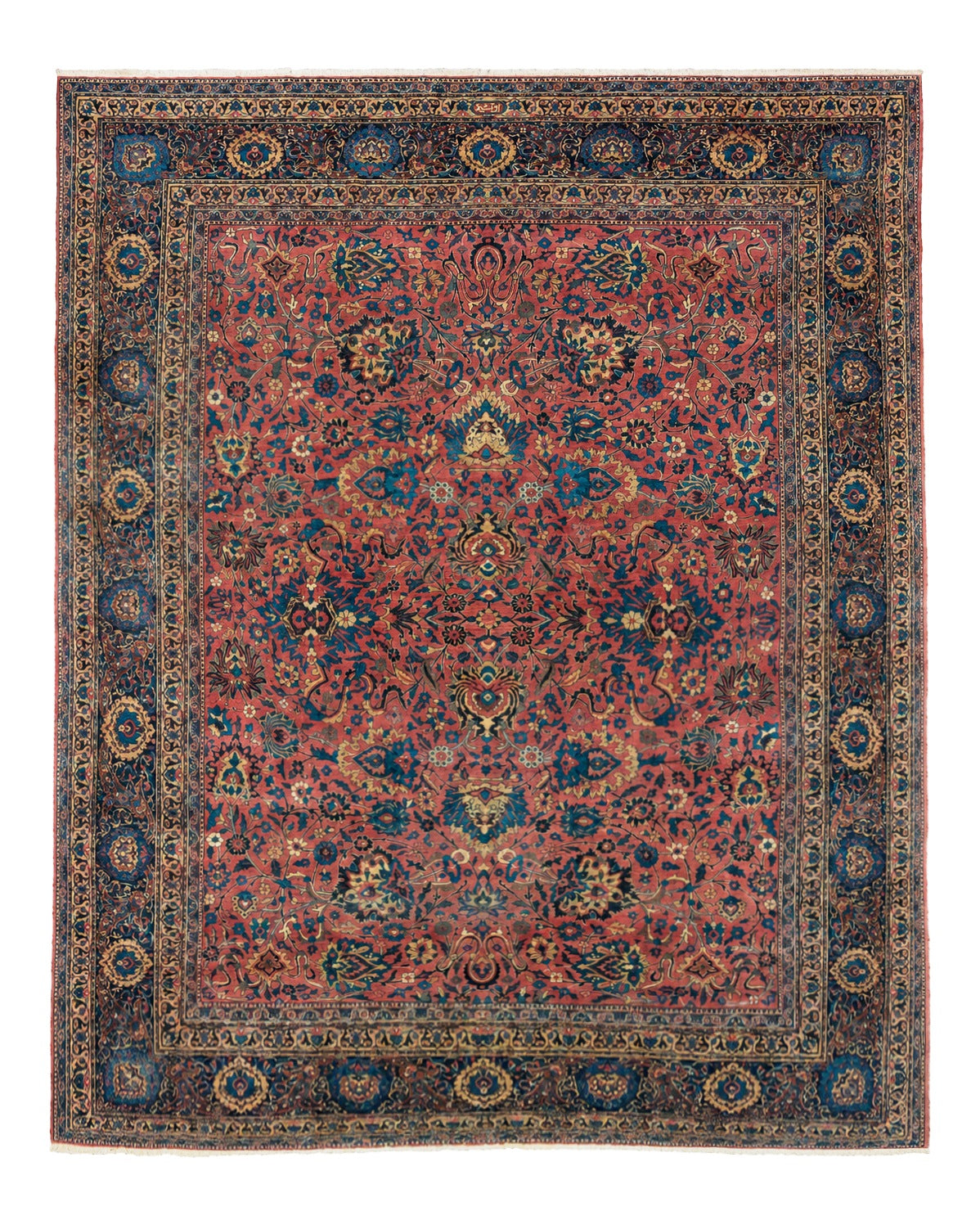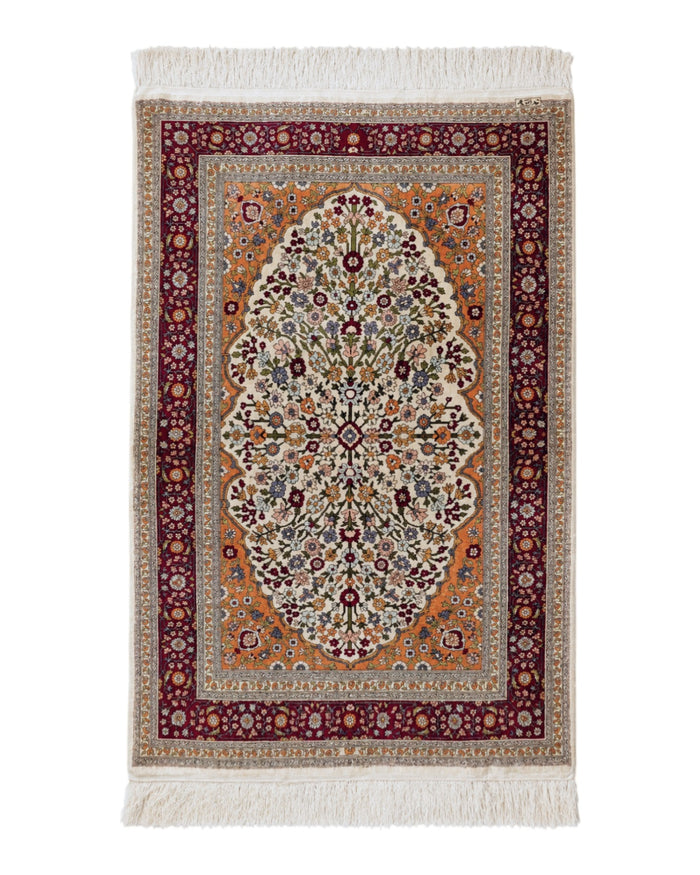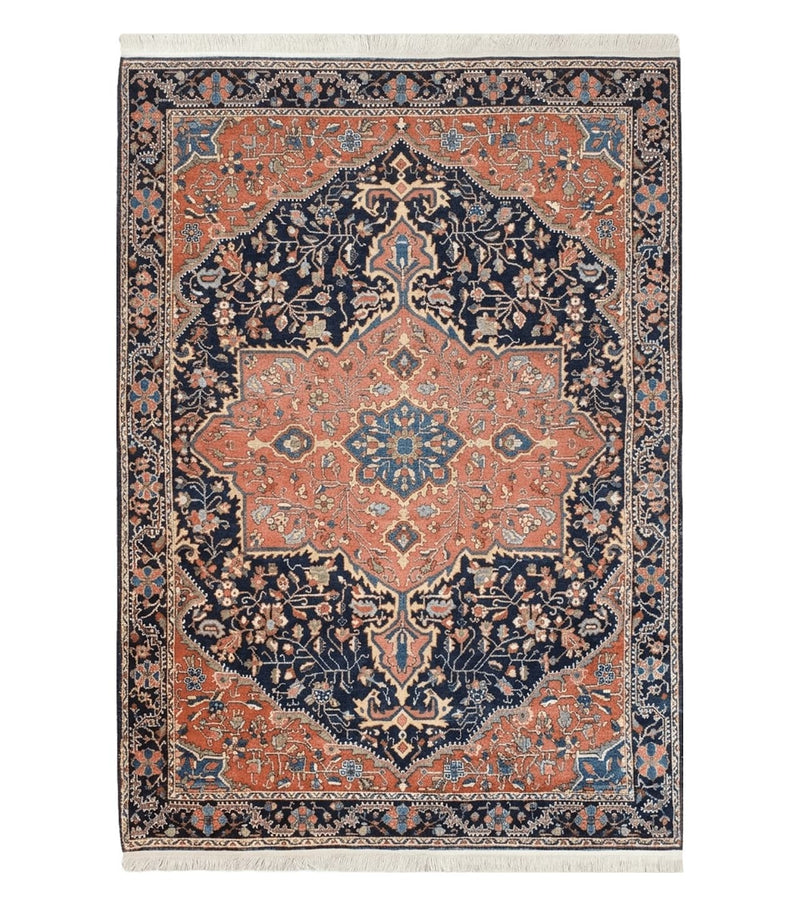


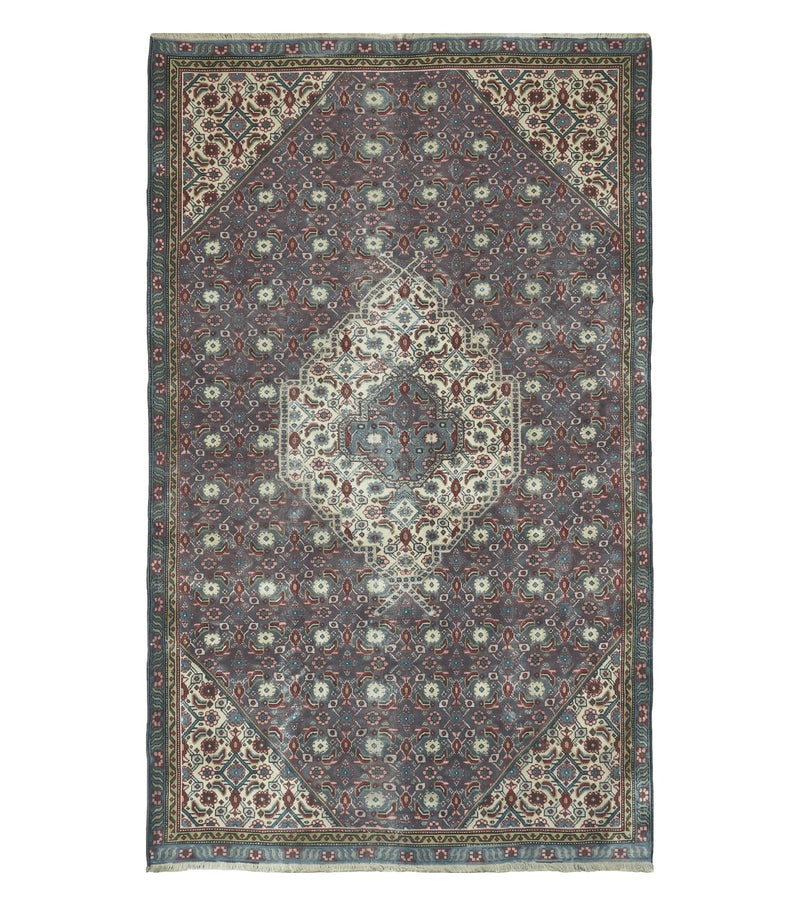


Kerman, also spelled Kirman, is a city in south-east Iran with one of the longest and most varied weaving histories in the country. Kerman rugs are city rugs known for graceful, naturalistic floral designs and an unusually wide palette, including soft rose, ivory, pale green and gold. They range from the exquisitely fine antique "Lavar" Kermans to the light, open-field rugs woven for American homes in the 20th century.
| Origin | Kerman and Ravar (Lavar), Kerman province, south-east Iran |
|---|---|
| Tradition | City (workshop) rugs |
| Knot | Asymmetric (Persian) |
| Materials | Soft wool pile on a cotton foundation |
| Knotting | Fine to very fine |
| Typical designs | Floral medallions, vase designs, all-over florals, pictorials, open fields |
| Also called | Kirman; antique pieces often "Lavar Kerman" |
History
Kerman has been a center of fine weaving since at least the Safavid period, and a group of 17th-century carpets with "vase" designs is attributed to its workshops. The city was also famous for its woven shawls, and when shawl weaving declined in the 19th century, many weavers turned to carpets.
Some of the most refined Persian rugs of the late 19th and early 20th centuries came from Kerman and the nearby town of Ravar, whose name became "Lavar" in the trade. Antique Lavar Kermans are finely knotted, delicately drawn, and sometimes signed by their master weavers. See Signed Rugs.
The American Kerman
From the 1920s to the 1950s, Kerman workshops wove large numbers of rugs for the American market. These rugs have a distinctive look: an open ivory, rose or pale green field with a small central medallion or none at all, floral sprays and garlands around the edges, and wide, flowery borders, all in soft pastel colors. The pile is often thick, and many were "chemically washed" to soften the colors further. They remain popular for their light, elegant look.
The style was so popular that American mills, including Karastan, made machine-woven "Kirman" designs. See Karastan Rugs.
Designs
- Floral medallions with naturalistic flowers, often roses, more realistic than in most Persian rugs.
- Vase and garden designs, with flowers rising from vases across the field.
- All-over designs, including millefleurs ("thousand flowers") and the boteh, which Kerman shawl weavers knew well. See The Boteh (Paisley) Motif.
- Pictorial rugs, including portraits, historical scenes and copies of European paintings.
How to recognize a Kerman
- Naturalistic flowers and graceful, flowing drawing.
- A wide, soft palette with rose, ivory, pale greens and golds as well as reds and blues.
- Asymmetric knots on a cotton foundation, with a firm, even weave.
- Often wide, elaborate borders, especially in American-market rugs.
See also Persian City Rugs.