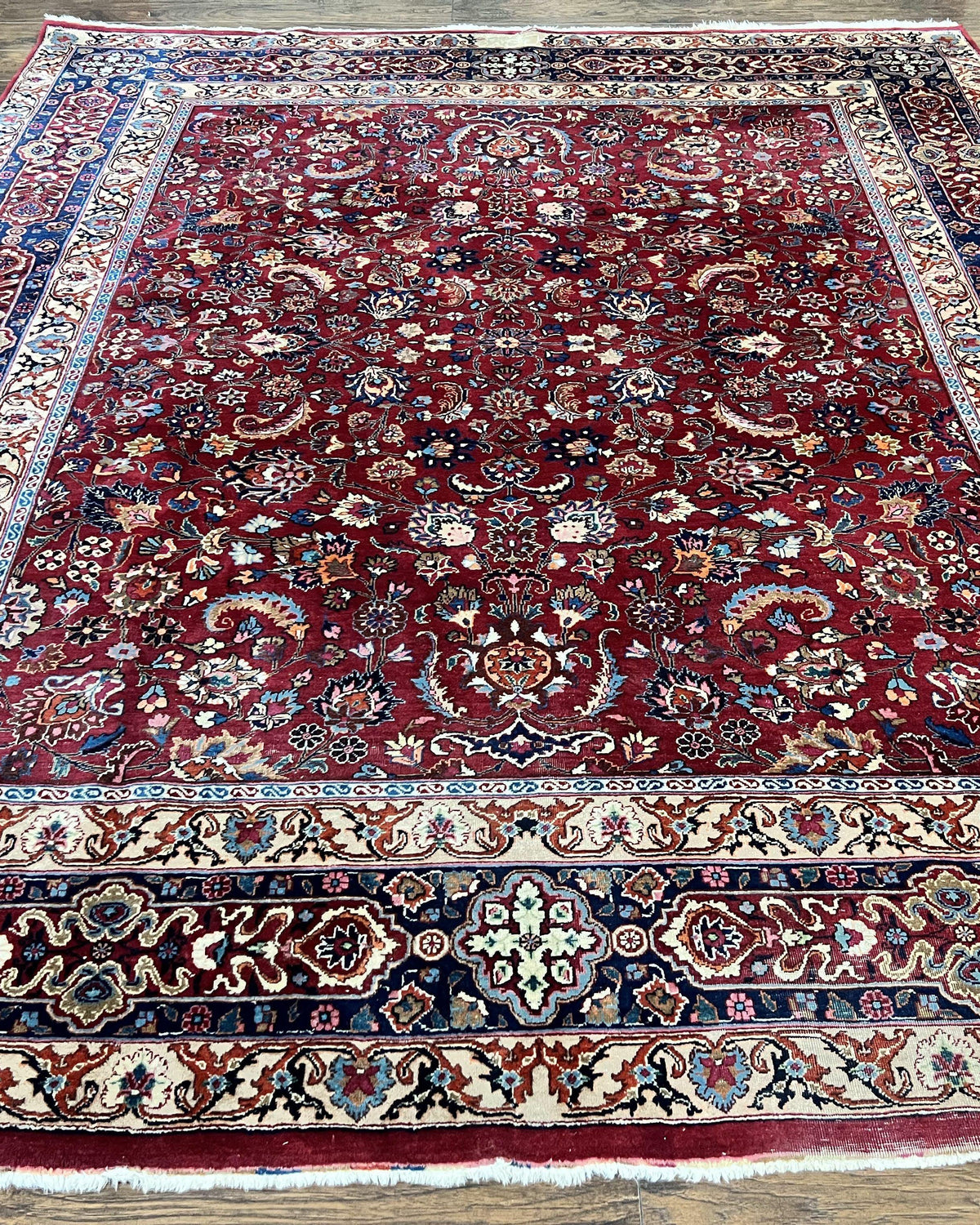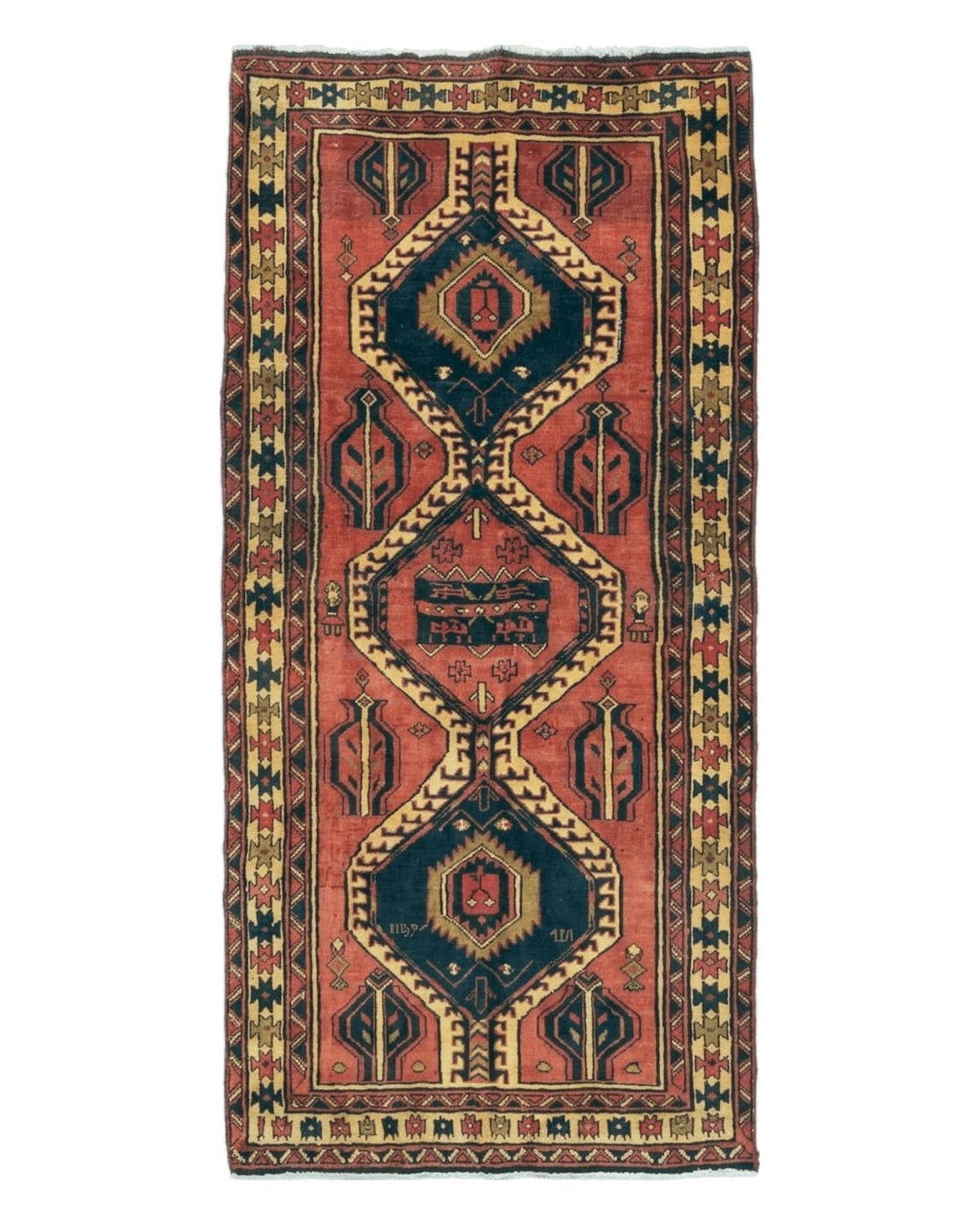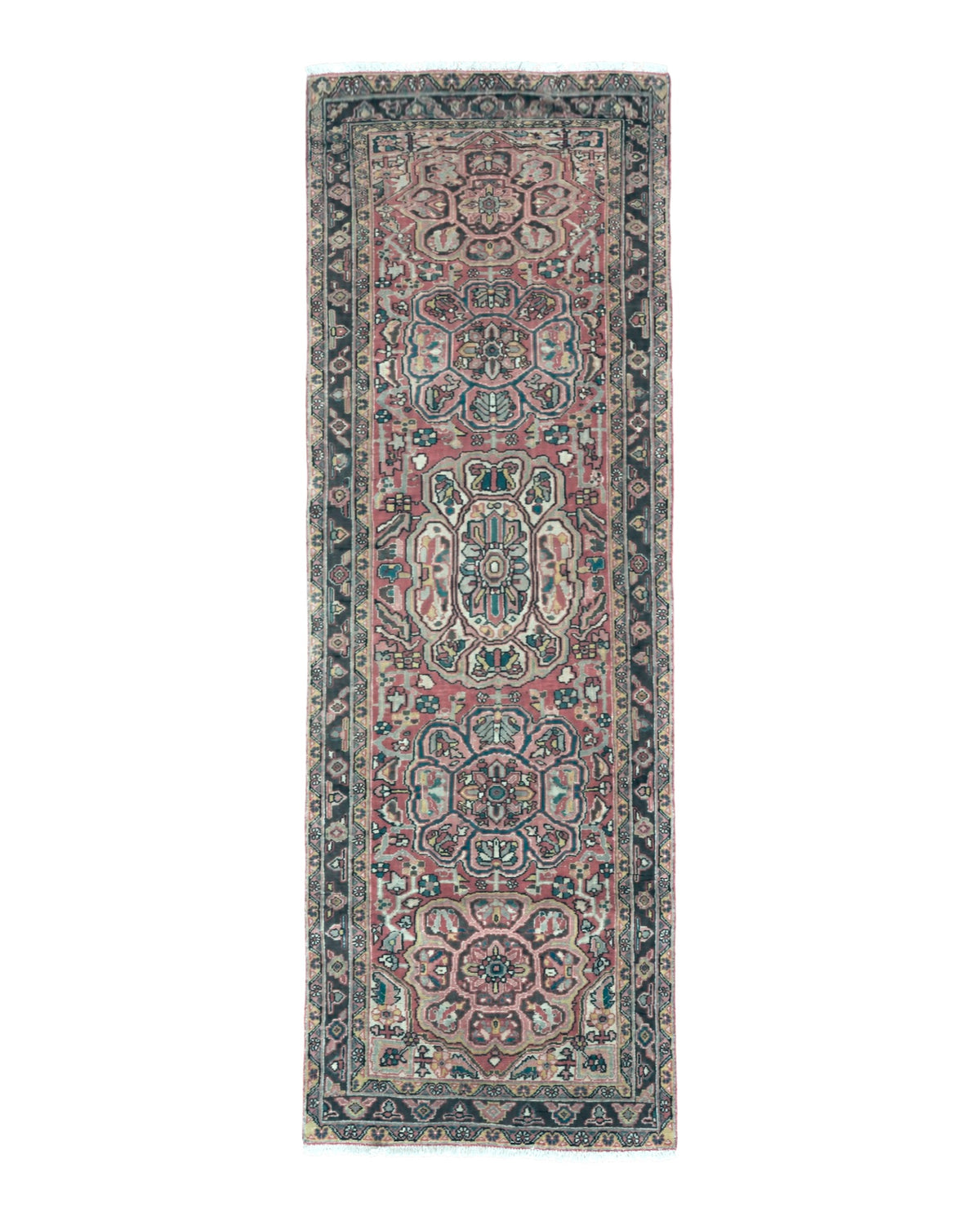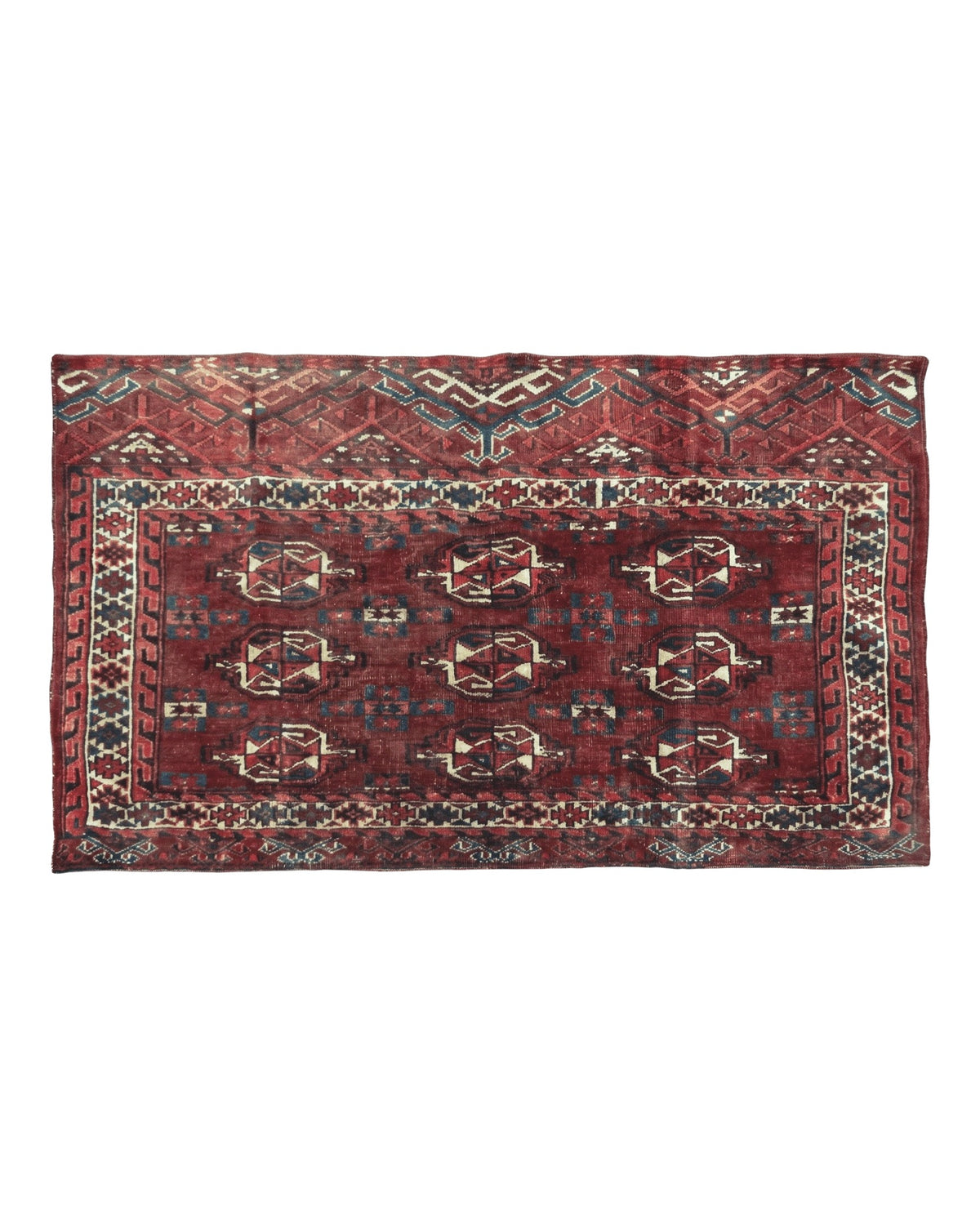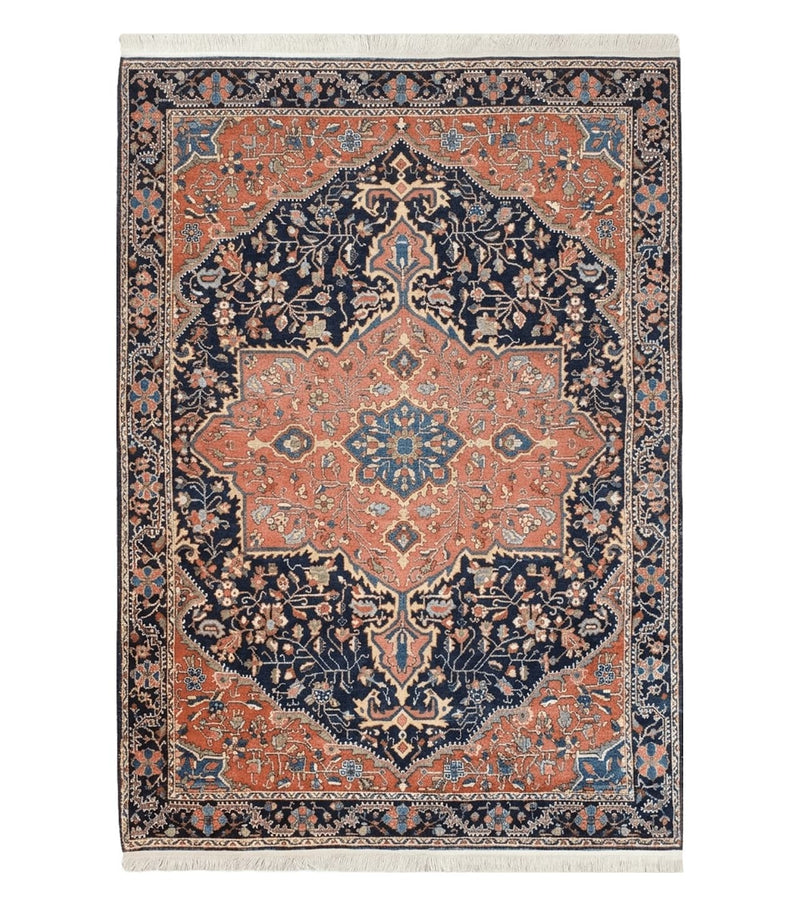


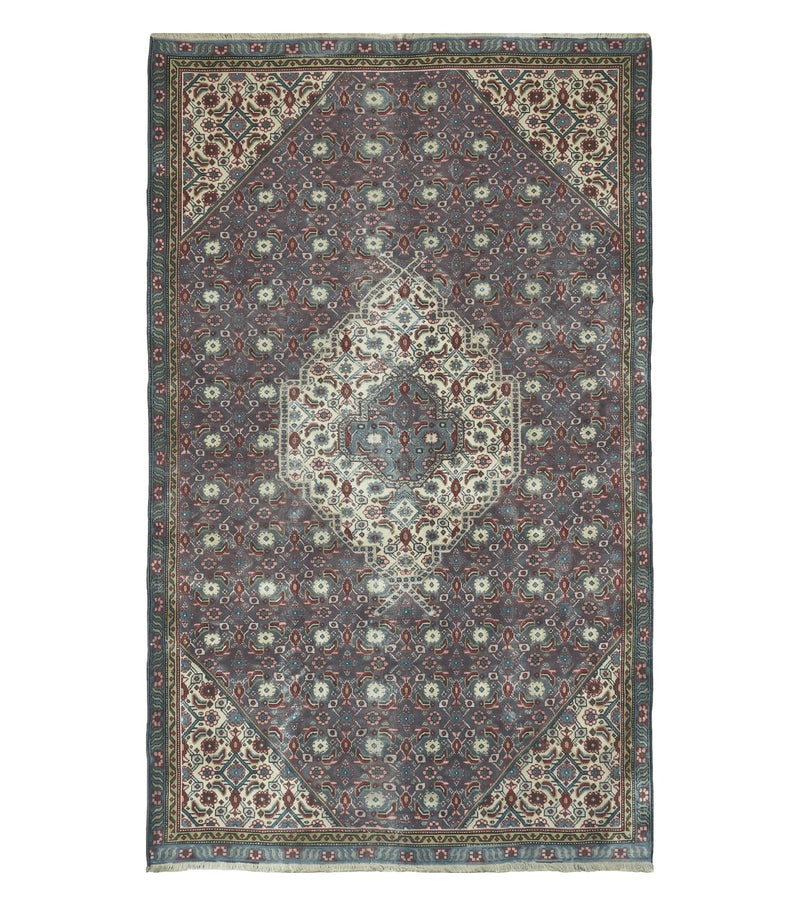


Kashmar is a town in Khorasan province in north-east Iran, south of Mashad. Its rugs are known for one thing above all: fields packed with detail. Kashmar weavers fill the whole rug with flowers, vines, trees, birds, animals and often human figures, so that very little of the ground color shows. The result is rich, busy and full of interest, and Kashmar pictorial rugs in particular are popular as both floor rugs and wall hangings.
| Origin | Kashmar, Khorasan, north-east Iran |
|---|---|
| Tradition | City and town workshop rugs |
| Knot | Asymmetric (Persian) |
| Materials | Wool pile on a cotton foundation |
| Knotting | Medium to fine |
| Typical designs | Dense all-over florals, tree of life, pictorial and hunting scenes |
| Common colors | Red, navy, ivory, gold and green |
The Kashmar look
A Kashmar rug can be recognized almost at a glance. Where many Persian rugs leave open space around a medallion, Kashmar rugs crowd the field with pattern. Common designs include:
- All-over florals, with flowers, palmettes and leafy vines covering the entire field.
- Tree of life and garden scenes, often with birds and animals among the branches.
- Pictorial scenes, from hunting parties and scenes of Persian poetry to historical figures.
- Medallion designs, where even the medallion is surrounded by dense floral work.
See All-Over Designs and Pictorial and Hunting Rugs.
Colors and construction
Kashmar palettes are usually rich and warm: deep red and navy with ivory, gold, green and touches of pink. The wool is the soft wool of Khorasan, knotted with the asymmetric knot on a cotton foundation. Quality ranges from medium to fine; the best pictorial Kashmars are tightly woven with crisp, expressive figures.
Kashmar and Mashad
Kashmar is part of the Khorasan weaving region, and its rugs share materials and some designs with those of Mashad. The difference is mostly in the design: Mashads favor large medallions with more open space, while Kashmars fill every part of the field.
See also Persian City Rugs.