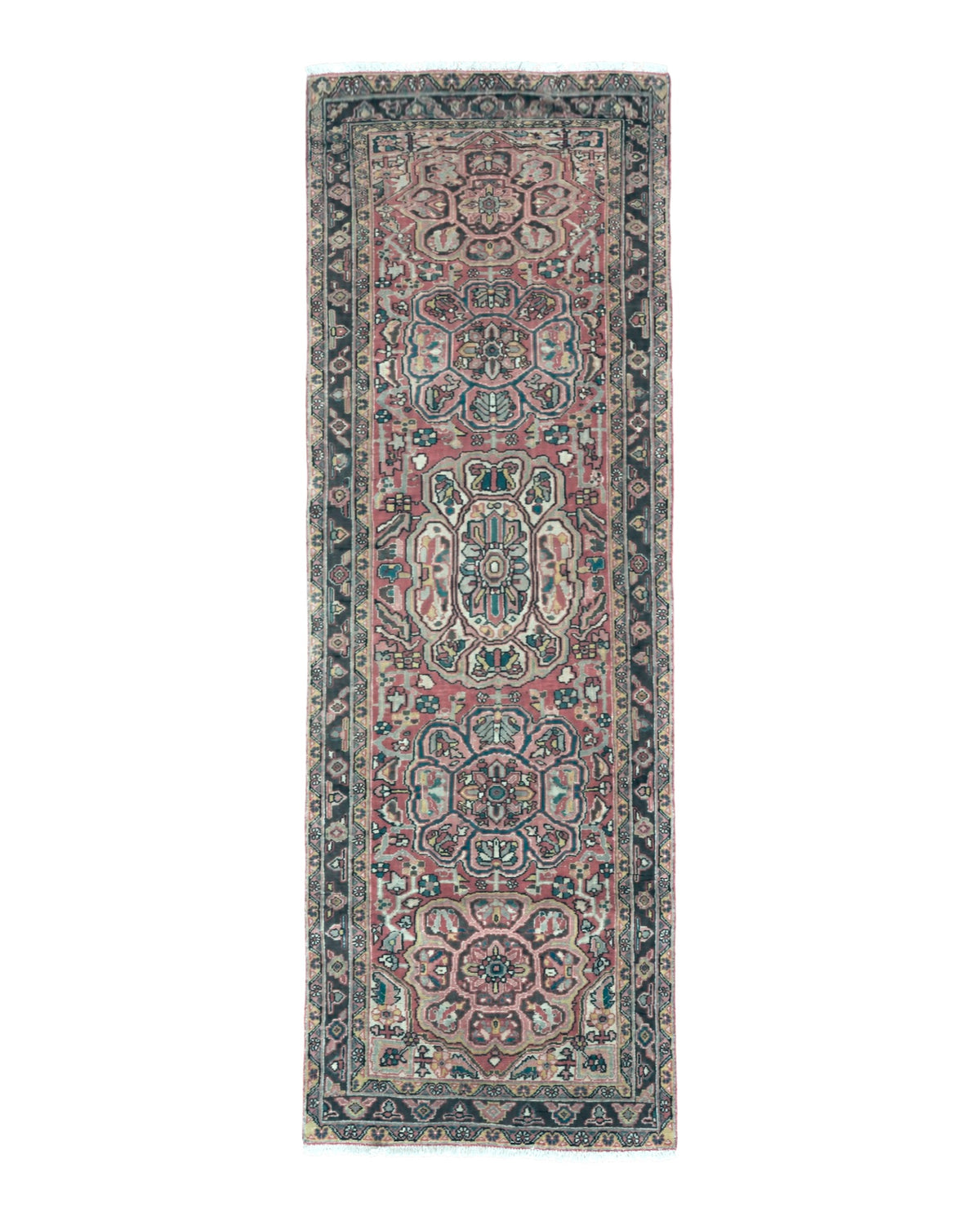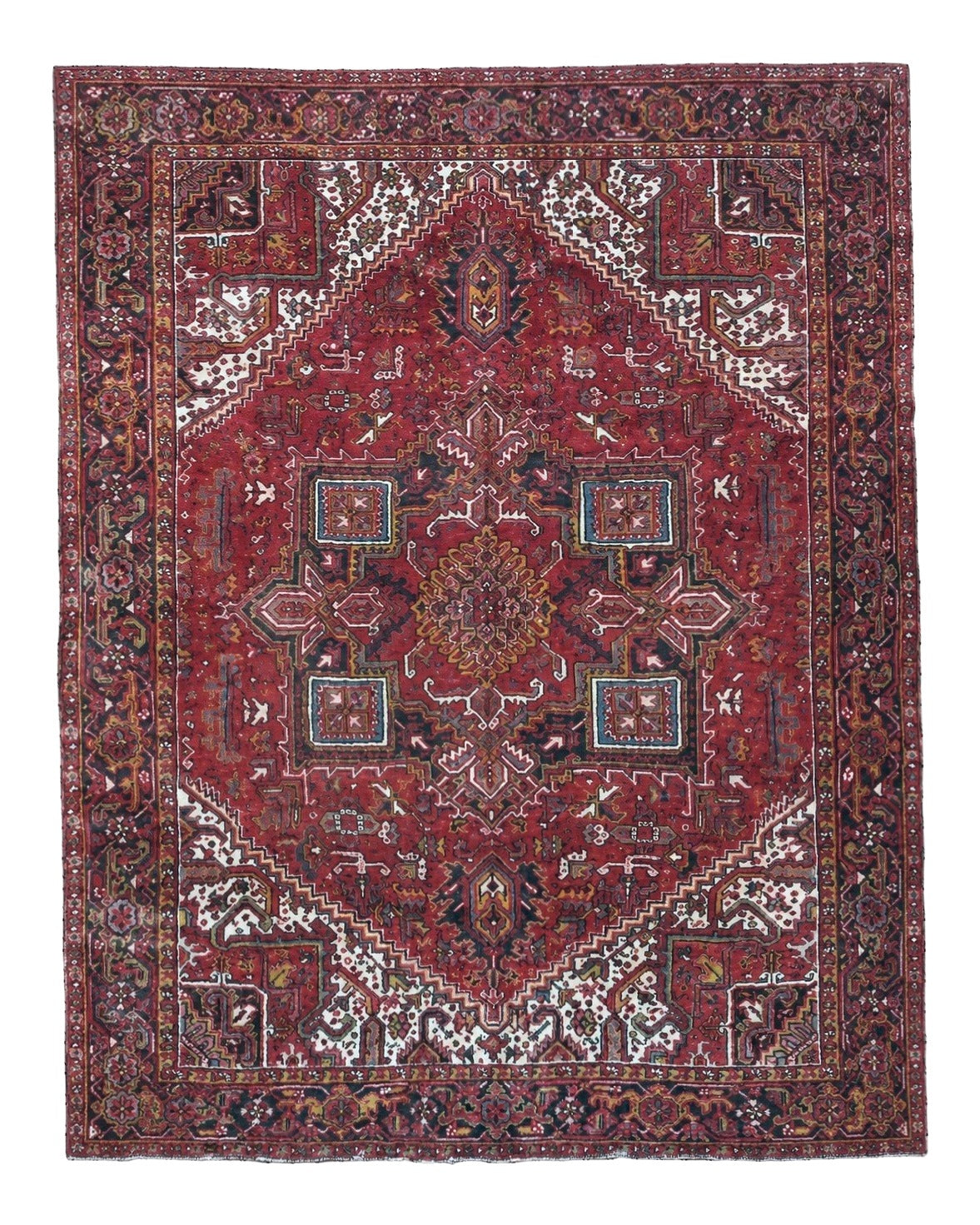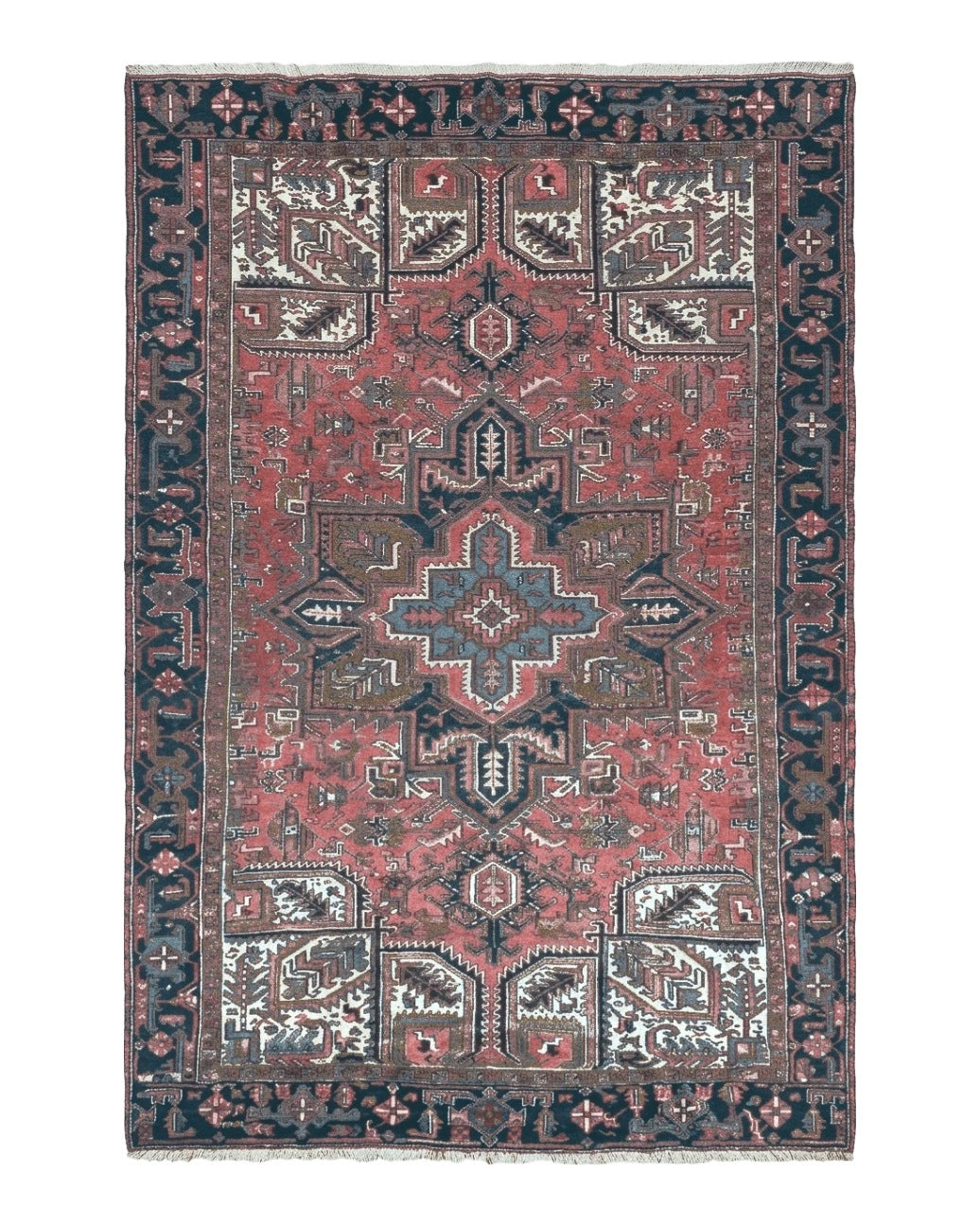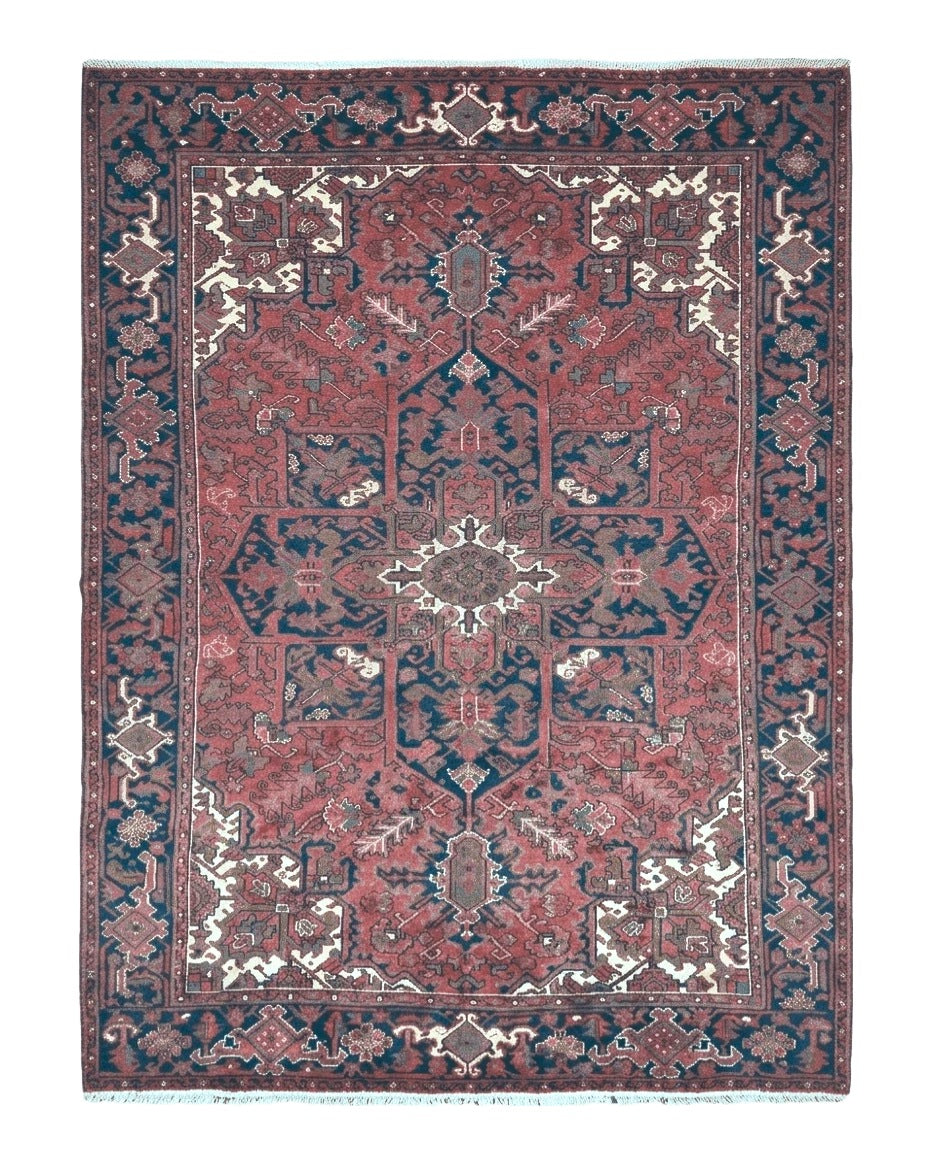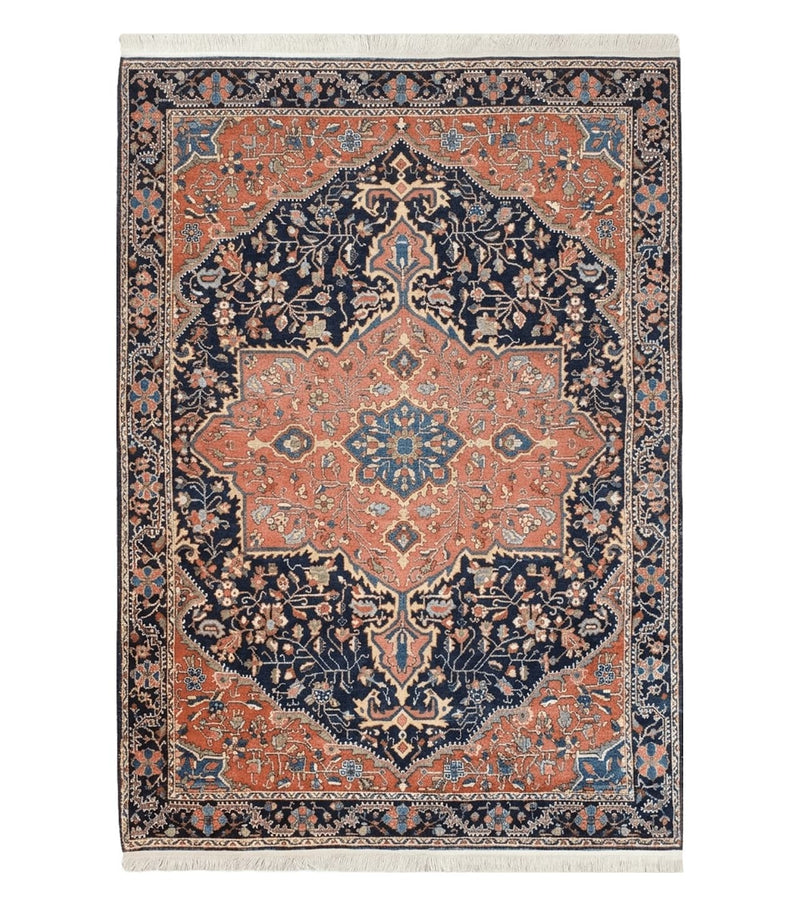


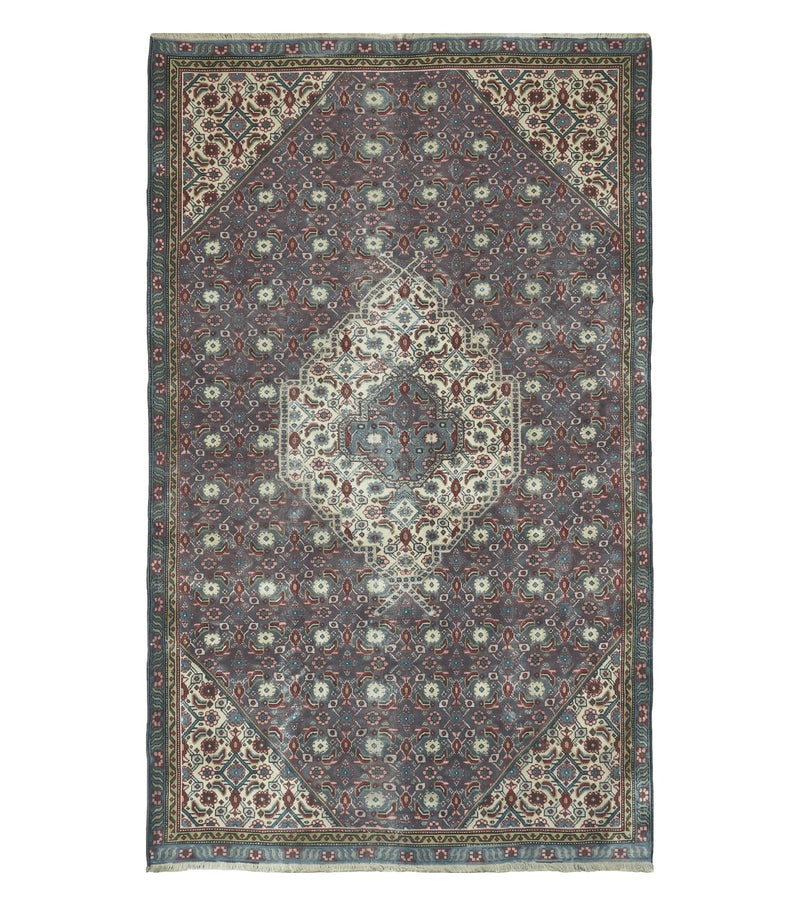


Karajeh (also Karaja or Qarajeh) is a village in north-west Iran, north-east of Tabriz, in the same weaving district as Heriz. Karajeh rugs are village rugs known for their bold, geometric designs, most often a row of two or three medallions running down the length of the rug. They are usually woven in smaller sizes and runners, which makes them a natural companion to the larger Heriz rugs from the same area.
| Origin | Karajeh and nearby villages, north-west Iran, near Heriz |
|---|---|
| Tradition | Village rugs |
| Knot | Symmetric (Turkish) |
| Materials | Wool pile on a cotton foundation |
| Typical design | Two or three geometric medallions in a row |
| Sizes | Mostly small rugs, dozars and runners |
| Common colors | Red, navy, ivory, with green and gold |
The Karajeh look
The signature Karajeh design is a series of medallions down the center of the field, often octagons or stepped diamonds, sometimes alternating in color, each with hooked or star-shaped details. The rest of the field is filled with small geometric motifs and stylized flowers. Borders are bold and geometric too. The overall effect is close to the rugs of the Caucasus to the north, which share many of the same motifs, and some Karajeh rugs look strikingly Caucasian.
Colors are those of the Heriz district: brick red, deep navy and ivory, with touches of green, gold and light blue. See Geometric vs. Curvilinear Designs.
Construction
Karajeh rugs are woven with the symmetric knot on a cotton foundation. A characteristic feature is a single weft between each row of knots, which gives the back a slightly different look from the double-wefted rugs of Heriz. They are sturdy and hard-wearing, with a medium pile, and well suited to entrances, hallways and kitchens.
Karajeh and Heriz
Karajeh and Heriz rugs come from the same district and share a palette and a geometric approach to design. The differences are mostly in size and layout: Heriz rugs are usually room-sized with a single large angular medallion, while Karajeh rugs are smaller and often have several medallions in a row. Karajeh runners are a popular way to match a Heriz in a nearby hallway.
How to recognize a Karajeh
- Two or three geometric medallions in a row down the field.
- Small sizes or runners.
- Heriz-district colors: red, navy and ivory.
- Symmetric knots and a single weft between rows.
See also Sarab Rugs and Persian Village Rugs.