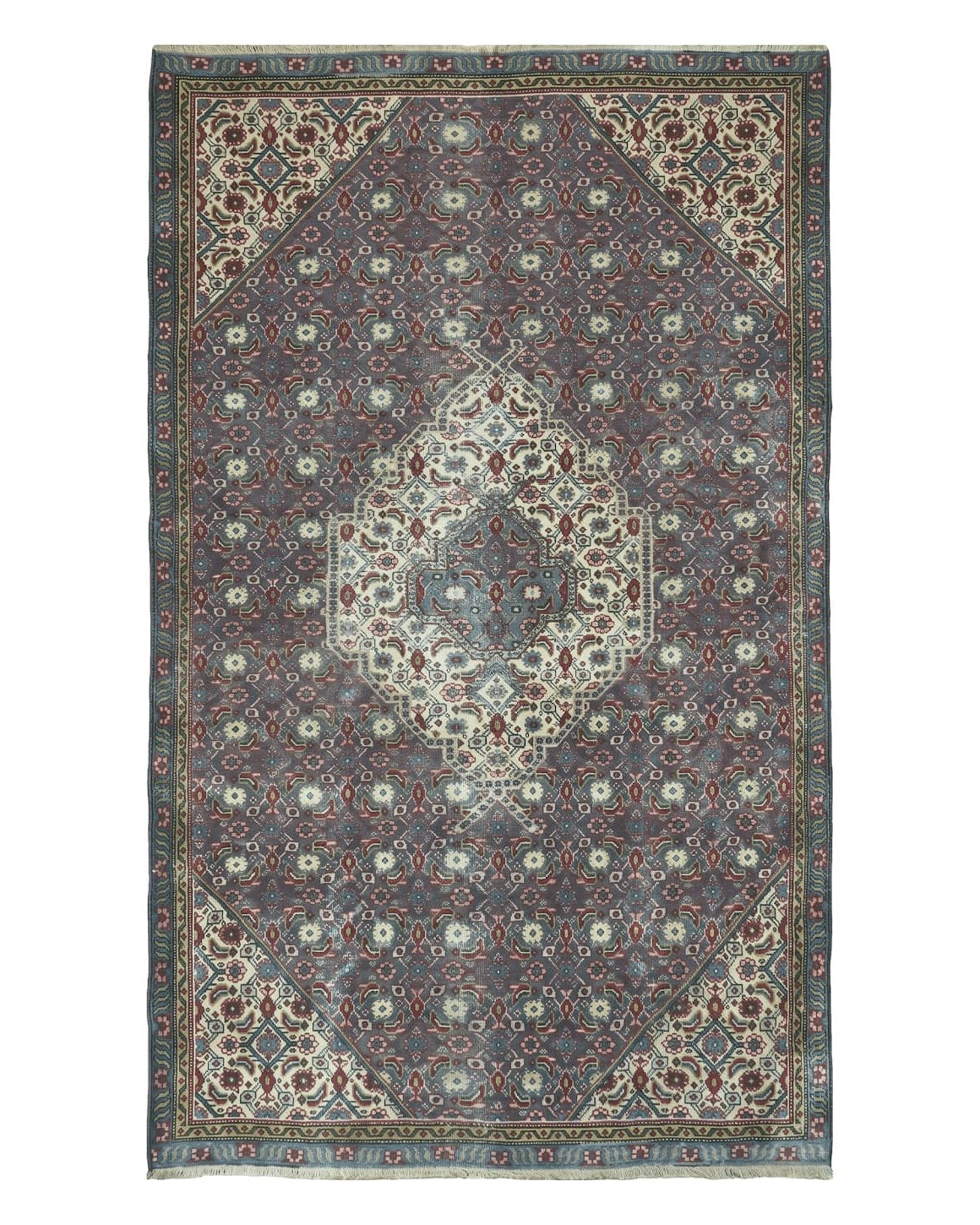
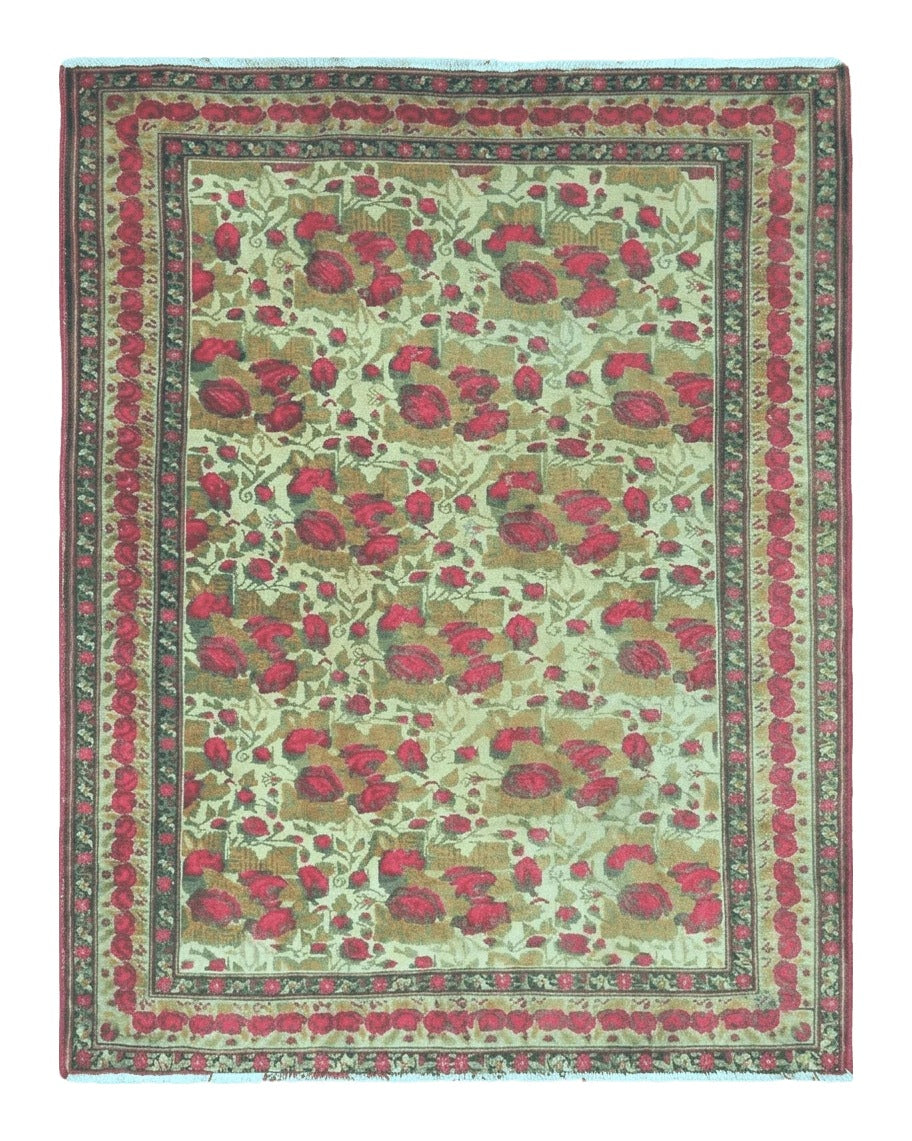
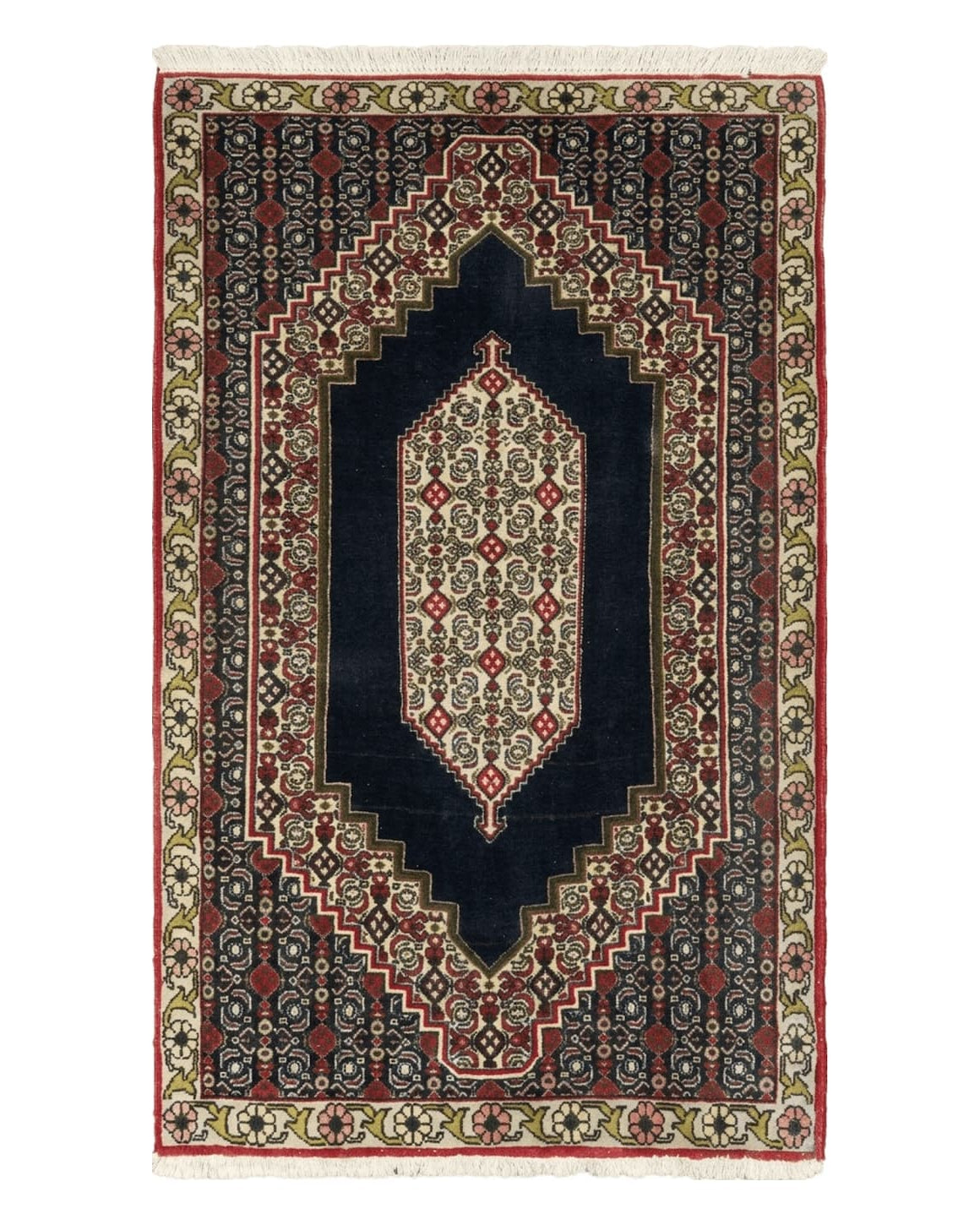
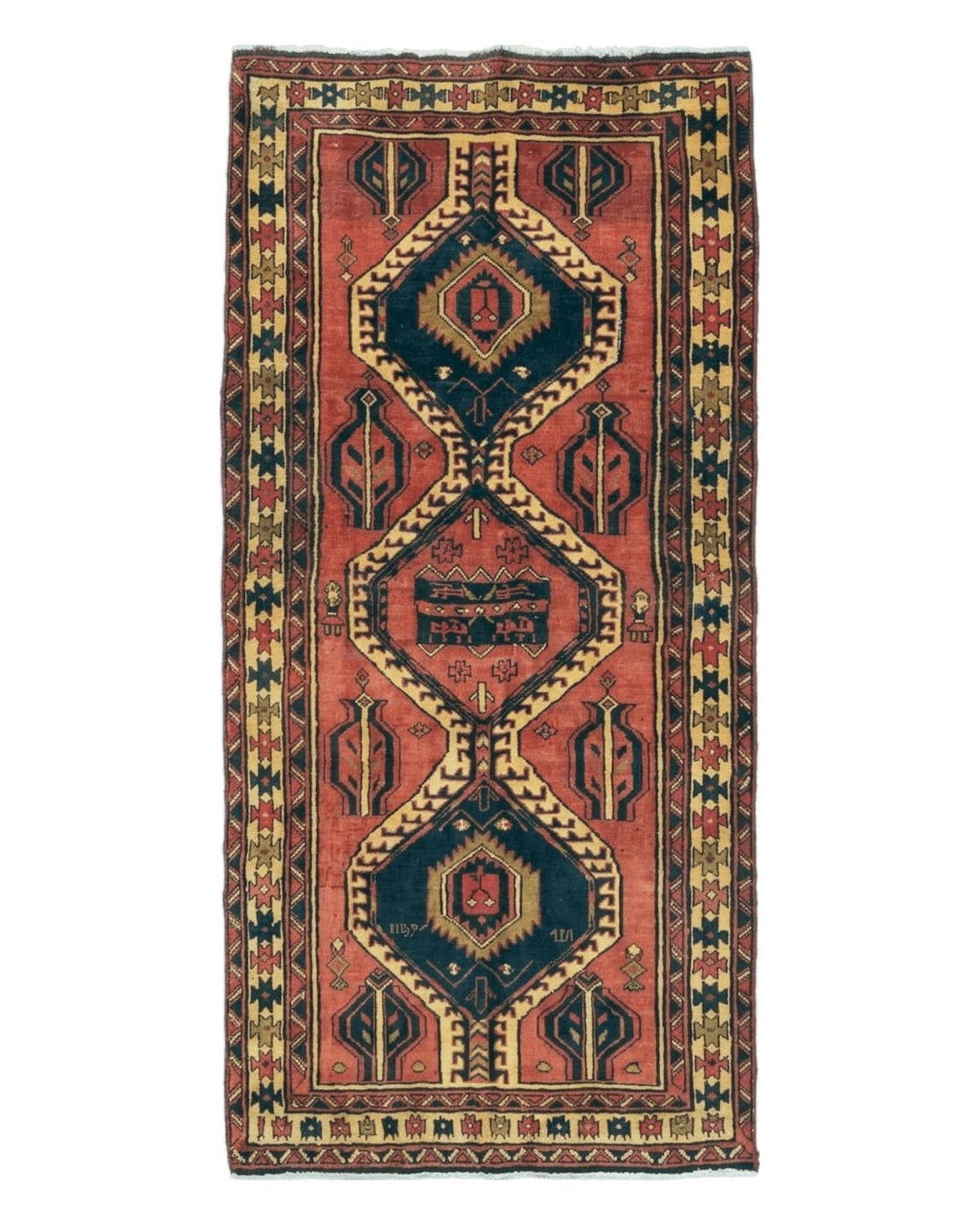
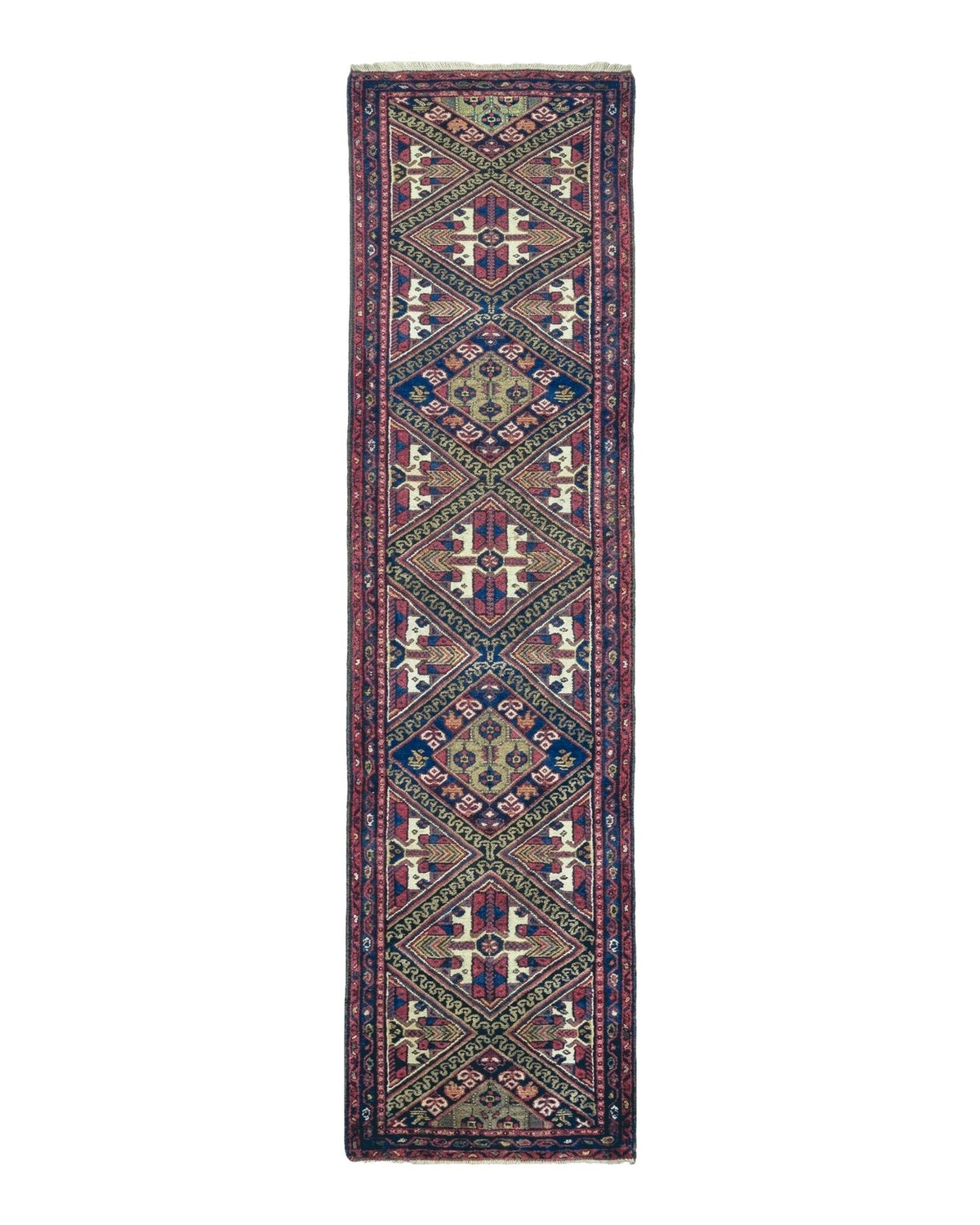
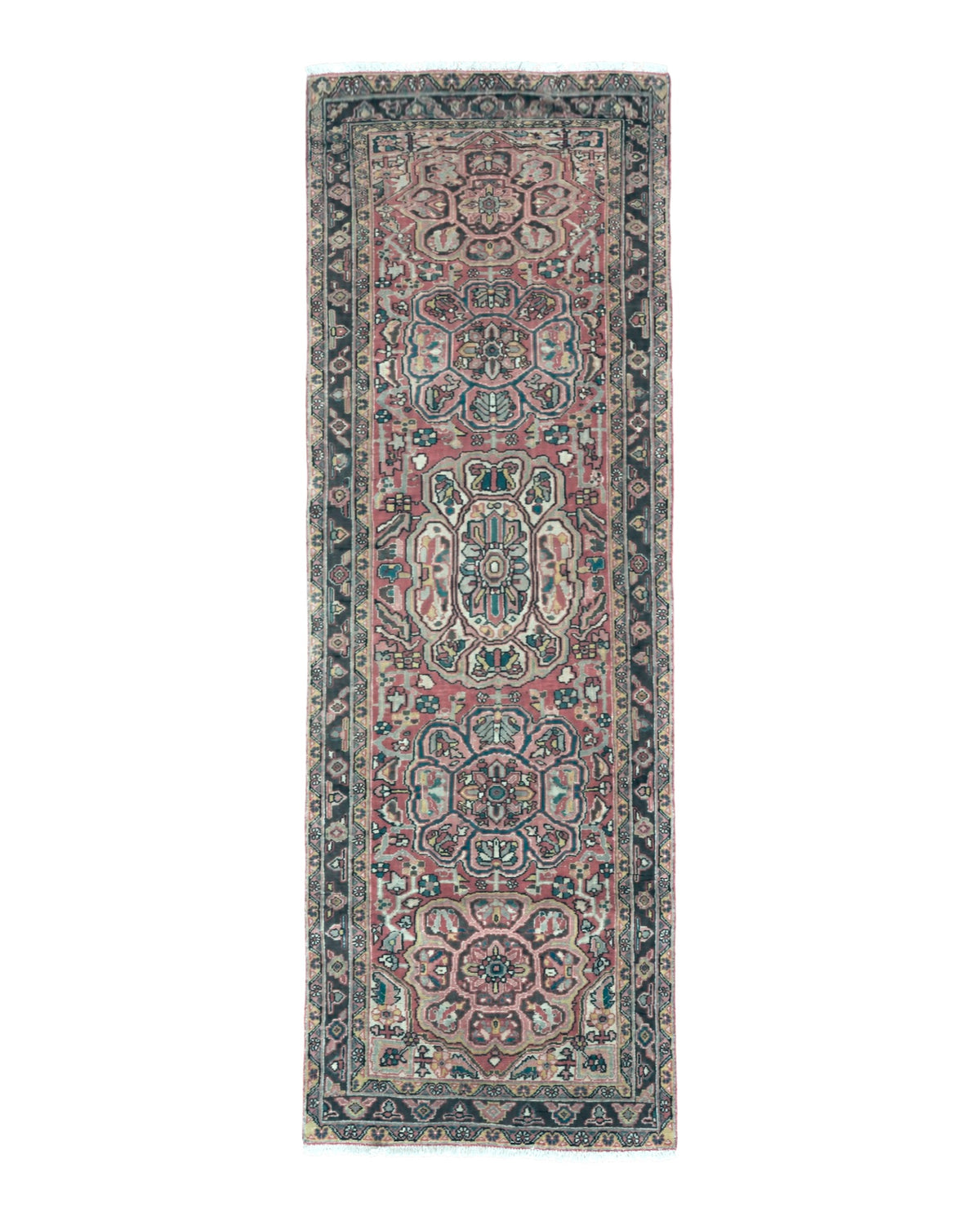
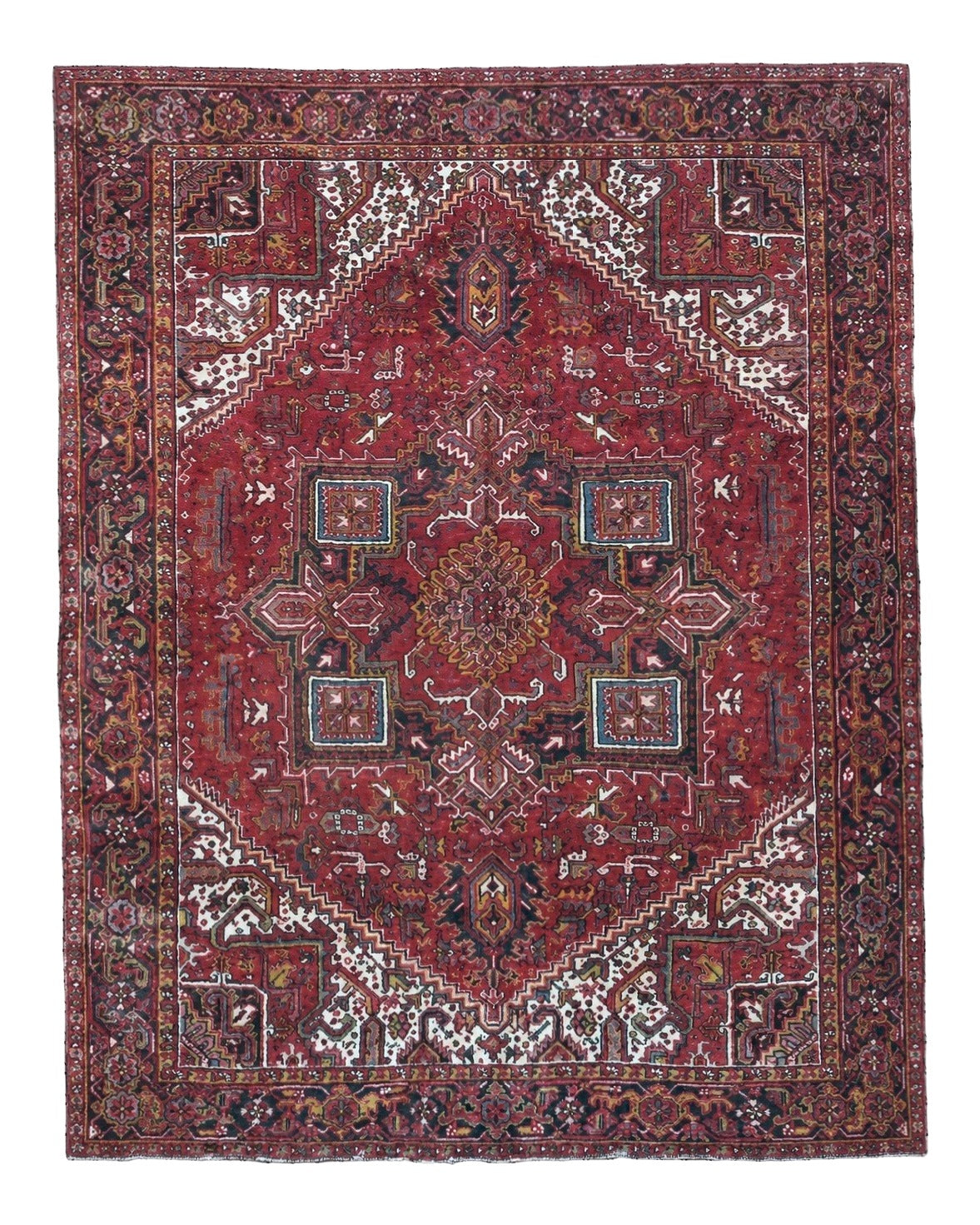
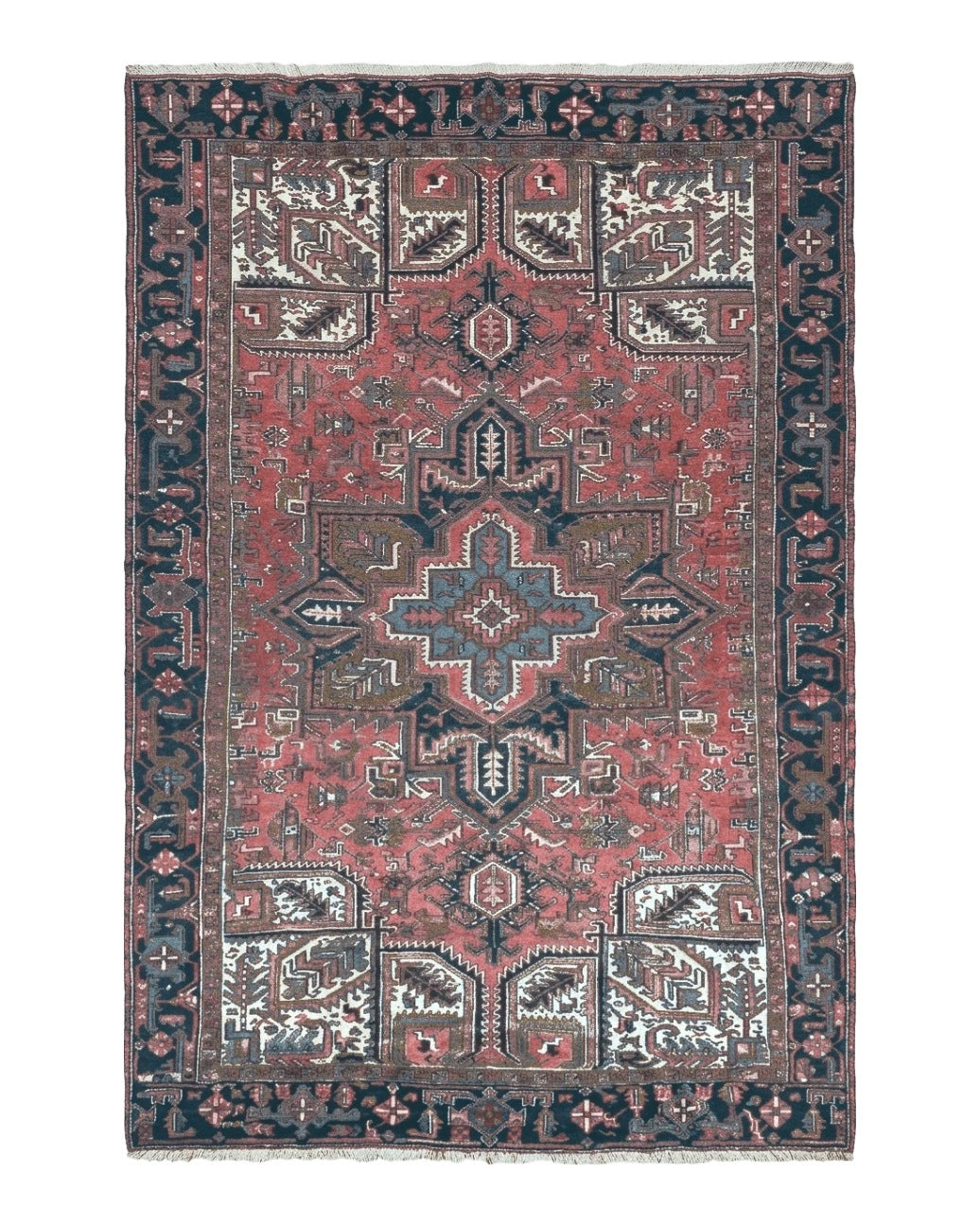
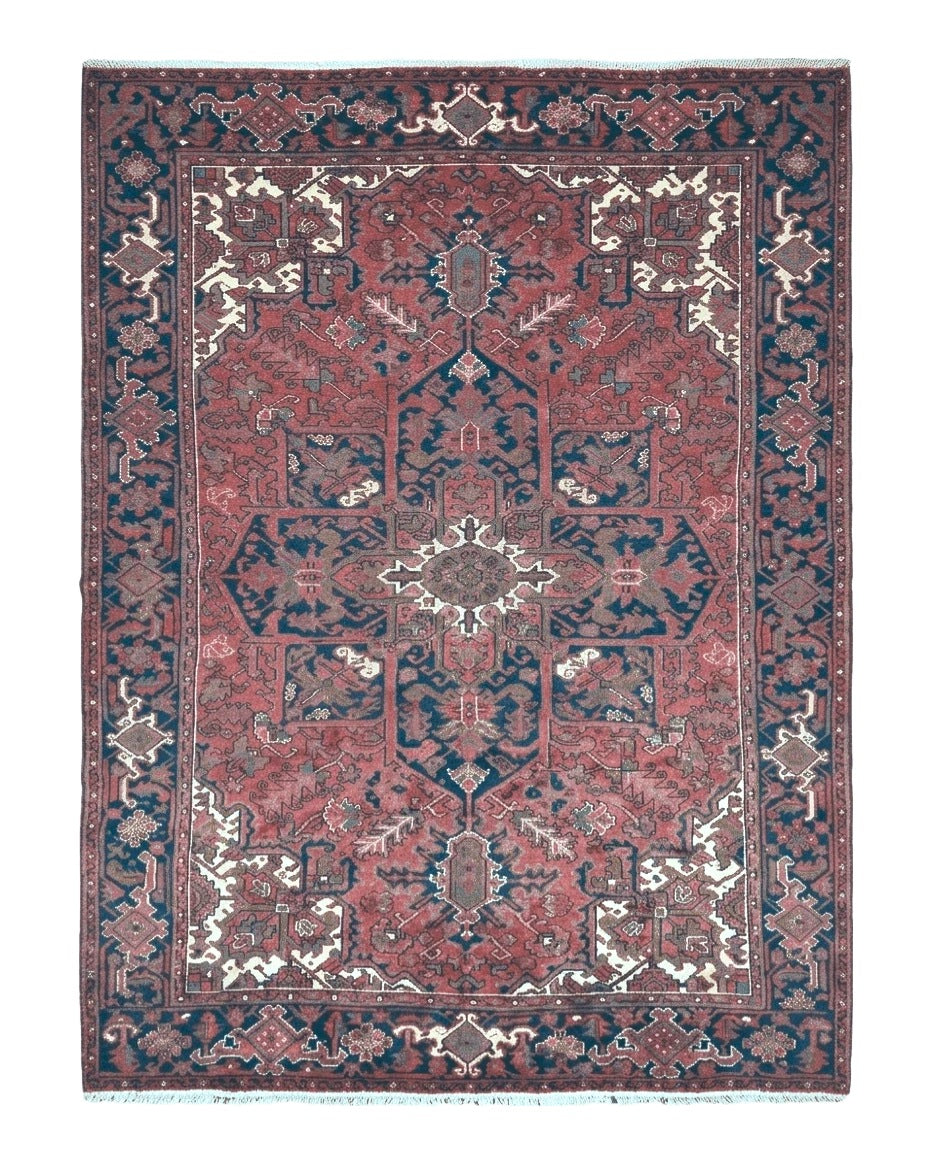
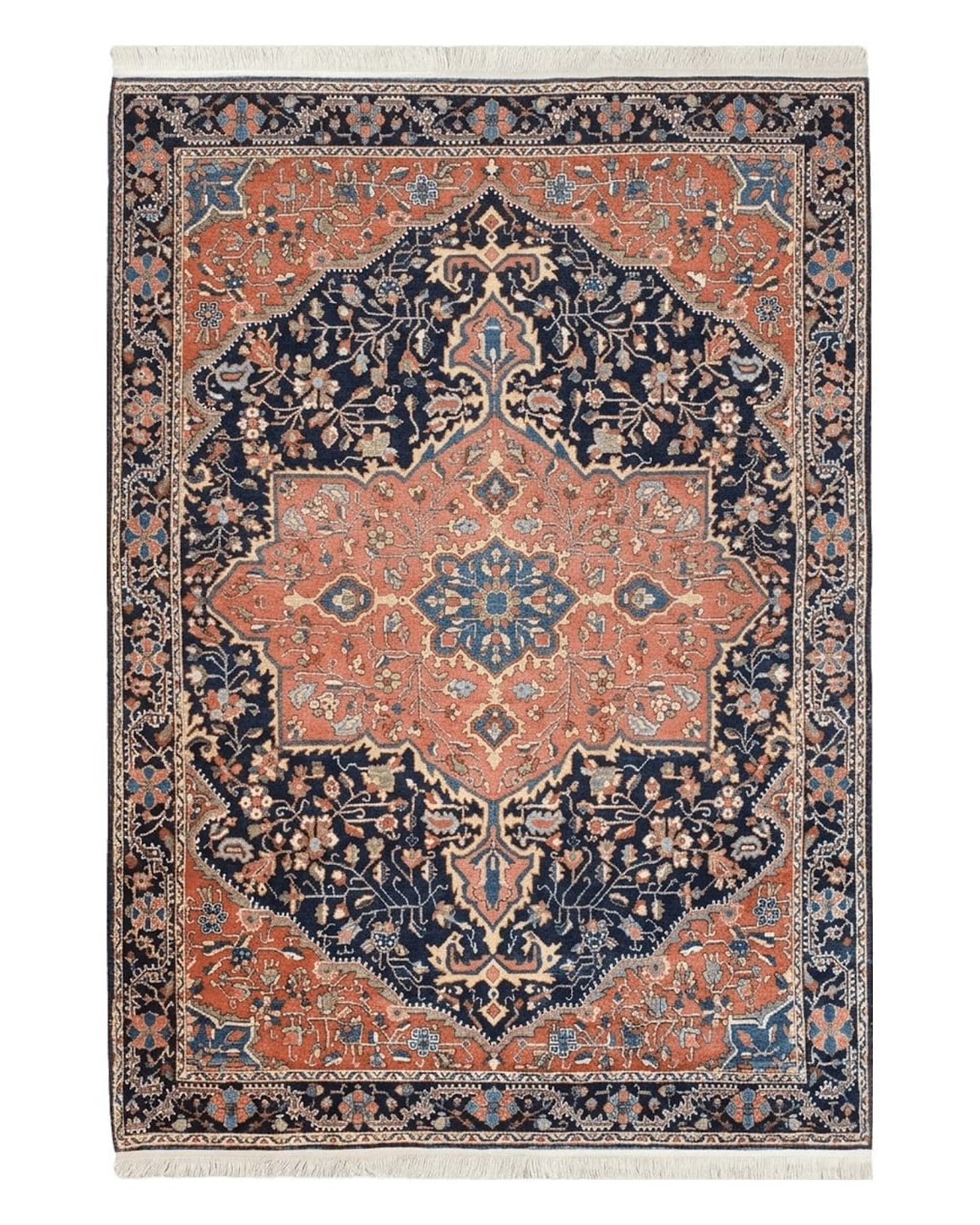
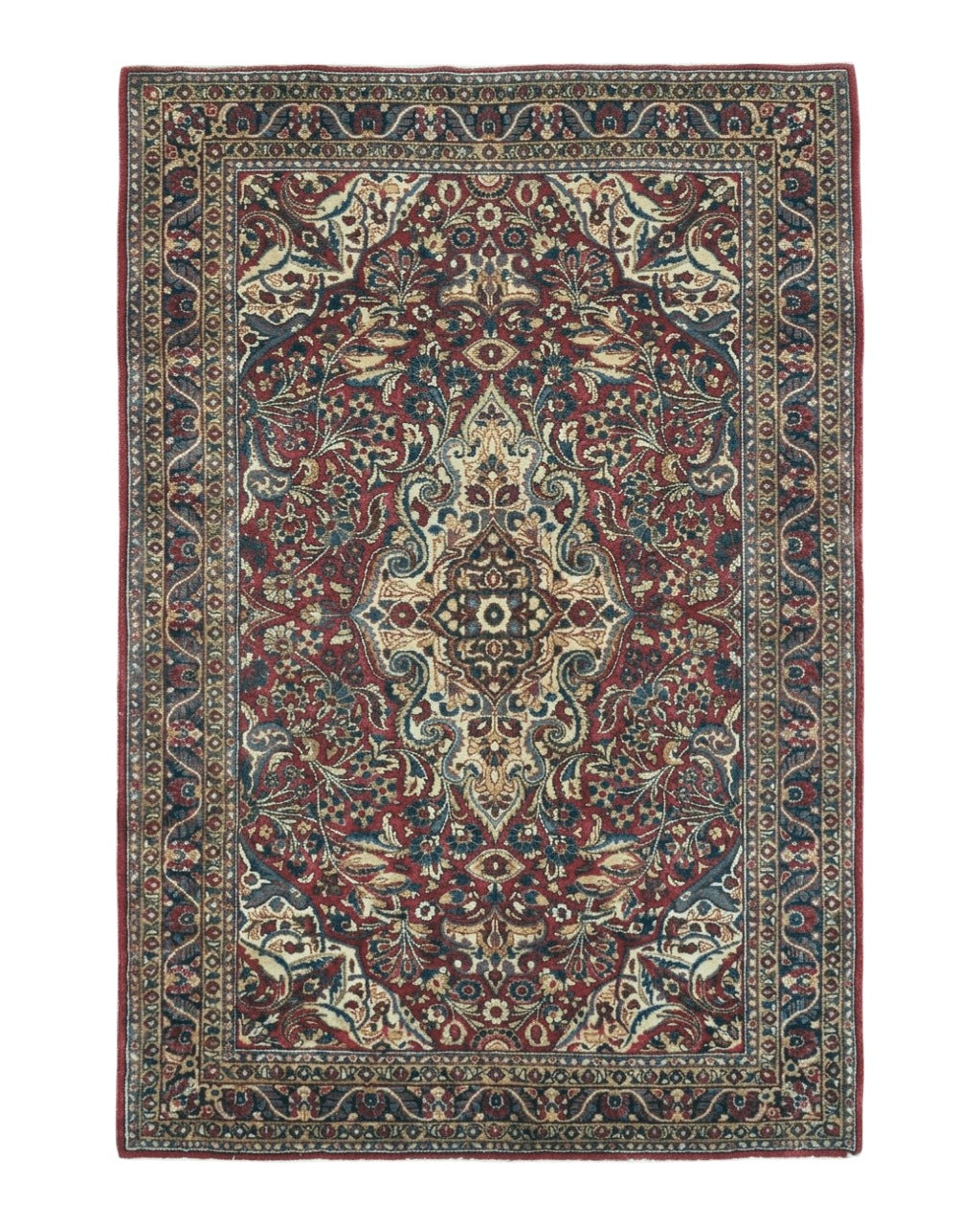
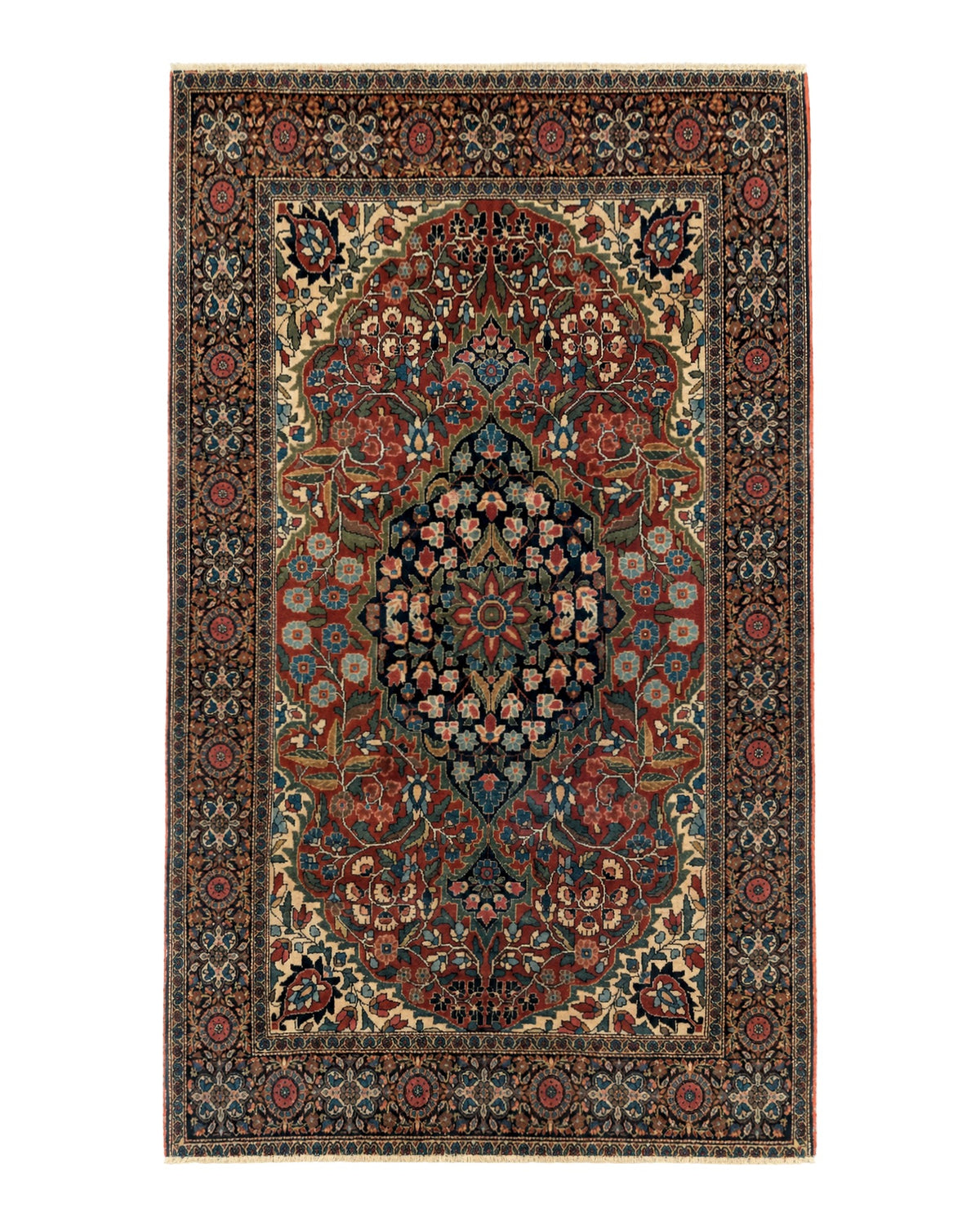
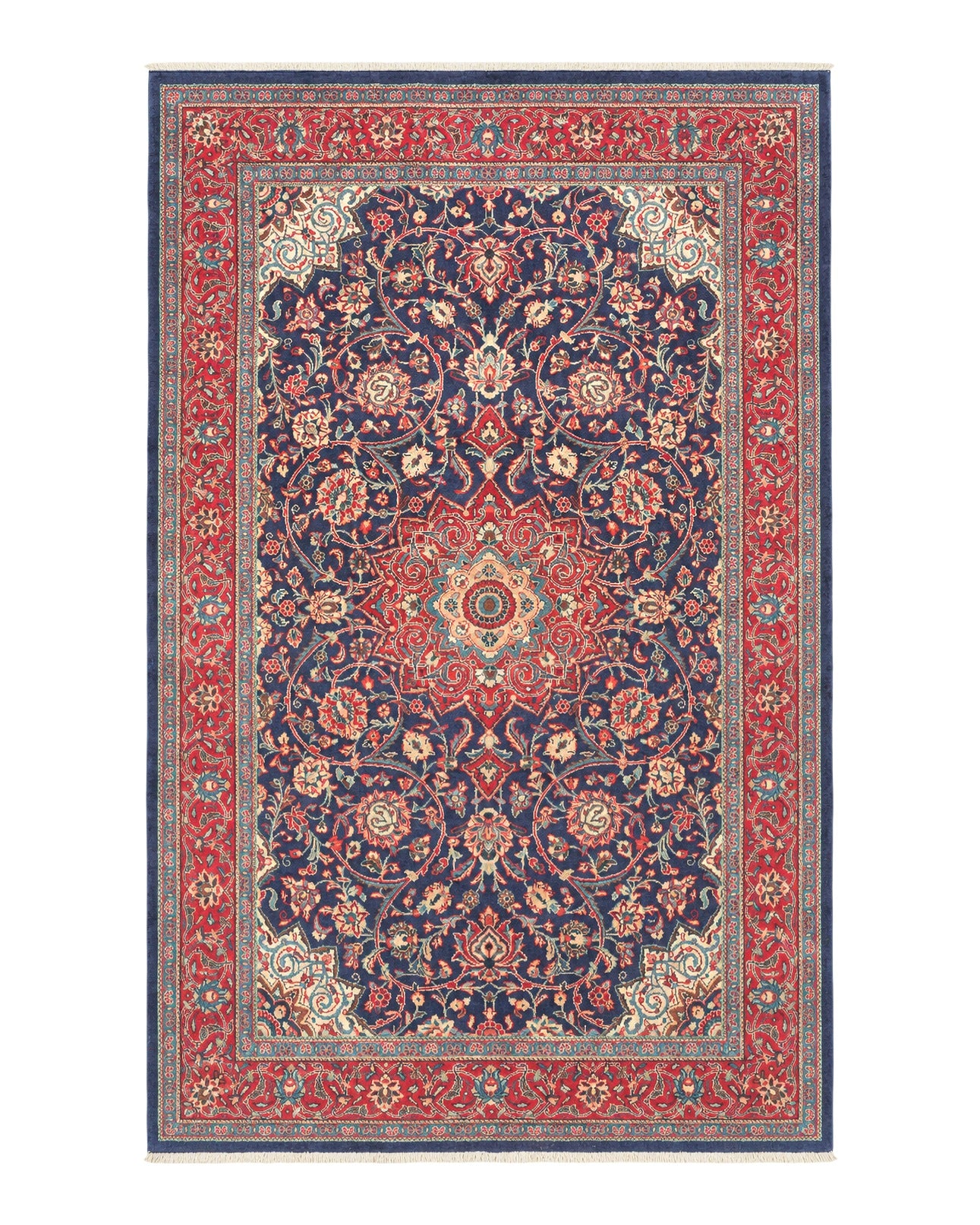
Persian village rugs are woven at home by families in Iran's villages. Unlike city rugs, which are made in workshops from a designer's drawing, village rugs are usually woven from memory, using designs passed down within the village or district. They tend to be bolder and more geometric than city rugs, more coarsely knotted but often thicker and very durable, and full of the small variations that come from weaving by hand and eye.
| Woven by | Families at home, often women |
|---|---|
| Design source | Memory and local tradition; sometimes a small sample rug |
| Style | Bold, often geometric; stylized florals |
| Knotting | Coarse to medium; some areas fine |
| Foundation | Mostly cotton |
| Main regions | Heriz, Hamadan, Arak (Sarouk), Kurdistan (Bidjar, Senneh), Malayer |
How village rugs are made
A village rug is woven on an upright loom set up in the home. The weaver usually works without a full drawing, translating the designs she knows into knots row by row. Some weavers keep a vagireh, a small sample rug showing parts of the design, to copy from. Because designs are remembered rather than measured, curves become angles, motifs vary from one side of the rug to the other, and borders sometimes have to be squeezed to turn the corner. These are not faults; they are part of what gives village rugs their life and character.
Many villages across a district share a common style, and rugs are sold under the name of the district's market town, such as Heriz, Hamadan or Bidjar. See City, Village and Tribal Rugs.
Why village rugs are so durable
Many village rugs were made for use in the weaver's own home, or for local sale, and were built to last. They often use thick, local wool, a firm cotton foundation, and a pile left a little longer than on city rugs. Some types, such as Bidjar and Heriz, are famously tough, and century-old pieces are still in daily use.
The main village regions
| Region | Known for |
|---|---|
| Heriz | Bold angular medallions, brick red and navy; extremely durable |
| Karajeh | Small rugs and runners with rows of geometric medallions |
| Sarab | Camel-colored grounds and long runners |
| Ardabil | Geometric rugs close to Caucasian designs |
| Bidjar | Dense, heavy "iron rugs" from Kurdistan |
| Senneh | Very fine, thin Kurdish rugs with small all-over designs |
| Hamadan | A large region of hard-wearing, single-wefted village rugs |
| Malayer | Fine village rugs combining Hamadan and Arak traditions |
| Sarouk | Floral rugs of the Arak region, from Farahan to the American Sarouk |
| Mahal and Sultanabad | Large decorative rugs with bold, open designs |
Designs and colors
Village designs draw on the same Persian vocabulary as city rugs, medallions, Herati patterns, boteh and floral borders, but render it in a bolder, more geometric way. Colors are usually strong and saturated: brick and madder red, deep blue, ivory and camel, with green and gold accents. Abrash, the gentle banding of color from batches of hand-dyed wool, is common and valued. See Geometric vs. Curvilinear Designs.
Living with a village rug
Village rugs are some of the most practical rugs to live with. They suit family rooms, dining rooms and hallways, hide everyday wear well, and their bold designs work in both traditional and modern rooms. Antique village rugs, especially Heriz and Serapi pieces, are also highly prized by collectors and designers. See Persian City Rugs and Persian Tribal Rugs for the other two traditions.