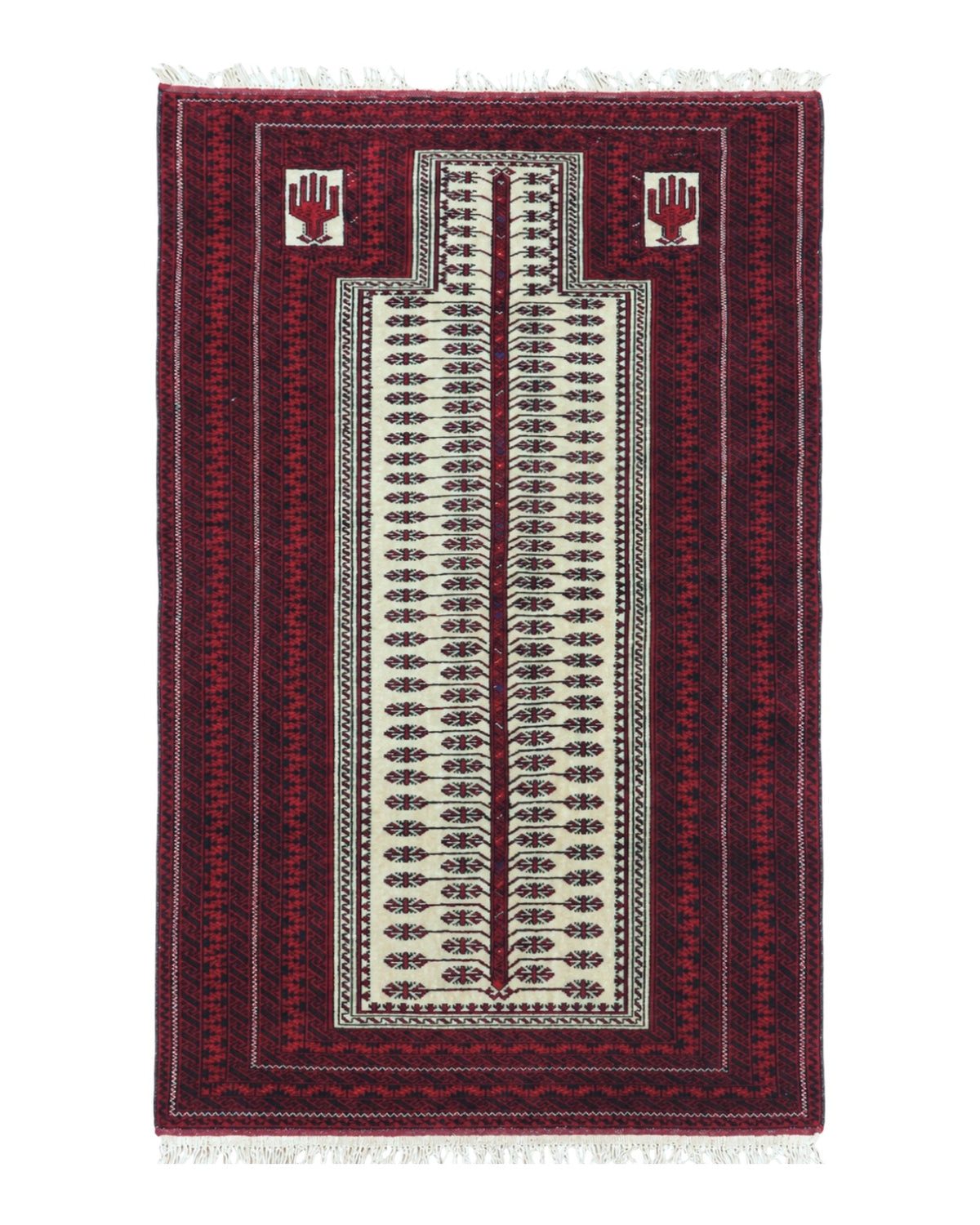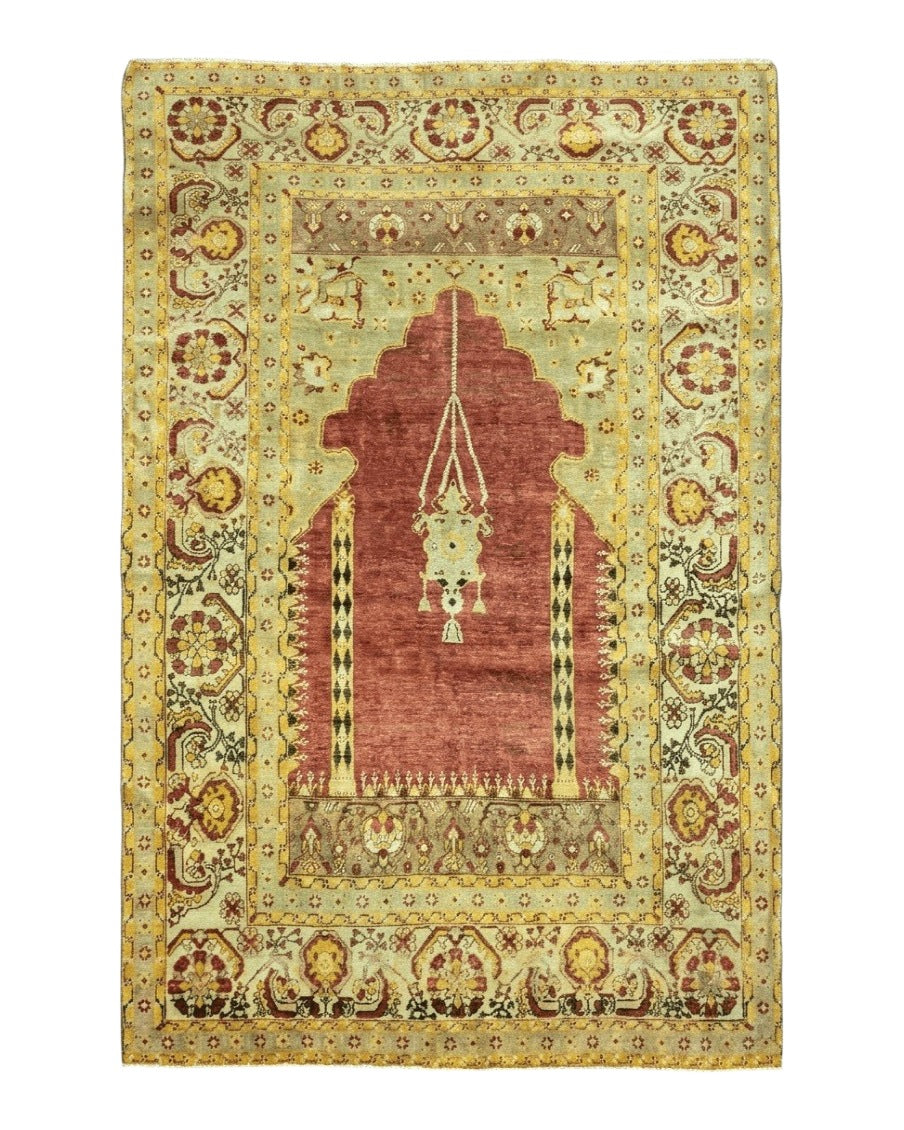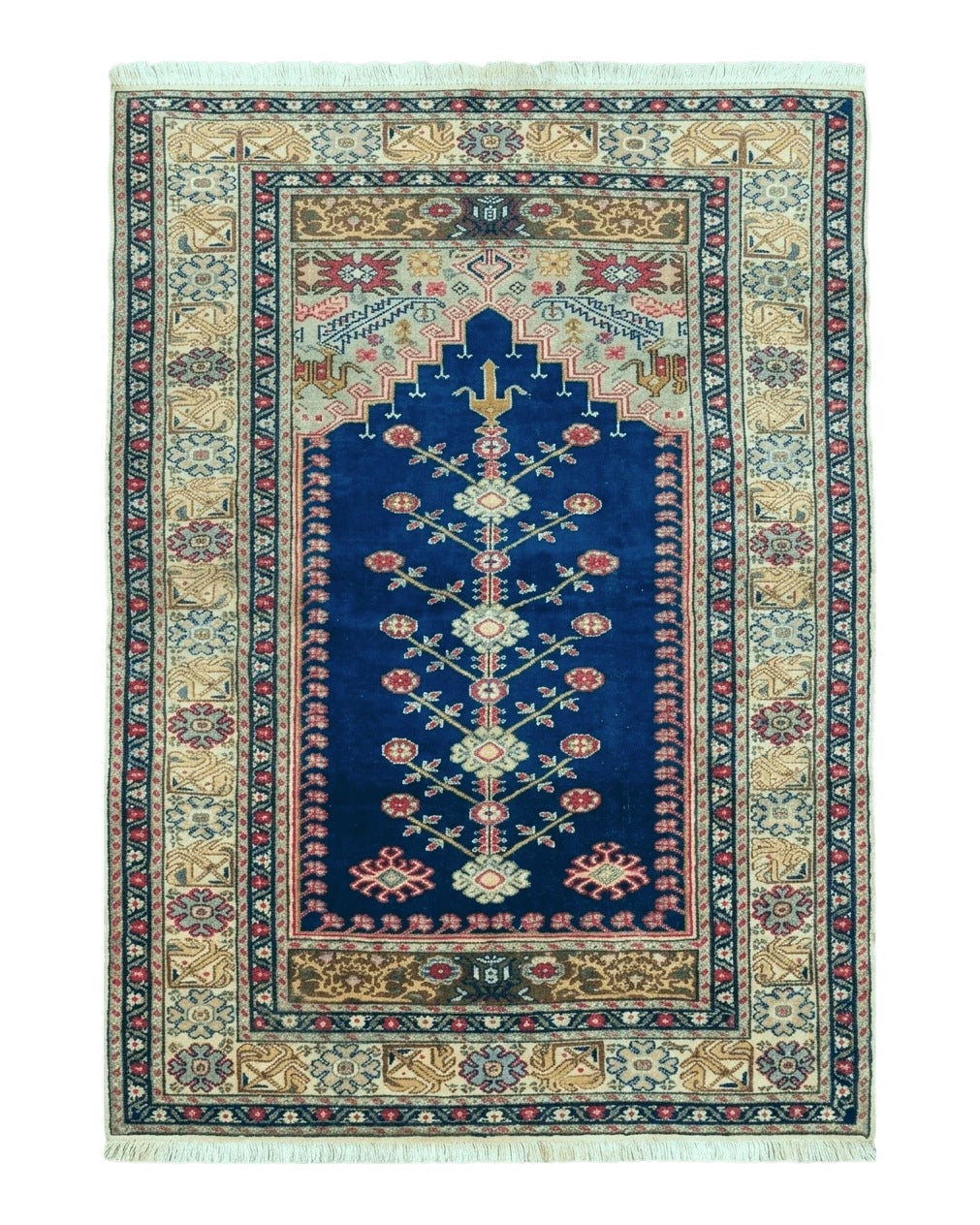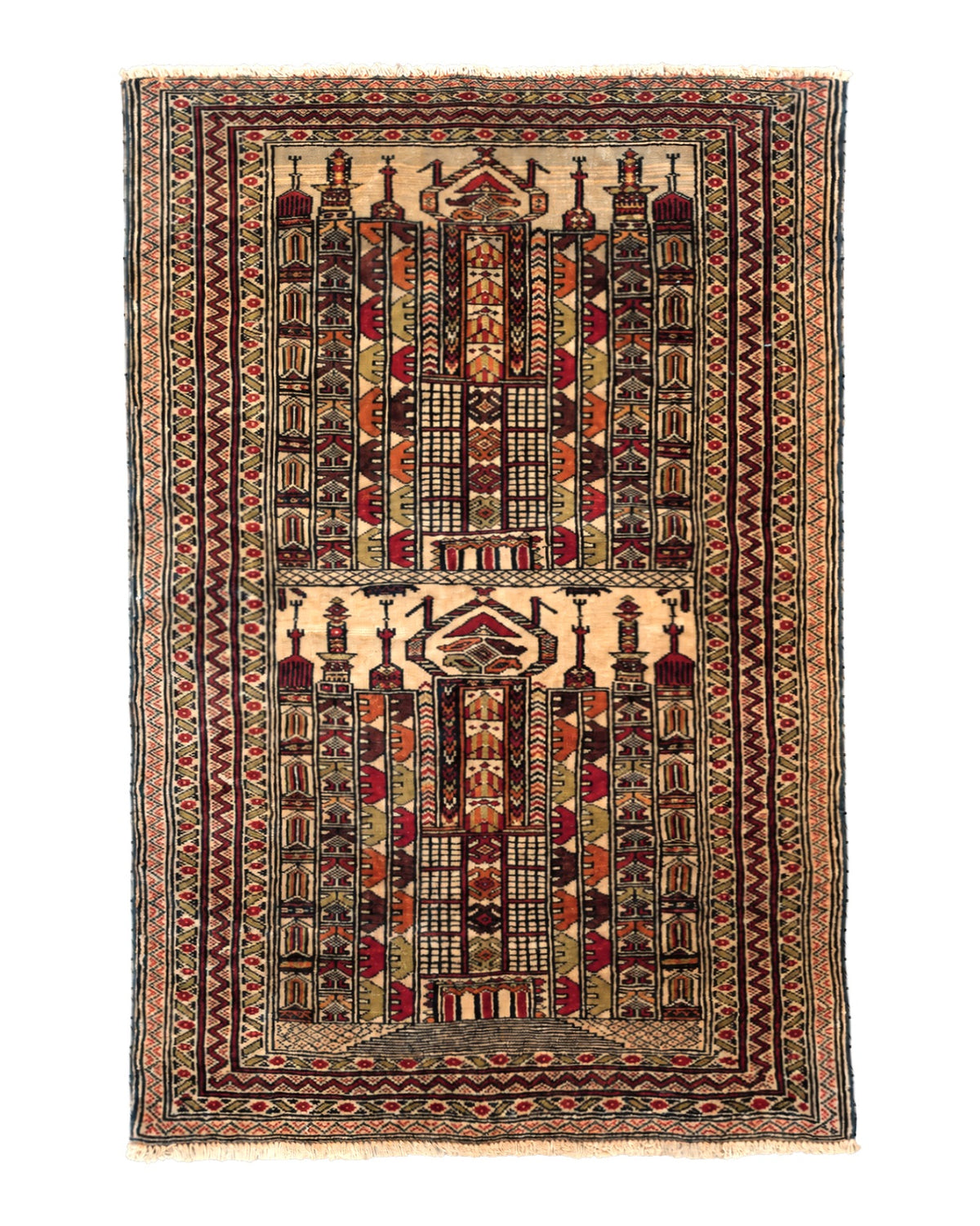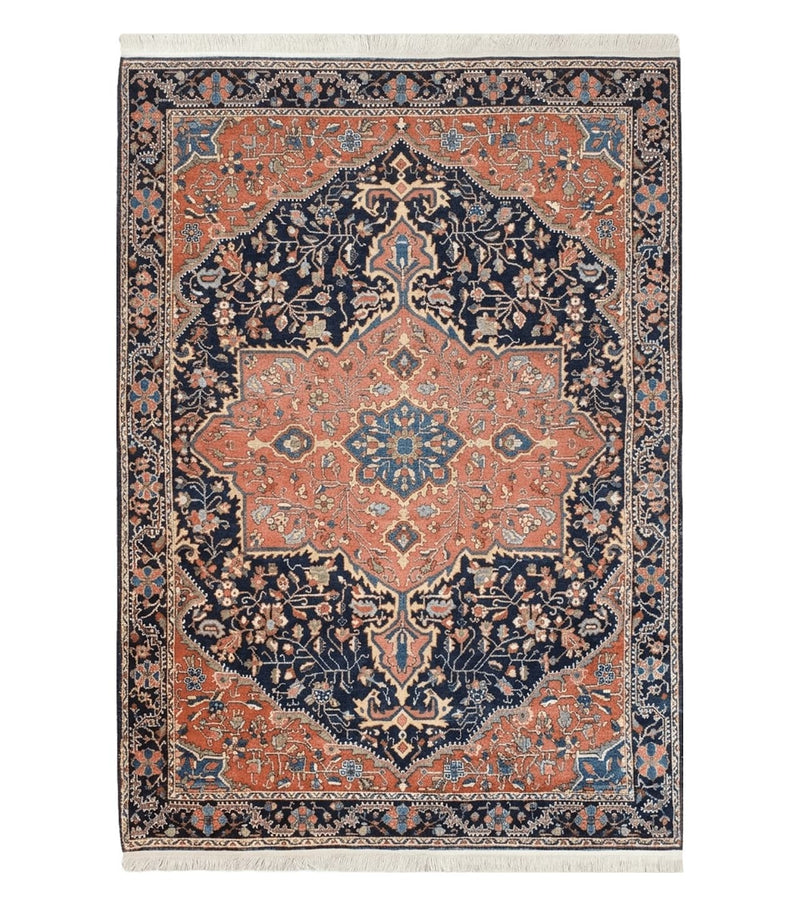


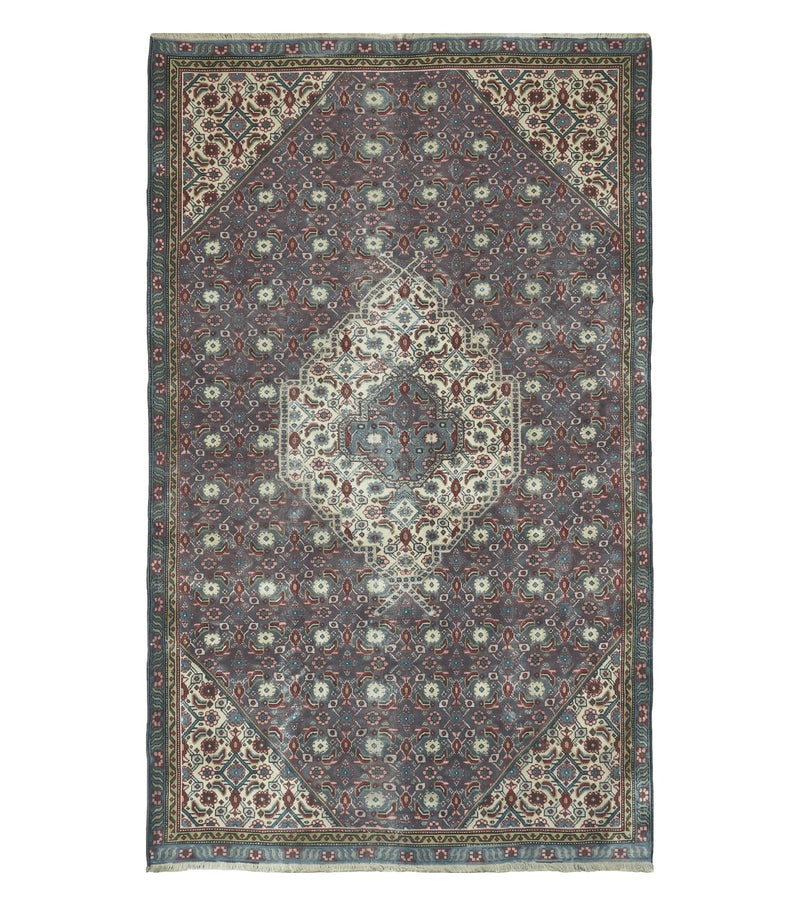


A prayer rug is a small rug with a design pointing in one direction, most often an arch at one end of the field. The arch, called a mihrab, represents the niche in the wall of a mosque that shows the direction of Mecca. Muslims pray five times a day, and a prayer rug provides a clean place to kneel; when it is laid out, the arch points toward Mecca. Prayer rugs have been woven across the Islamic world for centuries, and they include some of the most beautiful rugs ever made.
| Key feature | An arch (mihrab) at one end of the field |
|---|---|
| Typical size | About 3 × 4 to 4 × 6 feet |
| Common motifs | Hanging lamp, tree of life, vase, columns, hands, combs |
| Variations | Single arch; double-ended; multiple arches (saf) |
| Woven in | Turkey, Iran, the Caucasus, Central Asia, Afghanistan and beyond |
The mihrab and its symbols
The arch may be pointed, stepped, rounded or drawn as a simple triangle, and the field beneath it may be plain or richly decorated. Common features include:
- A hanging lamp, recalling the lamps of a mosque and a verse of the Qur'an that compares God's light to a lamp.
- A tree of life or vase of flowers, filling the field under the arch.
- Columns, framing the arch like the entrance of a building.
- Hands, small stylized hands on either side of the arch, marking where the hands are placed.
- A comb or ewer, recalling the washing and grooming before prayer.
See Rug Motifs and Their Meanings.
Prayer rugs around the rug belt
- Turkish (Anatolian): some of the most famous prayer rugs, from Ladik, Ghiordes, Kula, Melas and Kayseri, often with tall columns or bold, stepped arches. See Turkish Rugs.
- Persian: city prayer rugs from Kashan, Qum, Isfahan and Tabriz, often with vases or trees of life in fine floral detail, and sometimes in silk.
- Caucasian: geometric prayer rugs from Daghestan, Shirvan and Kazak, often with an all-over lattice under a small, angular arch.
- Baluch: small prayer rugs with camel-colored fields, trees of life and stylized hands. See Baluch Rugs.
- Turkmen: prayer rugs and engsi door rugs with divided fields.
A saf is a long rug with a row of several arches side by side, made for a family or a mosque.
Prayer rugs today
Prayer rugs are still used for prayer, and they are also widely collected and used as decorative rugs. Their small size suits entrances, bedsides and walls, and the directional design makes them especially attractive hung. Many "prayer design" rugs are woven purely as decorative pieces.
See also Garden, Panel and Tree of Life Designs.