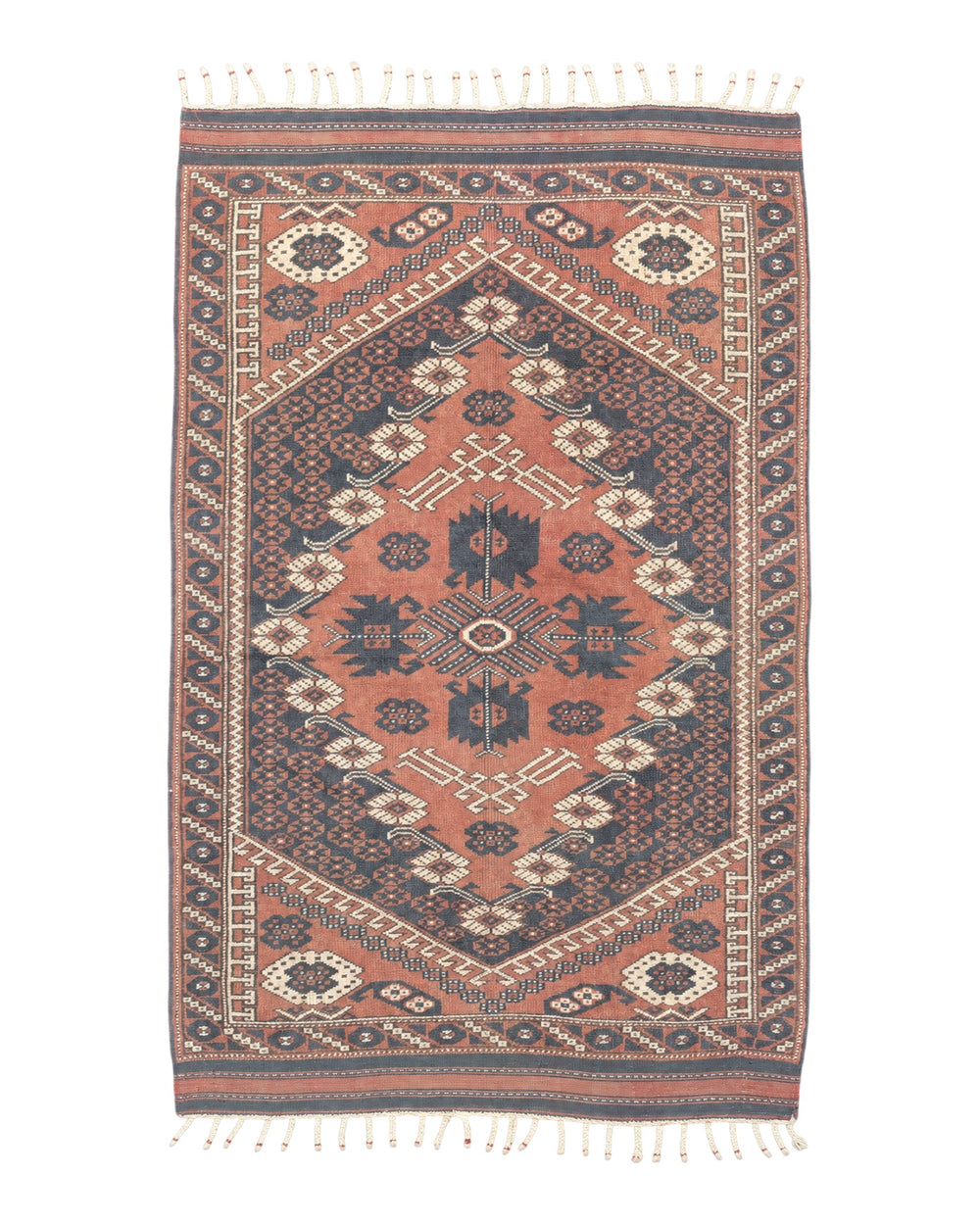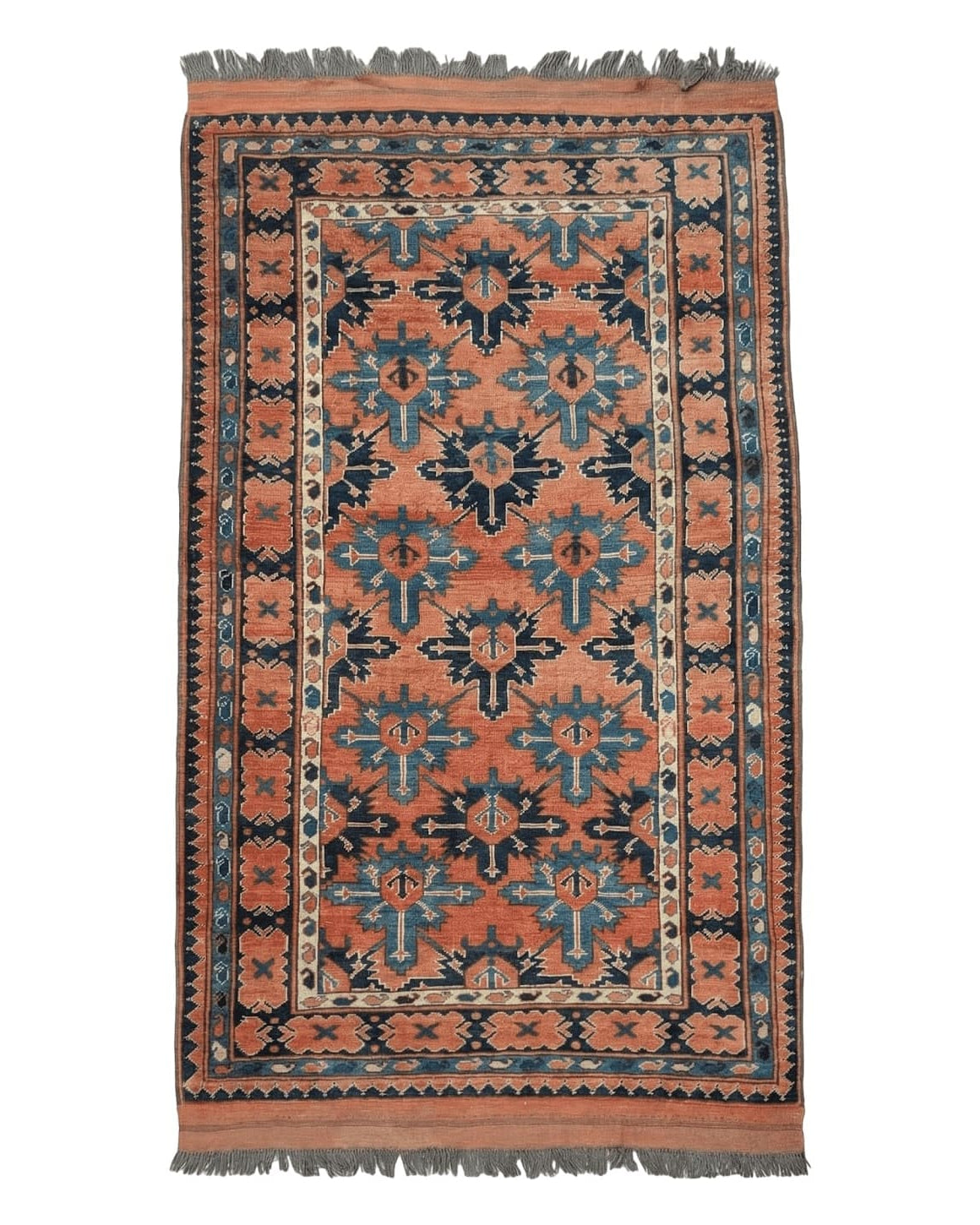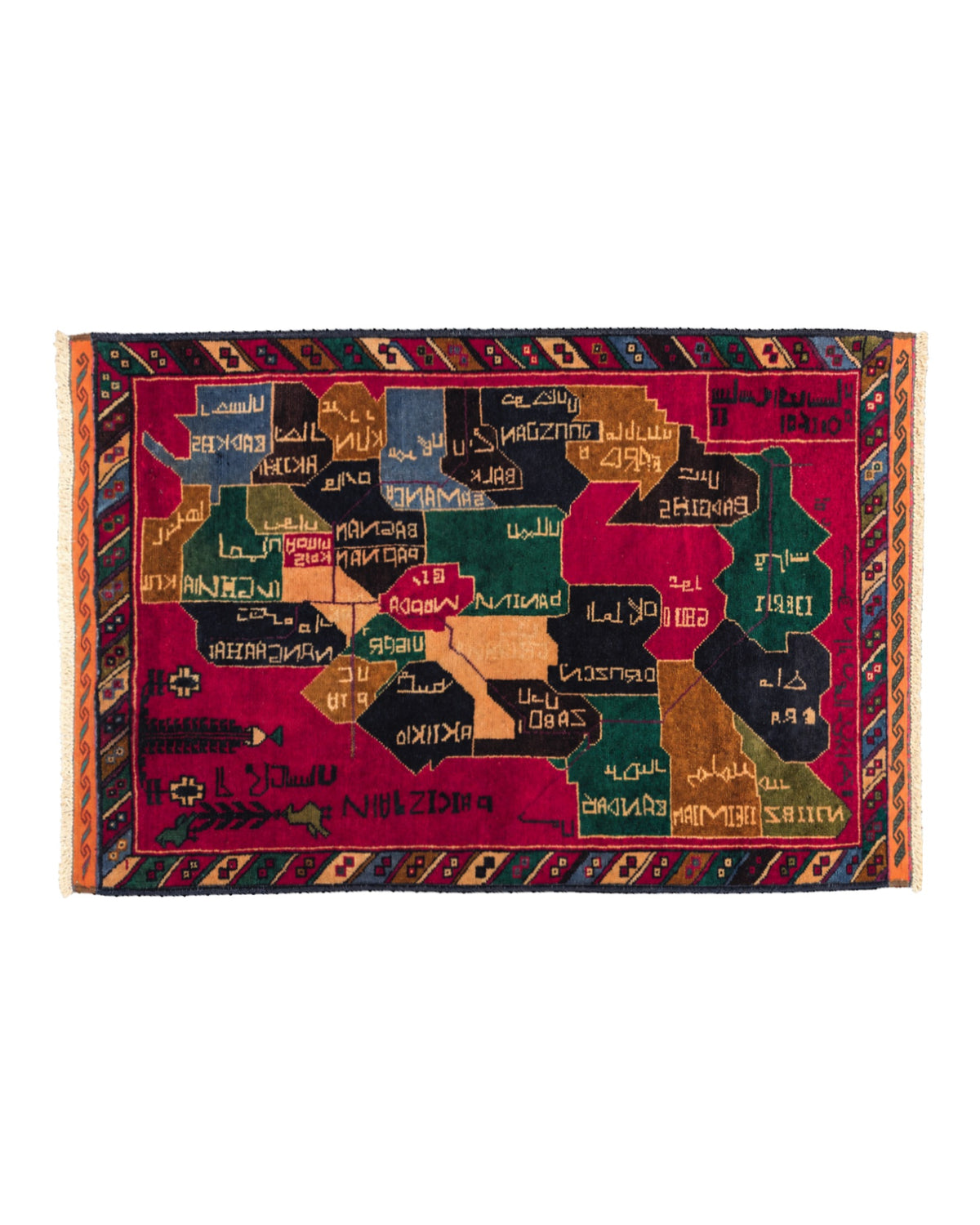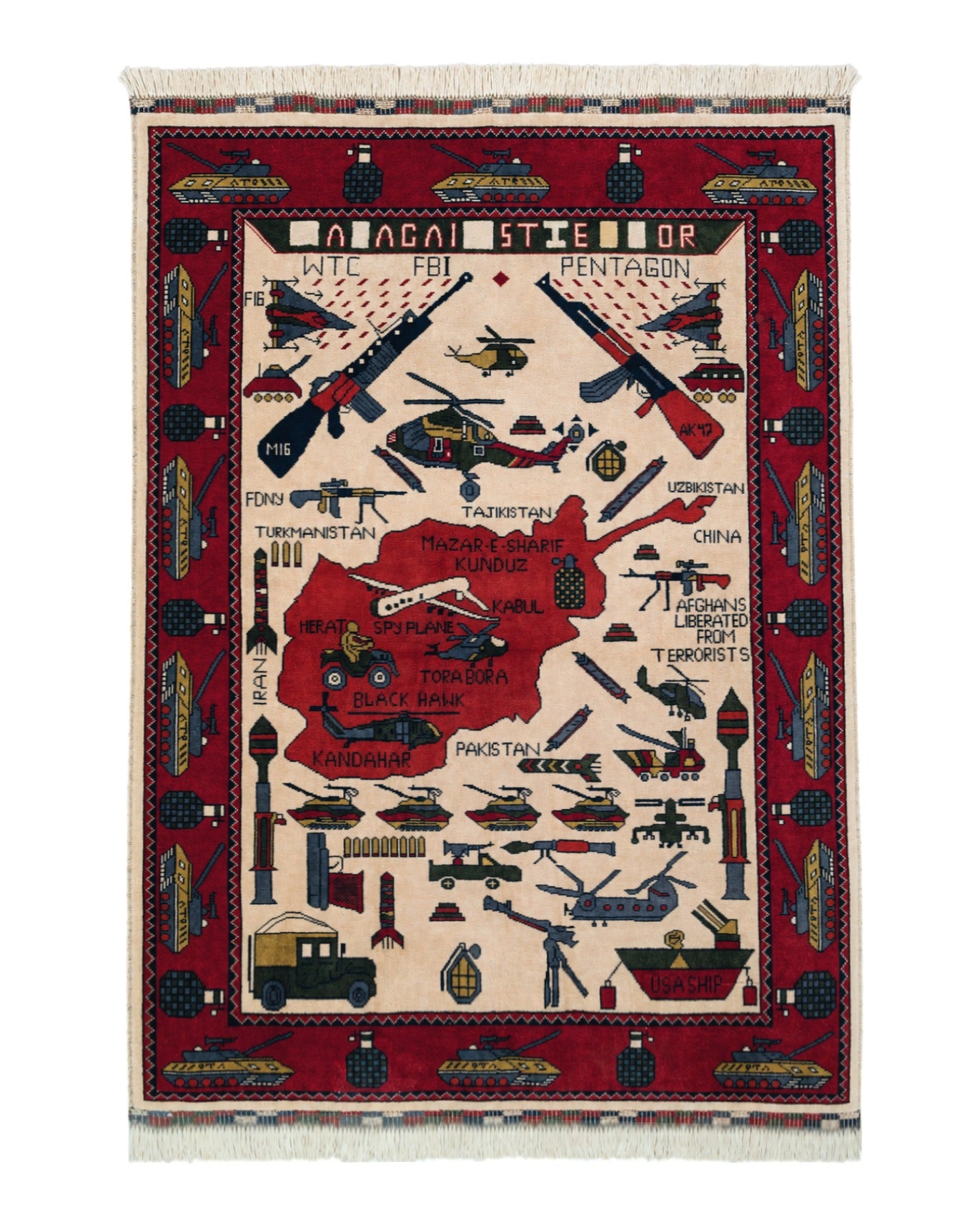




Afghanistan has a long weaving tradition, carried on mainly by the Turkmen of the north, the Baluch and related groups of the west, and, more recently, by many weavers producing revival and decorative rugs. Afghan rugs are best known for their deep red Turkmen designs with repeating guls, but they also include Baluch prayer rugs, Beshir designs, soft-colored Chobi rugs, bold Kazak-style rugs, and the unique "war rugs" of the 1980s.
| Main weavers | Turkmen (north), Baluch and related groups (west), Uzbek and others |
|---|---|
| Knot | Mostly asymmetric (Persian); some symmetric |
| Materials | Hand-spun wool, often on a wool foundation |
| Typical designs | Turkmen guls, Baluch designs, Beshir, Chobi, Kazak |
| Classic color | Deep madder red with navy, black and ivory |
| Markets | Mazar-i-Sharif, Andkhoy, Herat, Kabul; Peshawar in Pakistan |
Turkmen rugs
The Turkmen of northern Afghanistan, especially the Ersari, weave rugs with rows of guls on deep red grounds, much like Turkmen rugs from Iran and Turkmenistan. Trade names such as Daulatabad, Andkhoy and Mauri refer to local types and qualities. Afghan Turkmen rugs are often larger, with large-scale "elephant foot" guls, and they were among the most popular rugs in Western homes in the mid-20th century. See Persian Turkoman Rugs.
Baluch and Beshir
In western Afghanistan, Baluch and related groups weave small rugs and prayer rugs in dark, glowing colors. See Baluch Rugs. Beshir (also Bashir) is an old Ersari Turkmen type known for bolder, more floral designs, including large Herati-like patterns and cloud bands, and the name is used today for Afghan rugs in that style.
Revival and decorative rugs
From the 1980s and 1990s, many Afghan weavers, including refugees in Pakistan, began producing rugs with hand-spun wool and natural dyes in revived designs. Chobi rugs, with soft, washed colors and Ziegler or Oushak designs, and Kazak rugs, in bold Caucasian designs, are the best known. See Chobi and Ziegler-Style Rugs and Kazak Rugs.
War rugs
After the Soviet invasion of 1979, some Afghan weavers began weaving tanks, helicopters, rifles and grenades into traditional designs. These "war rugs" record the experience of conflict in a traditional art form and have become collectible. Later war rugs also depicted other events of the region's recent history.
How to recognize an Afghan rug
For a side-by-side comparison with Persian rugs, see Persian vs. Afghan Rugs.
- Deep red grounds with guls in Turkmen pieces.
- Hand-spun wool with a slightly uneven texture.
- Wool foundations in traditional pieces.
- Soft, natural colors in Chobi and revival rugs.